500 000 drachmai 1944
About This Note
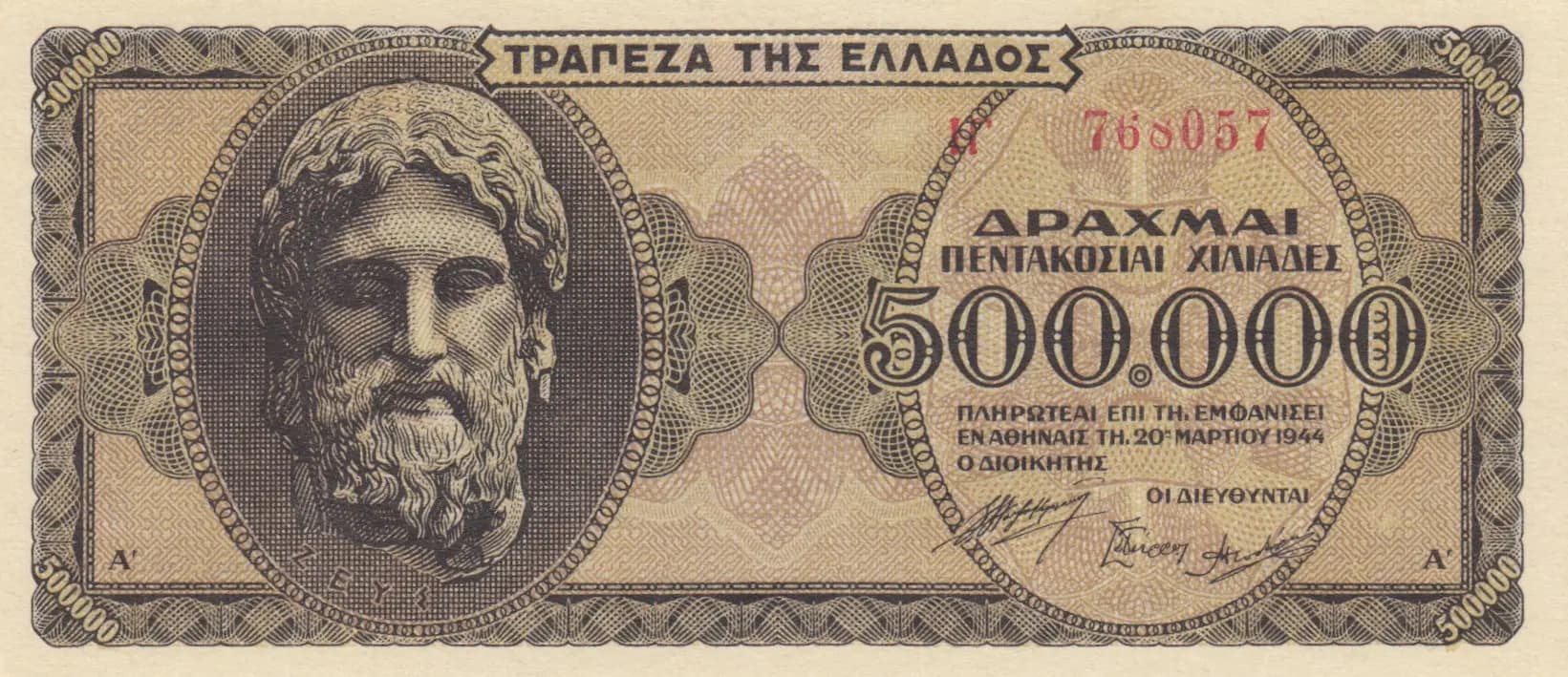
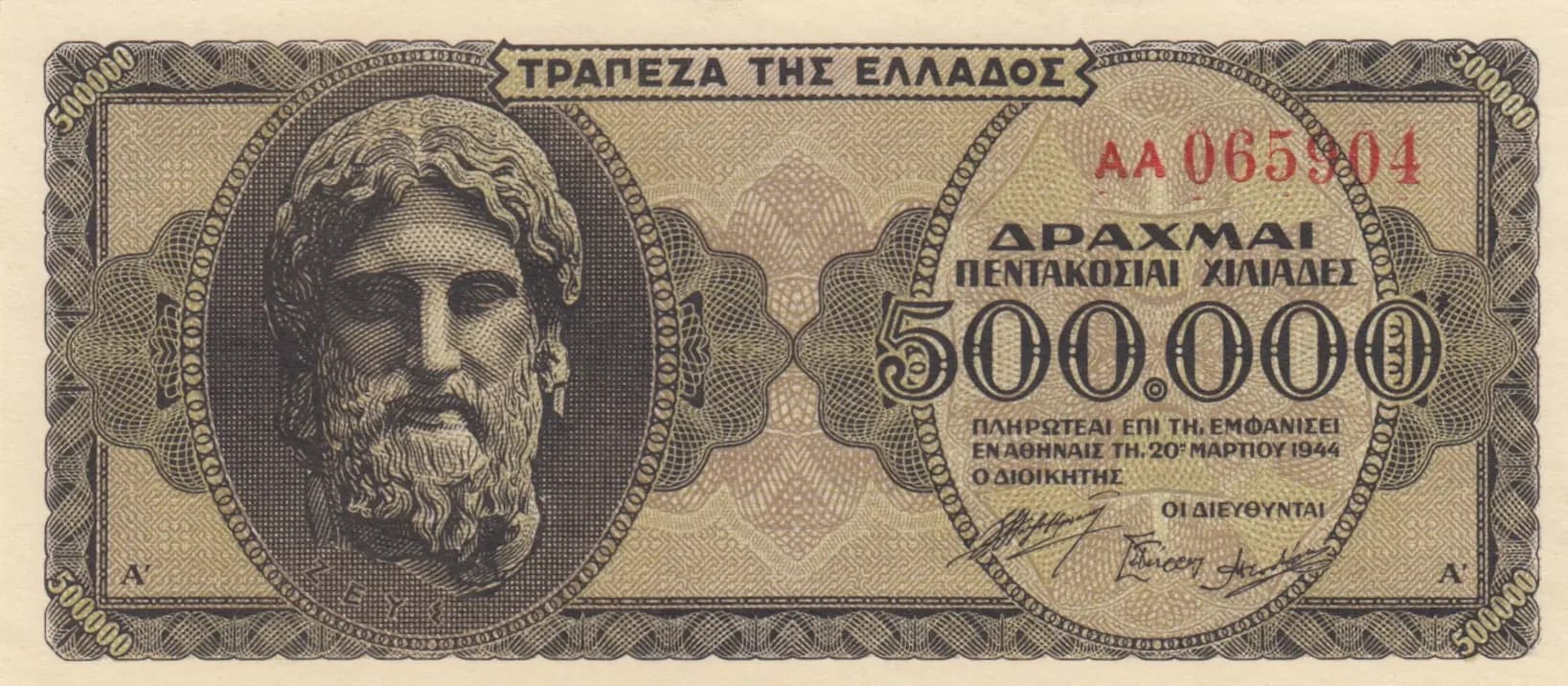
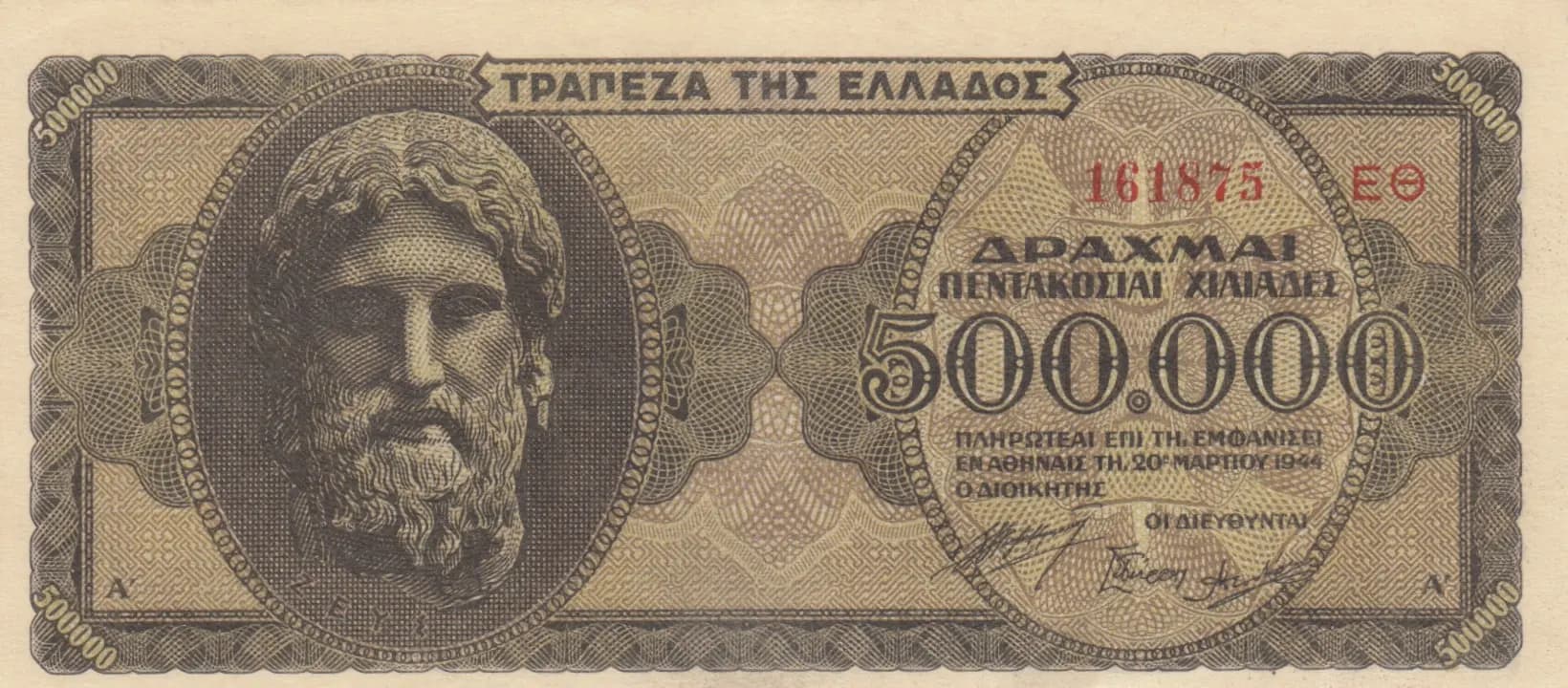
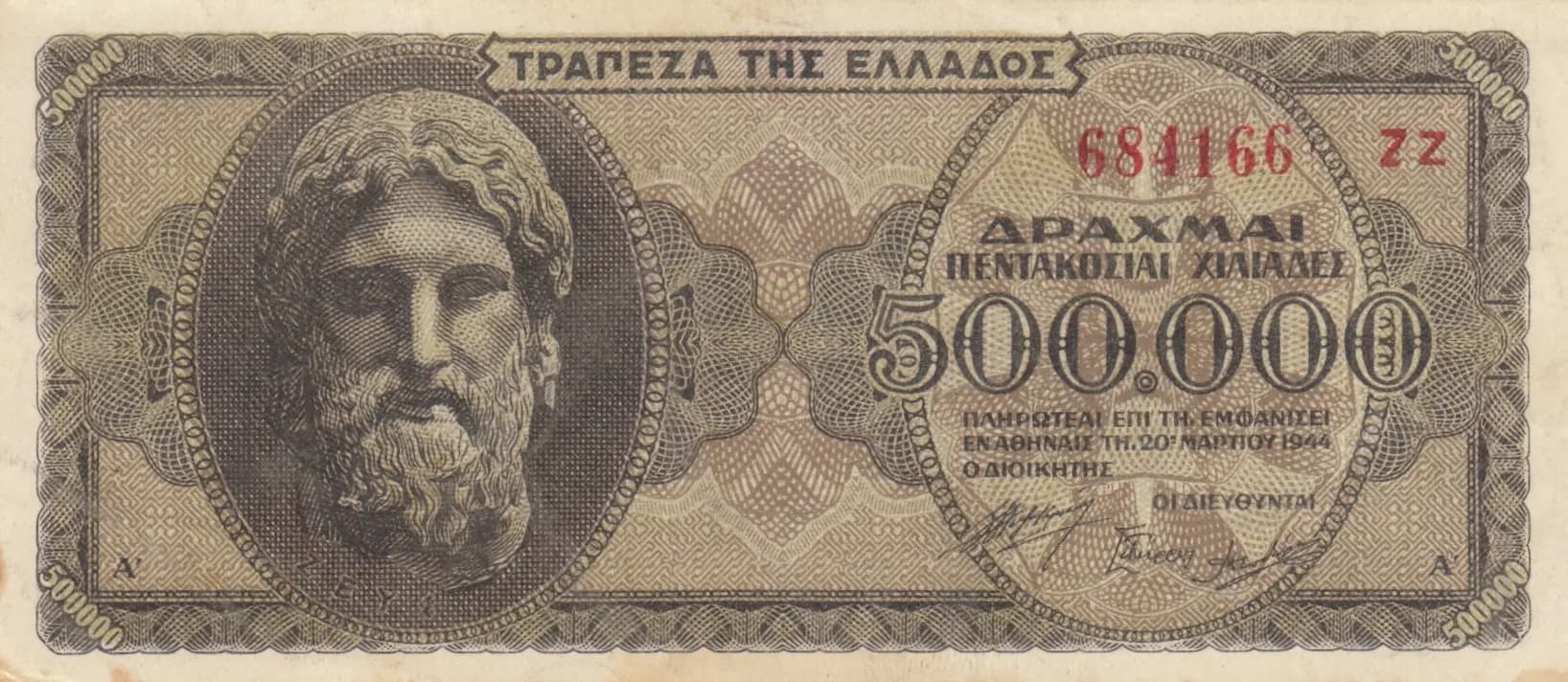
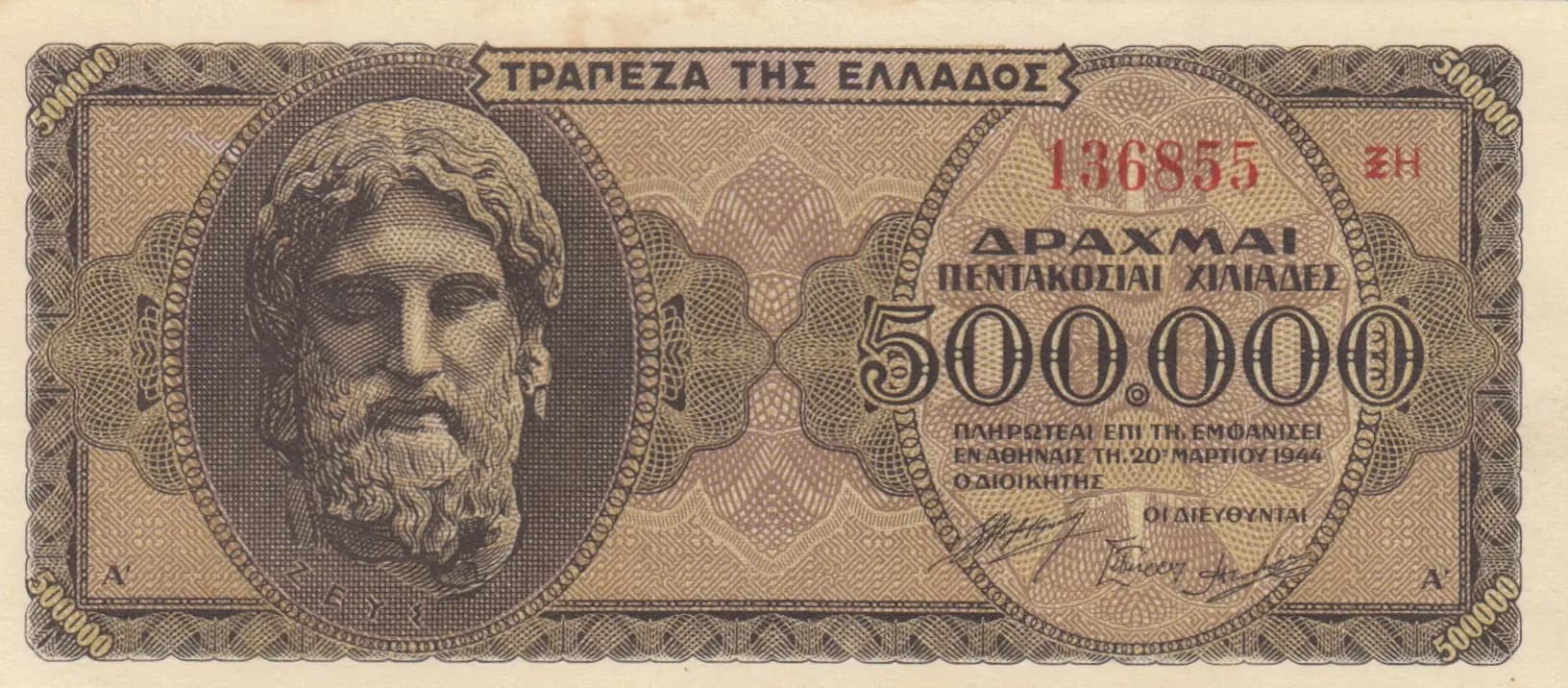
This Greek 500,000 Drachmai note from March 20, 1944 features an exceptional classical portrait of Zeus in a circular medallion frame, rendered in fine engraved detail characteristic of wartime Bank of Greece currency. The AU condition grade reflects minimal circulation wear despite its 80-year age, with the tan and brown color palette on the obverse and the distinctive green/teal geometric patterns on the reverse remaining well-preserved. The note represents a significant hyperinflationary denomination issued during the German occupation of Greece, making it historically significant both for its design artistry and its role as a monetary instrument during one of Greece's most turbulent periods.
Common. The 500,000 Drachmai denomination from 1944 was issued in large quantities as part of emergency wartime currency measures during the hyperinflation period. Notes from this series are readily available in the numismatic market at modest prices. The AU condition grade indicated may command a modest premium over circulated examples, but the note itself remains common in the broader Greek banknote catalog.
Issued on March 20, 1944, during the final year of Nazi occupation of Greece, this banknote was part of the Bank of Greece's emergency currency measures as the drachma experienced severe devaluation. The classical portrait of Zeus—the king of the Olympian gods—serves as a potent nationalistic symbol, reasserting Greek cultural and classical identity during foreign occupation. The enormous denomination of 500,000 drachmai reflects the accelerating inflation that would culminate in Greece's post-war currency crisis, making such high-value notes commonplace instruments of commerce by 1944.
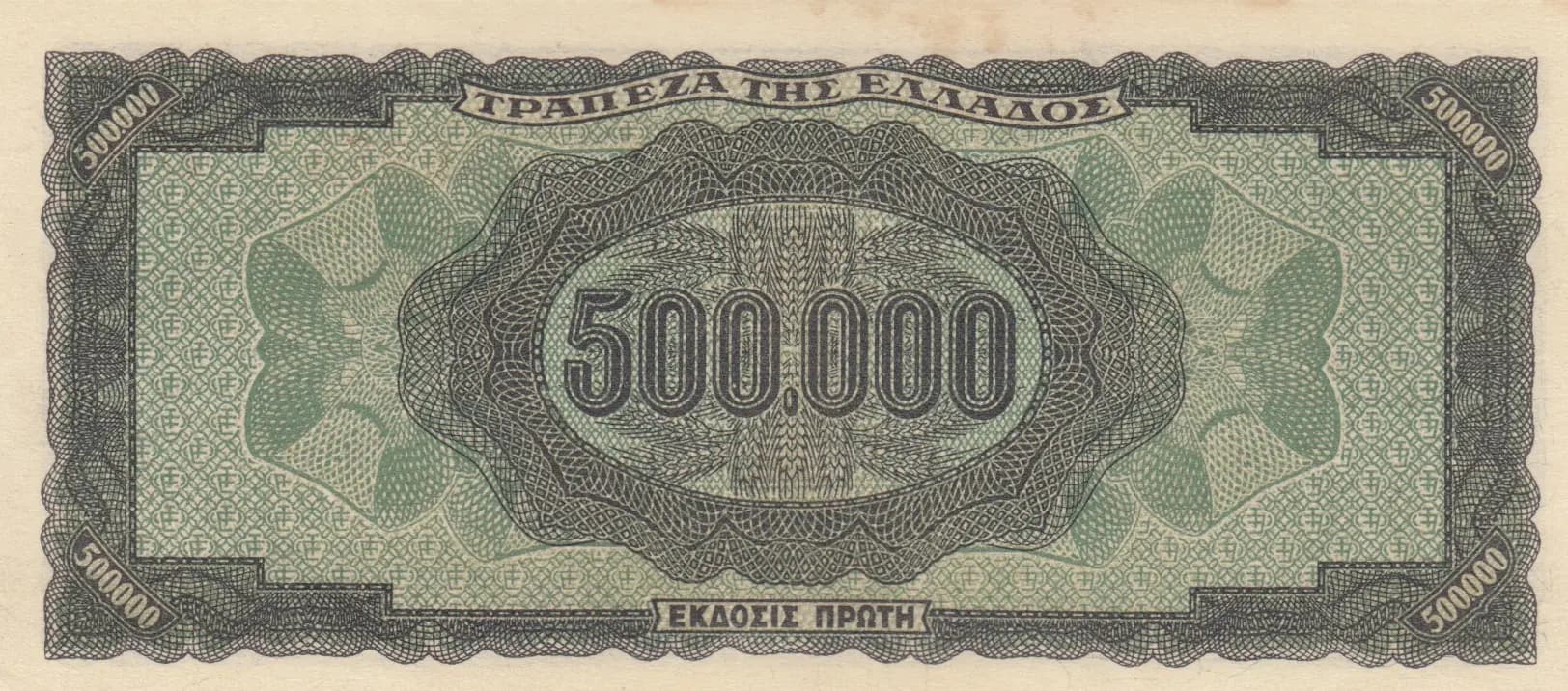
The obverse features a classical left-facing profile portrait of Zeus, the king of the ancient Greek gods, rendered as a mature bearded male within a circular medallion frame adorned with a decorative rope border. This classical iconography deliberately evokes ancient Greek civilization and national identity. The portrait is surrounded by an ornate geometric border pattern characteristic of Greek neoclassical design. The denomination and issuing authority text occupy the right portion of the note. The reverse displays a large oval frame containing the numerical denomination '500,000' as the central design element, with an elaborate geometric wave-pattern background in green and teal tones providing visual interest. Both sides feature fine line engraving work and crosshatching throughout, typical of security printing from this era. The overall composition reflects the Bank of Greece's commitment to classical aesthetics even during wartime economic crisis.
FRONT SIDE: 'ΤΡΑΠΕΖΑ ΤΗΣ ΕΛΛΑΔΟΣ' (Bank of Greece) | '500,000' (Five Hundred Thousand) | 'ΑΡΧΑΜΑΙ ΠΕΝΤΑΚΟΣΙΑΙ ΧΙΛΙΑΔΕΣ' (Five Hundred Thousand - spelled out) | 'ΛΑΙΡΟΓΕΤΑΙ ΕΠΙ ΤΗ ΕΜΦΑΝΙΣΕΙ ΕΝ ΑΘΗΝΑΙΣ ΤΗ 20η ΜΑΡΤΙΟΥ 1944' (Issued upon appearance in Athens on March 20, 1944) | 'Ο ΔΙΟΙΚΗΤΗΣ' (The Governor) | 'ΟΙ ΔΙΕΥΘΥΝΤΑΙ' (The Directors) | Serial number: '136855' | Series designation: 'ΣΗ' | BACK SIDE: 'ΤΡΑΠΕΖΑ ΤΗΣ ΕΛΛΑΔΟΣ' (Bank of Greece) | '500,000' (Five Hundred Thousand) | 'ΕΚΔΟΣΙΣ ΠΡΩΤΗ' (First Edition)
Intaglio (engraved) printing, the standard security printing method for Bank of Greece banknotes during the 1940s. The fine line work, crosshatching, and intricate geometric patterns visible throughout the note are characteristic of high-quality engraved security printing. The printer is consistent with Bank of Greece's contracted security printers of the period, though specific printer attribution would require additional documentation. The technique allowed for complex security features and artistic detail necessary for currency production during the occupation period.
Pick number P-126b(2) indicates this is the second known variety or printing state of the 500,000 Drachmai note. The series designation 'ΣΗ' and serial number 136855 suggest this specific note falls within a larger print run. Varieties for 1944 Greek notes of this denomination may exist based on signature combinations (the Governor and Directors' signatures), serial number prefixes, or minor design variations. The 'First Edition' marking ('ΕΚΔΟΣΙΣ ΠΡΩΤΗ') on the reverse confirms this as an early printing from the March 1944 initial release. Further variety research would require comparison with other known examples and consultation of specialized Greek banknote catalogs.