25 000 drachmai 1943
Market Prices
66 salesAbout This Note
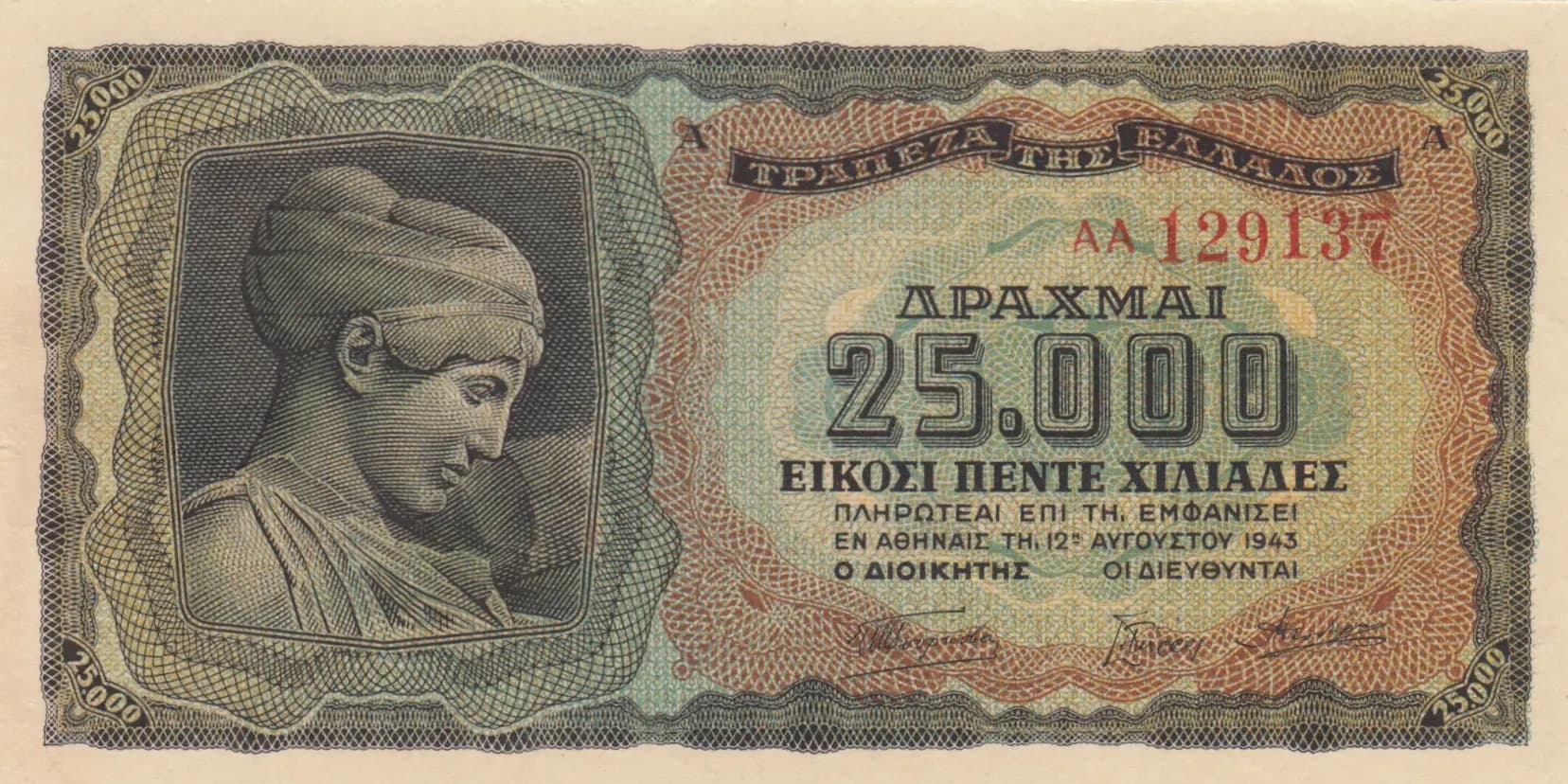
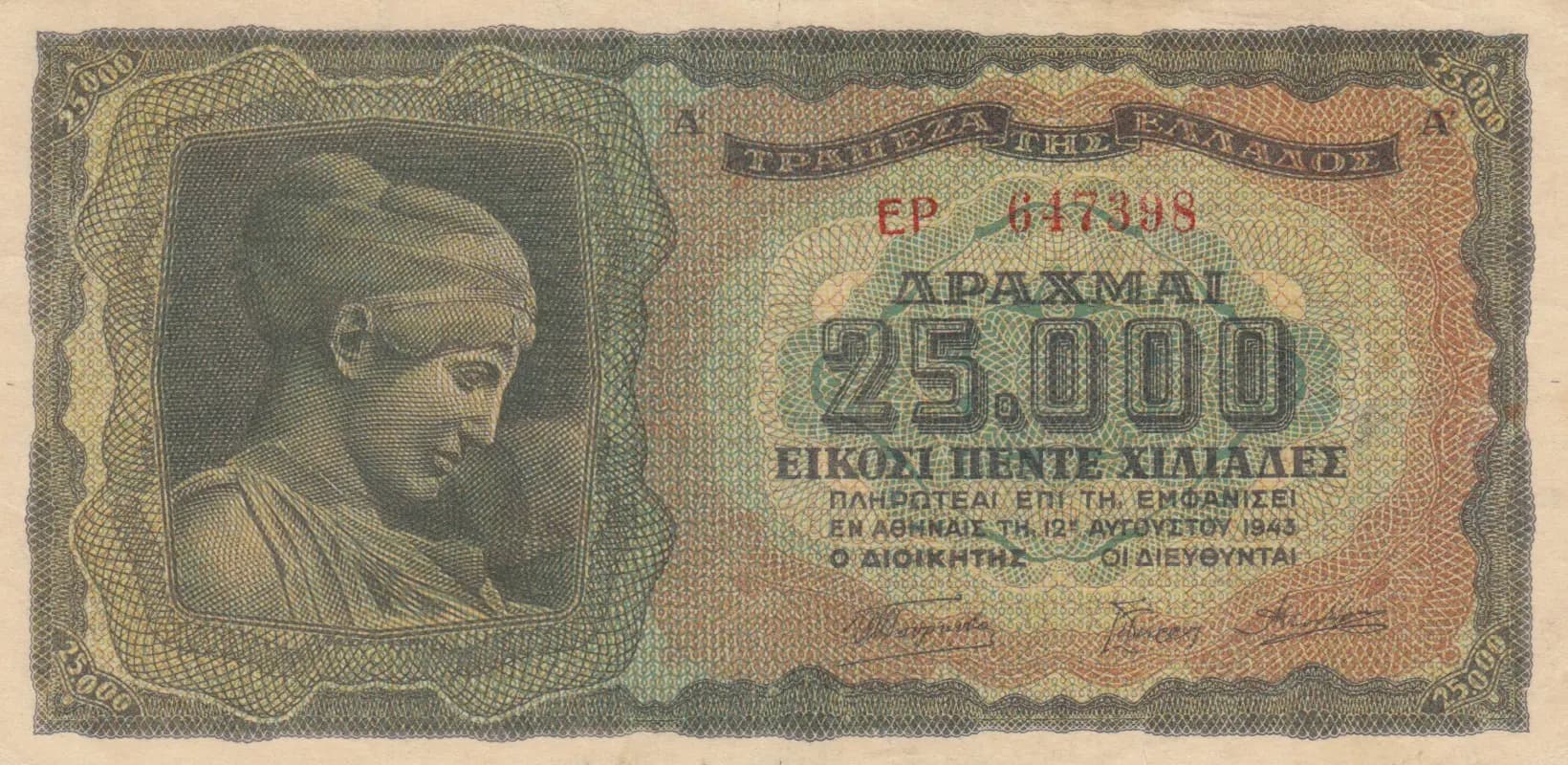
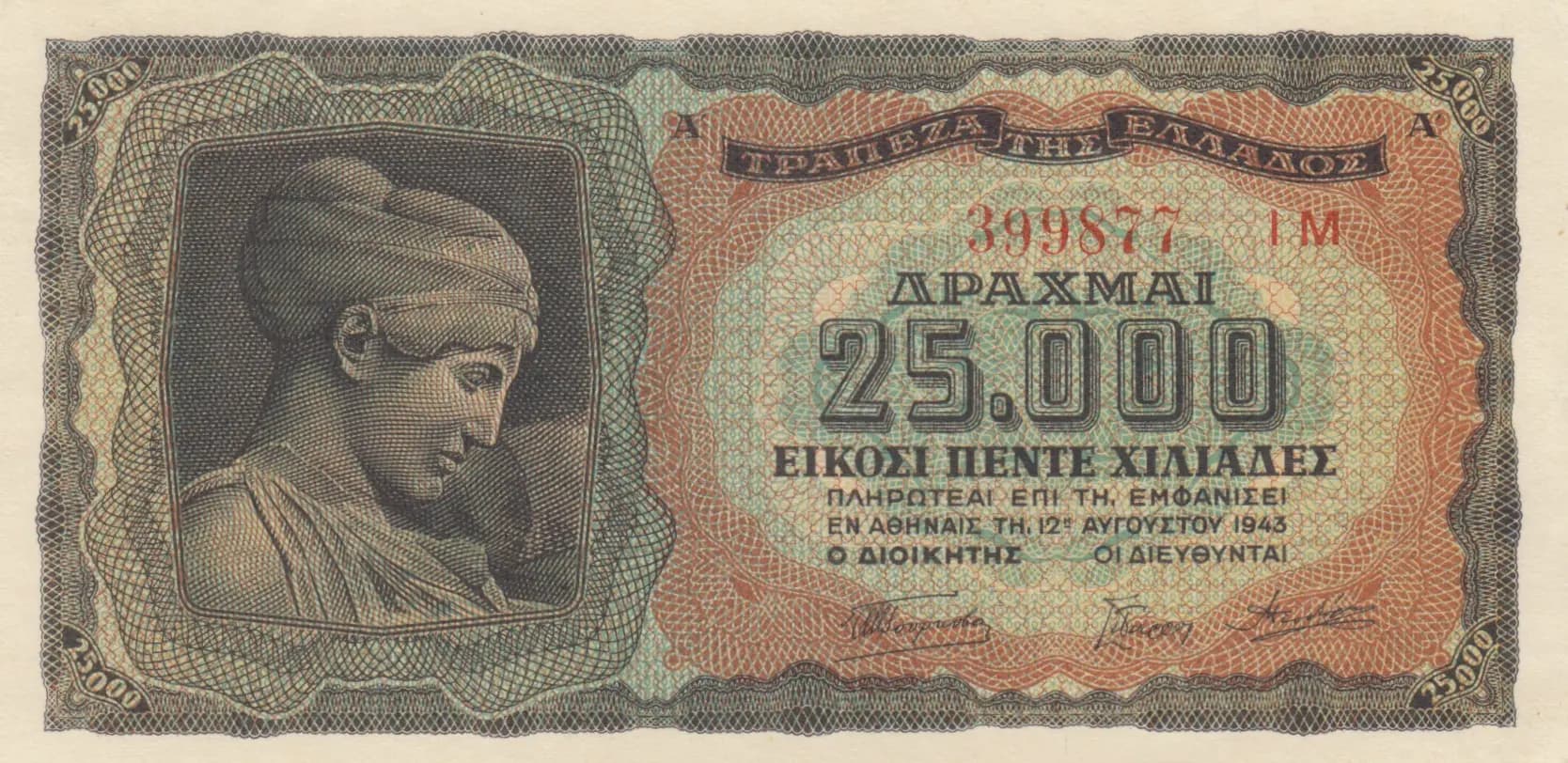
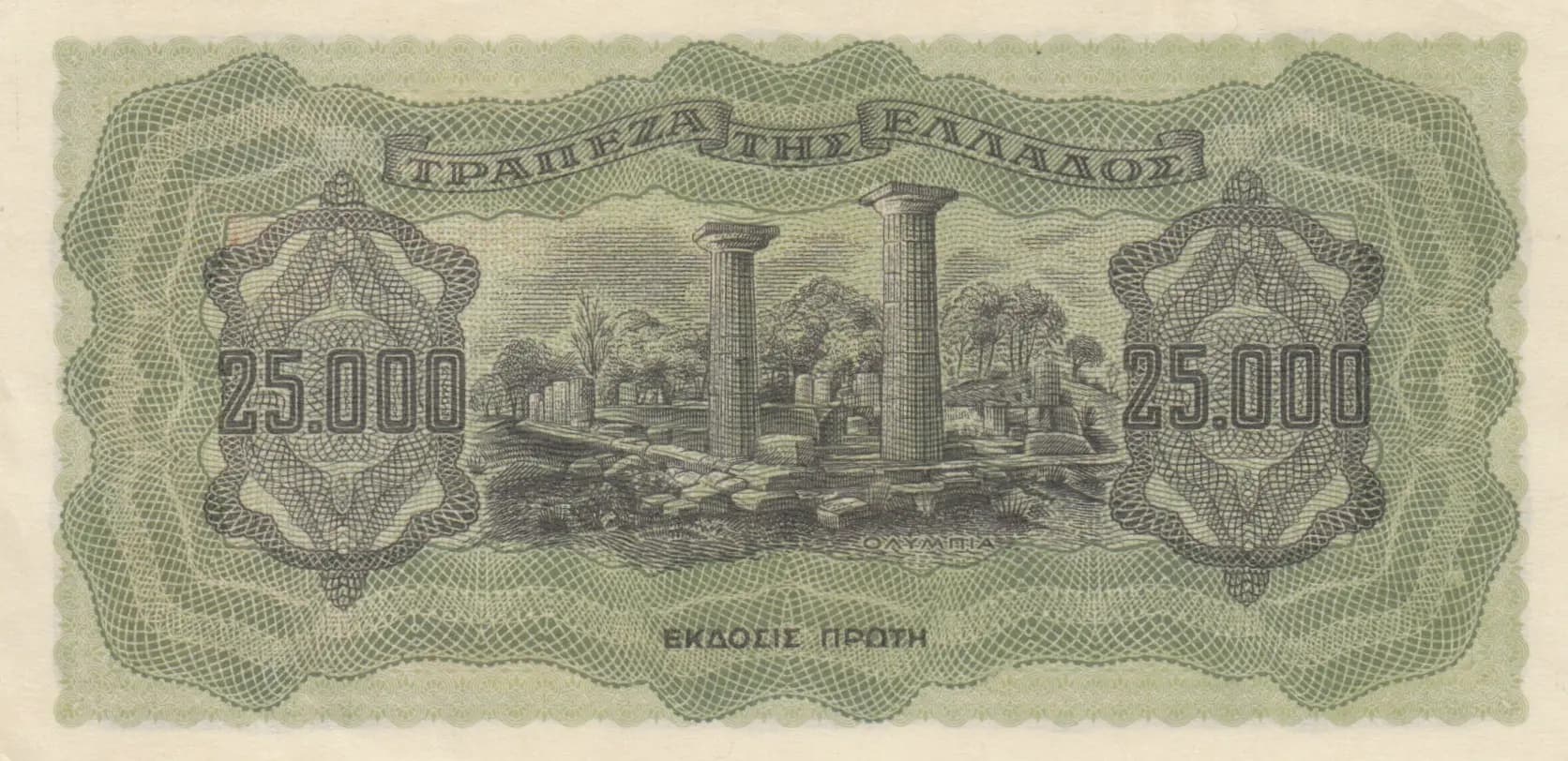
This is an exceptional AU-graded example of Greece's 25,000 Drachmai note from 1943, issued during the German occupation. The note displays crisp, uncirculated characteristics with sharp impressions throughout and pristine surfaces on both sides. The obverse features a classical portrait in an ornate rectangular frame with fine crosshatch security patterns, while the reverse showcases the iconic ruins of the Temple of Zeus at Olympia—a powerful symbolic image of Greek classical heritage during a turbulent historical period.
Common. Secondary market data from 2009-2026 shows consistent availability with regular sales across all condition grades. Even graded examples (PMG 50-66) have sold in modest quantities with prices ranging from $12-77, while ungraded VF examples typically sell for $1-5. The large print run characteristic of a regular-issue high-value denomination during wartime inflation, combined with abundant modern auction records, confirms this note's common status despite its historical significance.
Issued on August 12, 1943, this banknote was produced during Nazi occupation of Greece (1941-1944), a period of severe economic disruption and hyperinflation. The Bank of Greece (Τράπεζα της Ελλάδος) continued to issue currency despite the occupation, and this denomination represents the high-value notes necessary due to spiraling inflation. The reverse's depiction of Olympia's Temple of Zeus served as a potent symbol of Greek cultural continuity and historical grandeur during foreign occupation.
The obverse features a classical male portrait (likely a historical or mythological figure appropriate to Greek heritage) rendered in fine engraved lines, positioned within an ornate rectangular frame with elaborate borders. The reverse depicts the famous ruins of the Temple of Zeus at Olympia, showing two prominent Corinthian/Ionic columns with scattered architectural remains and stone blocks at the base, flanked by decorative lion or sphinx head emblems. Both sides employ extensive fine mesh crosshatch patterns for security purposes, wavy decorative borders framing the composition, and rosette ornaments in corners. The color palette includes blacks, grays, tans, and light greens creating a formal, classical aesthetic appropriate to the subject matter.
FRONT: 'ΤΡΑΠΕΖΑ ΤΗΣ ΕΛΛΑΔΟΣ' (Bank of Greece) | '25.000 ΔΡΑΧΜΑΙ' (25,000 Drachmai) | 'ΕΙΚΟΣΙ ΠΕΝΤΕ ΧΙΛΙΑΔΕΣ' (Twenty-five thousand) | 'ΕΝ ΑΘΗΝΑΙ ΤΗ 12 ΑΥΓΟΥΣΤΟΥ 1943' (In Athens, 12 August 1943) | 'Ο ΔΙΟΙΚΗΤΗΣ ΟΙ ΔΙΕΥΘΥΝΤΑΙ' (The Director, The Managers) | Serial number: 399877 | 'ΙΜ' (initials/marking). BACK: 'ΤΡΑΠΕΖΑ ΤΗΣ ΕΛΛΑΔΟΣ' (Bank of Greece) | '25000' (repeated in multiple corners) | 'ΟΛΥΜΠΙΑ' (Olympia) | 'ΕΚΔΟΣΗΣ ΠΡΟΤΗ' (First issue).
Intaglio (engraved) printing, the standard security printing method for Greek banknotes of this era. The fine line work, detailed portraiture, and elaborate crosshatch security patterns are characteristic of high-quality intaglio production. The Bank of Greece contracted with established European security printers for such denominations during this period, though specific printer attribution for P-123b requires additional research documentation.
This example represents 'ΕΚΔΟΣΗΣ ΠΡΟΤΗ' (First Issue) as noted on the reverse. The Pick number P-123b designation indicates this is a specific variety within the 25,000 Drachmai series. The serial number 399877 and 'ΙΜ' signature marking are consistent with 1943 production. No overprints or significant variations are apparent on this particular example. Collectors should note that different signature combinations and serial number prefixes may distinguish sub-varieties within this denomination.