25 000 drachmai 1943
About This Note
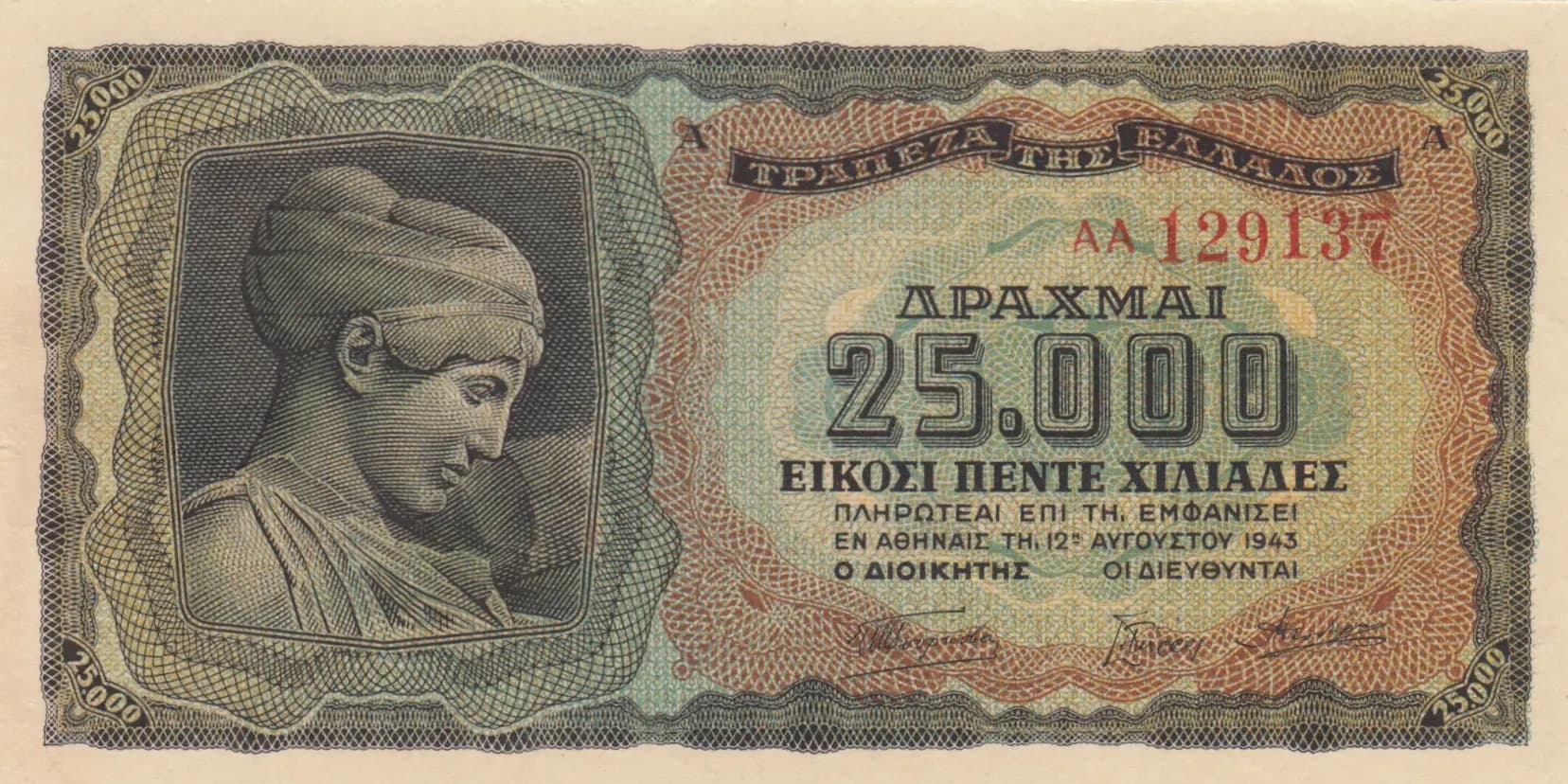
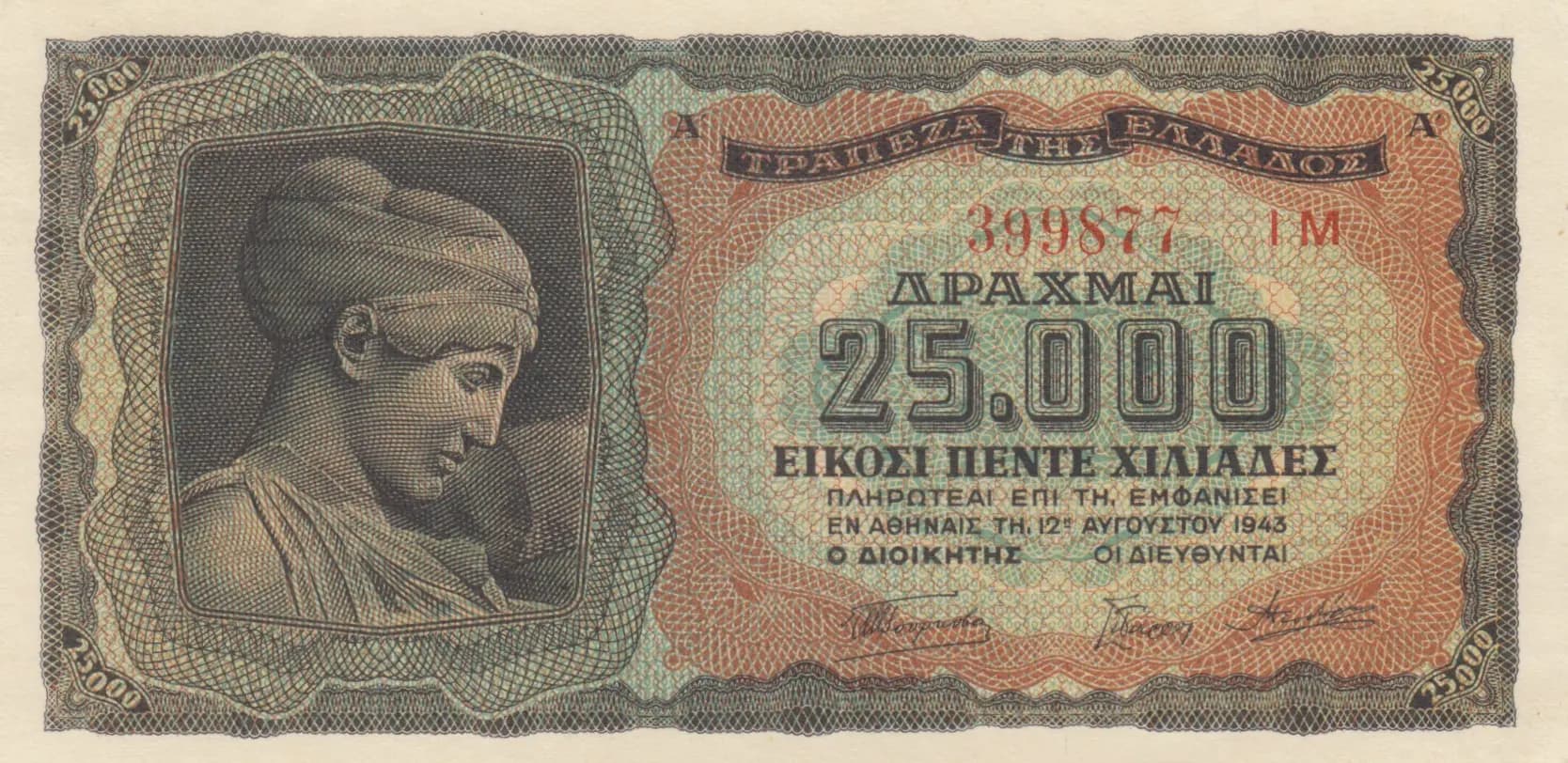
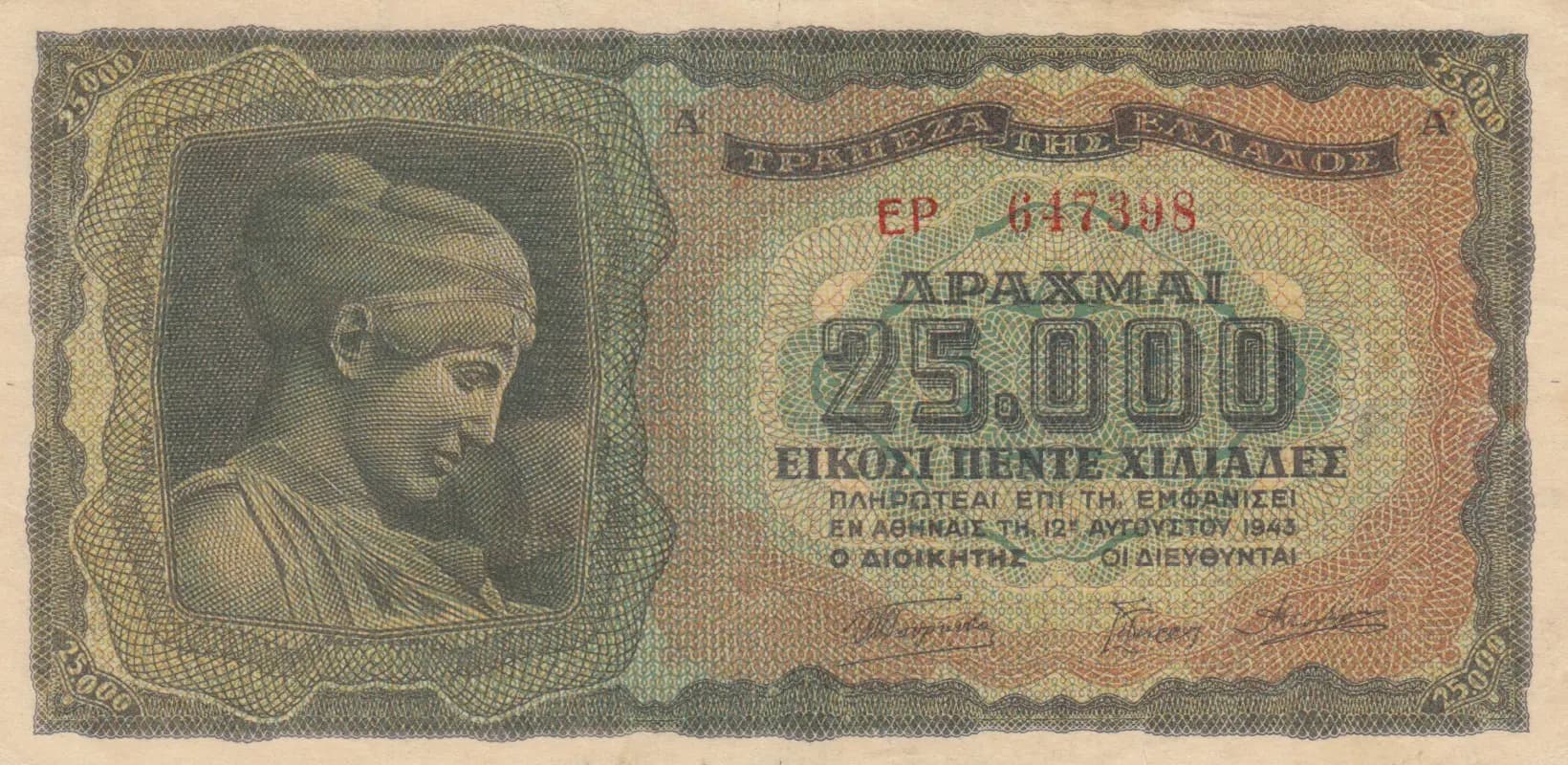
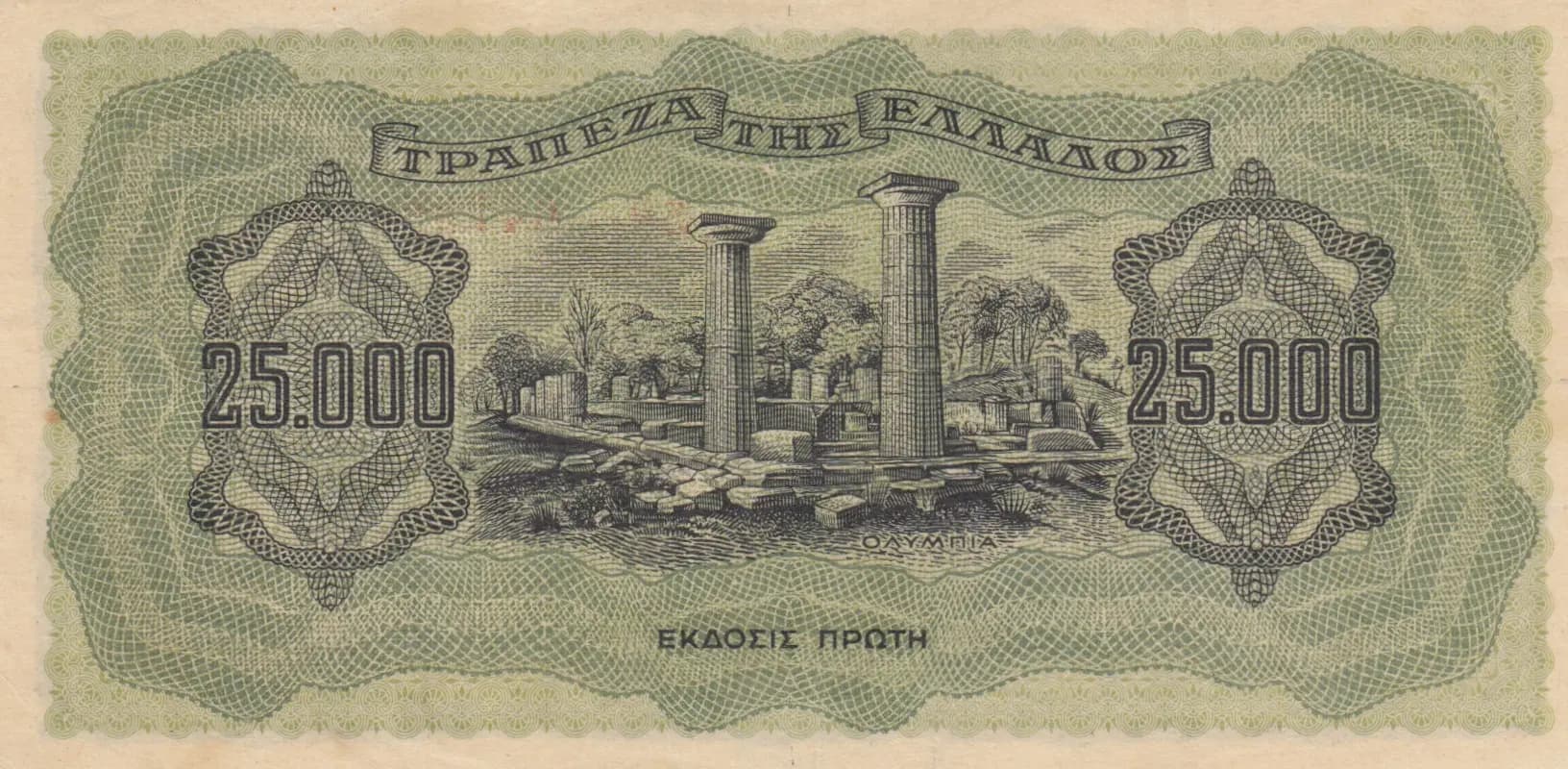
This Greek 25,000 drachmai note from 1943 presents a striking example of wartime-era Bank of Greece currency, rendered in earthy greens and browns with sophisticated engraved security patterns. The obverse features a classical male portrait in stippled profile style, while the reverse showcases the majestic ruins of the Temple of Zeus at Olympia with prominent columns and architectural details. In AU condition, the note displays expected aging characteristics including foxing and yellowing, yet maintains sharp engraving details throughout, making it an attractive specimen of this historically significant issue.
Common. The 1943 25,000 drachmai issue was produced in substantial quantities as a standard circulation note during the wartime period. No documented evidence suggests limited print runs, recalls, or short-lived issuing authority. While the denomination is high and the date wartime-related, these factors do not indicate rarity—rather, they reflect the inflationary pressures of the period. AU condition specimens are readily encountered in the numismatic market, supporting common classification.
Issued on August 12, 1943, during Greece's occupation in World War II, this banknote represents the Bank of Greece's continued monetary authority during a tumultuous period. The design's emphasis on classical Hellenic heritage—featuring the Nymph Deidamia on the obverse and Olympia's Temple of Zeus on the reverse—served as a symbolic assertion of Greek cultural continuity and national identity during foreign occupation. This high denomination reflects the severe inflation that plagued Greece during the war years, necessitating ever-larger denominations in circulation.
The obverse features a profile portrait of the Nymph Deidamia, rendered in classical stippled engraving technique, positioned on the left side and facing right. The design is framed by ornamental borders with geometric lattice and mesh patterns serving as security elements. The reverse depicts the iconic ruins of the Temple of Zeus at Olympia, the sanctuary of ancient Olympia, shown with its characteristic tall Doric columns and surrounding architectural remains set within a naturalistic landscape with vegetation. Decorative heraldic emblems flank the archaeological scene on both sides, with the bank's name appearing in ceremonial banners at the top of each side. The color palette of greens, browns, tans, and grays creates an austere, classical aesthetic appropriate to the depicted historical and mythological subjects.
OBVERSE: ΤΡΑΠΕΖΑ ΤΗΣ ΕΛΛΑΔΟΣ (Bank of Greece) | ΑΡΧΑΙΑΙ 25,000 (Ancient 25,000) | ΕΙΚΟΣΙΠΕΝΤΕ ΧΙΛΙΑΔΕΣ (Twenty-five thousand) | ΔΙΕΥΘΥΝΤΟΥ (Of the director) | ΕΡ (Reference designation) | ΔΑΤ108 (Serial designation). REVERSE: ΤΡΑΠΕΖΑ ΤΗΣ ΕΛΛΑΔΟΣ (Bank of Greece) | 25,000 (denomination in numerals) | ΕΚΔΟΣΗ ΠΡΩΤΗ (First edition/First issue) | ΟΛΥΜΠΙΑ (Olympia).
Engraved intaglio printing, utilizing sophisticated security patterns including fine-line geometric lattice work, stippled portraiture, and intricate architectural detail rendering. The note exhibits the characteristic qualities of Bank of Greece production during this period, with finely executed classical engraving throughout. No evidence of letterpress or lithographic elements; pure intaglio engraving dominates the design. The printer for this issue was likely the Bank of Greece's own printing facilities or a contracted European security printer, though specific attribution requires additional documentation.
This specimen is cataloged as Pick 123a(2), indicating it is the second variety of the first series. Known varieties of the 1943 25,000 drachmai exist with minor signature variations, date designations, and serial number prefix differences. The visual analysis does not reveal sufficient signature or serial number detail to definitively determine the specific sub-variety, though the notation 'ΔΑΤ108' and 'ΕΚΔΟΣΗ ΠΡΩΤΗ' (First edition) designation are consistent with early production runs. Collectors should examine signature blocks and serial prefixes to distinguish among recognized varieties within the Pick 123a classification.