25 000 drachmai 1943
About This Note
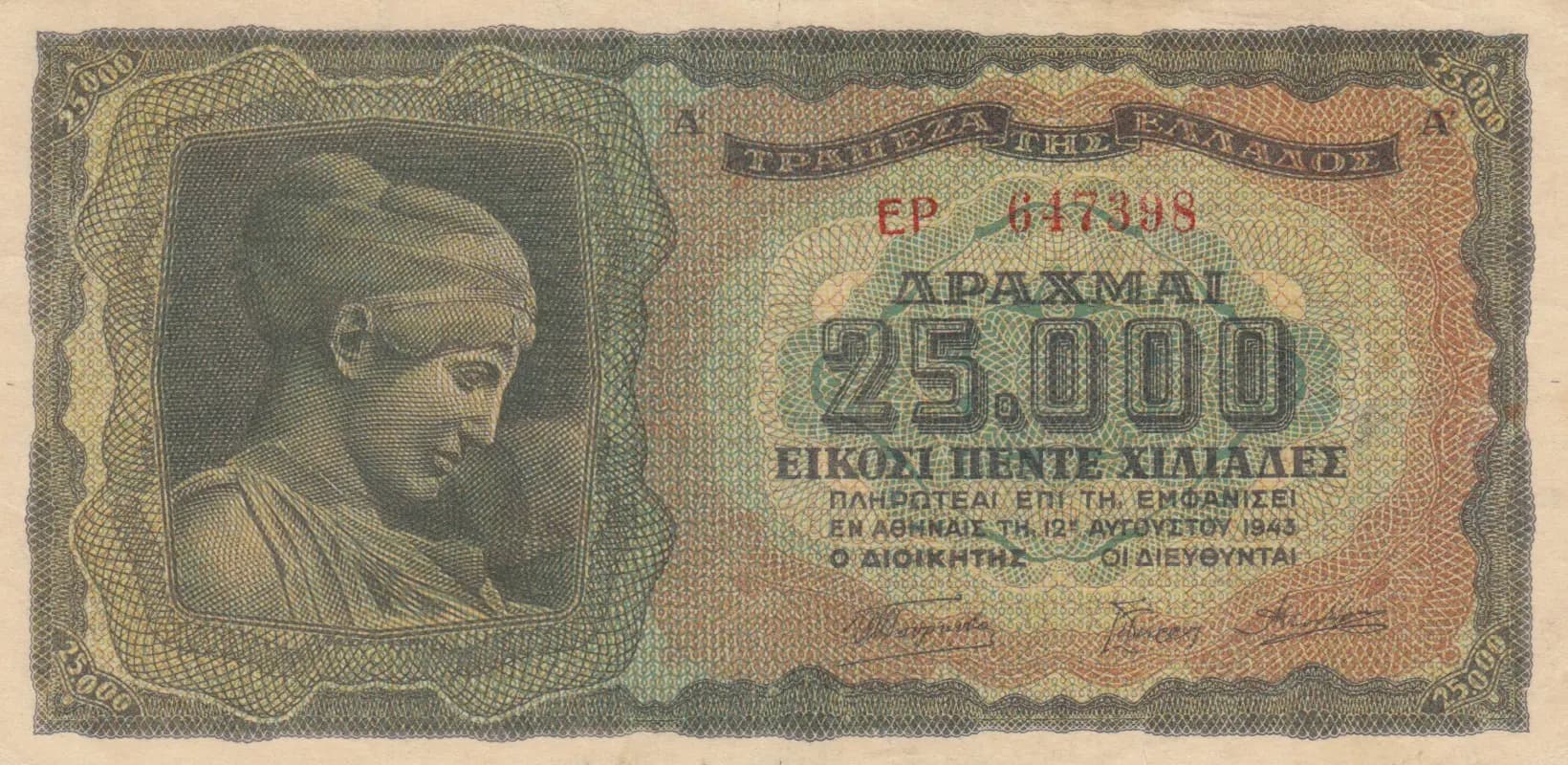
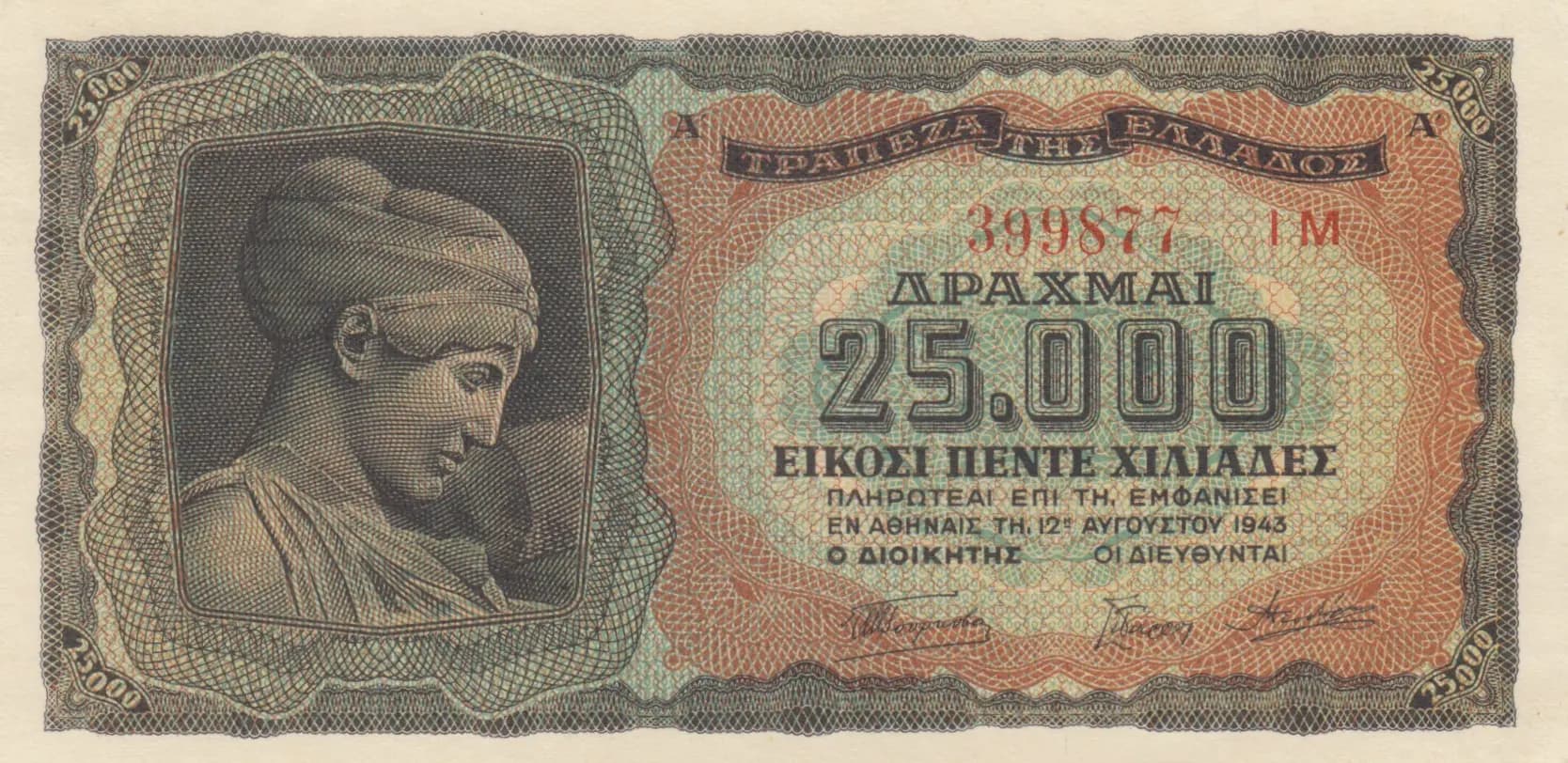
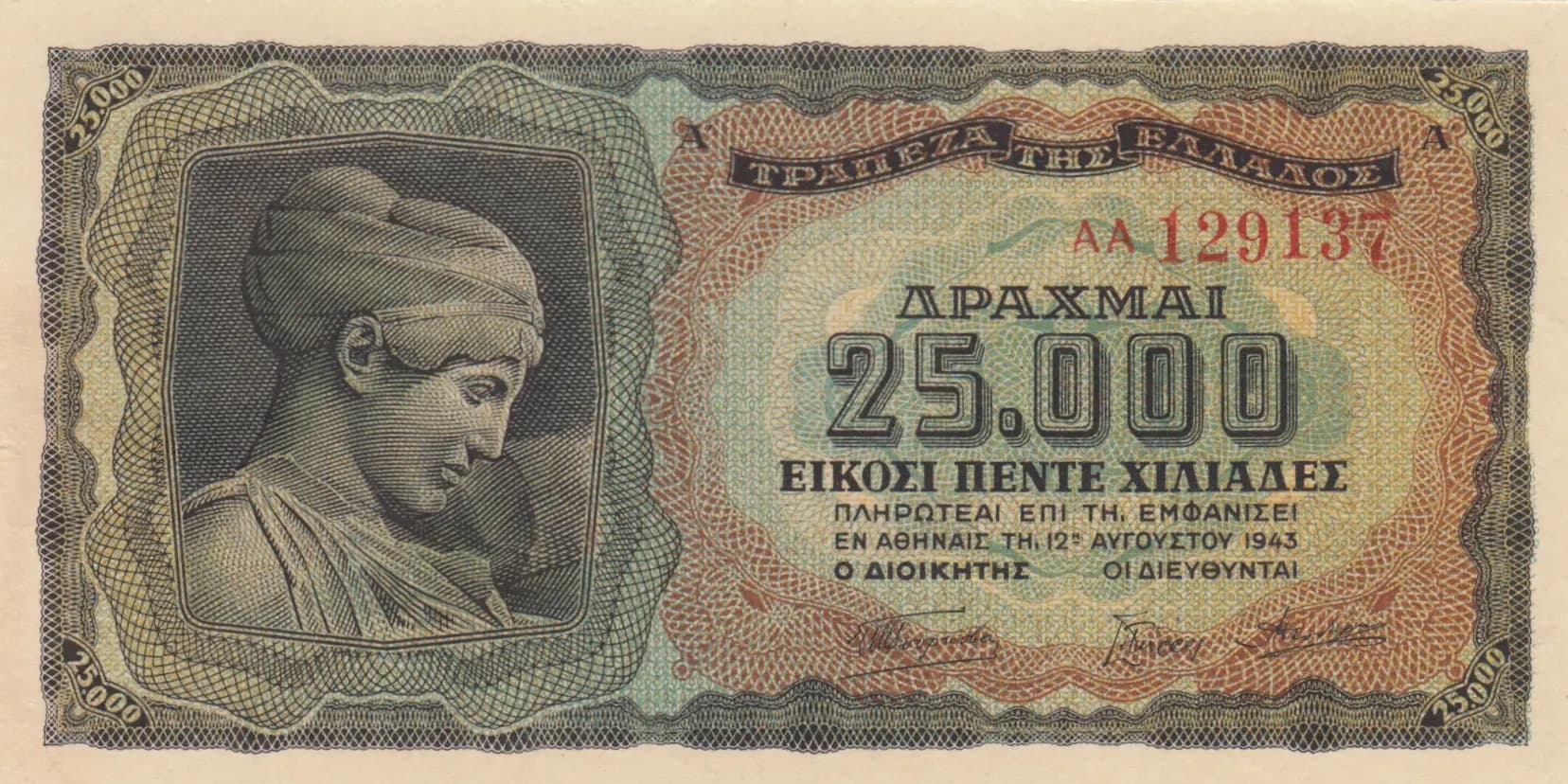
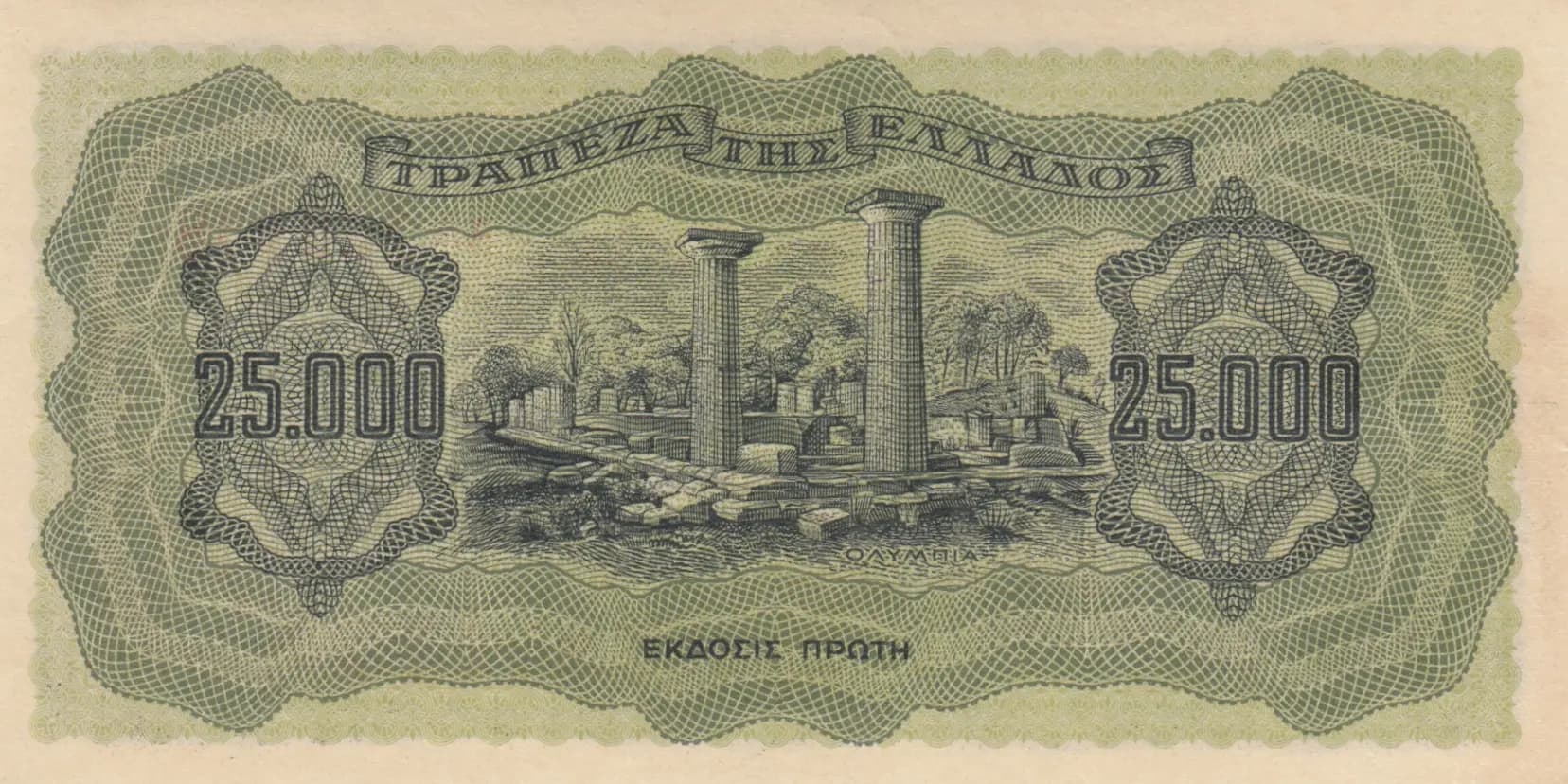
This is an exceptional AU-grade example of the Greek 25,000 drachmai note from 1943, featuring outstanding engraving quality and pristine condition with no visible wear, creases, or damage. The front showcases a classical profile portrait within ornate crosshatch frames in reddish-brown and green tones, while the reverse displays the famous ruins of the Temple of Zeus at Olympia with detailed architectural rendering. This wartime issue represents a fascinating piece of Greek monetary history during the German occupation, notable for its classical Greek artistic themes that emphasize national identity.
Common. The 25,000 drachmai denomination from 1943 was issued in substantial quantities by the Bank of Greece and circulated widely during and after the occupation period. While wartime issues are historically significant, this particular denomination and date are not scarce in the collector market. The AU condition grade is desirable but does not substantially increase rarity, as many examples survived in excellent condition due to the note's relatively late date in the war and preservation in private collections.
Issued on August 12, 1943, during Nazi occupation of Greece in World War II, this banknote was produced by the Bank of Greece under extraordinary circumstances. The deliberate choice to feature classical Greek heritage—specifically the Nymph Deidamia on the obverse and the sacred Temple of Zeus ruins at Olympia on the reverse—served as a powerful statement of Greek cultural continuity and national pride during a period of foreign domination. The note's sophisticated design reflects the Bank of Greece's commitment to maintaining institutional legitimacy and cultural symbolism even under occupation.
The obverse features a classical portrait identified as the Nymph Deidamia, rendered in fine engraving style in profile facing right, wearing a wrapped head covering or turban characteristic of classical depictions. She is positioned on the left within an ornate rectangular frame with elaborate geometric crosshatch patterns and decorative corner ornaments. The right side displays a symphony of ornamental elements with wave-like borders and shield-like decorative cartouches, with the denomination '25,000' prominently featured in the corners. The reverse presents a meticulously engraved landscape depicting the archaeological site of Olympia, specifically featuring the standing columns and ruins of the Temple of Zeus, rendered with remarkable architectural detail and surrounded by naturalistic landscape elements including trees and rocky terrain. The design is symmetrically balanced with shield-like emblems and eagle symbols within decorative cartouches flanking the central architectural scene. The color palette throughout employs reddish-brown, green, black, cream, and gray tones, creating visual depth and security through layered design complexity.
FRONT: 'ΤΡΑΠΕΖΑ ΤΗΣ ΕΛΛΑΔΟΣ' (Bank of Greece) | 'ΔΡΑΧΜΑΙ' (Drachmai) | '25,000' (denomination) | 'ΕΙΚΟΣΙ ΠΕΝΤΕ ΧΙΛΙΑΔΕΣ' (Twenty-five thousand) | 'ΑΑ 129137' (Serial number) | 'ΠΛΗΡΩΤΕΑΙ ΕΠΙ ΤΗ. ΕΜΦΑΝΙΣΕΙ ΕΝ ΑΘΗΝΑΙΕ ΤΗ 12ε ΑΥΓΟΥΣΤΟΥ 1943' (Payable upon presentation in Athens on 12 August 1943) | 'Ο ΑΙΟΙΚΗΤΗΣ ΟΙ ΔΙΕΥΘΥΝΤΑΙ' (The Director / The Managers). BACK: 'ΤΡΑΠΕΖΑ ΤΗΣ ΕΛΛΑΔΟΣ' (Bank of Greece) | '25,000' (denomination, repeated left and right) | 'ΟΛΥΜΠΙΑ' (Olympia) | 'ΕΚΔΟΣΙΣ ΠΡΩΤΗ' (First Edition).
Intaglio engraving (line-engraved) using steel plates, evidenced by the fine detailed crosshatch patterns, elaborate border work, and precise line rendering visible throughout both sides. The multi-color printing effect (visible in reddish-brown and green tones) indicates multiple plate impressions or color application techniques typical of high-security banknote production from this era. The printer for Greek banknotes of this period was typically a combination of domestic and international security printers; for this occupation-era issue, production likely involved Bank of Greece facilities with technical oversight.
This example represents Pick-123a(1), the first printing of this denomination. The serial number 'ΑΑ 129137' indicates this is from an early batch of the series. The 'ΕΚΔΟΣΙΣ ΠΡΩΤΗ' (First Edition) inscription on the reverse confirms the first printing. Known varieties for this pick number include different serial number prefixes (AA, AB, AC, etc.) representing different printing runs, though all are from the same 1943 issue date. The signature block ('Ο ΑΙΟΙΚΗΤΗΣ ΟΙ ΔΙΕΥΘΥΝΤΑΙ') remains consistent across varieties of this denomination.