10 shillings 1948
Market Prices
17 salesAbout This Note
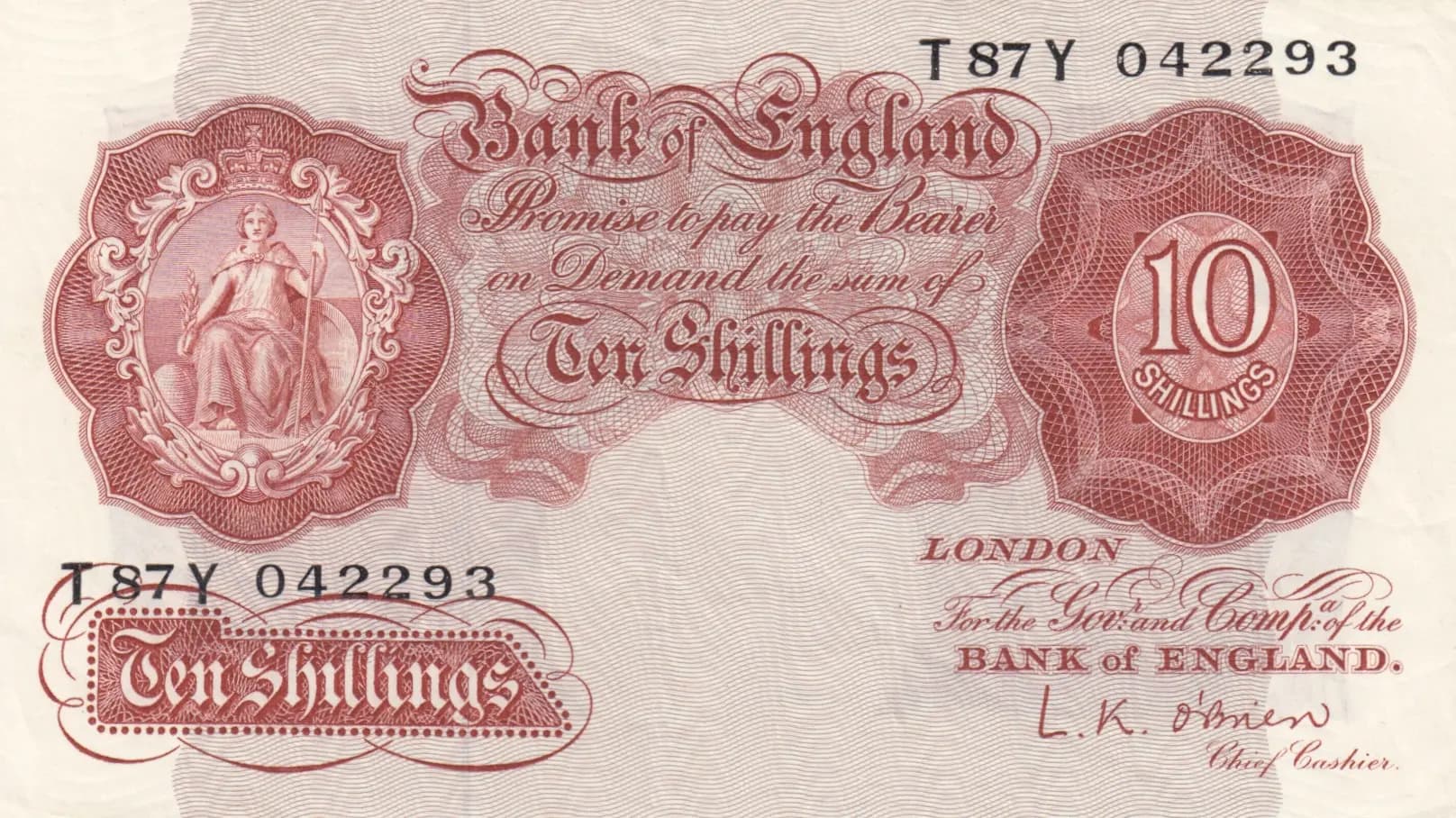
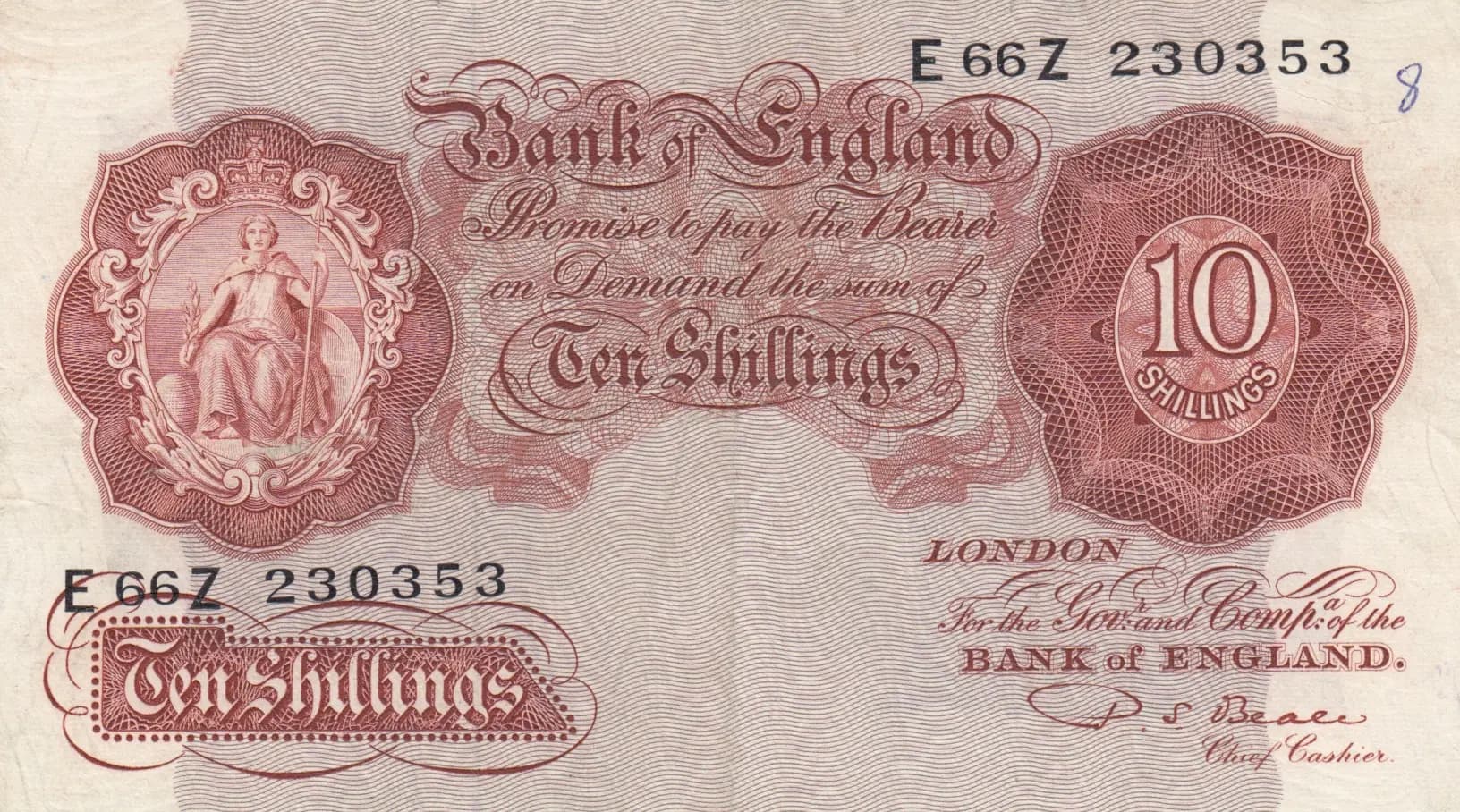
A VF-grade 1948 Bank of England 10 Shillings note featuring the iconic seated Britannia in ornate reddish-brown engraving on cream paper. The note displays classic mid-20th century British currency characteristics with fine line work and intricate security patterns. Moderate circulation wear is evident through yellowing and foxing typical of aged paper currency, yet the design remains crisp and legible—a solid example of post-war British banknote artistry.
Common. This is a regular-issue banknote from a long production run (1948-1960, with notes issued through 1955 visible in cataloging systems), with substantial print quantities typical of a major denomination in circulation during peacetime. Secondary market evidence from eBay confirms common status: VF-graded examples consistently sell in the $7-20 range, with catalog values listing VF at $20 (2016). No scarcity indicators are present for this Pick number or condition grade.
Issued during the post-World War II period when Britain was reasserting its currency stability under the Bank of England, this note features Britannia, the classical allegorical personification of Britain herself, seated with her traditional trident. The ornate Victorian-style engraving reflects Britain's historical monetary traditions and the formal dignity expected of imperial currency during the early Cold War era. This design period (1948-1960) marked the transition from wartime to peacetime banknote production with the introduction of security threads to combat counterfeiting.
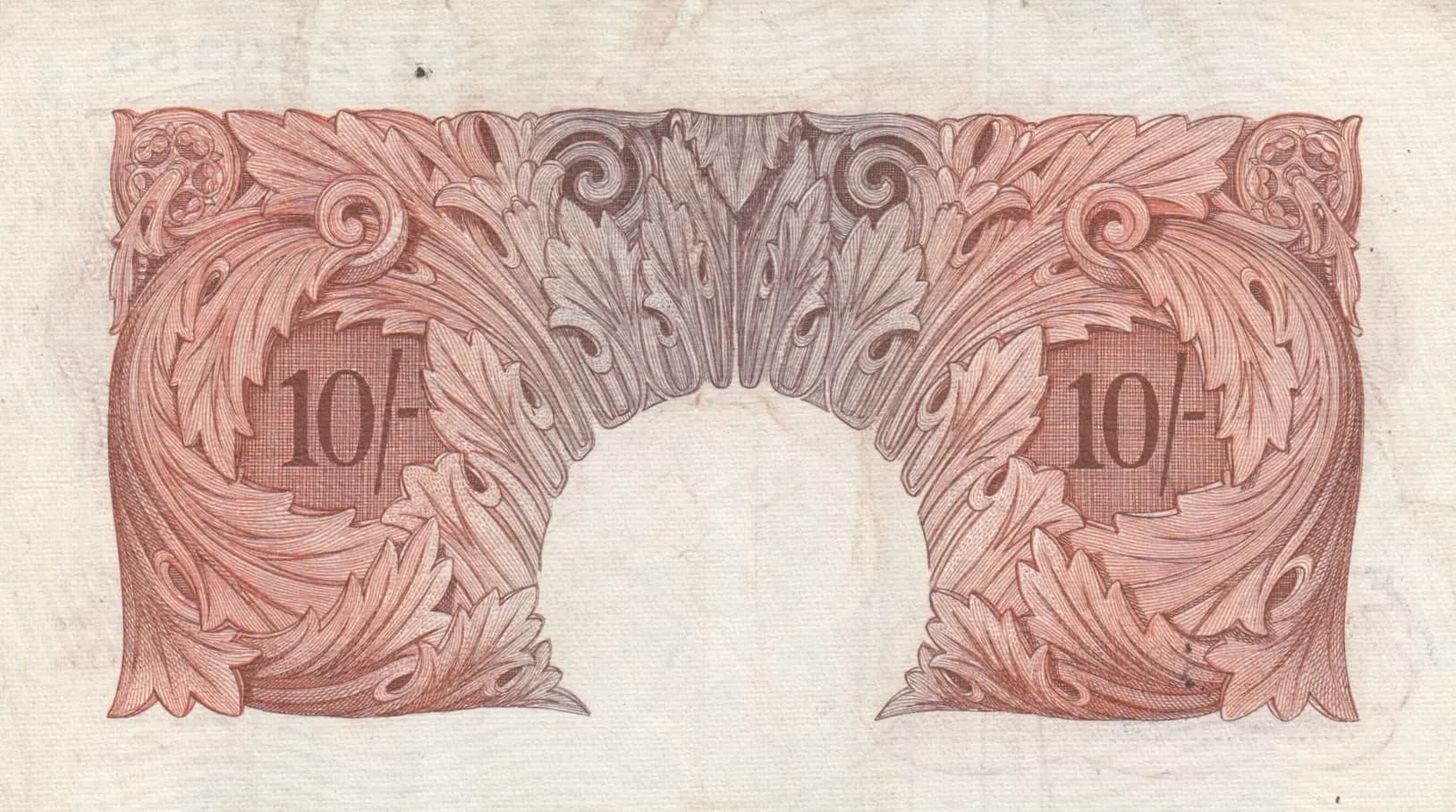
The obverse (front) features a classical seated Britannia at left, depicted as an allegorical female figure in elaborate scrolled cartouche, holding her traditional trident or staff as a symbol of British maritime power and sovereignty. The design employs ornate Victorian-style scrollwork with acanthus leaf flourishes framing the central composition. The denomination '10' appears in a circular ornamental frame at right. A heraldic design (likely the Royal coat of arms or Bank of England seal) occupies the top left. The reverse displays symmetrical decorative corner motifs with floral and acanthus scrollwork, a large central blank area suitable for handwritten details if needed, and denomination markers '10' in upper corners. The brown-violet and brown coloring on gray-pink underprint creates visual depth characteristic of this issue period.
Front side: 'Bank of England' (issuer); 'Promise to pay the Bearer on Demand the Sum of Ten Shillings' (standard legal tender promise); '10 SHILLINGS' (denomination); 'E66Z 230353' (serial number); 'LONDON' (place of issue); 'By the Governor Comptroller of the Bank of England' (authorizing authority); 'Chief Cashier' (signature line designation). Back side: '10' (denomination markers in upper corners). All inscriptions are in English, consistent with Bank of England currency conventions.
Steel plate engraving (intaglio process), the standard security printing method employed by the Bank of England for currency production during this era. Fine line engraving with intricate cross-hatching throughout provides anti-counterfeiting measures. Wavy security lines visible at top of note represent additional period-appropriate security features. The precision and complexity of the ornamental design elements reflect the high-skilled craftsmanship of Bank of England's printing operations, likely executed by De La Rue or similar established British security printers.
Serial number E66Z 230353 indicates this is from the Z series, consistent with later issues within the 1948-1960 production period. The catalog designation P-368b denotes this as the security thread variety (differentiating it from P-362, the earlier similar note without security thread). Chief Cashier signature line visible but specific signatory not determinable from visual analysis alone; multiple Chief Cashiers served during the 1948-1960 issue period, creating minor sub-varieties collectable by signature specialists. The brown-violet and brown coloring on gray-pink underprint is standard for the 1949-1955 variant described in catalog references.