1 pound 1919
Market Prices
12 salesAbout This Note
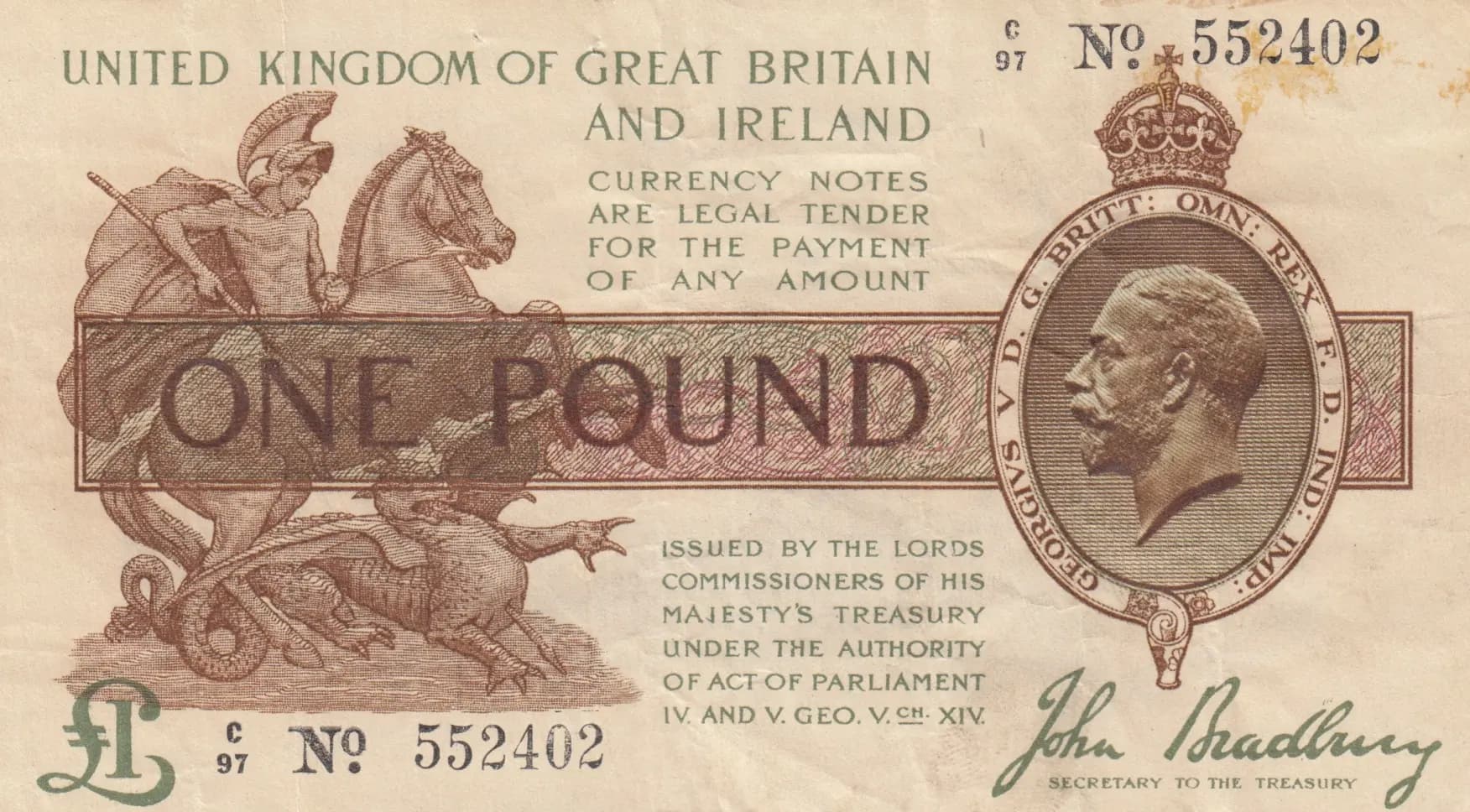
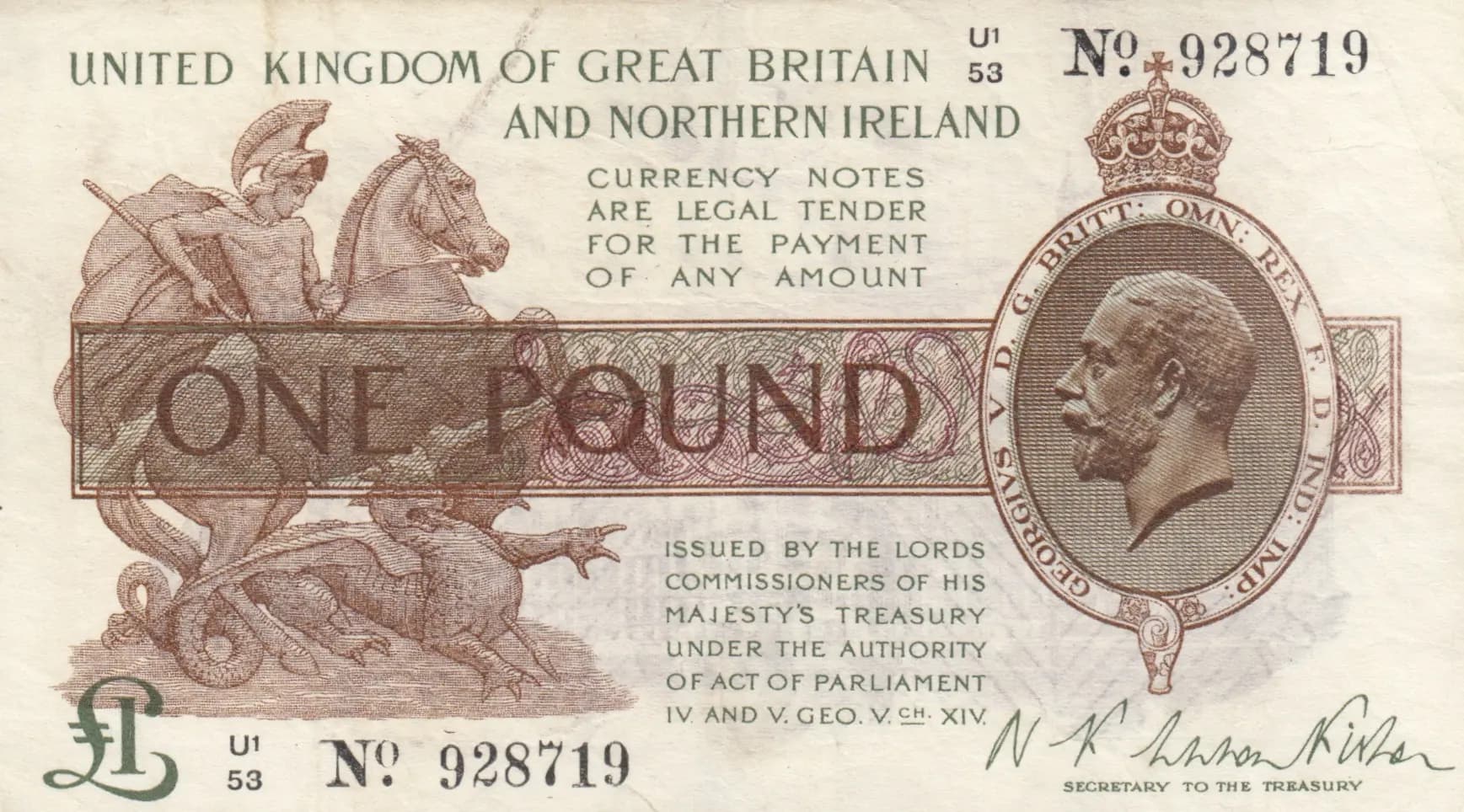
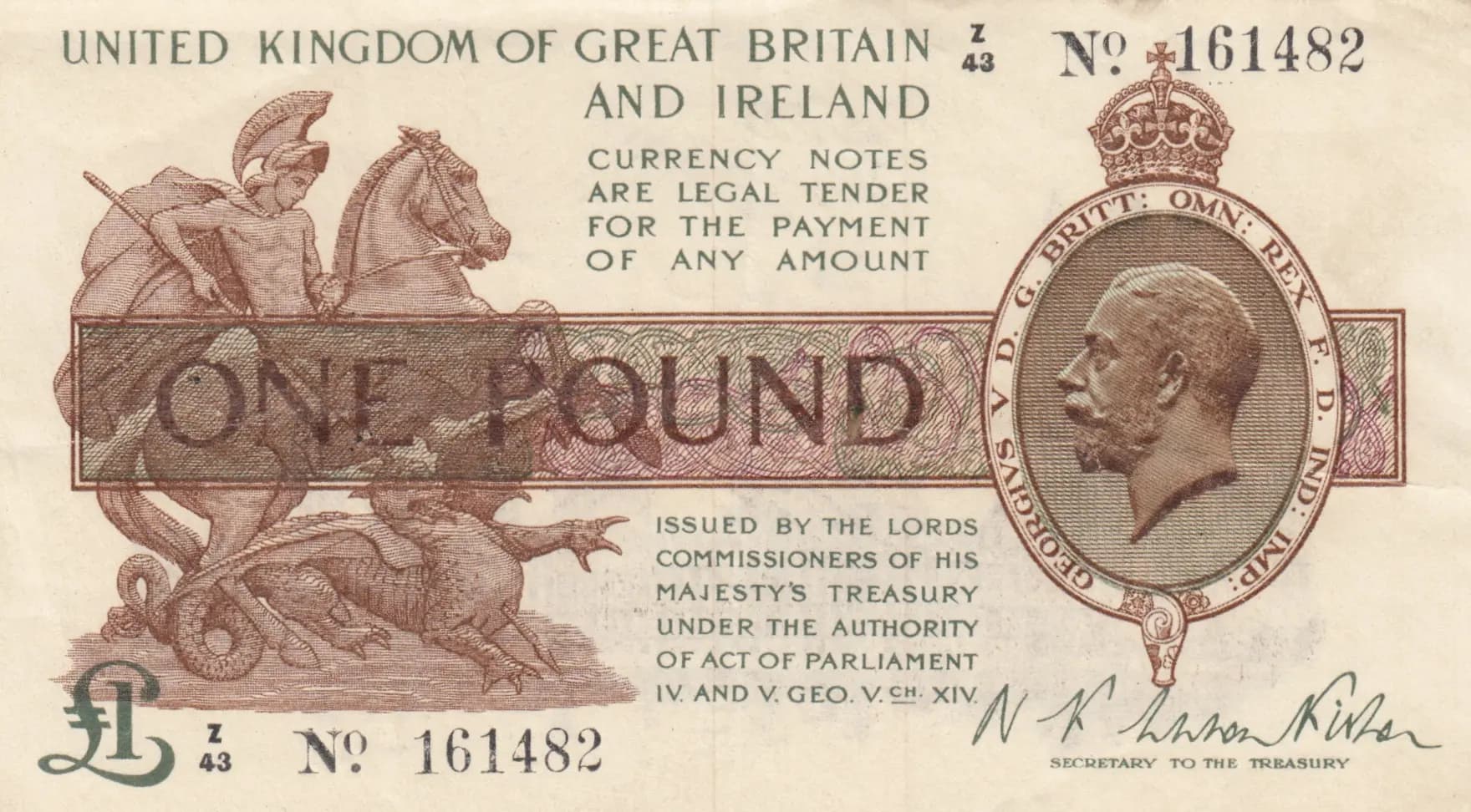
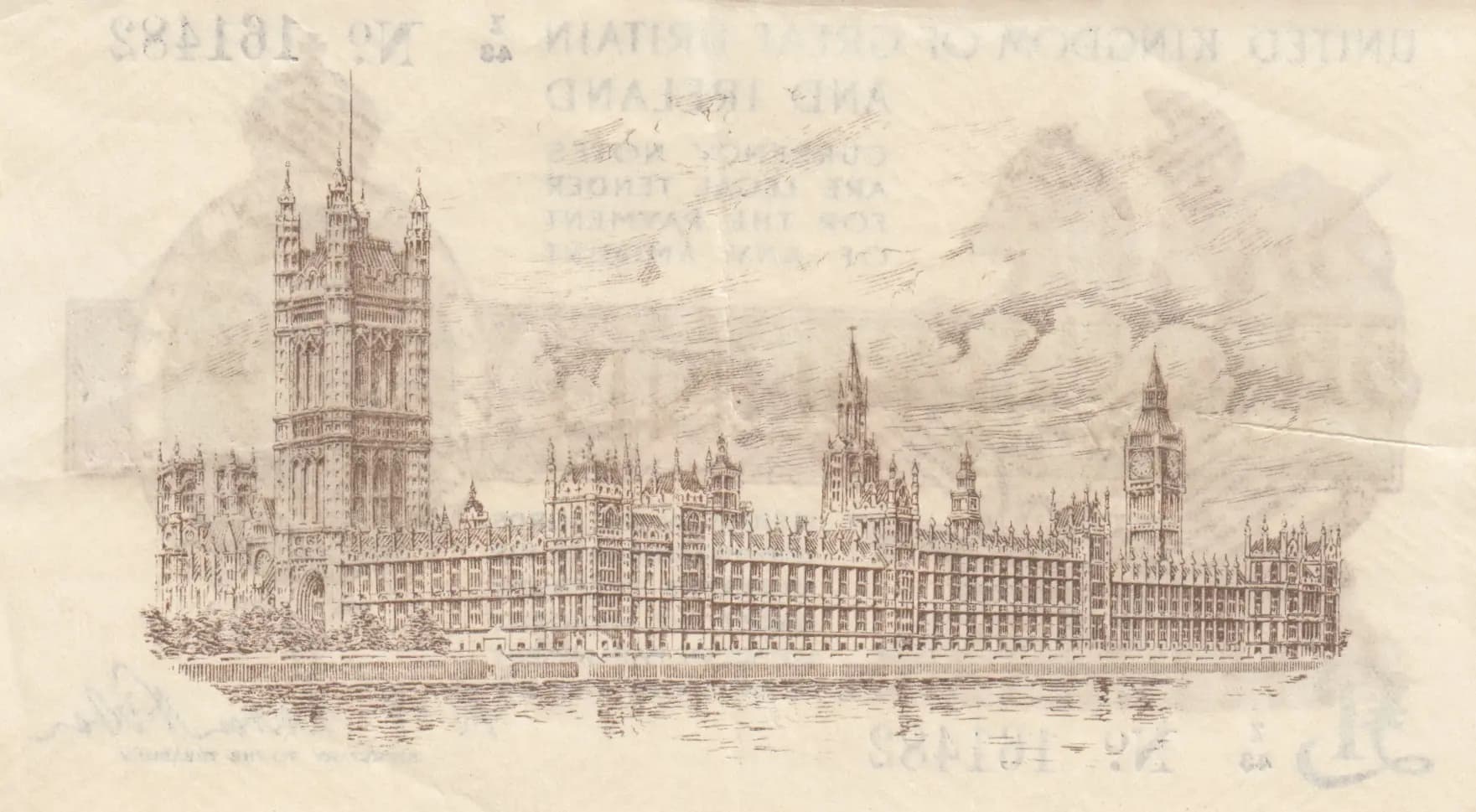
This is a VF-grade 1919 British Treasury Note featuring the iconic imagery of St. George and Britannia on the obverse and the Palace of Westminster on the reverse. The note displays typical age-related patina with foxing and discoloration consistent with a note over a century old, yet remains structurally sound with no significant tears. The serial number Z 43 № 161482 and Secretary's signature are clearly visible, making this a collectible example of early British currency notes issued under George V.
Common. While these notes are now nearly 105 years old, they were produced in substantial quantities as part of a regular currency issue by the Treasury. Market data shows consistent eBay sales activity in the $34–$89 range for VF specimens over the past decade, with multiple sales annually. Catalog values (2016) place VF examples at approximately $65, well within the range of common circulation notes. The absence of any scarcity notation in the Pick catalog and the regular appearance of examples in the collector market confirm common status despite their age.
Issued in 1919 under the authority of the Lords Commissioners of His Majesty's Treasury during the reign of George V, this note was produced under the Currency Notes Act (IV and V Geo. V Ch. XIV) in the immediate post-World War I period. The obverse depicts Britannia, the female personification of British sovereignty, alongside a crowned portrait (likely representing the monarchy), while the reverse showcases the Palace of Westminster, symbolizing parliamentary authority and the nation's democratic institutions during a period of significant constitutional and social change.
The obverse features a striking allegorical design with Britannia depicted as a female warrior figure with helmet and shield on the left side, representing British naval and military power. On the right, a crowned male portrait in an oval medallion faces left, representing the reigning monarch George V. The design is enclosed within an ornate decorative border with detailed engraving work. The reverse presents a detailed architectural engraving of the Palace of Westminster (Houses of Parliament) viewed along the River Thames, with Big Ben/Elizabeth Tower prominently featured on the right side. The Gothic Revival architecture is rendered with fine cross-hatching and line work characteristic of high-quality banknote engraving. The color scheme throughout is predominantly brown and tan on a cream background, typical of British Treasury Notes of this era.
FRONT: 'UNITED KINGDOM OF GREAT BRITAIN AND IRELAND' — the official name of the issuing nation; 'ONE POUND' — denomination; 'CURRENCY NOTES ARE LEGAL TENDER FOR THE PAYMENT OF ANY AMOUNT' — legal tender declaration; 'ISSUED BY THE LORDS COMMISSIONERS OF HIS MAJESTY'S TREASURY UNDER THE AUTHORITY OF ACT OF PARLIAMENT IV AND V GEO. V CH. XIV' — issuing authority and legislative basis; 'Z 43 № 161482' — serial number; '£1' — denomination symbol; 'G BRITT: OMNI: REG: F.D:' (Latin) — 'By the Grace of God, Queen of All Britons, Defender of the Faith'; 'SECRETARY TO THE TREASURY' — official title; 'N-K' — Secretary's signature initials. BACK: Architectural engraving of the Palace of Westminster with faded text at top (largely illegible due to deterioration).
Intaglio engraving (recess printing), the standard security printing method for British banknotes of this period. The fine line work, intricate shading through cross-hatching, and the sharp detail visible in the architectural elements and portrait work are characteristic of steel-plate engraving. The printer for this Pick P-357 issue was Waterlow & Sons Ltd., one of the premier security printers of the era.
This example represents the variety WITHOUT numeral '1' above the block letter (Pick P-357), as specifically noted in the catalog remark. A similar note with numeral '1' above the block letter exists as Pick P-359. The serial number prefix 'Z 43' indicates the printing block and position. The Secretary's signature initials 'N-K' visible on this note represent the signing official of the period. No overprints or exceptional varieties are apparent from the visual examination.