1 pound 1918
Market Prices
8 salesAbout This Note
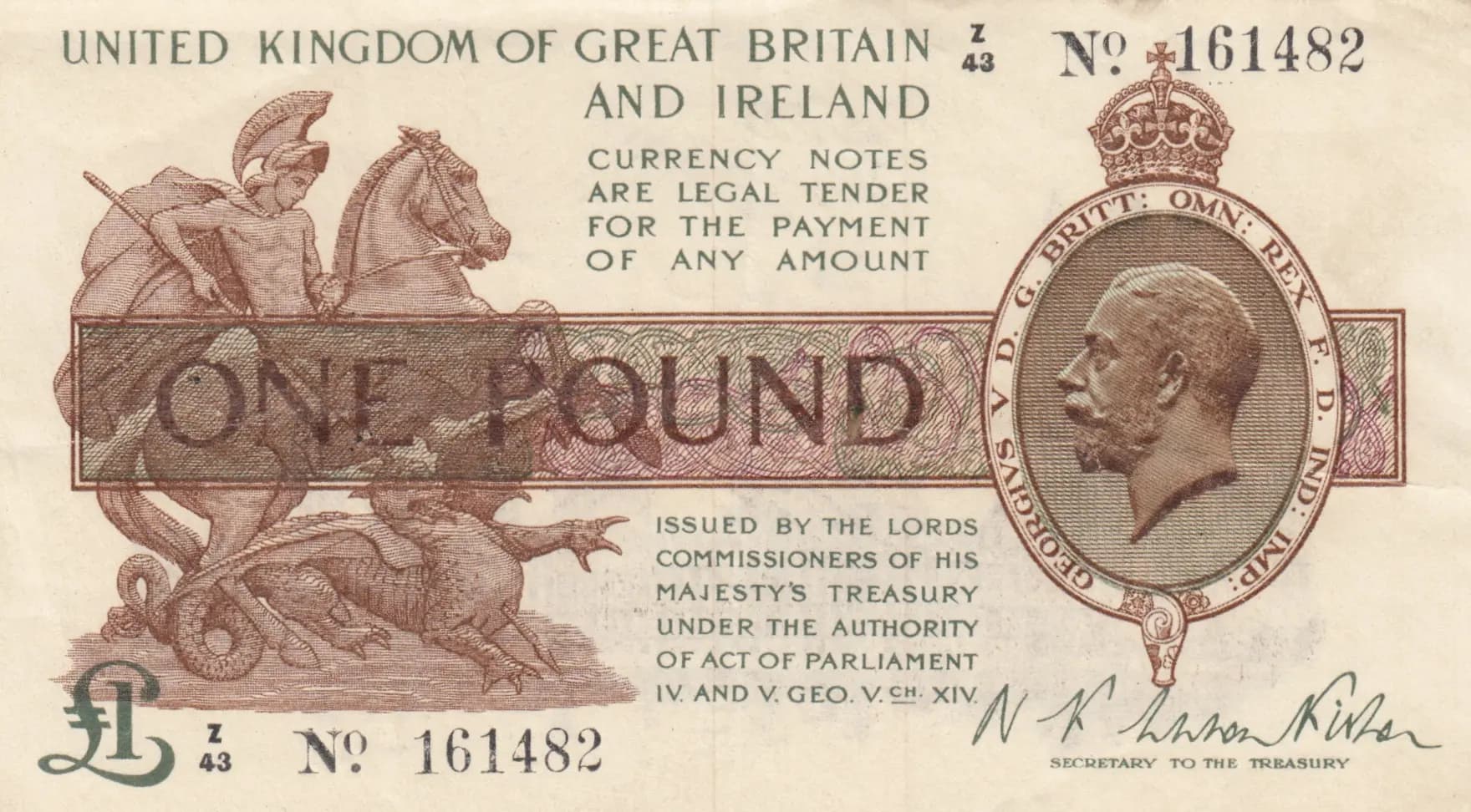
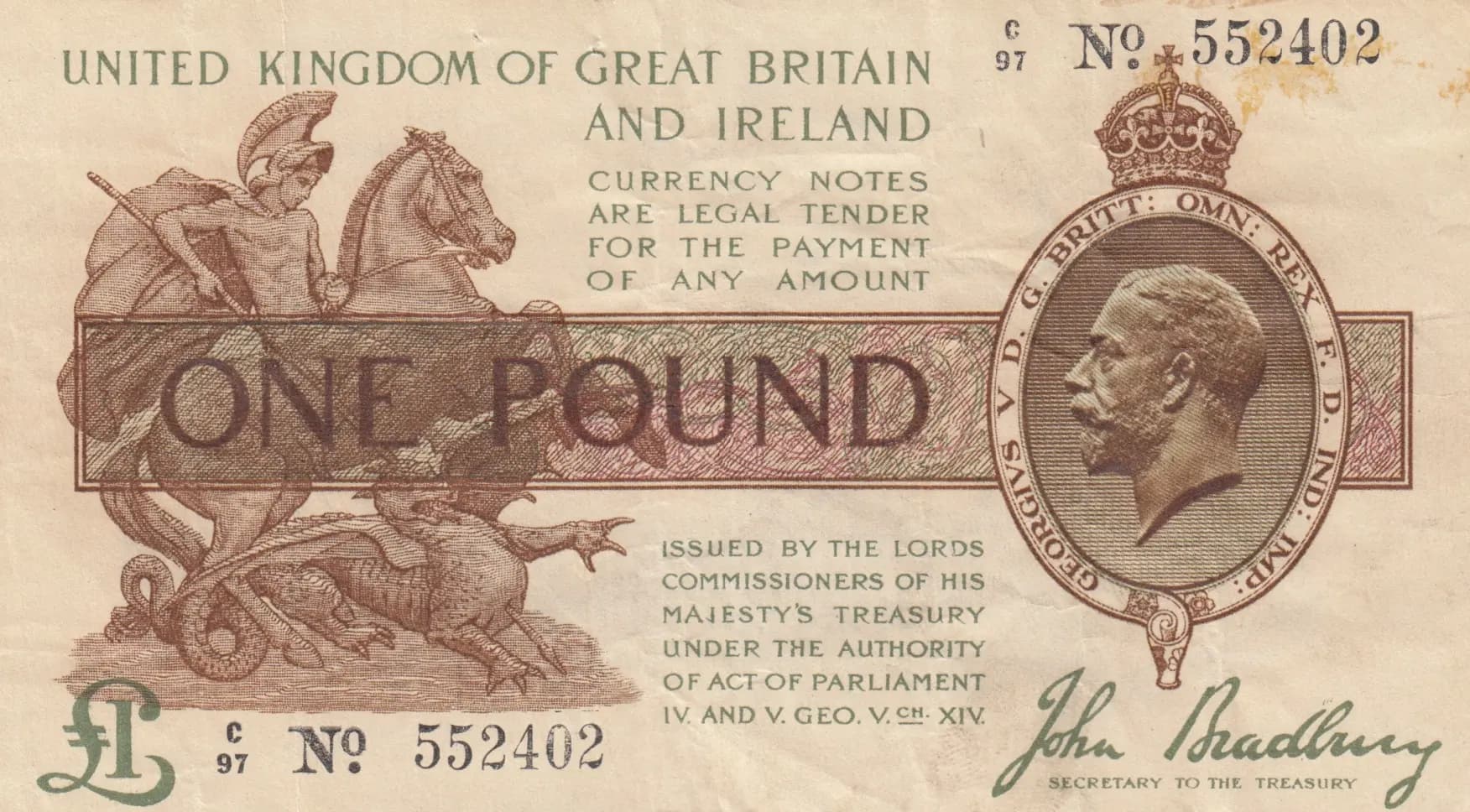
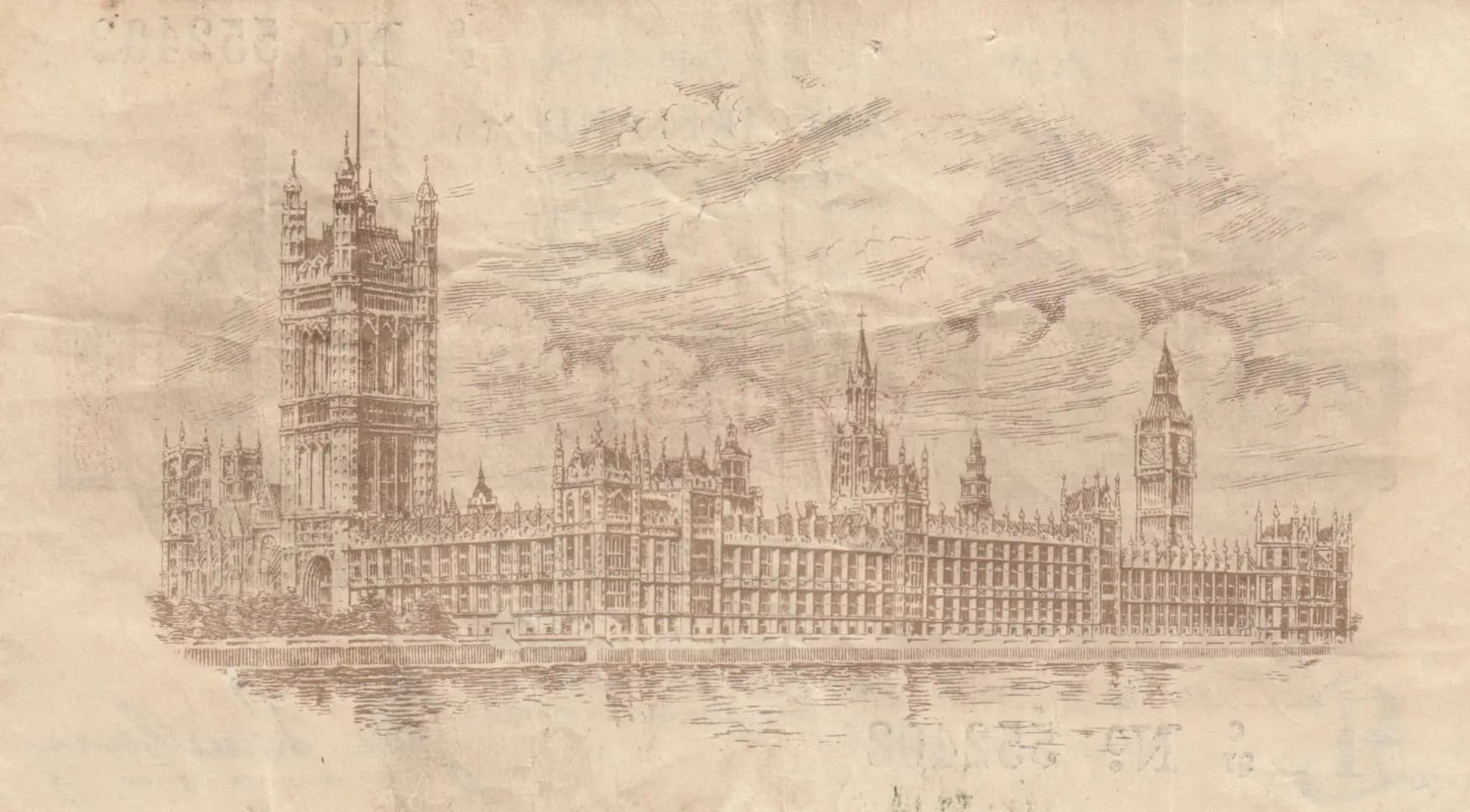
This is a British One Pound note from 1918, issued by the Lords Commissioners of His Majesty's Treasury during the World War I era. The note features a striking front design with St. George slaying the dragon on the left and a profile portrait of King George V on the right, while the reverse displays a detailed engraved view of the Palace of Westminster. In Fair (F) condition, this note shows significant age-related foxing and yellowing consistent with its ~105-year age, with the paper displaying the aged patina typical of early 20th-century currency, though structurally sound without major tears or severe damage.
Common. While this note is over 100 years old and from the World War I era, it was part of a regular currency issue with substantial print runs. The eBay price data provided shows consistent sales ranging from $10.50 to $155 depending on condition, with F-grade notes selling for around $78-120 in 2016, indicating robust collector interest but not scarcity. The PMG population report confirms multiple catalogued variants exist, suggesting significant numbers survive in collections. The note's widespread circulation and survival rate, combined with regular market availability, classify it as a common note despite its historical significance and age.
Issued under the authority of the 1914 Currency and Bank Notes Act during Britain's involvement in World War I, this banknote represents the early days of British paper currency as legal tender. The imagery reflects Edwardian imperial iconography: St. George and the Dragon symbolized British strength and virtue, while the majestic Palace of Westminster underscored parliamentary sovereignty and constitutional governance. The note was signed by John Bradbury, Secretary to the Treasury, whose signature became so ubiquitous on British currency that 'Bradbury' became a colloquial term for pound notes among soldiers and civilians during the war.
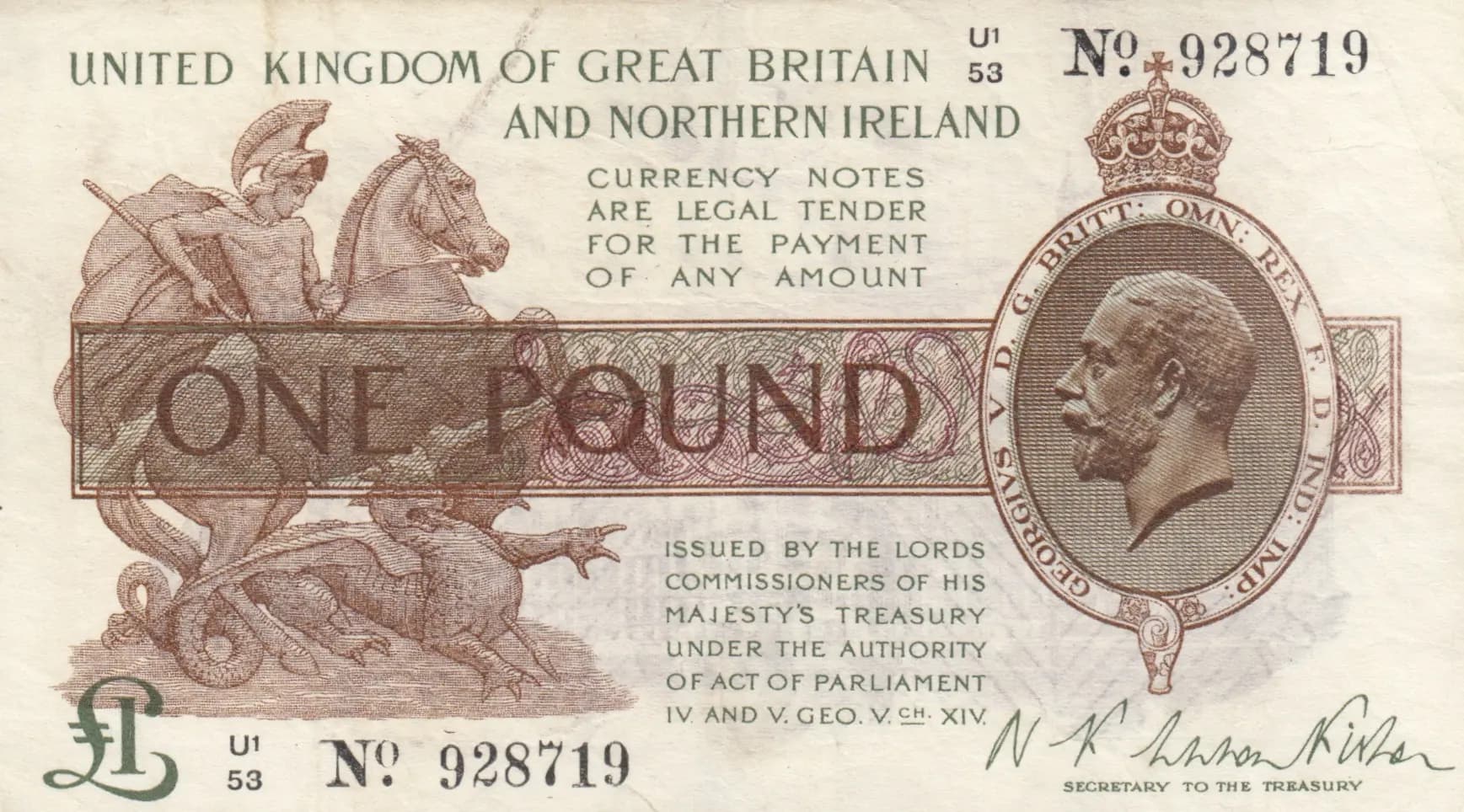
The obverse features an ornate, horizontally-oriented design dominated by heraldic and allegorical imagery. On the left side is a detailed engraving of St. George, the patron saint of England, depicted in classical heroic style as he slays the dragon beneath him—a powerful symbol of British virtue conquering evil. The center of the note contains a formal text panel stating the note's legal status and issuing authority. On the right side is an oval medallion containing a left-facing profile portrait of King George V, rendered in fine detail typical of Edwardian numismatic portraiture. A royal crown appears at the top center, and decorative borders with ornamental flourishes frame the composition. The color scheme is predominantly cream/beige with brown and sepia toning. The reverse presents a magnificent architectural engraving of the Palace of Westminster (Houses of Parliament) viewed from across the River Thames, rendered in fine Gothic Revival detail with multiple towers, spires, and the prominent clock tower (Big Ben). The Thames is depicted in the foreground with clouds above, emphasizing Britain's legislative heart and maritime importance.
FRONT: 'UNITED KINGDOM OF GREAT BRITAIN AND IRELAND' — [The political entity issuing the note] | 'CURRENCY NOTES ARE LEGAL TENDER FOR THE PAYMENT OF ANY AMOUNT' — [Statement of legal tender status] | 'ONE POUND' — [Denomination] | 'ISSUED BY THE LORDS COMMISSIONERS OF HIS MAJESTY'S TREASURY UNDER THE AUTHORITY OF ACT OF PARLIAMENT IV AND V. GEO. V. CH. XIV.' — [Official issuing authority and legislative authorization, referring to George V's reign] | 'D.G. BRITT: OMNI: F.D.' — [By the Grace of God, Britain [ruler], Defender of the Faith - traditional royal Latin inscription] | 'No 552402' — [Serial number] | 'C 97' — [Series/batch identifier] | '£1' — [Denomination symbol] | 'John Bradbury' — [Signature of Secretary to the Treasury] | 'SECRETARY TO THE TREASURY' — [Official title] | BACK: [The reverse contains only the architectural engraving of the Palace of Westminster with no printed text inscriptions]
Intaglio engraving (line engraving), which was the standard security printing technique for British banknotes of this period. The fine detail visible in both the allegorical imagery and the architectural rendering of the Palace of Westminster, as well as the precise linework in the borders and text, are characteristic of intaglio work. The printer for P-351 variants is recorded as TDLR (Thomas De La Rue & Company), Britain's premier security printer. The hand-signature of John Bradbury adds an additional security and authentication feature characteristic of notes from this era.
This note is catalogued as Pick P-351, with known variants P-351c and P-351e both printed by TDLR (Thomas De La Rue & Company). The signature visible on this note is that of John Bradbury (Secretary to the Treasury), a characteristic feature of notes from this issue period. The serial number 552402 with series identifier C 97 indicates this is from a specific print run. Related notes with the signature of Warren Fisher (a later Treasury official) are catalogued separately as P-357, P-359, and P-361, indicating that signature variants are important distinguishing characteristics for this denomination. Determining the precise variant (c or e) would require additional technical details such as printer's marks or specific plate characteristics not fully discernible from the provided visual analysis.