10 shillings 1928
Market Prices
3 salesAbout This Note
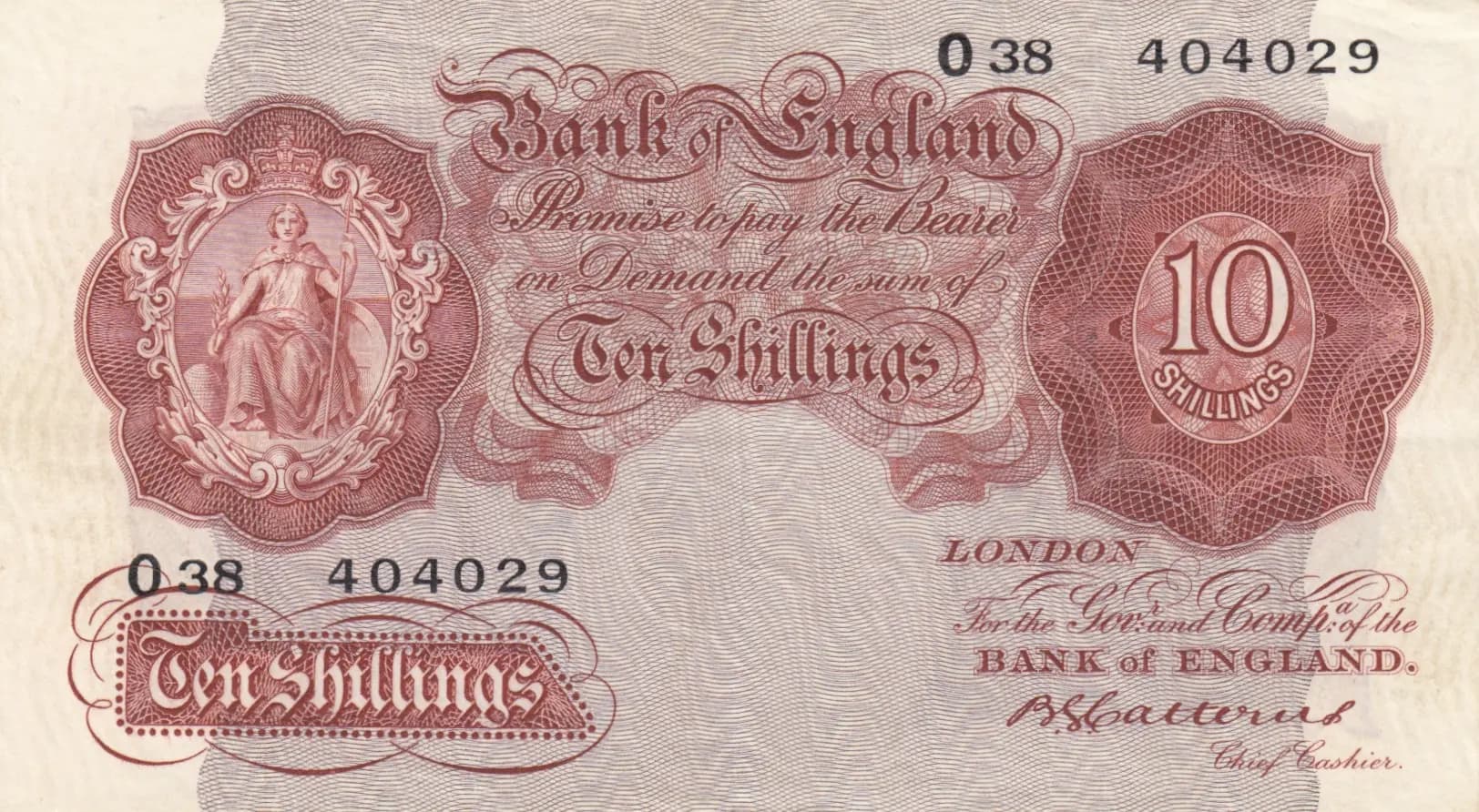
This is a Bank of England 10 Shillings note from 1928, graded VF, featuring the iconic Britannia allegorical figure in an ornate red/mauve design typical of inter-war British currency. The note displays characteristic age-related wear including a prominent horizontal center fold and yellowing, consistent with circulation during the pre-decimal era. The fine engraved security patterns and elaborate scrollwork remain well-preserved despite handling, making this an attractive example of early 20th-century British banknote design.
Common. The eBay price tracking data shows examples in VF condition selling for approximately $4-90 USD (with catalog values around $90 VF), indicating steady collector demand but regular market availability. The note was issued over a 20-year period (1928-1948) in substantial quantities as part of the Bank of England's standard circulation series. Pick catalog P-362b represents the standard issue without security thread, and the PMG population report indicates limited professional grading population, typical of less specialized collectors focusing on pre-decimal British notes. Notes selling consistently in single-digit to low double-digit dollars for circulated grades indicate robust supply relative to demand.
This 1928 issue represents the Bank of England's standardized banknote series during the inter-war period, following the return to the Gold Standard in 1925. The prominent Britannia figure, depicted as a seated allegorical female with classical robing, symbolized British economic and imperial strength during a period of monetary stabilization. The ornate baroque-style design with elaborate acanthus leaf scrollwork reflects the formal aesthetic conventions of high-security currency printing in the late 1920s, when intricate line engraving remained the primary anti-counterfeiting measure.
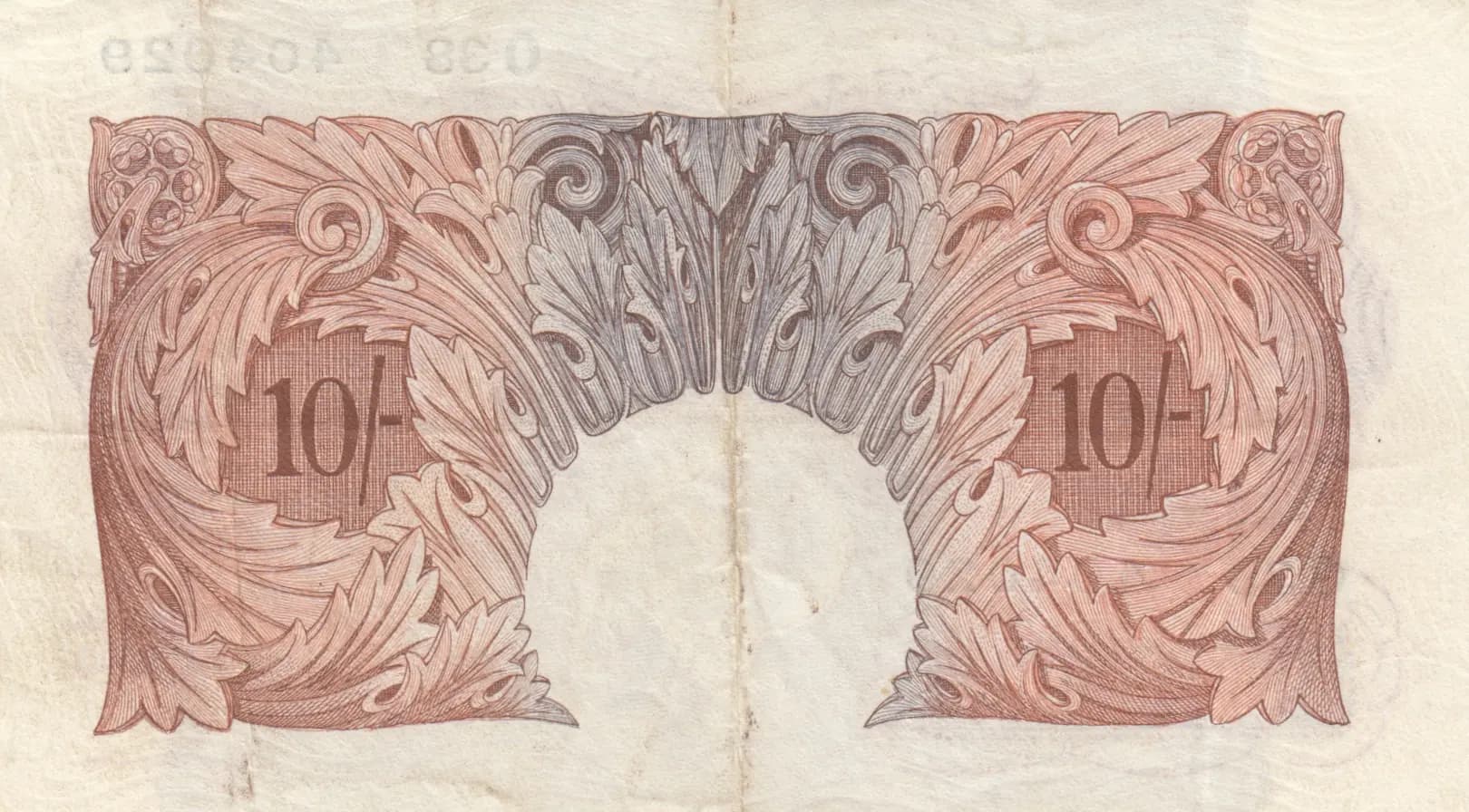
The obverse features Britannia, the classical allegorical representation of Britain, seated within an ornate oval frame on the left side, rendered in profile with classical drapery and regalia. The right side displays the denomination '10 SHILLINGS' in large text within a decorative oval cartouche. The center contains the formal promissory text surrounded by elaborate scrollwork and heraldic elements. The reverse is entirely composed of symmetrical baroque-style ornamental design dominated by acanthus leaf scrollwork and foliate flourishes, with large '10' numerals in both bottom corners within ornamental leaf frames. The color scheme throughout is predominantly red/mauve on cream, creating the distinctive appearance characteristic of Bank of England notes from this issuing period. Fine line engraving creating wave patterns and cross-hatching provides the primary security features.
Front side: 'Bank of England' (header); 'Promissory the Bearer on Demand the sum of Ten Shillings' (legal promise); 'Ten Shillings' (denomination in decorative script); '10 SHILLINGS' (denomination in large cartouche); 'LONDON' (issuing location); 'For the Governor and Company of the BANK OF ENGLAND' (issuer identification); 'Chief Cashier' (authorized signer title); Serial reference '404029' and identifier '0.38'. Back side: '10' (denomination numerals in corner ornamental frames). The full inscription translates as a promissory note from the Bank of England promising to pay the bearer on demand the sum of ten shillings, issued from London under the authority of the Bank's Governor and Company, with authorization by the Chief Cashier.
Intaglio engraving (line engraving), the standard security printing method for high-denomination British banknotes of the period. The fine, intricate cross-hatching, wavy line patterns, and elaborate ornamental scrollwork visible in both the visual analysis and characteristic of TDLR (Thomas De La Rue) printing are hallmarks of this technique. The high level of detail in the acanthus leaf work and the precise geometric patterns throughout would have been extremely difficult to counterfeit using contemporary reproduction methods, serving as the primary security measure for this era before the introduction of security threads.
This note is cataloged as Pick P-362b, specifically the 1928-1948 issue without security thread (distinguishing it from later P-368 variants which incorporated security threads). The Pick catalog notes this as an ND (no date) issue covering the entire 1928-1948 production run. The visible serial number reference '404029' and identifier '0.38' would help distinguish individual specimens, though such serial data rarely creates major varieties in this series. Variant identification would primarily depend on Chief Cashier signature, which changed periodically during the issue's lifespan, but such distinctions are not typically cataloged as separate Pick numbers for this series.