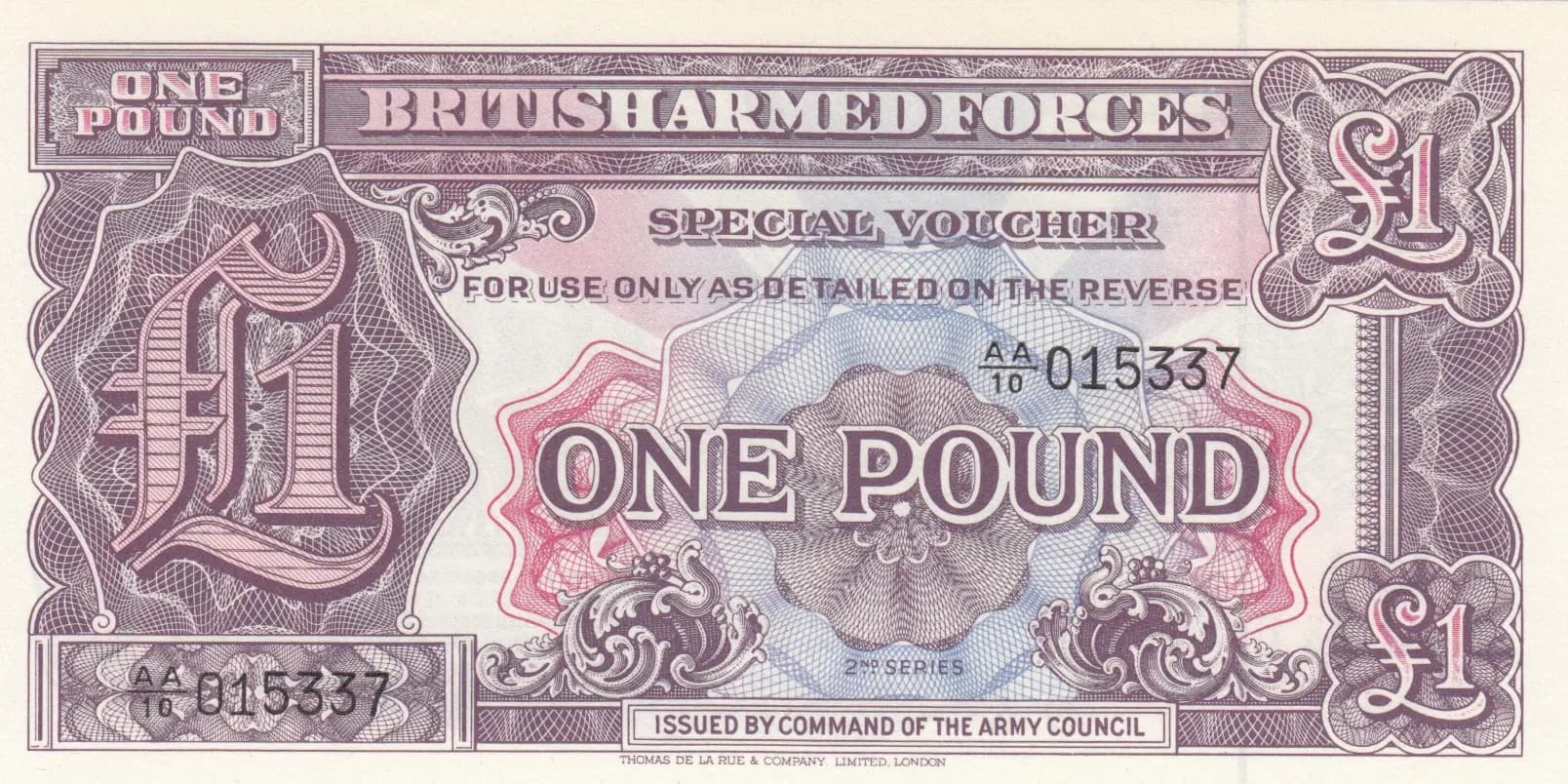
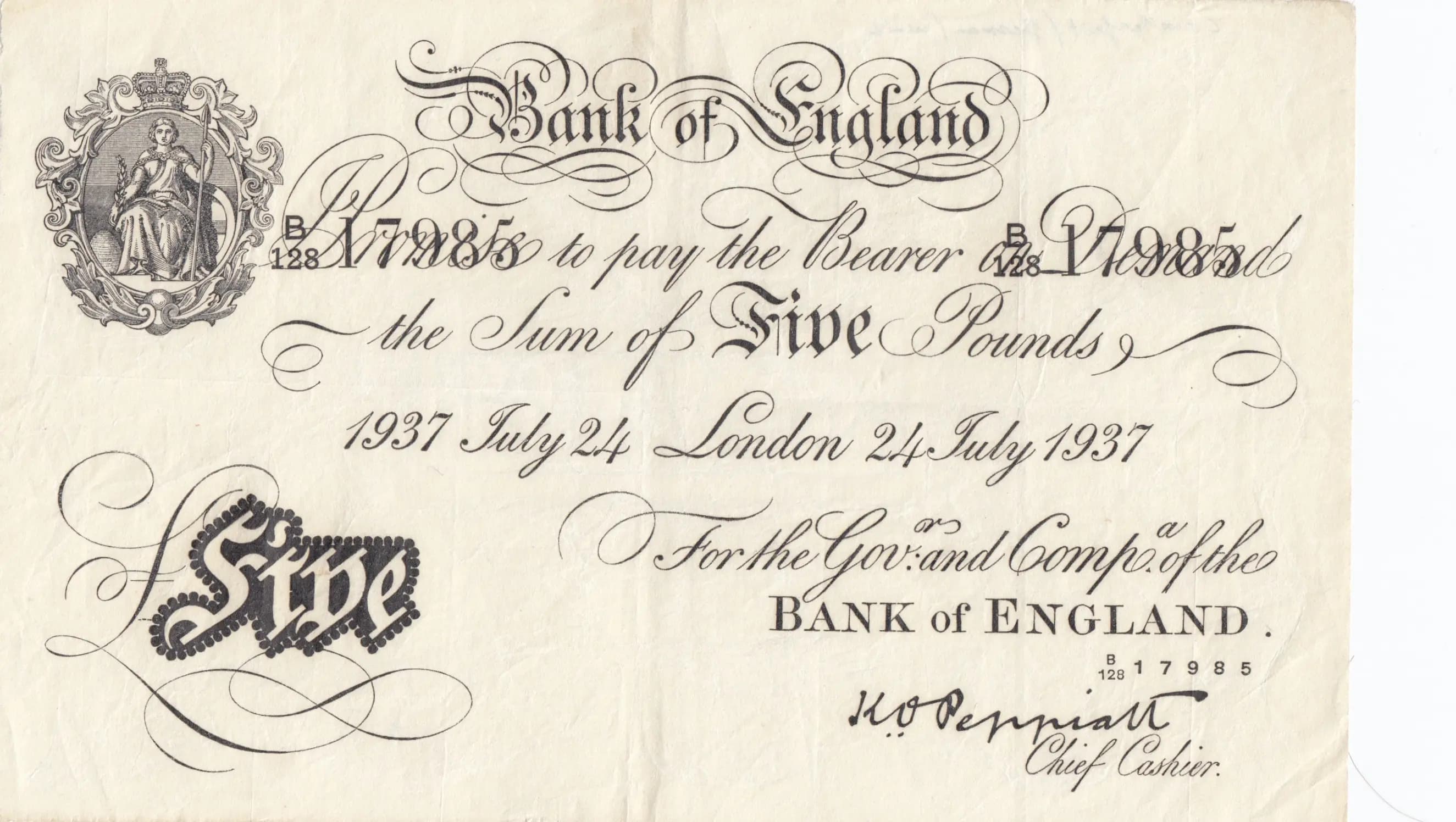
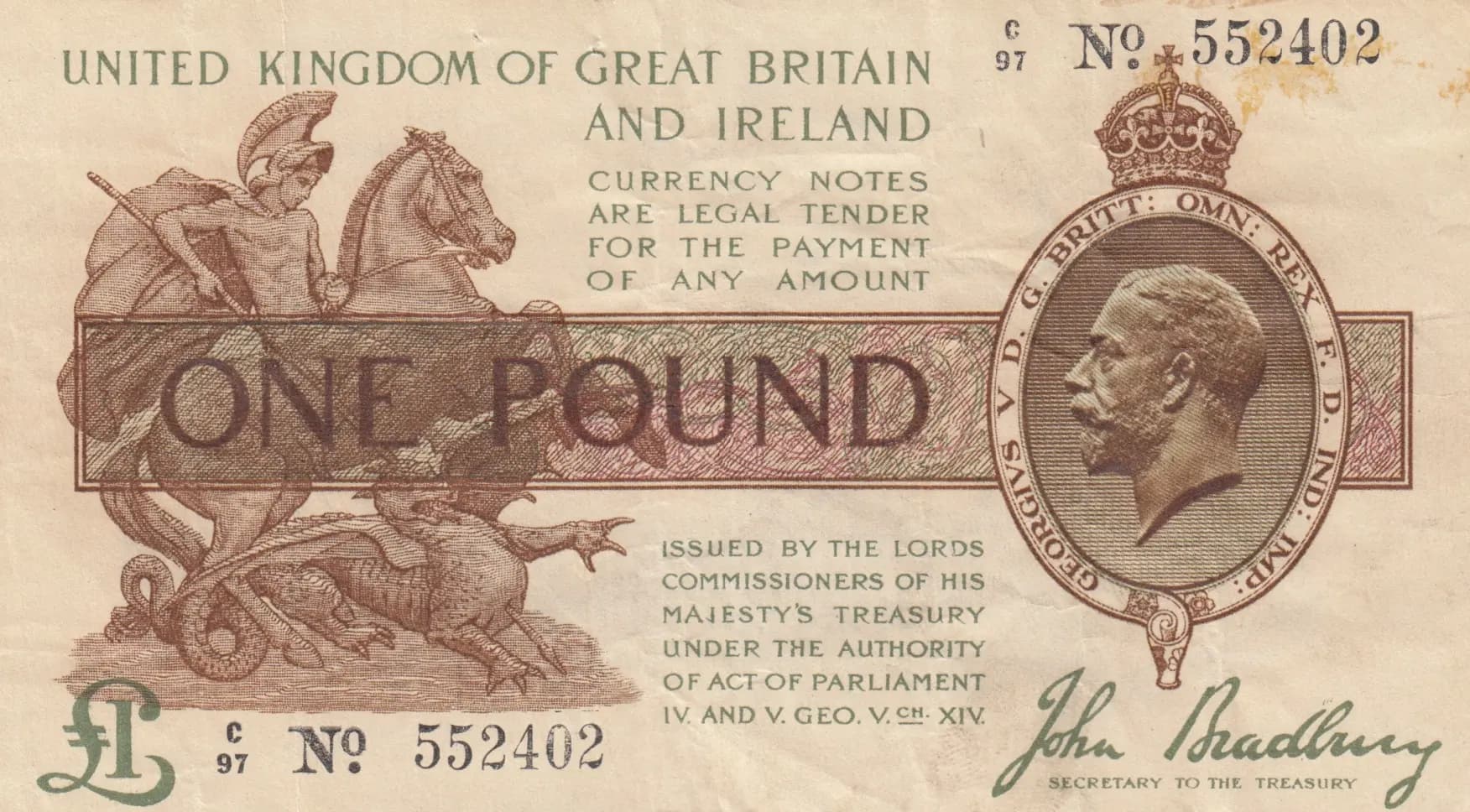
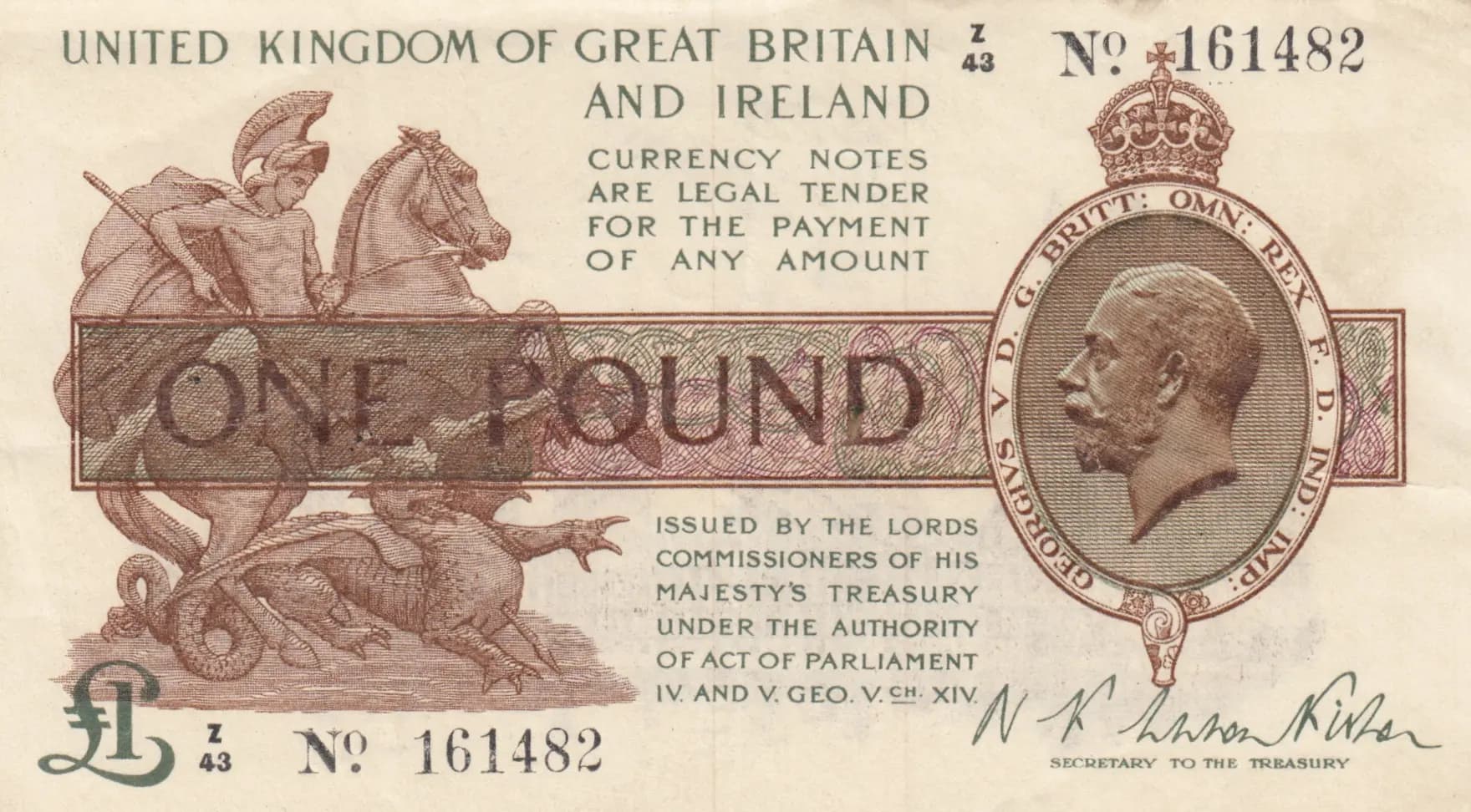
1 pound 1948
Market Prices
40 salesAbout This Note
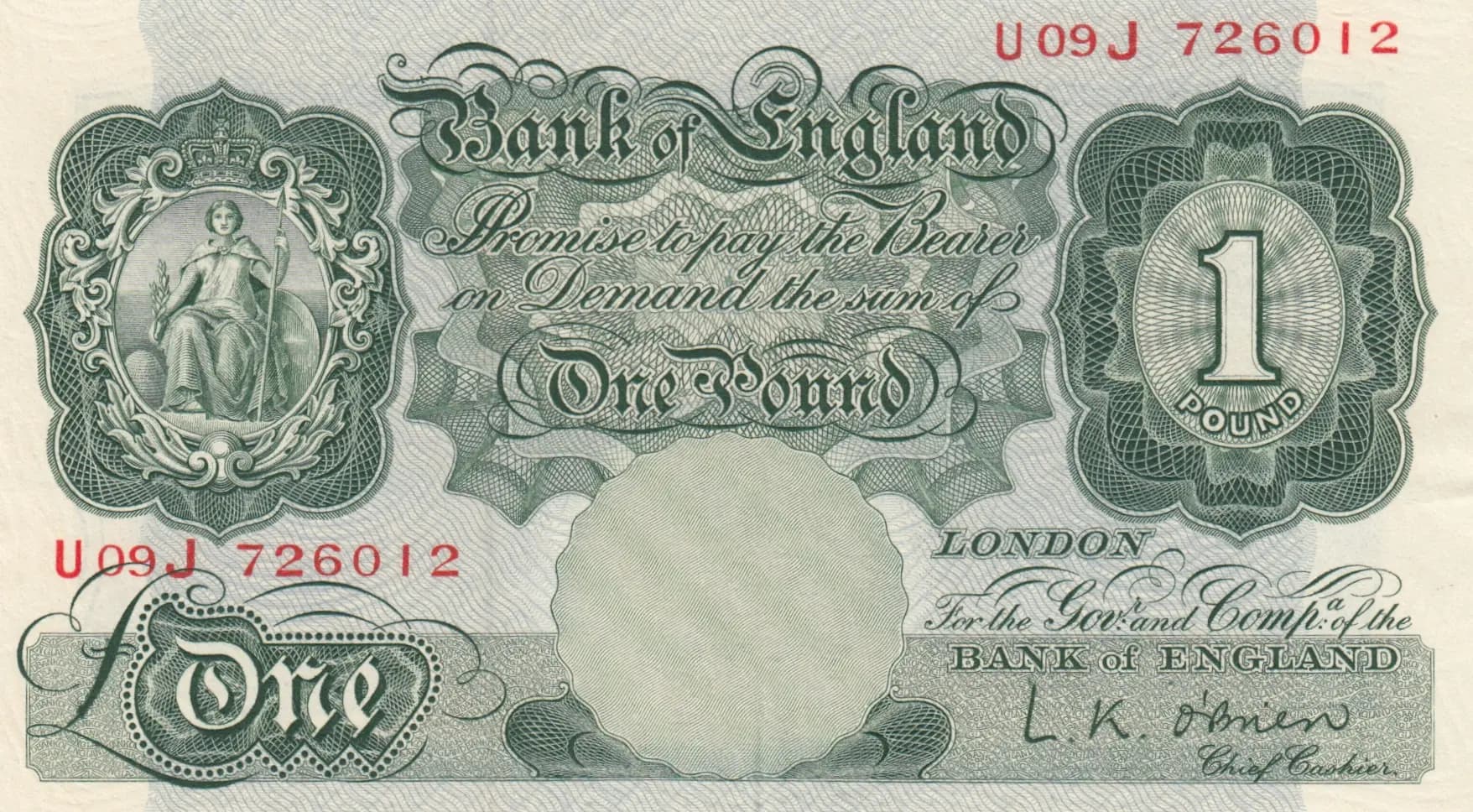
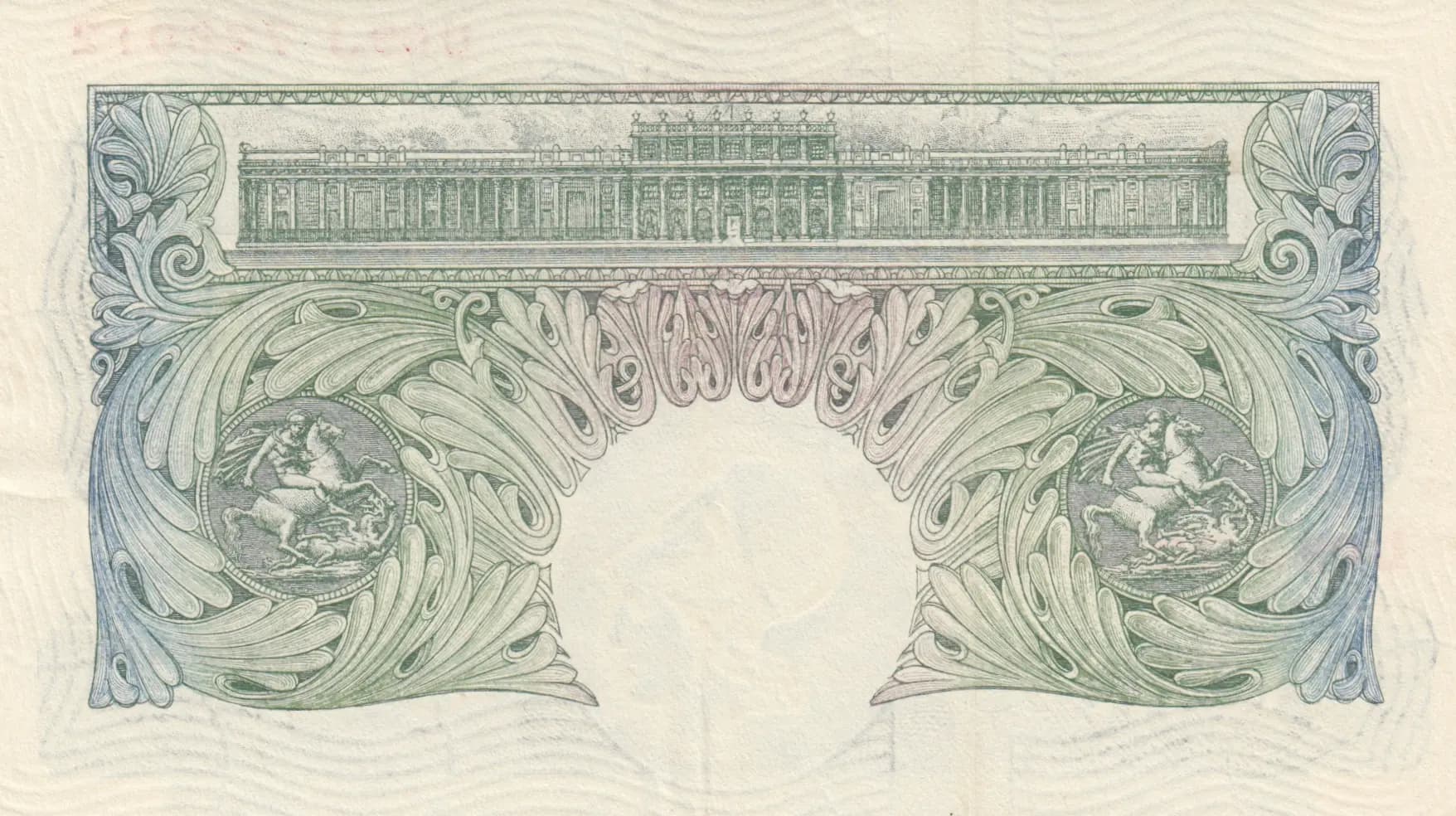
A stunning example of the Bank of England's 1948-1960 era One Pound note (Pick P-369c) in AU condition, featuring the iconic Britannia allegorical figure and the neoclassical Bank of England building. The note displays sharp, crisp engraving with vibrant green ink and red serial numbers on bright cream paper with no visible wear, creases, or foxing. This particular variety includes the security thread feature that distinguishes it from earlier issues, making it a desirable example for collectors of mid-20th century British currency.
Common. The 1948-1960 issue period for this design was lengthy, with substantial print runs to serve the British economy during the post-war period. eBay market data from realbanknotes.com shows consistent sales of this note type in the $3-$16 range for circulated examples, with even high-grade PMG specimens (PMG 66) selling in the $50-$103 range—well within the range for common notes. AU condition examples have historically traded in the $7-$33 range on secondary markets, indicating steady but unexceptional collector demand. No evidence of short print runs, recalls, or limited distribution.
Issued during the post-World War II period, this note represents the Bank of England's commitment to ornate, security-enhanced currency design during a time of economic recovery and institutional confidence in Britain. The prominent depiction of Britannia—the classical female allegory of Britain—and the stately neoclassical architecture of the Bank of England building itself reflect the nation's desire to project stability and continuity following the austerity and upheaval of the war years. The signature of L.K. O'Brien as Chief Cashier anchors the note to the mid-20th century Bank of England administration.
The front of the note presents Britannia, the classical personification of Britain, rendered as a seated female figure in elaborate period dress, positioned within an ornate decorative cartouche in the upper left. She represents the nation's sovereignty and cultural heritage. The Bank of England's promise-to-pay clause occupies the upper portion in the traditional legal format. The back showcases a detailed engraving of the Bank of England's neoclassical headquarters building—a grand structure with regular fenestration and classical proportions—positioned at the top center. Below this architectural centerpiece are two heraldic lions rampant (the royal emblem of Britain) set within ornamental frames and surrounded by elaborate acanthus leaf and scroll work characteristic of Victorian-era decorative design. The overall composition employs symmetry and fine line engraving to create a design of considerable complexity and security.
Front side: 'Bank of England' | 'Promise to pay the Bearer on Demand the sum of One Pound' | 'One Pound' | 'POUND' | 'One' | 'LONDON' | 'For the Government and Company of the Bank of England' | 'L.K. O'Brien, Chief Cashier' (signature and title) | Serial number: U 09 J 726012. Back side: No significant text inscriptions; the reverse features purely ornamental and architectural design elements (the neoclassical building and heraldic lions with acanthus scrollwork require no translation as they are symbolic rather than textual).
Intaglio engraving (line engraving) on banknote paper, executed by the Bank of England's in-house engraving department. The note exhibits characteristic deep guilloche patterns, fine line work, and precise registration visible in both the elaborate borders and the detailed architectural rendering on the reverse. The two-color printing (green ink with red serial numbers) was applied using traditional letterpress or relief printing techniques for the serial numbers, combined with the primary intaglio work. This note represents the final generation of the Bank of England's purely engraved designs before the shift toward more modern printing methods in subsequent decades.
This specific example is Pick P-369c, the variety with integrated security thread—an important distinction from the earlier P-363 (without security thread). The signature of L.K. O'Brien as Chief Cashier dates this within the O'Brien period (1955-1966), narrowing the likely issuance to the mid-to-late 1950s. The serial number prefix 'U 09 J' indicates a specific print batch; serial number variations are common across this issue but do not typically command premium values unless the number itself possesses collector appeal (consecutive serials, fancy numbers, etc.). The standard varieties for this Pick number are primarily distinguished by signature (O'Brien vs. earlier Beale or later Hollom signatories) and the presence or absence of the security thread.