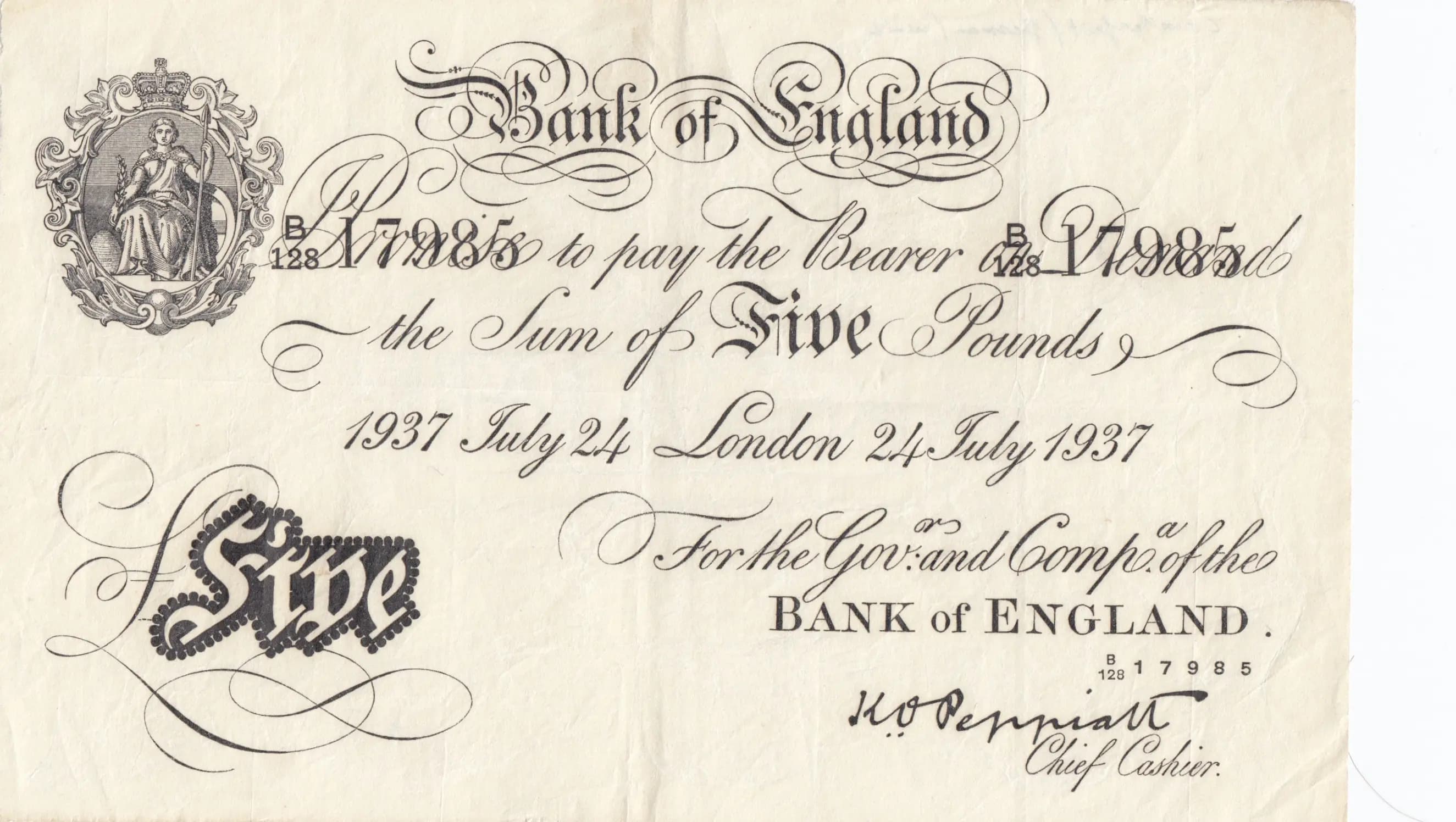
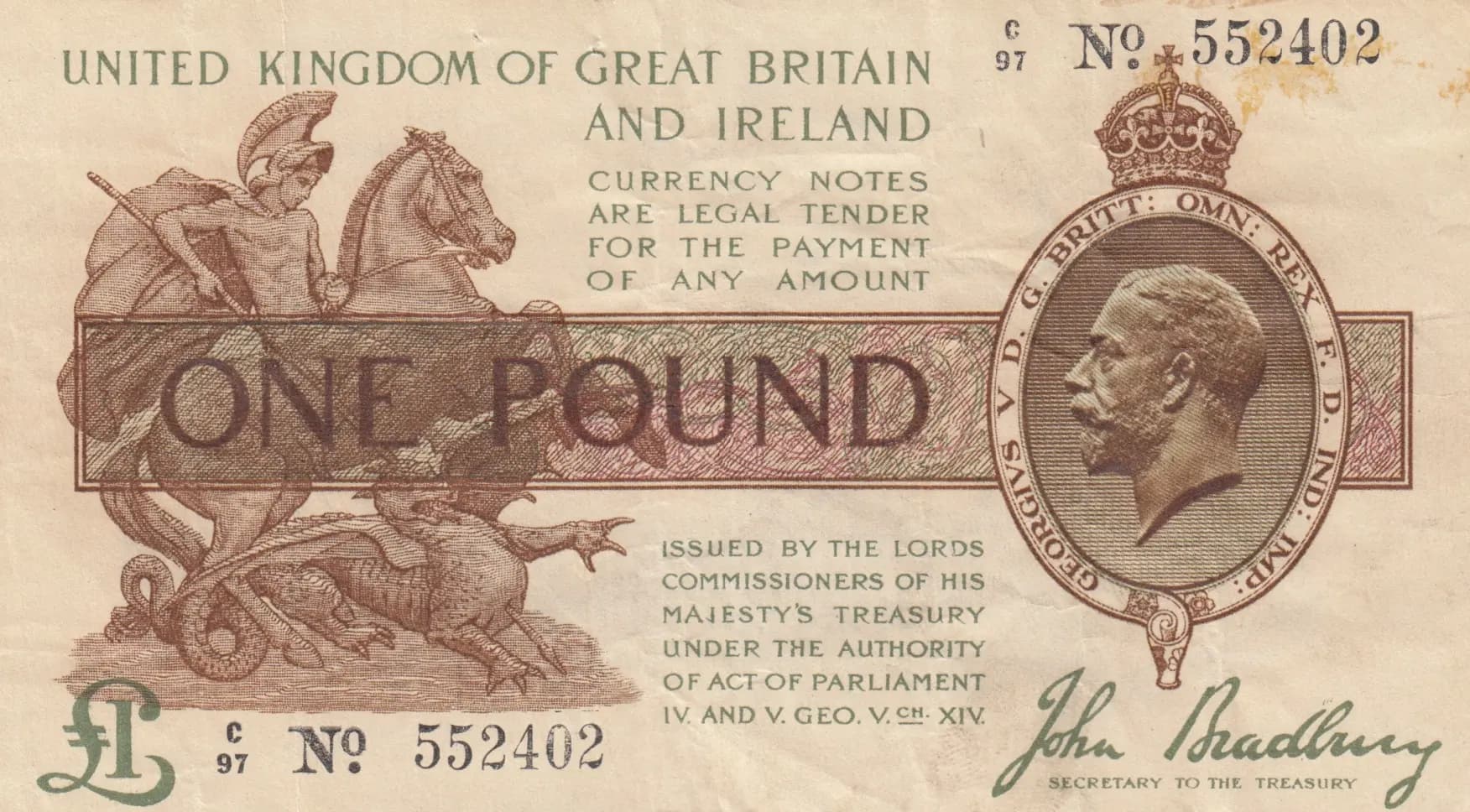
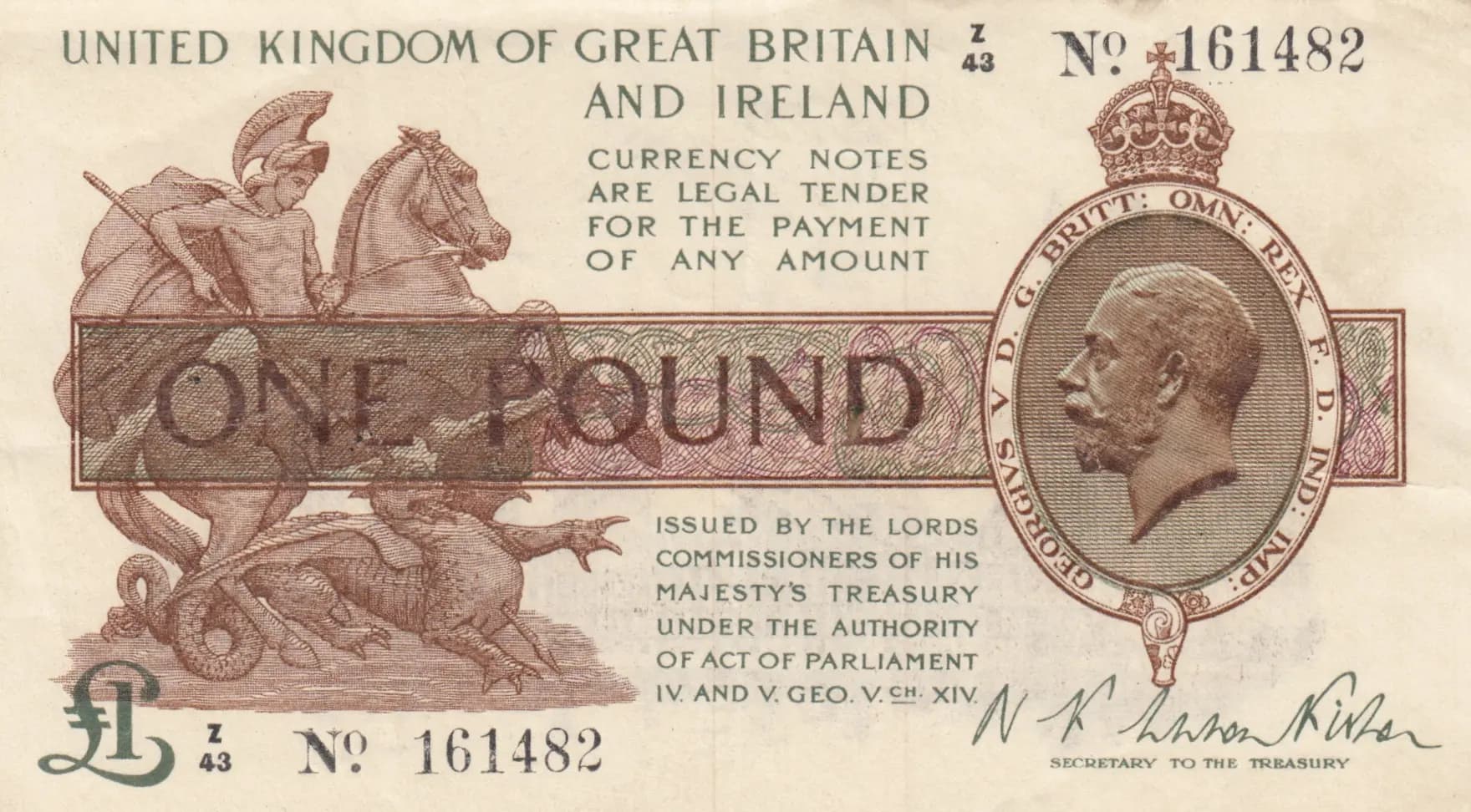
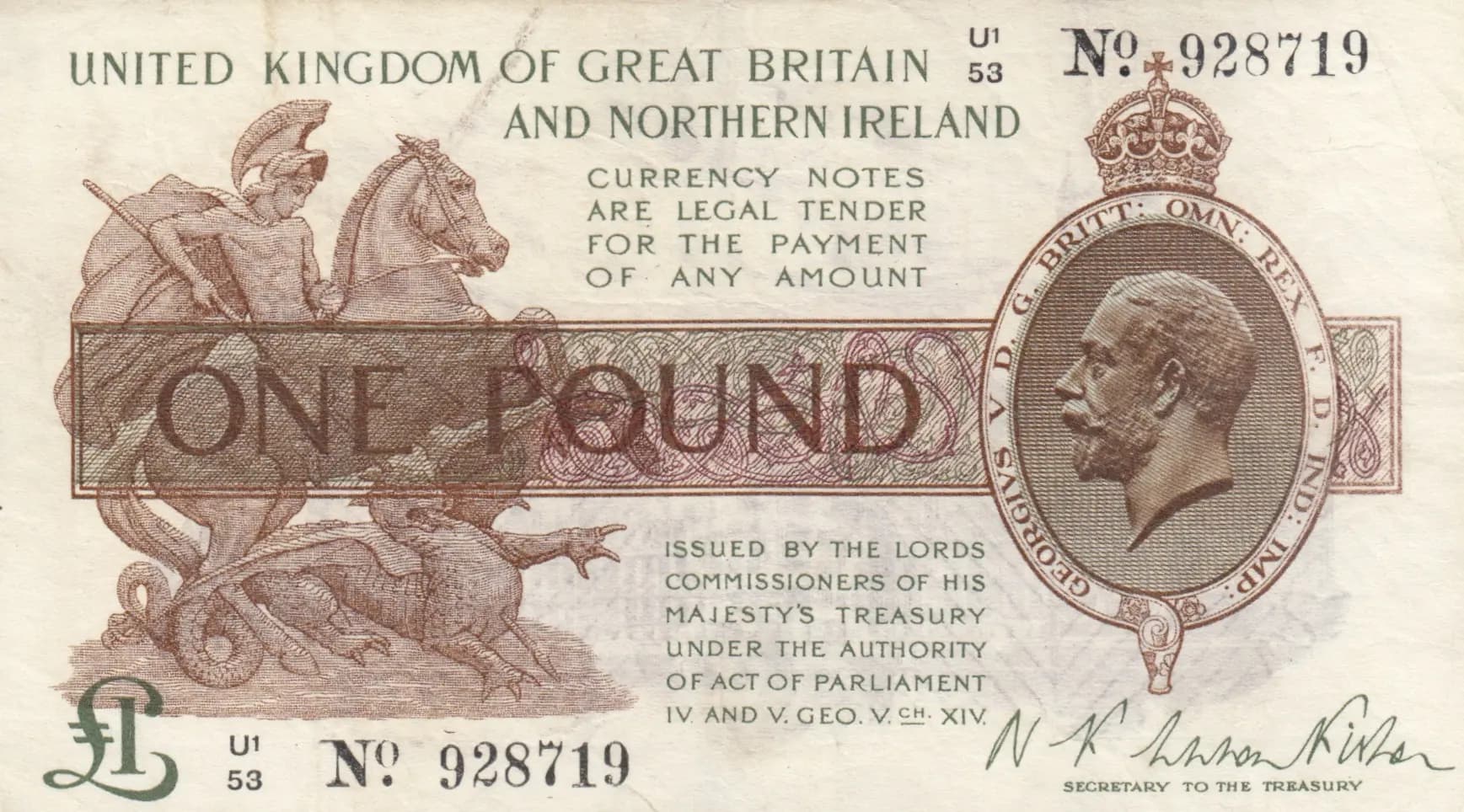
1 pound 1928
Market Prices
21 salesAbout This Note
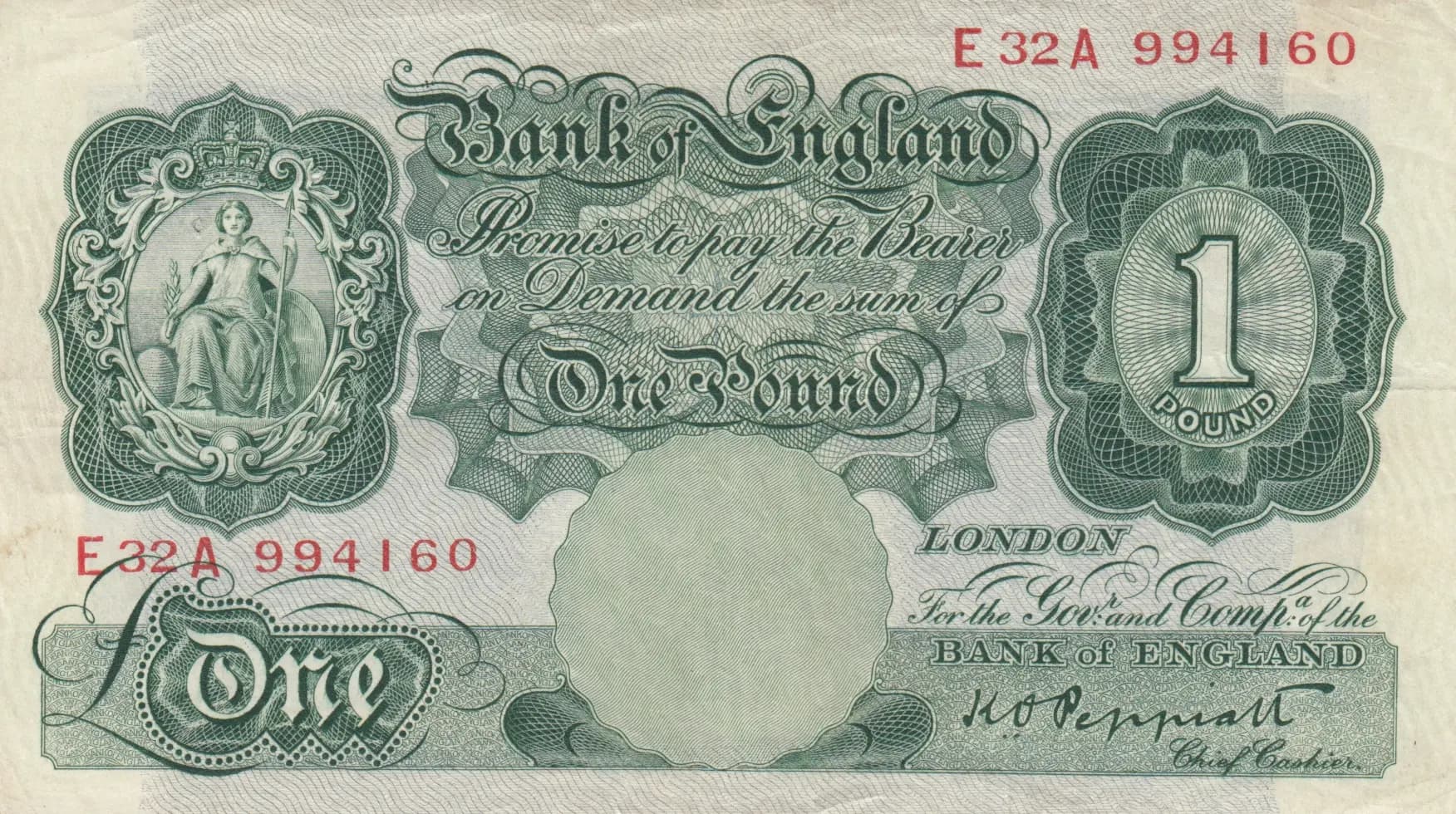
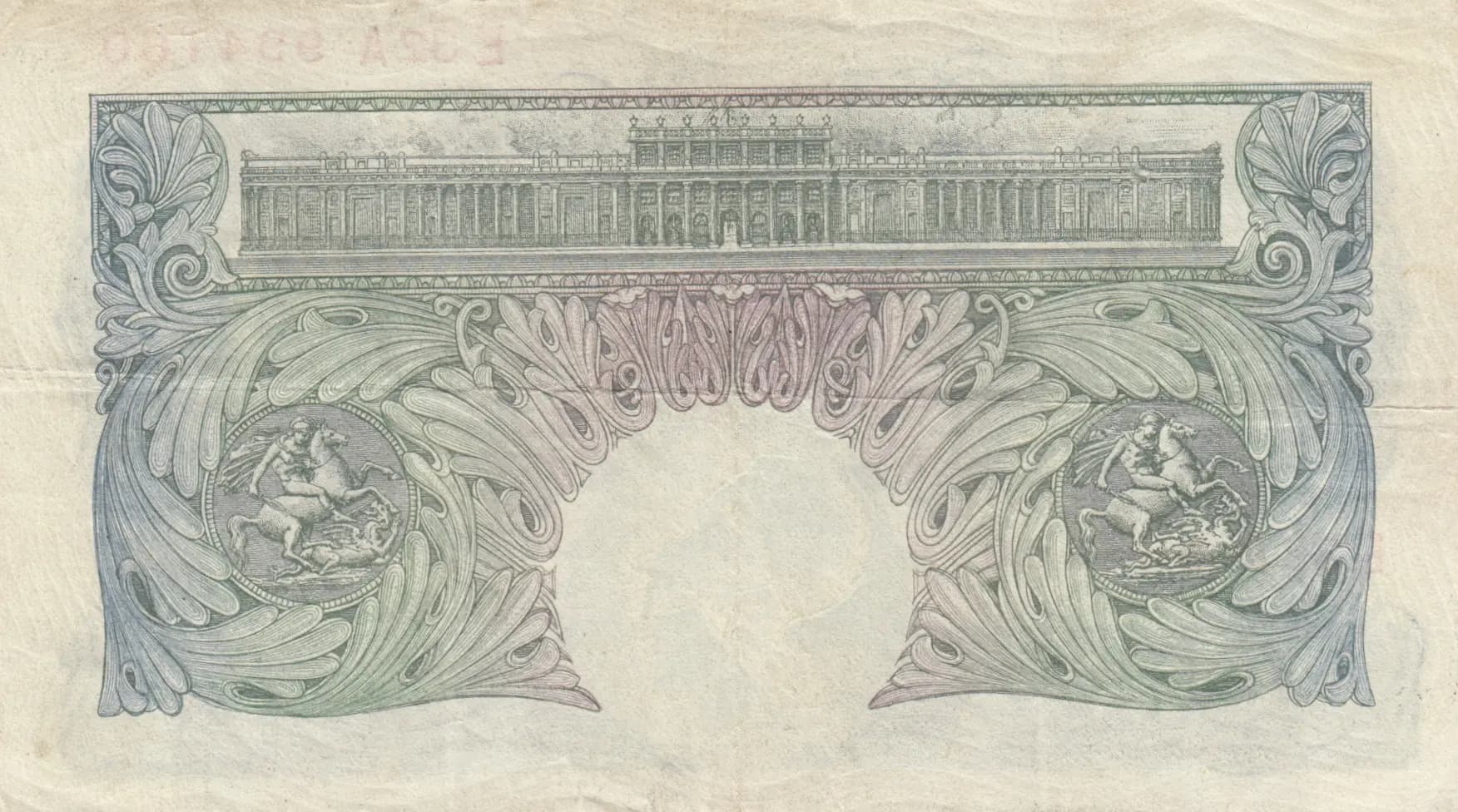
A well-preserved example of the Bank of England's 1928 £1 note (Pick P-363c) in Fine condition, featuring the iconic Britannia allegorical design in green and teal tones. The note displays crisp, detailed engraving with minimal wear consistent with careful handling and storage over nearly a century. The reverse showcases the classical Bank of England building flanked by cherub figures in multi-colored inks, making this a beautiful specimen of interwar British currency design.
Common. Despite its age (nearly 100 years old), this Pick number represents a regular issue with large print runs throughout the 1928-1948 period. eBay auction data shows consistent sales in the $3-$7 range for Fine condition examples, with only graded specimens (PMG 58, PMG 64) commanding premium prices ($67, $63). The 2016 catalogue values ($12.50 VG, $35 VF, $120 UNC) and high frequency of market availability confirm this as a commonly encountered note in the secondary market. Fine condition examples like this specimen are neither scarce nor particularly valuable.
This note was issued during the late 1920s-1930s era when the Bank of England continued to issue notes featuring Britannia, the classical allegorical representation of Britain itself. The architectural rendering of the Bank of England building on the reverse reflects the institution's prominence during the interwar period following Britain's return to the gold standard in 1925. The ornate classical design aesthetic dominated British banknote production throughout this era, emphasizing institutional authority and historical continuity during a period of significant economic transition.
The front features Britannia—the personified allegorical female figure of Britain—seated within an ornate shield-shaped frame on the left side, depicted holding a trident or staff as traditional iconographic attributes. She wears a crown symbol at the top of her vignette, emphasizing sovereign authority. The center displays elaborate scrollwork and the Bank of England coat of arms implied through heraldic elements. A large circular denomination indicator on the right displays the £1 value. The reverse presents the neoclassical façade of the Bank of England building at top center with its distinctive columned architecture and regularly-spaced windows, flanked by two cherub (putto) figures in ornate circular frames on either side. Decorative shells and classical acanthus leaf motifs frame the composition throughout. The color palette employs green predominately on the front with multicolored inks (green, blue, mauve/pink) on the reverse.
Front side: 'Bank of England' | 'Promise to pay the Bearer on Demand herein of One Pound' | 'POUND' and 'One' (denomination indicators) | 'LONDON' (place of issue) | 'For the Government and Comptroller of the Bank of England' | 'Chief Cashier' (authorized signatory) | 'E32A 994160' (serial number in red ink). Back side: No visible text inscriptions; the design focuses on architectural and allegorical imagery.
Steel engraving and intaglio printing, the standard banknote production method of the era. The extensive cross-hatching, fine line work, and intricate detail visible in both the allegorical figures and architectural rendering are characteristic of hand-engraved plates. The crisp impression and fine detail preservation in the observed specimen indicate high-quality plate maintenance. This note was produced by Waterlow & Sons, the primary security printer for Bank of England notes during this period, though printer identification marks are not prominently visible in the analyzed images.
The serial number visible is 'E32A 994160' printed in red ink, indicating this is from the E series (issued 1928-1934 per the catalog date range). The 'A' suffix and four-digit serial characteristics are typical of this issuance period. Without access to comprehensive series cataloging, further variety specification (such as signatory variations or specific plate differences) cannot be definitively determined from the visual analysis alone. Researchers should cross-reference this serial number prefix against standard Bank of England note variety references to identify the specific Chief Cashier signature variant, as multiple signatories are known for this pick number during its production span.