50 mark 1948
About This Note
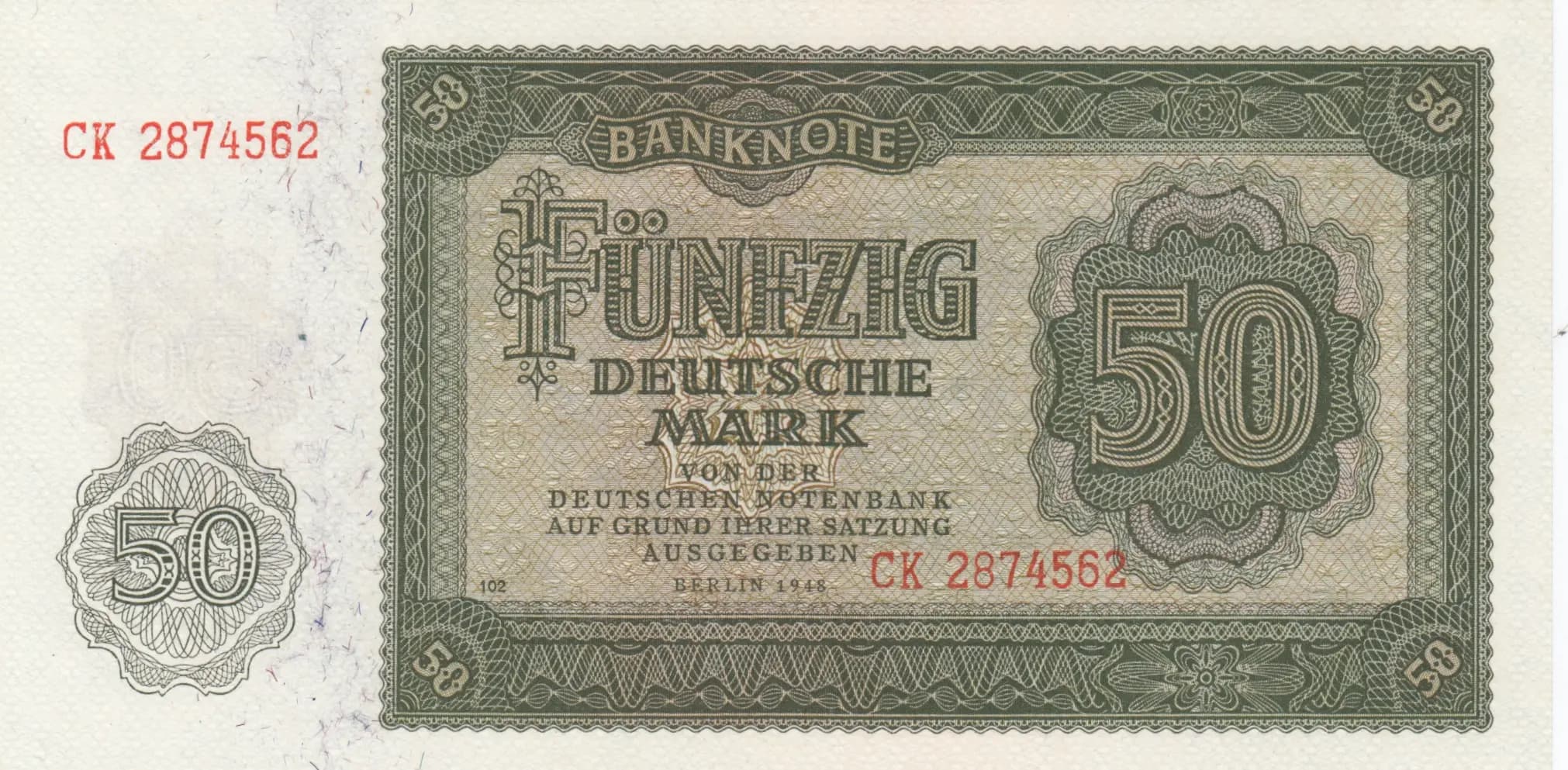
This 50 Mark note from the 1948 Soviet occupation zone represents an interesting transitional piece in German numismatic history. The note exhibits exceptional condition with sharp, vibrant printing and pristine surfaces showing no signs of circulation. The elaborate engraved design featuring allegorical figures and portraits demonstrates the high-quality security printing standards of the Reichsbank era, making this an attractive example for collectors of German occupation currency and pre-war Reichsbank notes.
Common. The 50 Mark denomination was produced in substantial quantities by the Reichsbank and remained in circulation through the occupation period. While Pick-6a specifically represents the 1948 Soviet zone reissue, this was a standard overprint/reissue of existing Reichsbank plates rather than a limited special issue. UNC examples are more desirable than circulated specimens, but the note itself is not scarce in the collector market. Most banknotes of this type and period remain common unless they represent extreme rarities from short print runs or are from recalled issues—neither applies to this standard denomination.
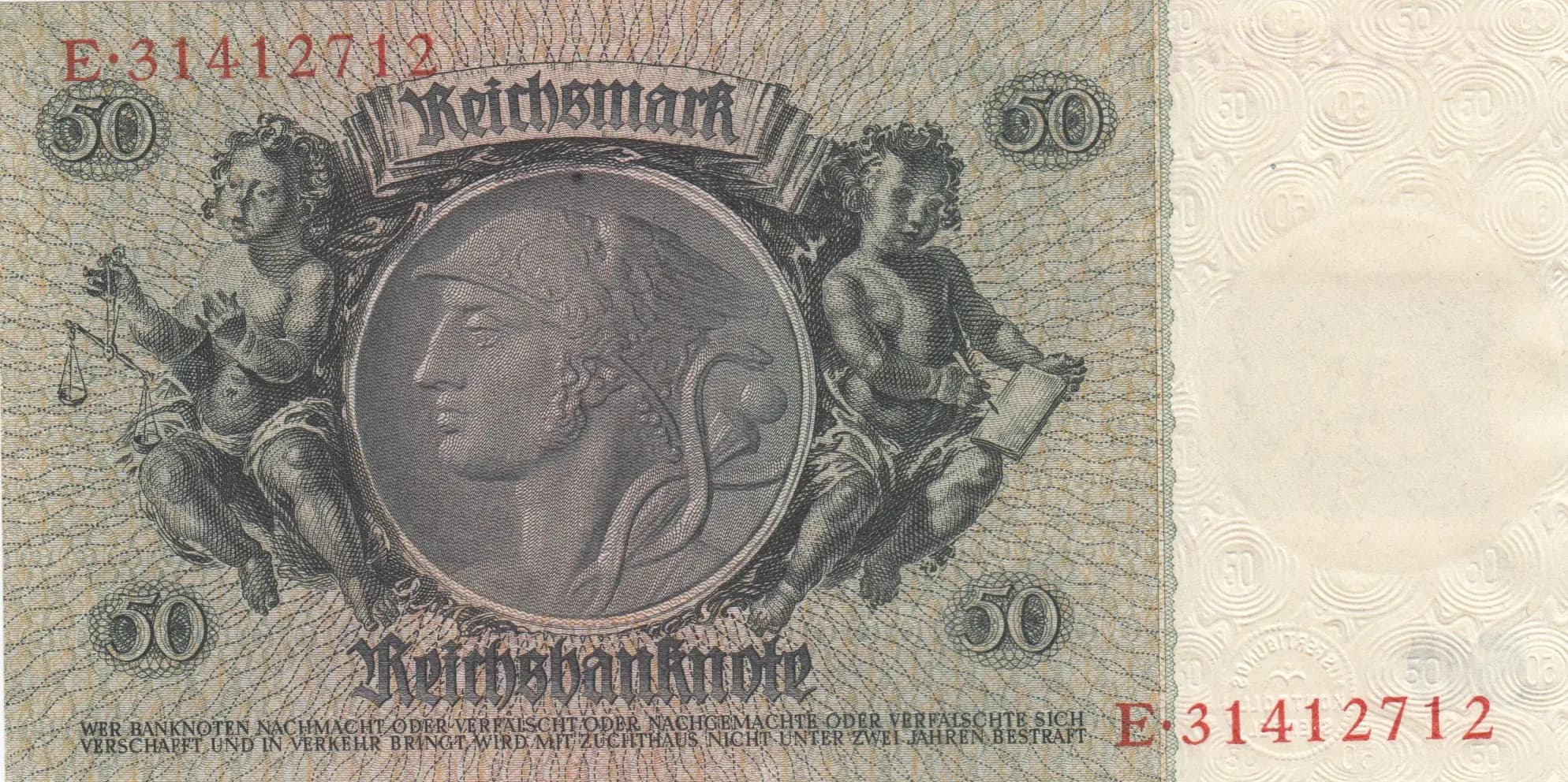
This note was issued during a complex period of German monetary history. The inscriptions reference the Banking Law of August 30, 1924 (Dawes Plan era), and bear a Berlin date of March 30, 1933, placing its design approval at the threshold of Nazi consolidation of power. The allegorical female figures on the reverse—representing Justice (with scales) and Knowledge (with tablet)—reflect Weimar-era ideals of rational governance that would soon be superseded. The Soviet occupation zone's reissue of these Reichsbank notes in 1948 represents the immediate post-WWII period before the formal division of Germany and the introduction of separate East and West German currencies.
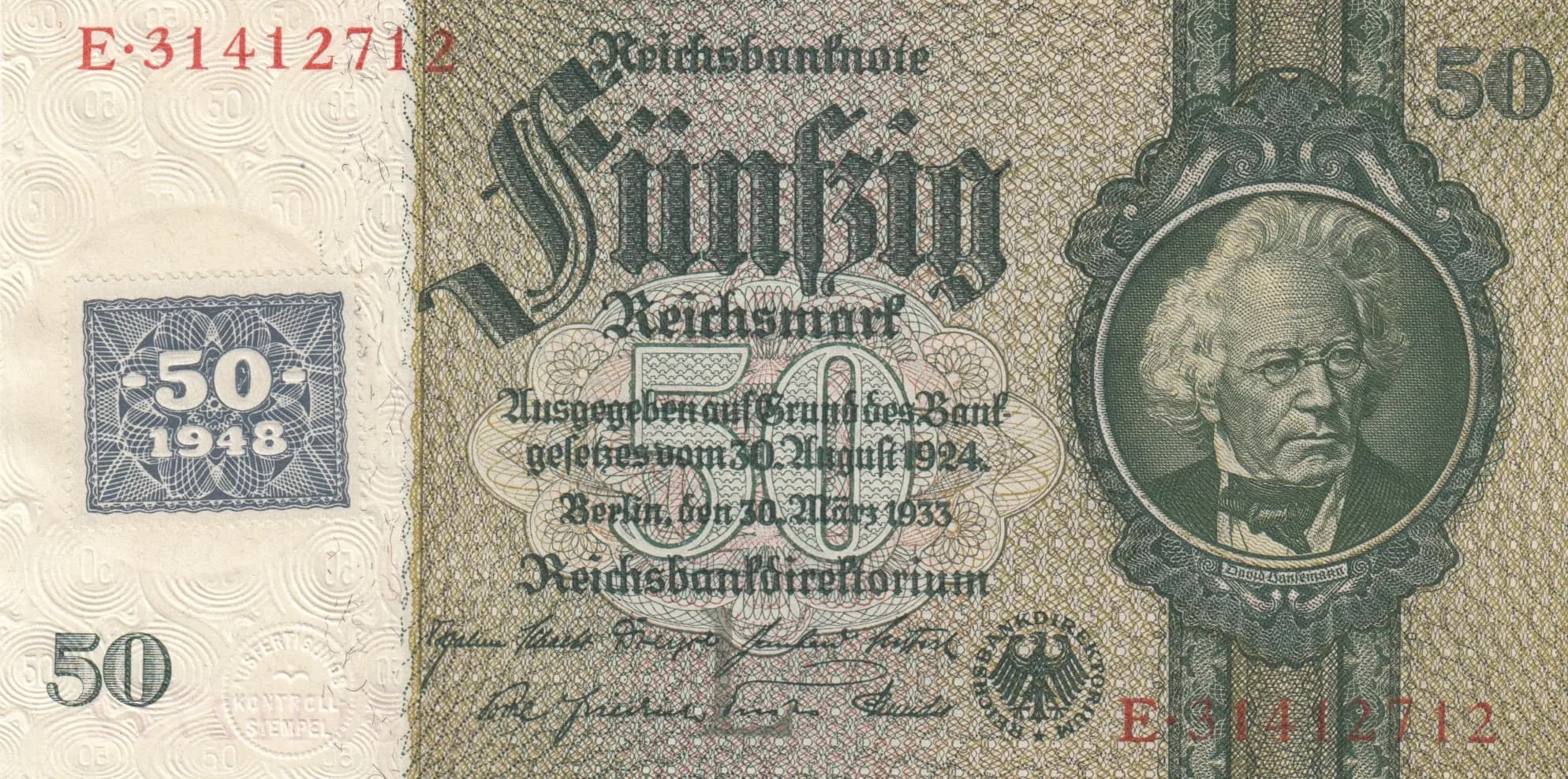
The front features a portrait medallion of a male figure in profile facing right, surrounded by ornamental borders and positioned on the right side of the note. The left side displays a decorative square containing the denomination 50, with elaborate scrollwork in German Gothic (Fraktur) script occupying the central area. The reverse presents a more complex allegorical composition with a larger circular medallion containing a male profile facing left as the central focal point. Flanking this central portrait are two allegorical female figures representing classical virtues: the figure on the left holds scales (symbolizing Justice), while the figure on the right holds a book or tablet (symbolizing Knowledge or Wisdom). The composition employs radiating line patterns and ornamental frames to create visual depth. The color palette of beige, cream, and green with black accents creates a sophisticated aesthetic typical of high-security Reichsbank currency. The intricate engraving work and cross-hatching throughout both sides served as anti-counterfeiting measures.
FRONT SIDE: 'Reichsbanknote' (Reichsbank Note) | 'Ausgeboten auf Grund des Bankgesetzes vom 30. August 1924' (Issued pursuant to the Banking Law of August 30, 1924) | 'Berlin, den 30. März 1933' (Berlin, March 30, 1933) | 'Reichsbank Direktorium' (Reichsbank Board of Directors) | Serial number: E·3141271·2 | Denomination: 50. BACK SIDE: 'Reichsbanknote' (Reichsbank Note) | 'WER BANKNOTEN NACHMACHT ODER DER HERSTELLUNG VERFÄLSCHTER ODER VERFÄLSCHTE SICH VERSCHAFFENDEN BANKNOTEN, WIRD MIT ZUCHTHAUS NICHT UNTER ZWEI JAHREN BESTRAFT' (Whoever counterfeits banknotes or participates in the manufacture of counterfeit or forged banknotes will be punished with hard labor for not less than two years) | Serial number: E·3141271·2 | Denomination: 50 (appears twice).
This note was produced using traditional steel plate intaglio (recess) engraving, a high-security printing method characteristic of Reichsbank currency. The extensive fine-line work, detailed cross-hatching patterns, and complex background textures visible throughout both sides demonstrate the sophisticated engraving techniques employed. The sharp clarity of the printing and preservation of fine detail in the uncirculated example indicates precise plate register and high-quality paper stock. The Reichsbank typically contracted with specialized security printers including Giesecke+Devrient and other German printing establishments for their currency production during this era.
This note is cataloged as Pick-6a, indicating it is the primary variety of the 50 Mark denomination in the Soviet occupation zone context. The serial number E·3141271·2 appears on both sides. Varieties for this Pick number may include different prefix letters on serial numbers (representing different printing batches), and the presence or configuration of overprints denoting the Soviet occupation authority. The 1933 date on the note itself represents the original Reichsbank printing approval date, not the 1948 reissue date, which is typical for occupation zone reissued currency that utilized existing plates. Further research into the specific prefix letters and any subtle overprint variations would be necessary to determine if this particular example represents a notable sub-variety.