20 mark 1948
About This Note
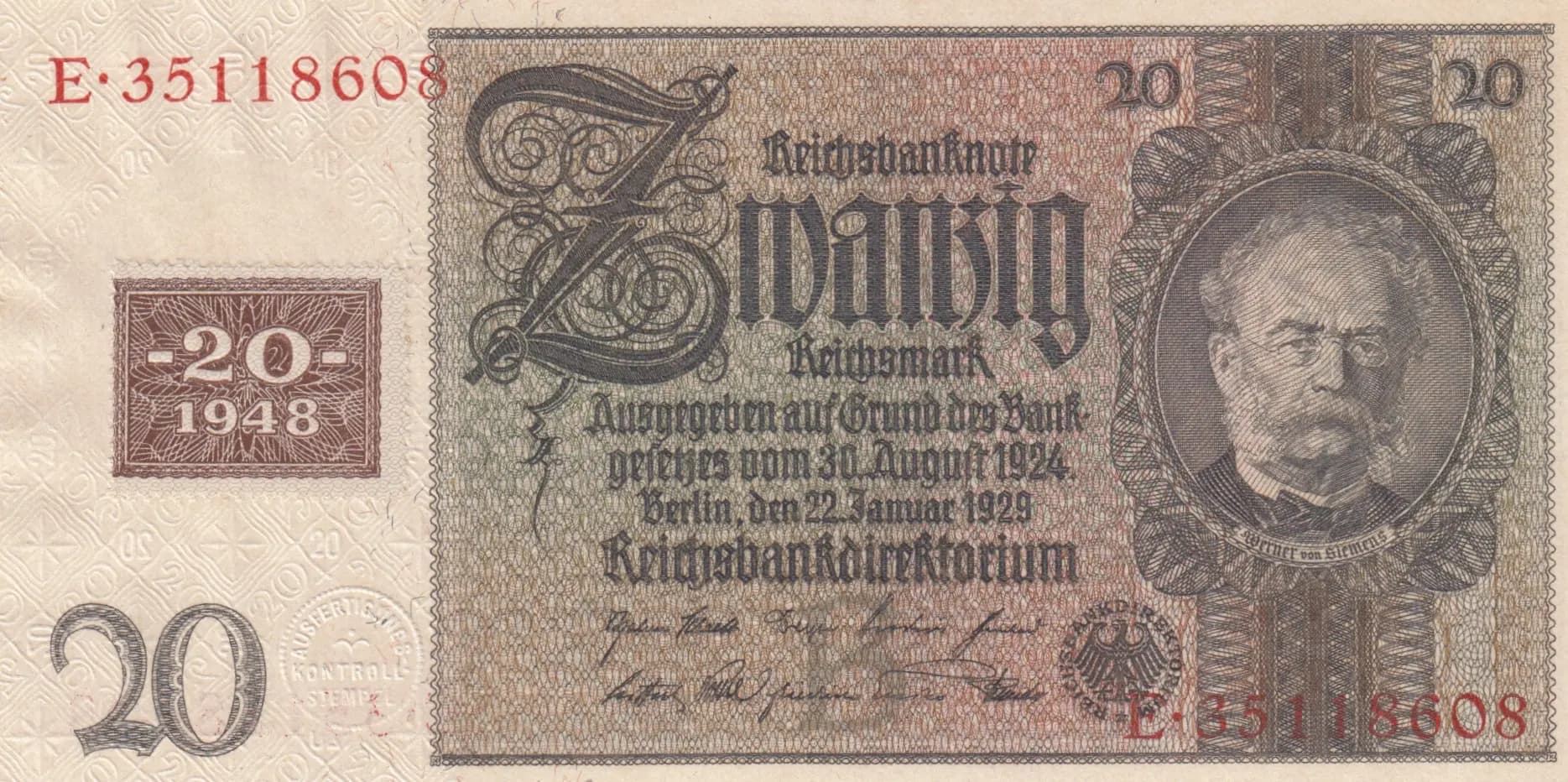
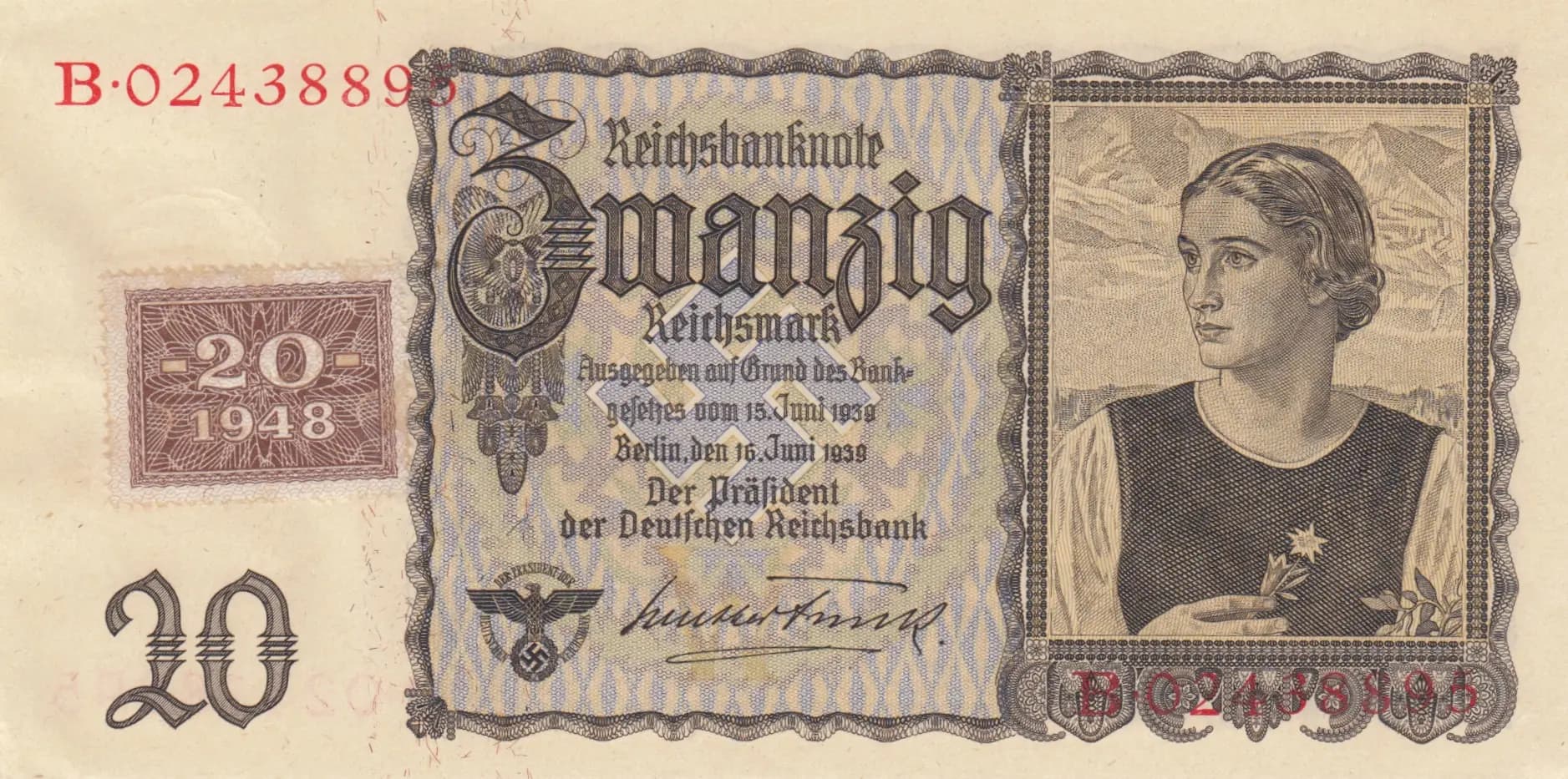
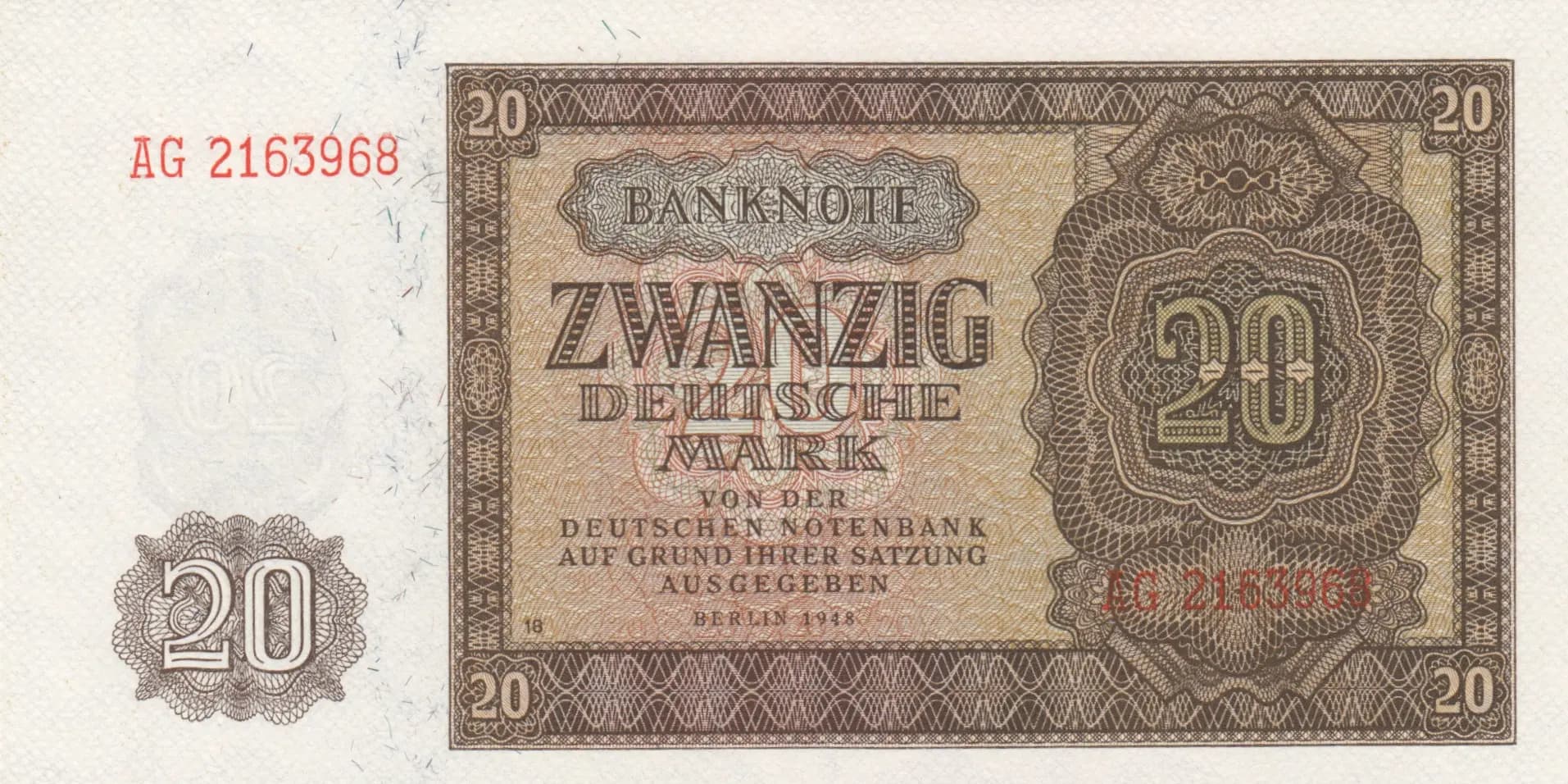
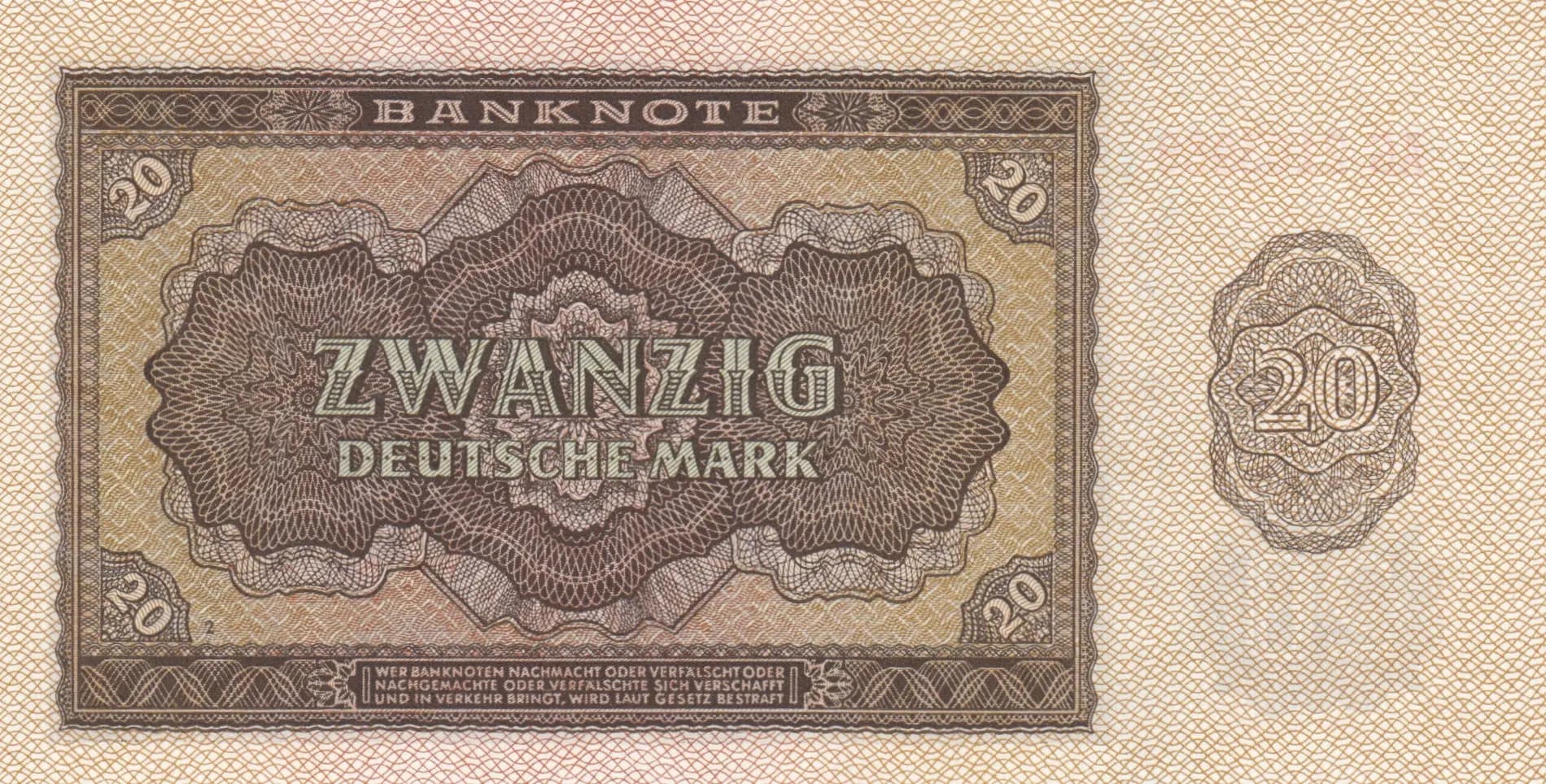
This is a 20 Deutsche Mark banknote issued by the Deutsche Notenbank in Berlin in 1948, graded UNC despite showing age-appropriate patina consistent with over 75 years of storage. The note features an elegant design with ornate geometric borders, fine line engraving patterns, and a warm brown-tan color palette typical of post-war German currency. The crisp, uncirculated condition preserves the intricate anti-counterfeiting details and fine mesh work that characterize this early Deutsche Notenbank emission.
Common. The 1948 Deutsche Notenbank 20 Mark note represents a standard, widely-circulated denomination from the initial currency reform period. No evidence of restricted print runs, early recalls, or short-lived authority status suggests ordinary availability in the collector market. UNC specimens command modest premiums over circulated examples due to condition rarity, but the note type itself remains commonly encountered in German banknote collections.
This note was issued during the critical 1948 currency reform period in the newly established German Democratic Republic, when the Deutsche Notenbank assumed note-issuing authority following Soviet occupation. The Berlin dating and emphasis on the issuing authority's charter reflect the complex political transition of East Germany immediately following World War II. The formal inscription warning against counterfeiting reflects post-war efforts to establish institutional credibility and monetary stability in the fractured German state.
The banknote employs a purely abstract geometric and ornamental design rather than representational portraiture or landmarks. The obverse features denomination text centered within ornamental frames with a circular emblem bearing '20' in ornate lettering in the lower left. The reverse displays 'ZWANZIG DEUTSCHE MARK' prominently within a large decorative cartouche at center, with a matching circular emblem positioned on the right side. Both sides are enveloped in complex geometric border patterns and fine-line mesh work serving both decorative and security purposes. The dominant color palette of brown, tan, and gray creates a formal, institutional appearance appropriate to the post-war rebuilding context. Red serial numbering on the obverse provides additional identification security.
Front: 'ZWANZIG DEUTSCHE MARK' (Twenty German Mark) | 'VON DER DEUTSCHEN NOTENBANK AUF GRUND IHRER SATZUNG AUSGEGEBEN' (Issued by the German Note Bank under the authority of its charter) | 'BERLIN 1948' (Berlin 1948) | Serial number: 'AG 2163968'. Back: 'BANKNOTE' (Banknote) | 'ZWANZIG DEUTSCHE MARK' (Twenty German Mark) | 'WER BANKNOTEN NACHMACHT ODER VERFÄLSCHT ODER NACHGEMACHTE ODER VERFÄLSCHTE BANKNOTEN IN VERKEHR BRINGT WIRD LAUT GESETZ BESTRAFT' (Whoever counterfeits banknotes or falsifies them or brings counterfeit or falsified banknotes into circulation will be punished according to law).
This note was produced using traditional intaglio engraving (copperplate printing), evidenced by the crisp, deeply-incised geometric patterns, fine line mesh backgrounds, and sharp definition of ornamental borders visible in the images. The fine line work throughout—particularly the mesh patterns and geometric designs—demonstrates the characteristic precision of intaglio production. For East German notes of this period (Pick P-13b, 1948), production was handled by state-controlled German security printers; the sophisticated technical execution suggests work by established pre-war German engraving houses operating under the new regime.
This specimen exhibits the serial number 'AG 2163968' with red numbering on the obverse, consistent with the P-13b variety designation. The 'BERLIN 1948' date marking and issuing authority text are standard for this Pick number. No known major varieties (such as signature variants or significant overprint differences) are documented for this denomination and date combination. The condition and color preservation suggest storage away from light exposure, typical of UNC-graded notes from this era.