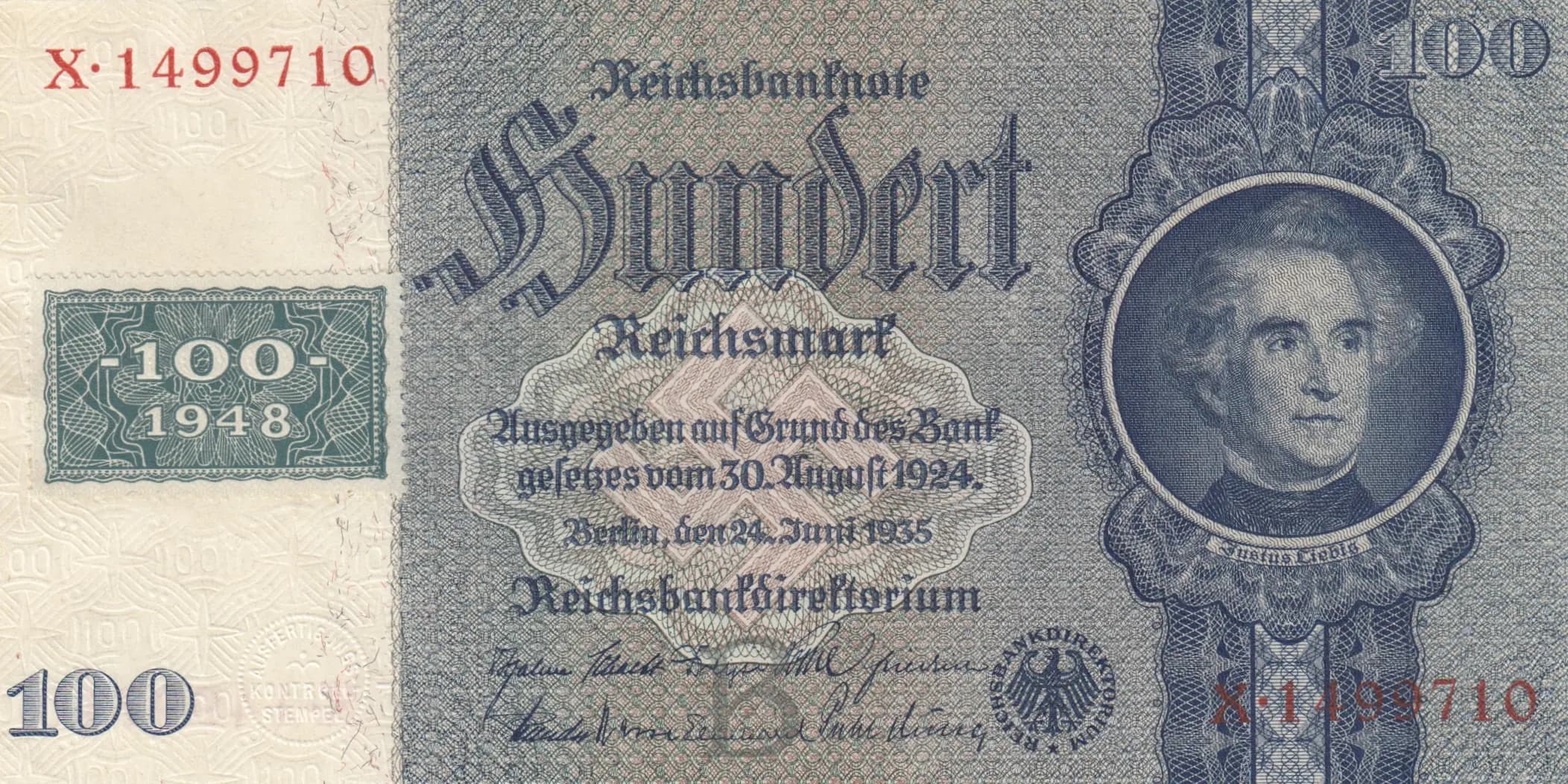
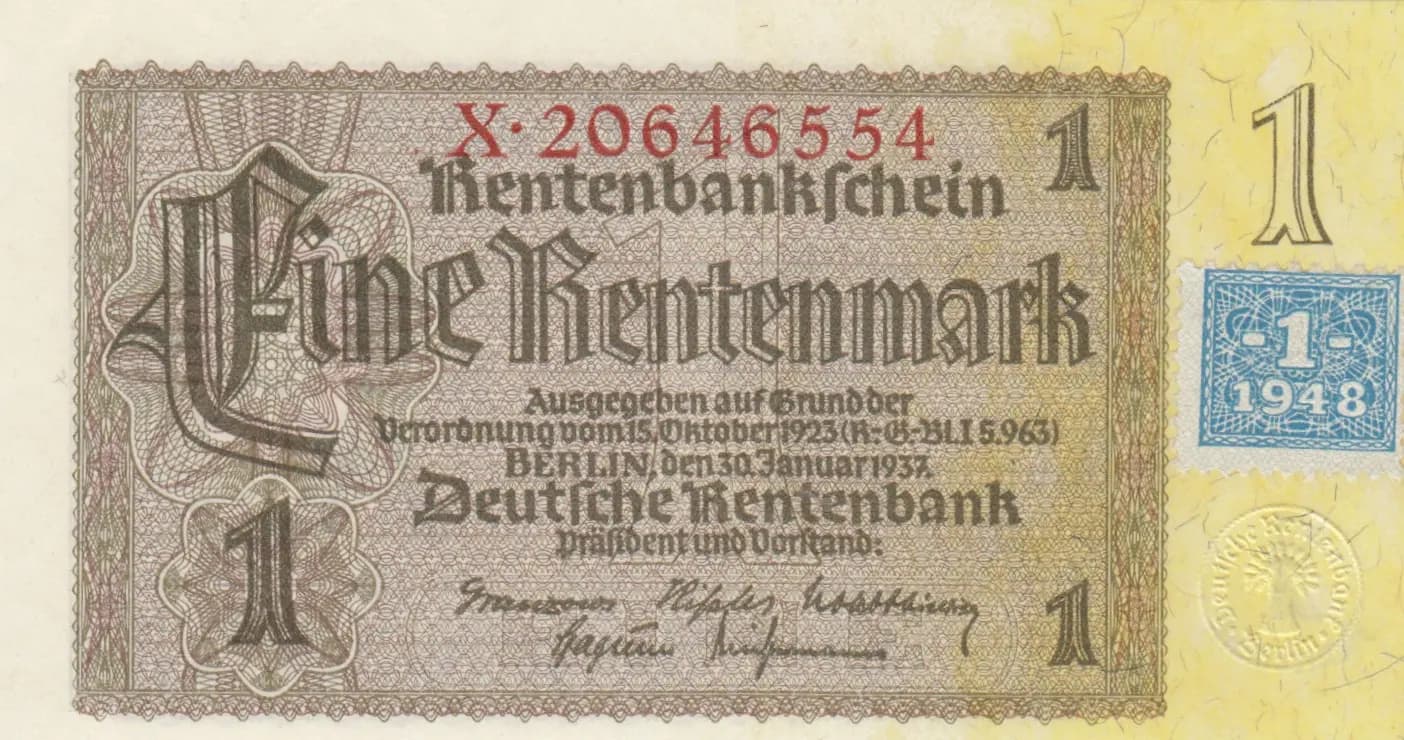
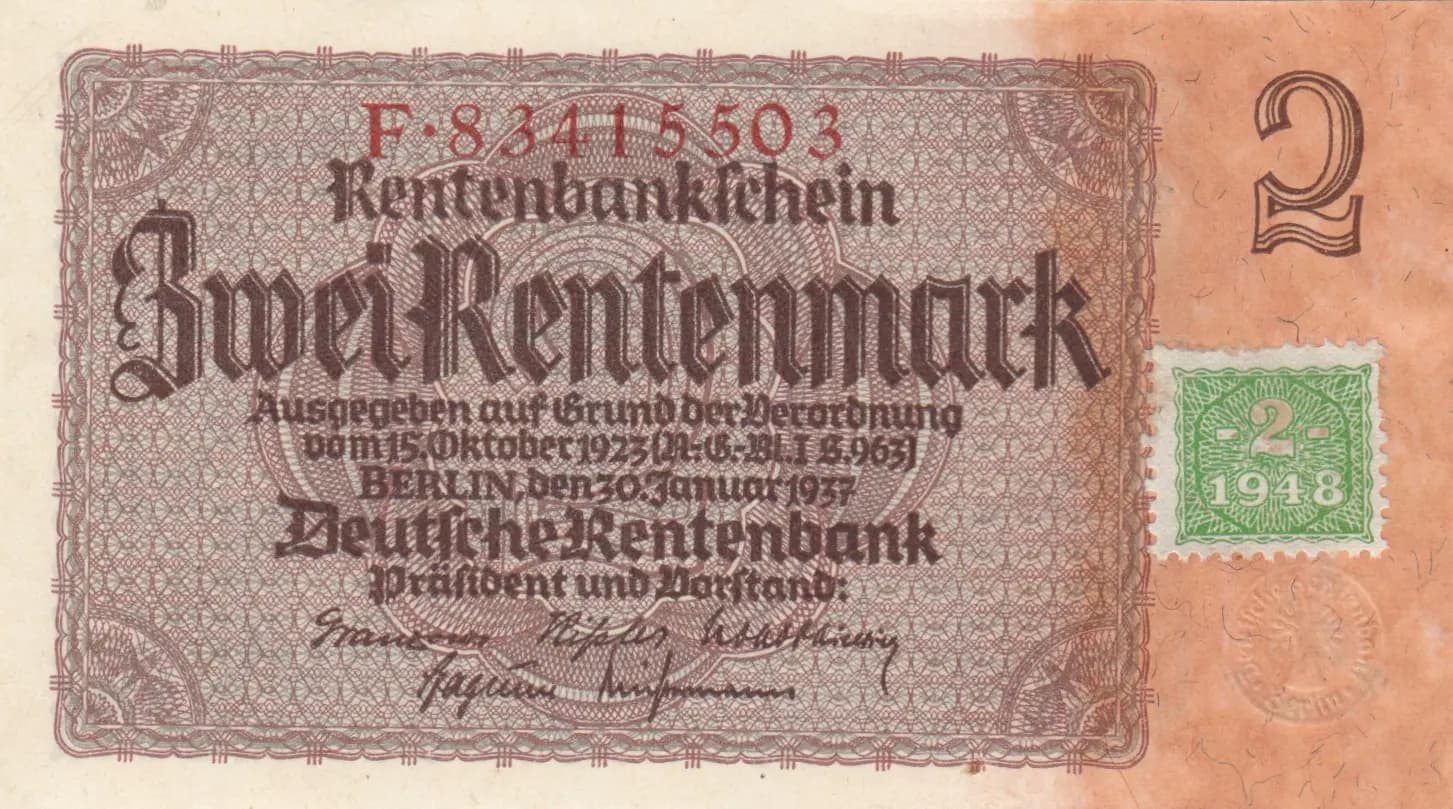
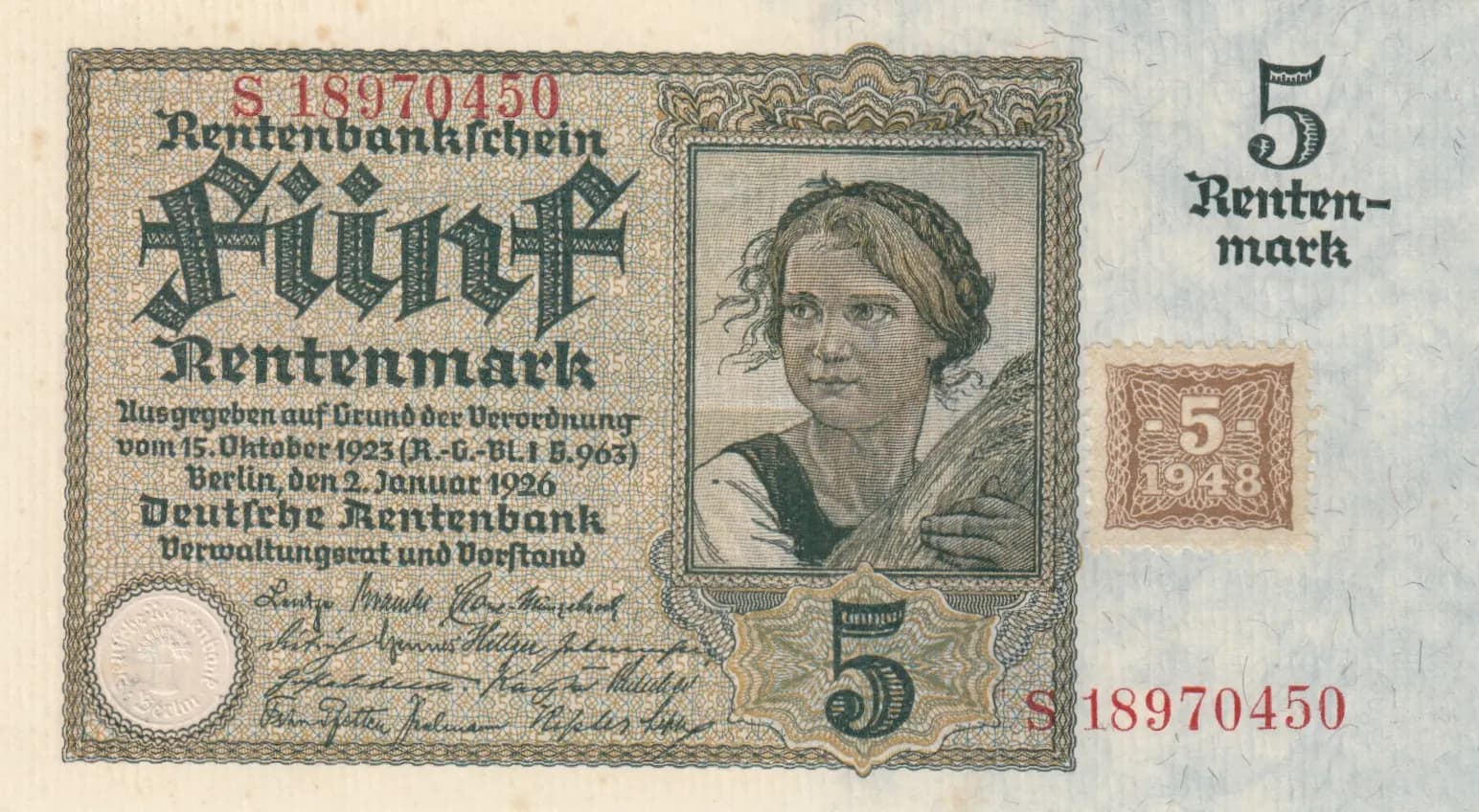
100 mark 1948
About This Note
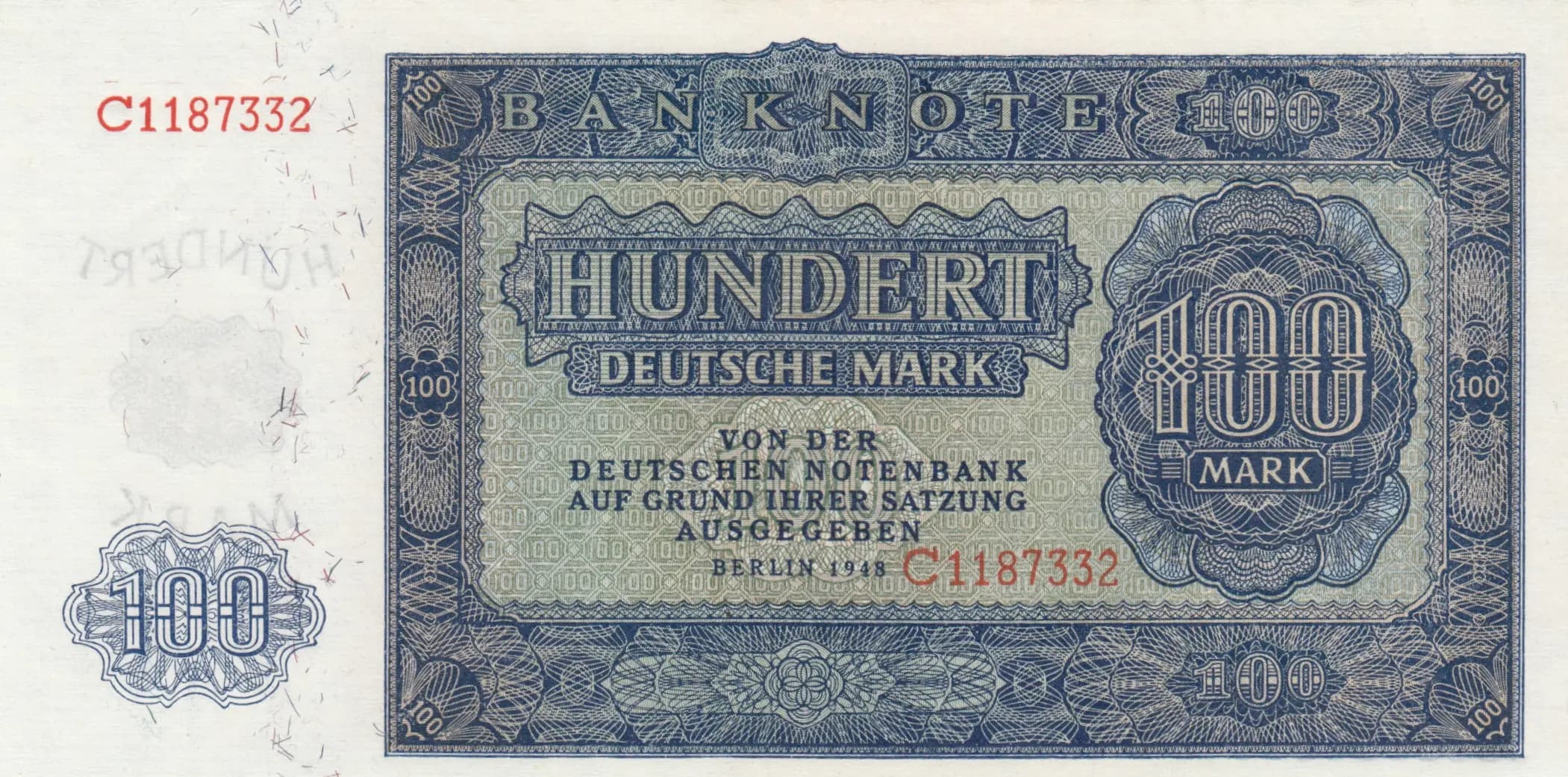
This is a 100 Deutsche Mark banknote issued by the Deutsche Notenbank in 1948, representing a significant piece of post-World War II German monetary history. The note is in UNC condition with only minor age-related patina and some pencil marks in the margins, displaying crisp printing and well-preserved ornamental designs throughout. The serial number C1187332 and Berlin 1948 date mark this as an early emission from the newly established central bank of the Soviet occupation zone.
Common. This is a standard issue from the Deutsche Notenbank's 1948 emission, with no evidence of restricted print runs, recalls, or short-lived circulation. The presence of a sequential serial number and the UNC condition grade suggest this was part of a substantial production run. Without specific evidence of scarcity or exceptionally high collector demand, this Pick-15 variety should be assessed as common in the current numismatic market, despite its historical significance.
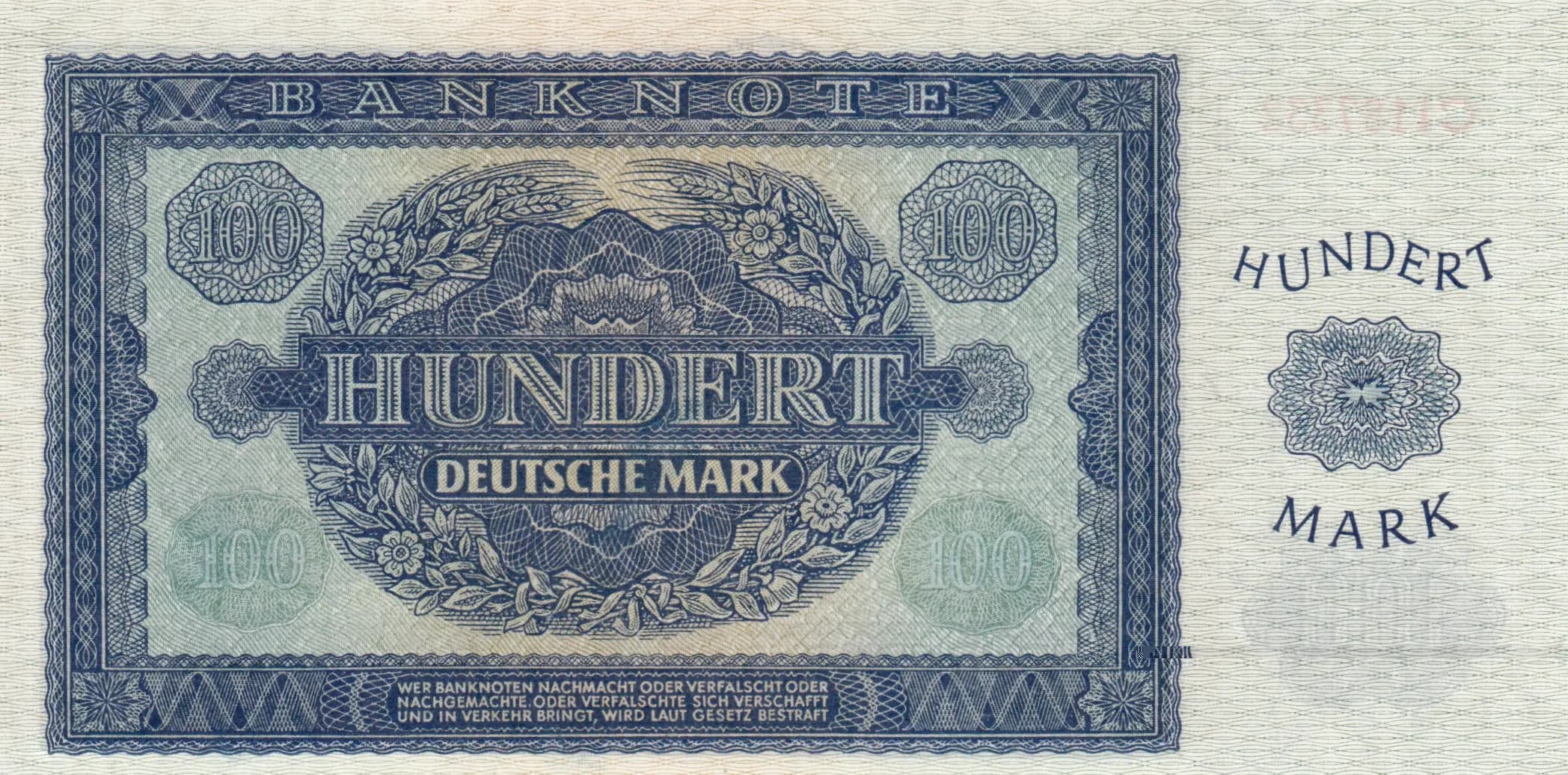
Issued on May 1, 1948, this banknote represents the currency transition in the Soviet occupation zone of Germany following World War II, predating the formal establishment of the German Democratic Republic by approximately one year. The Deutsche Notenbank, which issued this note, operated as the central bank of the Soviet zone before being superseded by institutions of the nascent East German state. The legal warning against counterfeiting printed on the reverse reflects the post-war authorities' concerns about currency fraud during this period of economic and political reconstruction.
This banknote features a purely ornamental design with no portraits or identified landmarks, characteristic of Deutsche Notenbank emissions of the early post-war period. The front displays a central decorative cartouche containing the denomination text 'HUNDERT DEUTSCHE MARK' flanked by ornamental oval medallion frames containing '100' in the corners, surrounded by intricate geometric and floral border patterns in blue-grey and cream tones. The reverse features a larger central ornamental medallion with 'HUNDERT DEUTSCHE MARK' surrounded by an elaborate laurel wreath with floral elements, with four corner denomination frames and dense decorative border work. The entire design relies on fine line-work, cross-hatching, and complex ornamental elements as anti-counterfeiting measures rather than portrait imagery.
FRONT SIDE: 'HUNDERT DEUTSCHE MARK' (One Hundred German Marks), 'BANK NOTE' (Banknote), '100' (denomination), 'VON DER DEUTSCHEN NOTENBANK AUF GRUND IHRER SATZUNG AUSGEGEBEN' (Issued by the German Central Bank on the basis of its statute), 'BERLIN 1948' (location and date), 'MARK' (Mark), Serial number 'C1187332'. REVERSE SIDE: 'HUNDERT DEUTSCHE MARK' (One Hundred German Marks), '100' (denomination in four locations), 'HUNDERTS' (Hundred's), 'MARK' (Mark), 'WER BANKNOTEN NACHMACHT ODER VERFÄLSCHT ODER NACHGEMACHTE ODER VERFÄLSCHTE SICH VER-SCHAFFT UND IN VERKEHR BRINGT, WIRD LAUT GESETZ BESTRAFT' (Whoever counterfeits or forges banknotes or acquires counterfeited or forged ones and puts them into circulation will be punished according to law).
This banknote was produced using intaglio (engraved line) printing, evident from the crisp, deeply-impressed fine detail work visible in the intricate line-work patterns, cross-hatching, ornamental borders, and decorative medallions. The precision of the parallel lines and the dimensional quality of the printed elements are characteristic of intaglio printing, which was the standard security printing method for German banknotes of this period. The specific printer for Deutsche Notenbank issues from 1948 is not definitively documented in readily available numismatic references, though major German security printers of the era included Giesecke+Devrient.
This note bears serial number C1187332, indicating it is from the C series of the 1948 emission. The 'C' prefix on Deutsche Notenbank notes from this period represents a standard serial variety; notes with different letter prefixes (A, B, D, etc.) may represent different production batches or issuing periods. The date inscription 'BERLIN 1948' and the May 1, 1948 issue date (per catalog) establish this as an early emission. No obvious overprints, signatures, or other distinguishing features beyond the standard serial numbering are visible in the visual analysis.