10 mark 1948
About This Note
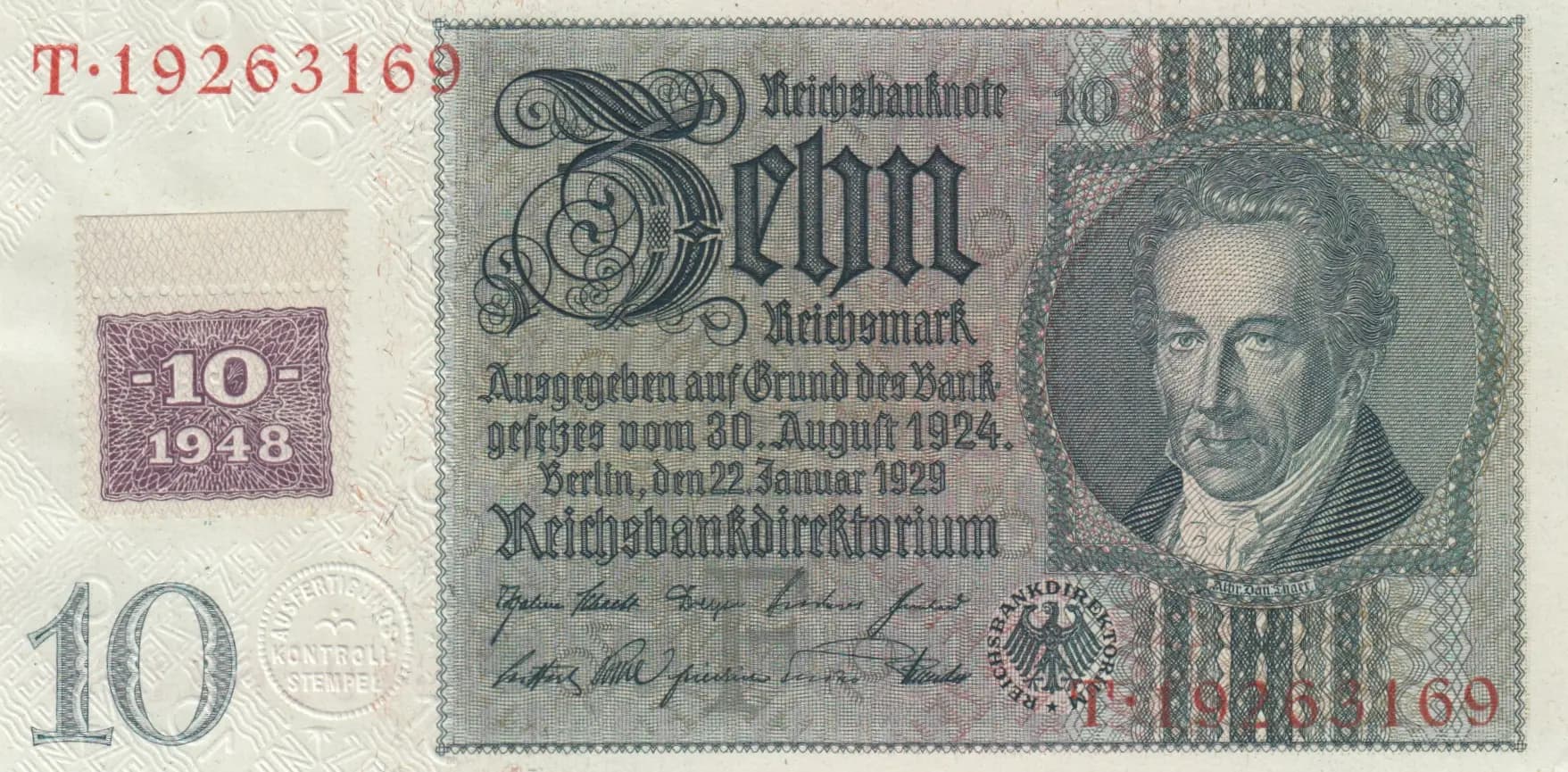
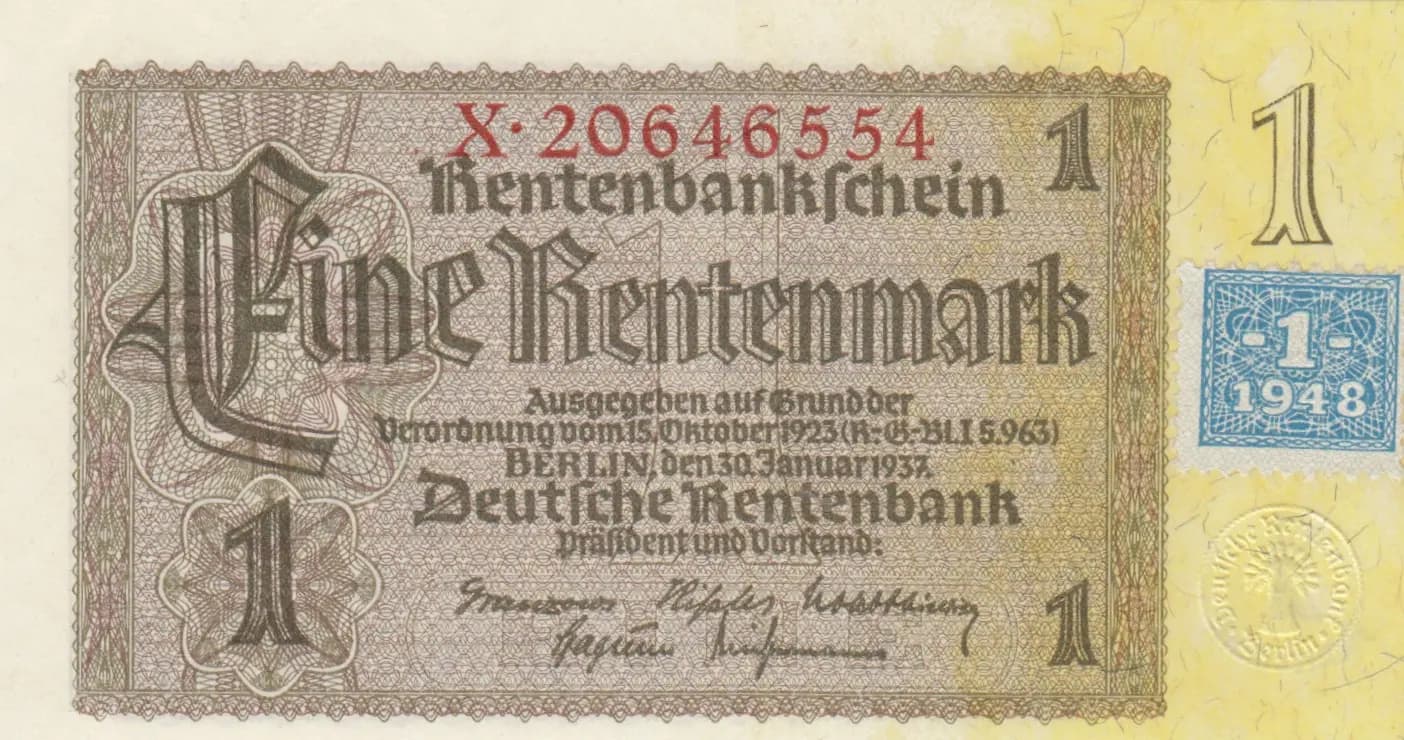
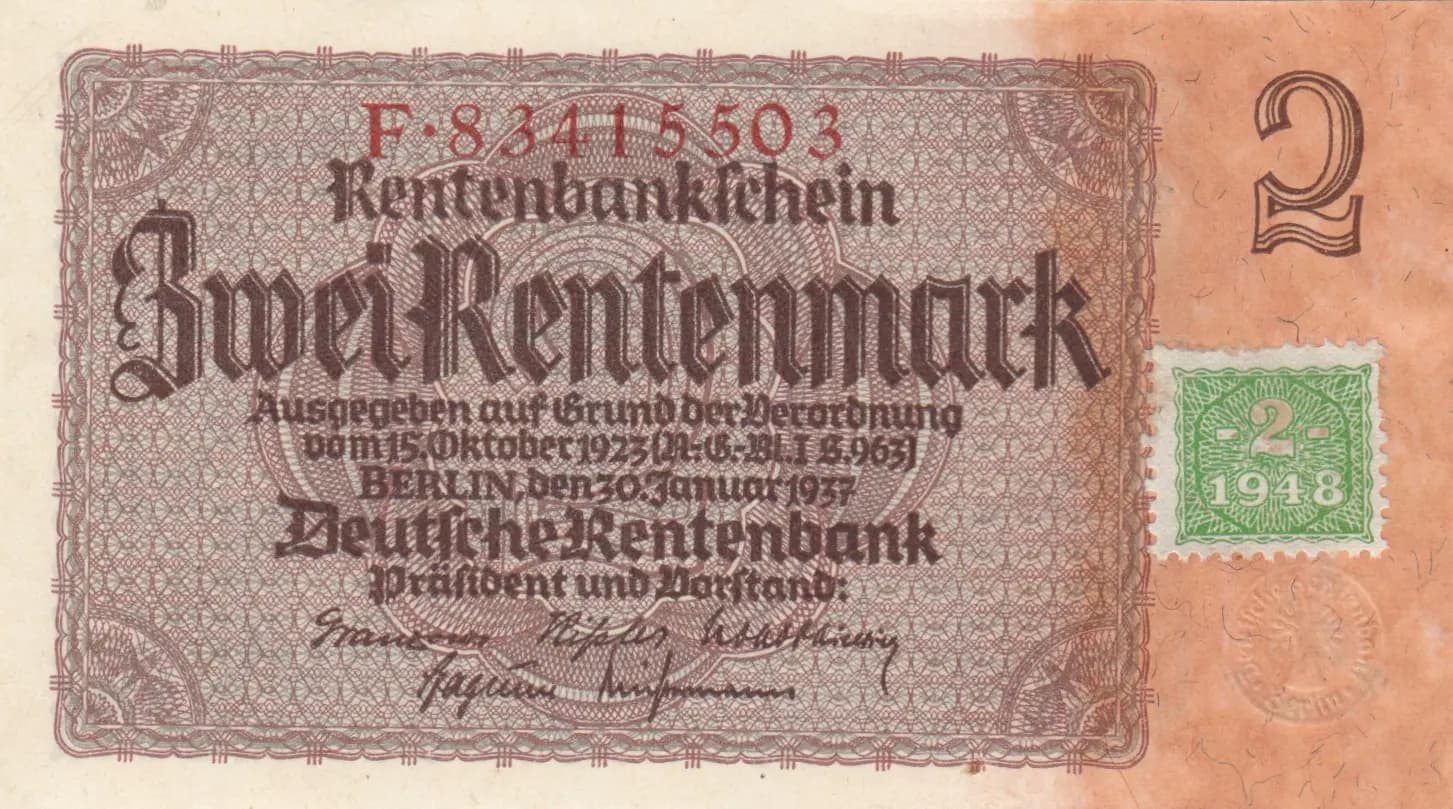
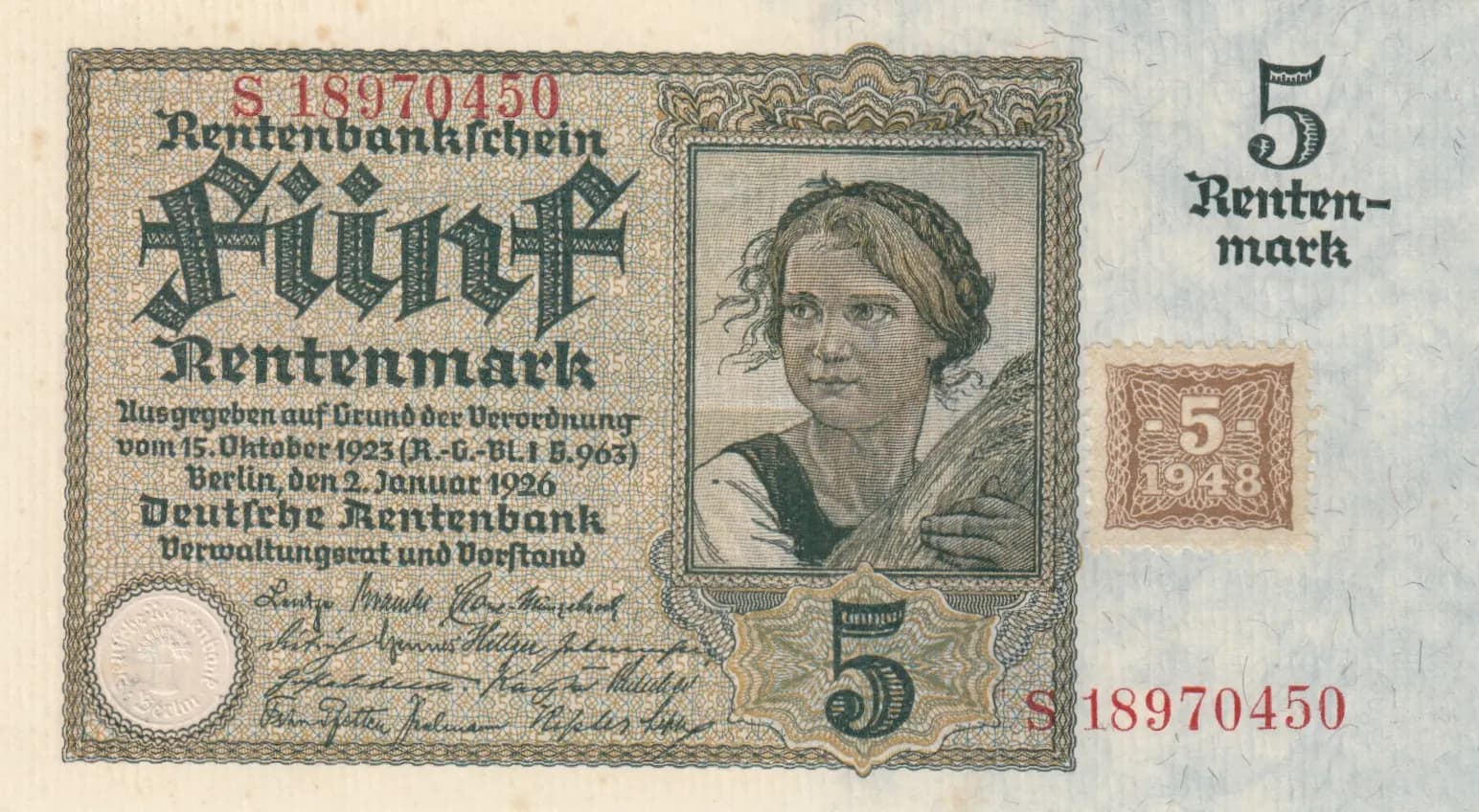
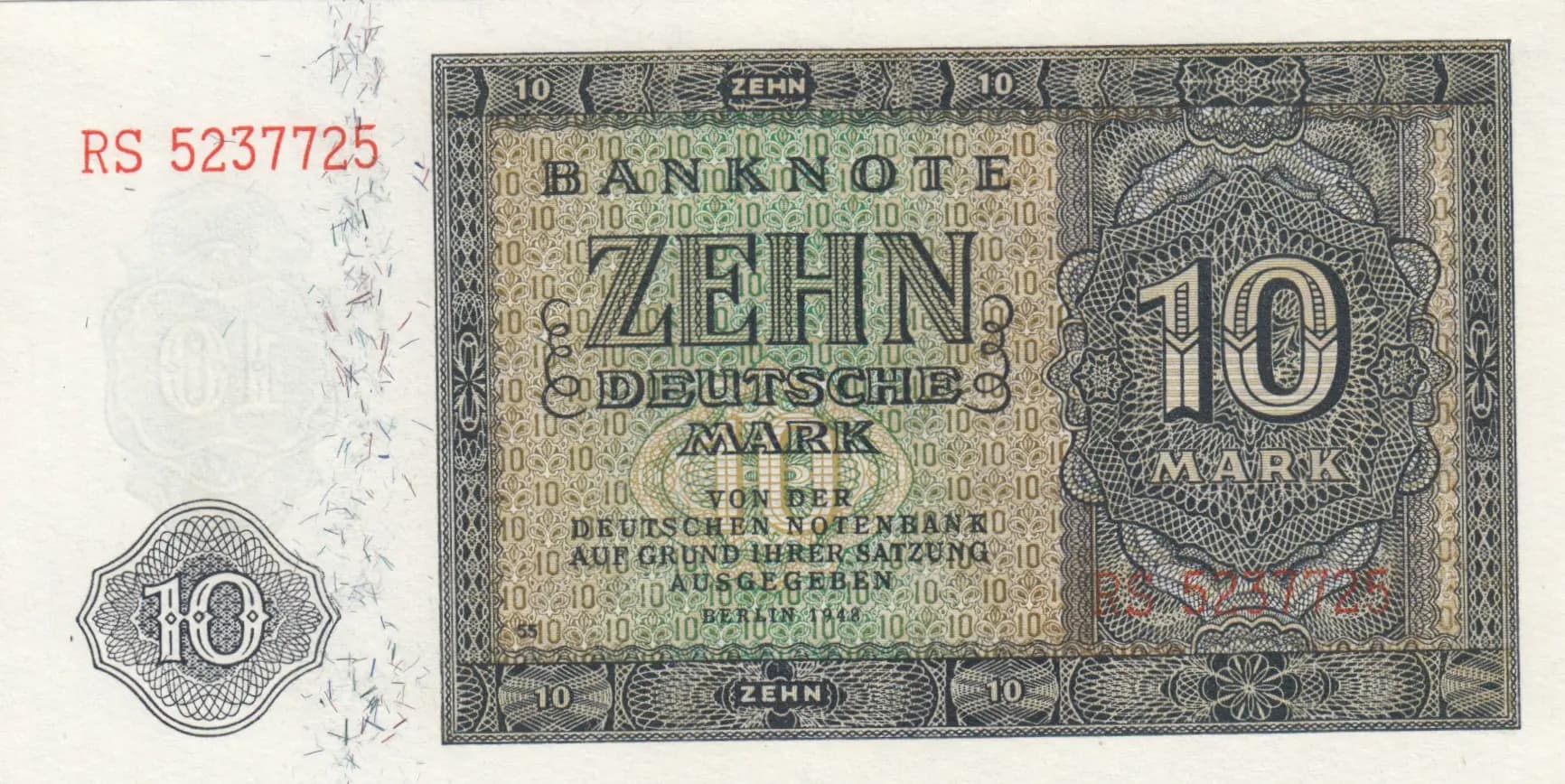
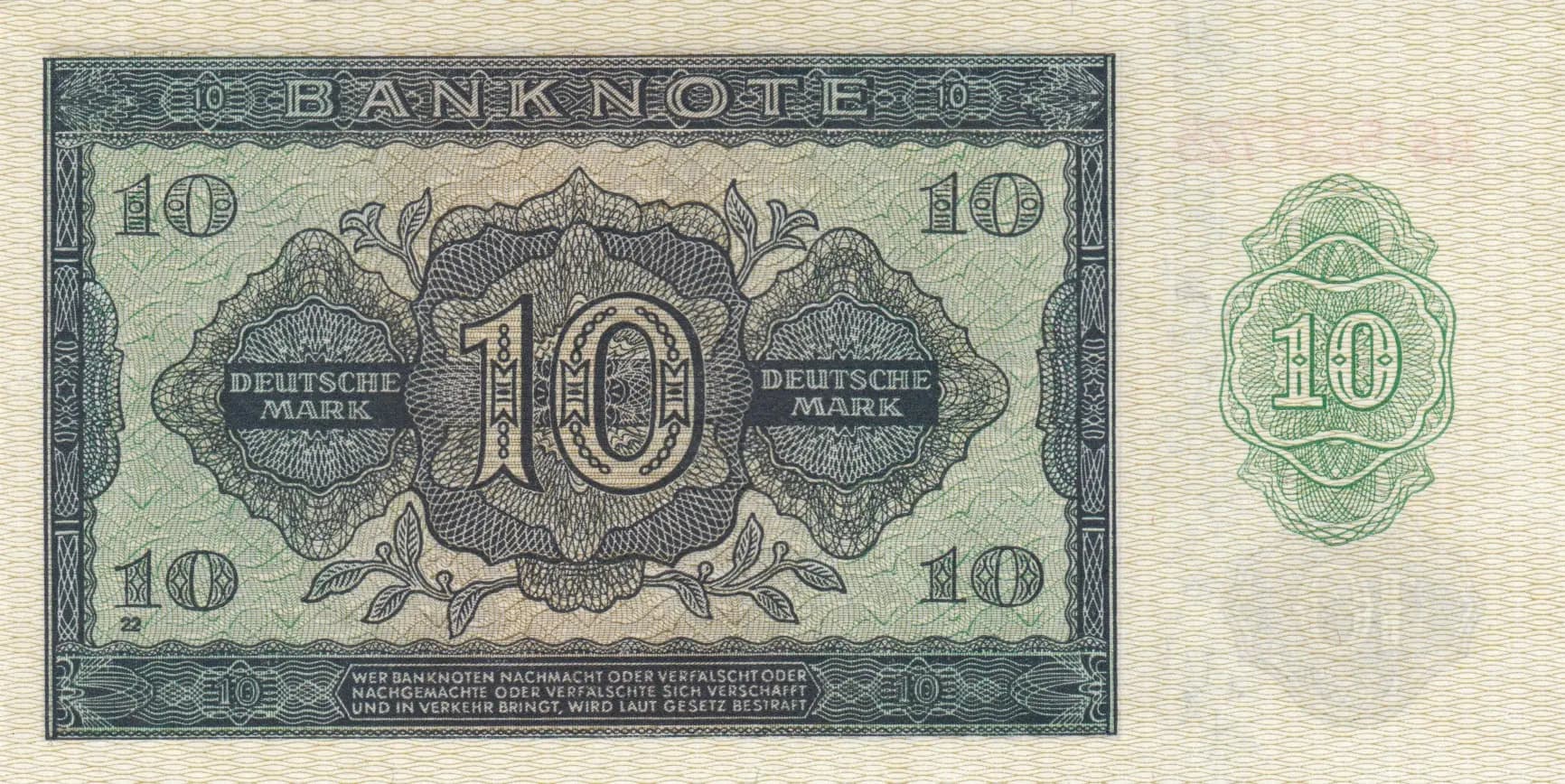
This is a 10 Deutsche Mark banknote issued by the Deutsche Notenbank in 1948, representing the early post-WWII currency of East Germany. The note is presented in uncirculated condition with sharp printing, intricate geometric rosette patterns dominating both sides, and vibrant green and black coloration. The design eschews portraiture in favor of classical ornamental security elements—elaborate decorative frames and corner numerals—making it a distinctive example of East German monetary design during the transitional period following currency reform.
Common. The 10 Mark denomination of the Deutsche Notenbank 1948 issue (Pick P-12b) had a substantial print run typical of everyday circulation currency. While these notes are now nearly 75 years old and many have been removed from circulation or damaged, uncirculated examples remain readily available in the numismatic market at modest prices ($15–40 USD depending on exact variety and serial number appeal). The denomination was one of the most frequently issued in the series, and UNC survivors are not scarce.
Issued in 1948 by the Deutsche Notenbank (German Note Bank) in Berlin, this banknote represents the immediate post-war monetary reorganization of the Soviet occupation zone, which would become the German Democratic Republic in 1949. The note's conservative ornamental design—featuring no political imagery or portraits—reflects the cautious approach taken during this transitional period before the GDR's formal establishment. The Berlin issuing location and 1948 date place this note at a crucial juncture in Cold War monetary history, issued during the Berlin Blockade era.
The 10 Mark note features a purely geometric and ornamental design scheme typical of security printing of the era, with no portraits or landmarks depicted. The dominant design element is an intricate rosette pattern—a radiating geometric mandala-like ornament—that fills the background of both sides and serves as the primary anti-counterfeiting feature. The front displays a circular emblem containing the number 10 set within the ornamental frame on the left edge, with the serial number printed in red ink (RS 5237725 observed). The reverse features an elaborate decorative cartouche framing a large central '10' numeral, with the denomination repeated in all four corners. The overall aesthetic is one of classical engraving precision, employing fine line work throughout to create a complex, difficult-to-replicate design.
FRONT SIDE: 'RS 5237725' (Serial number); 'ZEHN' (Ten); 'BANKNOTE' (Banknote); 'DEUTSCHE MARK' (German Mark); 'DER DEUTSCHEN NOTENBANK' (Of the German Note Bank); 'AUF GRUND IHRER SATZUNG' (Based on its charter); 'AUSGEGEBEN' (Issued); 'BERLIN' (Berlin); '10' (denomination numeral). BACK SIDE: 'BANKNOTE' (Banknote); 'DEUTSCHE MARK' (German Mark); '10' (denomination numerals in corners and center); 'WER BANKNOTEN NACHMACHT ODER VERFÄLSCHT ODER NACHGEMACHTE ODER VERFÄLSCHTE SICH VERSCHAFFT UND IN VERKEHR BRINGT, WIRD LAUT GESETZ BESTRAFT' (Whoever counterfeits or falsifies banknotes or procures counterfeit or falsified banknotes and brings them into circulation will be punished according to law).
This note was produced using intaglio (engraved) printing, evident from the fine line details, precise rosette patterns, and sharp impression quality visible throughout both sides. The multi-color printing (green and black on cream/off-white stock) was applied in separate passes, typical of high-security banknote production of the post-war period. The red serial number appears to have been overprinted in a separate operation. The printer is likely Giesecke+Devrient or a Soviet-supervised East German printing facility, though definitive attribution requires additional research into Deutsche Notenbank contracting records.
The observed serial number 'RS 5237725' indicates this note bears a red-printed serial number prefix. Known varieties of P-12b include different serial number prefixes and the presence or absence of overprints. The red serial number printing distinguishes this from other possible variants. The note exhibits no visible overprints or additional markings beyond the standard design and serial number, consistent with standard production notes from the primary 1948 issuance. Collectors should note that some 1948 Deutsche Notenbank notes carry Soviet control stamps or overprints reflecting occupation authority; this example does not appear to display such markings.