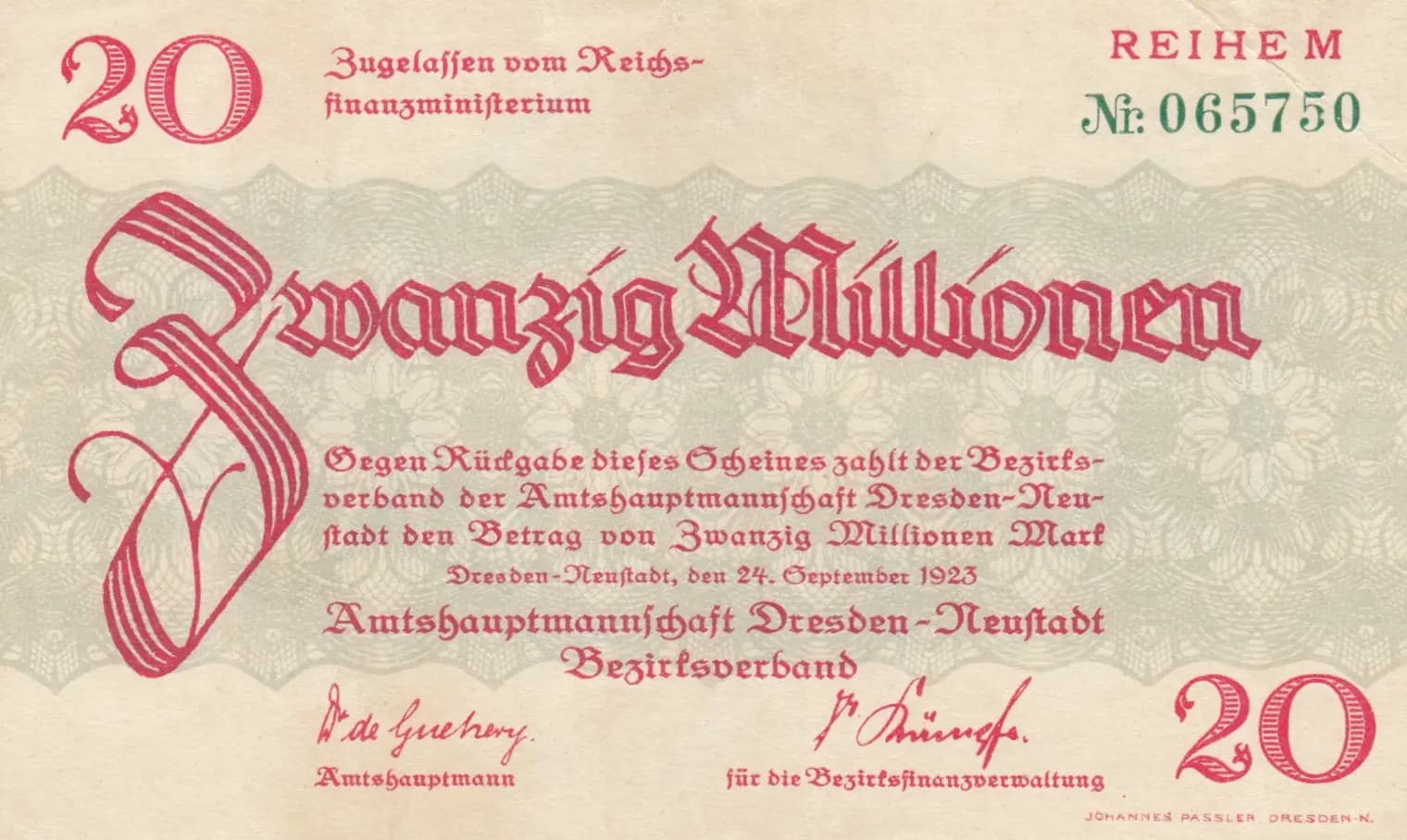
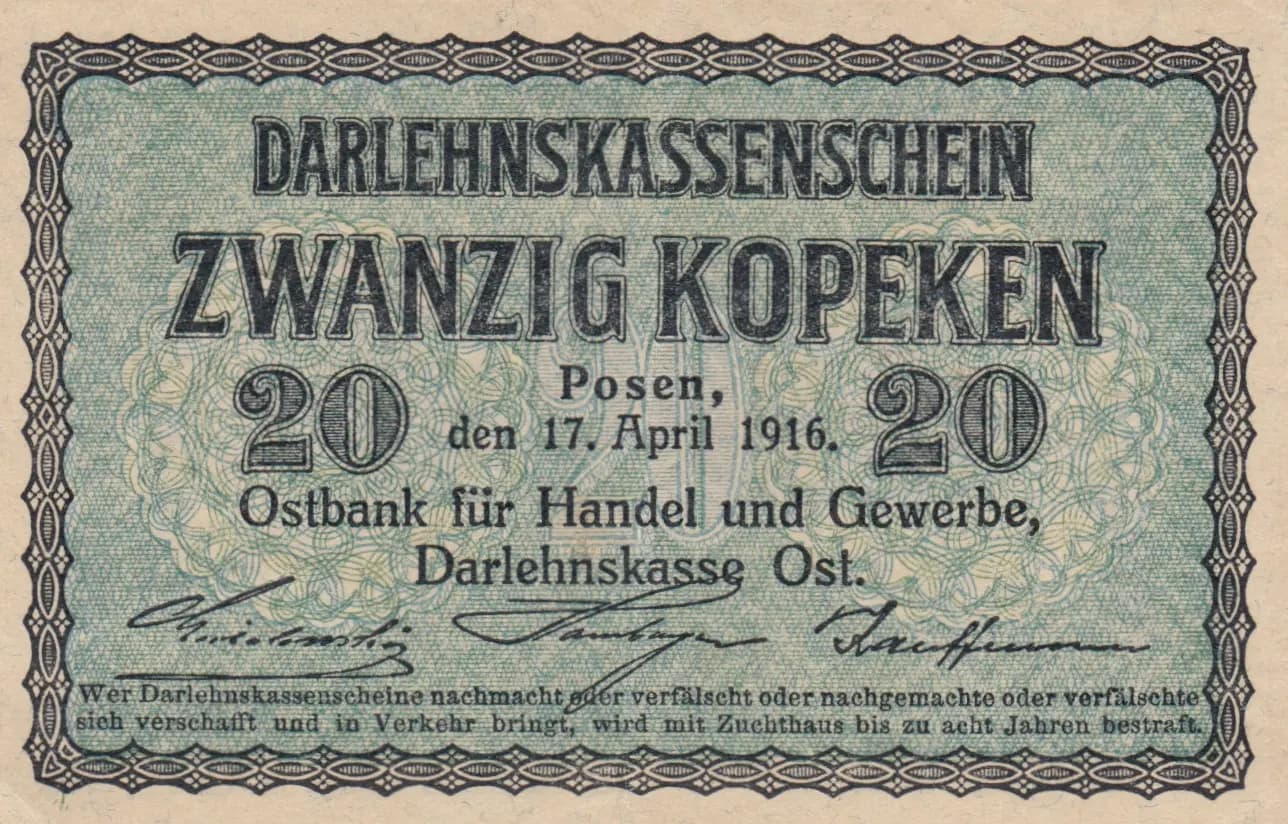
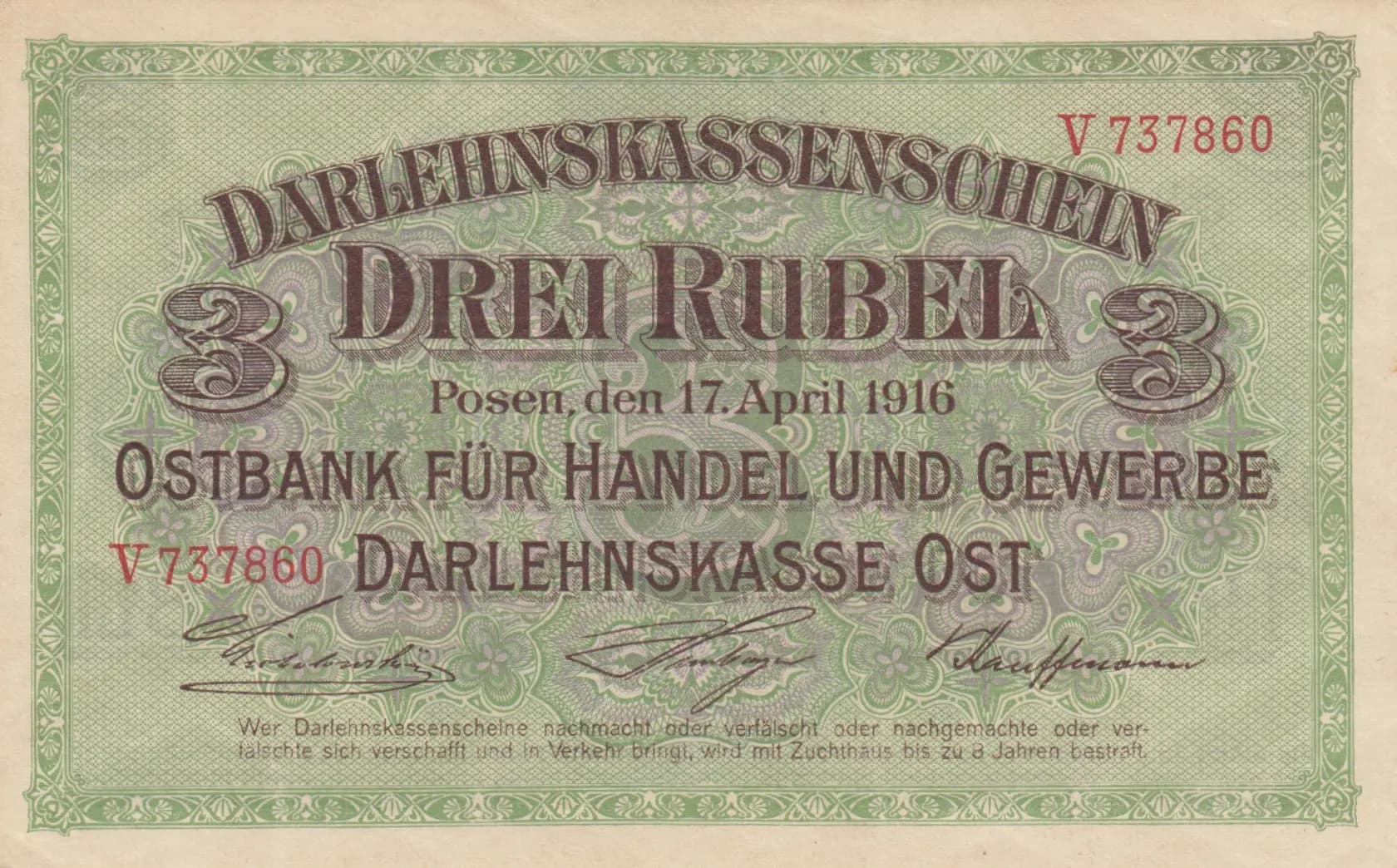
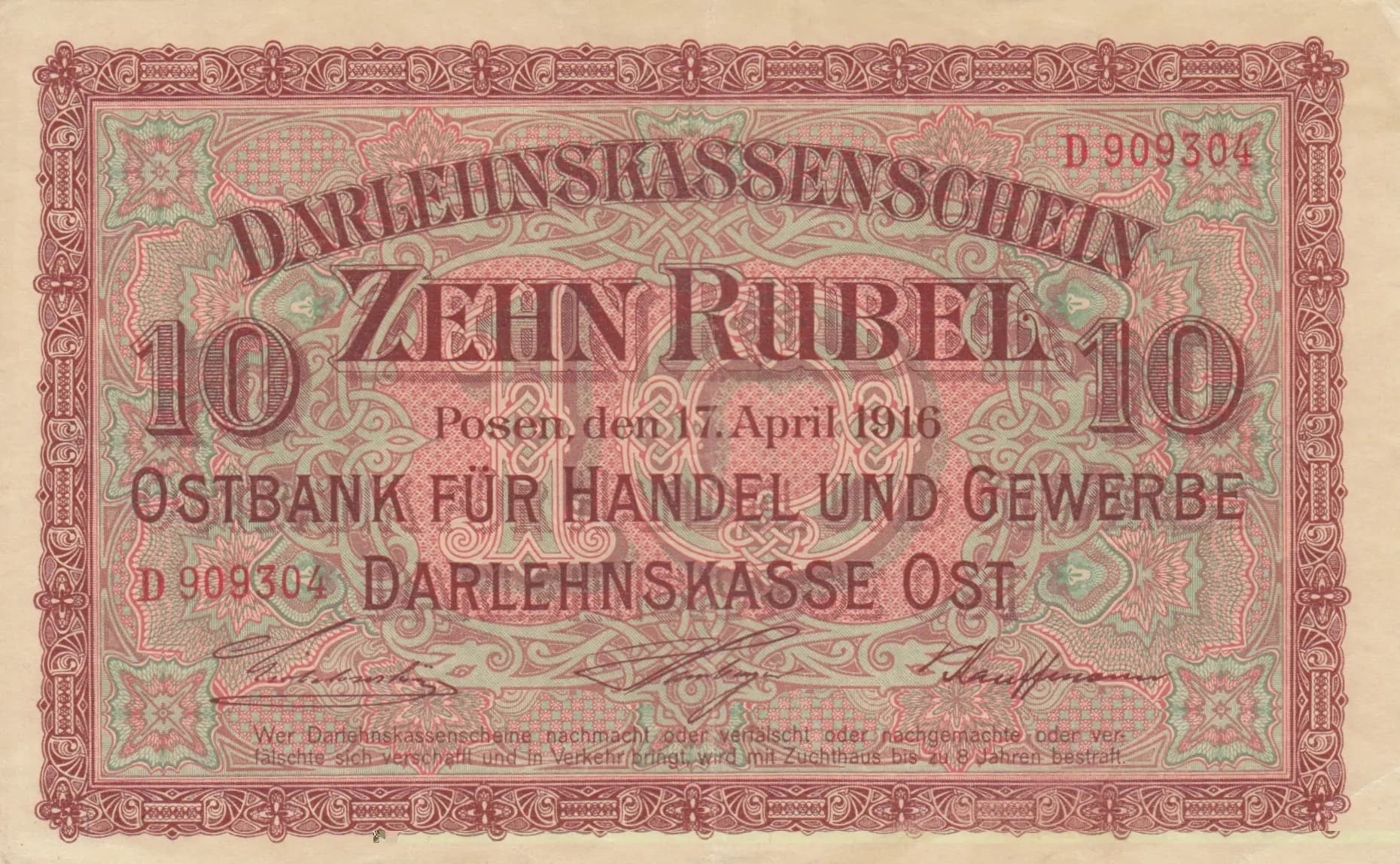
20 000 000 mark 1923
Market Prices
About This Note
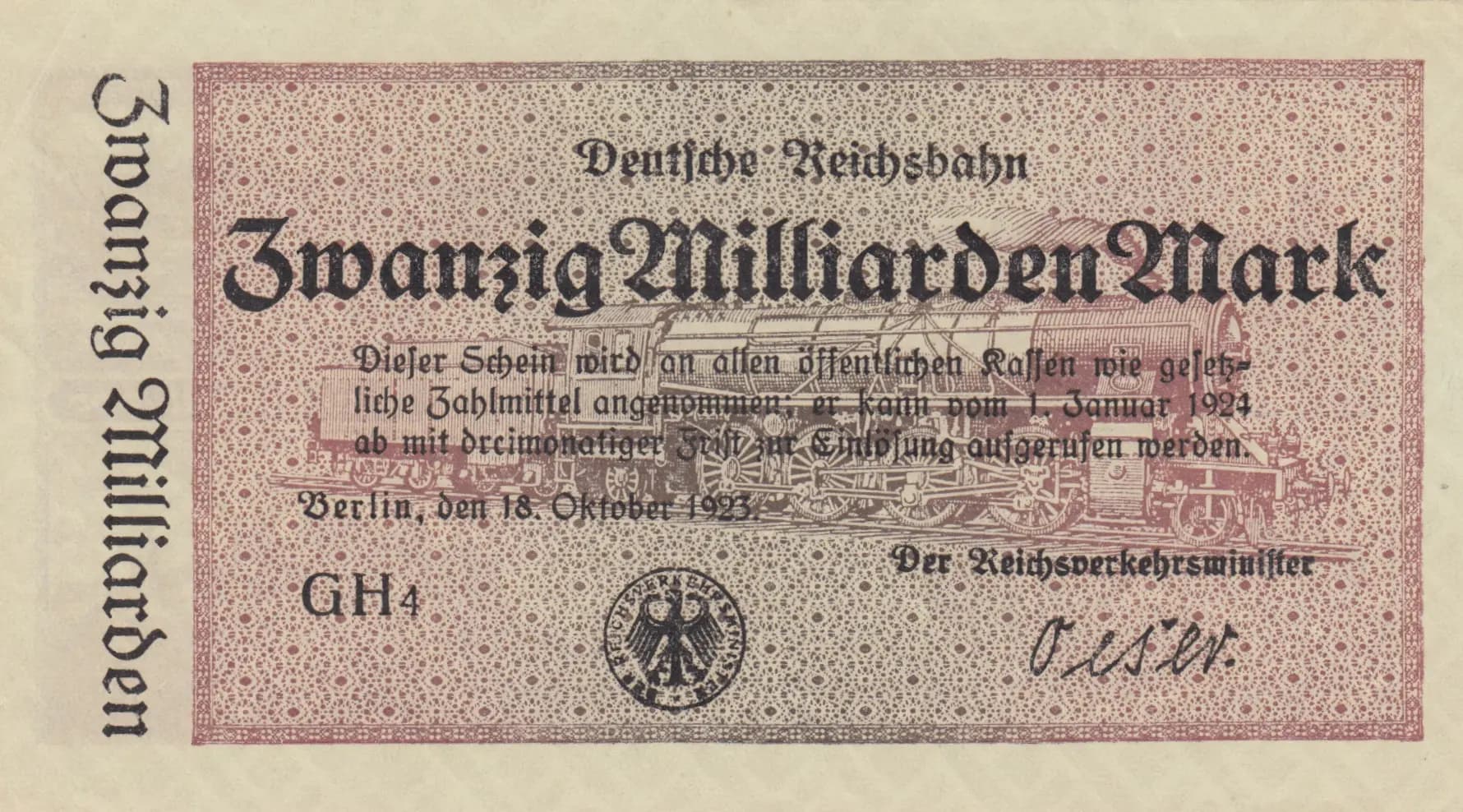
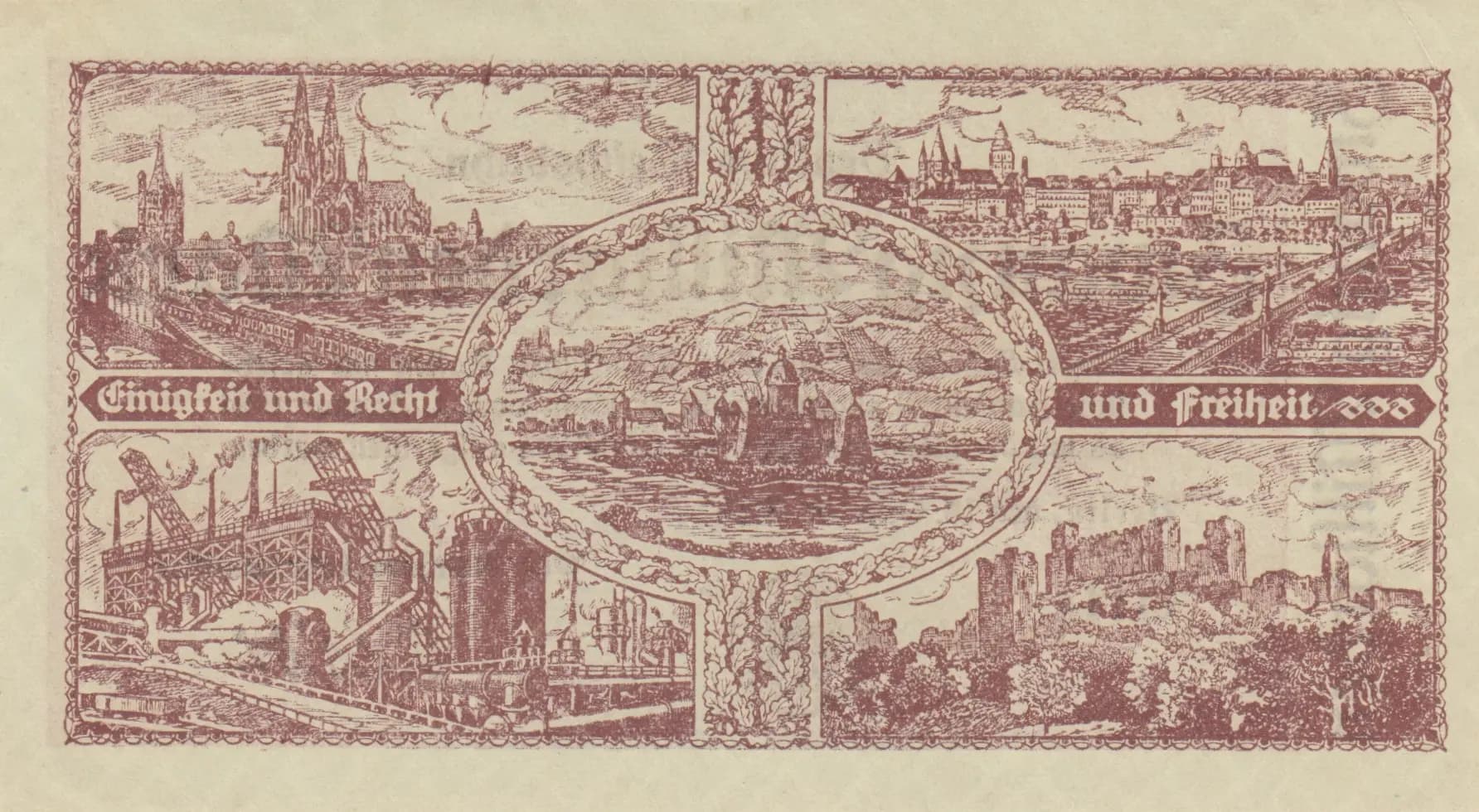
This is a Deutsche Reichsbahn 20 Milliarden Mark emergency railway banknote issued October 18, 1923, during Germany's hyperinflation crisis. The note displays the characteristic mauve and cream coloring typical of this issue, with an intricate steam locomotive vignette on the obverse and detailed architectural scenes on the reverse depicting German landmarks and industrial centers. In AU condition, this example shows minor age-related foxing and edge wear consistent with a 100-year-old historical document, with well-preserved printing detail and clear legibility of all security features and inscriptions.
Common. The eBay price tracking data shows this note regularly selling in the $1.99–$14.99 USD range across various condition grades, with AU examples consistently priced at $14.99 USD. The Deutsche Reichsbahn emergency notes of 1923 were issued in substantial quantities to facilitate railway operations during hyperinflation and were not recalled or destroyed systematically, resulting in widespread survival. Print runs were large, and these notes remain readily available in the collector market. No evidence of scarcity or restricted distribution.
This note represents a critical moment in Weimar economic history, issued by the Deutsche Reichsbahn (Imperial German Railways) as an emergency currency measure during the hyperinflation of 1923. The architectural and industrial vignettes on the reverse—including Gothic cathedrals, factory complexes with smokestacks, fortified castles, and cityscape panoramas—celebrate German infrastructure and industrial pride even as the currency itself became nearly worthless within months. The three-month redemption clause printed on the obverse reflects the temporary emergency nature of the issue, as the Mark would be completely replaced by the Rentenmark in November 1923.
The obverse features the name and authority of the Deutsche Reichsbahn prominently displayed with ornate serif typography in black on a dull mauve-brown background. A detailed engraved steam locomotive—the symbolic core of the railway system—dominates the center as the primary vignette, representing the nation's transportation infrastructure. An imperial German eagle seal (Reichsadler) appears as the official authority mark, accompanied by a printed signature of the Reichsverkehrsminister. Decorative guilloche patterns and rosette designs frame the composition. The reverse presents a sophisticated multi-part vignette arrangement: a central oval medallion showcases a fortified castle on a riverbank (likely the Rhine), surrounded by four corner scenes depicting German architectural heritage—a Gothic cathedral (upper left), an industrial cityscape with prominent factory smokestacks (lower left), a city skyline with church spires (upper right), and a hillside village landscape (lower right). These diverse landmarks celebrate Germany's cultural, industrial, and natural heritage. All elements are rendered in fine-line engraving in dark brown and maroon on the same mauve-cream background, with ornamental frames and laurel wreaths unifying the design.
OBVERSE: 'Deutsche Reichsbahn' (German Imperial Railway); 'Zwanzig Milliarden Mark' (Twenty Billion Mark); 'Dieser Schein wird an allen öffentlichen Kassen wie geldliche Zahlmittel angenommen, er kann vom 1. Januar 1923 ab mit dreimonatiger Kündigungsfrist aufgerufen werden.' (This note will be accepted at all public counters as legal tender; it can be called in from January 1, 1923 with three months' notice.); 'Berlin, den 18. Oktober 1923' (Berlin, October 18, 1923); 'Der Reichsverkehrsminister' (The Imperial Transport Minister); 'GH4' (reference code). REVERSE: 'Einigkeit und Recht' (Unity and Justice); 'und Freiheit' (and Freedom) — phrases from the German national anthem.
Intaglio engraving (copperplate/steel die printing) executed by the Reichsbank's primary security printer. The fine-line engraving detail visible in both the locomotive vignette and the architectural scenes, the precision of the ornamental guilloche patterns, and the subtle shading gradations are characteristic of professional intaglio production. The color scheme—achieved through selective inking of the engraved plate—demonstrates the sophisticated multi-color intaglio capability typical of Weimar-era Reichsbank security printing. Paper: light green stock as noted in catalog reference.
The primary catalog reference is Pick S1022. Known varieties for this 20 Milliarden Mark Reichsbahn issue include notes with and without printed serial numbers (as noted in the catalog reference data). The observed example displays the reference code 'GH4,' which may indicate a specific printing batch or series designation. The date October 18, 1923, is standard for this issue. Serial number presence/absence and specific printer batch codes (such as GH4) would constitute the main distinguishing varieties, though these do not significantly impact value given the note's common status.