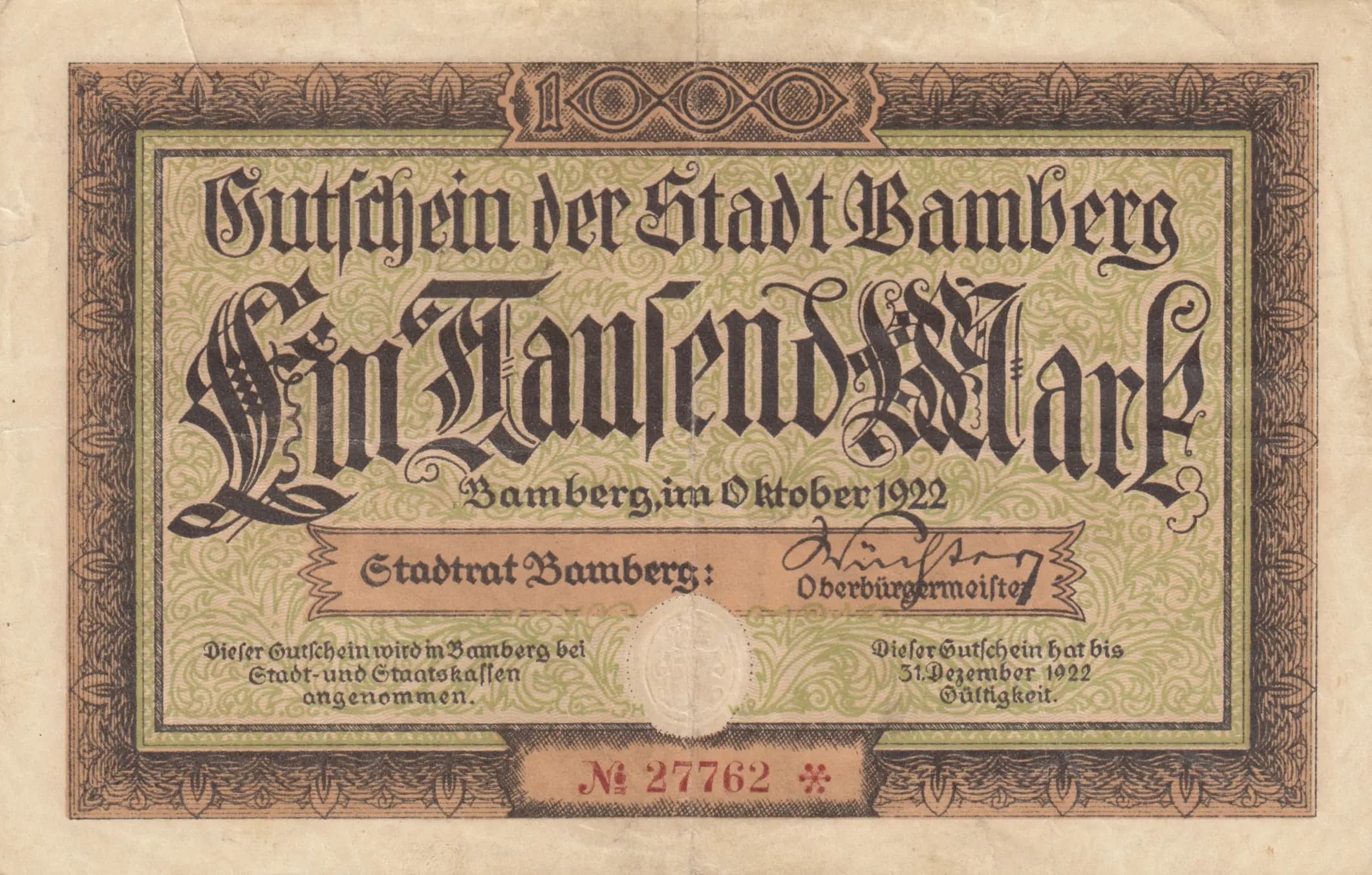
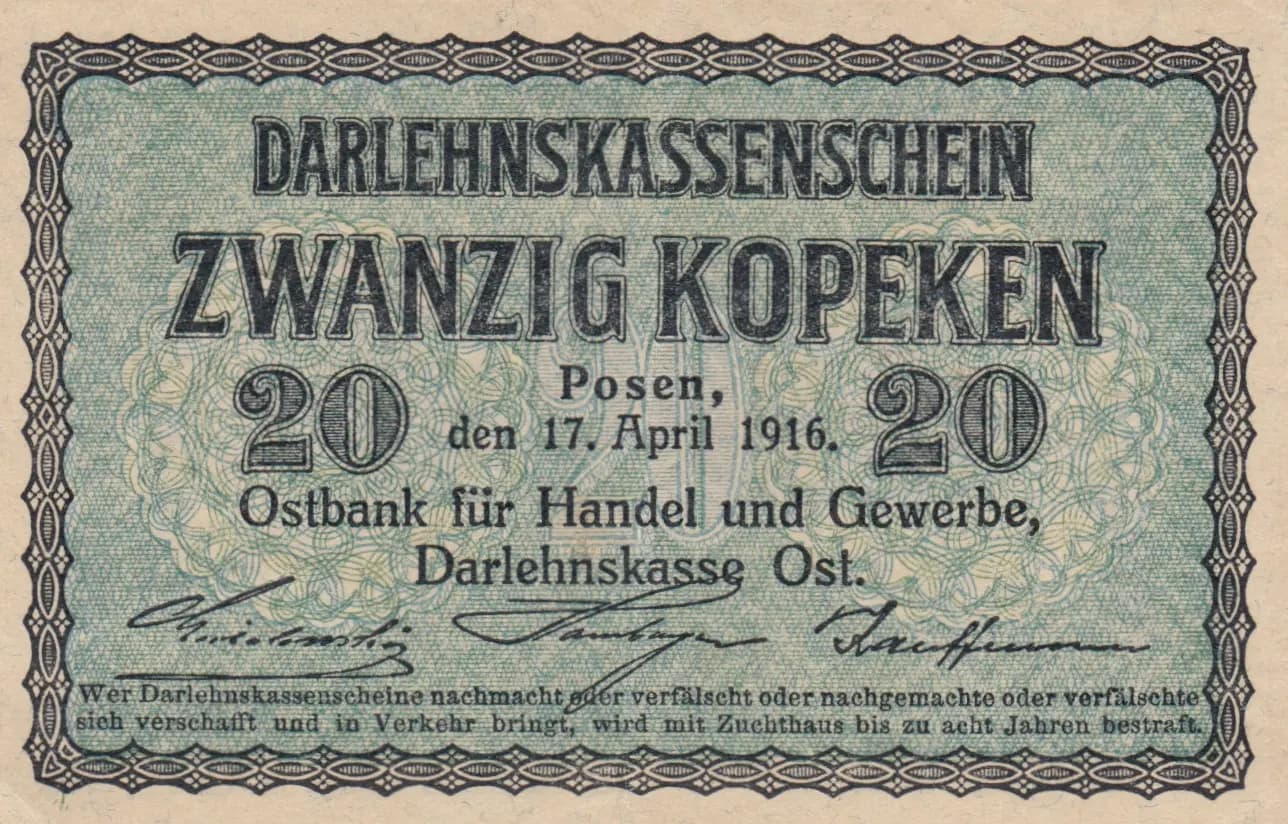
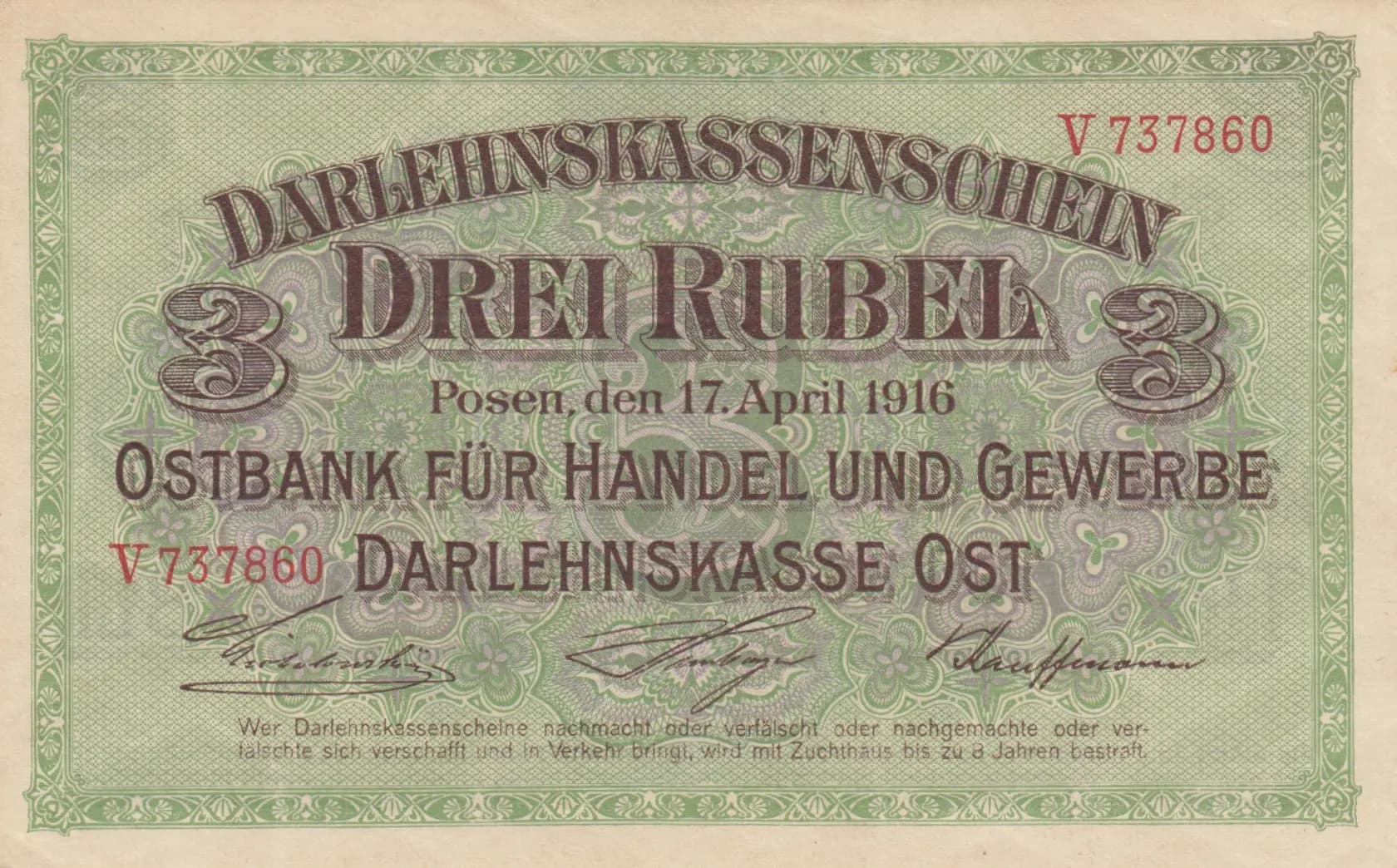
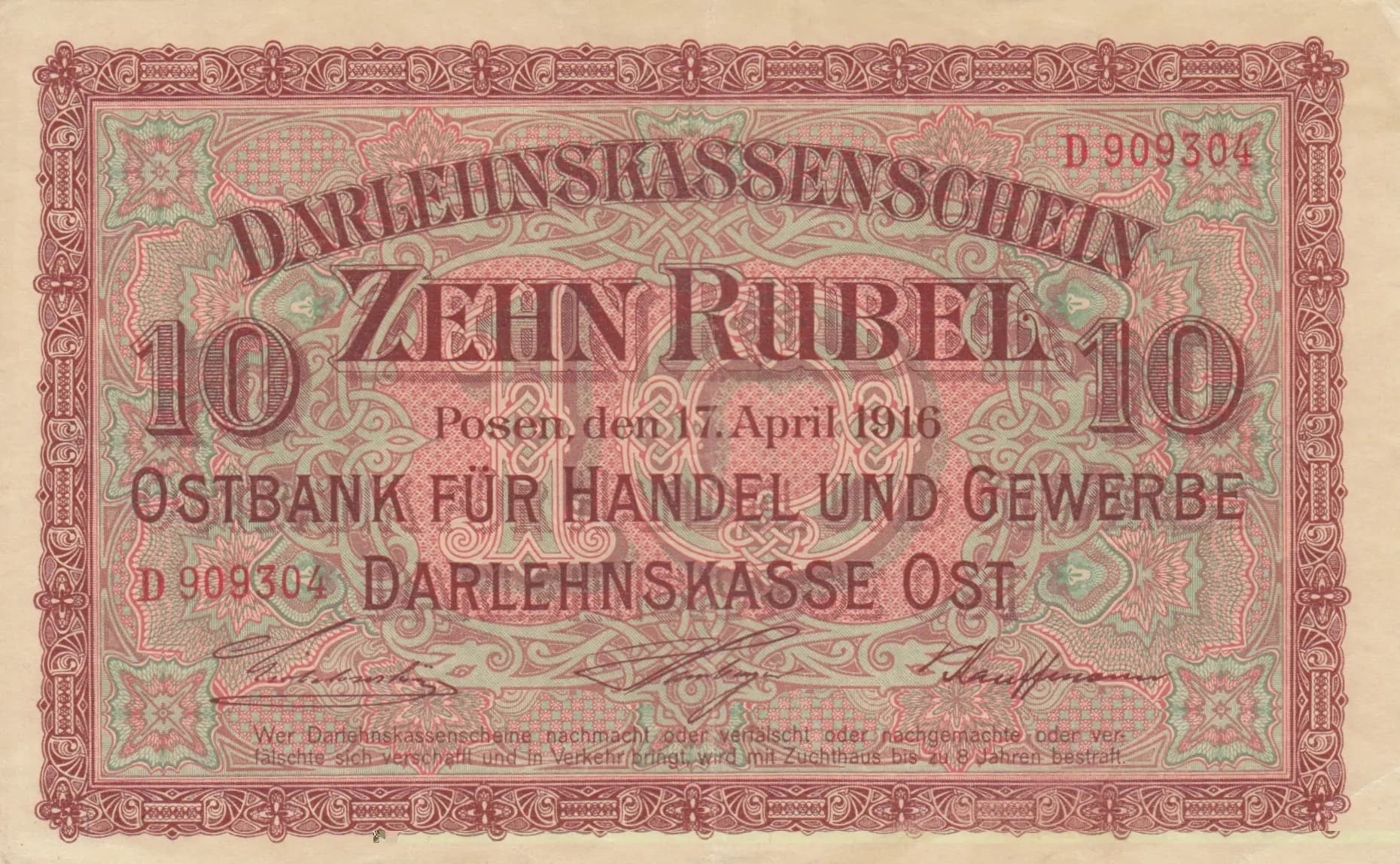
1000 mark 1922
About This Note
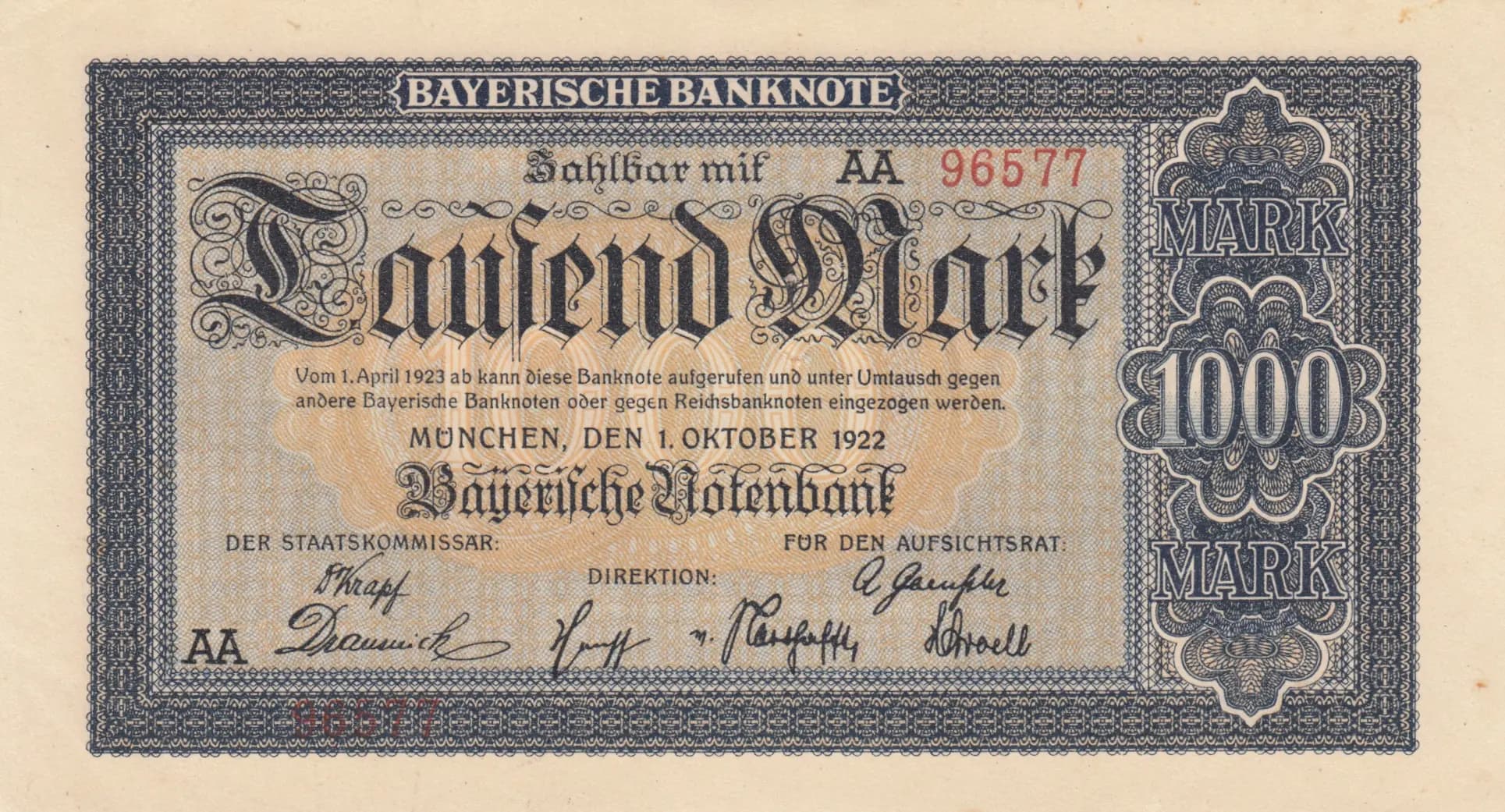
This 1000 Mark note from the Bayerische Notenbank, dated October 1, 1922, is an exceptional example of Bavarian hyperinflation-era currency in AU condition. The note displays crisp printing throughout with no visible wear, creases, or foxing, showcasing the intricate guilloche patterns and ornamental borders characteristic of early 20th-century German engraving. This is a historically significant piece documenting Bavaria's role in the German monetary crisis, issued just months before the currency's complete collapse and the transition to Reichsmark.
Common. The Bayerische Notenbank issued substantial quantities of this denomination during the hyperinflation period to meet currency demands. While all Bavarian banknotes are now historical artifacts, the 1000 Mark denomination was produced in significant numbers, and examples regularly appear on the philatelic and numismatic market. The AU condition grade elevates its desirability among collectors, but the underlying issue itself is not scarce.
Issued during the final months of the German hyperinflation crisis, this note represents the Bayerische Notenbank's attempt to maintain regional currency authority before the unified Reichsmark system took over in 1924. The inscription referencing April 1, 1923 as the date for potential redemption and exchange reflects the transitional monetary period when Bavaria's independent banknote authority was being phased out. The formal governance structure noted on the face—with State Commissar, Supervisory Board, and Management signatures—illustrates the complex administrative framework managing German currency during this economic emergency.
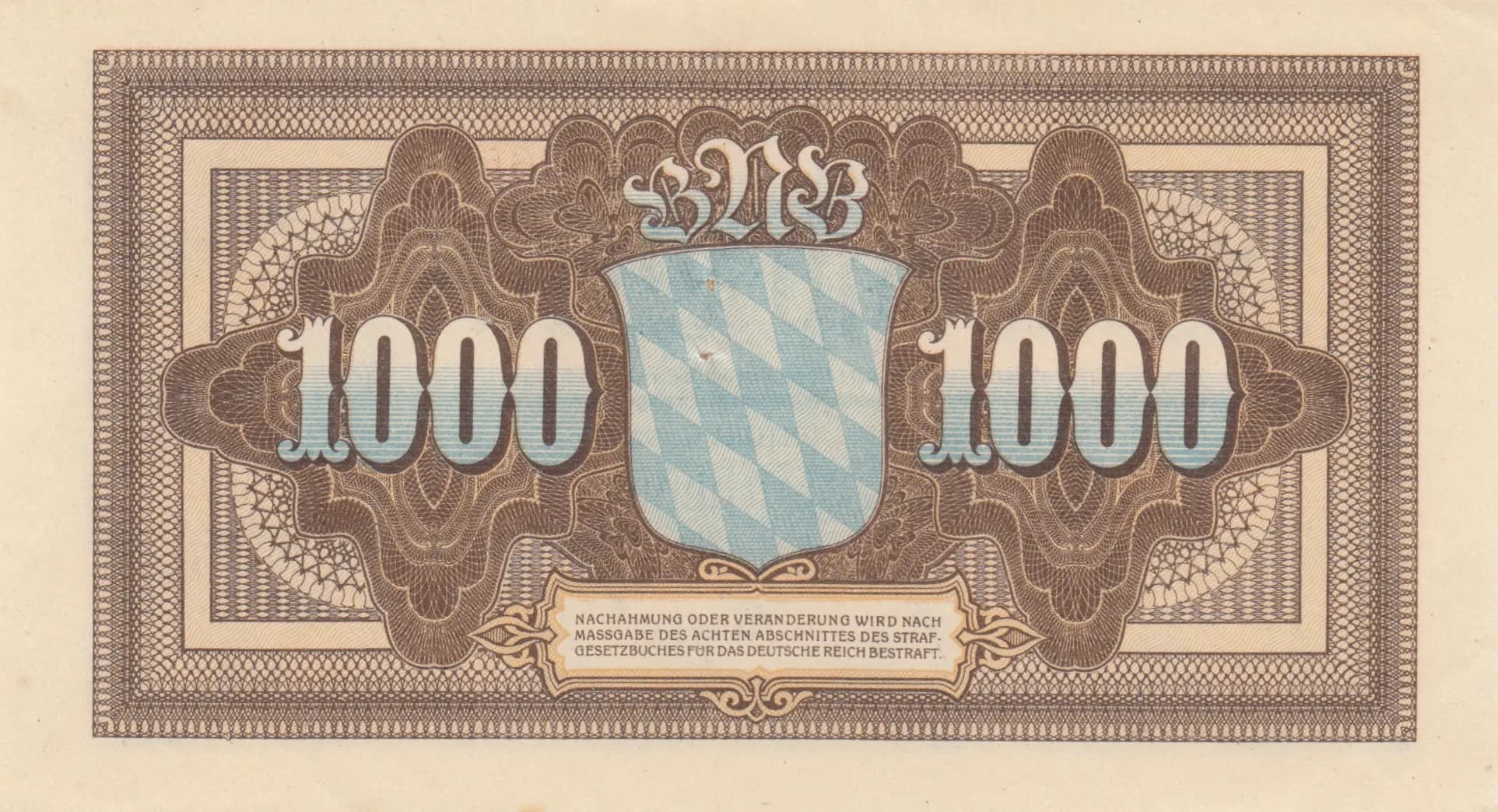
This banknote features the characteristic design elements of Bavarian currency during the hyperinflation period. The obverse displays the Bavarian Notenbank's formal authorization text with ornate Gothic-script typography, official signature blocks for state administrative officials, and an ornamental shield with Bavarian heraldic elements on the right margin. The reverse showcases the most prominent design feature: the Bavarian coat of arms (Wappenschild) in the center, displaying the characteristic blue and white diamond pattern (Bavarian lozenge) of the Bavarian state symbol, flanked by two large '1000' denomination numerals. The entire design is framed by elaborate floral and scroll motifs with intricate geometric guilloche patterns that extend throughout both sides. No portraits are depicted, consistent with German monetary design conventions of the era. The color scheme combines navy and dark blue on the obverse with brown, tan, and cream tones on the reverse, with accent colors in red for serial numbers.
FRONT SIDE: 'Bavarian Banknote' (Bayerische Banknote) — 'Payable with' (Zahlbar mit) — Serial number: AA 96577 — 'One Thousand Mark' (Tausend Mark) — 'From April 1, 1923 onwards, this banknote can be called in and exchanged for other Bavarian banknotes or Reichsbanknoten.' (Vom 1. April 1923 ab kann diese Banknote aufgerufen und unter Umtausch gegen andere Bayerische Banknoten oder gegen Reichsbanknoten eingezogen werden.) — 'Munich, October 1, 1922' (München, den 1. Oktober 1922) — 'Bavarian Banknote Bank' (Bayerische Notenbank) — 'The State Commissar' (Der Staatskommissar) — 'For the Supervisory Board' (Für den Aufsichtsrat) — 'Management' (Direktion) — Denomination markers: '1000' and 'Mark' BACK SIDE: Two instances of '1000' flanking the central coat of arms — 'Counterfeiting or alteration will be punished according to the provisions of the eighth section of the penal code for the German Reich.' (Nachahmung oder Veränderung wird nach Massgabe des achten Abschnittes des Strafgesetzbuches für das Deutsche Reich bestraft.)
Intaglio engraving (copperplate/steel engraving), the standard security printing method for German banknotes during this period. The crisp, fine line work evident throughout—particularly in the guilloche patterns, ornamental borders, and geometric designs—is characteristic of intaglio printing. The three-dimensional quality of the printing and the precision of the line engraving are visible in both the obverse and reverse imagery. This note was produced by one of Germany's authorized security printers, likely Giesecke+Devrient or a similar official contractor, though specific printer attribution for this Pick number would require additional archival documentation.
This specific variety is identified by serial number prefix 'AA' with sequence number 96577, dated Munich, October 1, 1922. The Bayerische Notenbank 1000 Mark note (Pick S924) exists in multiple signature varieties depending on which officials signed and in which positions. This example bears the standard governance signatures for the Staatskommissar (State Commissar), Aufsichtsrat (Supervisory Board), and Direktion (Management). Serial number prefixes including 'AA' are documented for this issue, though complete census data on all prefix varieties would require specialized Bavarian currency catalogs.