5 dalasi 1972 specimen
Market Prices
4 salesAbout This Note
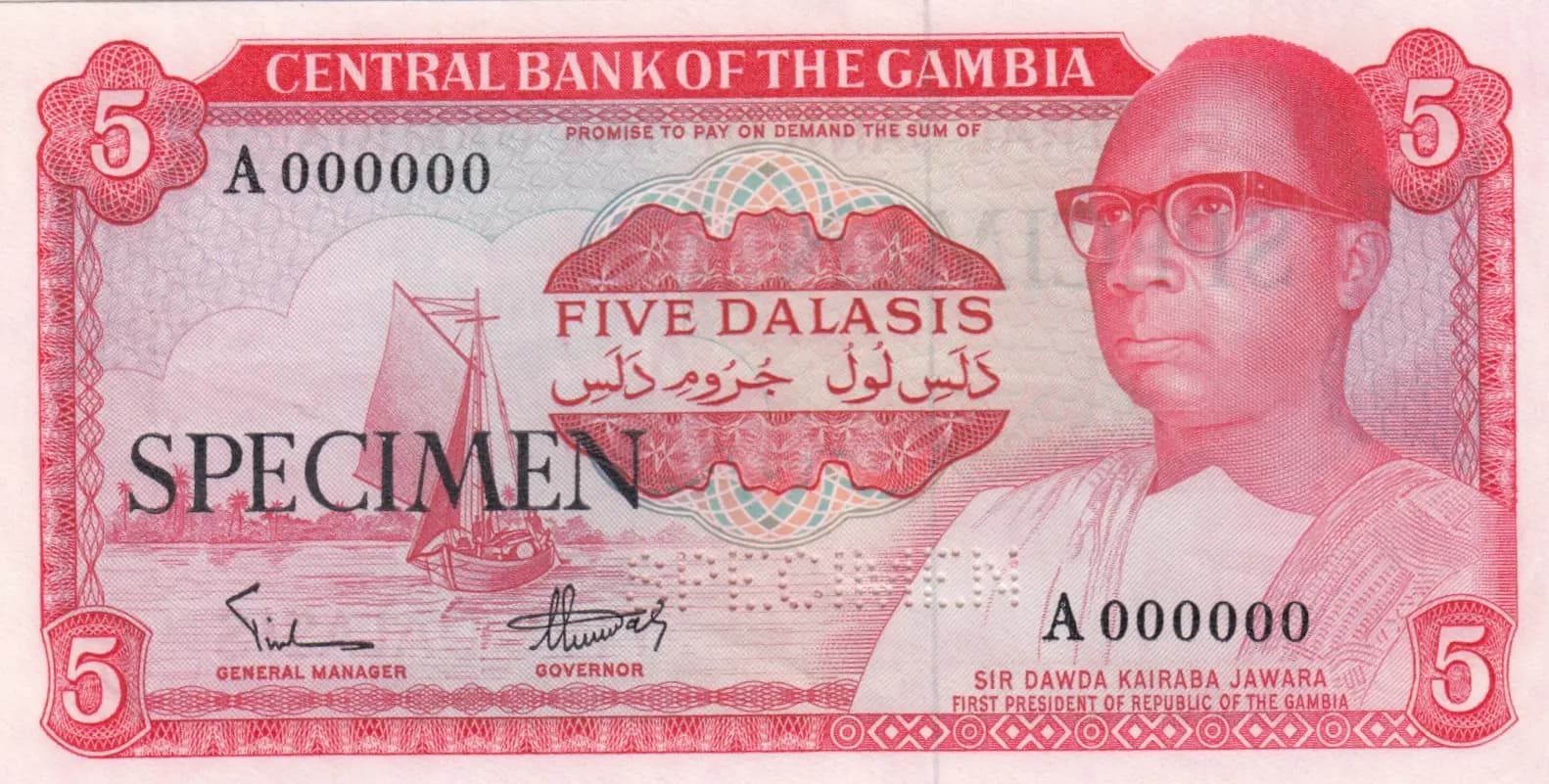
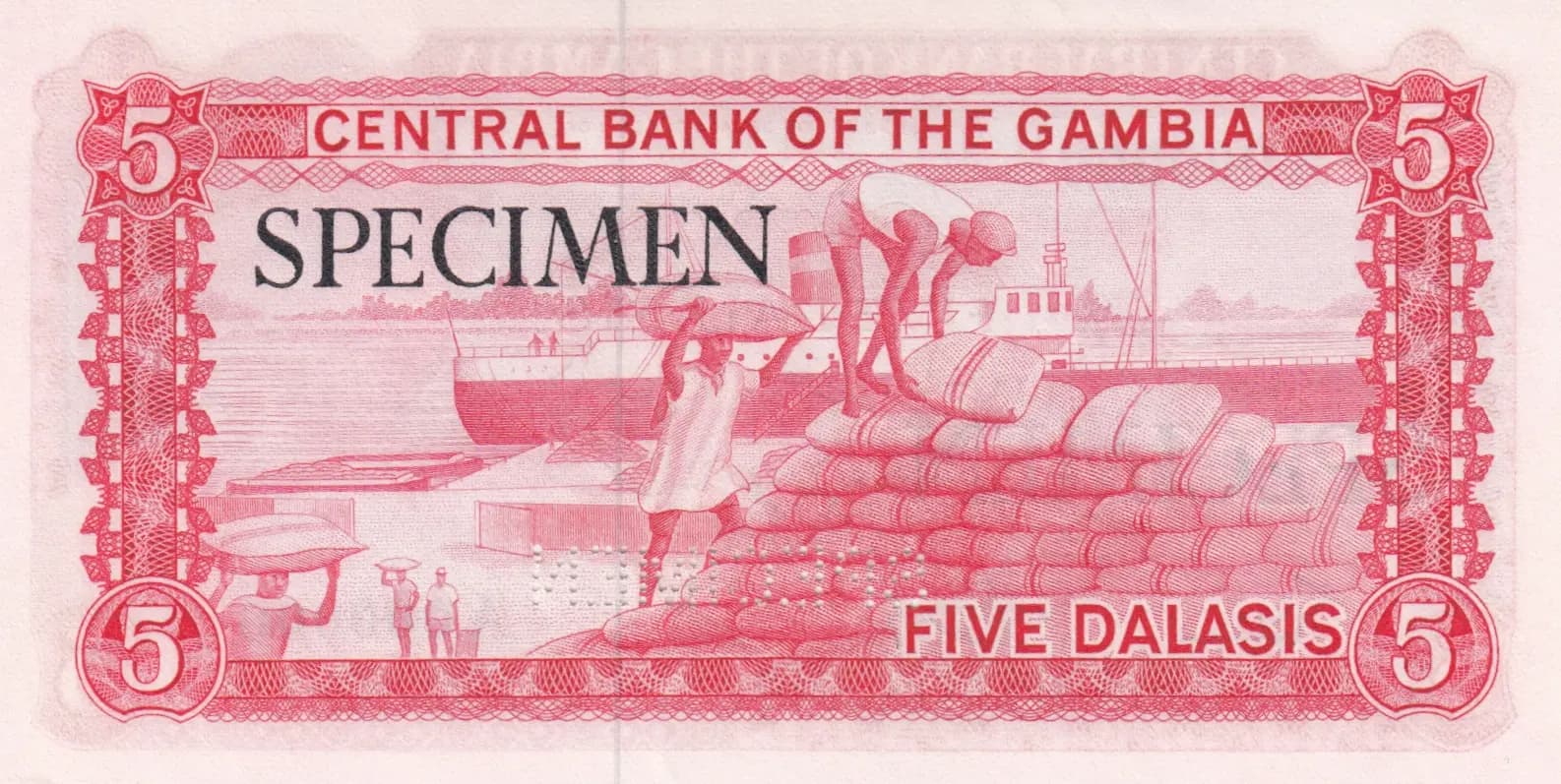
This is a 1972 specimen 5 Dalasi note from the Central Bank of The Gambia, presented in pristine uncirculated condition. The note features a striking red/pink color scheme with a traditional sailing dhow on the obverse and a harbor scene depicting port workers handling cargo on the reverse, reflecting Gambia's maritime and trading heritage. As a specimen example with A 000000 serial number, this represents an unissued bank proof note, making it a desirable collectible for both Gambian numismatics and African banknote specialists.
Common. eBay market data shows recent sales in the $1.26–$12.49 range for circulated grades, with 2019 catalogue valuations placing UNC specimens at $185. While specimen notes are less common than regular circulated issues, this particular Pick number (P-5s) represents a standard specimen example from a stable, ongoing issue (1972–1986 date range per banknote.ws). The note was part of a regular issue series by a functioning central bank, and specimen examples were produced in moderate quantities for presentation and security purposes. The UNC condition maintains collectible value, but the overall scarcity level remains low relative to truly rare African notes.
Issued in 1972, the year following Gambia's independence as a republic, this note celebrates the nation's first president Sir Dawda Kairaba Jawara and its economic foundation in groundnut export trade and maritime commerce. The imagery—a traditional sailing vessel and bustling port activity—symbolized Gambia's reliance on river trade and agricultural exports during the early post-colonial period. The bilingual inscriptions in English and Arabic reflect Gambia's cultural and economic ties to both Western and Islamic trading partners.
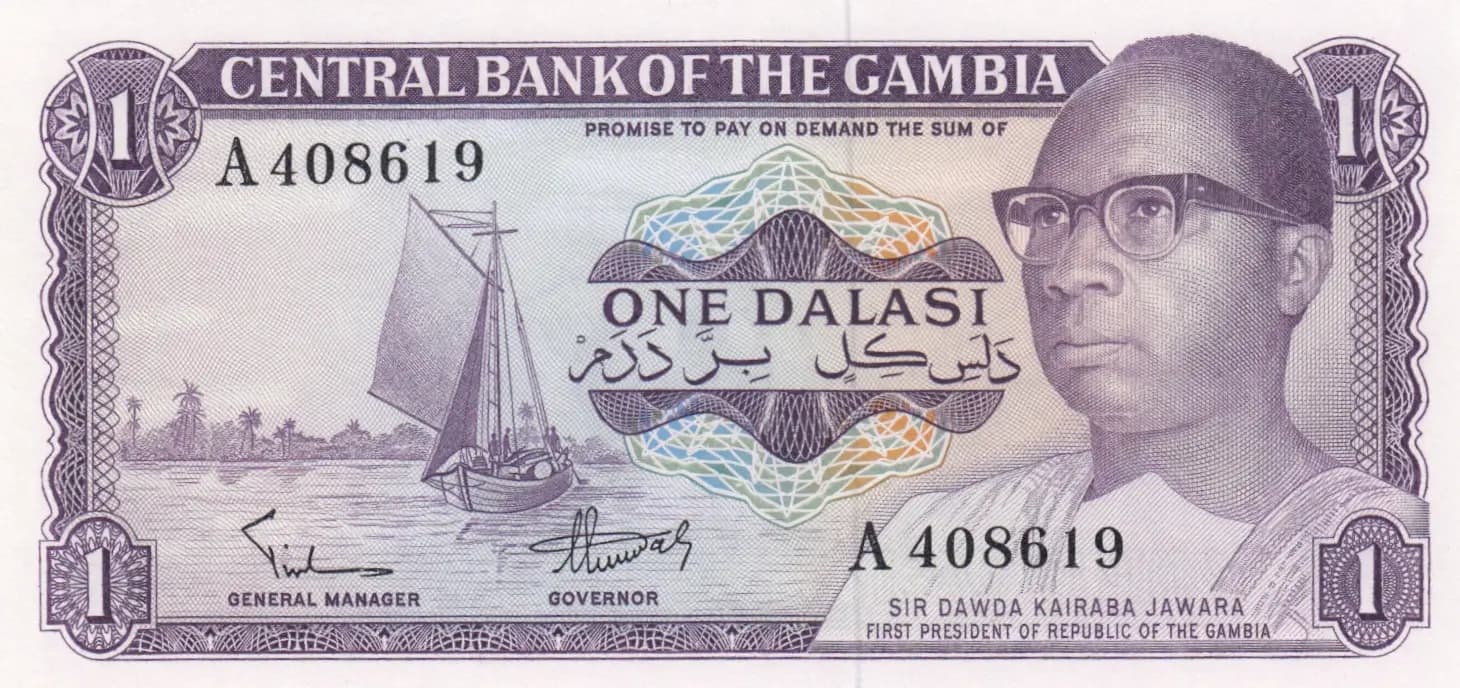
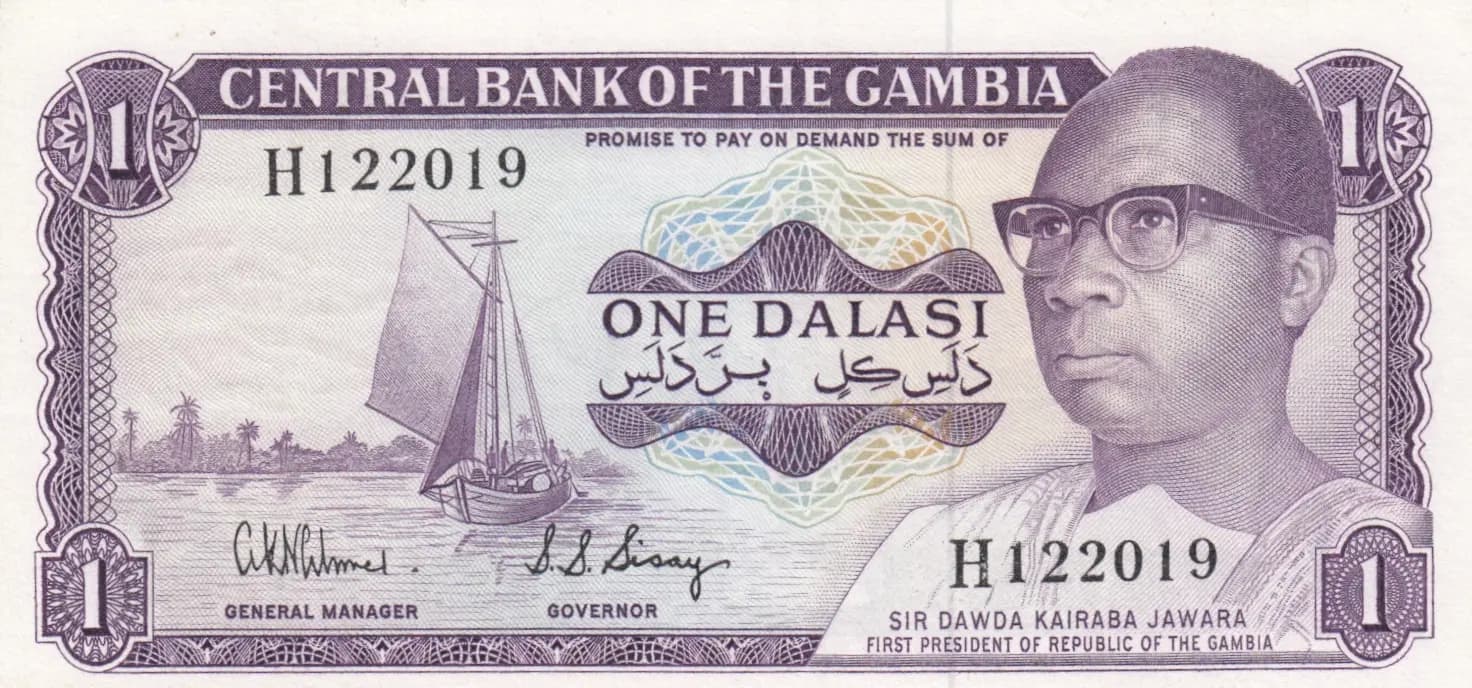
The obverse features a formal portrait of Sir Dawda Kairaba Jawara, Gambia's First President, positioned on the right side wearing his characteristic red cap and glasses, rendered in fine line engraving. The left side depicts a traditional dhow—a West African sailing vessel representative of the region's maritime heritage and Gambia's position on the Senegal River. The reverse illustrates economic activity central to Gambian identity: dock workers actively loading large sacks of goods (likely groundnuts, Gambia's primary export) at a busy port with trading vessels visible in the background. All four corners feature ornate decorative emblems with the numeral 5, while the overall design employs classical guilloche border patterns and intricate geometric frames. The color palette of red and pink on a white/pale gray background creates a warm, distinctive appearance characteristic of early Central Bank of The Gambia issues.
Front Side: 'CENTRAL BANK OF THE GAMBIA' (institutional issuer), 'PROMISE TO PAY ON DEMAND THE SUM OF' (legal tender clause), 'FIVE DALASIS' (denomination in English), 'خمسة دالاسيس' (denomination in Arabic: 'Five Dalasis'), 'A 000000' (specimen serial number), 'SPECIMEN' (proof/specimen marking), 'GENERAL MANAGER' and 'GOVERNOR' (signature titles), 'SIR DAWDA KAIRABA JAWARA' (portrayed dignitary), 'FIRST PRESIDENT OF REPUBLIC OF THE GAMBIA' (official title), '5' (denomination numeral). Back Side: 'CENTRAL BANK OF THE GAMBIA' (issuer identification), 'SPECIMEN' (proof marking), 'FIVE DALASIS' (denomination), '5' (denomination numerals in corners).
Intaglio (recess) printing, evidenced by the fine line engraving visible throughout the portrait, sailing vessel, and harbor scene, as well as the intricate guilloche patterns in the borders. The precision of detail in the workers' figures and cargo handling scene, combined with the depth of the color application and sharp edge definition on decorative elements, indicates professional security printing typical of 1970s African central bank note production. The specimen marking and registration precision suggest production by an established international security printer, likely De La Rue or a similar firm specializing in Commonwealth currency production.
This is identified as P-5s (specimen variety) per Pick catalog designation. The visual analysis confirms the specimen marking 'A 000000' serial number and 'SPECIMEN' overprint. According to the PMG population report, this base Pick number exists in five cataloged variants (P-5a, P-5b, P-5c, P-5d, and P-5s), with the specimen variant (P-5s) distinguished by its proof status and non-sequential serial number. The external reference notes the absence of microprinting below 'PROMISE TO PAY THE BEARER' text, which was added in later variants such as P-9. No signature varieties or date variations are evident in this specimen example, and the crocodile watermark is consistent with the established design.