1 pound 1965
Market Prices
10 salesAbout This Note
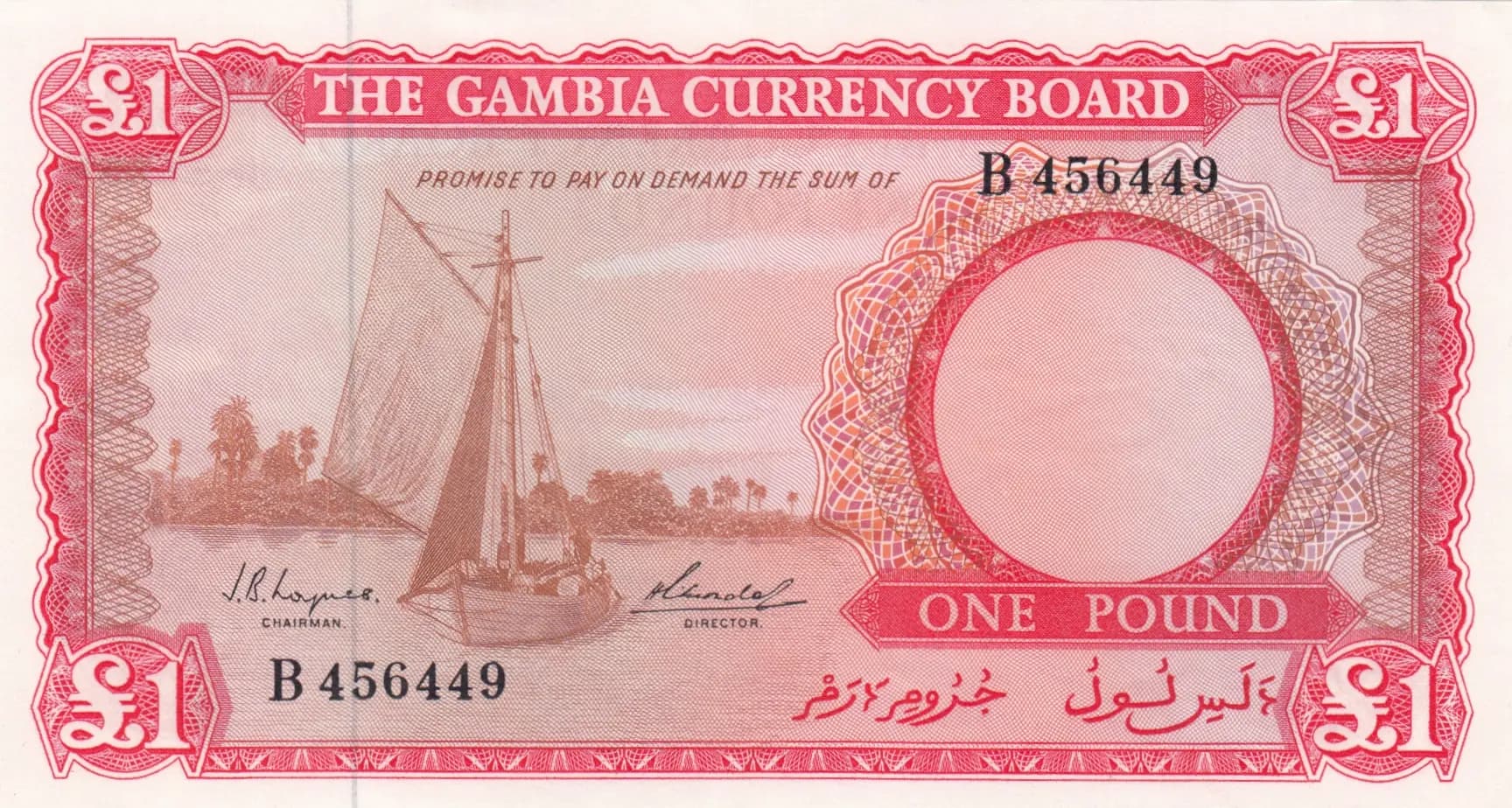
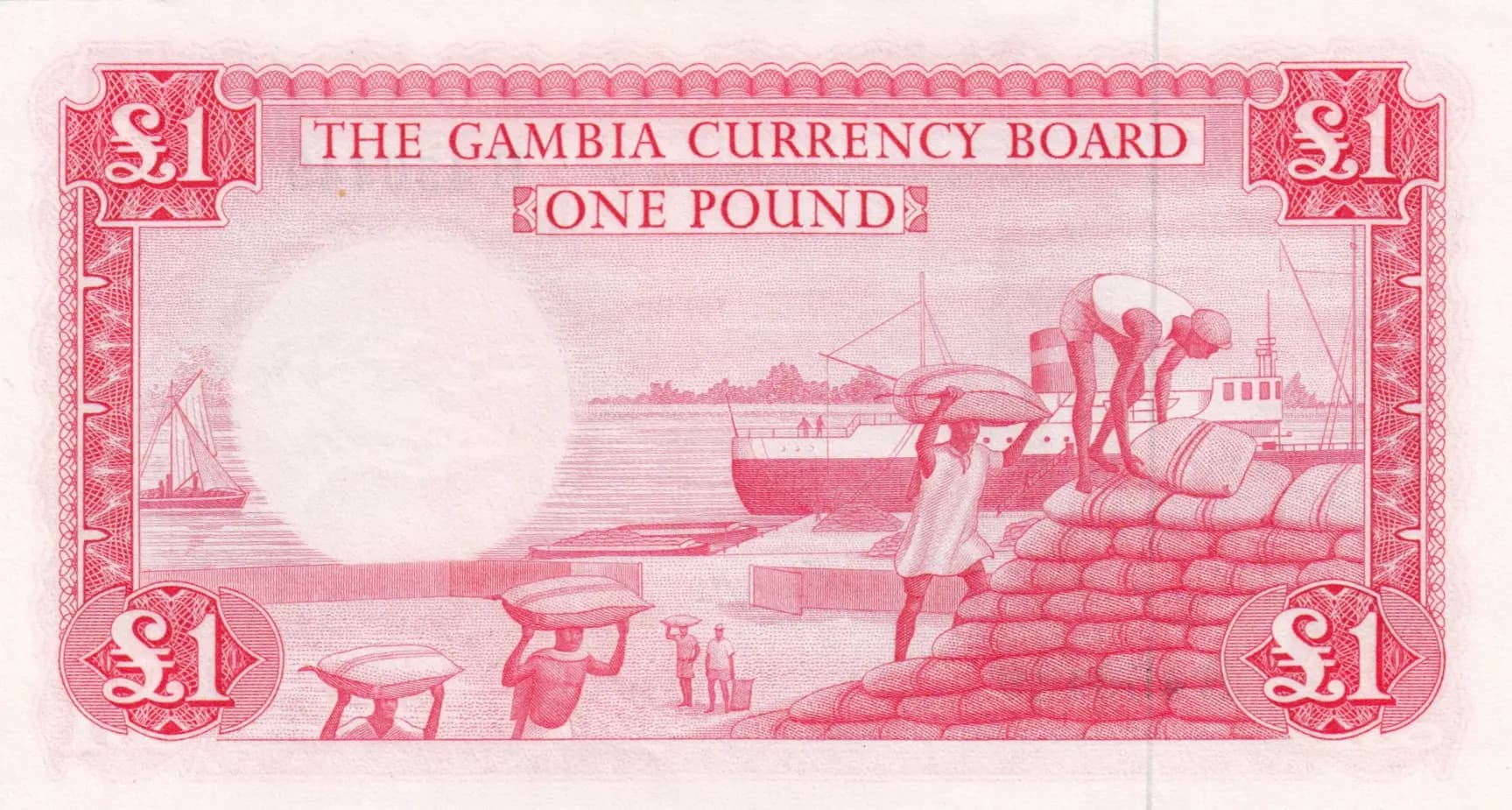
This is a 1965 one pound note from The Gambia Currency Board, graded UNC, featuring distinctive pink and red engraving throughout. The obverse displays an elegant sailing dhow on the left with coastal settlement in the background, while the reverse depicts dock workers actively loading cargo at a busy waterfront—imagery that vividly captures Gambia's maritime economy during this period. The note exhibits exceptional preservation with minimal wear despite its nearly 60-year age, making it a desirable example for collectors seeking early Commonwealth currency issues.
Common. While this is an early post-independence Gambian note with historical significance, the eBay market data shows consistent sales in the $20-$140 range across multiple condition grades (VG through PMG 66) spanning over a decade, with 2019 catalog values of $200 UNC reflecting collector pricing rather than scarcity. The note was part of a standard Currency Board issue with substantial circulation, and examples appear regularly in the collector market. No evidence of limited print runs or recall exists in available records.
Issued by The Gambia Currency Board during the early independence period (1965-1970), this note reflects the nation's economic focus on maritime commerce and trade. The prominent imagery of sailing vessels and active dock labor on the reverse illustrates Gambia's dependence on river and ocean commerce through the port of Bathurst (now Banjul), while the dhow on the obverse represents the traditional seafaring heritage of the region. This series preceded the transition to the Dalasi currency in 1971, making these pound notes symbols of the colonial-era currency framework.
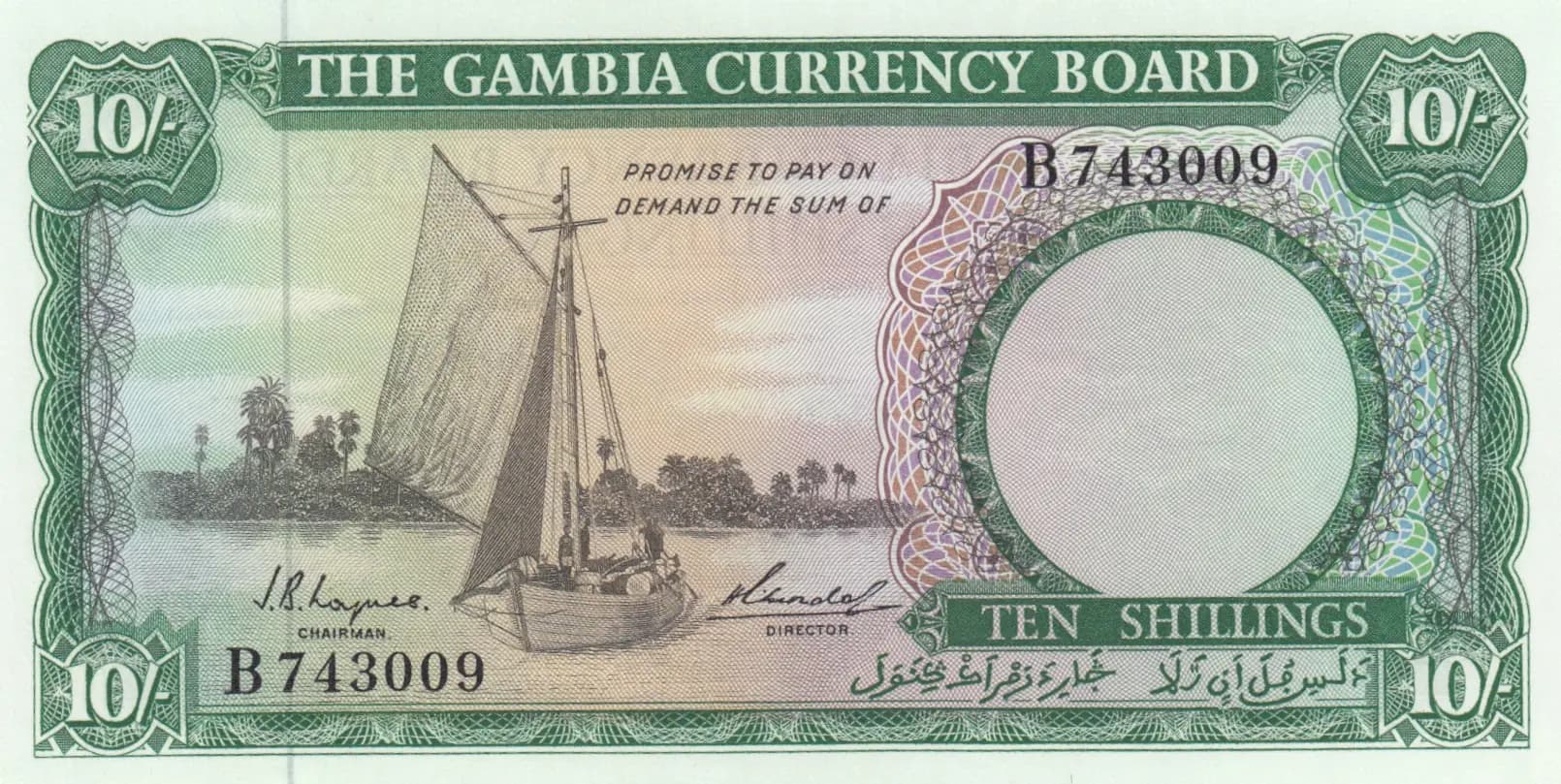
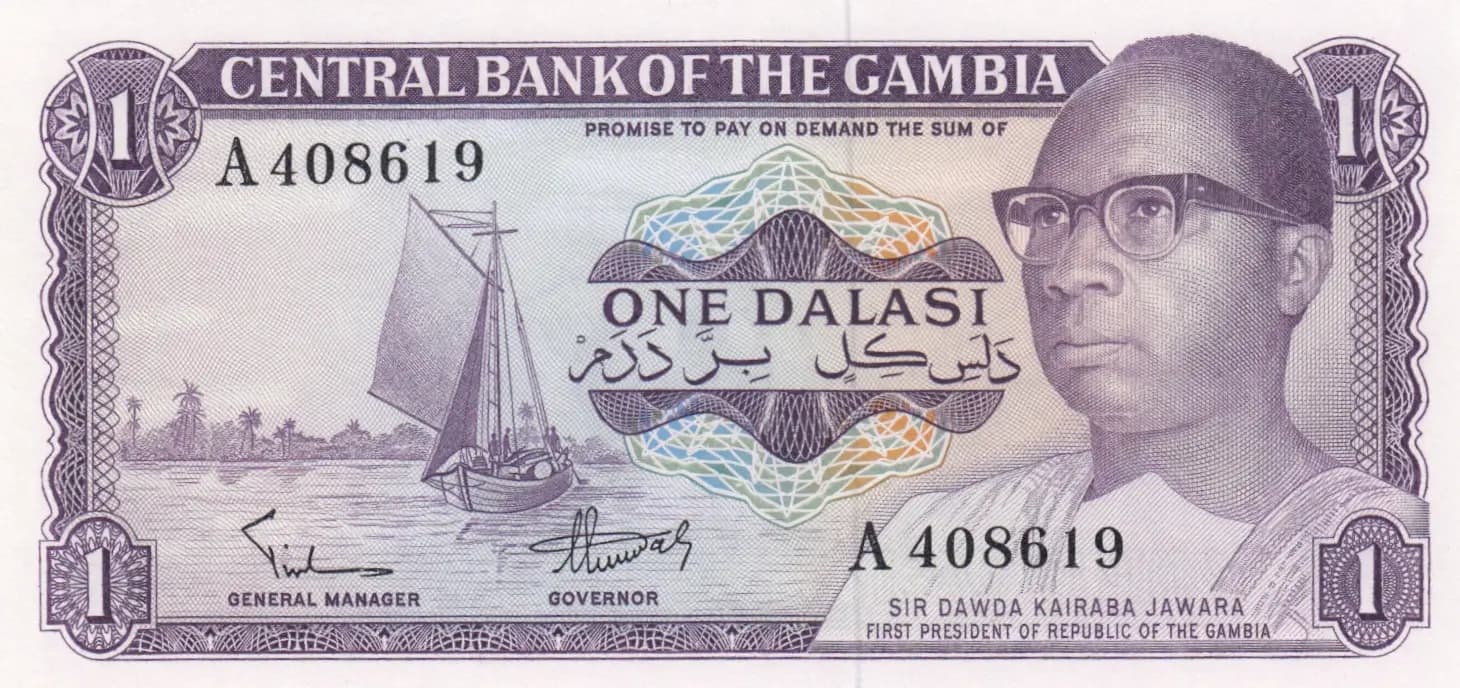
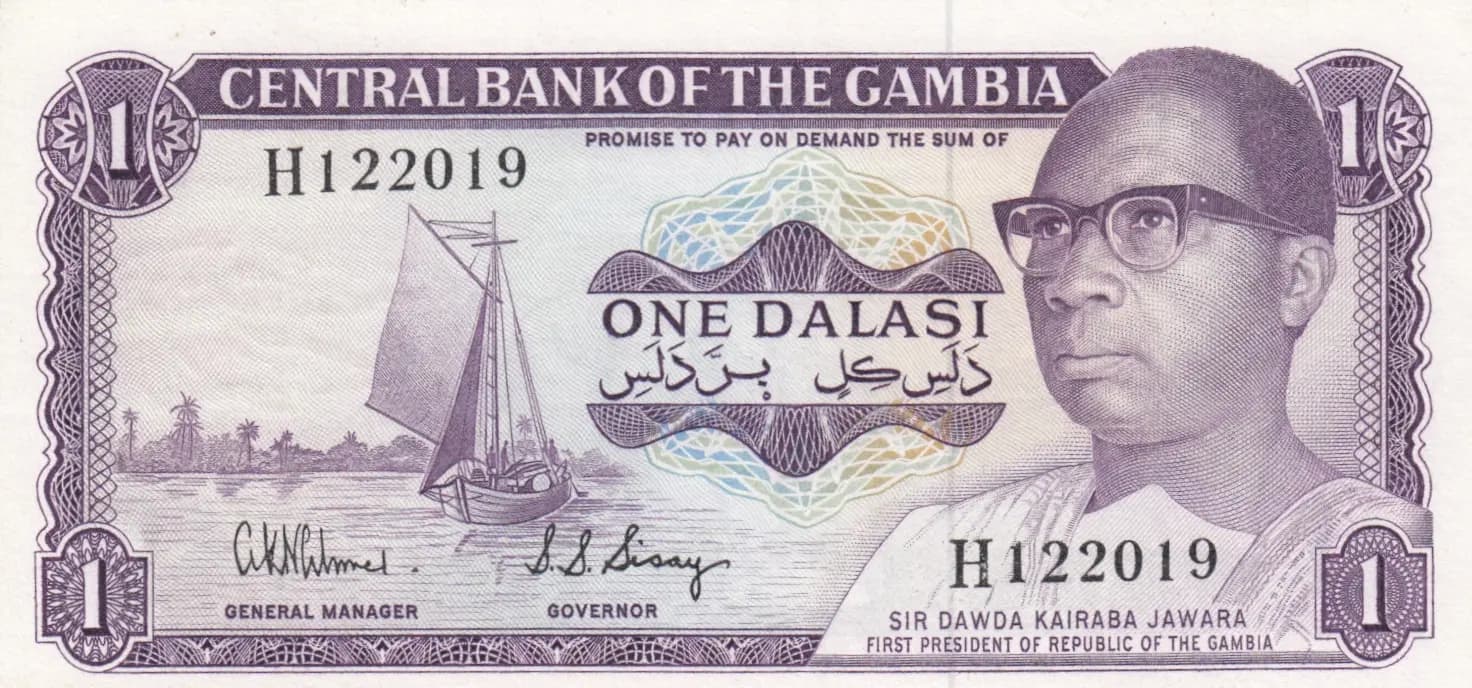
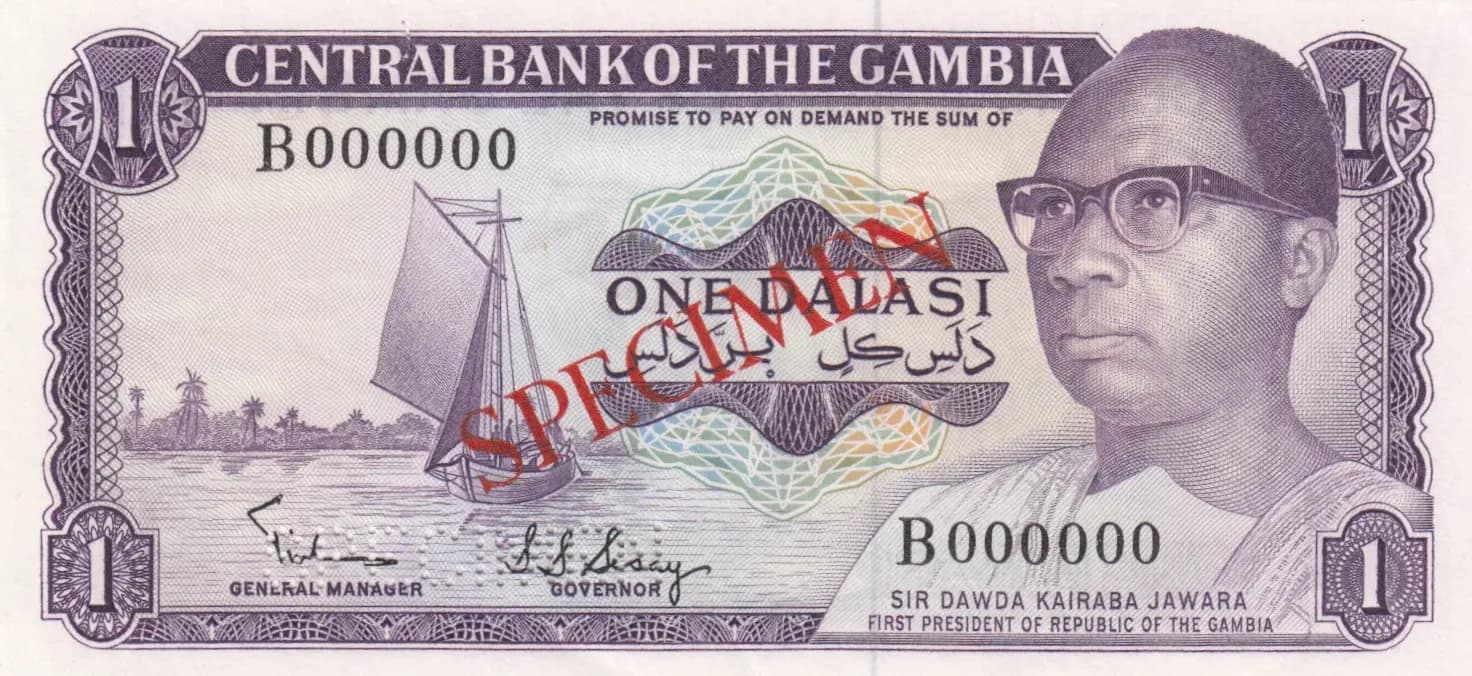
This note exemplifies the aesthetic standards of mid-20th century Commonwealth currency. The obverse features an engraved scene of a traditional West African dhow (wooden sailing vessel) positioned on the left, with a coastal settlement visible in the background—representing Gambia's maritime heritage. The center originally contained space for a portrait, standard on contemporary Currency Board issues. The reverse depicts a vibrant dock scene with multiple laborers engaged in the loading and unloading of large cargo containers and goods, with additional sailing vessels and port infrastructure visible in the background. This imagery emphasizes the commercial vitality of the colonial port. All four corners display ornate £1 symbols within elaborate decorative border panels executed in fine line engraving. The dominant color scheme of pink, red, and tan creates visual distinction while remaining consistent with Commonwealth banking standards of the period.
Front: 'THE GAMBIA CURRENCY BOARD' (top), 'PROMISE TO PAY ON DEMAND THE SUM OF' (center), 'ONE POUND' (denomination text), 'CHAIRMAN' and 'DIRECTOR' (signature lines), Arabic inscription 'لول لغرويز' (One Pound). Serial number: B456449. Back: 'THE GAMBIA CURRENCY BOARD' (top), 'ONE POUND' (denomination).
Intaglio engraving (line engraving and possibly steel engraving) on bank note paper. The visual analysis reveals the characteristic fine line work, intricate border details, and deep impression typical of high-security currency printing. The PMG population report indicates variant P-2a was printed by BWC (Bradbury, Wilkinson & Company), the prominent British security printer of the era. The complexity of the maritime scenes and ornamental borders, combined with the watermark feature (crocodile's head), indicates production to the highest standards of mid-20th century banknote manufacture.
Pick P-2, designated as P-2a in the PMG population report with printer identification BWC (Bradbury, Wilkinson & Company). The observed serial number B456449 provides individual note tracking. The visual analysis confirms the standard obverse design with sailing dhow and reverse with dock labor scene consistent with the 1965-1970 issue period. While the PMG population report indicates at least one variant (P-2cts), the UNC grade and visual characteristics of this example align with the standard P-2a production.