10 shillings 1965
Market Prices
8 salesAbout This Note
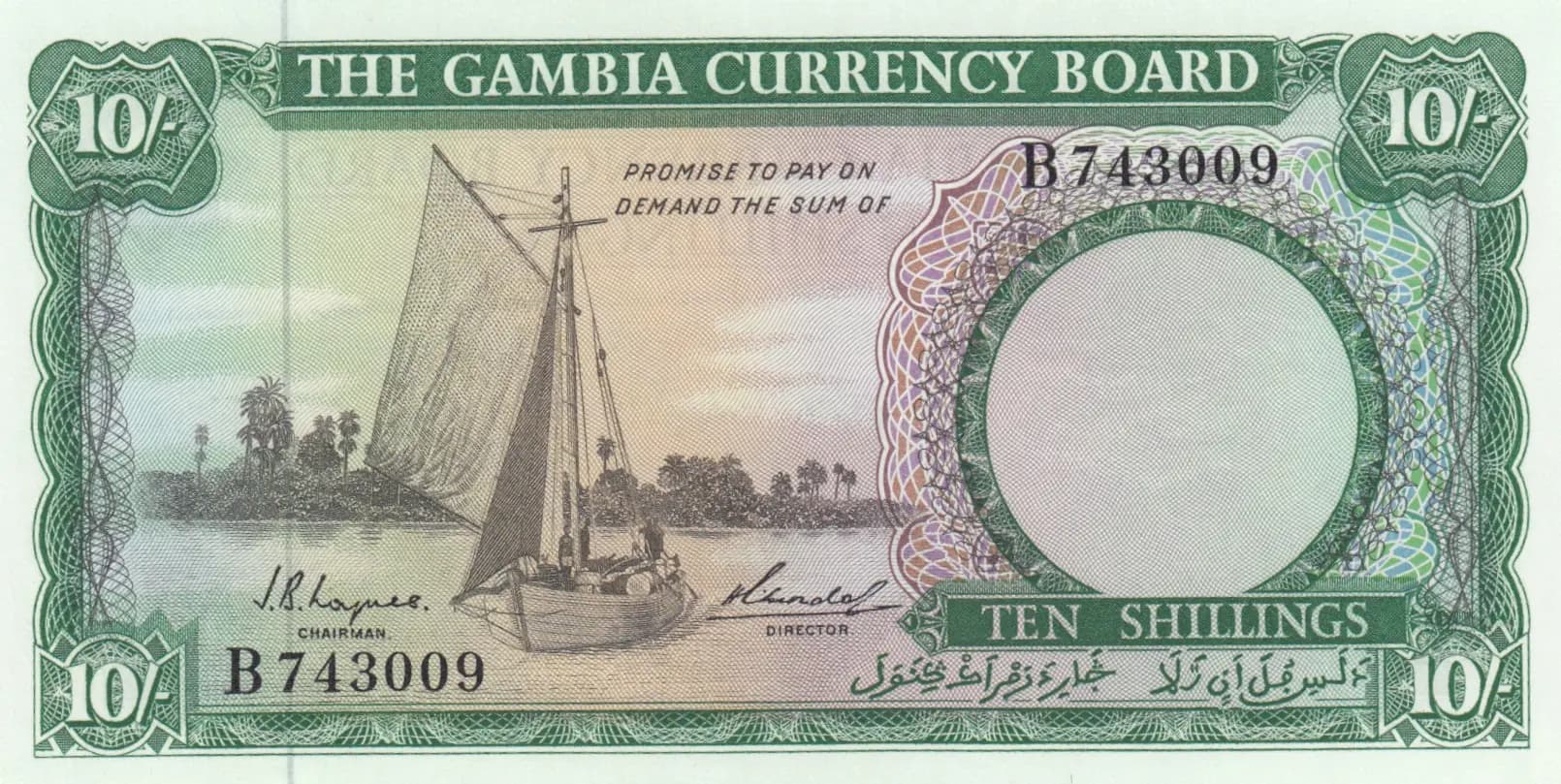
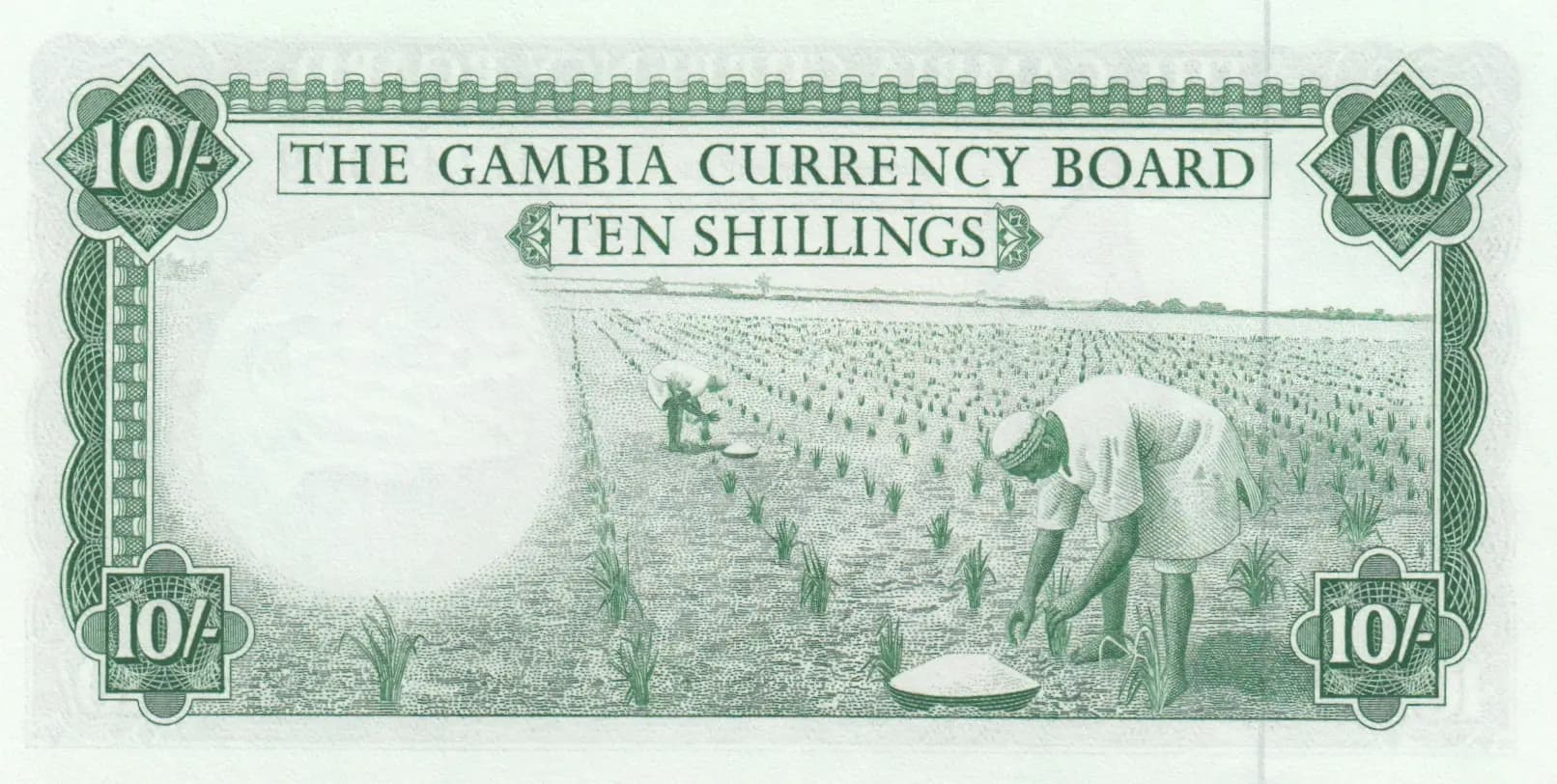
This is an exceptional example of The Gambia Currency Board's inaugural 10 shillings note from 1965 (Pick P-1), presented in uncirculated condition with virtually no handling wear. The note features a striking design combining a traditional sailing dhow on the obverse with an agricultural rice-farming scene on the reverse, both rendered in fine engraved detail with vibrant green and purple security features. This first issue from Gambia's newly established currency authority represents an important milestone in the nation's monetary history and remains highly sought after by collectors, particularly in high grades.
Common. While this is the first issue from a newly independent nation's currency board, eBay transaction data shows consistent sales in the $30–$130 range for various grades over multiple years (2011–2022), with even UNC examples selling in the $100–$127 range historically—indicating substantial circulation among collectors but not exceptional scarcity. The note was produced in sufficient quantities to supply a functioning currency system, and examples remain readily available in the collector market. The catalog value of $200 for UNC reflects numismatic desirability rather than extreme rarity.
This note was issued by The Gambia Currency Board in 1965, coinciding with Gambia's path toward independence (achieved in 1965). The imagery reflects the nation's economic foundations: the sailing vessel represents Gambia's maritime heritage and river trade along the Gambia River, a crucial commercial artery, while the rice-farming scene depicts the primary agricultural pursuit of the population. Together, these vignettes document the traditional economy of a newly sovereign West African nation establishing its monetary identity.
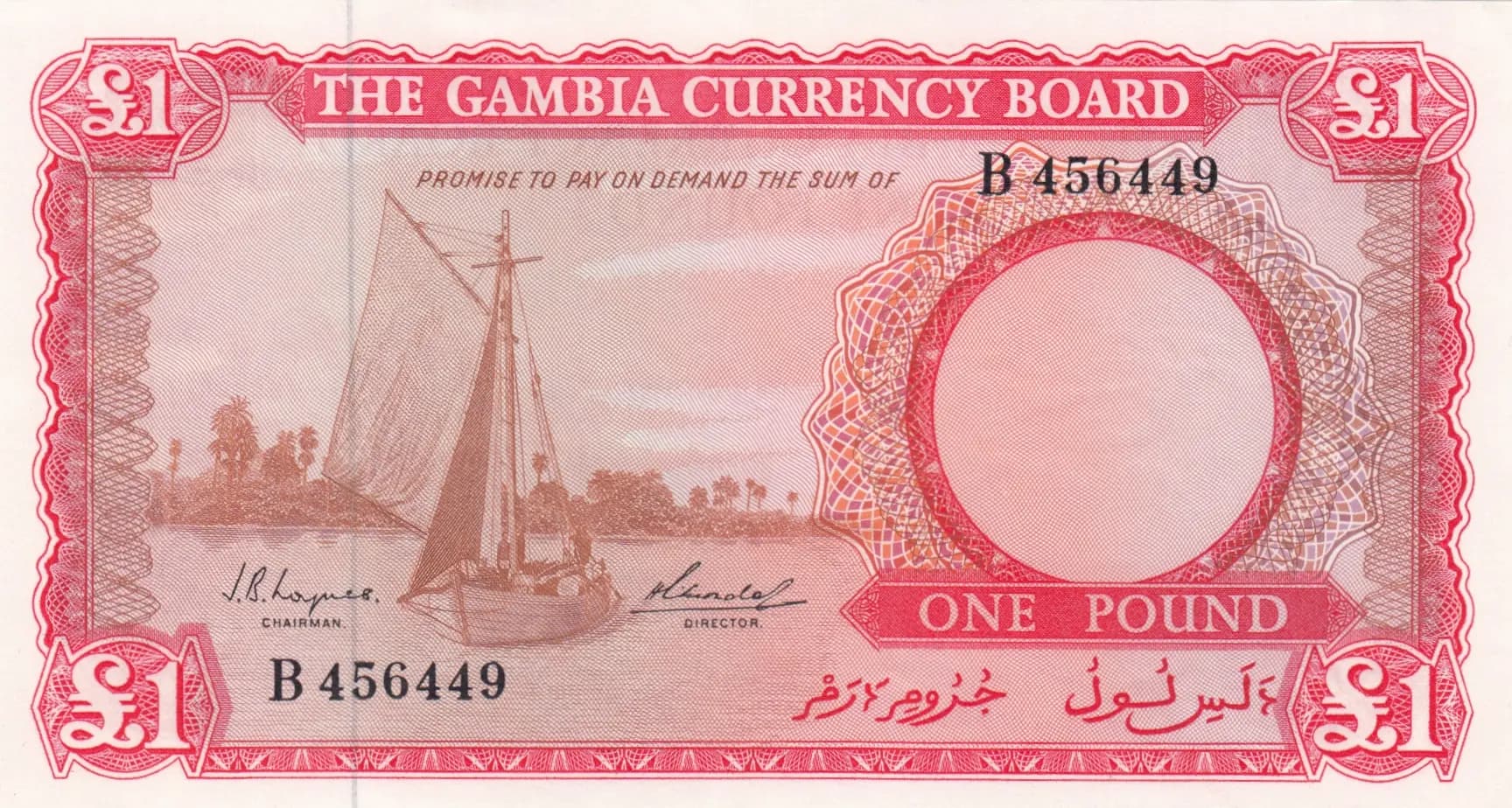
The obverse features a traditional Gambian sailing dhow with multiple masts positioned at the left side, surrounded by a tropical landscape with palm trees overlooking coastal or riverine waters—symbolizing Gambia's river-based trade heritage. A large blank oval cartouche occupies the right side where a portrait would typically be placed, filled instead with ornate security patterns in purple and mauve guilloche work. The reverse depicts a detailed agricultural labor scene showing rice farmers at work in extensive paddy fields: a primary laborer is shown in the foreground bent over in harvesting/planting activity, with additional workers visible in the background across the flat delta landscape. All text is in English, reflecting British colonial monetary traditions. Decorative geometric corner emblems and fine-line engraved borders frame both sides.
OBVERSE: 'THE GAMBIA CURRENCY BOARD' (issuing authority); 'PROMISE TO PAY ON DEMAND THE SUM OF' (standard currency board commitment); 'TEN SHILLINGS' (denomination in words); 'CHAIRMAN' and 'DIRECTOR' (signature titles); Serial number 'B743009' (appears three times on obverse); Arabic text appears to reference ministry authorization. REVERSE: 'THE GAMBIA CURRENCY BOARD' (repeated); 'TEN SHILLINGS' and '10/' (denomination in words and numerical form).
Intaglio engraving (recess printing), evidenced by the fine parallel line work, detailed guilloche security patterns, and the precise rendering of both the maritime and agricultural scenes. The note exhibits multiple layers of fine-line engraving throughout, characteristic of high-security currency production. The printer is identified in the PMG population data as BWC (Bradbury Wilkinson & Co., a renowned British security printer), which is consistent with the production standards and security features observed.
This example is identified as Pick P-1 (the base variety), specifically the P-1a variant printed by Bradbury Wilkinson & Co. (BWC), as indicated by PMG population data. The PMG catalog identifies two primary variants (P-1a with BWC printer and P-1cts), suggesting this note is from the standard commercial printing. The serial number prefix 'B' and the format are consistent with the 1965 issue characteristics. No overprints, color variations, or signature variants are evident in this specimen—it represents the standard first-issue production.