25 dalasi 1972 specimen
Market Prices
1 saleAbout This Note
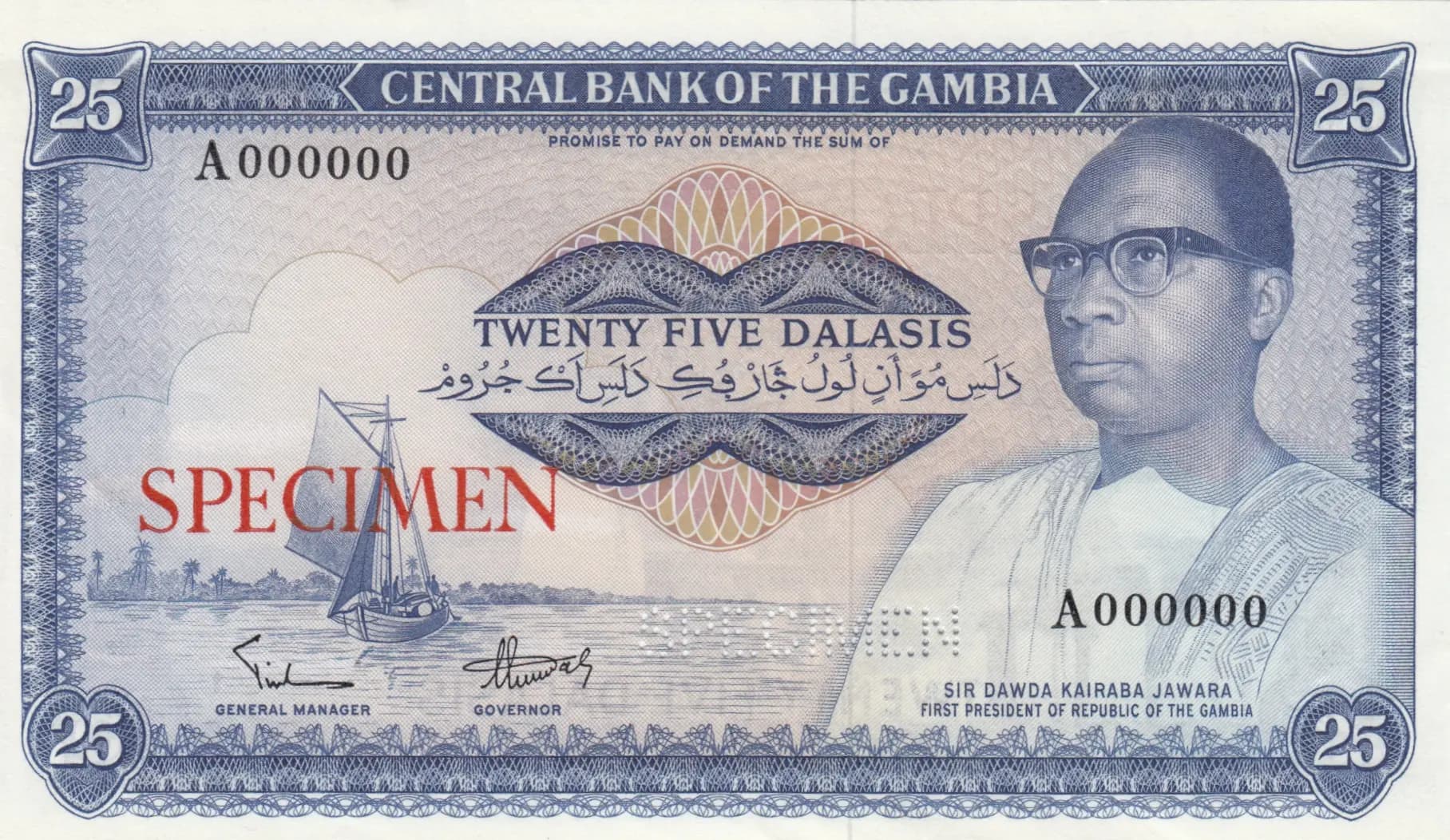
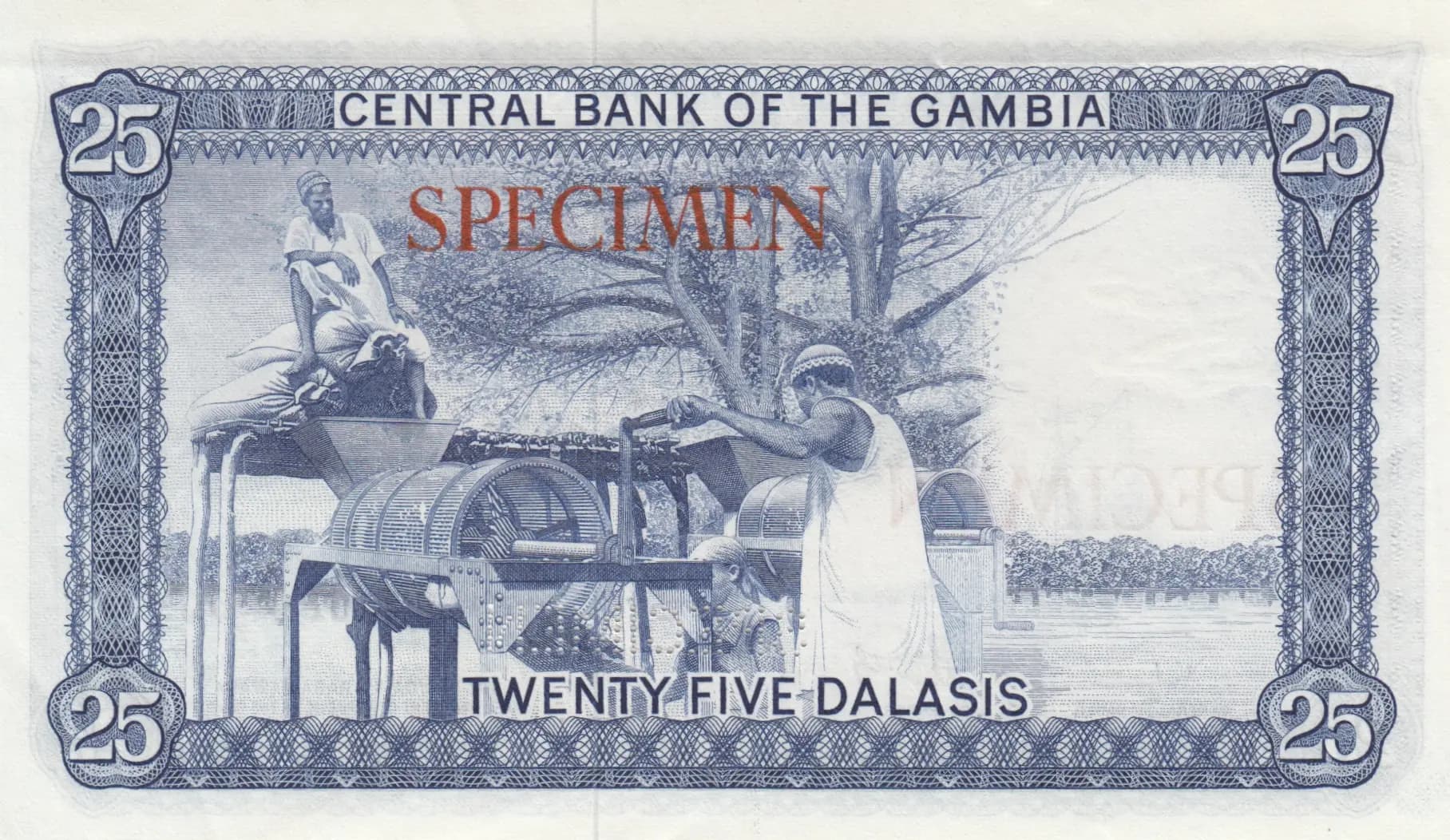
A pristine specimen note of the 25 Dalasis from the Central Bank of The Gambia, issued in 1972 and graded UNC. This example features the iconic portrait of Sir Dawda Kairaba Jawara on the obverse alongside a traditional sailing vessel, with the reverse depicting agricultural workers operating machinery. The diagonal red 'SPECIMEN' overprint and serial number A000000 confirm its status as a bank specimen, making it a desirable item for collectors of West African currency and post-independence African states.
Common. While specimen notes command a premium over circulated examples, the 1972 25 Dalasis (P-7) series has a substantial surviving population. eBay market data shows the note trading regularly (VF graded examples at $150, UNC at $700 per 2019 cataloging), and PMG population reports document multiple variants (P-7a, P-7as, P-7b, P-7s, P-7acts) all appearing in graded populations, indicating healthy availability. The specimen overprint does not significantly restrict supply for this issue, as specimen notes were issued in moderate quantities for bank distribution and archive purposes.
Issued during the early years of The Gambia's independence (1972), this banknote reflects the nation's economic identity through its symbolic imagery: the traditional sailing boat honors the country's maritime heritage and historical connection to the Atlantic trade routes, while the agricultural machinery on the reverse emphasizes the nation's agrarian foundation in the post-colonial period. Sir Dawda Kairaba Jawara, depicted on the front, served as the first president of the independent Republic of The Gambia, making his portrait a symbol of national sovereignty and stability during a formative era.
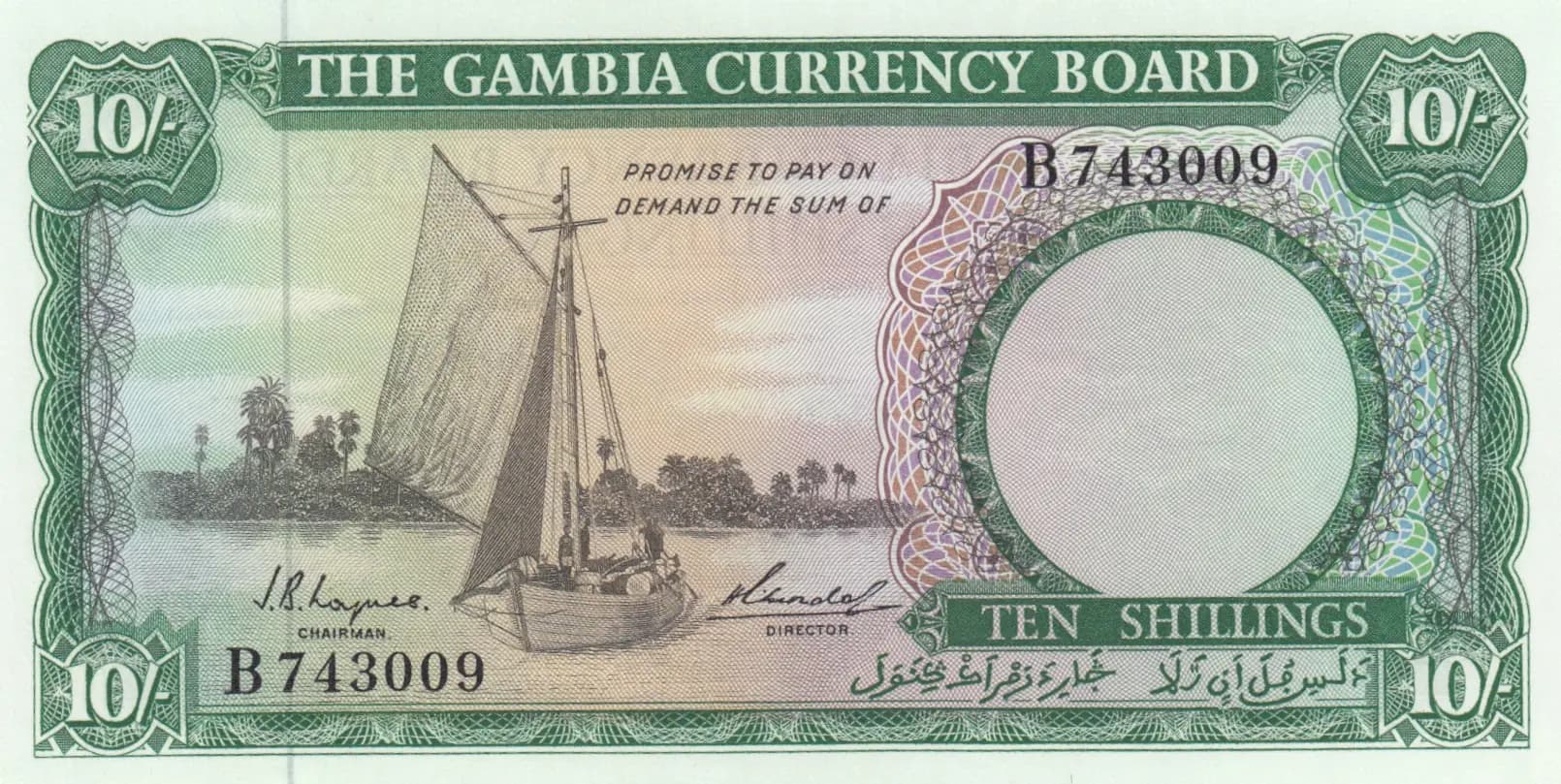
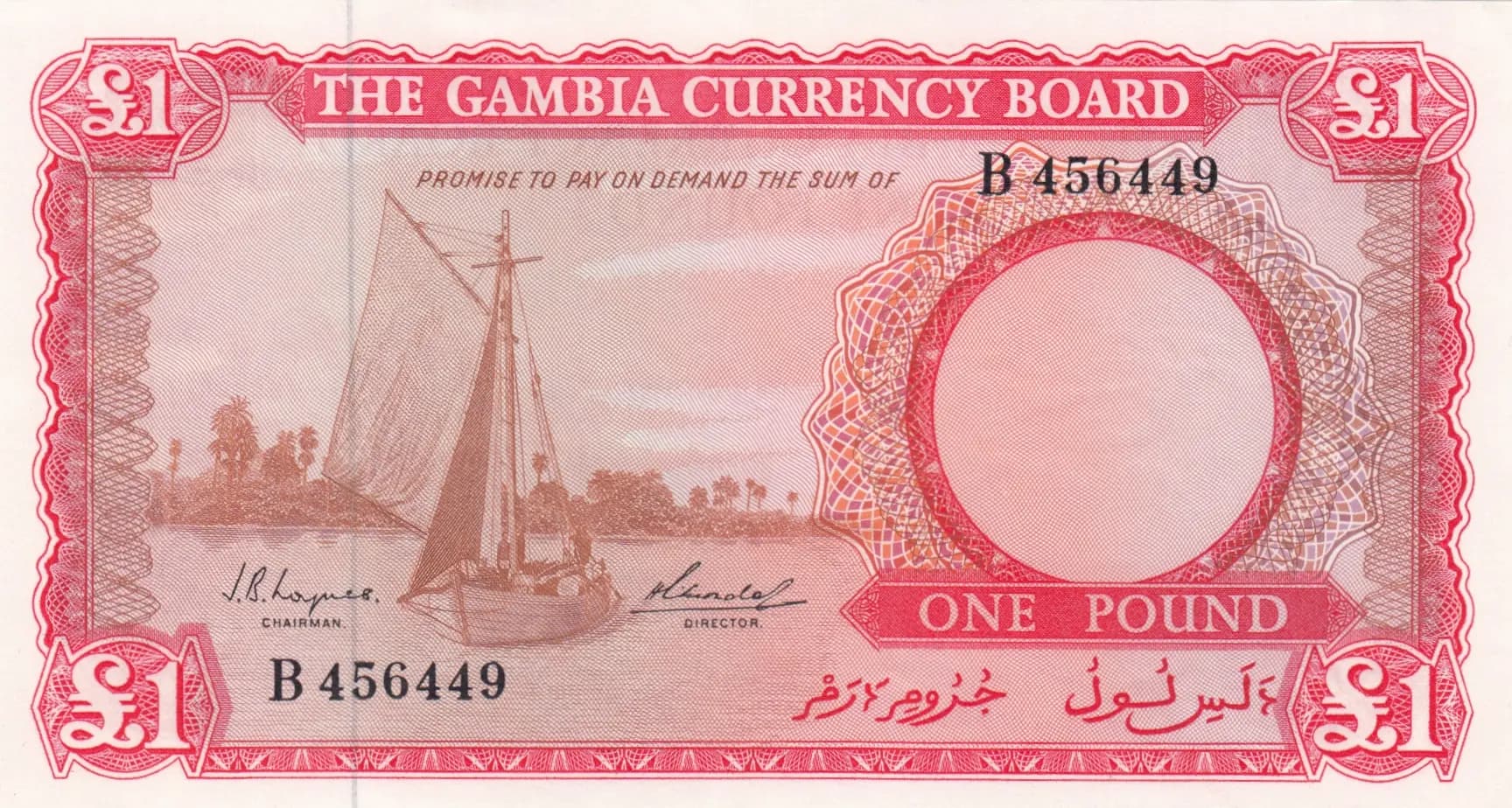
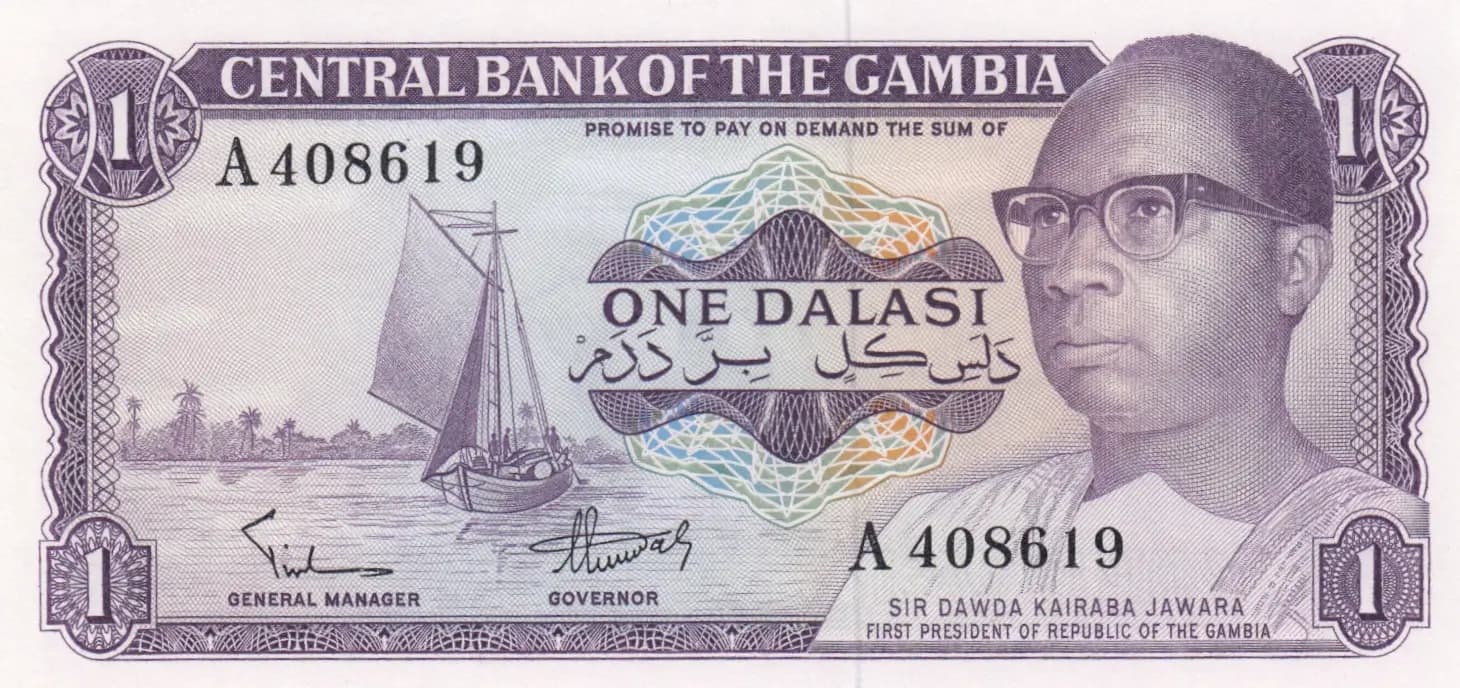
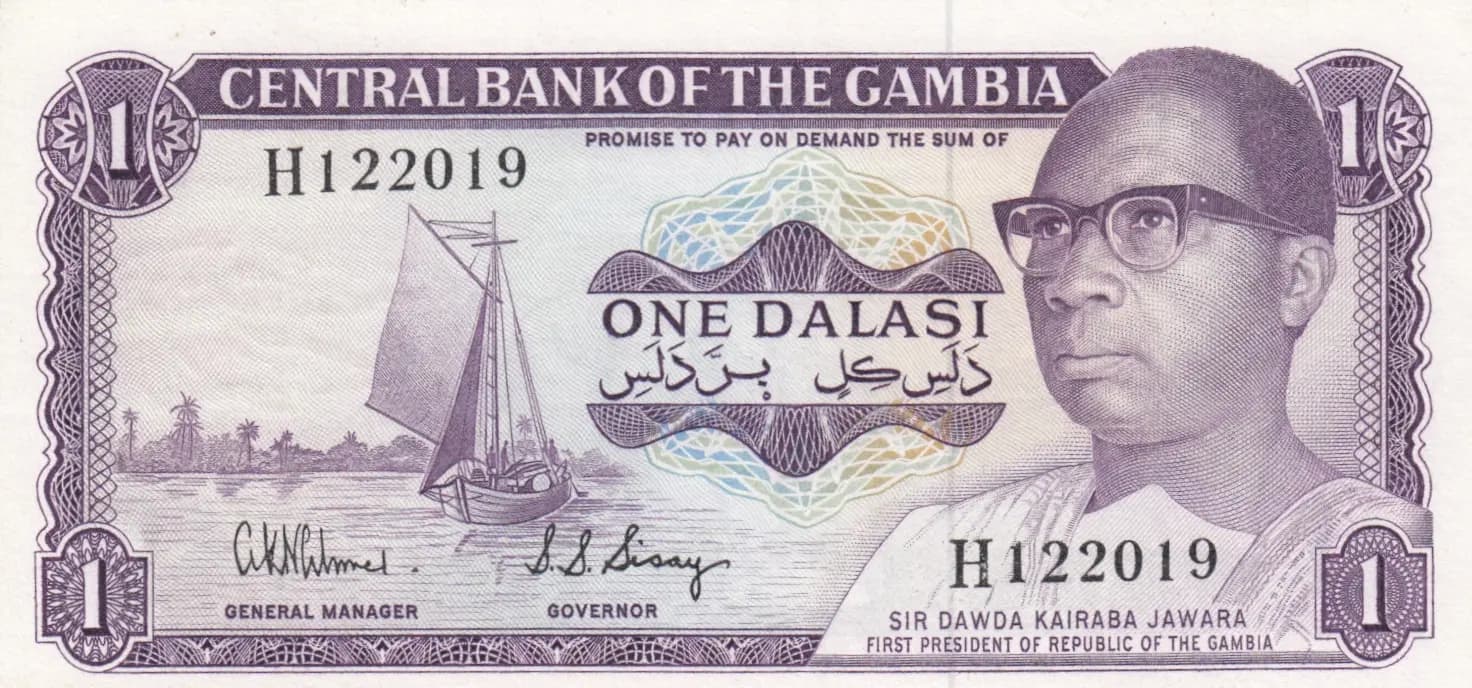
The obverse features a left-positioned traditional sailing vessel with multiple masts depicted on water with a visible shoreline, symbolizing The Gambia's maritime heritage and historical trade significance. The right side carries a formal portrait of Sir Dawda Kairaba Jawara, the First President of the Republic of The Gambia, dressed in light-colored formal clothing and wearing glasses. The reverse depicts two figures—a man and woman—operating agricultural machinery in a rural waterfront setting with trees and vegetation visible, emphasizing the nation's agricultural economy. The entire design is framed by ornate decorative borders featuring intricate geometric and floral patterns. The color scheme of blue on multicolored underprint (beige, white, navy) creates visual hierarchy, with the red 'SPECIMEN' diagonal overprint clearly marking this as a non-circulating example. All corners display the numeral '25' within decorative frames.
FRONT: 'Central Bank of The Gambia' (issuing authority); 'Promise to Pay on Demand the Sum of' (standard promise clause); 'Twenty Five Dalasis' (denomination in English); Arabic text reading 'Twenty Five Dalasis' (denomination in Arabic, written as 'كاس موالي غالوفي كاس خروف'); 'Sir Dawda Kairaba Jawara First President of Republic of The Gambia' (identification of portrait subject); 'Governor' and 'General Manager' (signature titles); 'Specimen' (overprint); Serial number 'A000000' (appears twice, specimen marker). BACK: 'Central Bank of The Gambia' (issuing authority); 'Twenty Five Dalasis' (denomination); '25' (numeral denomination); 'Specimen' (overprint).
Intaglio engraving (line engraving) on multicolor base, evidenced by the fine detailed line work, complex cross-hatching patterns, and multiple tonal levels visible throughout both the portrait and landscape scenes. The geometric borders and decorative patterns show characteristic fine line precision of classical intaglio security printing. The specimen overprint in red appears to have been applied via offset lithography post-intaglio production, a standard practice for specimen notes. The printer for this series is not definitively identified in standard references, but Gambian notes of this era were typically produced by established European security printers such as Thomas De La Rue or similar.
This is specifically Pick number P-7as, distinguishable as a specimen variant (the 's' suffix denotes 'specimen') with watermark of a crocodile's head. The note lacks microprinting below the 'Promise to Pay the Bearer' text, consistent with the earlier 1972 printing; later variants (such as P-11) incorporated microprinting as a security enhancement. The serial number A000000 is typical of specimen notes. The red diagonal 'SPECIMEN' overprint clearly identifies this as a non-circulating example prepared for banking institution distribution or archival purposes rather than circulation.