10 dalasi 1972 specimen
Market Prices
1 saleAbout This Note
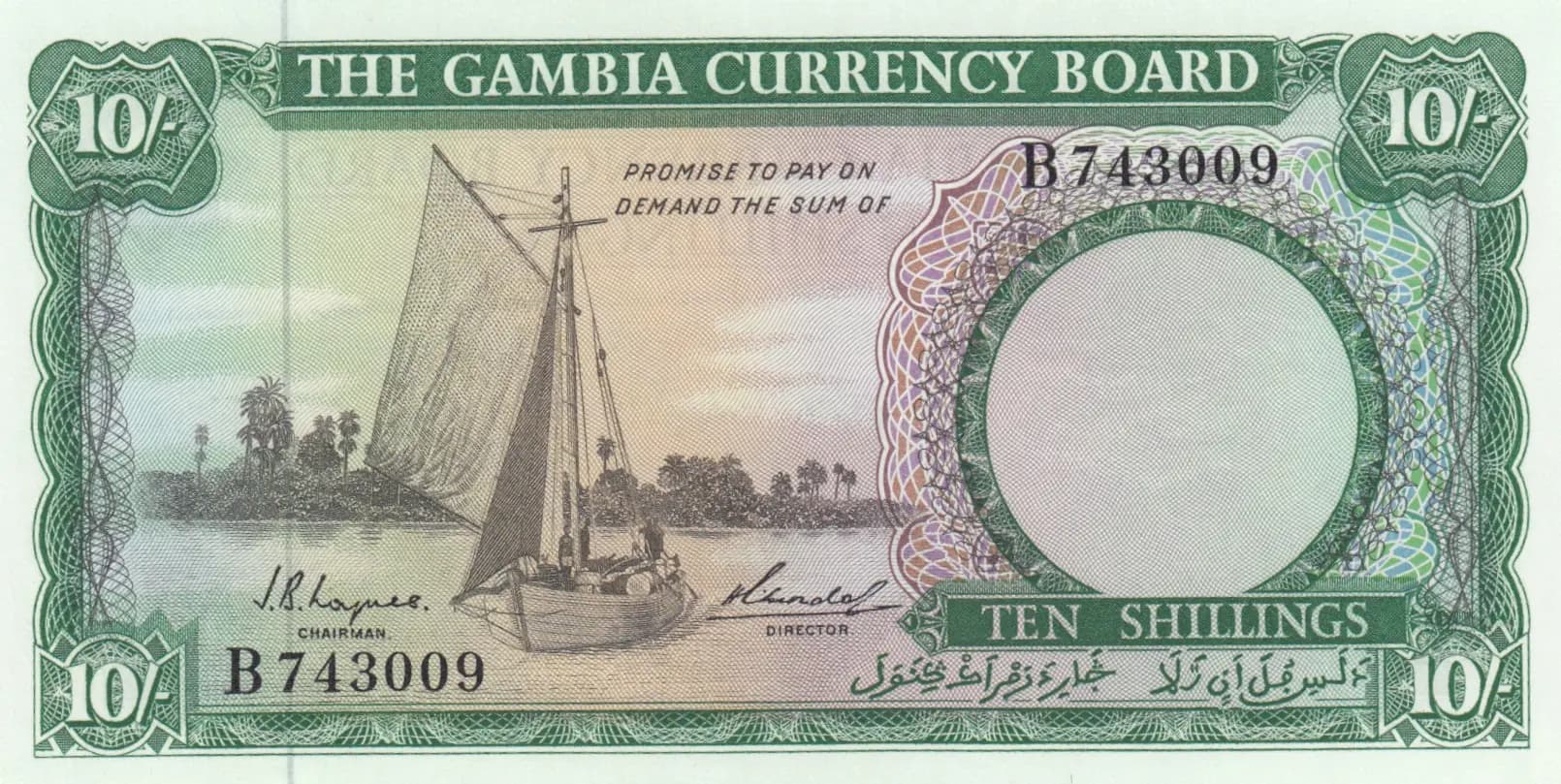
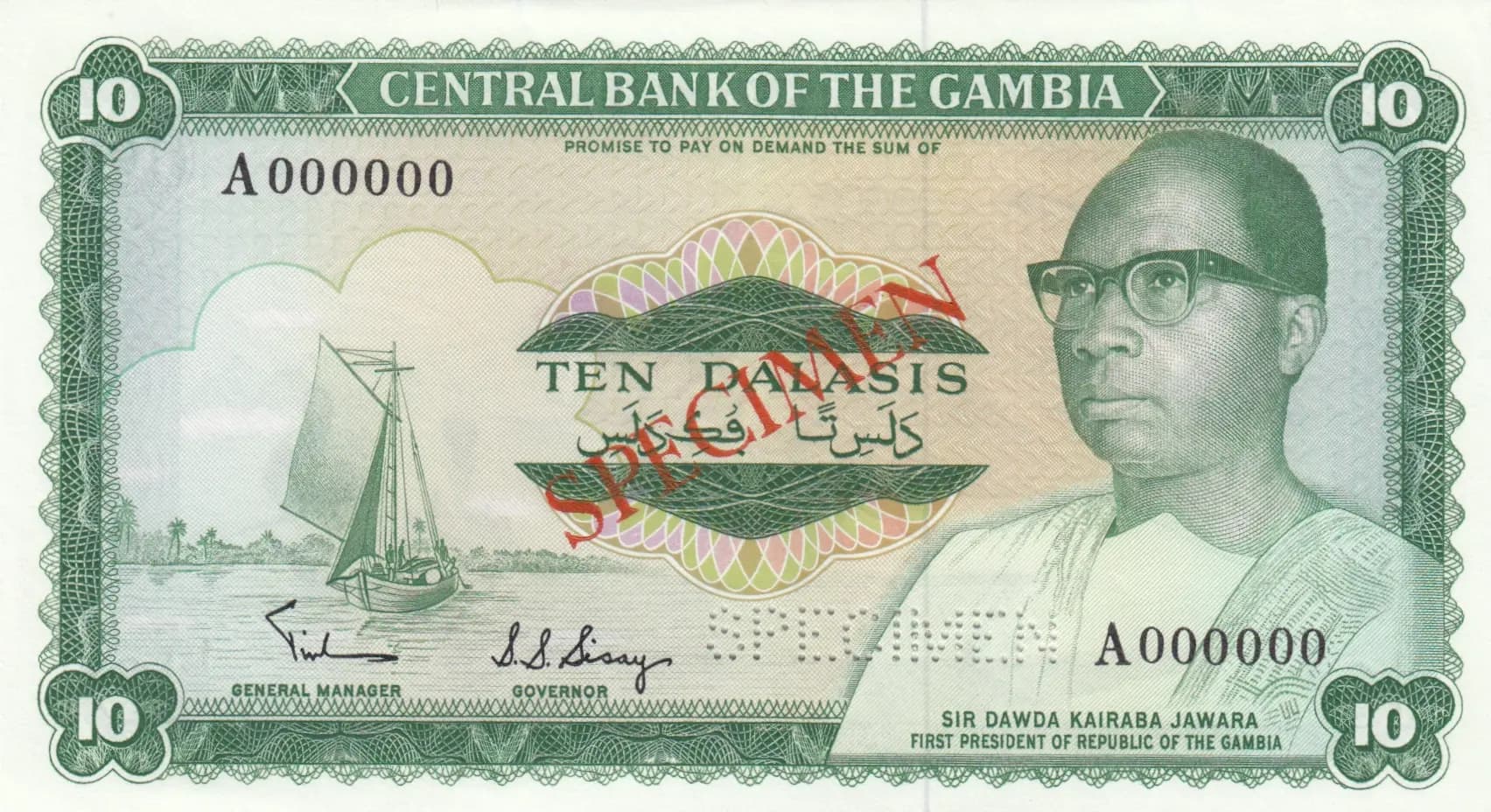
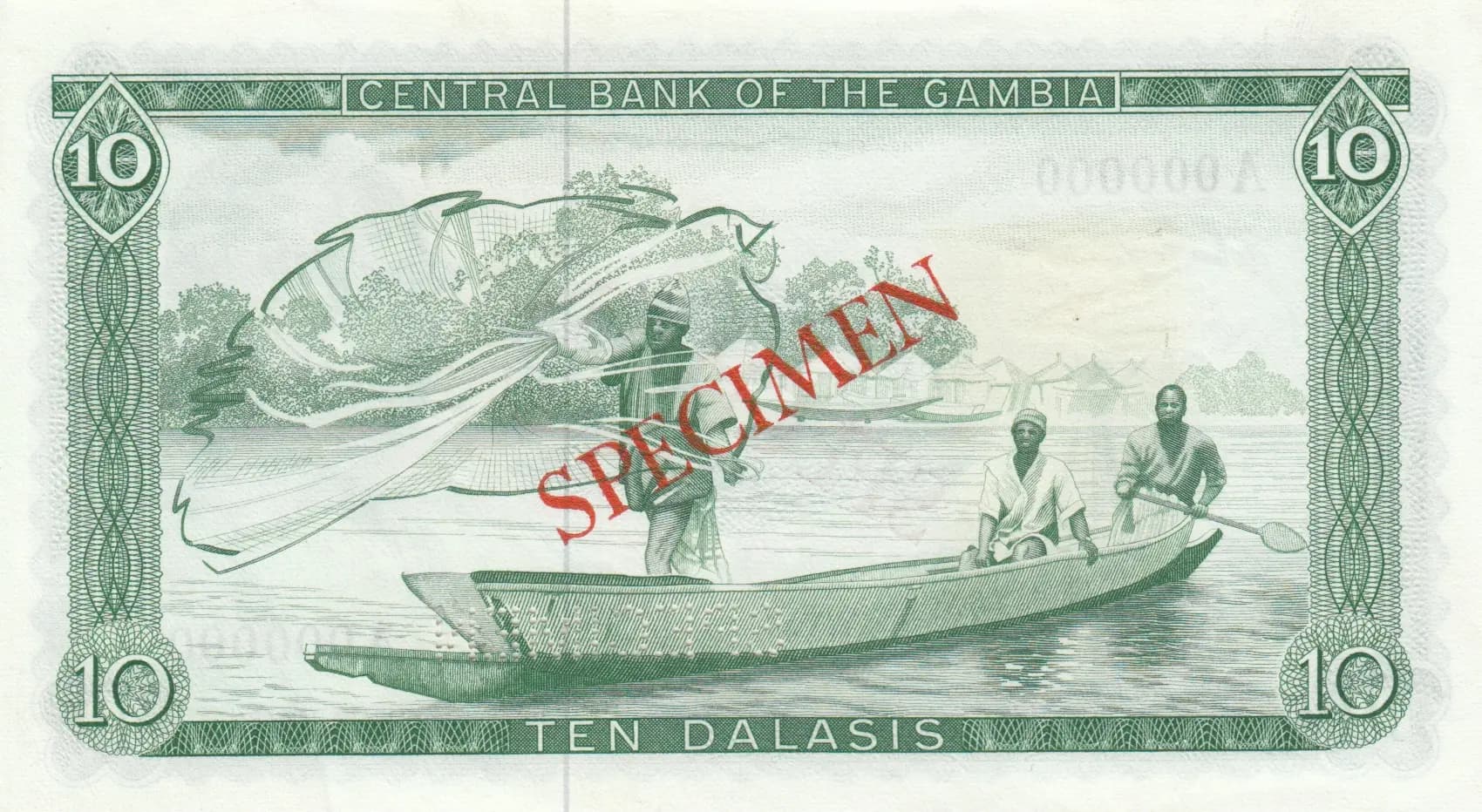
This is a 1972 specimen banknote from the Central Bank of The Gambia, denominated at 10 Dalasis, graded UNC. The note features a striking green and multicolor design with a traditional sailing dhow on the obverse and a detailed fishing scene on the reverse, both characteristic of Gambian maritime culture. As a specimen note marked with red diagonal overprint and bearing the serial number A000000, this represents a bank distribution sample rather than circulating currency, making it a notable item for collectors of African banknotes and Central Bank specimens.
Common. While this is a specimen note (P-6bs variant), the 10 Dalasis denomination from this 1972-1986 series is widely available in the collector market. eBay transaction data shows VF specimens selling for approximately $4-5, with catalog values for UNC grades at $175, indicating consistent but modest collector demand. The lack of any special printing restrictions, the relatively long issuance period (1972-1986), and the straightforward specimen marking all point to this being a commonly encountered note among African banknote collectors.
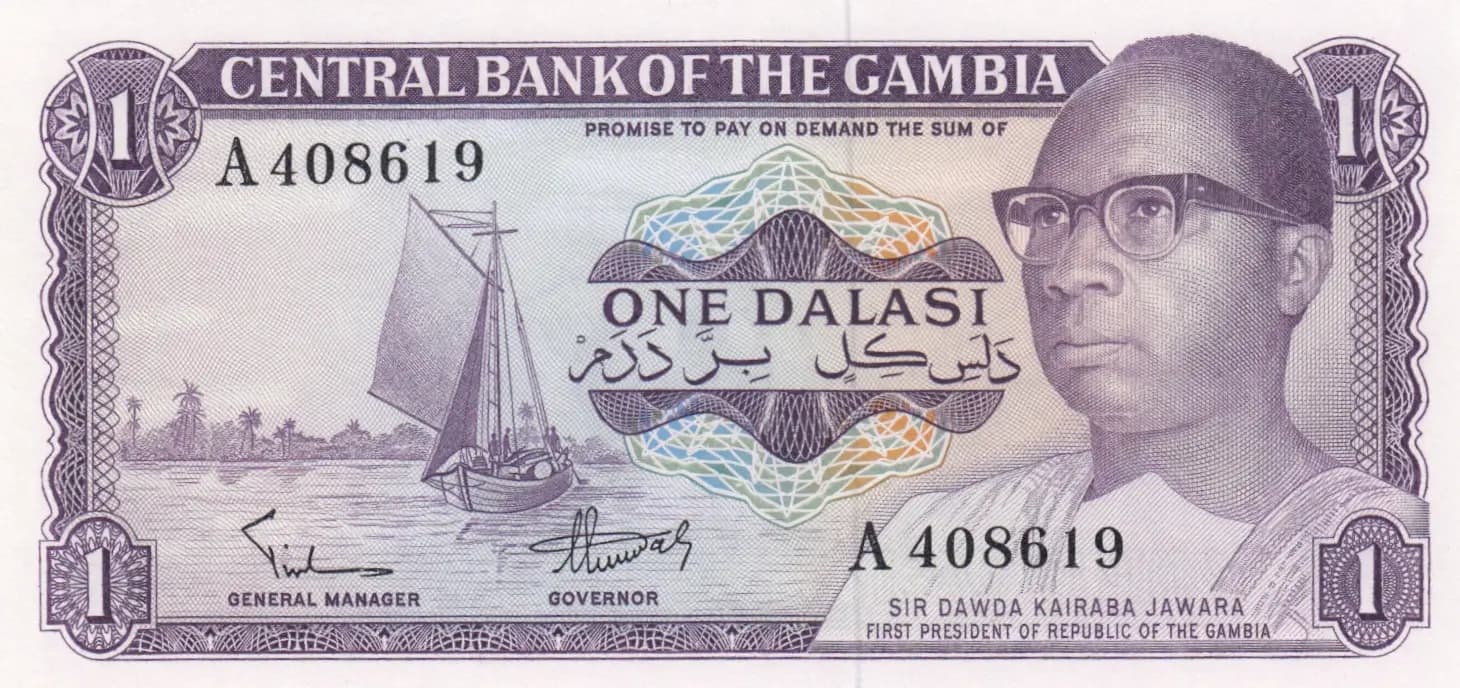
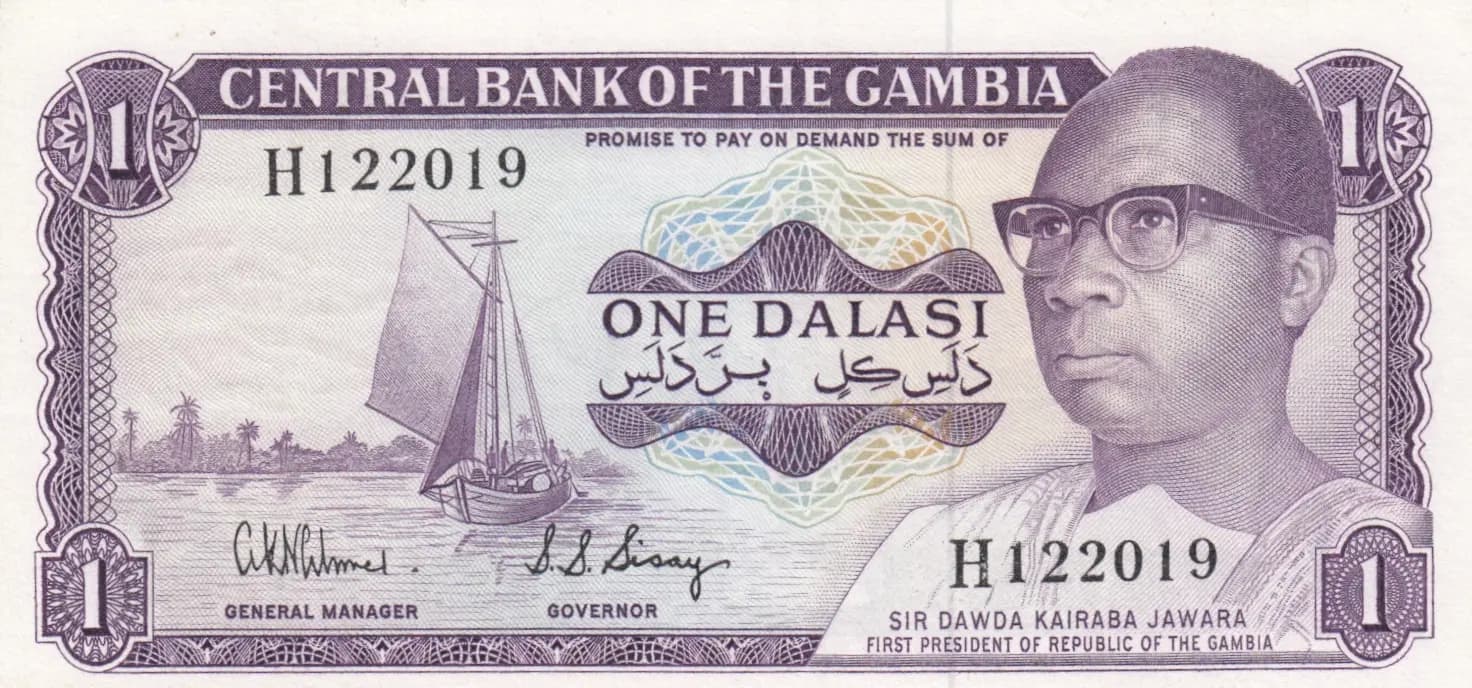
This 1972 note was issued during the early years of The Gambia's independence (1965) and reflects the nation's strong maritime heritage and fishing economy. The prominent portrait of Sir Dawda Kairaba Jawara, the First President of the Republic of The Gambia, honors the country's founding leader, while the dual imagery of sailing vessels and fishermen emphasizes the economic importance of the river and coastal fisheries to Gambian society during this period.
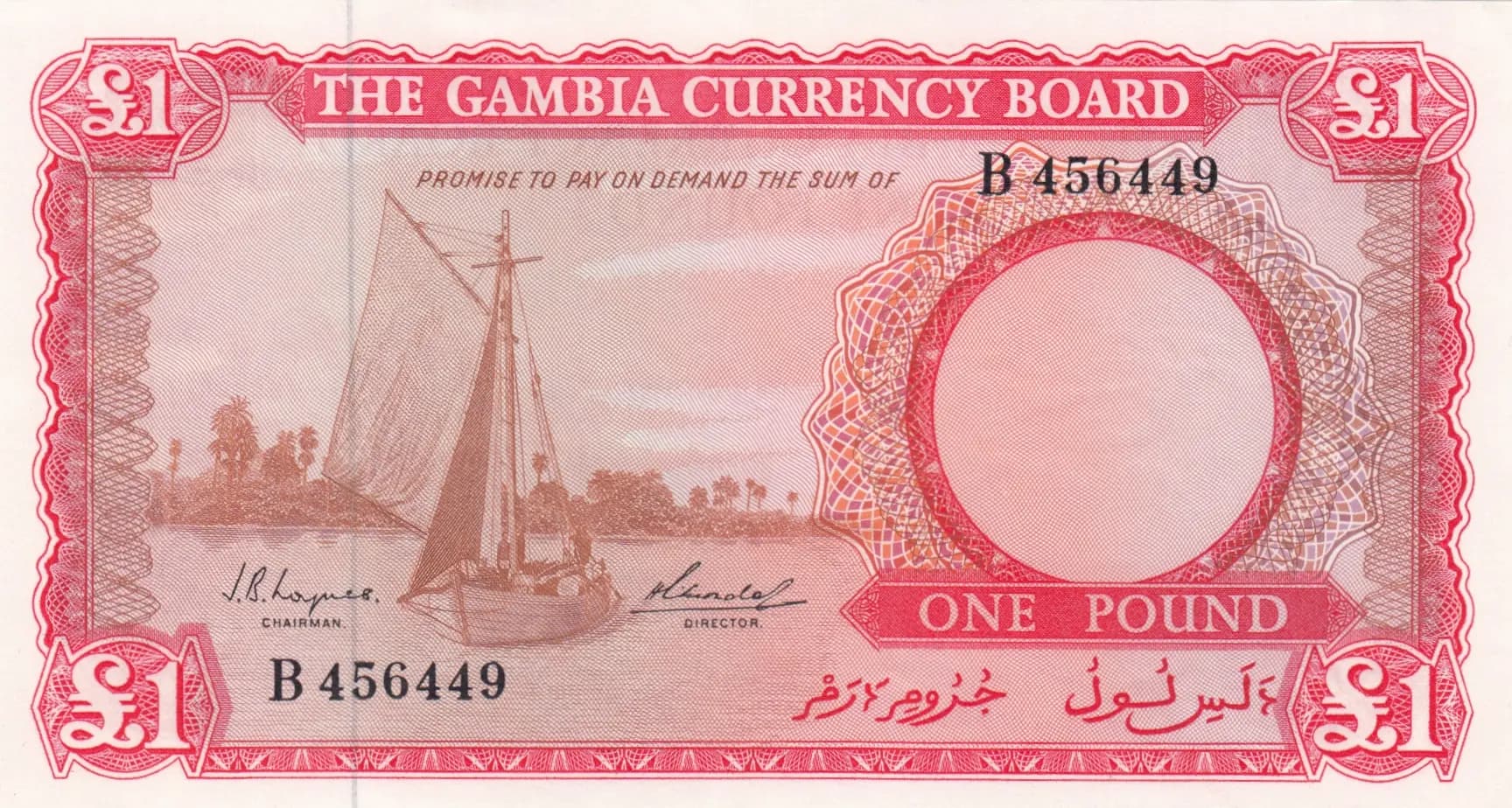
The obverse features a formal three-quarter portrait of Sir Dawda Kairaba Jawara wearing round glasses and light-colored clothing, positioned on the right side of the note. To the left is a detailed engraving of a traditional dhow sailing vessel with full sails, set against a background of palm trees and water, representing Gambia's maritime traditions. A distinctive crocodile head design appears in an ornate oval medallion at the center, serving as both an artistic element and watermark identifier. The reverse depicts a dynamic fishing scene with three Gambian fishermen in traditional boats, one standing with an active fishing net, set within a riverine landscape with vegetation. The entire note is bordered by intricate geometric and scalloped ornamental patterns in green, cream, and mauve tones.
FRONT SIDE: 'Central Bank of The Gambia' (issuing authority); 'Promise to Pay On Demand the Sum of' (legal tender declaration); 'Ten Dalasis' (denomination in English); 'دالسي عشرة' (denomination in Arabic, translates to 'Ten Dalasis'); 'Sir Dawda Kairaba Jawara' (portrait identification); 'First President of Republic of The Gambia' (title); 'Governor' and 'General Manager' (signature lines); 'SPECIMEN' (specimen overprint); 'A000000' (specimen serial number). BACK SIDE: 'Central Bank of The Gambia' (issuing authority); 'Ten Dalasis' (denomination); 'SPECIMEN' (specimen overprint).
Intaglio (recess/engraving) printing, evidenced by the fine line engraving, detailed crosshatching, stippling effects visible on the portrait, fishing figures, and water scenes, and the crisp geometric border patterns. The multicolor printing technique, combining green, cream, pink/mauve accents, and white highlights, indicates a sophisticated multi-pass printing process typical of high-security banknote production from this era. The printer for this series is not definitively identified in available records, but the quality is consistent with international security printing standards of the early 1970s.
This note is cataloged as Pick P-6bs, the specimen variant of the base P-6 design. The 's' suffix denotes this is a specimen note, characterized by the red diagonal 'SPECIMEN' overprint and the standard specimen serial number (A000000). According to PMG population data, there are at least five recognized varieties within the P-6 base number (P-6a, P-6acts, P-6b, P-6c, P-6s), though distinctions among these may relate to signature varieties, printer details, or security feature evolution. This particular specimen lacks microprinting below the 'Promise to Pay' text, a feature that appears on later variant P-10 according to banknote.ws references, confirming this as an earlier-period specimen of the P-6 series.