50 pence 1974 radar
Market Prices
28 salesAbout This Note
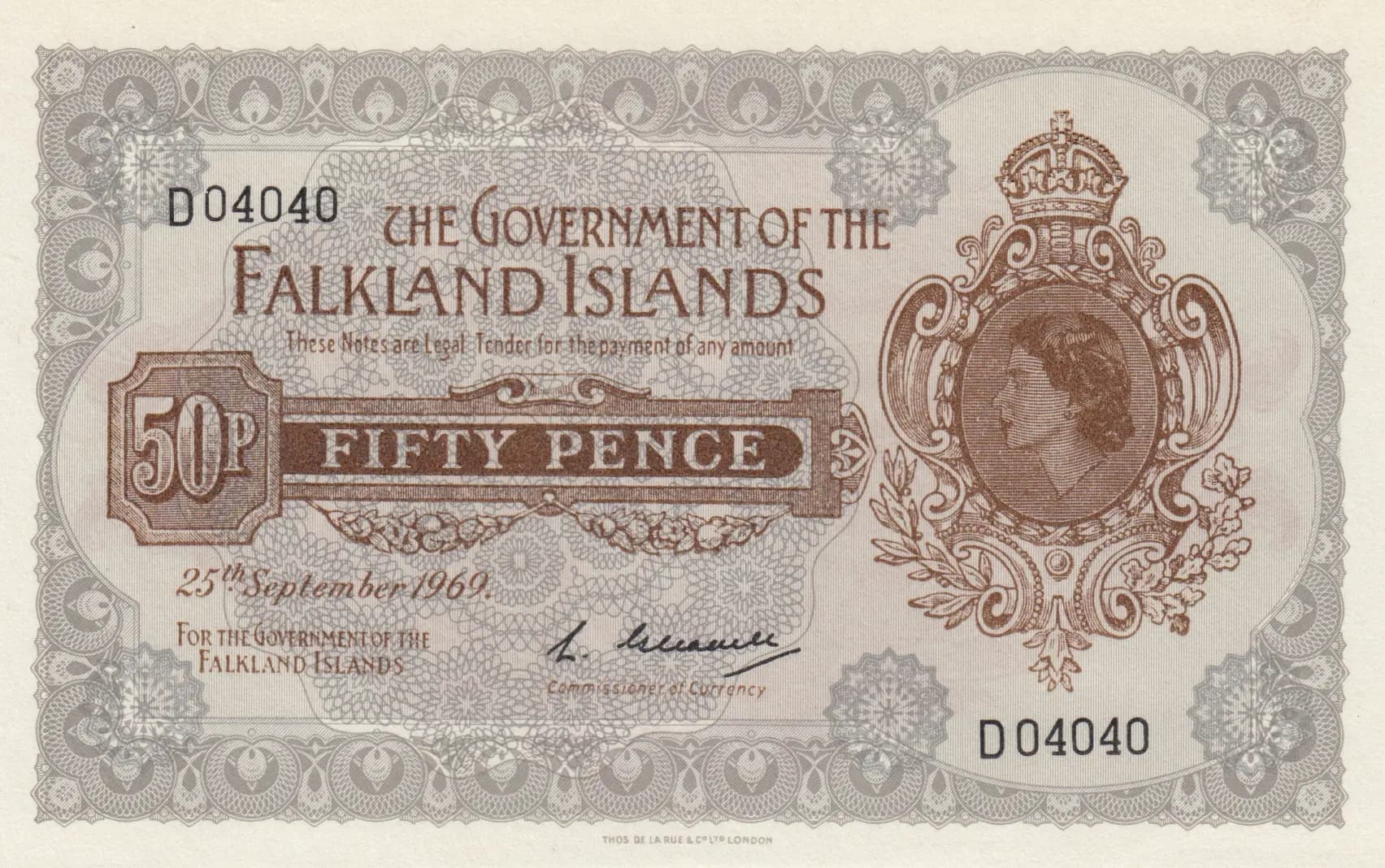
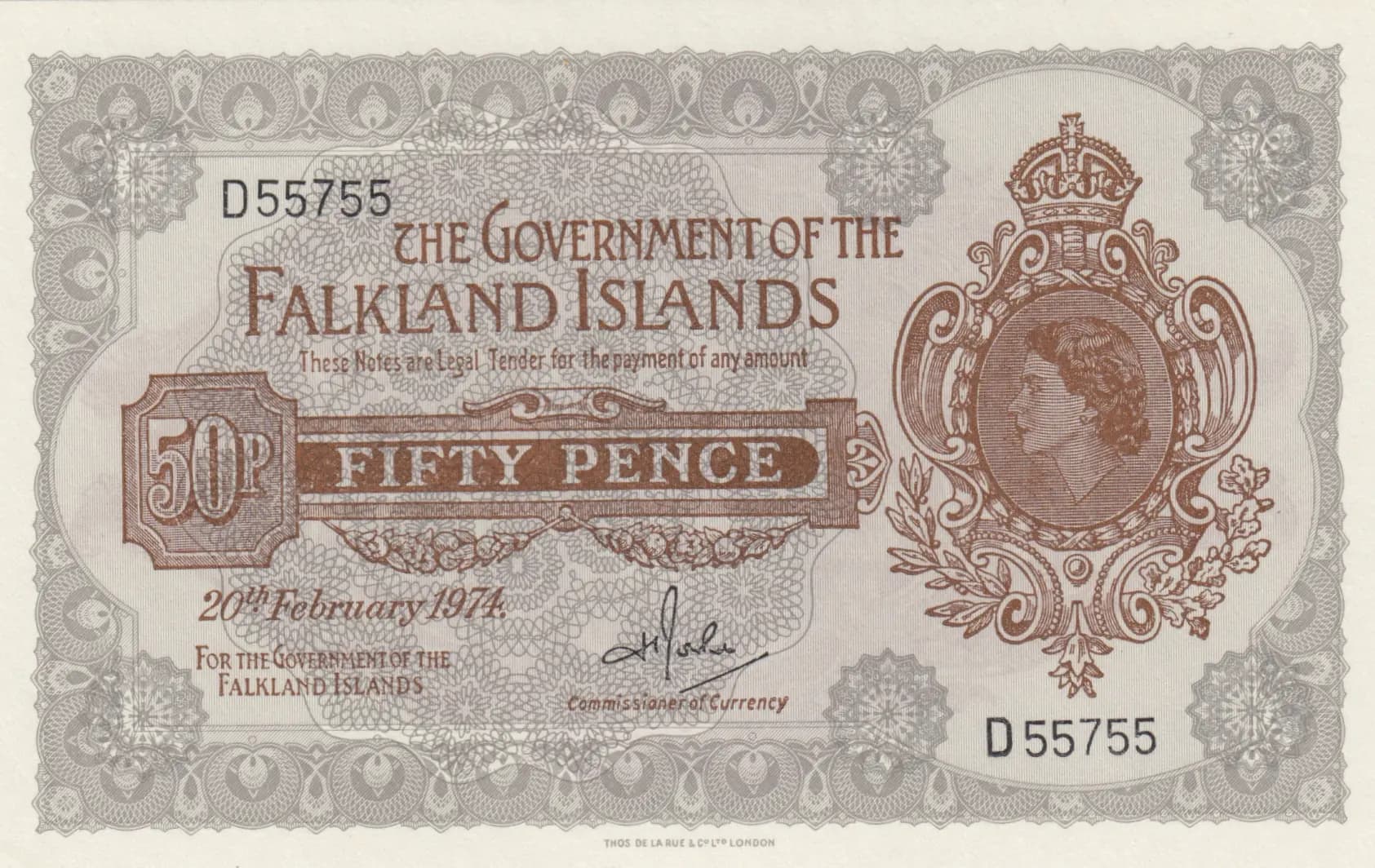
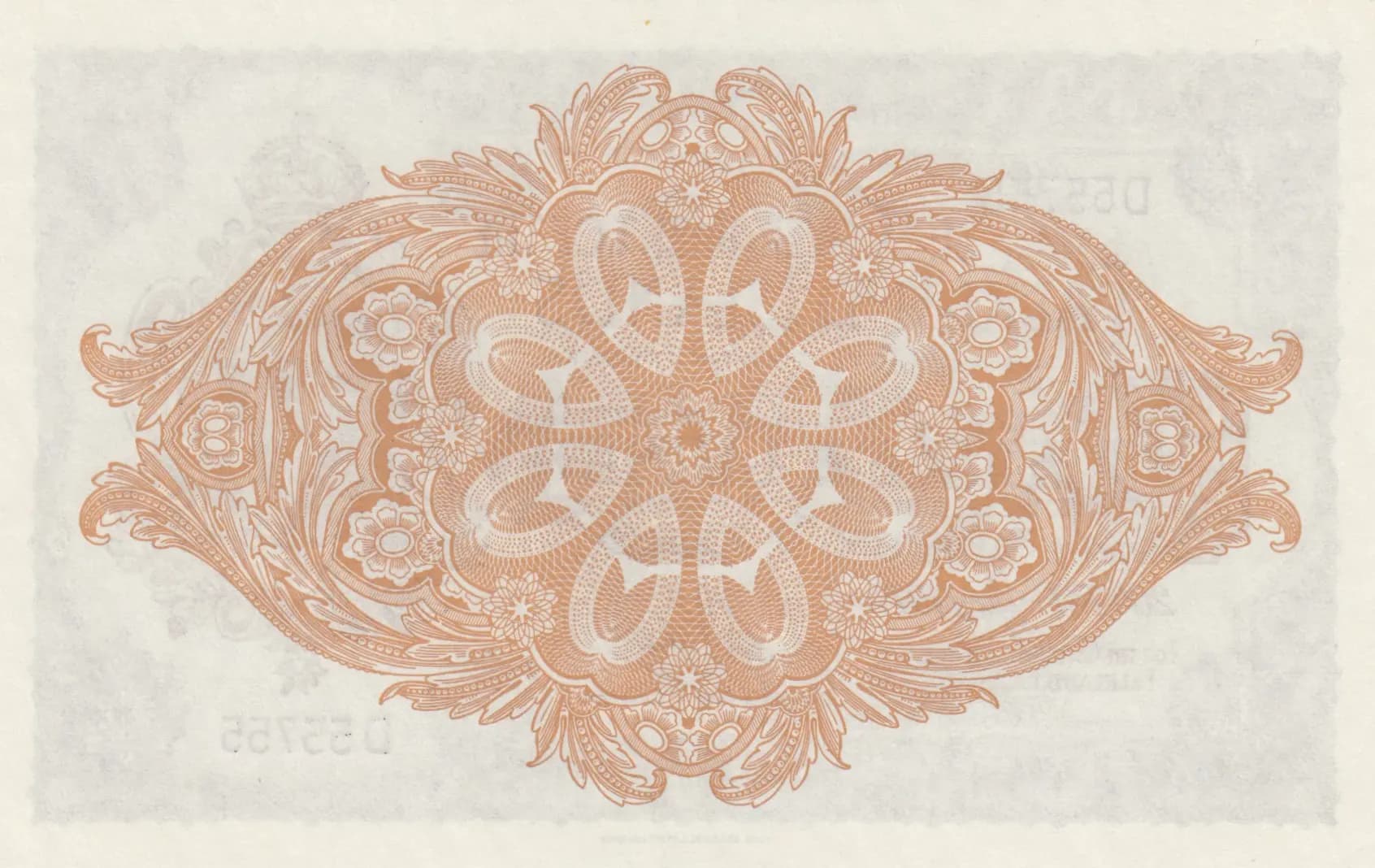
This 1974 Falkland Islands 50 Pence note in Uncirculated condition exemplifies the elegant security printing of Thomas De La Rue during the early currency reform period of the islands. The note features a striking brown and grey color scheme on cream stock with an ornate oval portrait frame crowned with a royal emblem, complemented by an intricate geometric and floral border design. The reverse displays an elaborate symmetrical decorative medallion in fine-line engraving, characteristic of De La Rue's security printing expertise, making this a desirable example of Commonwealth currency design.
Common. The eBay market data shows consistent trading activity across all condition grades, with UNC examples selling between $41-$81 across a 13-year period (2012-2022), indicating steady collector demand but ready availability. Print runs for Falkland Islands currency from this era were substantial relative to the territory's small population, and this Pick-10b variant (identified as a standard regular issue) has no documented scarcity or recall history. The consistent supply at auction auctions supports a common classification despite its visual appeal.
Issued on 20th February 1974, this note represents the Government of the Falkland Islands' early post-colonial currency during a period of political transition in the South Atlantic. The ornate royal symbolism—evidenced by the crown atop the portrait frame and formal state inscriptions—reflects the islands' continued constitutional connection to the British Crown at this time. The De La Rue printing represents the security standards applied to British Overseas Territory currencies during the Cold War era.
The obverse (front) prominently features a formal portrait in profile facing right, set within an ornate oval medallion frame adorned with scrollwork and floral flourishes, crowned with the royal crown—likely depicting a British sovereign or Commonwealth figure central to Falkland Islands governance. The left side displays a decorative denomination box containing '50P'. The entire note is framed by an elaborate geometric and floral border pattern in repeating motifs, typical of De La Rue's ornamental security design language. The reverse displays a large central rosette medallion with radiating symmetrical filigree patterns and complex geometric ornamentation, serving both aesthetic and security functions. All elements are rendered in brown/rust tones on cream stock with grey accents in the border work.
Front side: 'THE GOVERNMENT OF THE FALKLAND ISLANDS' (issuing authority); 'FIFTY PENCE' / '50P' (denomination); 'These Notes are Legal Tender for the payment of any amount' (legal tender clause); '20th February 1974' (issue date); 'FOR THE GOVERNMENT OF THE FALKLAND ISLANDS / Commissioner of Currency' (authorized signatory); 'THOS DE LA RUE & C° LTD LONDON' (printer); Serial number 'D55755' (appears twice, left and right). Back side: No text inscriptions visible; design is purely ornamental.
Intaglio (engraved) printing, executed by Thomas De La Rue & Company Limited, London—the industry standard for high-security banknote production. The fine-line engraving work, evident in the intricate border patterns, portrait detail, and the elaborate reverse medallion, would have been produced using steel plates and multi-pass printing to achieve the complex tonal variations and sharp definition observed. The color separation between brown/rust primary elements and grey accent work indicates multiple plate impressions.
This note is catalogued as Pick-10b, one of five documented variants in the Pick catalog system (P-10a, P-10as, P-10b, P-10bs, P-10s). The 'b' designation indicates a specific printing run or signature variant within the 1974 50 Pence series. The serial number format 'D55755' (with letter prefix 'D') is consistent with this variant's production parameters. The visual appearance matches the standard obverse description of 'brown on gray underprint' with Elizabeth II portraiture. No observable overprints, commemorative markings, or signature variations are present that would distinguish this as a scarcer sub-variety.