1 pound 1938
Market Prices
2 salesAbout This Note
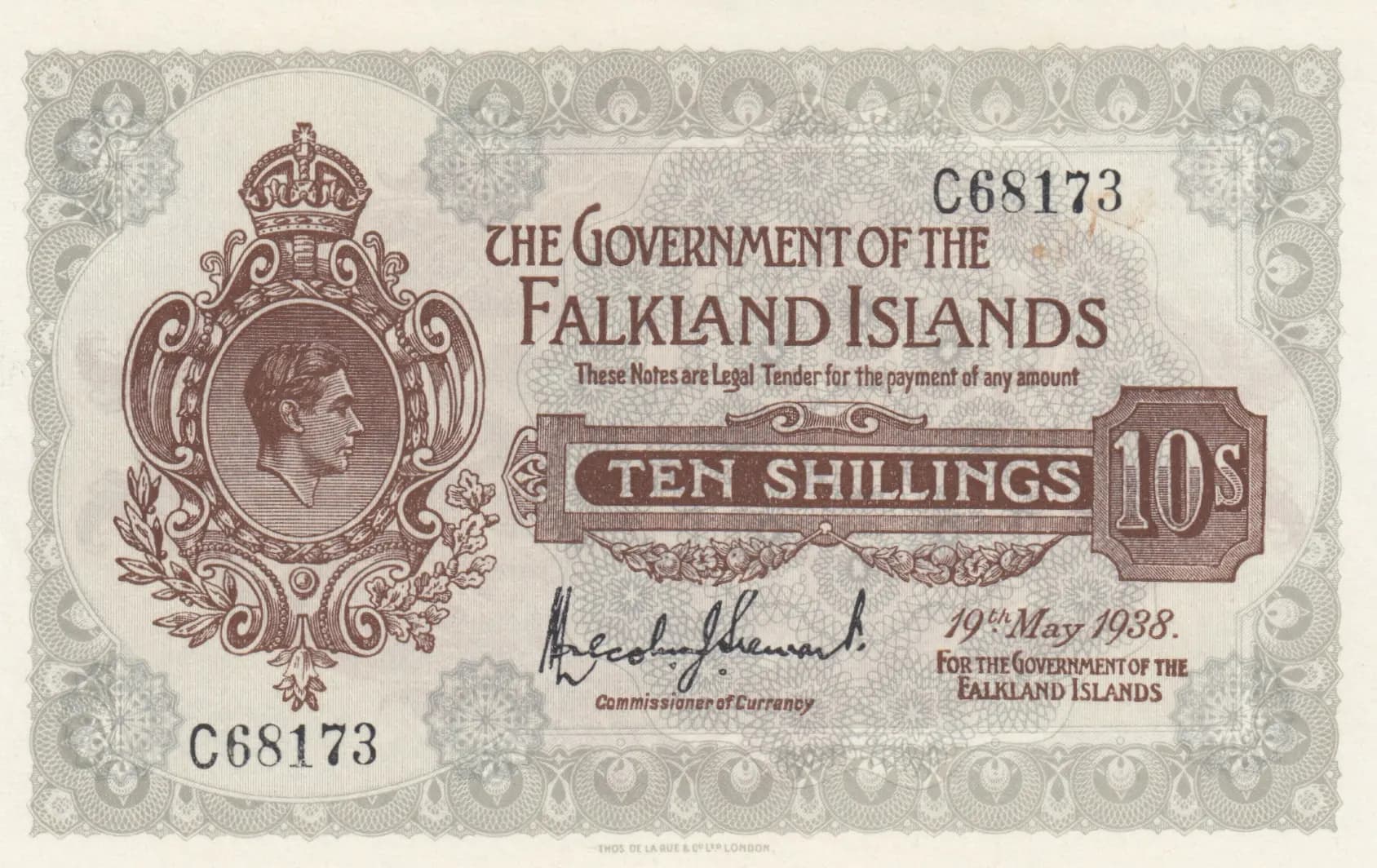
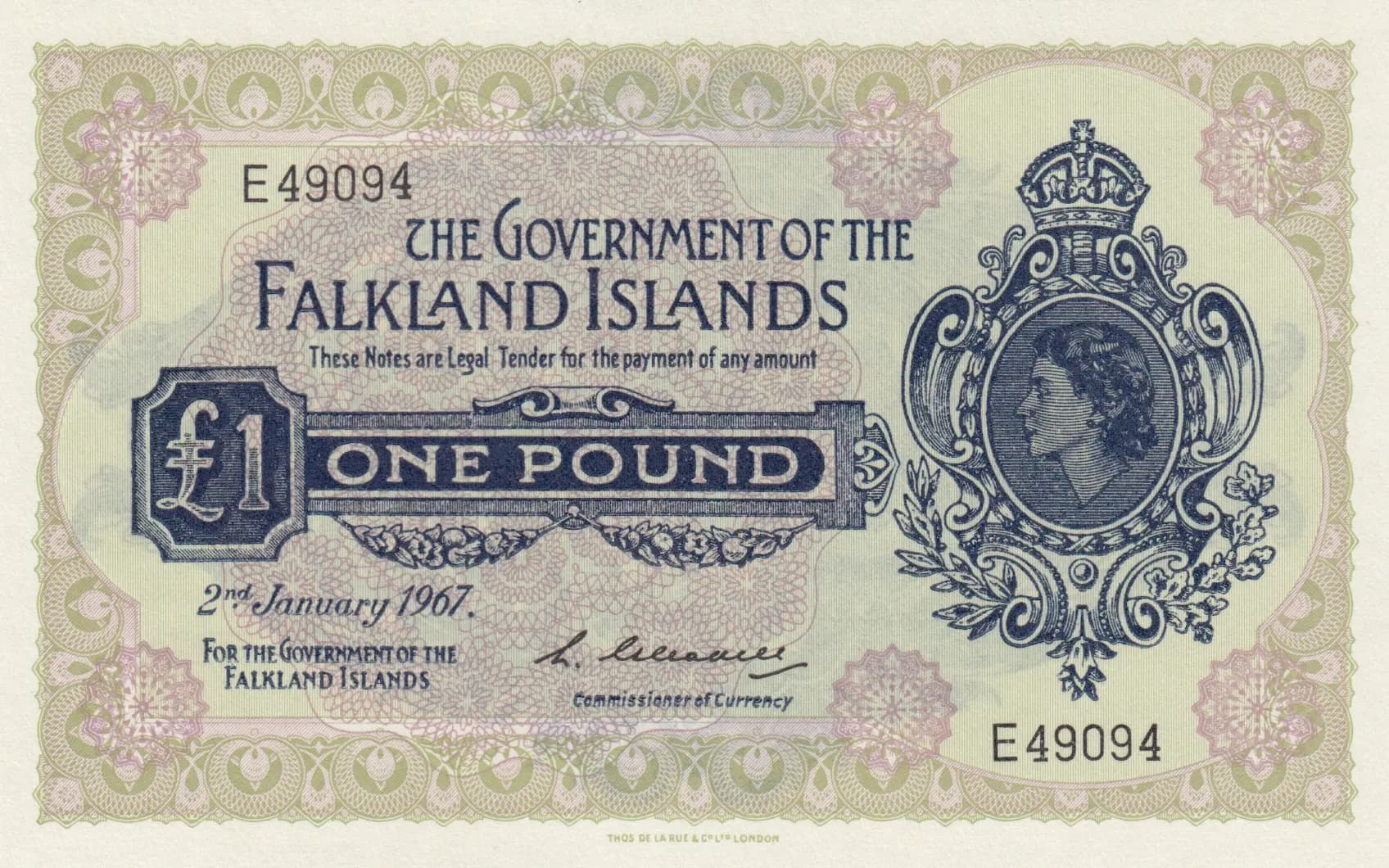
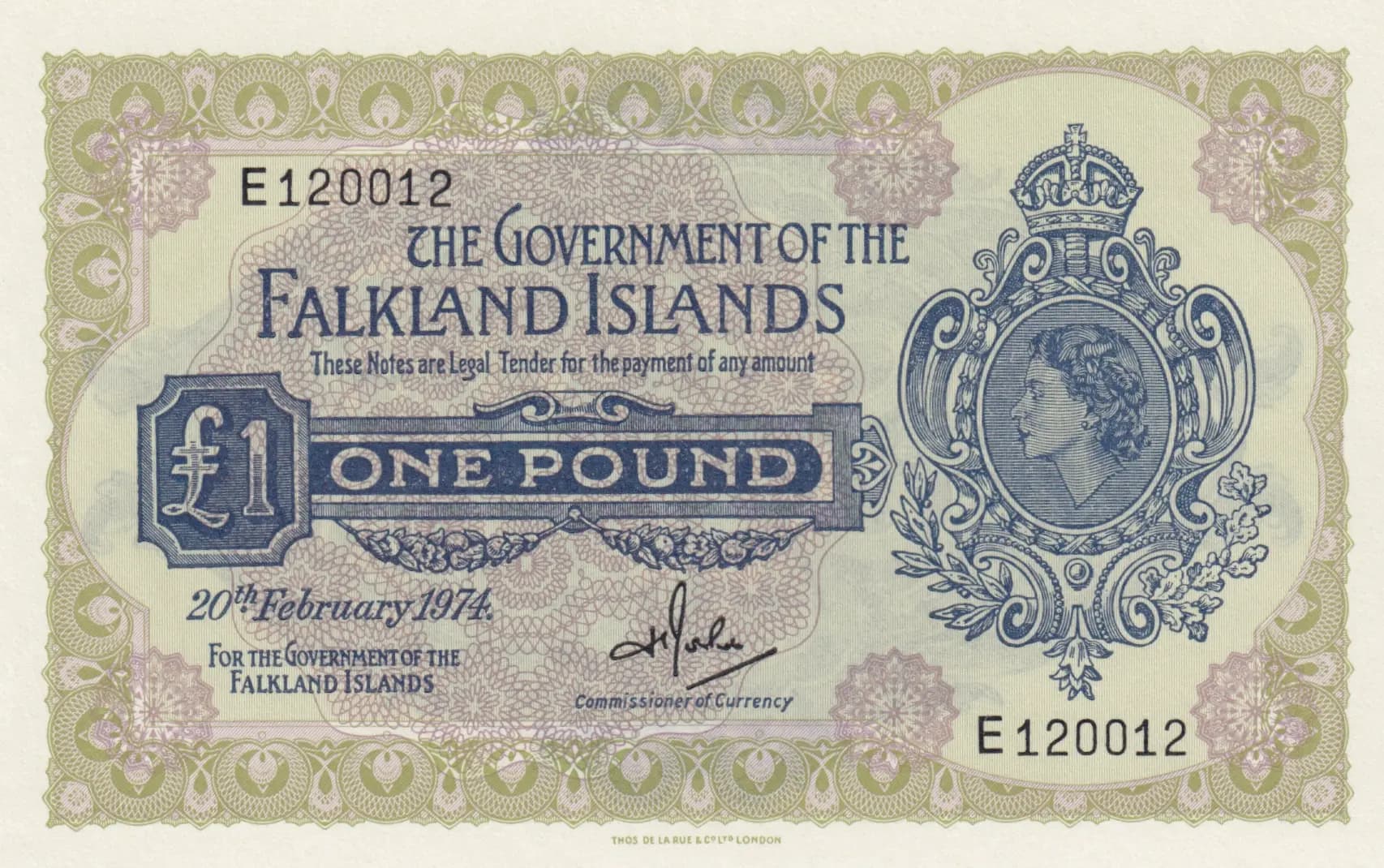
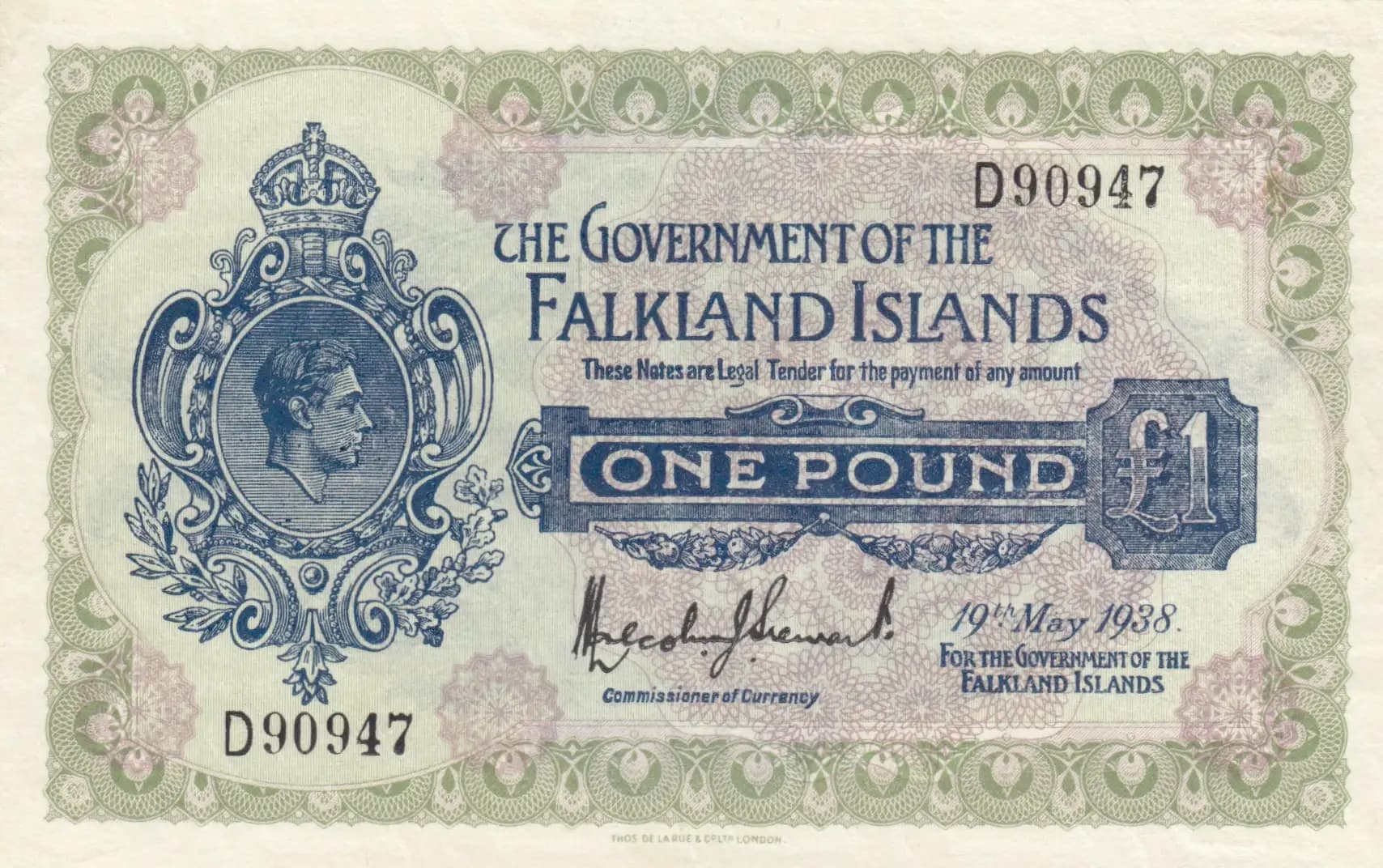
This is a handsome example of the 1938 Falkland Islands £1 note (Pick P-5), printed by Thomas de la Rue in London. The note displays the characteristic blue, green, and mauve color scheme of this issue, featuring an ornate oval portrait medallion of King George VI facing right, surrounded by elaborate scrollwork and laurel branches. In UNC condition, the note exhibits minor age-appropriate foxing but displays crisp engraving, sharp impressions, and no significant wear—a well-preserved specimen of this early Commonwealth currency issue.
Common. The 1938 Falkland Islands £1 (Pick P-5) remains relatively accessible to collectors. Catalog values indicate a UNC specimen at approximately $425 USD (2016 pricing), while recent eBay market data shows specimens in lower grades (F condition) selling in the $71–$118 range, suggesting steady but unspectacular demand. These notes were produced in reasonable quantities by Thomas de la Rue for a small island territory, and substantial quantities remain in collector hands and institutional holdings. There is no evidence of extreme scarcity, recall, or shortage of supply that would elevate this to rare status.
Issued on 19 May 1938, this note represents the Falkland Islands' early monetary independence under the authority of the Government of the Falkland Islands and its Commissioner of Currency. The portrait of King George VI, crowned and surrounded by laurel wreaths and heraldic ornaments, reflects the Islands' status as a British Crown colony during the reign of George VI (1936–1952). The elaborate engraved design and formal legal tender declaration underscore the Islands' establishment of a distinct currency system during this period of imperial monetary consolidation.
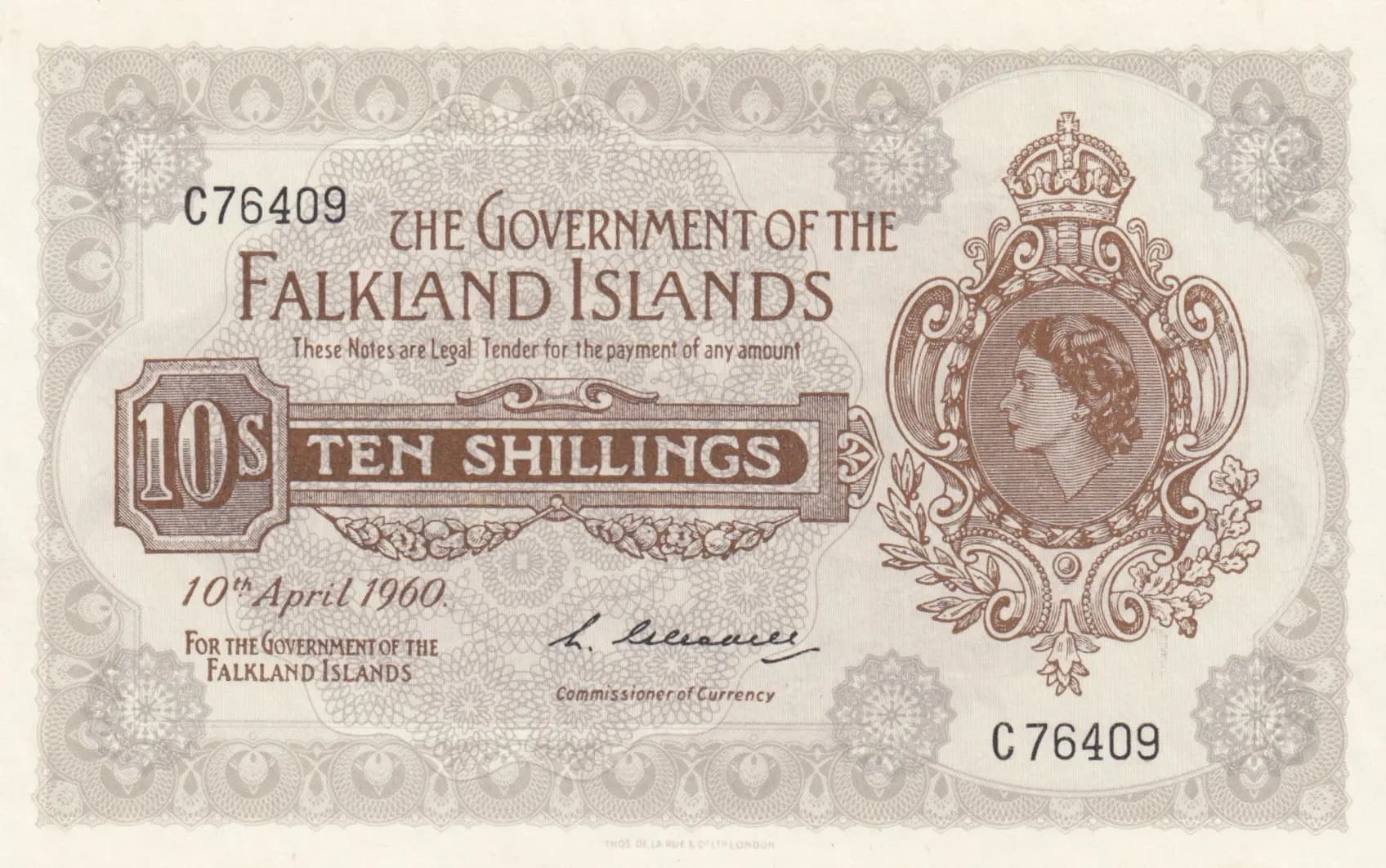
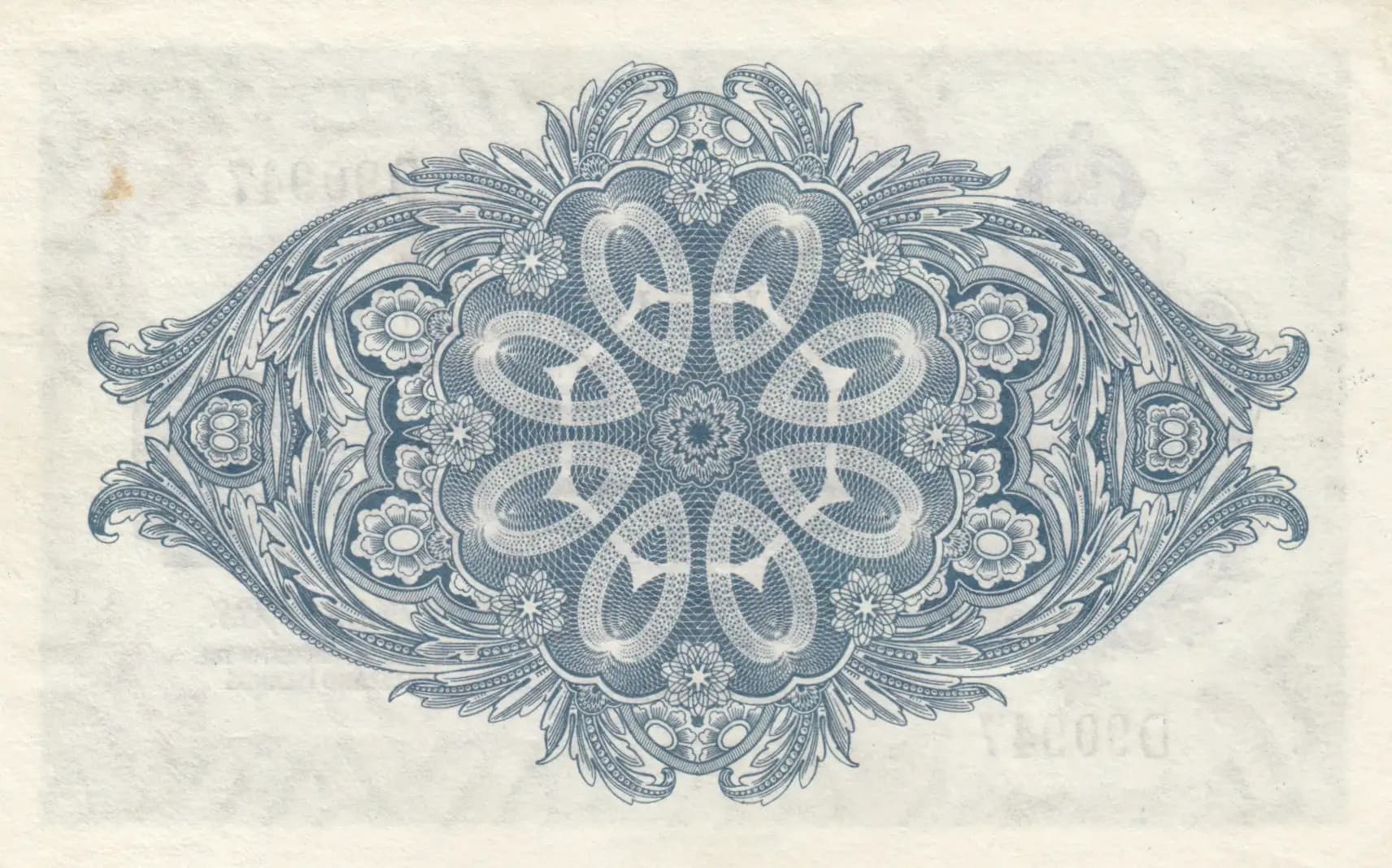
The obverse features a formal portrait of King George VI in left profile, enclosed within an ornate oval medallion with an elaborate baroque-style decorative border. Above the portrait is a crown symbol, and the medallion is flanked by symmetrical laurel wreath branches symbolizing honor and authority. The surrounding frame displays intricate scrollwork, floral motifs, and geometric ornamental patterns in green and mauve tones on a cream background. The reverse abandons portraiture entirely in favor of an elaborate symmetrical ornamental composition—a large decorative crest or shield-like design rendered in blue fine-line engraving, consisting of interlocking geometric patterns, baroque flourishes, and floral elements. This design-heavy reverse was characteristic of Thomas de la Rue's anti-counterfeiting approach of the era.
FRONT: 'THE GOVERNMENT OF THE FALKLAND ISLANDS' (issuing authority); 'These Notes are Legal Tender for the payment of any amount' (legal tender clause); 'ONE POUND' / '£1' (denomination); '19th May 1938' (issue date); 'FOR THE GOVERNMENT OF THE FALKLAND ISLANDS' (authorization); 'Commissioner of Currency' (authorized signature line); Serial number 'D90947'. BACK: No inscriptions present; reverse consists entirely of elaborate ornamental engraved design. PRINTER MARK: 'THOS DE LA RUE & CO LONDON' (Thomas De La Rue and Company, London).
Intaglio engraving (recess printing), the hallmark of Thomas de la Rue & Co., London. The note exhibits the characteristic fine line work, intricate cross-hatching, and three-dimensional impression quality typical of high-security banknote production of the 1930s. The ornamental patterns throughout both sides serve dual aesthetic and security purposes, with the complexity of the engraved design providing resistance against counterfeiting. Color printing was applied in register over the engraved base, producing the multi-color effect (green, mauve, blue, and cream) visible on the obverse.
This note is catalogued as Pick P-5 (the base variety). PMG records indicate three variants exist for this Pick number: P-5 (standard), P-5p1 (plate variety or printing variant), and P-5s (likely a specimen or special issue variant). The observed example with serial number D90947 and issue date 19 May 1938 represents the standard P-5 variety. All known variants share Thomas De La Rue as the printer. No overprints, signature variants, or significant serial number prefixes that would constitute major varieties are evident in this specimen.