10 shillings 1938
Market Prices
About This Note
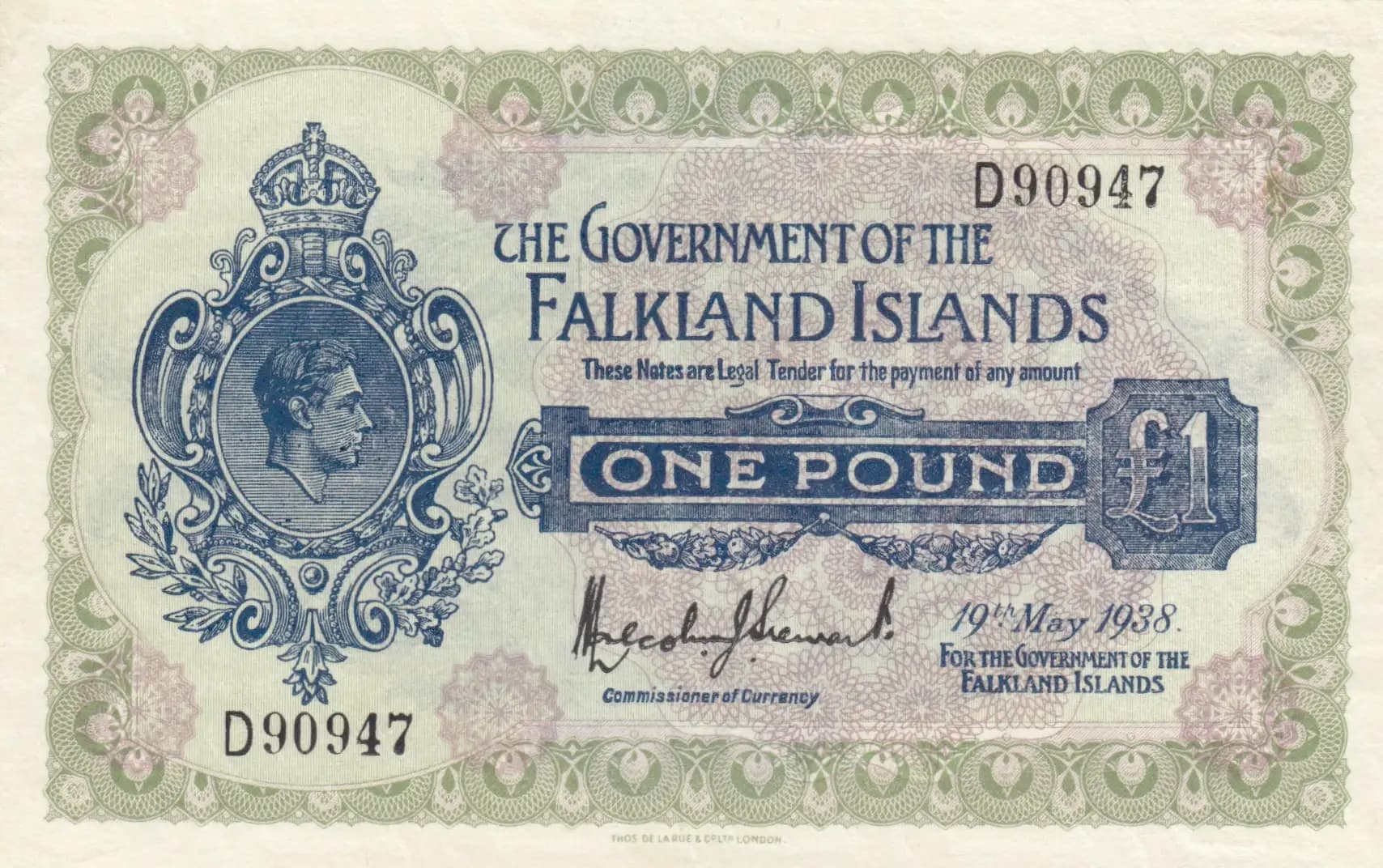
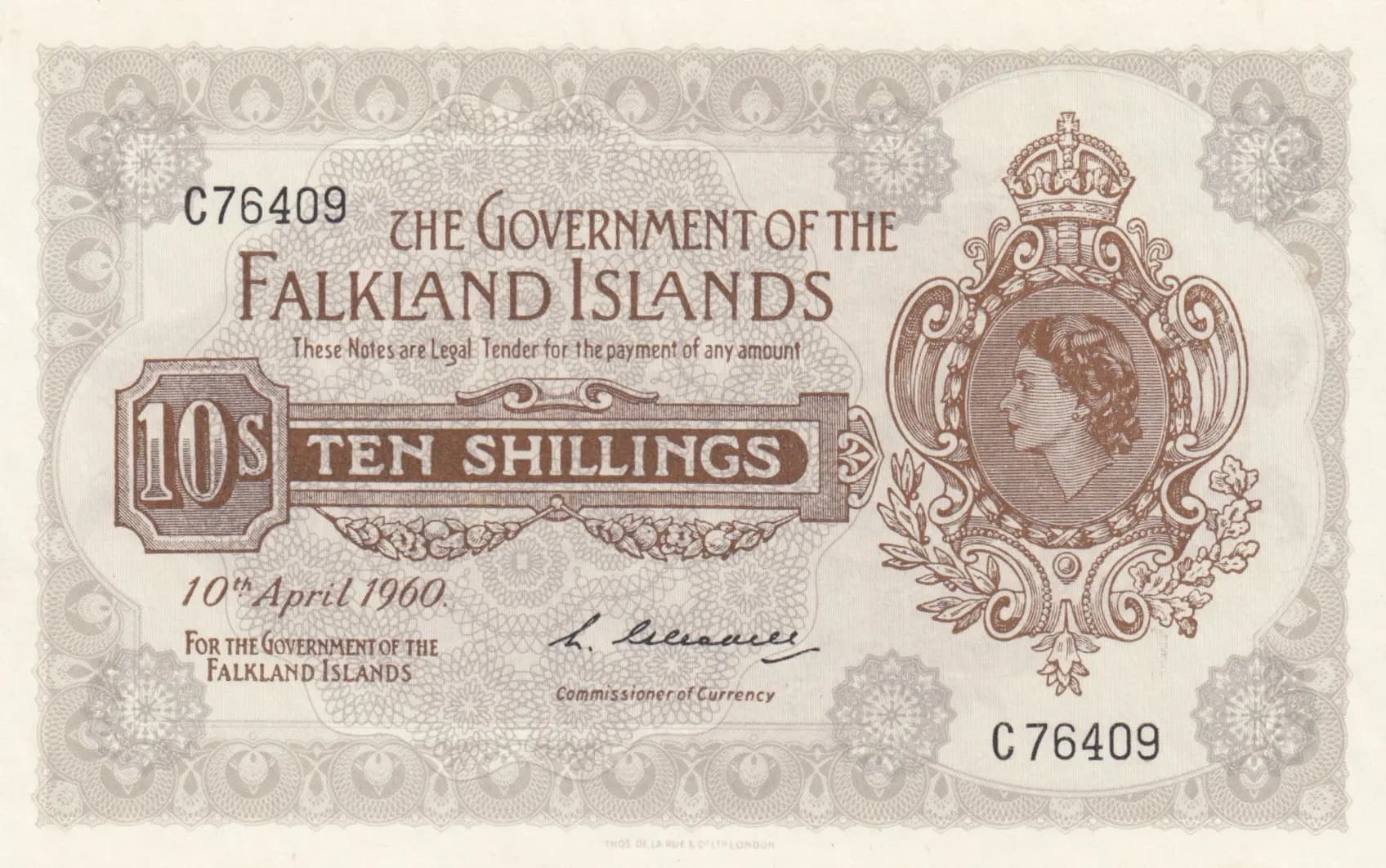
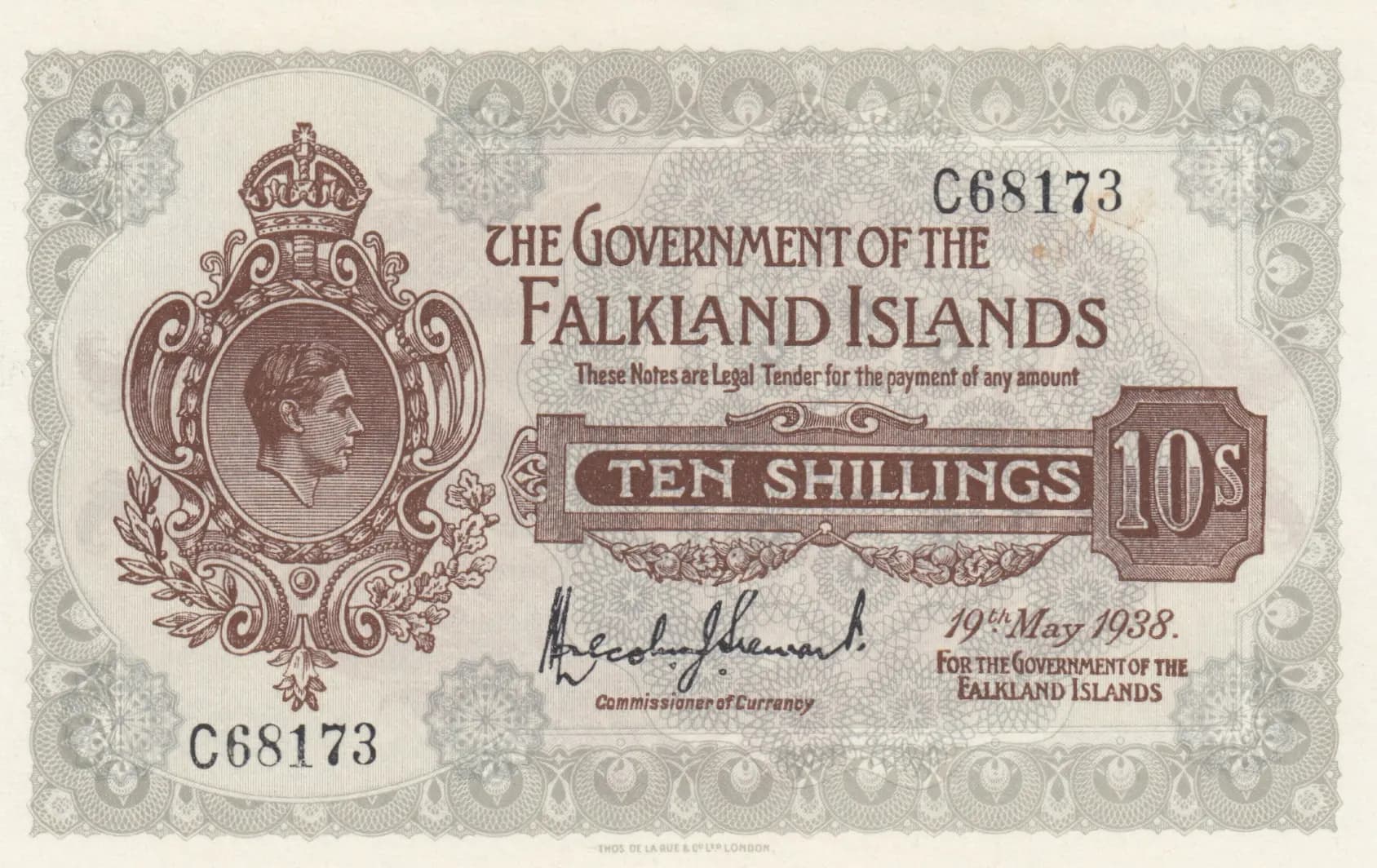
This is a 10 shillings banknote from the Government of the Falkland Islands, dated 19 May 1938, printed by Thomas de la Rue & Co, London. The note features a brown/maroon color scheme on cream underprint with an ornate oval portrait medallion of King George VI on the left side, surrounded by elaborate decorative scrollwork and laurel wreaths. While the note exhibits natural aging consistent with its 1938 issuance date, including foxing and light staining throughout, the fine line engraving details remain clearly visible, making this a historically significant example of early British colonial currency.
Common. The secondary market data from realbanknotes.com shows eBay listed prices for UNC examples ranging from approximately $500-$1,400 USD, with a 2016 catalogue value of $200 UNC. While the note commands moderate prices reflecting its age and colonial origin, the presence of multiple UNC examples in circulation and the regular appearance of listings on eBay indicate this is not a scarce issue. The Government of the Falkland Islands had sufficient resources to produce adequate quantities for local circulation during the 1938 issue period.
This note was issued during the reign of King George VI, whose portrait appears prominently within an ornate oval frame crowned with the royal crown—a standard iconographic element for British Commonwealth currency of the interwar period. The 'Government of the Falkland Islands' issuing authority reflects the territory's status as a British Crown Colony, and the denomination in shillings places it within the pre-decimal sterling system that governed British currency until 1971. The elaborate decorative design and Thomas de la Rue production mark this as part of the high-quality security printing standards maintained by Britain's premier currency printer during the 1930s.
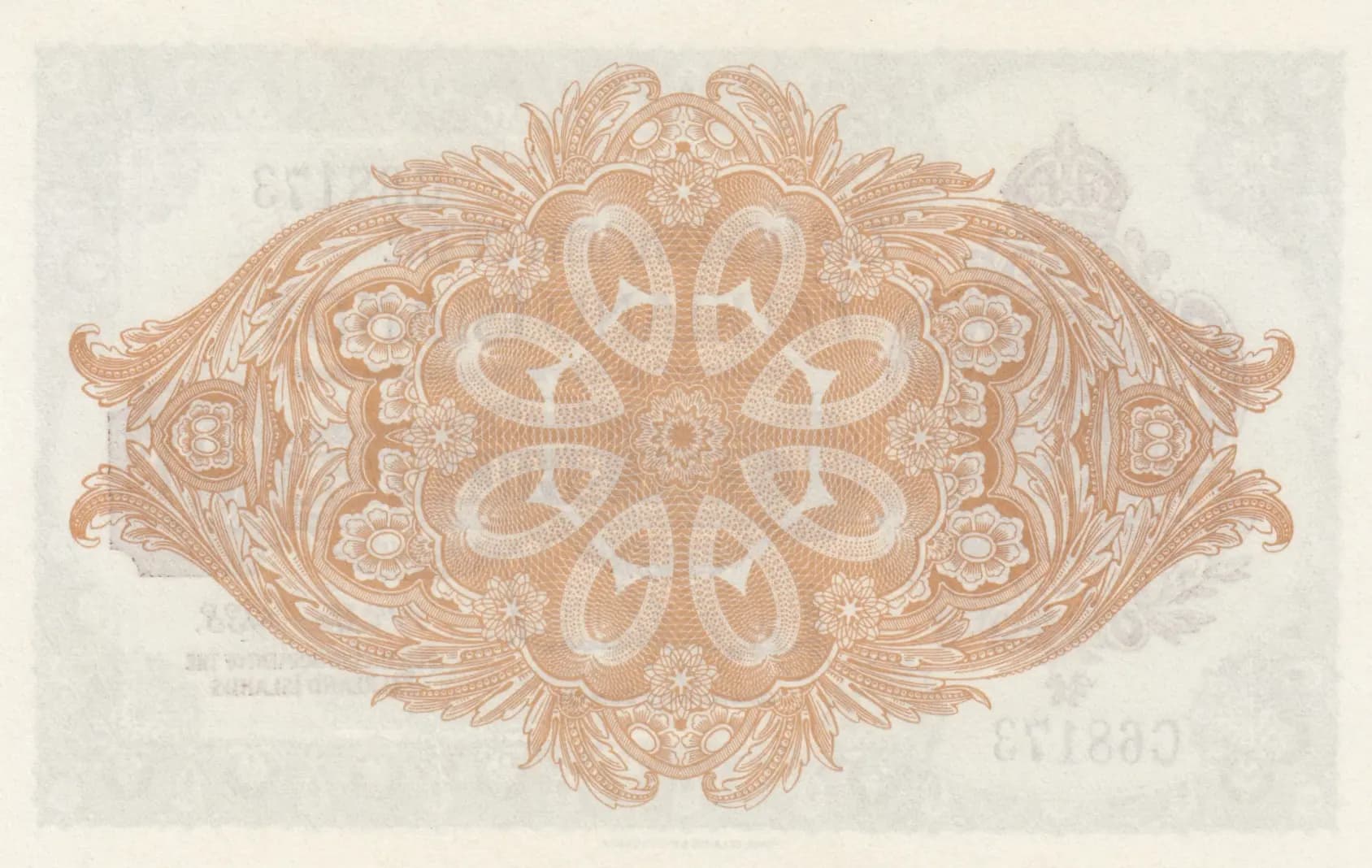
The obverse features a formal portrait of King George VI in right-facing profile, positioned within a large ornate oval medallion on the left side of the note. The portrait is surrounded by elaborate heraldic elements including a royal crown at the top of the medallion, symmetrical laurel wreaths, ornamental scrollwork, and an intricate coat of arms design. The right portion of the note displays the denomination and issuing authority in prominent text, with a signature line for the Commissioner of Currency. The entire design is framed by an ornate geometric and floral decorative border. The reverse displays a symmetrical ornamental medallion design featuring nested scrollwork, floral motifs, and geometric patterns in a mandala-like arrangement, typical of De la Rue's decorative security printing style. The color scheme of brown/maroon on cream creates high contrast suitable for both visual identification and anti-counterfeiting purposes.
FRONT: 'THE GOVERNMENT OF THE FALKLAND ISLANDS' (issuing authority); 'These Notes are Legal Tender for the payment of any amount' (legal tender declaration); 'TEN SHILLINGS' and '10S' (denomination); '19th May 1938' (issue date); 'FOR THE GOVERNMENT OF THE FALKLAND ISLANDS' (attribution); 'Commissioner of Currency' (authorized signatory title); 'C68173' (serial number, appears twice). BACK: 'THOS DE LA RUE & Co LONDON' (printer identification).
Intaglio (copperplate) engraving, as evidenced by the fine line work visible throughout both sides of the note. The detailed portrait engraving, intricate border patterns, ornamental scrollwork, and geometric security features are characteristic of Thomas de la Rue & Co's high-quality engraving process. No evidence of lithography is present; the note shows the sharp, deeply-impressed characteristics of traditional intaglio currency production.
This example bears the serial number C68173 with the standard 'C' prefix. PMG cataloguing indicates two known varieties for Pick-4: the standard P-4 and the P-4s (specimen notes). The visual analysis confirms this is a circulated P-4 regular issue (not a specimen), identifiable by the absence of 'SPECIMEN' overprinting and the presence of a standard circulation serial number. The signature authority shown as 'Commissioner of Currency' is consistent with the 1938 first issue of Falkland Islands currency.