50 pence 1969 radar
Market Prices
21 salesAbout This Note
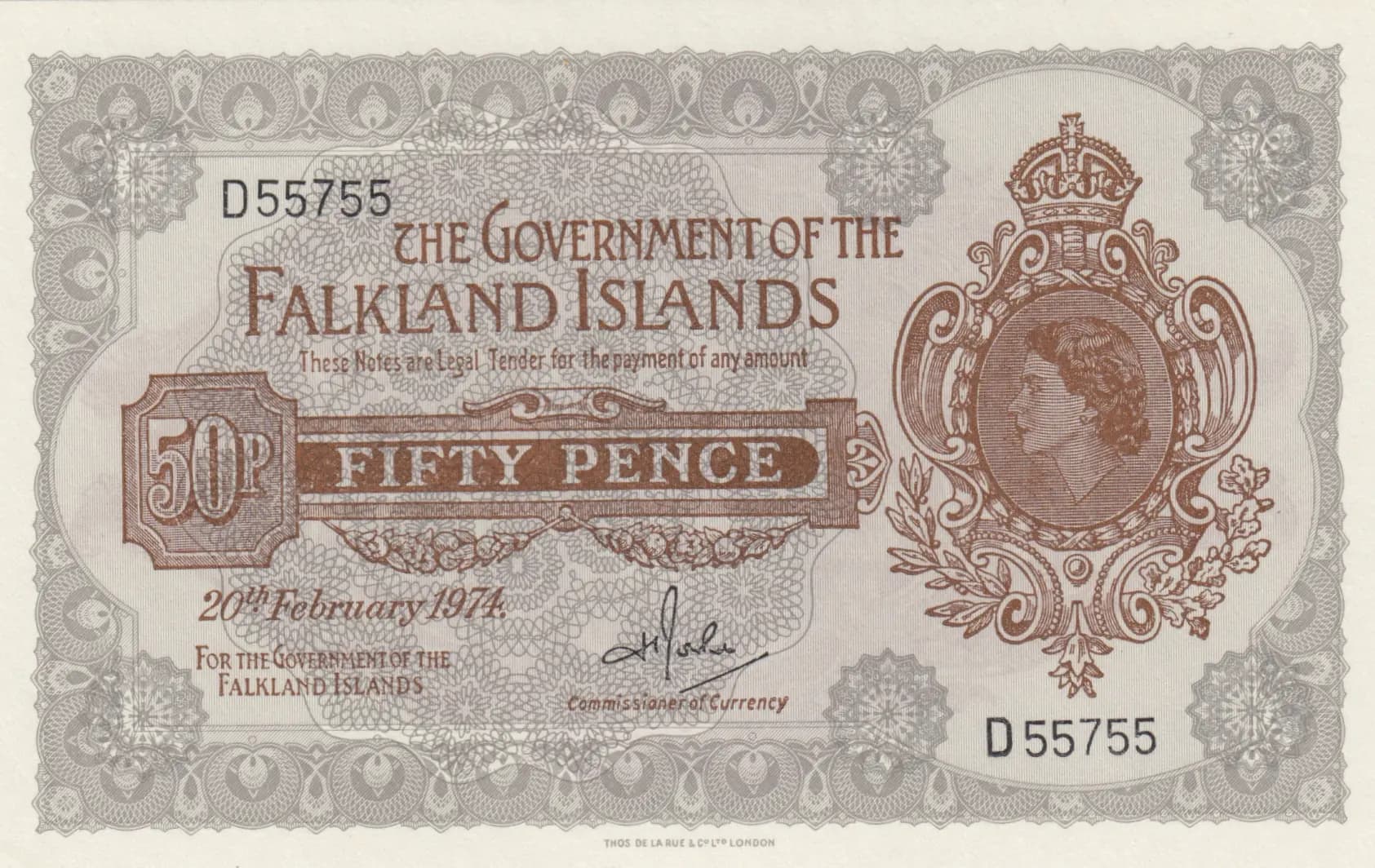
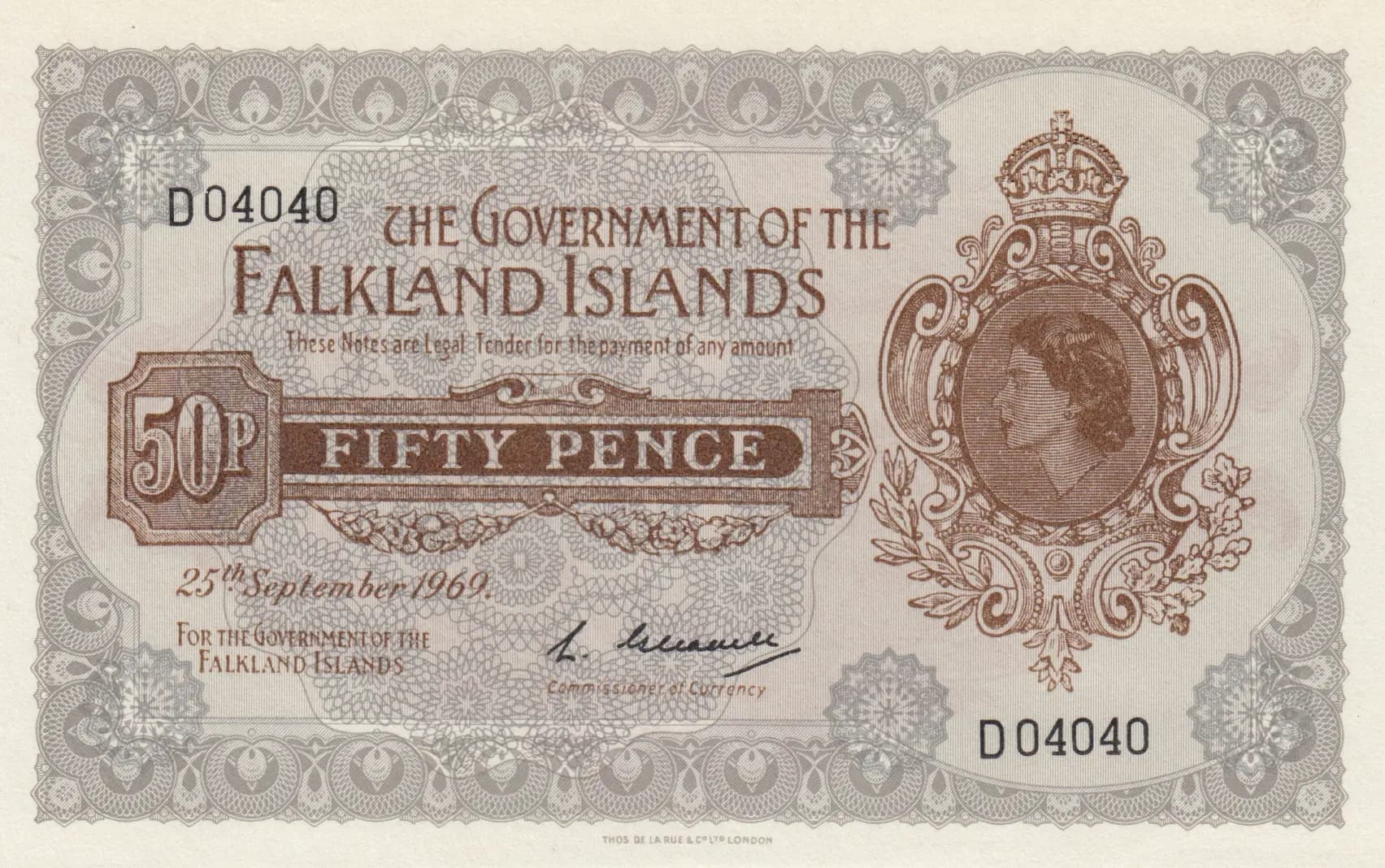
This is a 1969 Falkland Islands 50 pence note in uncirculated condition, featuring an elegant portrait of Queen Elizabeth II in crowned profile on the right side, rendered in brown and cream tones with intricate security printing throughout. The note exhibits the crisp, sharp detail characteristic of Thomas de la Rue's security printing, with no visible signs of circulation, creasing, or wear. This early issue from the Government of the Falkland Islands' initial decimal currency series represents an important colonial banknote with strong collector demand, as evidenced by consistent eBay sales in the $70-$280 range depending on PMG grade.
Common. While this is an early decimal issue from a small territory, the eBay transaction history shows consistent availability with regular sales spanning multiple years (2016-2022). UNC examples sell reliably in the $70-$115 range with modest premiums for higher PMG grades. Print runs for Falkland Islands currency were substantial enough to support circulation across the territory's small population, and the note has not been recalled or withdrawn. The frequency and accessibility of examples at various grade levels confirms common status despite the specialized collector interest in Falkland Islands currency.
This note was issued on 25 September 1969 by the Government of the Falkland Islands following the territory's transition to decimal currency. The portrait of Queen Elizabeth II and royal crown symbolize the Falkland Islands' status as a British Overseas Territory during this period. The issuing authority is explicitly stated as 'The Government of the Falkland Islands' with reference to the Commissioner of Currency, reflecting the administrative structure of the territory in the late 1960s.
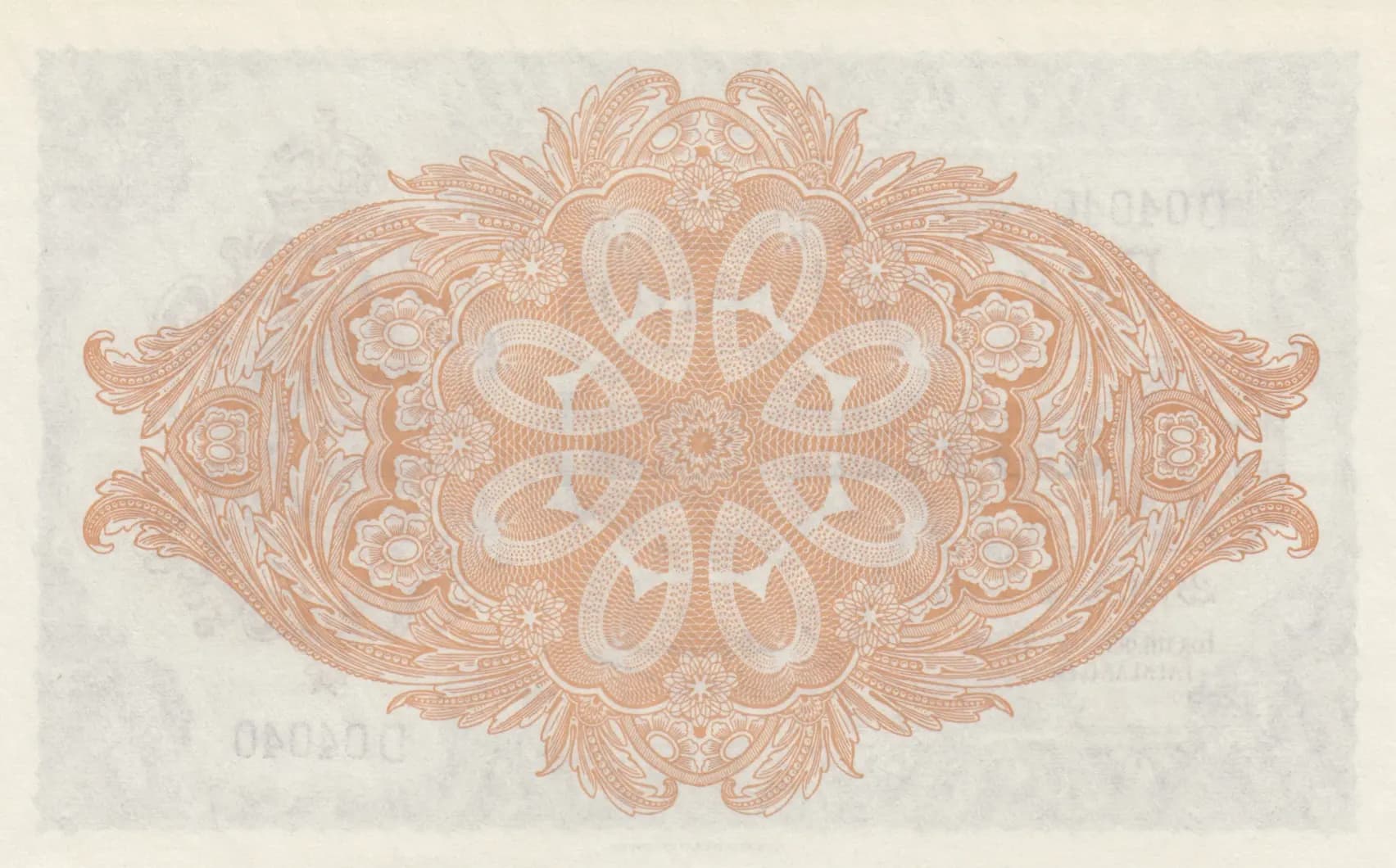
The obverse features a crowned portrait medallion of Queen Elizabeth II in profile, positioned on the right side of the note within an ornate oval frame decorated with laurel wreaths. The portrait is rendered in the formal heraldic style typical of Commonwealth currency of this era. The reverse displays an elaborate baroque-style ornamental design centered on the note, featuring symmetrical scrollwork, a central rosette medallion, and radiating decorative flourishes. Both sides are framed by an intricate geometric and floral border pattern characteristic of high-security banknote design. The color scheme throughout is brown on a cream/beige underprint, creating a warm, dignified appearance suitable for colonial government currency.
Front side: 'THE GOVERNMENT OF THE FALKLAND ISLANDS' (issuing authority) / 'FIFTY PENCE' and '50p' (denomination) / 'These Notes are Legal Tender for the payment of any amount' (legal tender declaration) / '25th September 1969' (issue date) / 'FOR THE GOVERNMENT OF THE FALKLAND ISLANDS' (authority confirmation) / 'Commissioner of Currency' (authorized official title) / 'THOS DE LA RUE & Co LTD LONDON' (printer attribution) / 'D04040' (serial number). Back side: 'BANK OF FALKLAND ISLANDS' (issuing institution). All inscriptions are in English.
Intaglio engraving (recess printing) executed by Thomas de la Rue & Co Ltd, London, one of the world's premier security printers. The fine line work, ornate decorative elements, intricate border patterns, and crisp detail visible throughout indicate the multi-plate engraving process typical of de la Rue's work. The complexity of the baroque-style reverse design and the security-oriented geometric patterns on both sides are hallmarks of classical security banknote printing designed to prevent counterfeiting.
This is identified as Pick P-10a (1969 radar). The PMG population report indicates five catalogued varieties exist for this base Pick number: P-10a, P-10as (specimen), P-10b, P-10bs (specimen), and P-10s (specimen). The specimen suffix variants represent notes issued for reference purposes and would be distinct from this circulation example. The serial number prefix 'D04040' visible on this note may be relevant to establishing variety classification, though multiple prefixes are likely to exist across the print run. No overprints or signature variations are apparent from the visual analysis.