5000 marka 1923 specimen
Market Prices
About This Note
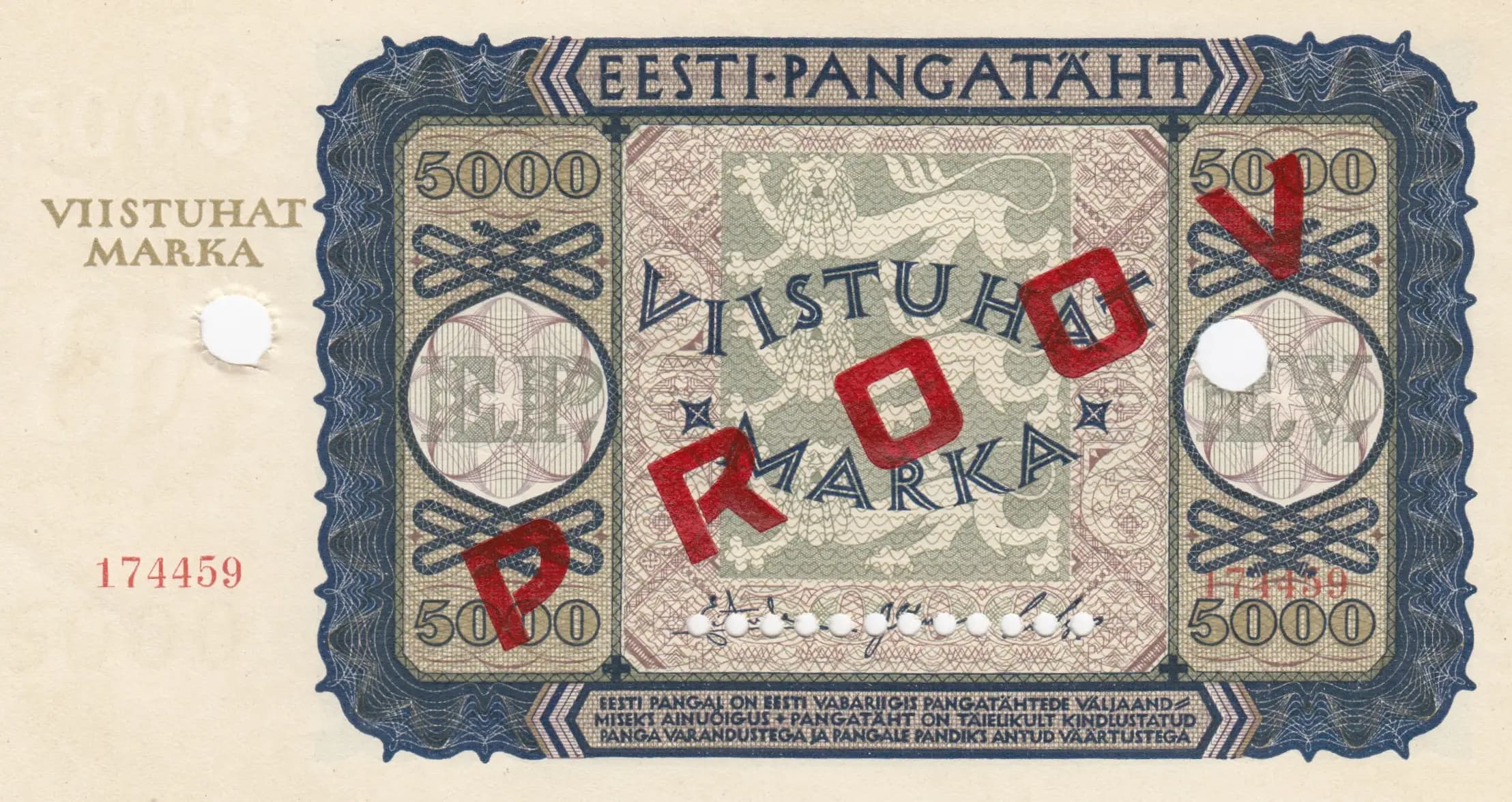
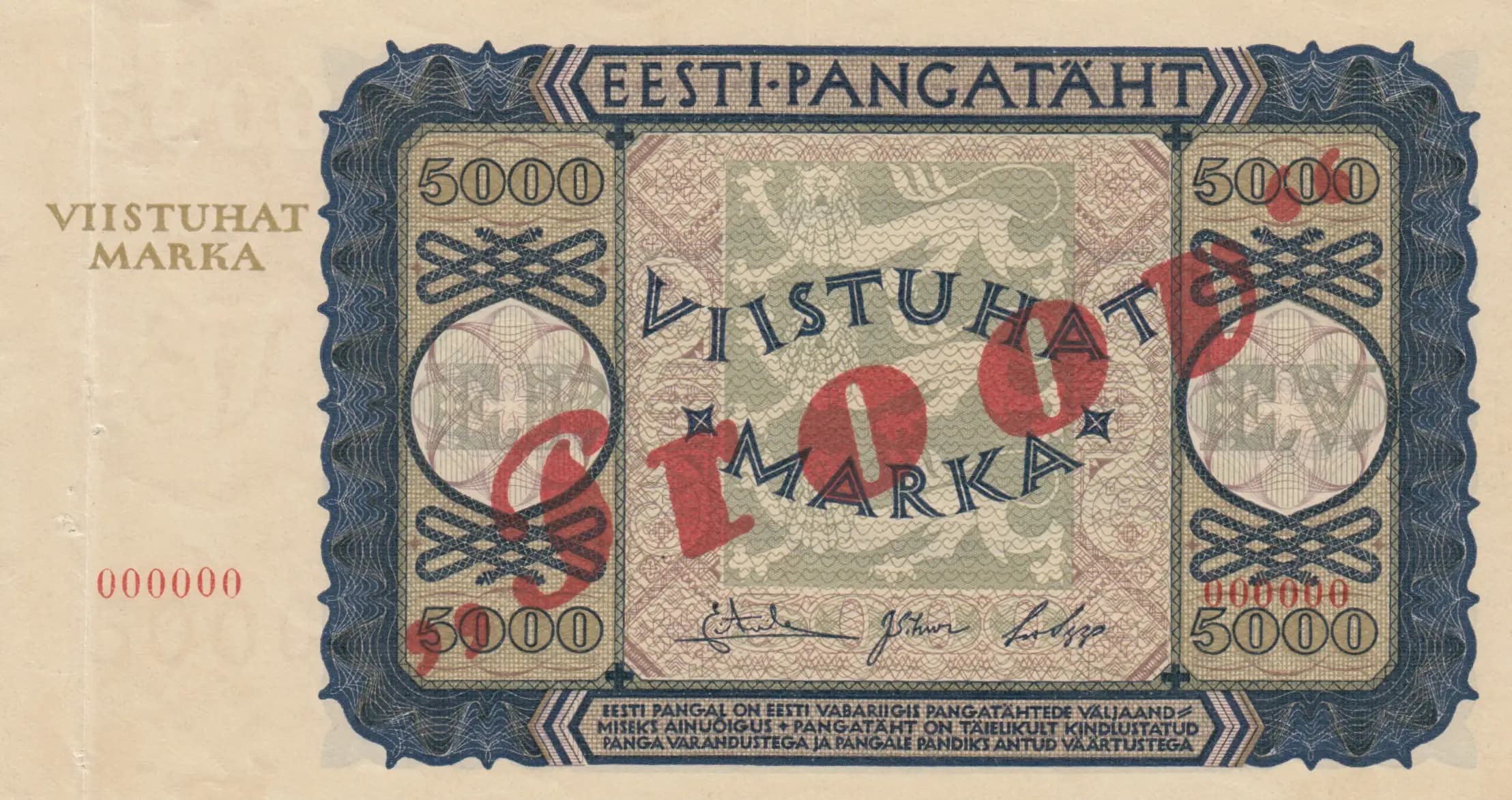
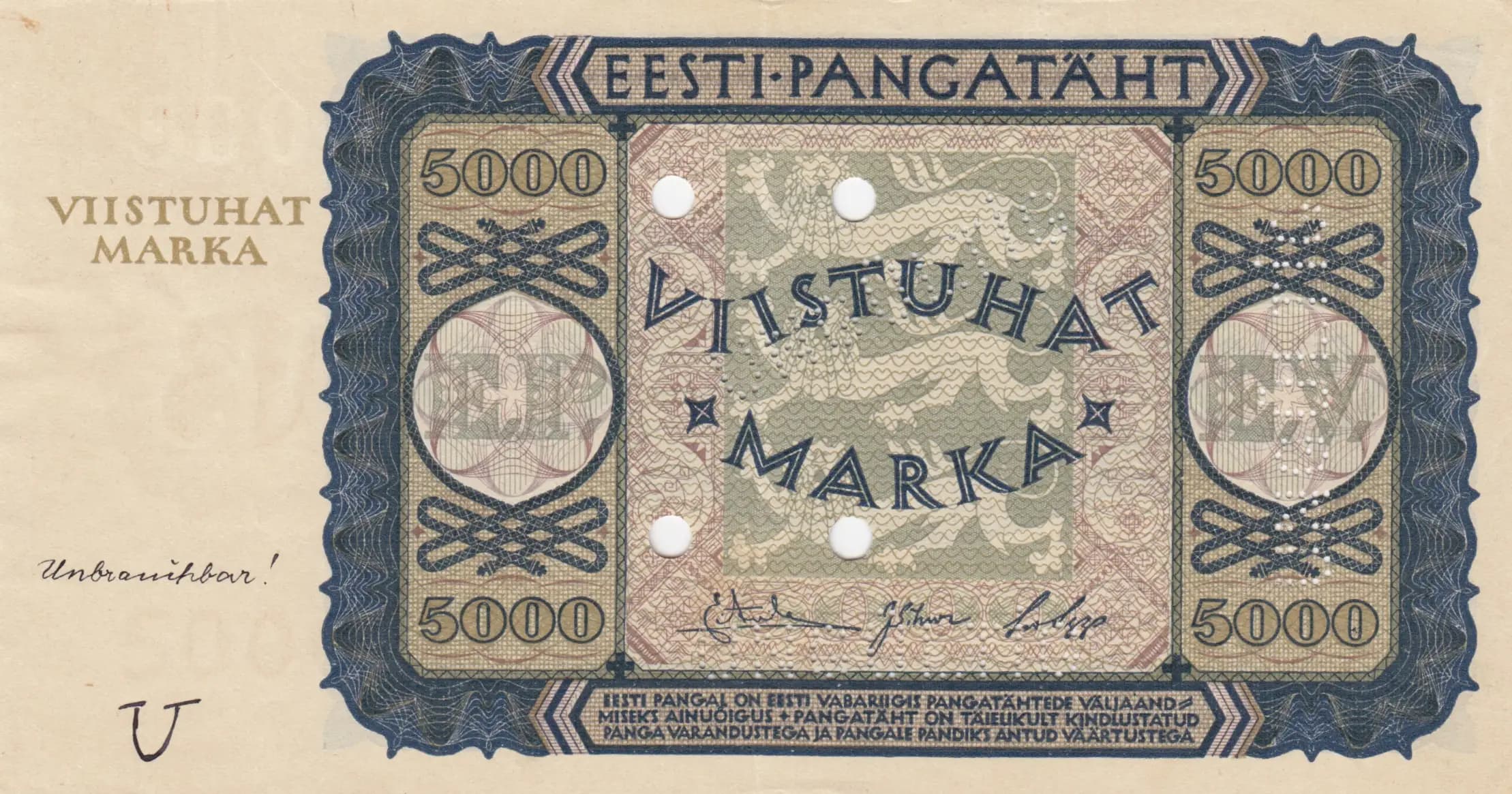
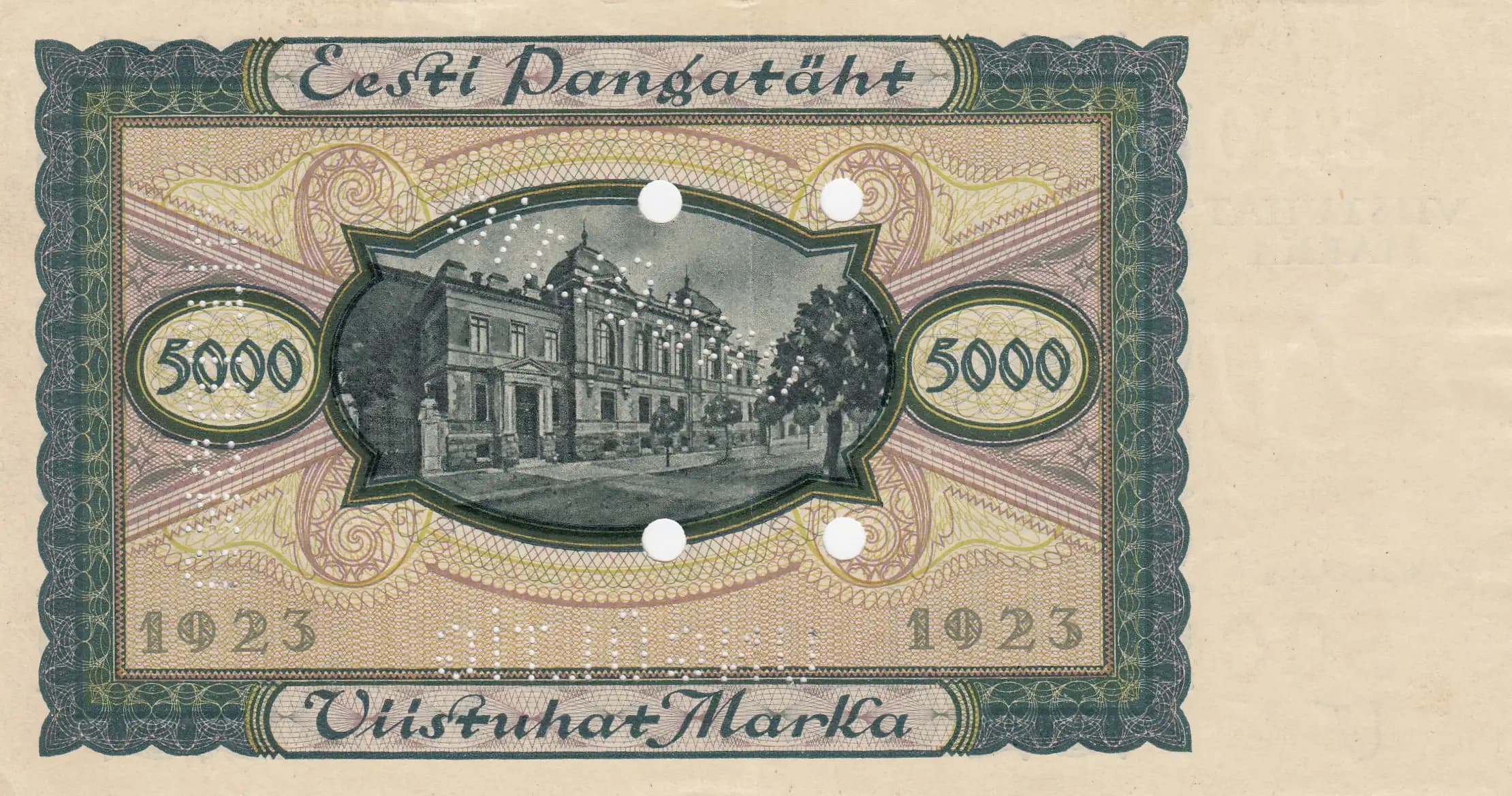
This is an exceptional specimen of Estonia's 5000 Marka banknote from 1923, representing a high-denomination note from the early independence period. The note displays the characteristic multi-color design with blue, brown, and green tones, featuring ornamental geometric patterns and the Estonian state arms on the front, while the reverse showcases a classical domed building (likely an important institutional structure). As a specimen note marked with punch holes and vertical 'SPECIMEN' text, it has never circulated and retains its original character, though it shows expected foxing and age-related patina consistent with a century-old document stored in original condition.
Uncommon to scarce in specimen condition. While the catalog values from 2016 list VF at $1,300 and UNC at $2,700, the eBay market data shows significant volatility with recent sales ranging from $38.50 to $245.00, with most transactions in the $70-$180 range. Specimen notes from early Estonian independence are generally less common than regular circulation issues, as they were produced in smaller quantities and typically retained by banks or archives rather than entering general numismatic circulation. The Pick-60s3 designation (s3 = specimen variety) indicates this is specifically the third specimen variant. The aging and foxing visible on this example, combined with the specimen cancellation, makes it a legitimate collector piece rather than a common circulation rarity.
Issued in 1923 by the Treasury of Estonia (Eesti Vabariik), this banknote reflects Estonia's consolidation of independence following World War I and the Estonian War of Independence. The prominent display of the Estonian arms and the inscription 'EESTI-PANGATAHT' (Estonian Bank Note) emphasized national sovereignty during a period when Estonia was establishing its monetary independence. The classical institutional building depicted on the reverse likely represents an important state financial or government facility, symbolizing the stability and legitimacy of the new Estonian state during its early years of monetary autonomy.
The 5000 Marka features a symmetrical layout with strong Art Nouveau and classical design elements typical of 1920s Central European banknote production. The front presents a formal composition with the Estonian state arms as the central motif, surrounded by four geometric medallion designs in the corners with ornamental knot work. The reverse showcases an engraved vignette of a significant classical or neoclassical building with a prominent domed roof, multiple stories with regular fenestration, flanking trees, and columns — likely representing the Estonian Treasury, Bank of Estonia building, or another state financial institution. The entire note is framed by elaborate decorative scrollwork and geometric borders in contrasting color zones. The palette of blue, brown, green, and tan creates visual distinction between design elements while maintaining the formal dignity appropriate to high-denomination currency.
Front side: 'EESTI-PANGATAHT' (Estonian Bank Note); 'VIISTUHAT MARKA' (Five Thousand Marka) — appears both in text form and in the upper corners as '5000'; 'SPECIMEN' marked vertically on left margin; 'Unbrautibar!' (Not Valid/Unusable); extensive banking terms and conditions in Estonian regarding the note's legal status and backing. Back side: 'Eesti Pangataht' (Estonian Bank Note) in cursive at top; '5000' in circular denomination frames on left and right; '1923' marked at bottom left and right; denomination text at bottom.
The note was produced using fine line engraving and intaglio printing techniques, evidenced by the sharp, detailed geometric patterns, the intricate scrollwork, the finely rendered building vignette, and the precise linear work visible throughout both sides. The color printing involved multiple passes to achieve the polychrome effect. The specimen punch holes were applied post-production. The security engraving and overall technical execution is consistent with the work of major European security printers active in the early 1920s, though the specific printer attribution for this Pick number would require consultation of Estonian banking records.
This note is cataloged as Pick-60s3, indicating it is a Specimen variety of the 5000 Marka. The specific specimen designation 's3' suggests there are multiple specimen variants of this denomination. The visual analysis confirms specimen characteristics: the punch holes (four white circular areas canceling the note), the 'SPECIMEN' text marking on the left margin, and the overall appearance consistent with a bank specimen issue rather than a regular printing. No serial numbers or signatures are described in the visual analysis, which is typical for specimen notes. The 1923 date is confirmed on the reverse. Collectors should note that specimen notes may exist with variations in the number, placement, or size of cancellation holes depending on when and by which institution they were prepared as samples.