5000 marka 1923 specimen
Market Prices
About This Note
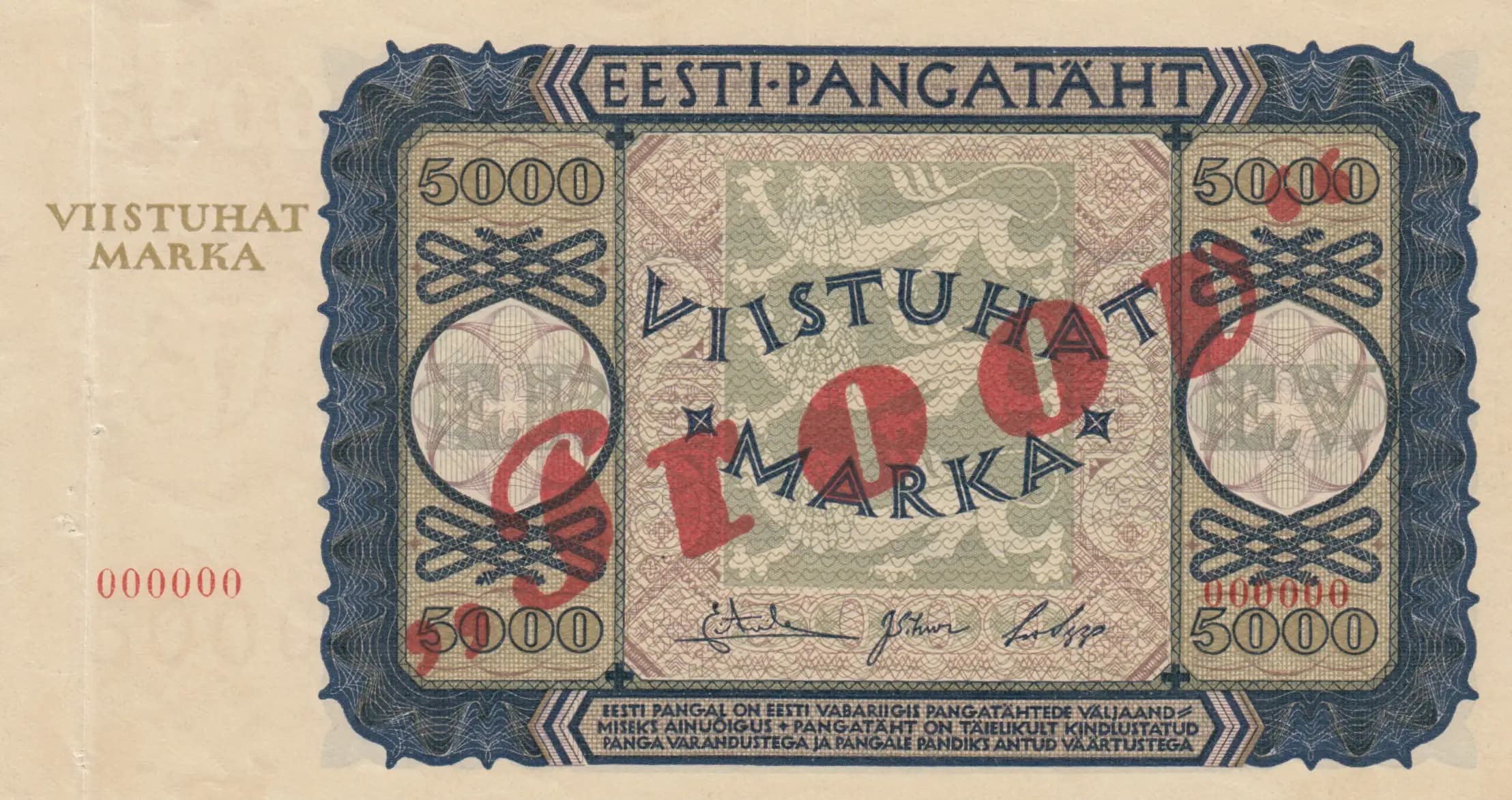
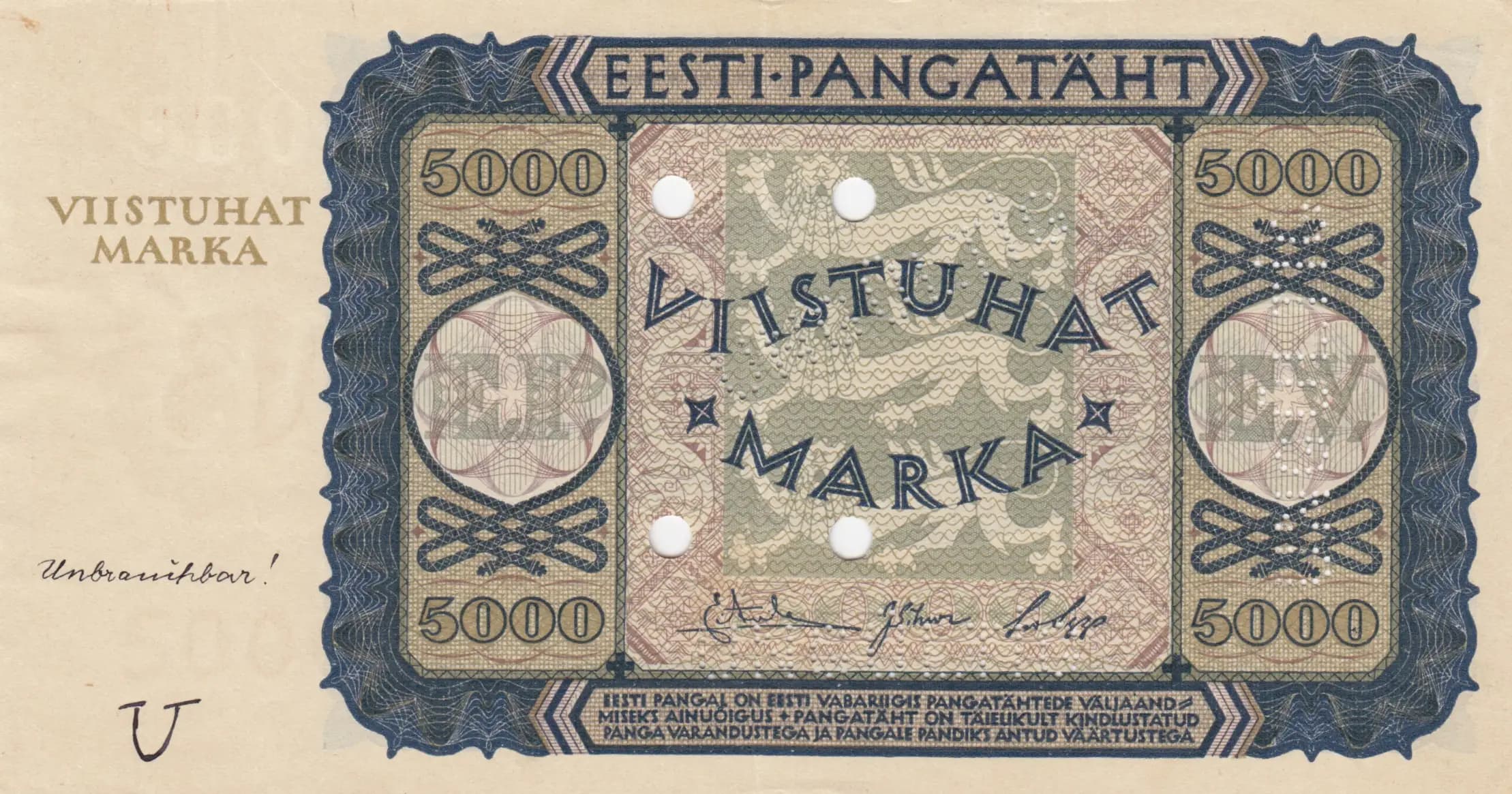
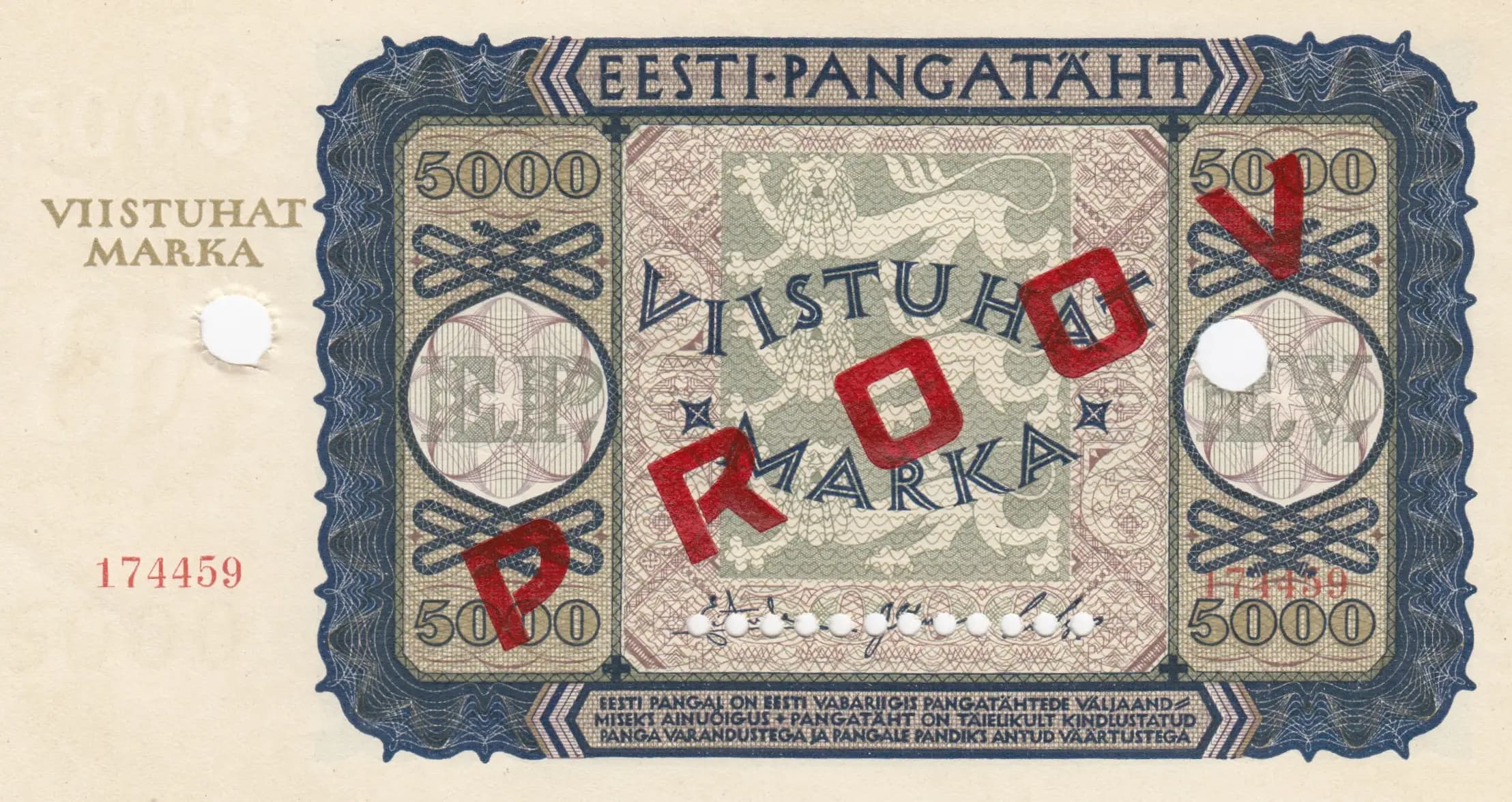
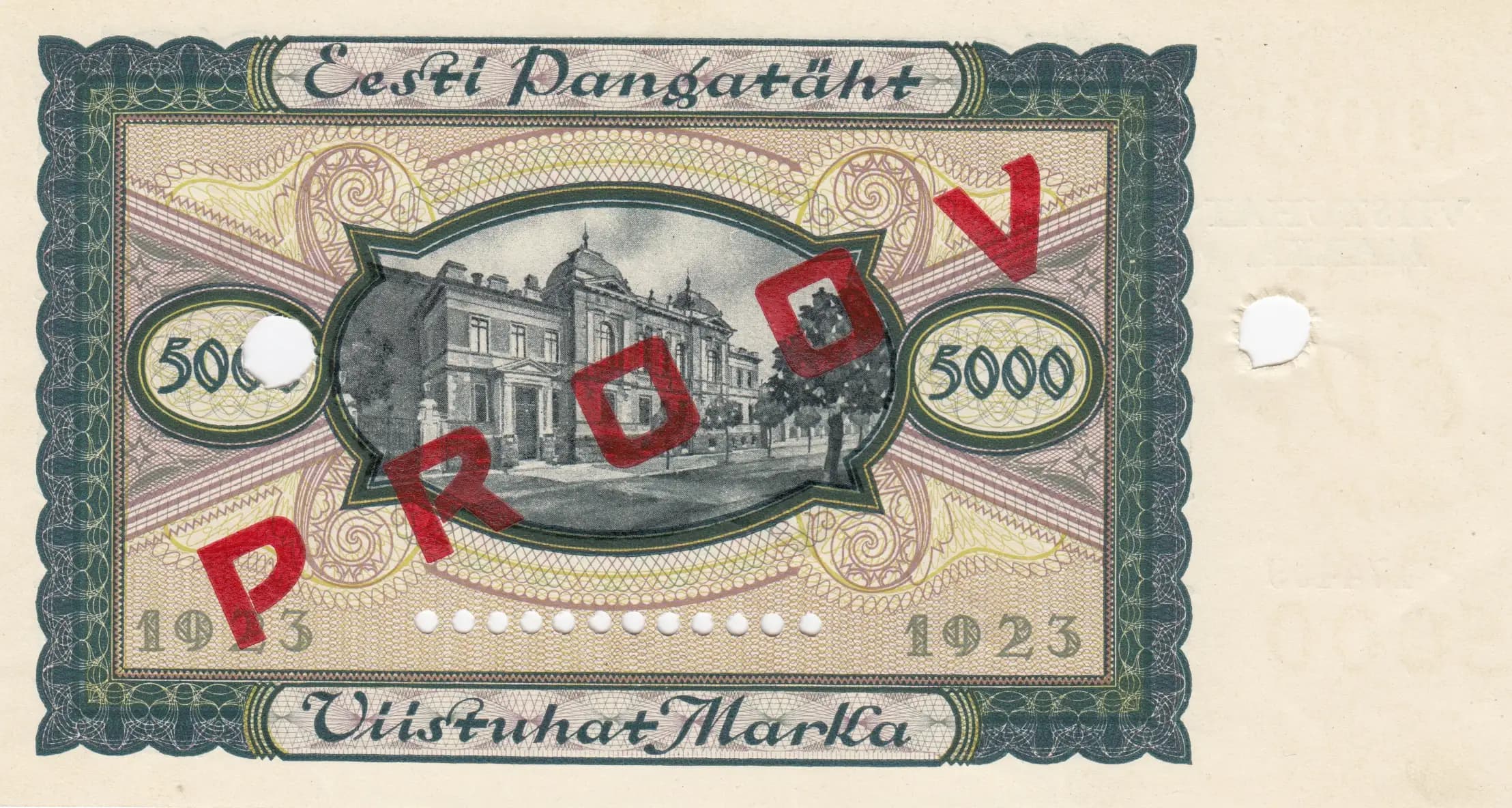
This is an exceptional specimen note of Estonia's 5000 Marka from 1923, graded UNC, representing a significant piece of interwar Baltic numismatic history. The note features the iconic red 'PROOF' overprint on both sides and displays pristine condition with no circulation wear, though evidencing mounting holes consistent with specimen status. The intricate blue, green, and cream color scheme combined with fine security engraving makes this an attractive example of early Estonian currency design.
Common. While specimen notes command premiums over regular circulation issues, the eBay market data shows UNC examples trading in the $114–$177 range with some listings at $138–$150, indicating a steady but not scarce supply in the collector market. The median pricing around $150 USD reflects a note that, while desirable as a specimen, is neither exceptionally rare nor difficult to acquire. The large catalog value range ($2700 for UNC in 2016) versus actual market transactions suggests catalog values may not reflect current market reality. The absence of evidence of a small print run specific to specimen versions, combined with moderate market pricing, supports a 'common' assessment for this denomination in UNC specimen condition.
The 5000 Marka denomination was issued during Estonia's early years of independence (1918-1940) as the newly sovereign nation established its own monetary system separate from Russian Imperial currency. The classical building depicted on the reverse represents the Estonian Bank (Eesti Pank), symbolizing the nation's financial autonomy and institutional stability during this crucial period of nation-building. The map of Estonia featured in the central obverse design further emphasizes national identity during a time when the country's borders and sovereignty were still being internationally recognized.
The obverse features an ornate design centered on a map of Estonia rendered in fine engraving, flanked by decorative crossed ornamental elements in the upper corners. The denomination '5000' appears in elaborate oval cartouches in both upper left and right corners. A decorative border of intricate wave and geometric patterns in dark blue frames the entire design, with the text 'EESTI PANGATÄHT' (Estonian Bank Note) and the legal authority statement printed in Estonian. The reverse displays the neoclassical Estonian Bank building (Eesti Pank headquarters) as the primary vignette—a multi-story structure with classical columns, an arched entrance, and architectural detailing suggesting the building's importance as a symbol of national financial authority. Ornate spiral and scroll decorative motifs flank the building vignette, with denomination cartouches repeated on left and right sides. Both sides incorporate the red 'PROOF' diagonal overprint, standard for specimen notes not intended for circulation.
OBVERSE: 'EESTI PANGATÄHT' (Estonian Bank Note) | '5000' (denomination) | 'VIISTUHAT MARKA' (Five Thousand Marka) | 'PROOF' (specimen designation) | '174459' (serial number) | Legal text: 'EESTI PANGAL ON EESTI VABARIIGI PANGATÄHTEDE VÄLJASTAMISE AINUÕIGUS' (The Estonian Bank has the sole right to issue Estonian banknotes) with additional text regarding the bank's authority and backing. REVERSE: 'Eesti Pangatäht' (Estonian Bank Note) | '5000' (denomination, appears twice) | '1923' (year of issue) | 'PROOF' (specimen designation) | 'Viistuhat Marka' / 'Uistuhat Marka' (Five Thousand Marka, variant spellings).
This note was produced using intaglio (copperplate) engraving, evidenced by the fine line work, intricate guilloche patterns, and detailed security features visible throughout both sides. The exceptional detail in the building vignette, the complex geometric border patterns, and the precise rendering of the map demonstrate the high-quality craftsmanship typical of early 20th-century security printing. Estonian banknotes of this era were typically printed by established European security printers; based on the design characteristics and the Pick catalog designation, this note likely came from a major Central European printing house contracted by the Estonian Treasury.
This is identified as Pick P-60s1, the specimen variety of the 5000 Marka (P-60). The 's1' designation indicates this is the first specimen variety. Key identifying features include: (1) the red 'PROOF' (or 'PROOV' in Estonian) overprint on both obverse and reverse; (2) mounting holes visible on the note, consistent with specimen sheet storage; (3) the serial number 174459 visible on the obverse. Specimen notes may have been issued without serial numbers or with special numbering schemes; variations in serial number presentation may indicate different specimen printings. The 1923 date is constant for this denomination.