50 krooni 1929 specimen
Market Prices
About This Note
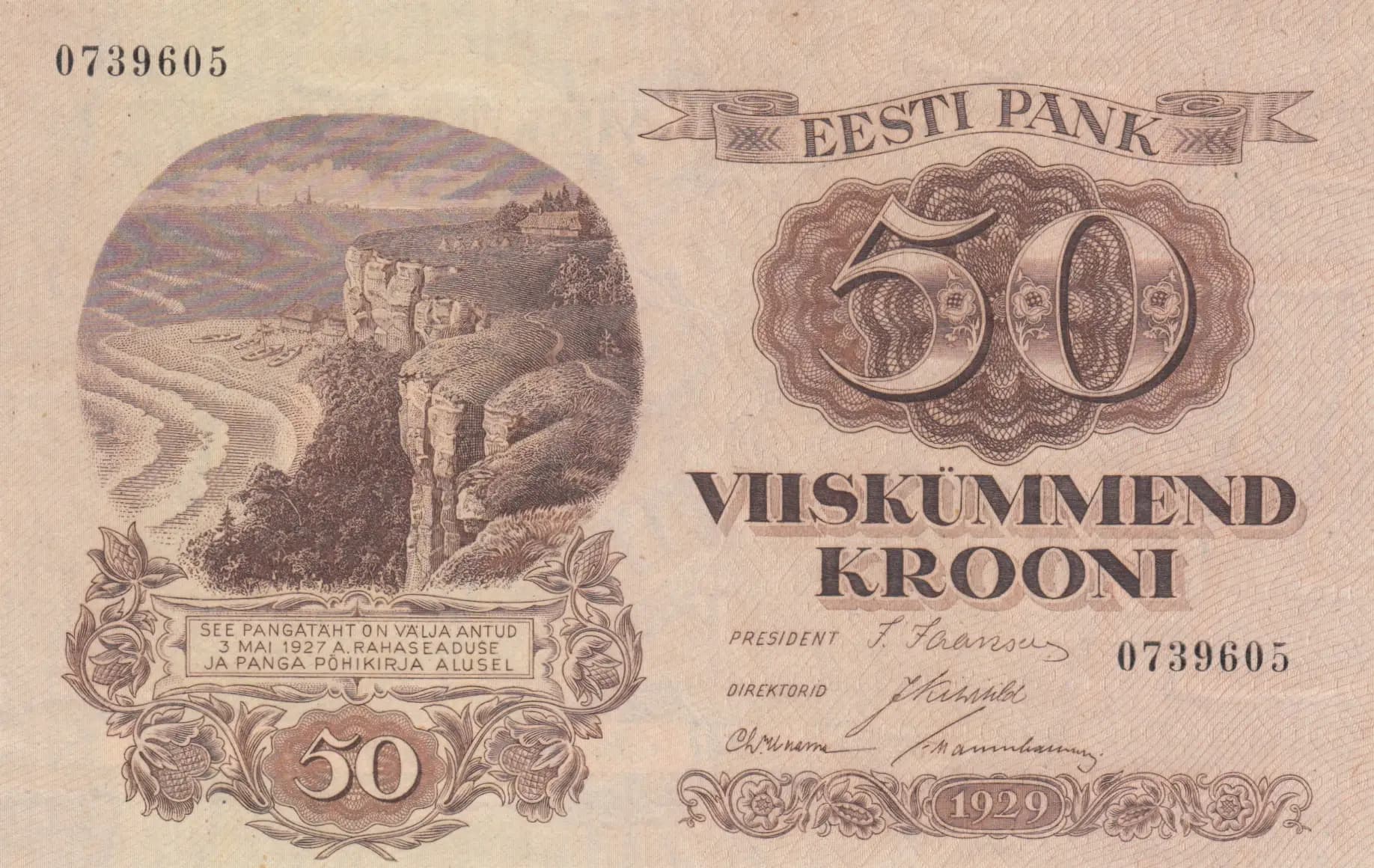
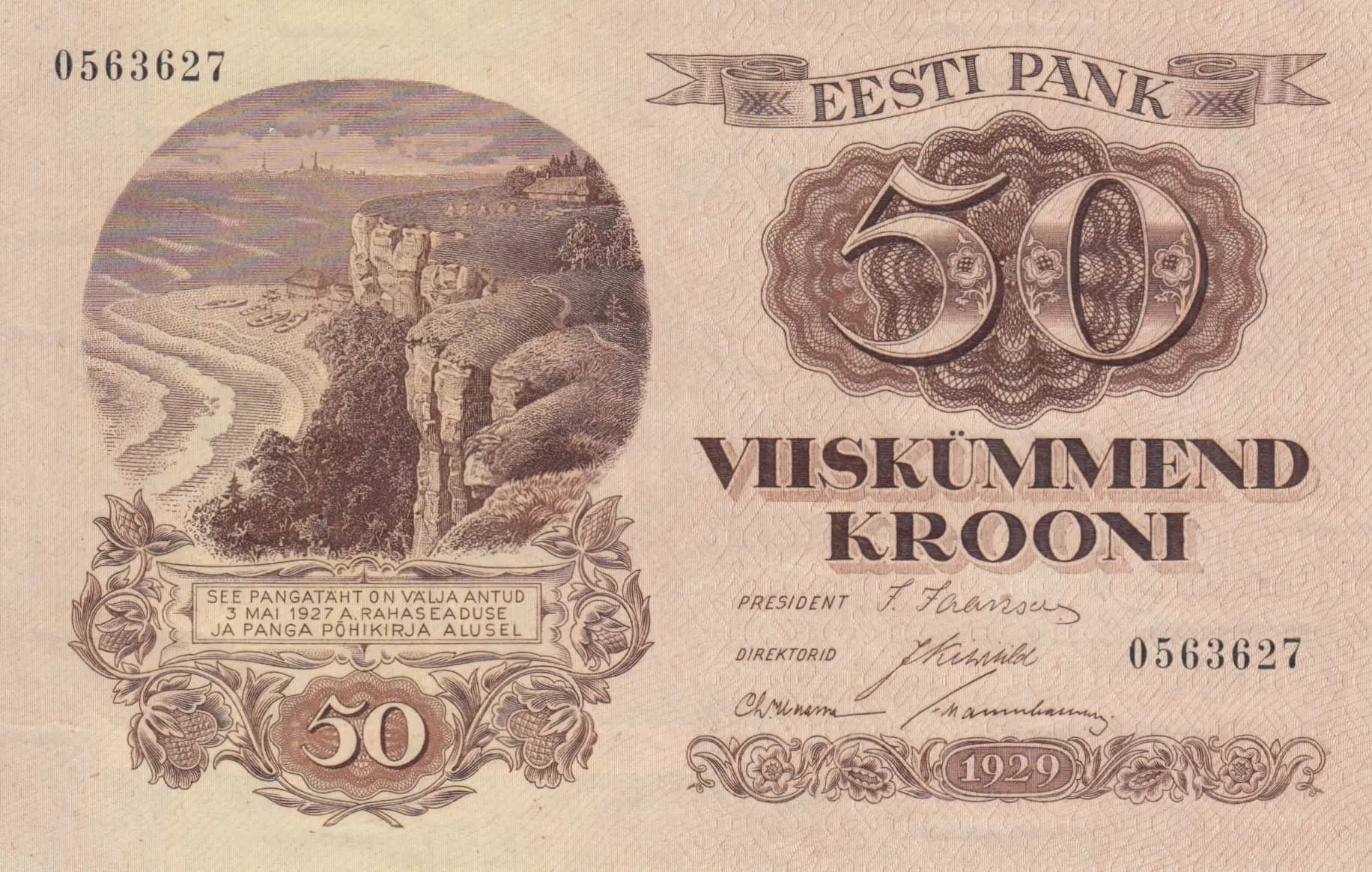
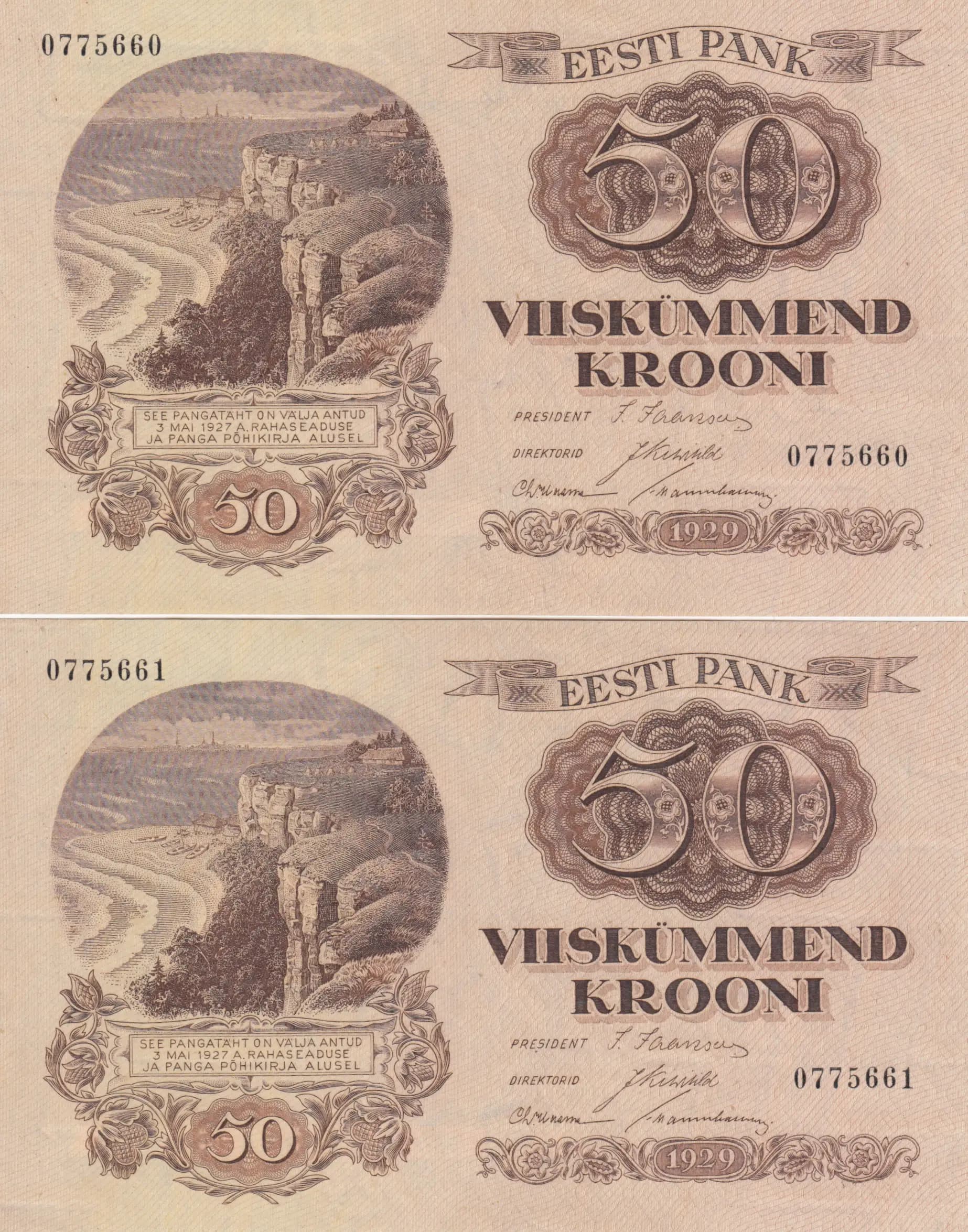
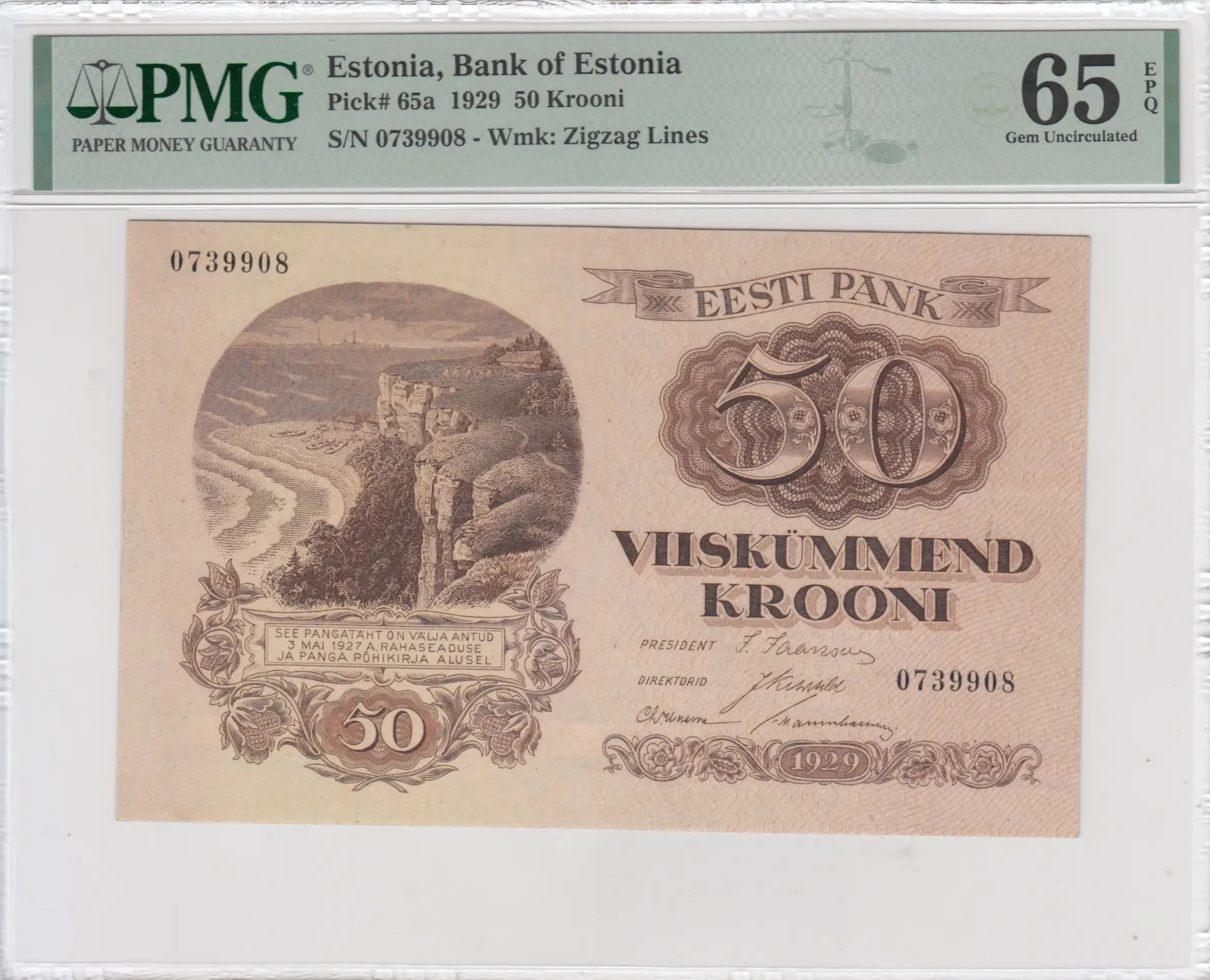
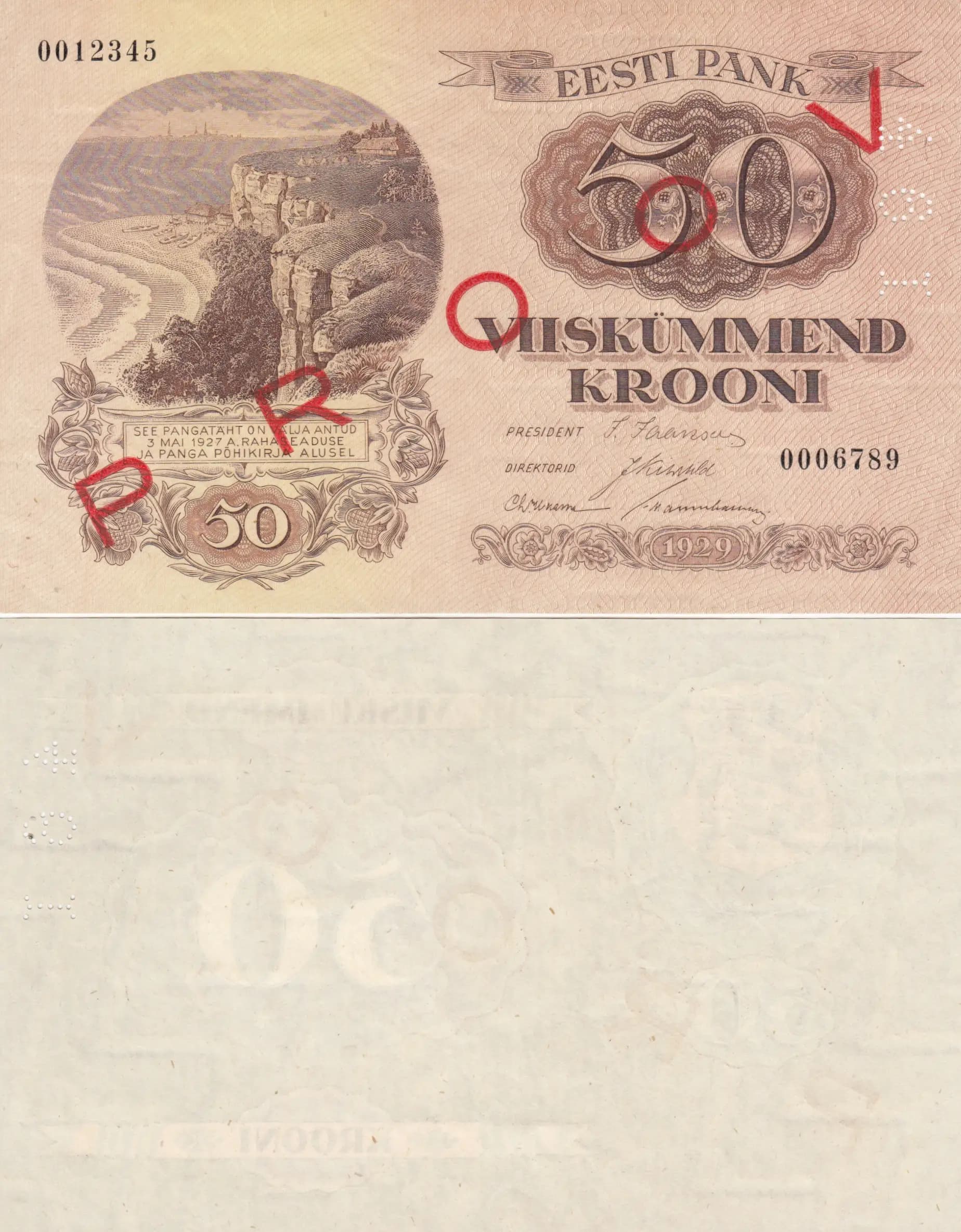
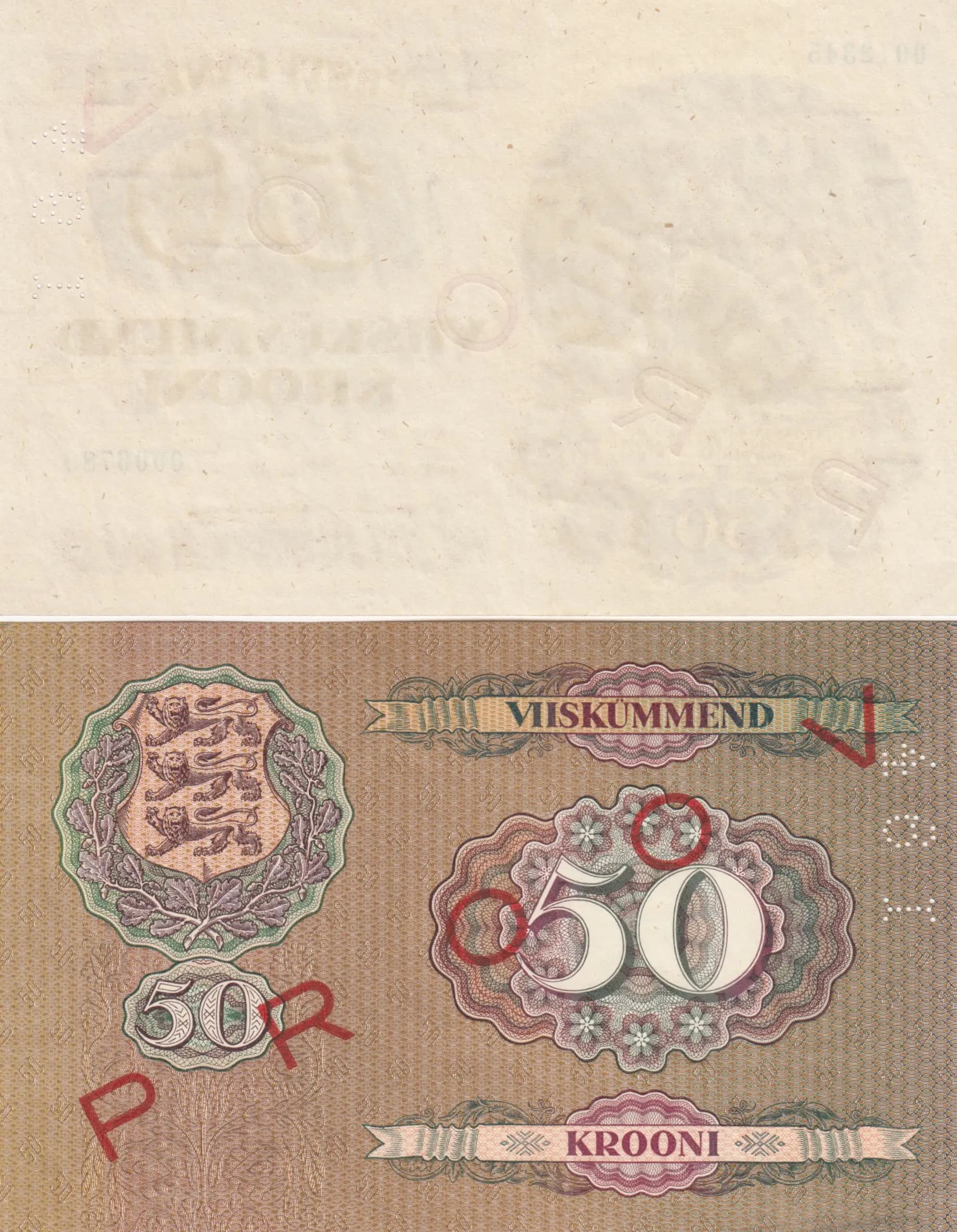
This is an exceptional specimen note of the 1929 Estonian 50 krooni (Pick-65s), featuring the iconic Rannamoisa coastal cliffs landscape on the obverse and the Estonian coat of arms on the reverse. The note displays pristine UNC condition with characteristic red specimen overprints and markings that identify it as a bank sample, making it a significant piece of interwar Estonian numismatic history. The fine engraved detail work and warm brown color scheme reflect the sophisticated printing standards of Eesti Pank during Estonia's first independence period.
Uncommon. While specimen notes from the 1929 Estonian series exist, they were produced in limited quantities as bank samples and not released into general circulation. The eBay price data shows UNC specimens trading in the $70-$200 range, suggesting moderate collector interest. The catalog values (2016) list UNC at $70, confirming this is neither a common circulation note nor exceptionally scarce—uncommon represents the appropriate assessment for a specimen note of this vintage with limited surviving examples.
Issued in 1929 by Eesti Pank during Estonia's interwar independence (1918-1940), this banknote exemplifies the new nation's assertion of sovereignty through distinctive national imagery. The Rannamoisa cliffs, depicted on the obverse, represent Estonia's natural heritage and were a deliberate choice to emphasize national identity on currency. The coat of arms featuring three lions on the reverse reinforces the heraldic symbols of Estonian statehood during this formative period of the Estonian Republic.
The obverse features a landscape engraving of the Rannamoisa coastal cliffs—a hillside scene showing the distinctive geological formation that became a symbol of Estonian natural identity. The denomination '50' is prominently displayed in an ornate circular frame in the upper right. The reverse displays the Estonian coat of arms (three lions passant in an ornate shield) on the left side, with the denomination '50' centered within an elaborate circular cartouche frame. Both sides employ fine cross-hatching and intricate botanical/floral ornamental designs in the corners and borders. The color scheme is predominantly warm brown and tan with red specimen overprints applied diagonally and circularly across the note surface.
FRONT: 'EESTI PANK' = Bank of Estonia; 'VIISKUMMEND KROONI' = Fifty Krooni; '50' = denomination; 'SEE PANGA SIHUS JA PANGATEHTE TAOTUSEIL JA PANGA POHIKIRI ALUSEL' = By authority of the Bank and according to the Bank's charter; '1929' = year of issue; 'PRESIDENT' = President (signature line); 'DIREKTOR' = Director (signature line); Serial numbers: '0012345' and '0006789'. BACK: 'VIISKUMMEND' = Fifty; 'KROONI' = Krooni (currency denomination); '50' = denomination.
Intaglio engraving (copperplate printing), evidenced by the fine line work, detailed cross-hatching, and sharp definition of portrait and landscape elements visible in the visual analysis. The ornate frames and decorative botanical elements are characteristic of high-security banknote production standards of the 1920s-1930s era. The specimen notes were likely printed by a European security printer (possibly Giesecke+Devrient or similar firm contracted by Eesti Pank), with specimen overprints applied separately.
This is Pick-65s, identified as a specimen note variant by the red overprint marks and 'Specimen' designation. The visual analysis notes 'Eesti Pank and L. Specimen' in the watermark area, indicating L. as a printer's identifier. The specimen variety represents the non-circulating sample copies produced for approval and archival purposes. PMG records indicate one catalogued variant (P-65a) exists in their population data, suggesting this specimen type may have limited professional grading submissions.