50 krooni 1929 print offset
Market Prices
13 salesAbout This Note
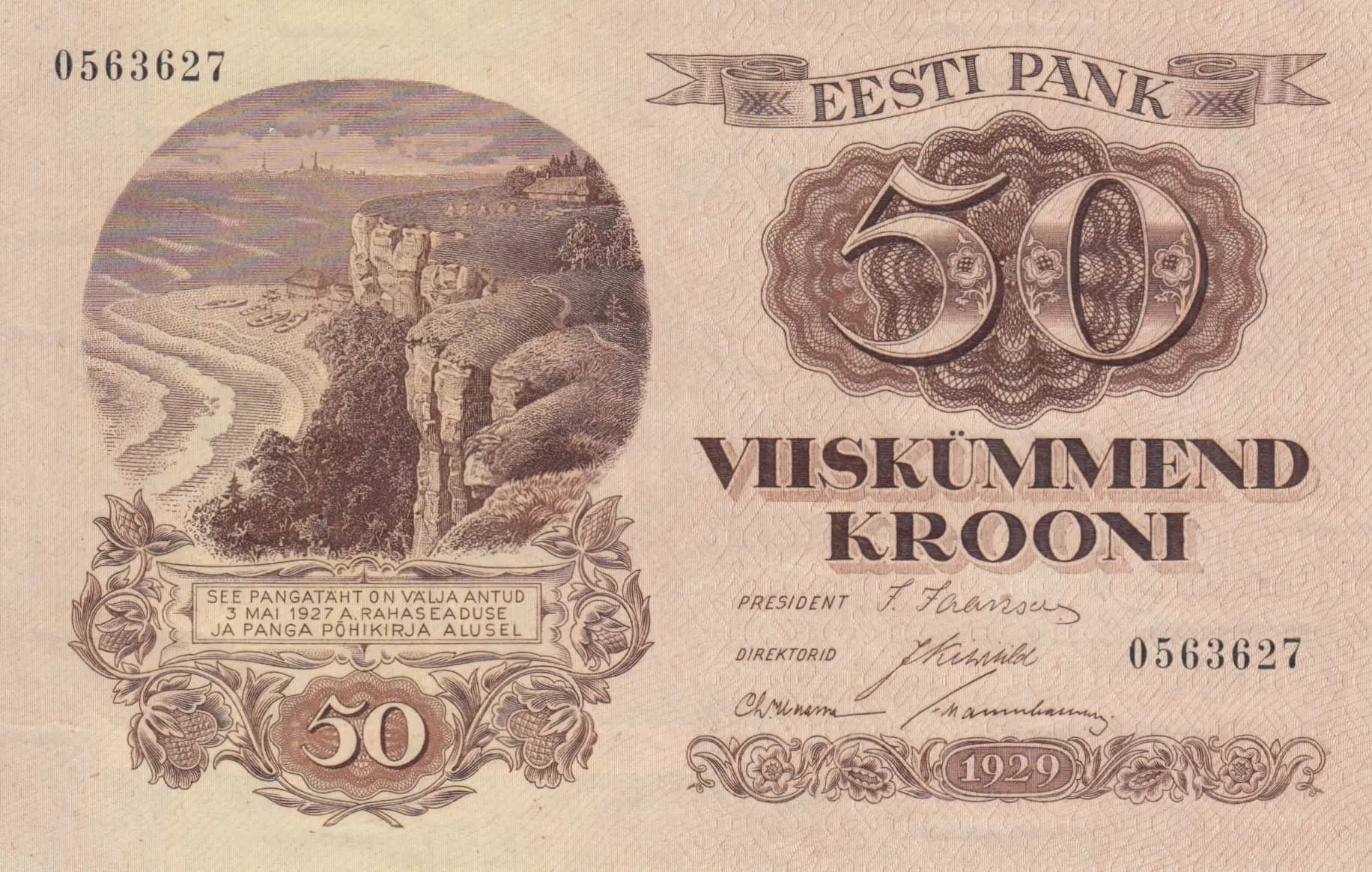
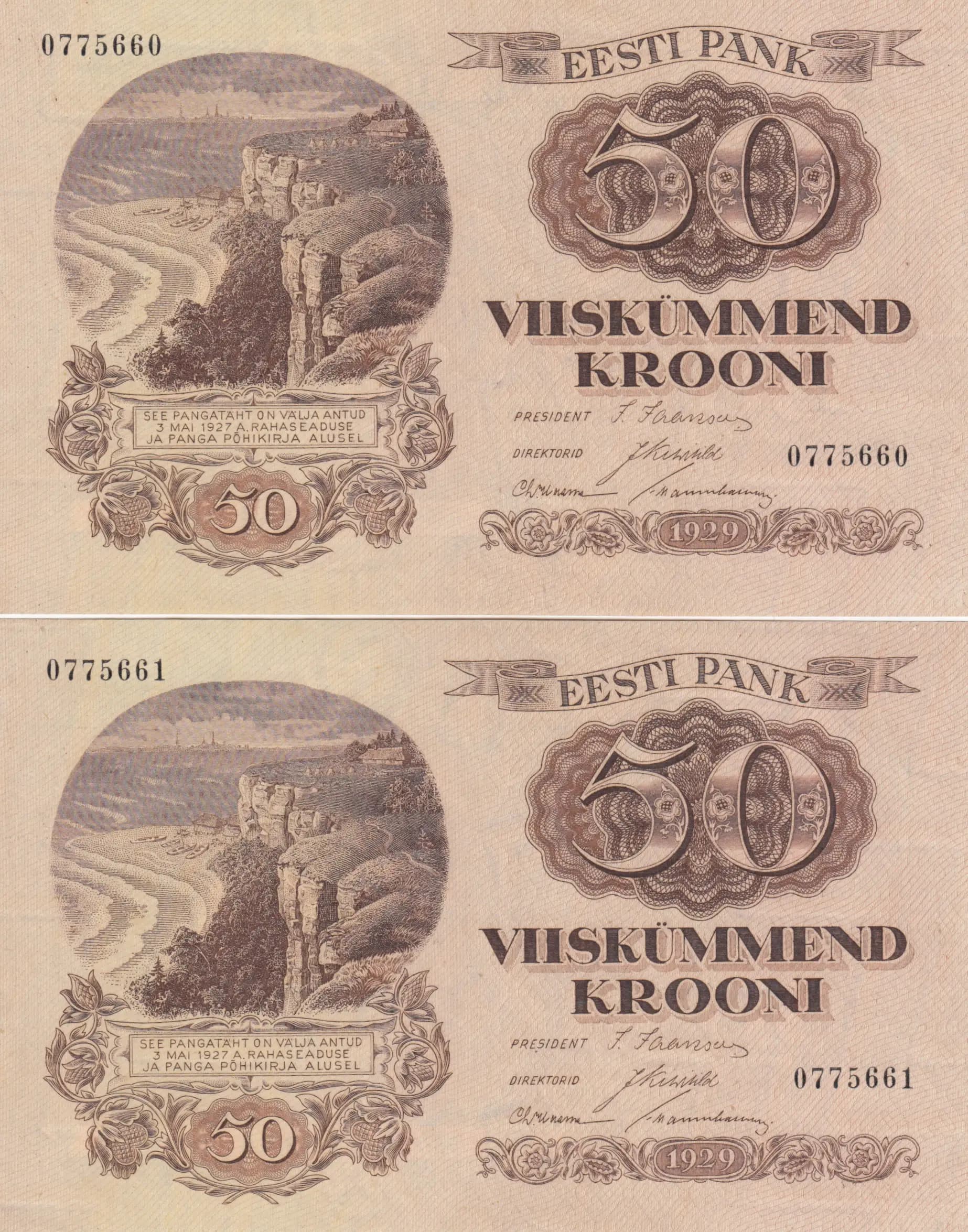
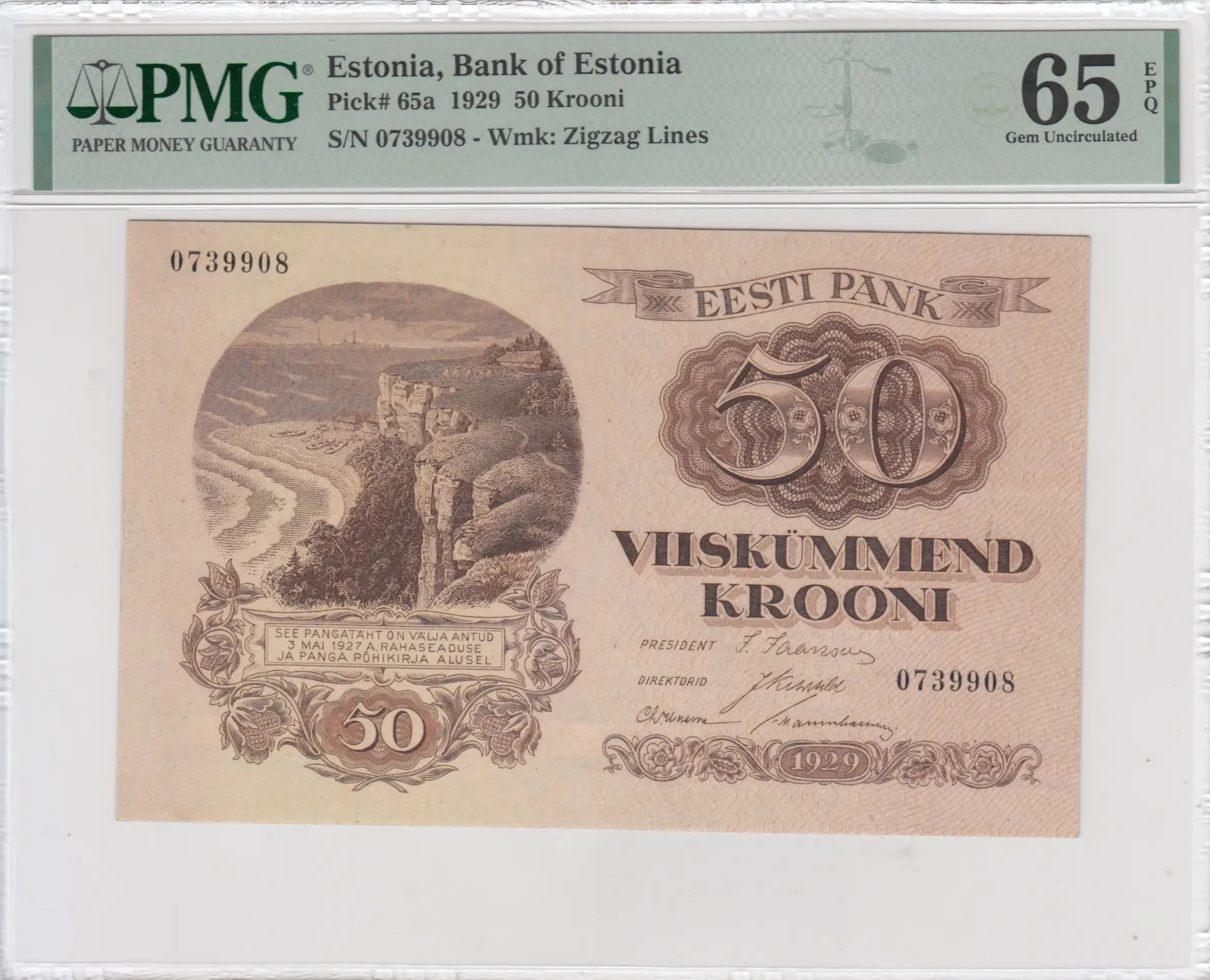
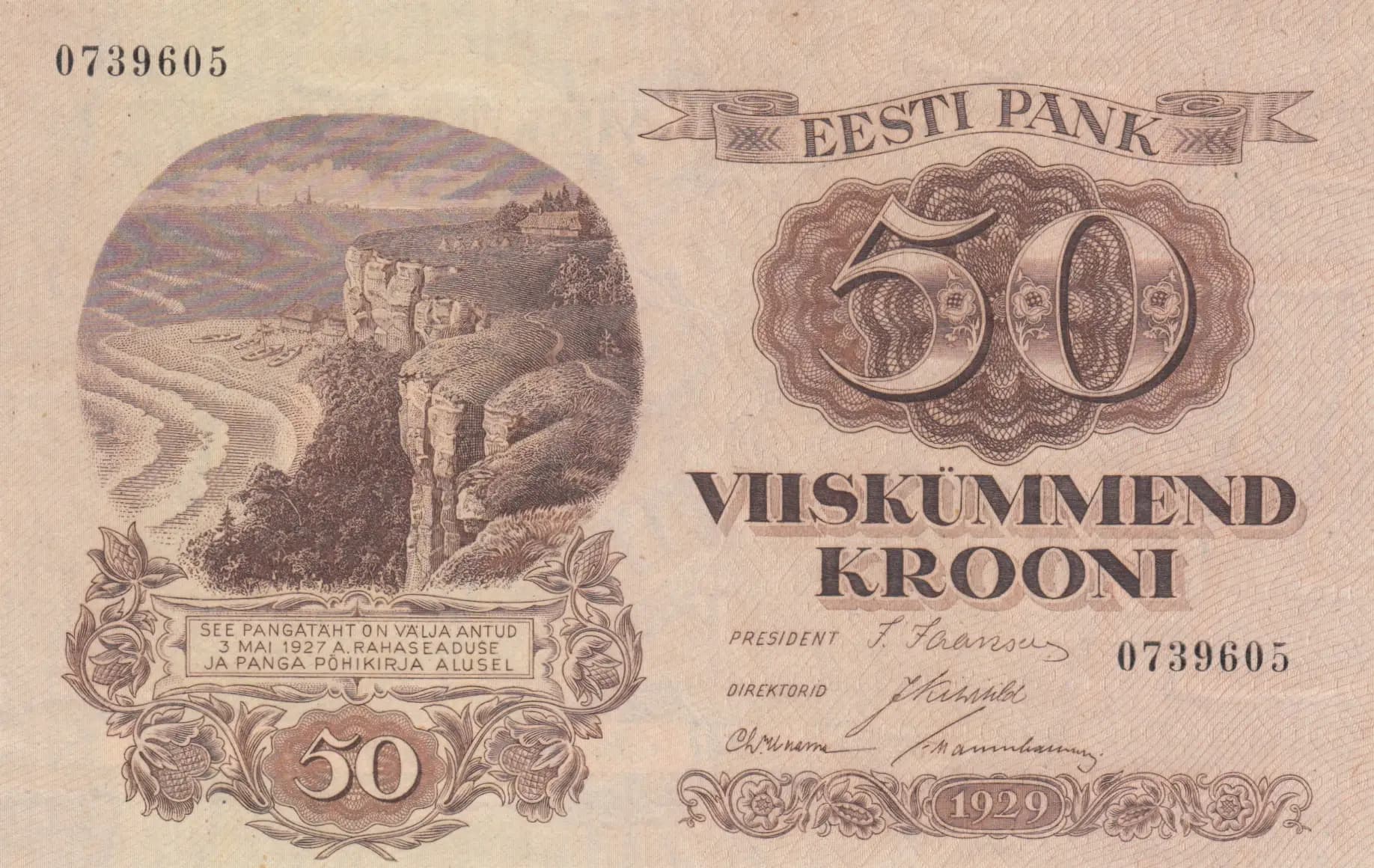
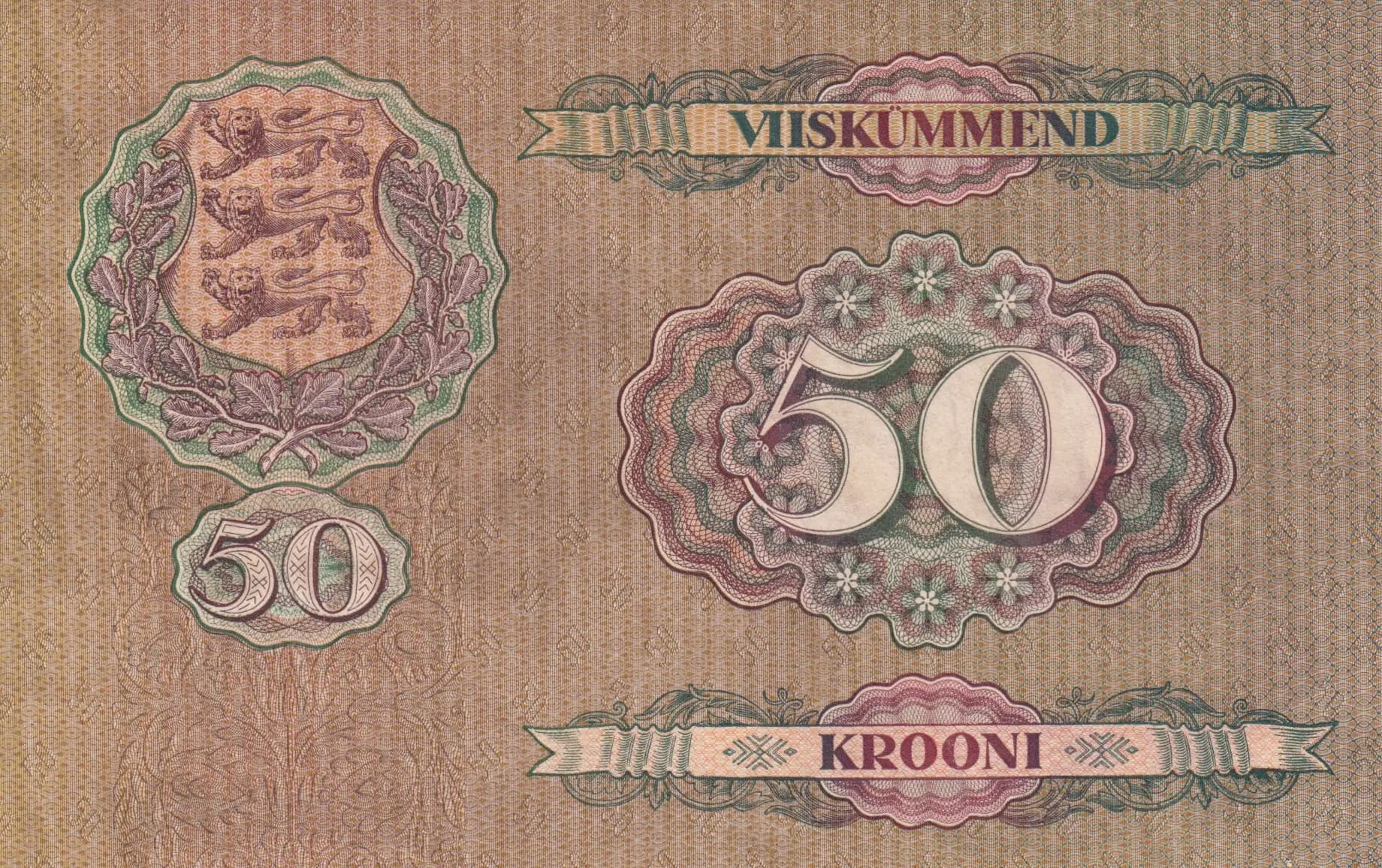
This 50 krooni banknote from 1929 presents an exceptional example of Estonian interwar currency in uncirculated condition. The note features a striking landscape vignette of the Rannamoisa cliff formations on the obverse, rendered in warm brown and sepia tones with meticulous engraving detail, while the reverse displays the Estonian coat of arms (three lions) within an ornamental shield. The pristine condition with no visible wear, creases, or stains, combined with the historical significance of this Bank of Estonia issue, makes it a desirable piece for collectors of Baltic numismatics.
Common. The eBay market data provided shows consistent sales activity across multiple condition grades over an extended period (2010-2023), with UNC examples selling in the $97-$213.50 range and PMG-graded specimens commanding modest premiums ($91-$407). The 2016 catalogue value of $150 for UNC and the consistent availability of examples in various conditions indicate this is a regularly traded banknote. The relatively modest prices and frequency of sales suggest adequate print runs and sufficient survivor population to classify this Pick-65 note as common in the numismatic market.
Issued on May 5, 1927, under the Estonian Banking Act and Bank Charter, this 1929 print represents Estonia's early independence period following the establishment of the Estonian republic in 1918. The Rannamoisa cliff landscape symbolizes Estonia's natural heritage and national identity, while the three-lion coat of arms reinforces the sovereignty of the newly formed nation. The denomination and design reflect Estonia's effort to establish a stable, distinctive currency during the interwar period before the economic disruptions of the 1930s.
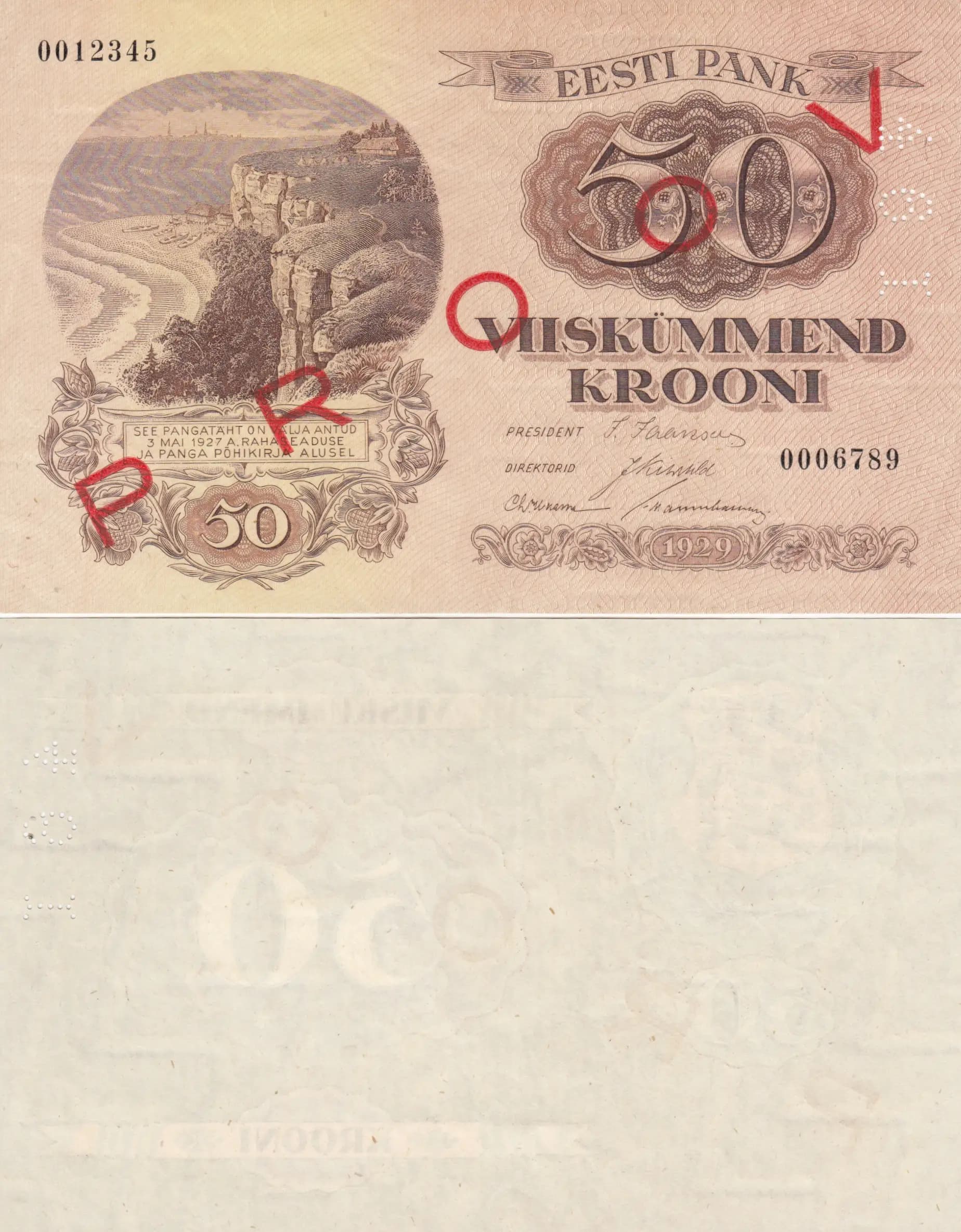
The obverse features a detailed landscape vignette of Rannamoisa cliffs—a notable Estonian coastal geological formation—depicted on the left side with rocky pillars, natural stone formations, forested vegetation, and a winding path, creating a romanticized representation of national geography. The reverse presents the Estonian coat of arms (three lions passant guardant arranged in a shield with a green heraldic border), positioned on the left within an ornamental frame, with a large decorative medallion containing the '50' denomination numeral at center. Both sides employ extensive ornamental borders featuring floral wreaths, geometric patterns, and fine line work typical of early 20th-century banknote design. The color palette transitions from warm brown and sepia on the obverse to green, pink/rose, brown, and cream on the reverse.
FRONT: 'EESTI PANK' (Bank of Estonia); '50' and 'VIISKUMMEND KROONI' (Fifty kroons); 'SEE PANKATAHT ON VALJA ANTUD 5 MAI 1927 A.RAHASAEADUSE JA PANGADE POHIKIRJA ALUSEIL' (This banknote was issued May 5, 1927 based on the Banking Act and Bank Charter); 'PRESIDENT' and 'DIREKTORID' (President and Directors); '1929' (year); serial number '0739605'. BACK: 'VISKUMMEND KROONI' (Fifty kroons); '50' (denomination).
This note employs the intaglio printing method (offset lithography combined with engraved elements), as evidenced by the fine line work, cross-hatching security patterns, ornate engraving detail, and the dimensional quality of the printed imagery. The offset printing technique for 1929 production allowed for the precise registration of multiple color elements and the reproduction of intricate security features characteristic of Bank of Estonia currency. The meticulous detail and anti-counterfeiting measures visible in the ornamental borders and denomination medallions are consistent with security printing standards of the period.
This example represents the standard P-65a variety as catalogued by PMG. The note exhibits the characteristic 1929 print date with the May 5, 1927 issuance statement. Serial number 0739605 is consistent with the documented series for this emission. No overprints, signature variants, or printing anomalies are evident from the visual analysis.