50 krooni 1929
Market Prices
13 salesAbout This Note
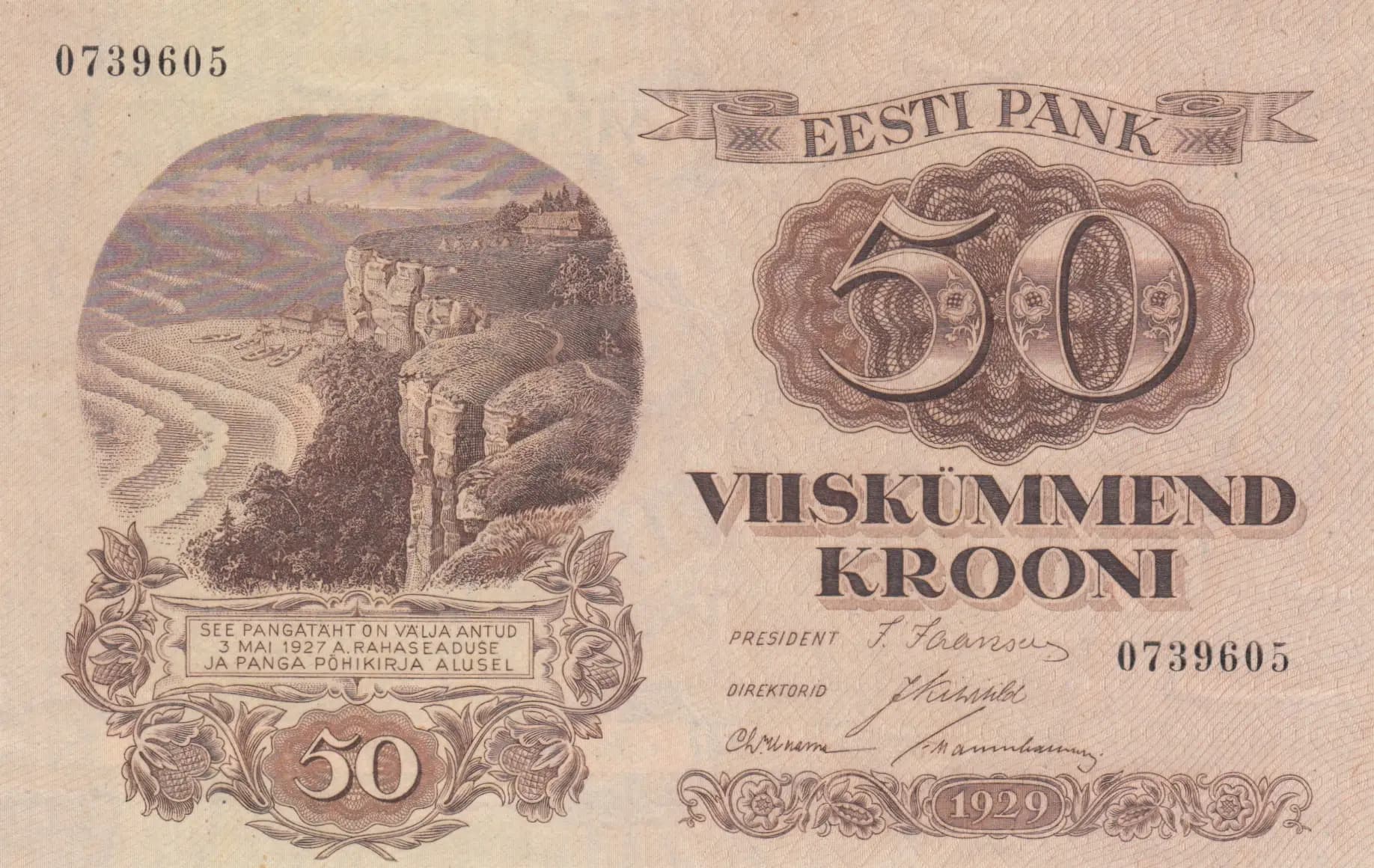
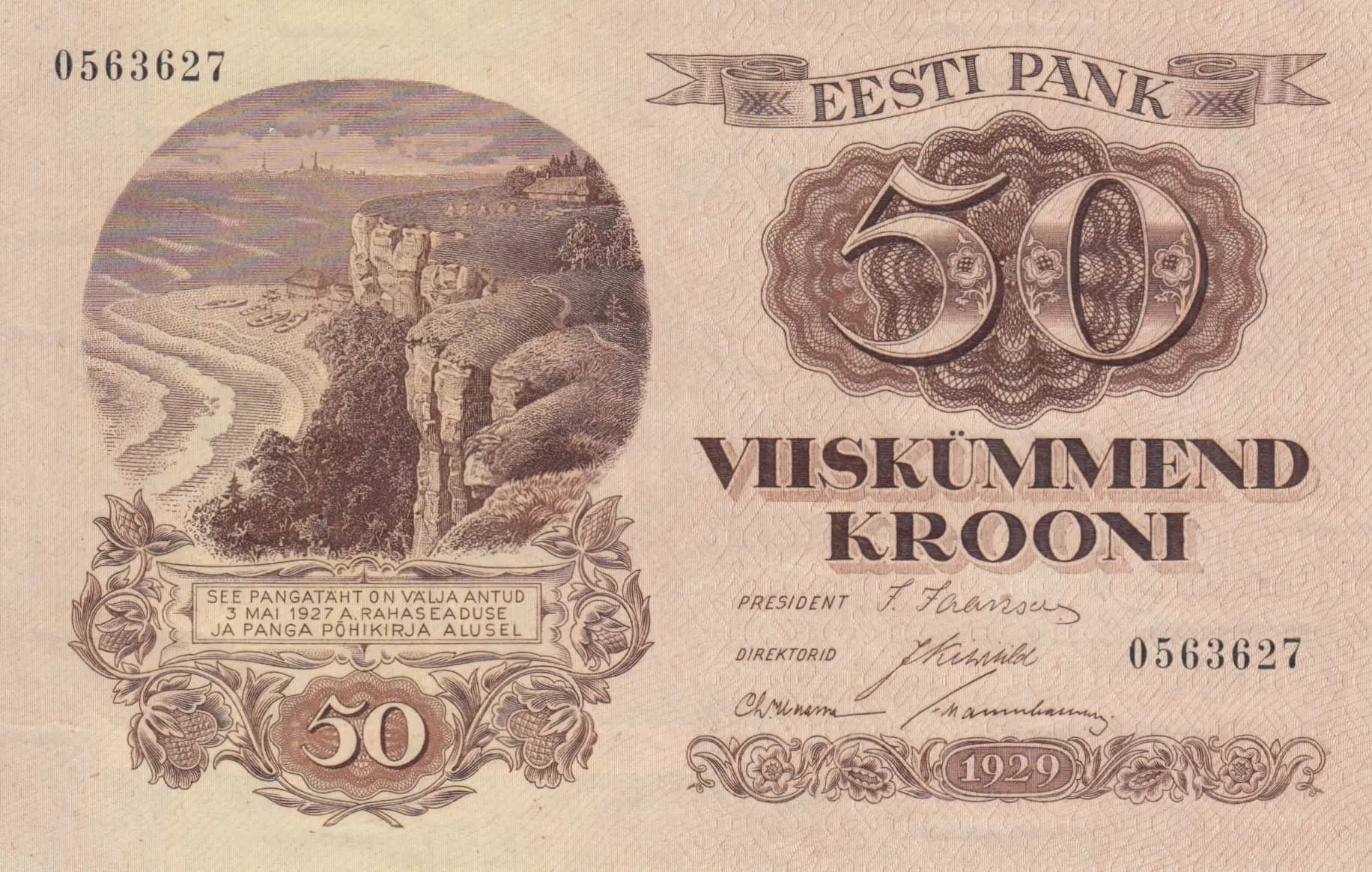
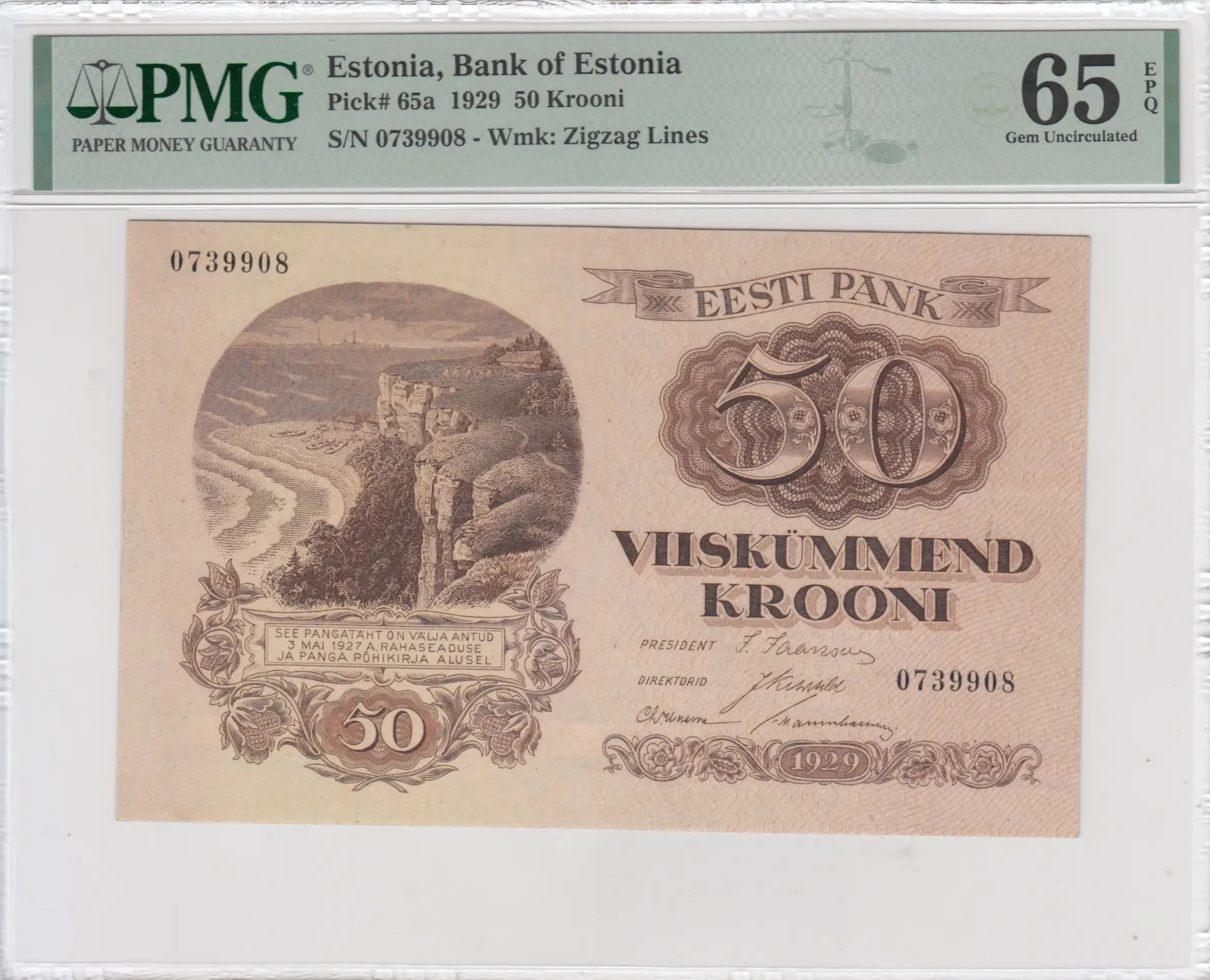
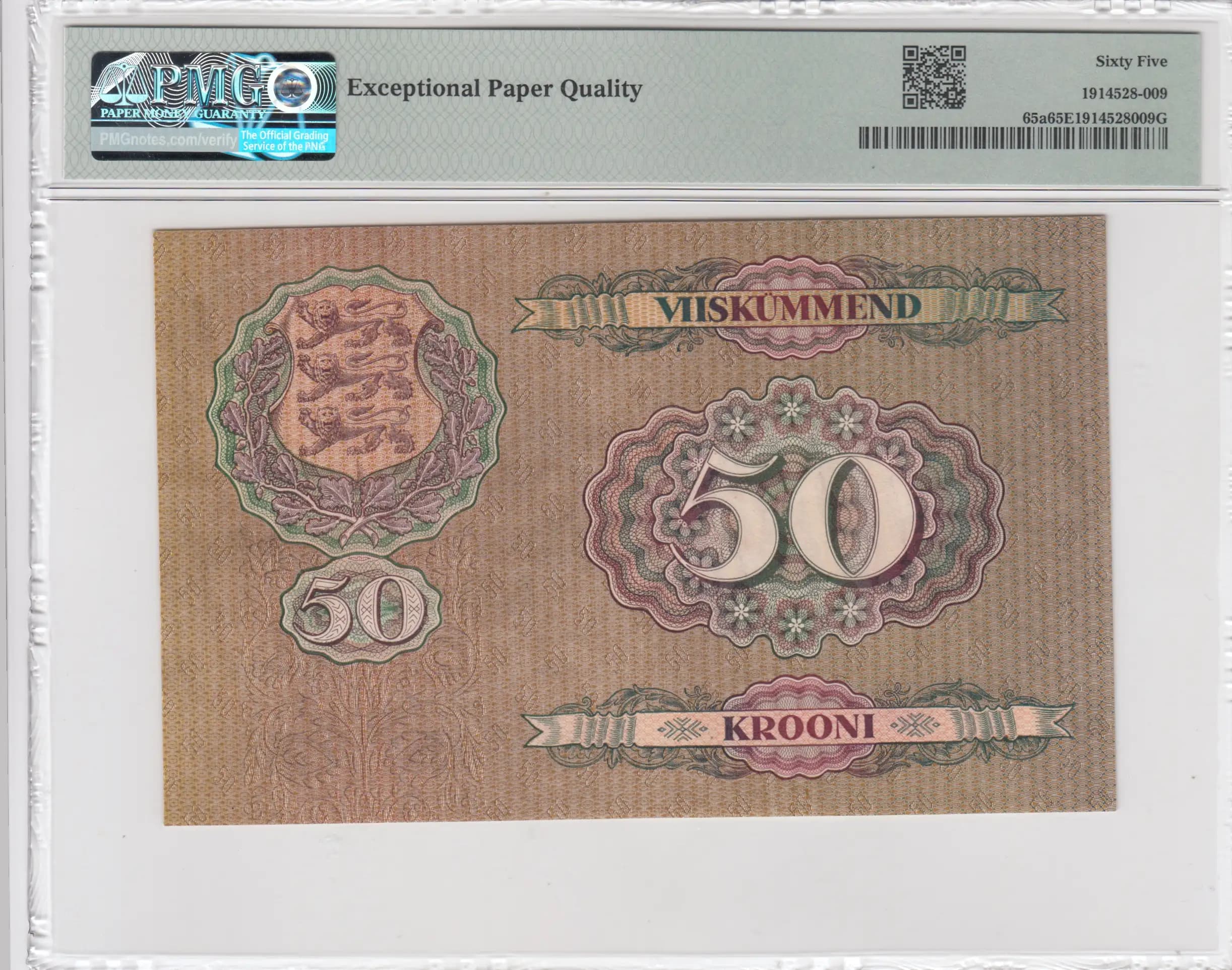
This is an exceptionally well-preserved example of Estonia's 1929 50 krooni note, graded PMG 65 EPQ (Gem Uncirculated). The note features a striking landscape vignette of the Rannamoisa cliffs on the obverse, rendered in warm tan and brown tones, paired with Estonia's coat of arms on the reverse. Having never entered circulation, this example retains pristine paper quality and represents a significant piece of early Estonian monetary history from the interwar period.
Common. While the 1929 50 krooni note is a desirable early Estonian banknote with historical significance, eBay market data indicates regular trading activity at moderate prices. PMG 65 examples have sold for $260 (2022) and $104-$407 depending on exact grade and market conditions, with UNC notes typically ranging $97-$213. The note was produced in sufficient quantities for circulation, and many examples survive today. It is not scarce in any grade, though high-grade specimens (PMG 66+) command premium prices relative to circulated examples.
Issued in 1929 by Eesti Pank (Bank of Estonia) during the newly independent Estonian state's first decade, this banknote reflects the nation's establishment of a modern monetary system following independence from Russia in 1918. The prominent depiction of Rannamoisa's dramatic coastal cliffs symbolizes Estonia's natural heritage and geographic identity, while the Estonian coat of arms featuring a lion rampant reinforces the country's sovereignty and national pride during this formative period.
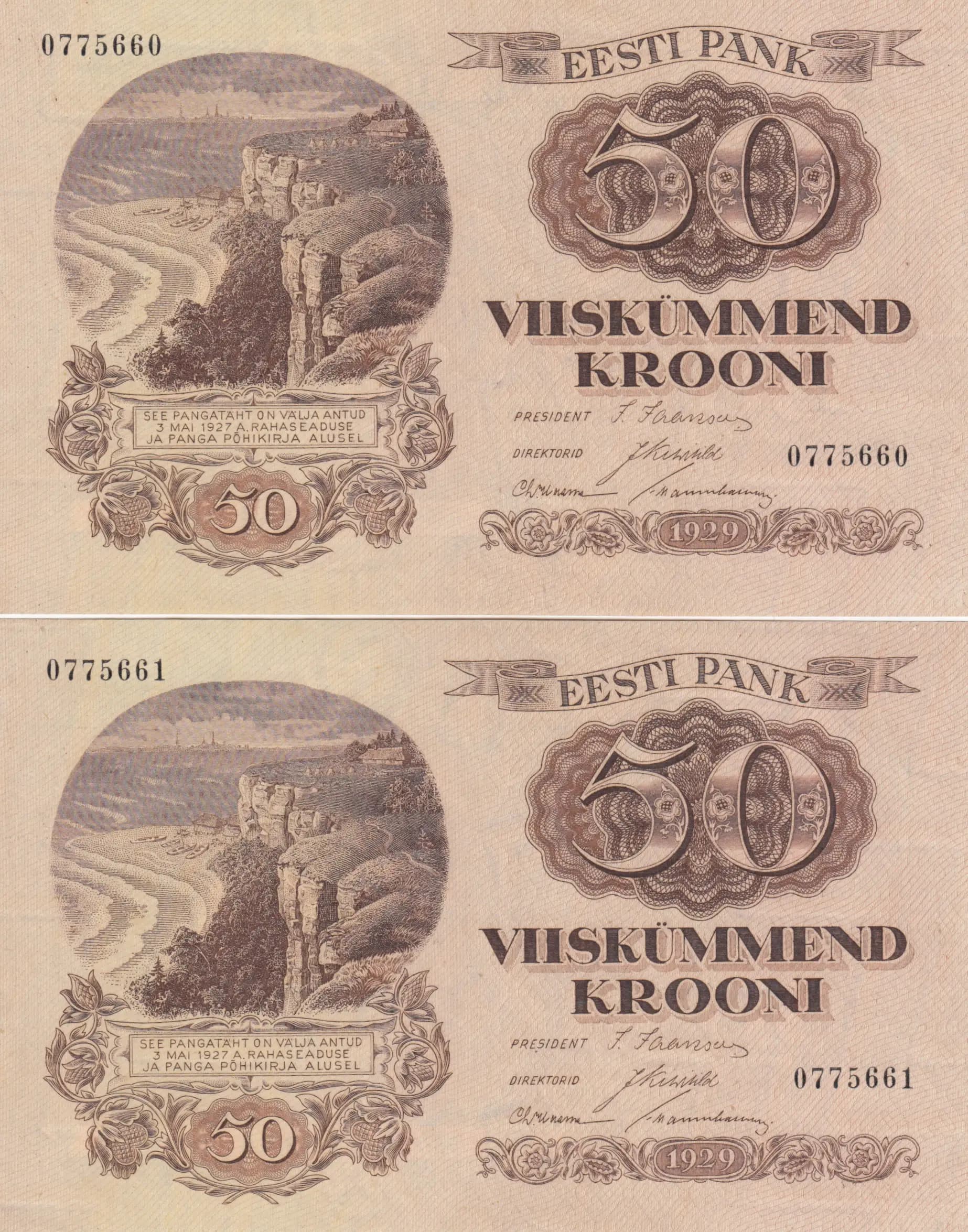
The obverse features a landscape vignette of the Rannamoisa cliffs, a famous Estonian coastal formation characterized by rocky cliff faces overlooking a river valley with distant structures visible on the hilltop. This natural landmark is framed within decorative borders and is accompanied by an ornate oval cartouche containing the denomination '50' on the right side. The reverse displays Estonia's coat of arms (a rampant lion within an ornate circular wreath frame) positioned on the left, with a large, intricately decorated oval denomination frame featuring complex security patterns occupying the center-right. The entire design employs fine line engraving with Art Nouveau-influenced scrollwork and botanical decorative elements throughout, creating a sophisticated and dignified appearance befitting a nation's early currency.
FRONT SIDE: 'EESTI PANK' (Bank of Estonia) - issuing authority; '50' - denomination; 'VIISKÜMMEND KROONI' (Fifty Krooni) - denomination in words; 'PRESIDENT' and 'DIREKTOR' (President and Director) - official titles; 'J. Tuurnen' - signature of an official; '1929' - year of issue; '0739908' - serial number; 'SEE PANGA TAHI ON VALIA ANTUD MAI 1927. A RAHASE ADUSE JA PANGA POHKIRJA ALUSEL' (This bank note is issued May 1927 according to the monetary law and bank charter) - legal authorization statement. BACK SIDE: '50' - denomination; 'VISKUMMEND KROONI' (Fifty Krooni) - denomination in words.
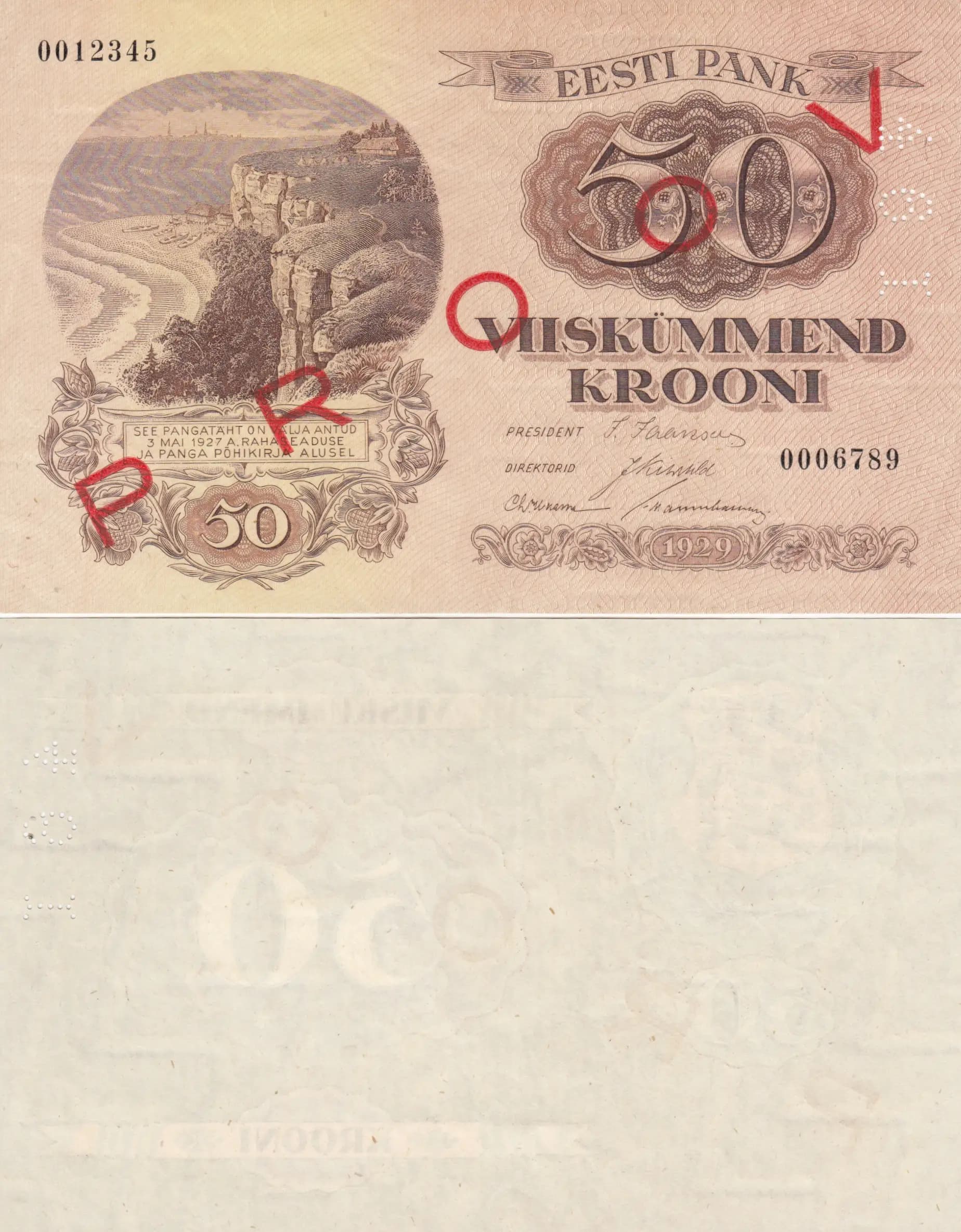
Intaglio (engraved) printing on high-quality banknote paper. The fine line engraving is evident in the detailed landscape vignette, coat of arms, and decorative borders. Security features include intricate geometric patterns within the denomination frames and a zigzag watermark ('Eesti Pank and L' noted in catalog references) integrated into the paper itself. This represents the standard security printing technology of the 1920s-1930s era employed by established European banknote printers serving newly formed central banks.
Pick-65a is the cataloged variety for this base Pick number per PMG population records. The observed serial number '0739908' and signature of 'J. Tuurnen' are consistent with standard 1929 issue characteristics. No overprints, color varieties, or other notable variants are apparent in this example. The 1927 authorization date printed on the note ('MAI 1927') reflects the legislative basis for the issue, predating the actual 1929 circulation date.