5 krooni 1929 specimen
Market Prices
2 salesAbout This Note
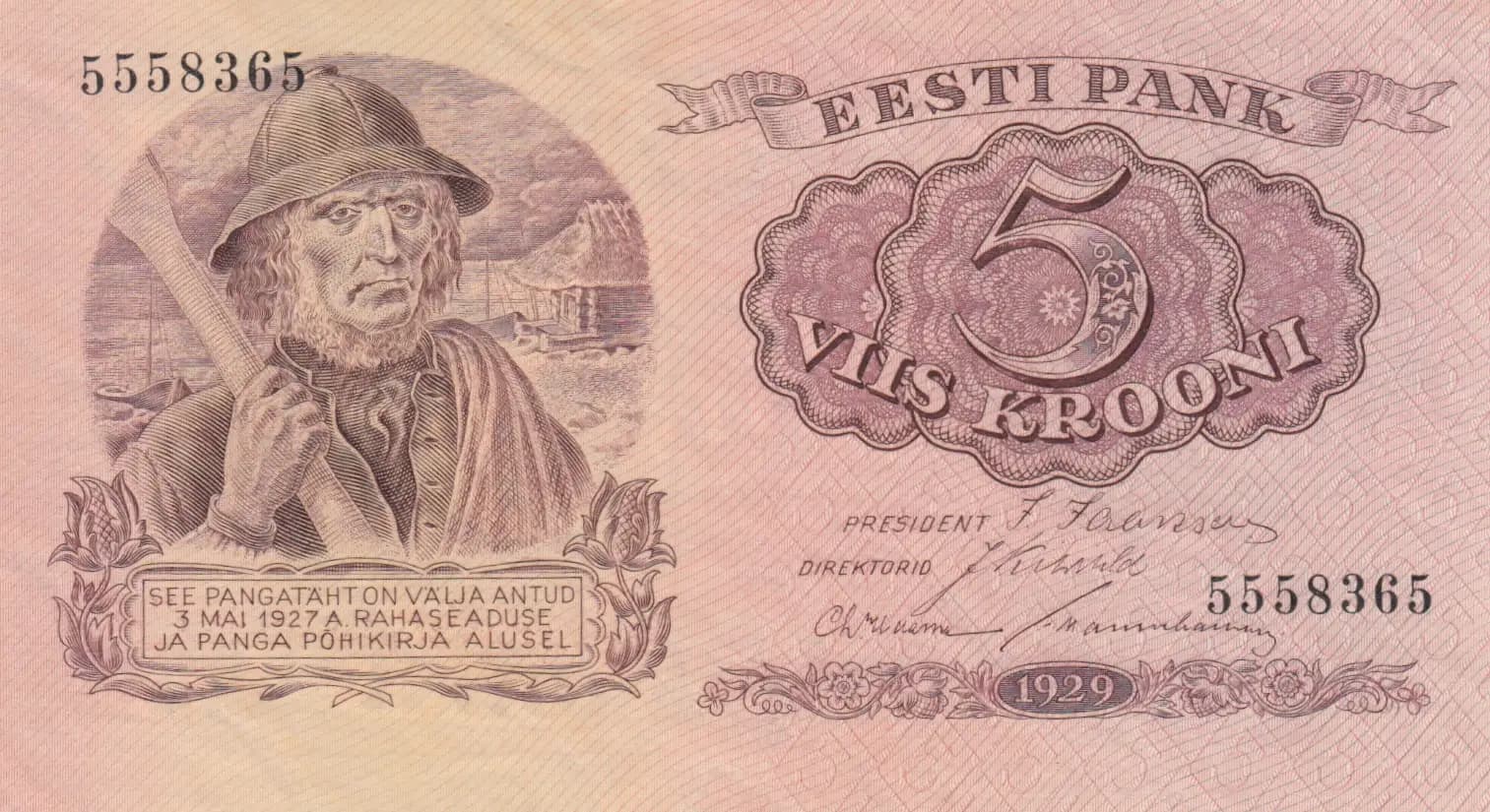
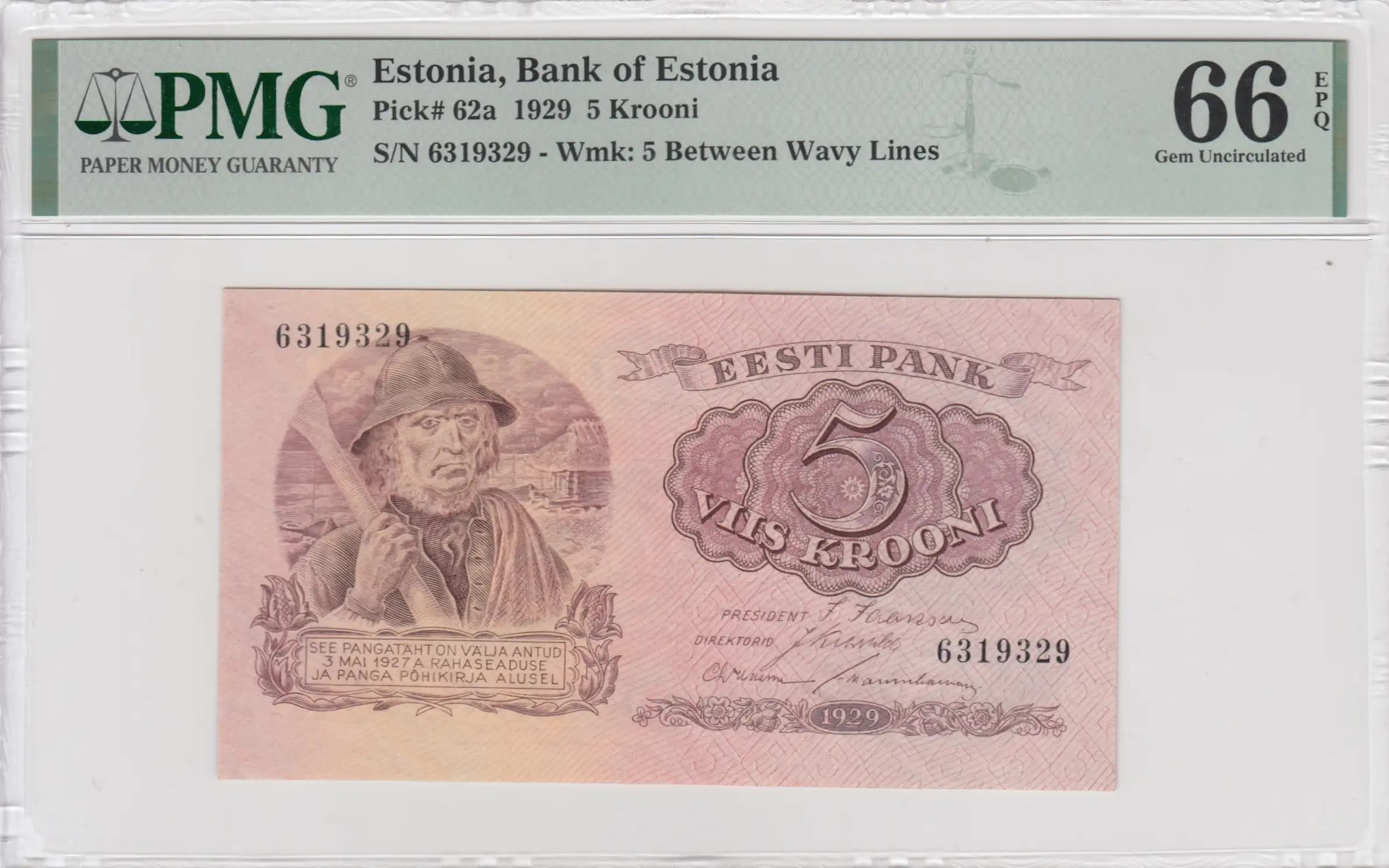
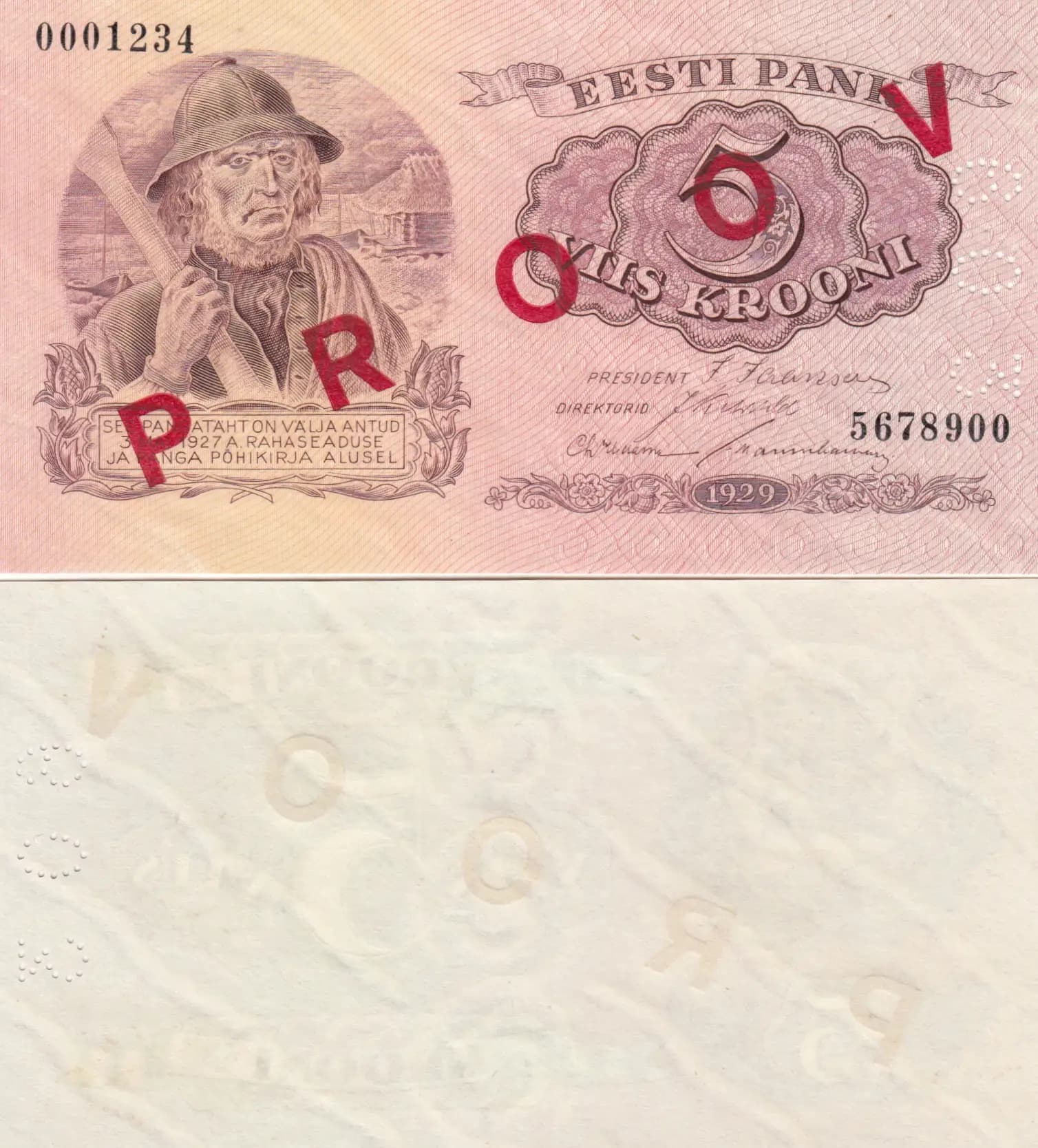
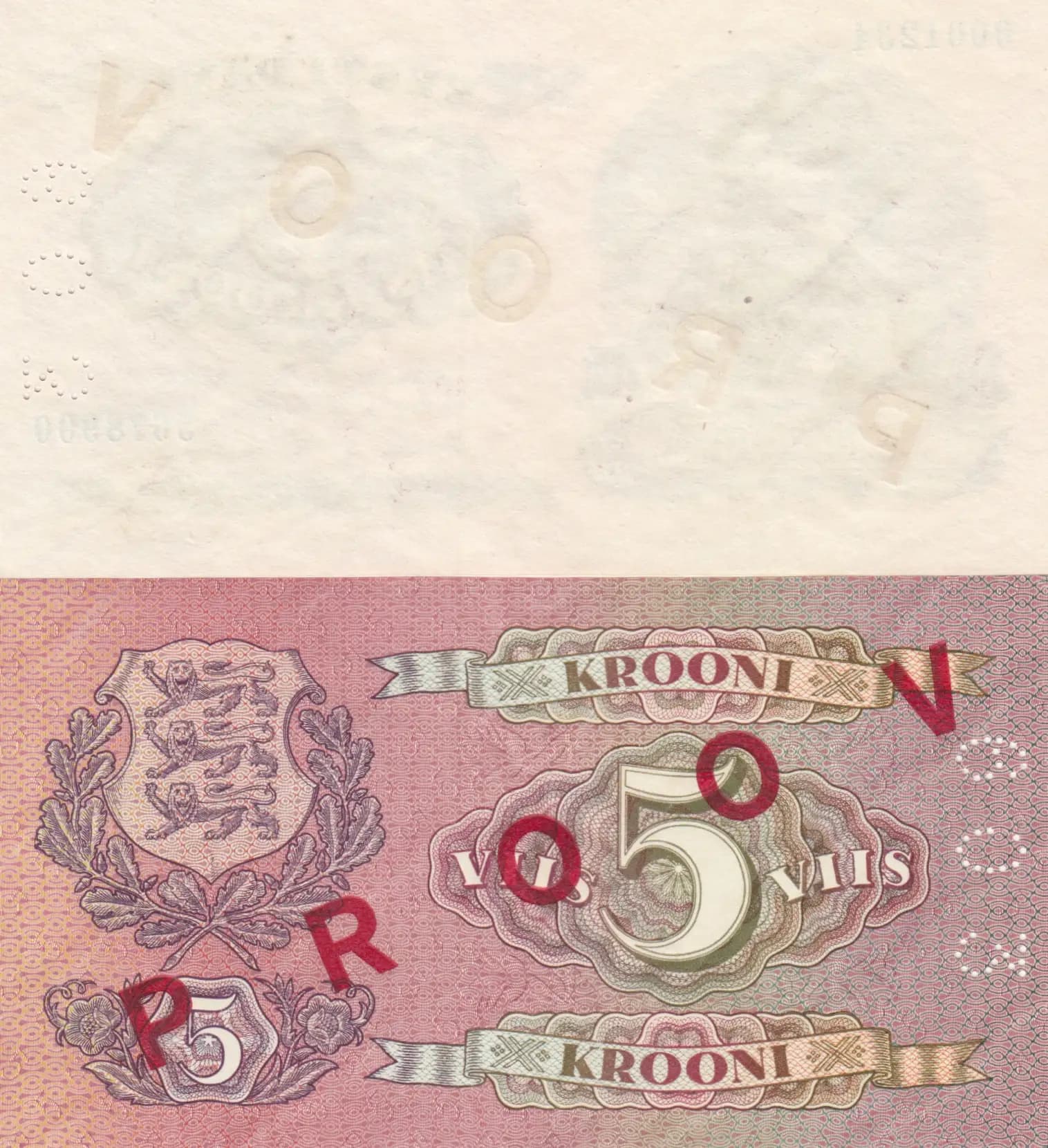
This is an Estonian 5 Krooni specimen note from 1929, issued by Eesti Pank during the early period of the independent Estonian Republic. The note features a finely engraved portrait of an elderly fisherman on the obverse and the Estonian coat of arms on the reverse, rendered in delicate pink and mauve tones with red 'R' specimen overprints clearly visible across both sides. In uncirculated condition with no visible wear, creases, or foxing, this specimen note represents an excellent example of interwar Baltic numismatic design and printing craftsmanship.
Common. While this is a specimen note (overprinted with red 'R' stamps), specimen notes were produced in moderate quantities for official and archival purposes. The eBay market data indicates UNC examples sold for approximately $80-87 as of 2009-2016, with even premium PMG 67 graded examples reaching $810 in 2018—prices consistent with uncommon but not rare material. The relatively modest catalog values ($50 VF, $80 UNC) and existence of multiple sales records indicate adequate availability in the collector market.
Issued in 1929, this note represents Estonia's monetary sovereignty during the 1920s-1930s interwar period, shortly after independence from Russia was formally recognized in 1920. The imagery—a working fisherman and the three-lion coat of arms—reflects Estonia's cultural identity and maritime heritage during this formative period of the Estonian nation. The specimen overprints indicate this particular note was prepared as a trial or presentation piece by Eesti Pank, likely for internal or official distribution purposes rather than general circulation.
The obverse depicts a bearded elderly man wearing a wide-brimmed hat in profile facing left—representing a fisherman, a figure symbolic of Estonia's maritime economy and working-class identity. The portrait is rendered in fine engraved detail with cross-hatching and intricate line work. The reverse displays the coat of arms of the Estonian Republic: a shield containing three lions (representing historical Estonian regions) surrounded by a decorative laurel wreath, a classical heraldic presentation. Both sides feature ornamental cartouches framing the denomination, decorative floral wreath borders, and fine geometric patterns. The color scheme of pink and mauve with brown and cream accents creates a distinctive aesthetic characteristic of this series.
Front side: 'EESTI PANK' (Estonian Bank), '5 KROONI' (5 Kroon), '1929' (year of issue), 'PRESIDENT' (President signature line), 'DIREKTOR' (Director signature line), serial numbers appearing at top left and bottom right, and text reading 'PATAH TON VALJA ANTUD JA RAHA SEADUSE ALUSEL PÖHIKIRJA ALUSEL' (Issued in accordance with the monetary law and charter provisions). Back side: '5' and 'KROONI' (Five Kroon) appearing in multiple decorative cartouches. Both sides feature multiple red 'R' stamps indicating 'SPECIMEN' status.
Intaglio (steel engraving) printing, evidenced by the fine line work, cross-hatching, and intricate detail visible throughout the design. The note exhibits the hallmarks of high-quality security printing typical of interwar European banknotes, with multiple security features including watermark areas visible in the denomination cartouches, fine engraved portraits and heraldic elements, and complex geometric border patterns. The printer for Estonian banknotes of this era was typically a European security printing house, likely De La Rue or similar establishment.
This note is catalogued as Pick P-62s, with the 's' suffix denoting specimen status. The red 'R' specimen overprints are clearly visible across both obverse and reverse. PMG population data indicates variant P-62a exists, suggesting there may be differences in signature combinations or printing states. The specific serial numbers visible in the images (0001234 at top left, 5678900 at bottom right) are consistent with specimen note numbering practices. No other documented varieties are apparent from the visual analysis, though signature varieties between President and Director positions should be expected.