5 krooni 1929
Market Prices
8 salesAbout This Note
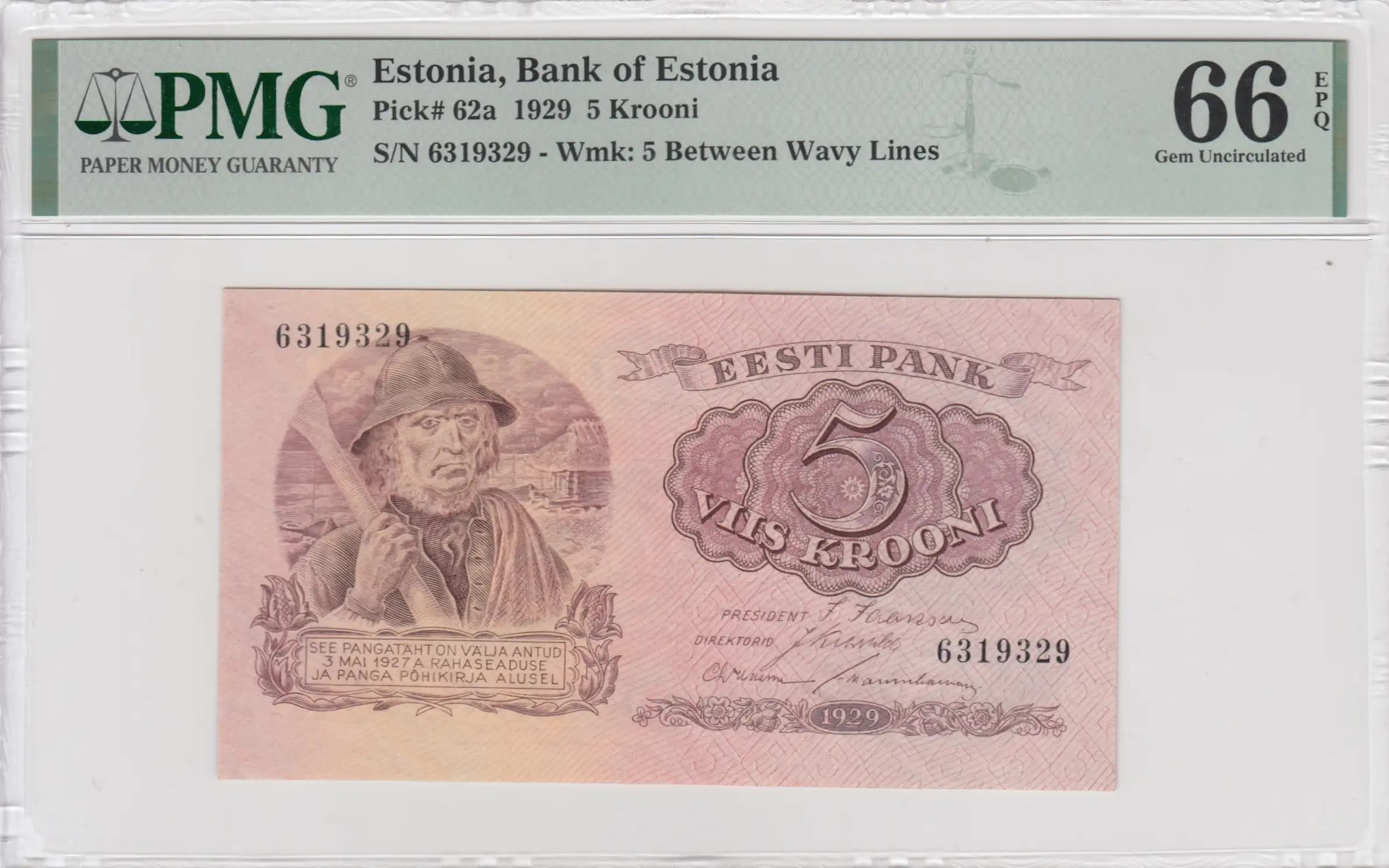
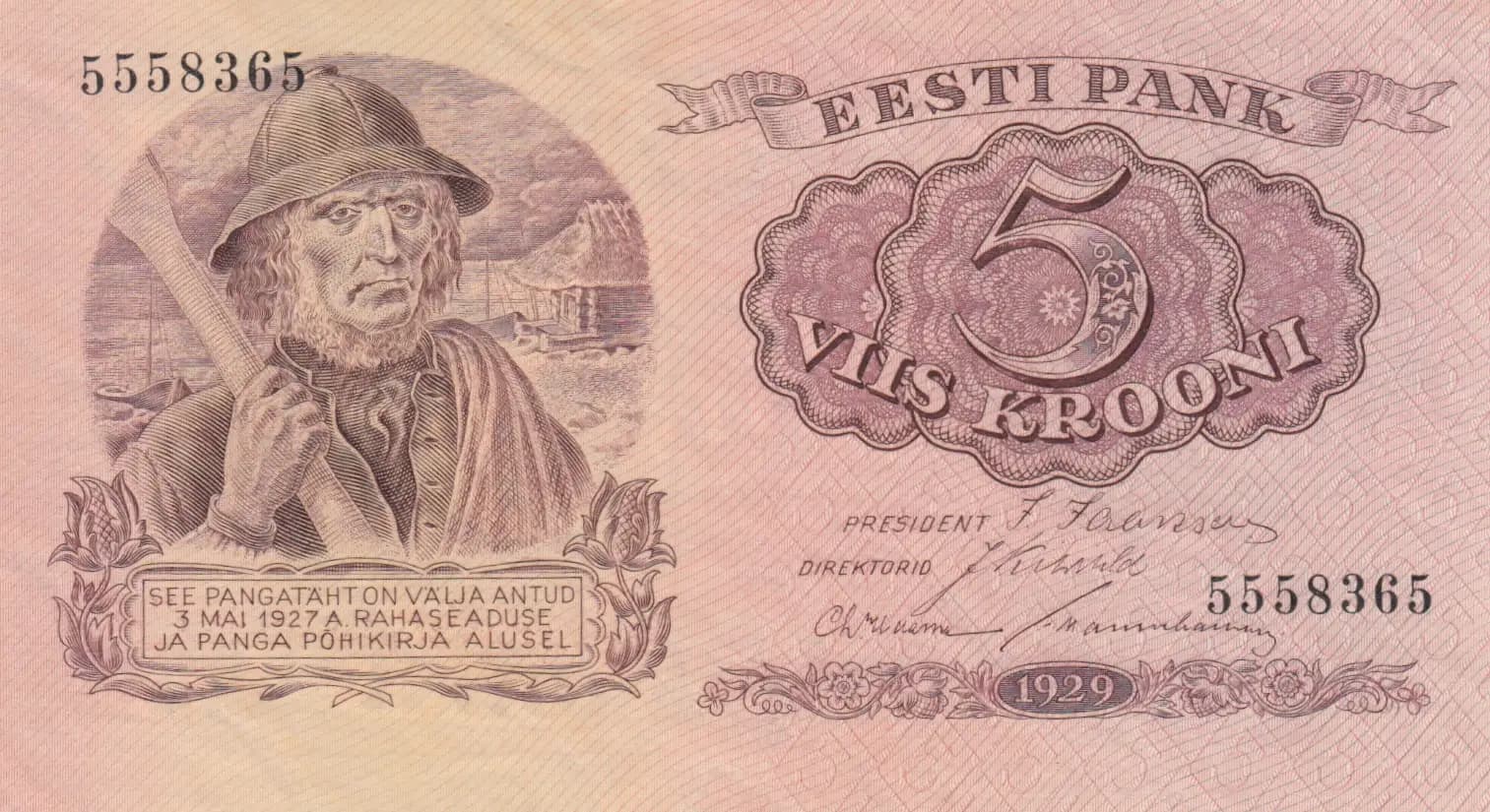
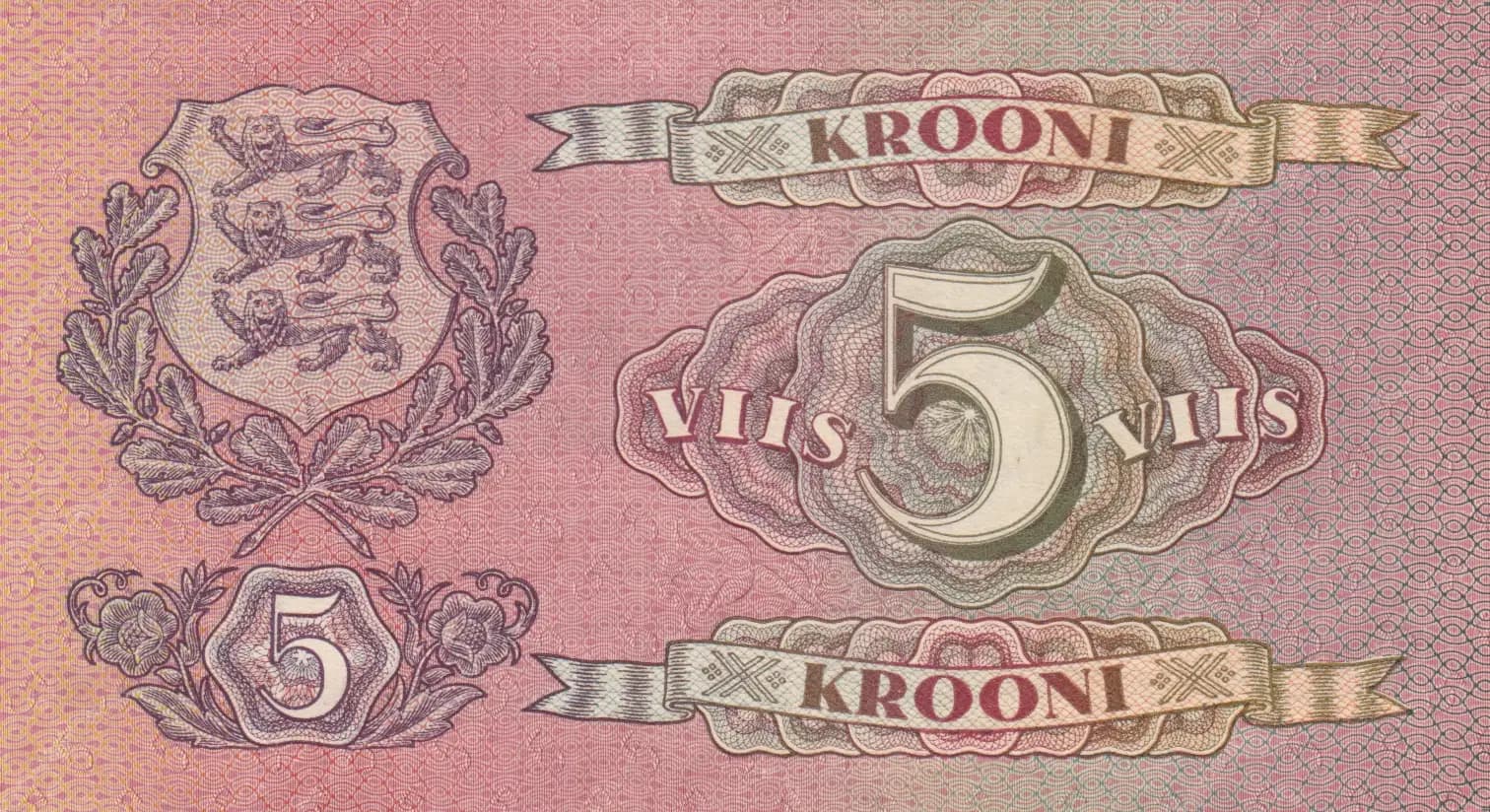
This is an exceptionally well-preserved example of Estonia's 5 krooni note from 1929, graded UNC (Uncirculated). The note displays the characteristic pink-rose coloration with the dignified portrait of an elderly bearded fisherman on the obverse and the Estonian coat of arms (three lions) featured prominently on the reverse. The crisp engraving, sharp detail, and complete absence of handling marks make this an outstanding specimen for advanced collectors of early Estonian currency.
Common. Despite its UNC grade and attractive appearance, the 5 krooni 1929 (Pick P-62) is a common banknote with a substantial original print run. Market data from realbanknotes.com shows consistent sales activity across multiple condition grades, with UNC examples selling in the $80-99 range as of 2016. The relatively modest catalog values ($30 VG, $50 VF, $80 UNC) and regular availability in the secondary market indicate this is a standard issue that was produced in sufficient quantities to ensure ready availability for collectors today. Most early Estonian banknotes remain relatively accessible to collectors.
This 1929 issue represents a critical period in Estonian independence, issued by Eesti Pank during the interwar years when Estonia sought to establish its own monetary sovereignty following independence from Russia in 1918. The fisherman depicted on the obverse symbolizes Estonia's maritime heritage and economic identity, while the three-lion coat of arms on the reverse reinforces national identity and governmental authority during this formative period of the Estonian state.
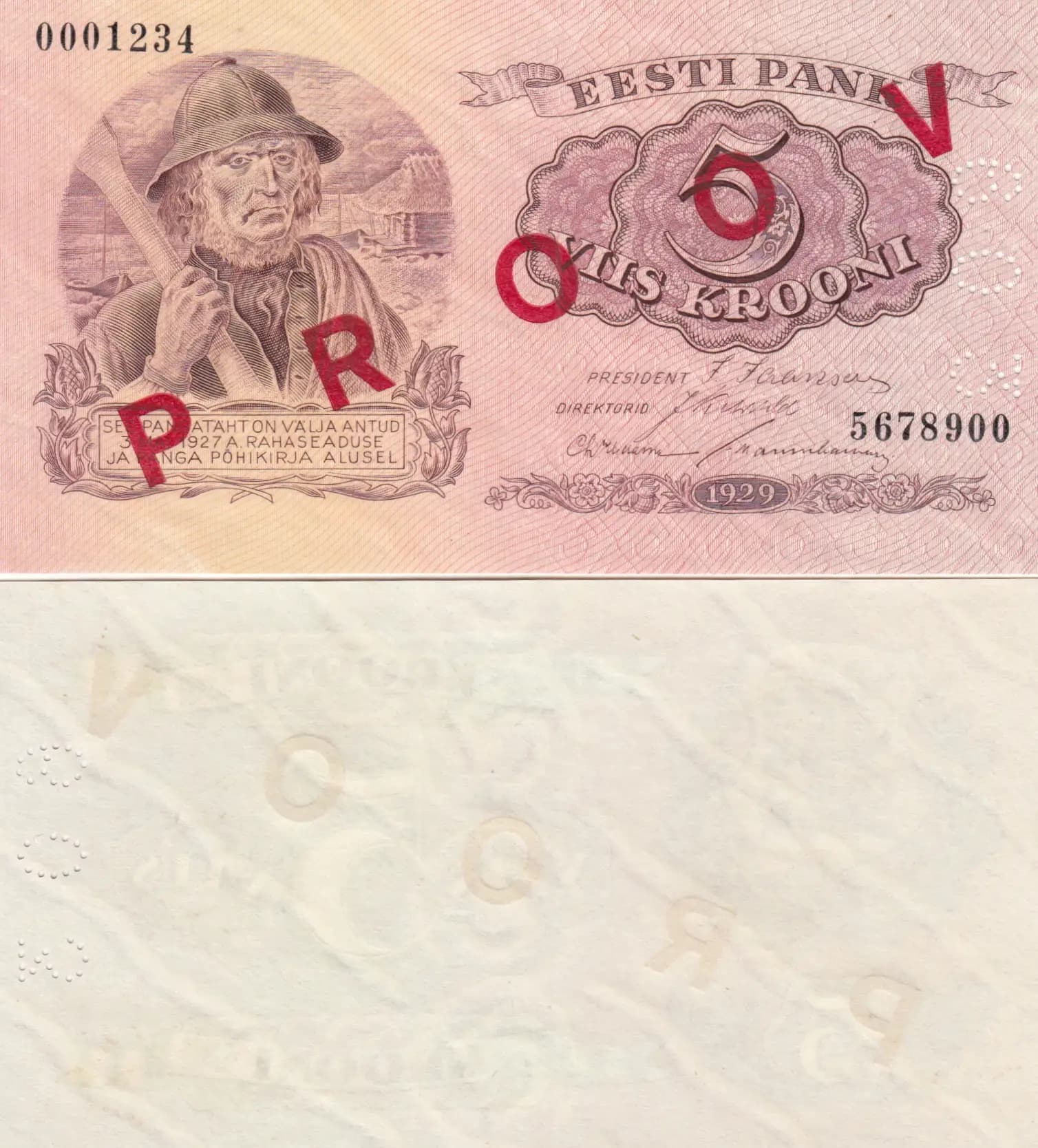
The obverse features a classical engraved portrait of an elderly fisherman with a full beard, wearing period clothing and a cap, depicted in three-quarter profile on the left side of the note. The portrait is rendered in traditional intaglio cross-hatching technique with exceptional detail. Ornamental floral and scrollwork elements frame the portrait, typical of early 20th-century banknote design aesthetics. The reverse showcases the Estonian national coat of arms—a shield containing three lions passant—centrally positioned and surrounded by elaborate decorative flourishes and foliage designs. Large numeral denominations and the word 'KROONI' appear in ornamental cartouches on both sides of the coat of arms. The overall design palette employs warm pink-rose and brown tones with subtle green tinting, creating a sophisticated and dignified appearance befitting a national currency of a newly independent state.
Front side: 'EESTI PANK' (Estonian Bank) / '5 VIIS KROONI' (5 Five Krooni) / 'SEE PANGATAHTON VALJA ANTUD 3 MAI 1927 A RAHASEADUSE JA PANGA POHIKIRJA ALUSEL' (This banknote was issued on 3 May 1927 under the Currency Act and the Bank's Charter) / 'PRESIDENT' (President) / 'DIREKTORID' (Directors) / Serial number: 5558365 / Year: 1929. Back side: '5' (Five) / 'KROONI' (Krooni) appearing twice in banners / 'VIIS VIIS' (Five Five).
The note was produced using traditional intaglio engraving, the standard security printing method for banknotes of this era. The fine line engraving patterns, detailed cross-hatching in portrait work, and the intricate ornamental design elements visible throughout both sides are characteristic of high-quality intaglio production. This technique provided the necessary anti-counterfeiting security features appropriate for 1920s-era currency. The printer for this series was likely a specialized European security printer, though specific attribution would require archival research into Eesti Pank's historical records.
The specific serial number observed is 5558365, with the note dated 1929 on the obverse (though the authorization date shown is 3 May 1927). PMG has catalogued one variant for this base Pick number (P-62a). Without access to comprehensive signature and serial number prefix data, the exact variety classification within P-62 variants cannot be definitively determined from visual inspection alone. Collectors should reference detailed Pick or specialized Estonian banknote catalogs to confirm the precise variety of any individual specimen based on signature combinations and serial number characteristics.