25 marka 1919 specimen
Market Prices
5 salesAbout This Note
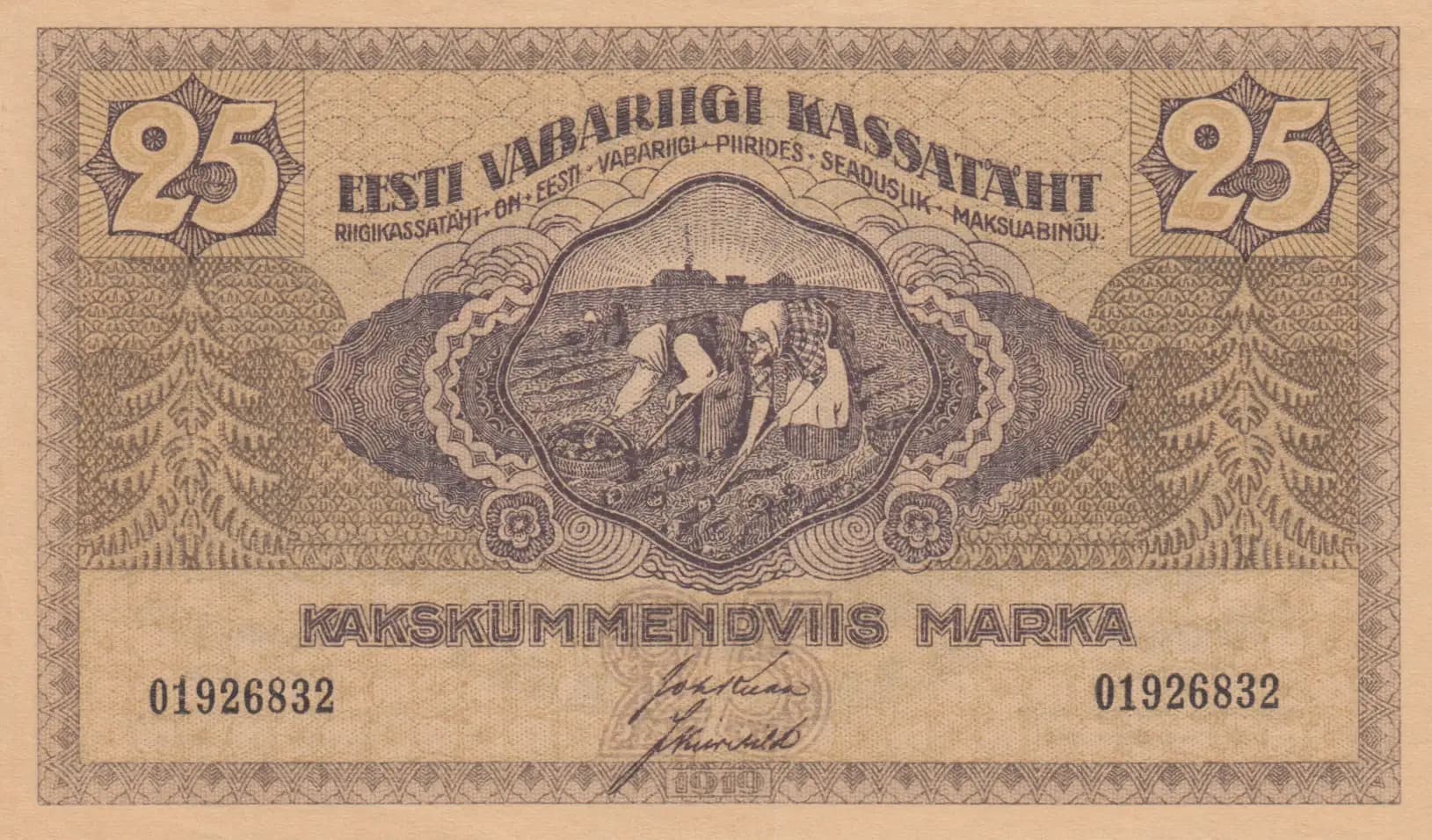
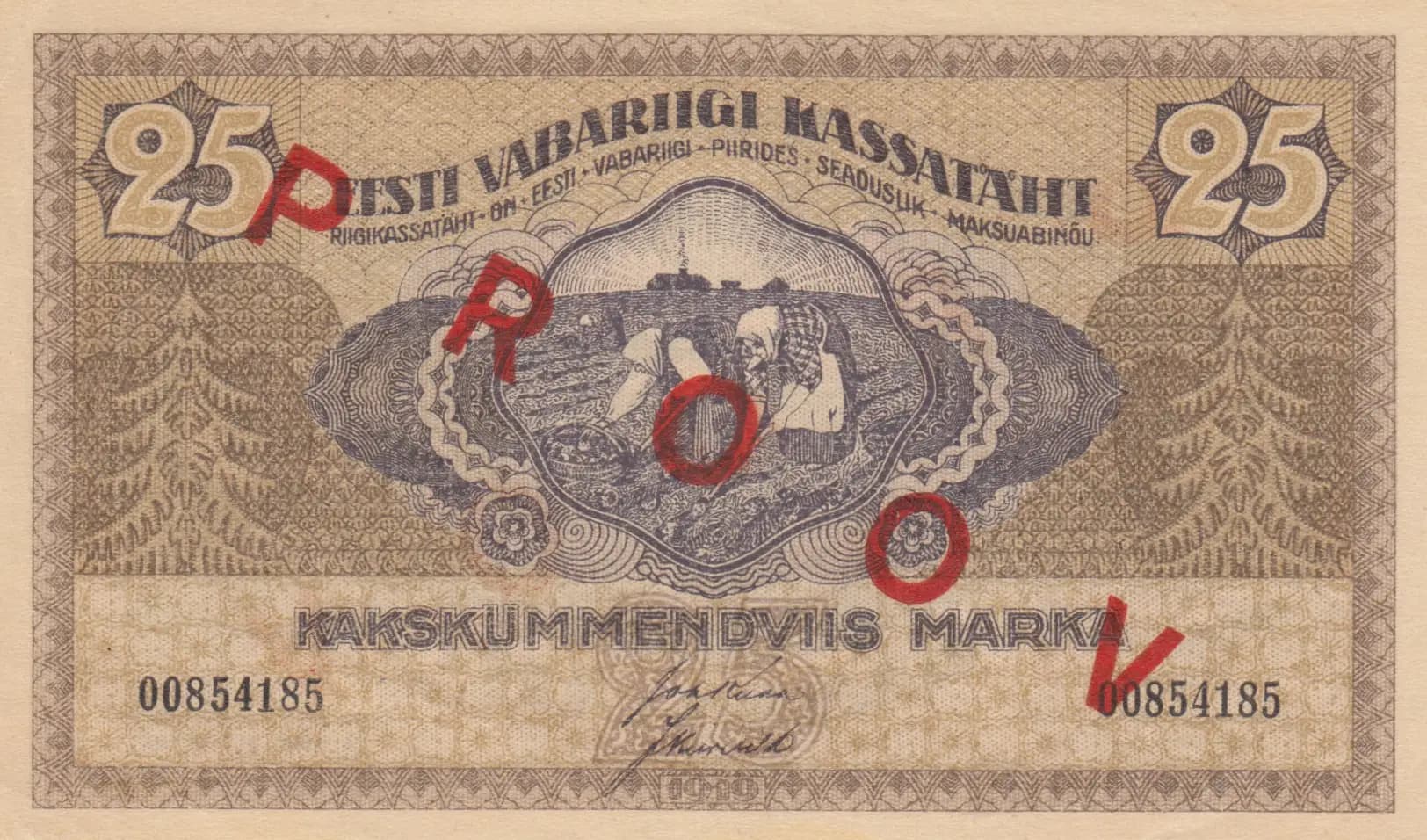
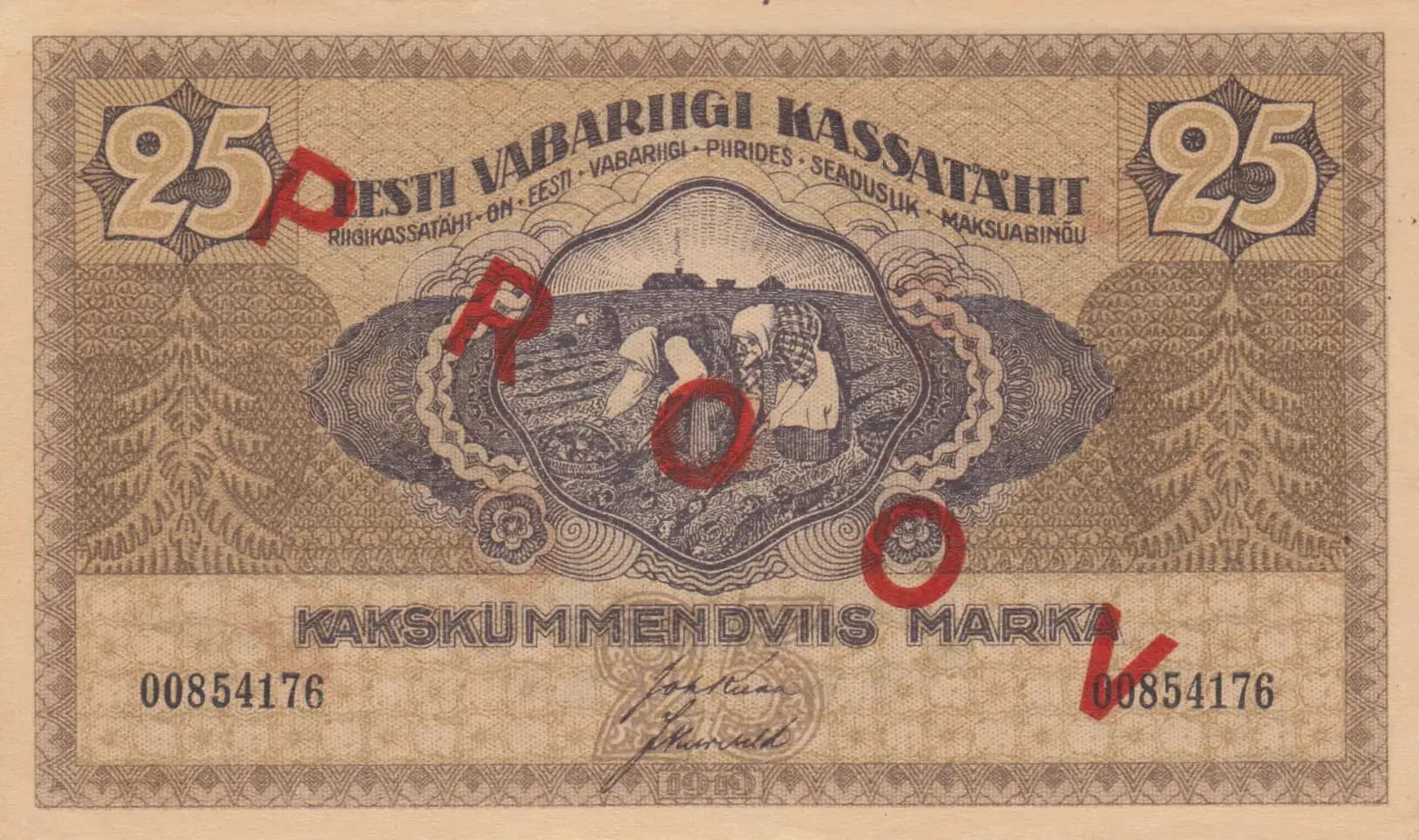
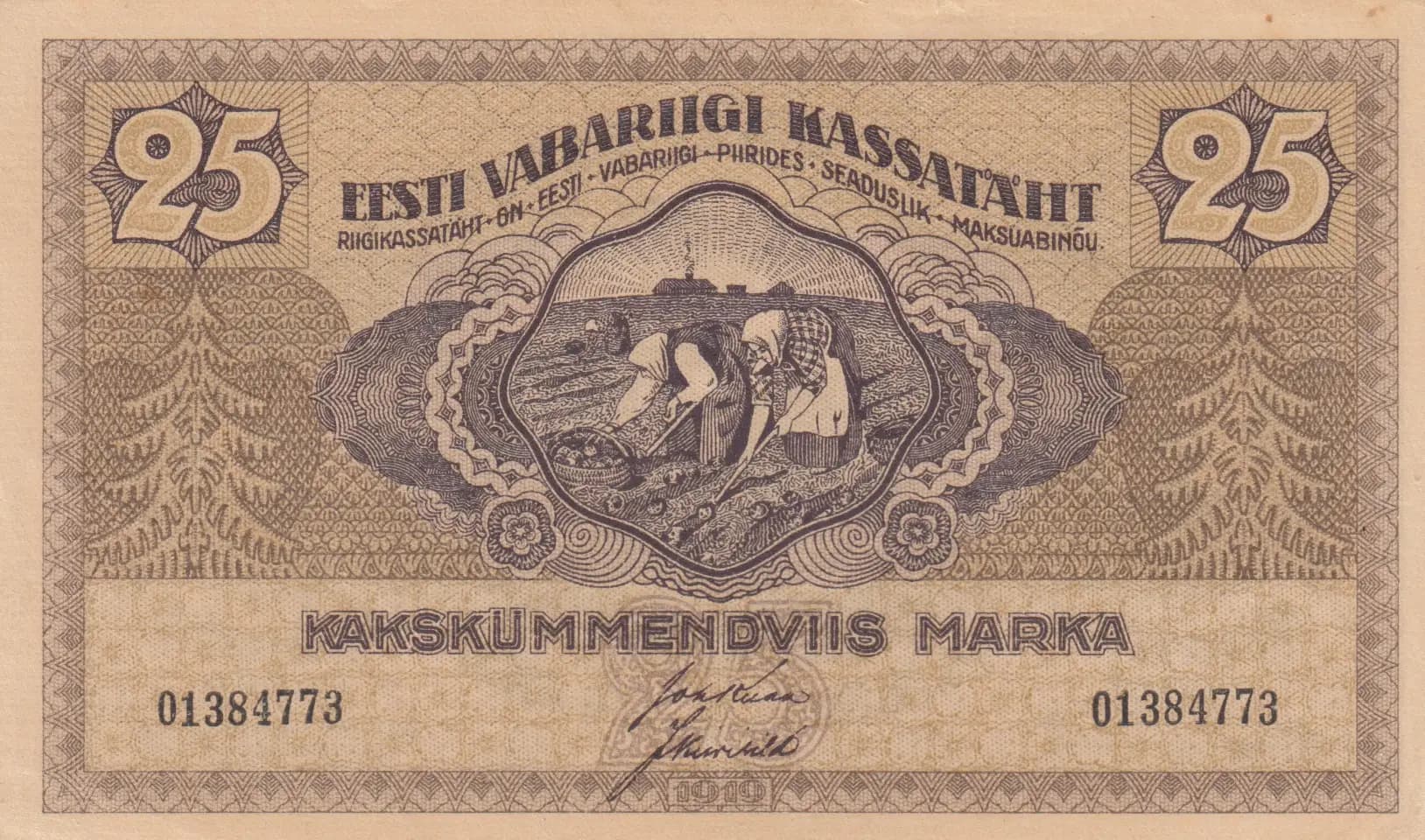
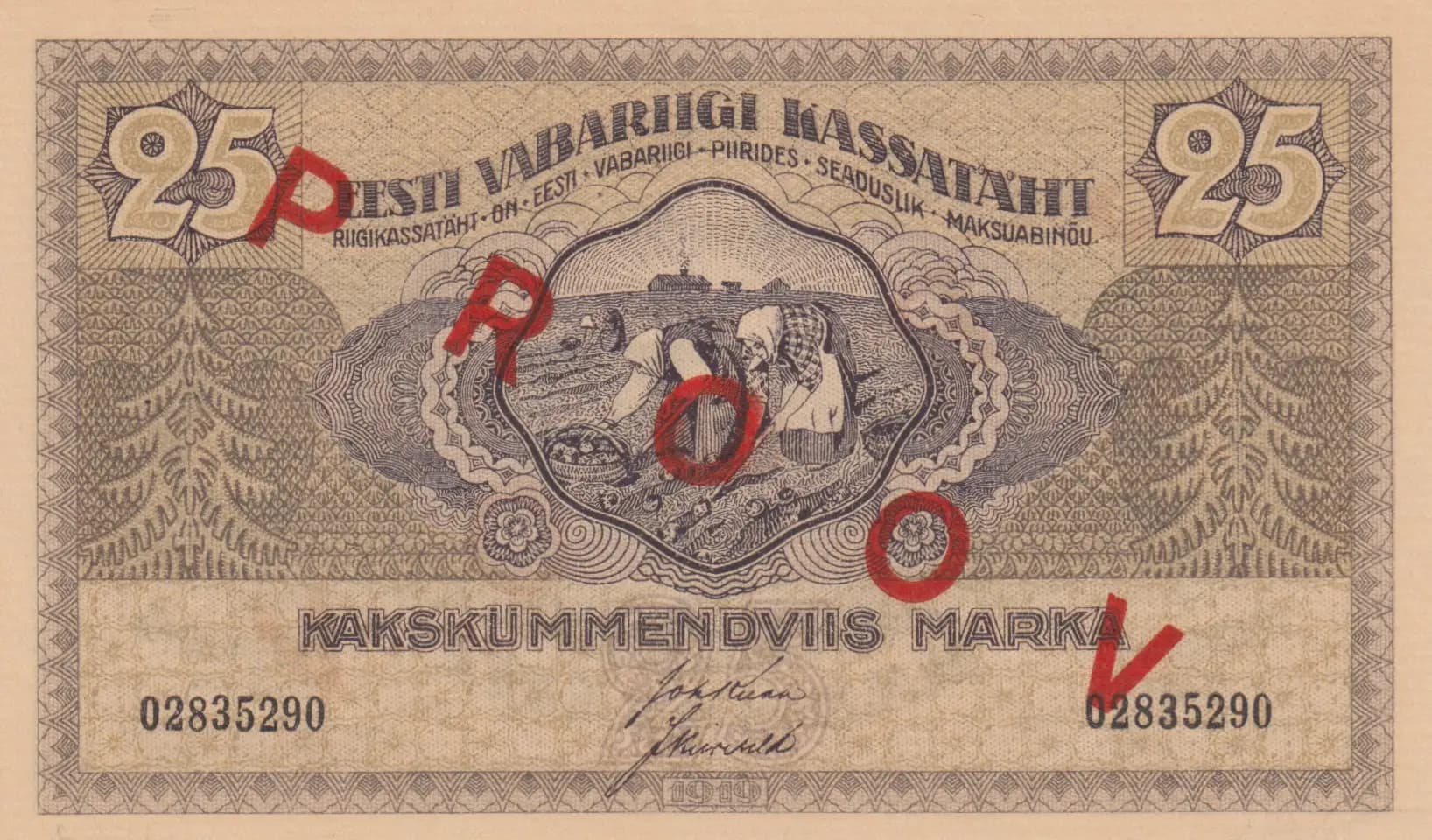
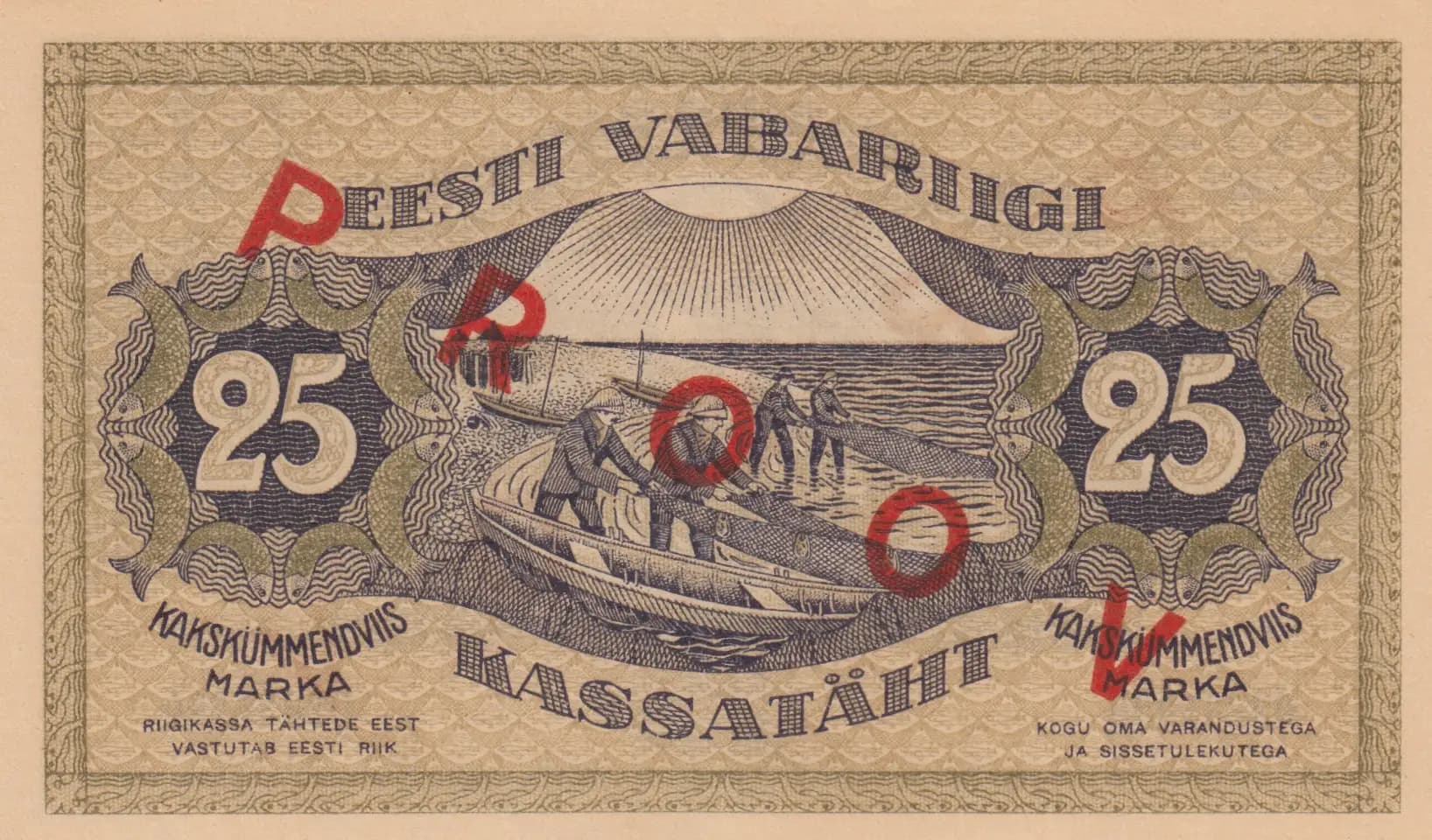
This is a 1919 Estonian 25 marka specimen note in uncirculated condition, issued by the Treasury of Estonia (Eesti Vabariigi Riigikassa). The note features distinctive red overprint stamps and diagonal lines marking it as a specimen, with crisp engraving showing agricultural labor on the obverse and a maritime fishing scene on the reverse. The excellent preservation and prominent specimen markings make this an interesting example of Estonia's early republican currency, with eBay auction data indicating catalogue values around $200 for UNC specimens.
Common. eBay auction data from 2015-2020 shows typical selling prices ranging from $8.60 to $19.50 for fine to fine condition notes, with only one example reaching $13.50-$19.50. The 2016 catalogue valuation of $200 for UNC represents a standard market rate for uncirculated specimens of this note type. The existence of three documented Pick catalogue variants (P-47a, P-47b, P-47s) and the circulation of examples in the secondary market indicate this was not a limited issue. This specimen variant is undoubtedly common among collectors.
This note was issued during Estonia's first period of independence following the 1918 declaration and the conclusion of the Estonian War of Independence in 1920. The imagery—depicting agricultural fieldwork and coastal fishing—reflects the nation's economic foundation in these primary industries during the early 20th century. The note's design emphasizes the working classes and productive capacity of the new Estonian state, consistent with nationalist iconography of the era.
The obverse depicts a rural agricultural scene centered on a single male figure engaged in potato harvesting or crop cultivation, rendered in fine engraved detail with rolling terrain visible in the background. The reverse features a maritime/fishing vignette with multiple workers operating a fishing boat with nets on coastal waters, dominated by a large mountain or headland in the background. Both sides employ ornamental corner cartouches featuring geometric radiating sun-like patterns and what appear to be heraldic or decorative dragon/lion motifs. The denomination '25' appears prominently in large numerals on both left and right sides of each side. Decorative borders with repeating geometric patterns frame the entire note. The color palette consists primarily of beige, tan, and cream with brown and dark blue/navy engraving tones.
OBVERSE: 'EESTI VABARIIGI HASSATAAHT' (Estonian Republic Treasury Note); 'RIIGIKASSATAHI-ON-EESTI VABARIIGI-PIIRIDES-SEADUSLIK-MAKSUABINOU' (State Treasury is legal tender within Estonian Republic borders); 'KAKSKUMMENVIIS MARKA' (Twenty-five marka); Serial number 02835290 appears twice; handwritten signature(s) of authorized officials present. REVERSE: 'PEESTI VABARIIGI HASSATAAHT' (Estonian Republic Treasury Note); 'KAKSKUMMENVIIS MARKA' (Twenty-five marka); 'RIIGIKASSASSA TAHTEDE EEST VASTUTAB EESTI RIIK KOGU OMA VARANDUSTEGA JA SISSETULEK UTEGA' (The Estonian State is responsible for these treasury notes with all its property and income); denomination marking '25'.
Steel plate intaglio engraving, evidenced by the fine line work, detailed vignettes, and sharp reproduction of the complex border patterns. The red overprint stamps and diagonal lines were applied as security markings and specimen designations using what appears to be offset printing or stamp application. The clarity and crispness of the engraved elements suggest professional security printing, consistent with Estonian Treasury specifications of 1919.
This note is catalogued as P-47bs (specimen variant of Pick 47). The 'bs' designation indicates this is a specimen copy, confirmed by the large red circular overprint stamps with radial line patterns and diagonal red overprint lines visible across both sides. The PMG population report confirms three variants exist: P-47a, P-47b, and P-47s. The specimen markings are crisp and prominently applied, distinguishing this from regular issue circulation notes. The serial number 02835290 is visible on both sides, consistent with specimen production practices.