25 marka 1919
Market Prices
5 salesAbout This Note
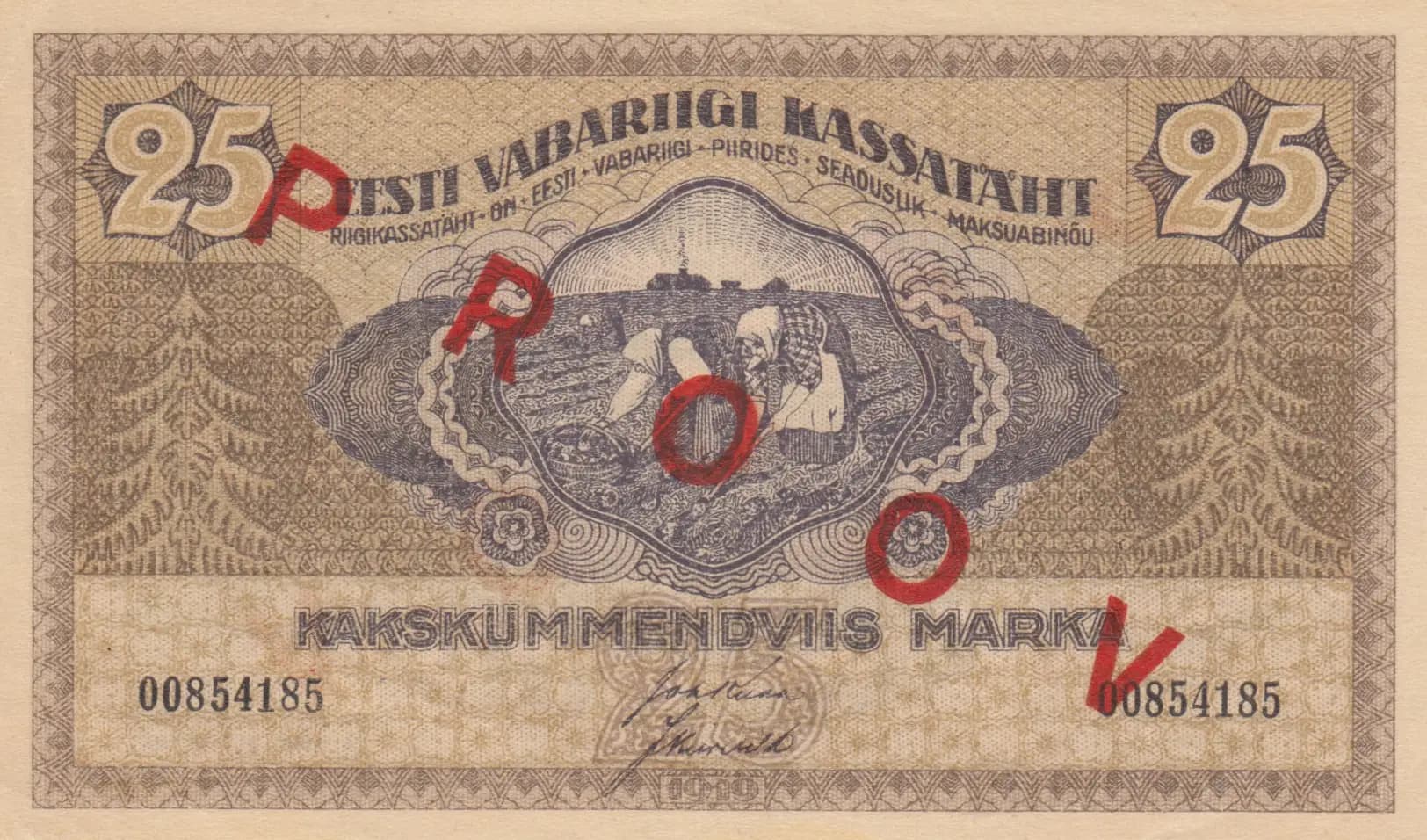
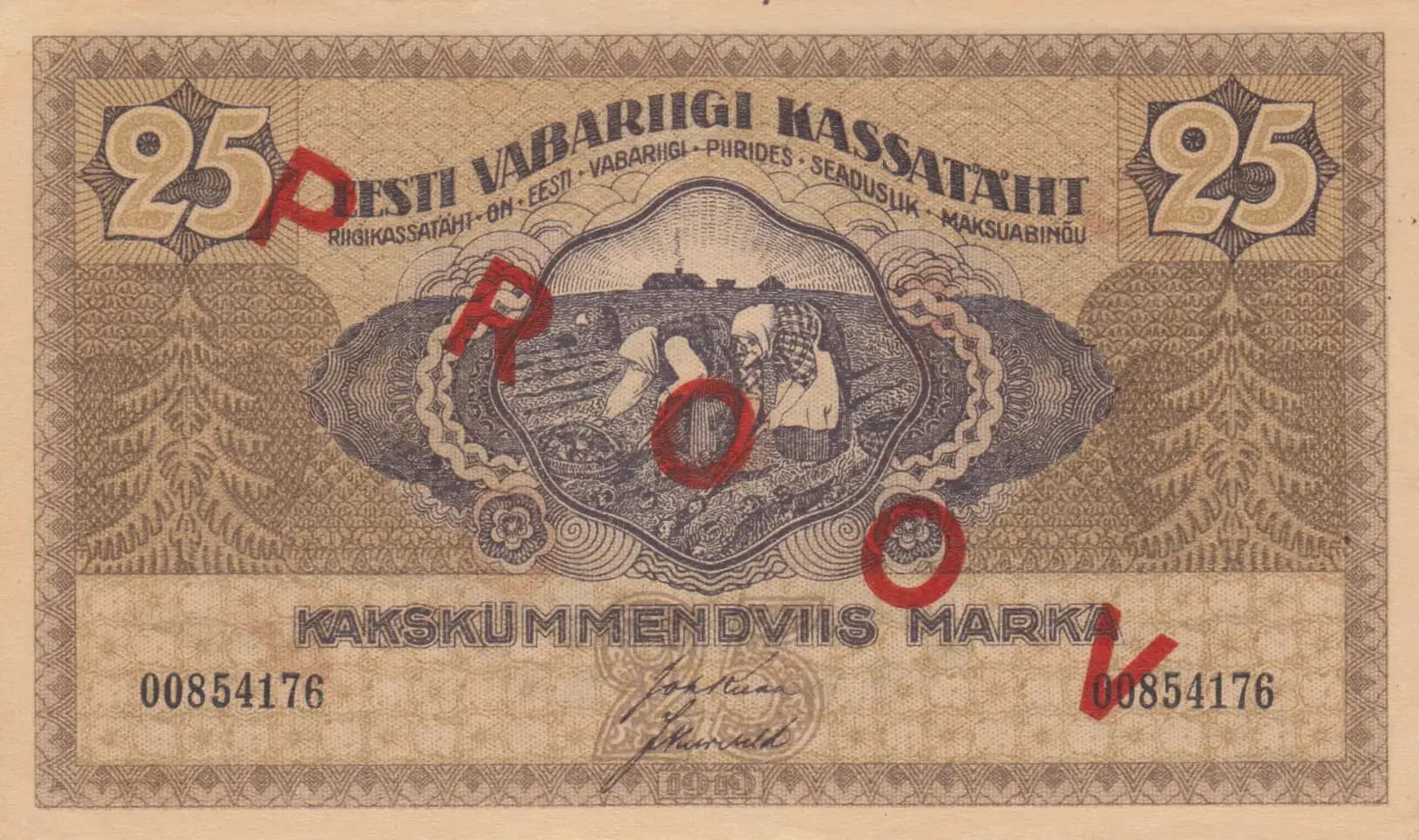
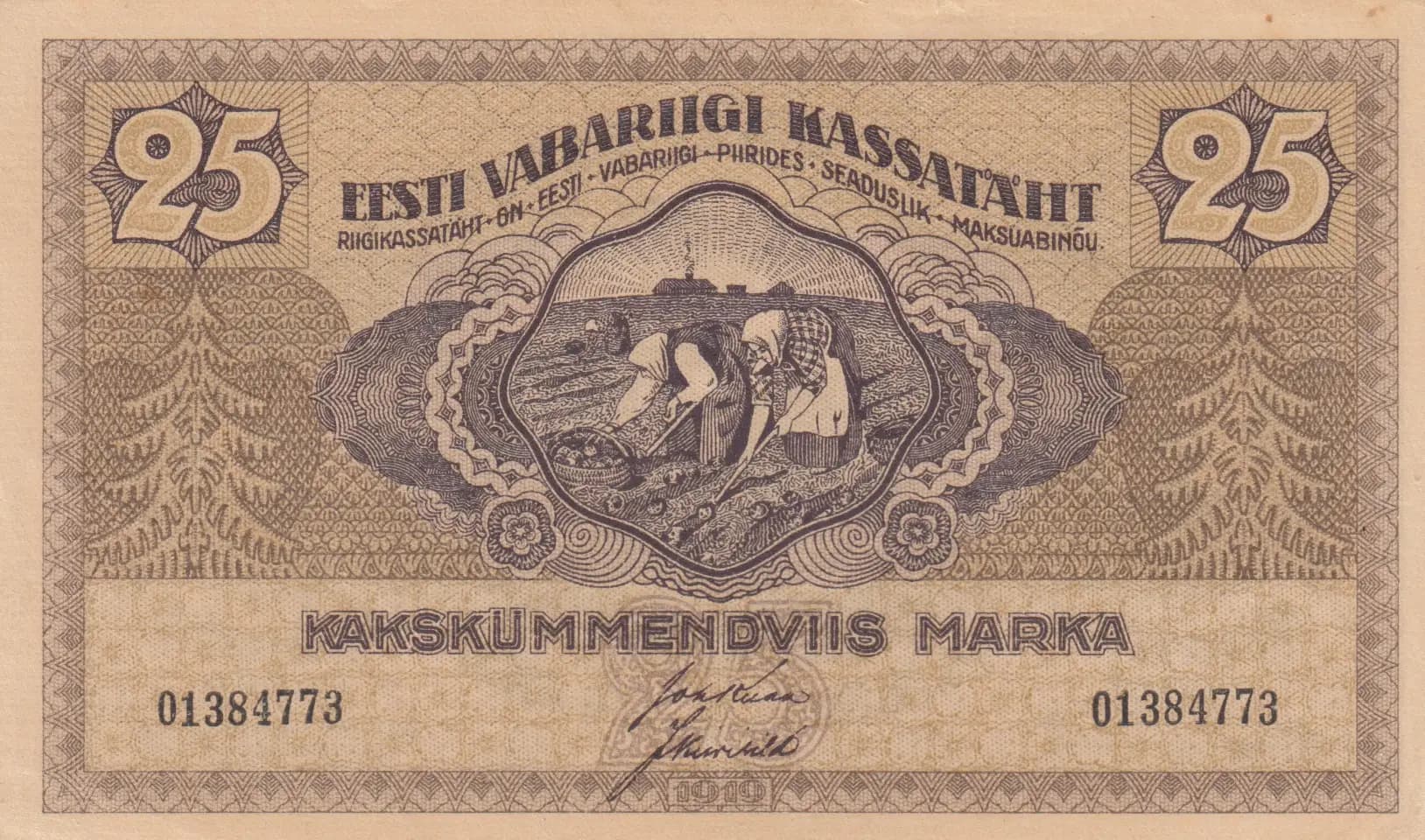
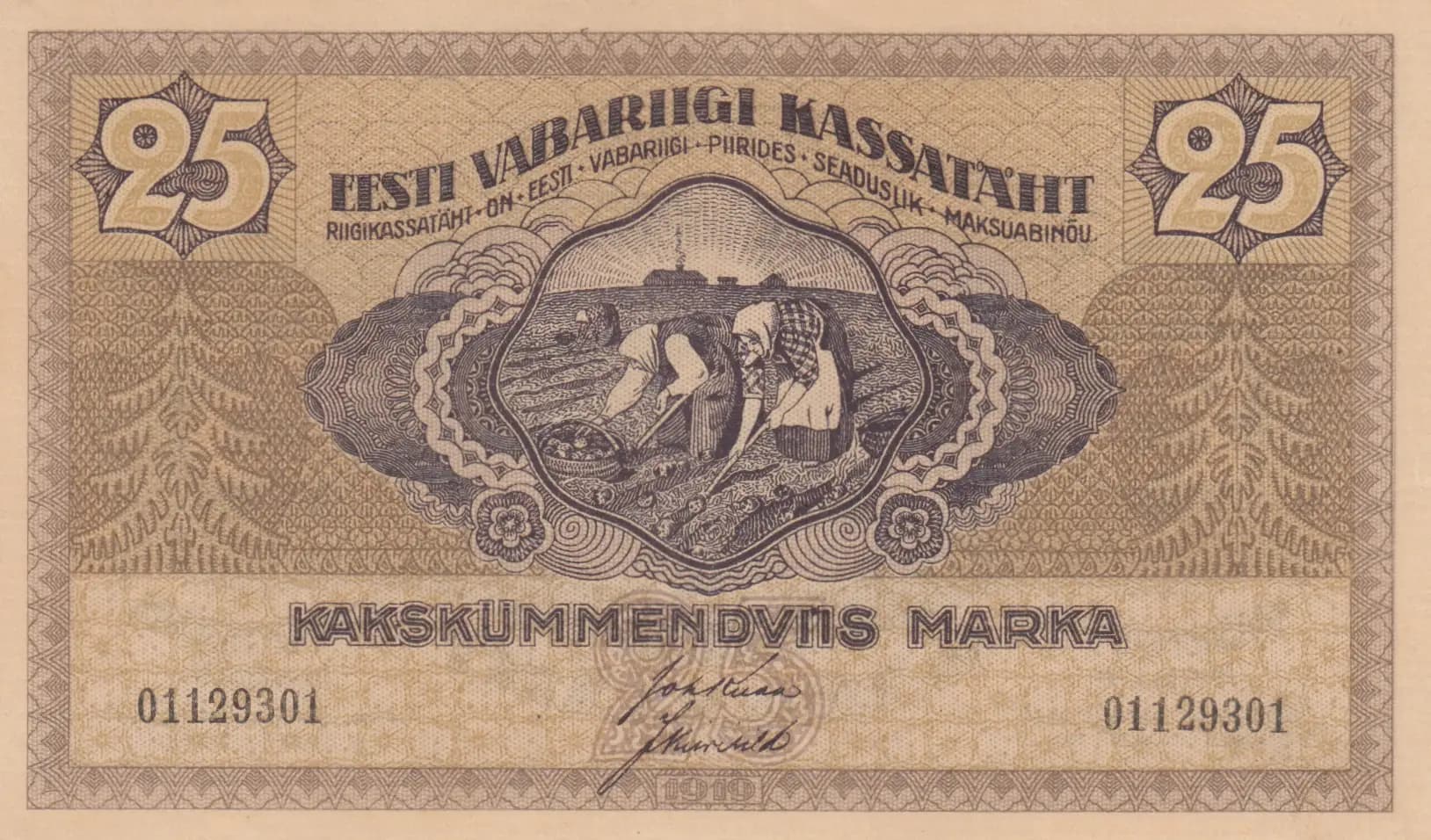
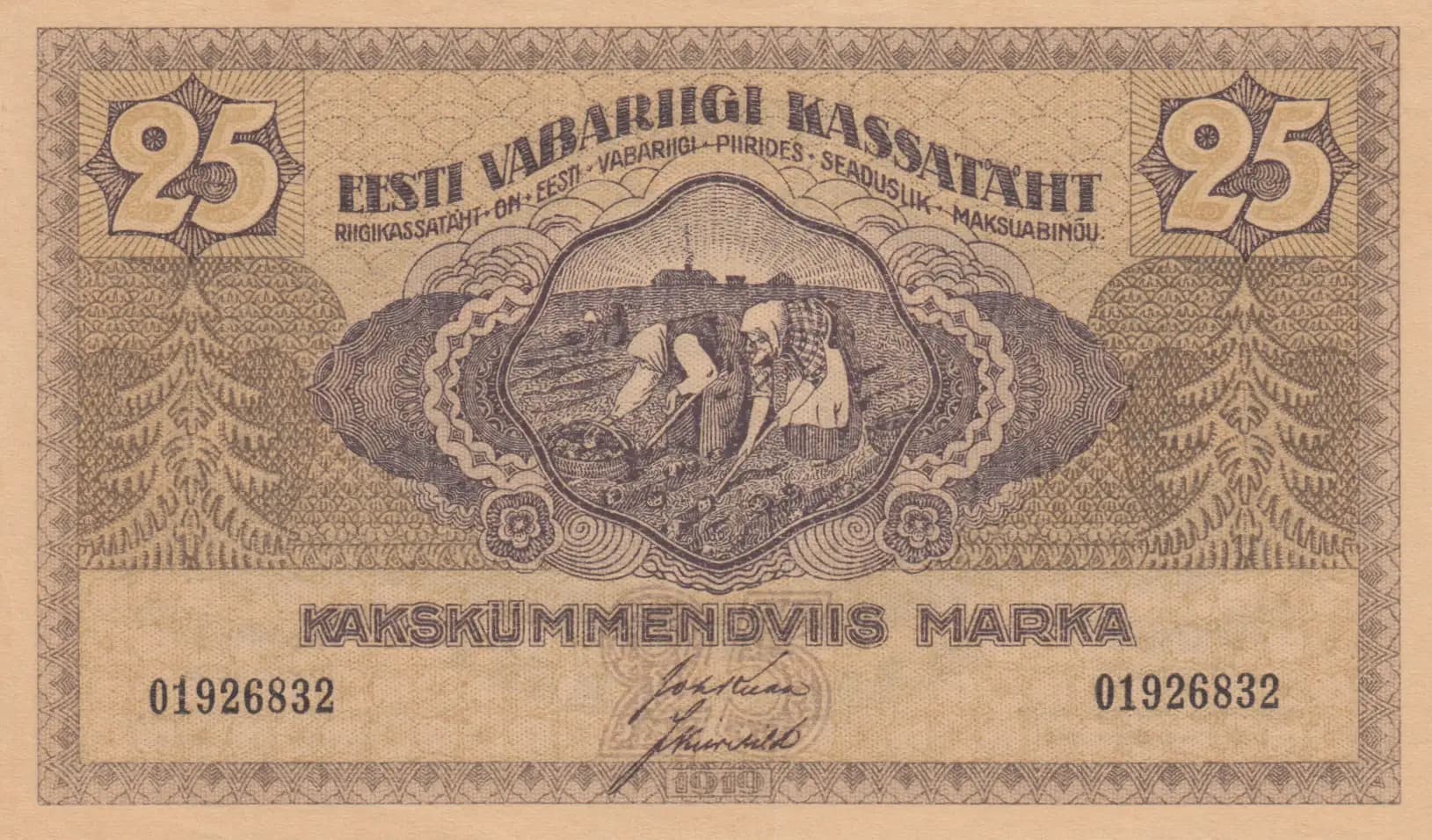
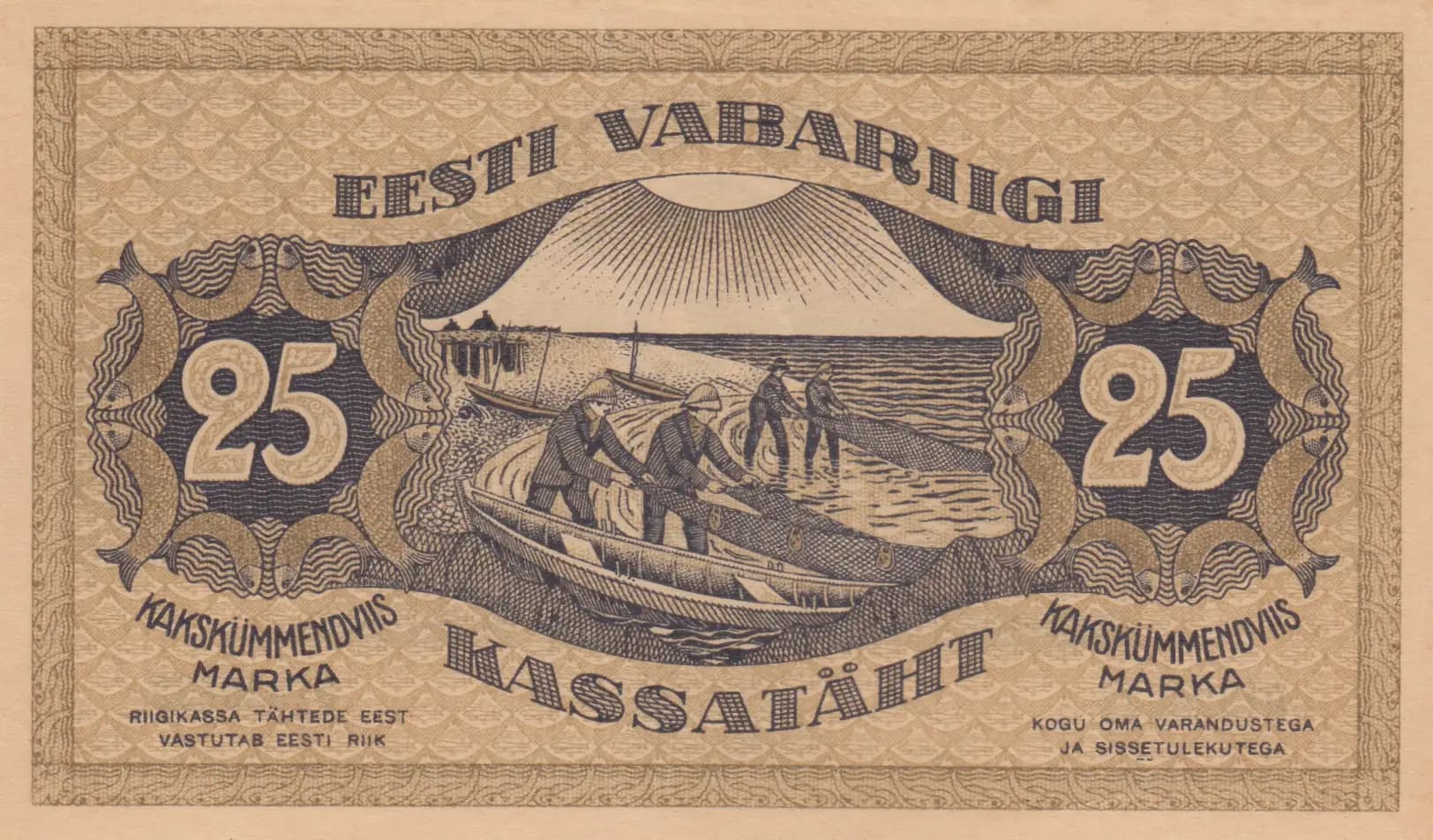
This is an uncirculated 1919 Estonia 25 marka note, Pick P-47a, featuring exceptional preservation with no visible wear, creases, or damage. The note displays masterful fine-line engraving on both sides: agricultural labor on the obverse and a maritime fishing scene on the reverse, rendered in warm brown and sepia tones. The detailed craftsmanship and historical significance of Estonia's early independence currency make this an attractive example for collectors of Baltic or early 20th-century European banknotes.
Common. The eBay price data provided shows consistent sales in the $8–$20 range for circulated examples (F and VG grades), with catalog values for UNC examples around $200 (2016 data). While UNC examples command higher prices than circulated specimens, the regular appearance of this note in the secondary market and its substantial catalog print run during 1919 indicate this is a commonly available note. The Price guide values are modest relative to truly scarce early European banknotes.
This banknote was issued by the newly independent Estonian Republic in 1919, immediately following the nation's declaration of independence from Russia. The dual imagery—agricultural workers harvesting potatoes and fishermen with nets—symbolizes the economic foundations of the young nation, reflecting Estonia's primary industries of agriculture and fishing. The formal inscription 'The Estonian State is responsible for State Treasury Notes with all its property and income' underscores the new nation's commitment to monetary sovereignty during a period of profound political and economic transformation.
The obverse features an ornately framed central medallion depicting agricultural workers engaged in potato harvesting, with a fortified structure visible in the background—representing Estonia's rural economy and historical heritage. Large numerals '25' in ornamental frames anchor the upper corners. The reverse showcases a maritime scene with multiple fishermen in traditional boats casting nets, with a prominent celestial body (sun or moon) rising over the seascape—symbolizing the nation's maritime traditions. Both sides are surrounded by elaborate geometric and floral decorative borders with shell or clam-shaped ornamental frames containing the denomination numerals. The design employs sophisticated line-engraving technique throughout, with handwritten signatures visible on the obverse, typical of early Estonian treasury notes.
FRONT SIDE: 'EESTI VABARIIGI KASSATÄHT' (Estonian Republic Banknote); 'RIIGIKASSATÄHT - OHT - EESTI - VABARIIGI - PIIRIDESSEADUSLIK - MAKSUABINDU' (State Treasury Note - law - Estonian - Republic - Border - legal - payment device); 'KAKSKUMMENDVIIS MARKA' (Twenty-five marka); Serial number '01926832' (appears twice). BACK SIDE: 'EESTI VABARIIGI' (Estonian Republic); 'KAKSKUMMENDVIIS MARKA' (Twenty-five marka, appears twice); 'RIIGIKASSA TÄHTEDE EEST VASTUTAB EESTI RIIK KOGU OMA VARANDUSEGA JA SISSETULEKUTEGA' (The Estonian State is responsible for State Treasury Notes with all its property and income).
Fine-line engraving (intaglio printing). The detailed parallel-line patterns, intricate border work, and the dimensional quality visible in the image are characteristic of high-quality intaglio production. The note was likely produced by a European security printer specializing in currency production for newly independent nations in the post-WWI period, though the specific printer attribution would require archival research.
This specimen is identified as Pick P-47a, with the serial number 01926832 visible on both obverse and reverse. The PMG population report indicates three cataloged variants exist for this base Pick number (P-47a, P-47b, and P-47s), suggesting minor variations in printing or signature placement may distinguish different issues. This particular note's handwritten signatures and serial numbering are consistent with standard 1919 Treasury note production. Without access to comparative specimens or detailed variant catalogs, the specific characteristics differentiating P-47a from P-47b or P-47s cannot be determined from the visual evidence alone.