25 marka 1919 specimen
Market Prices
5 salesAbout This Note
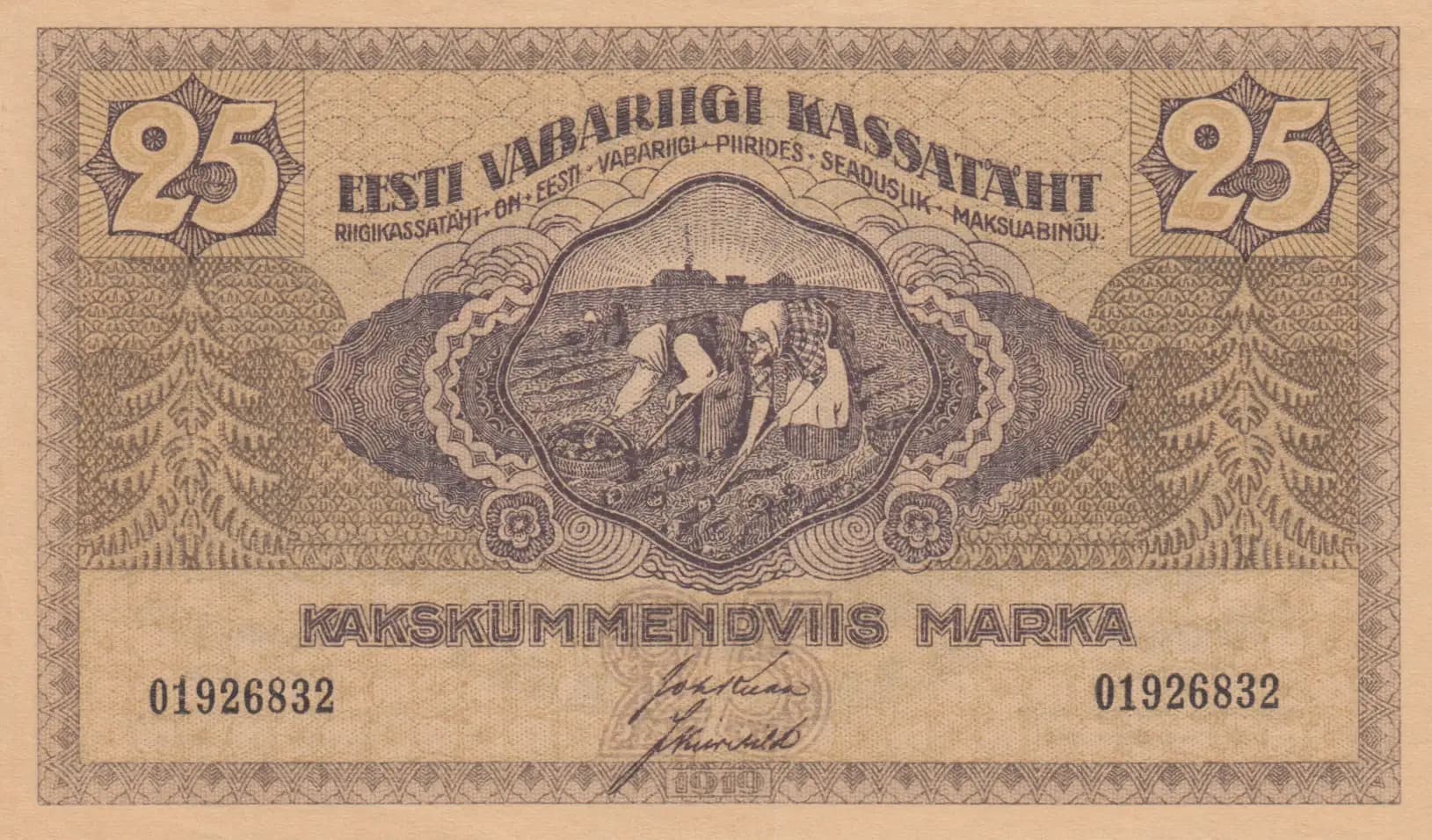
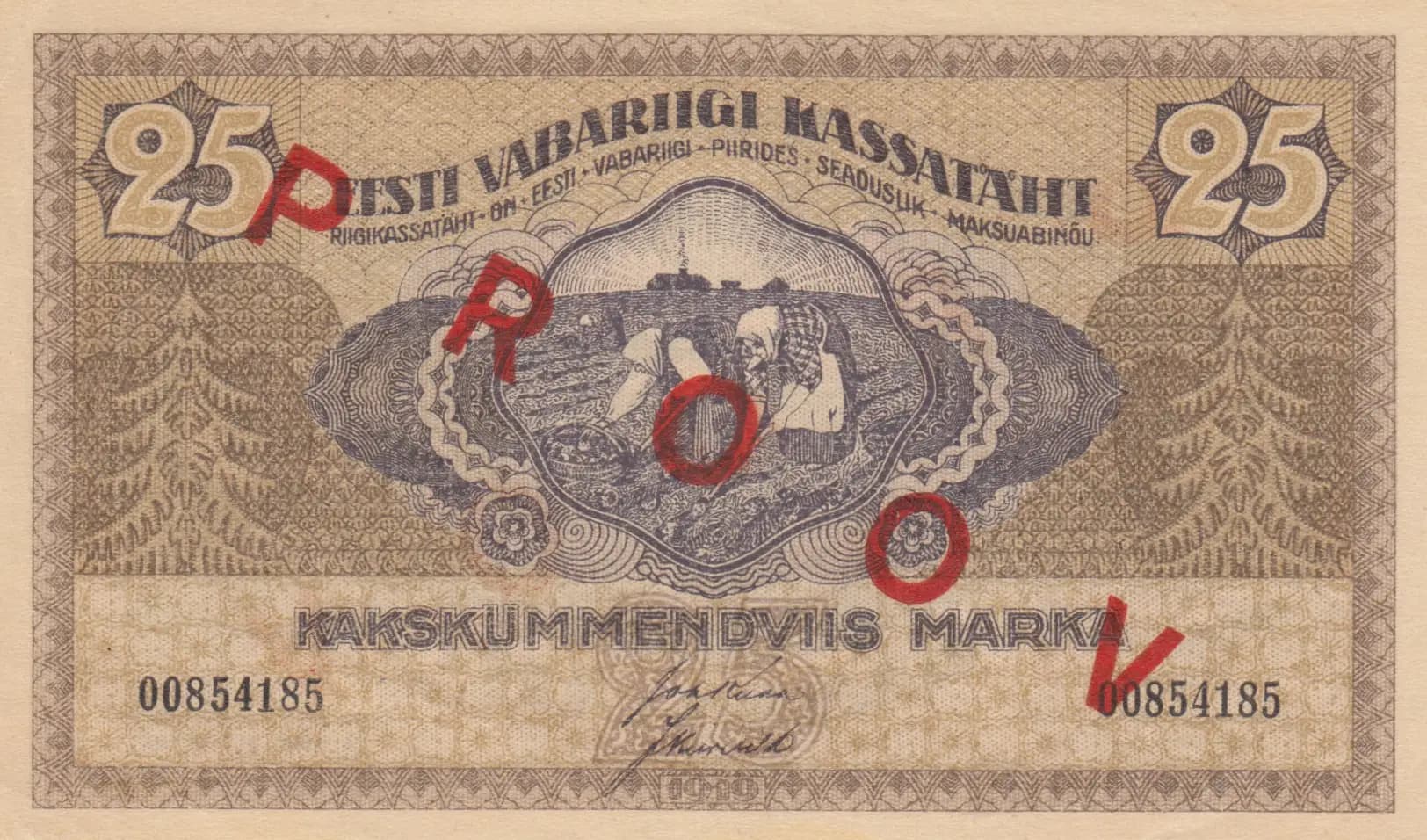
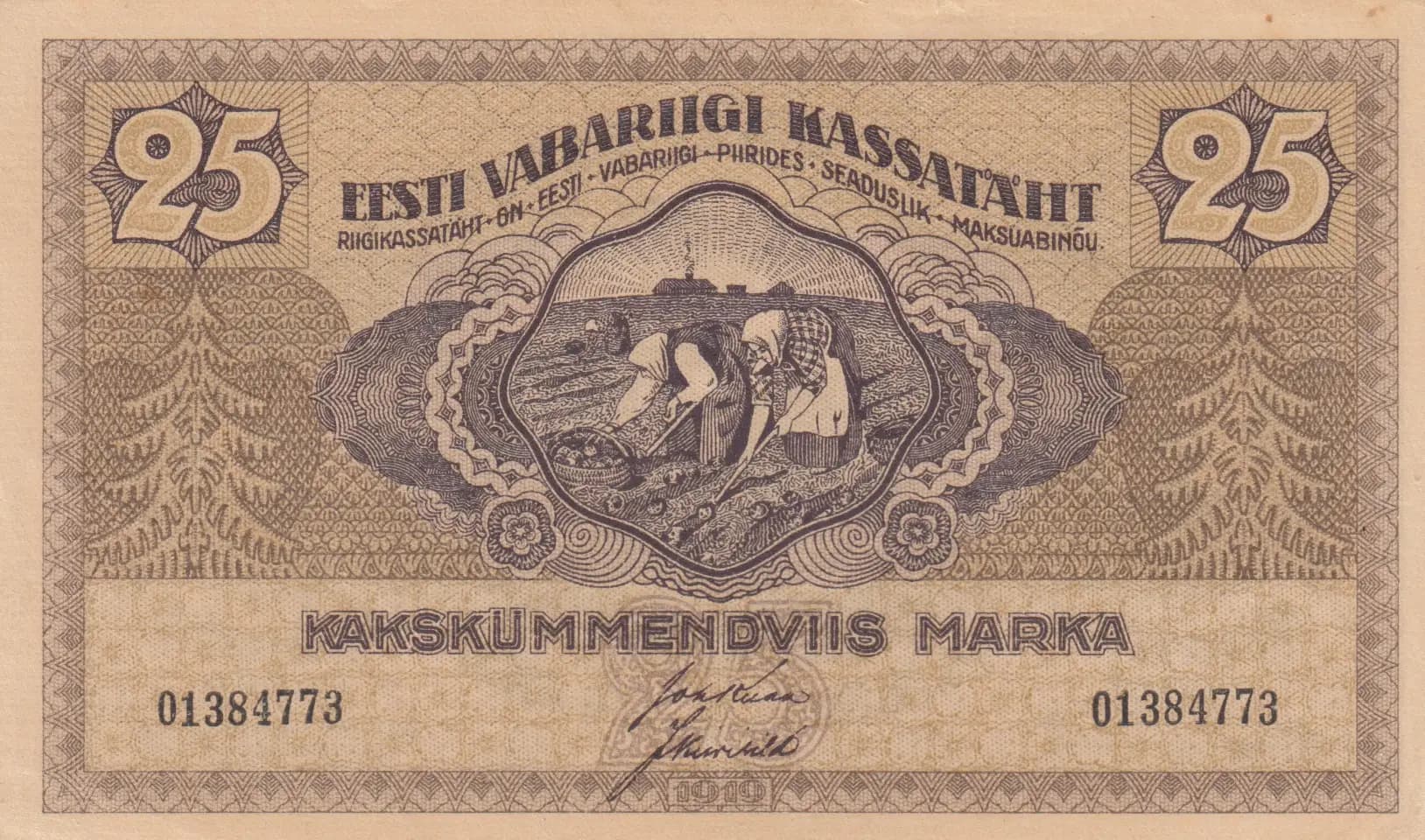
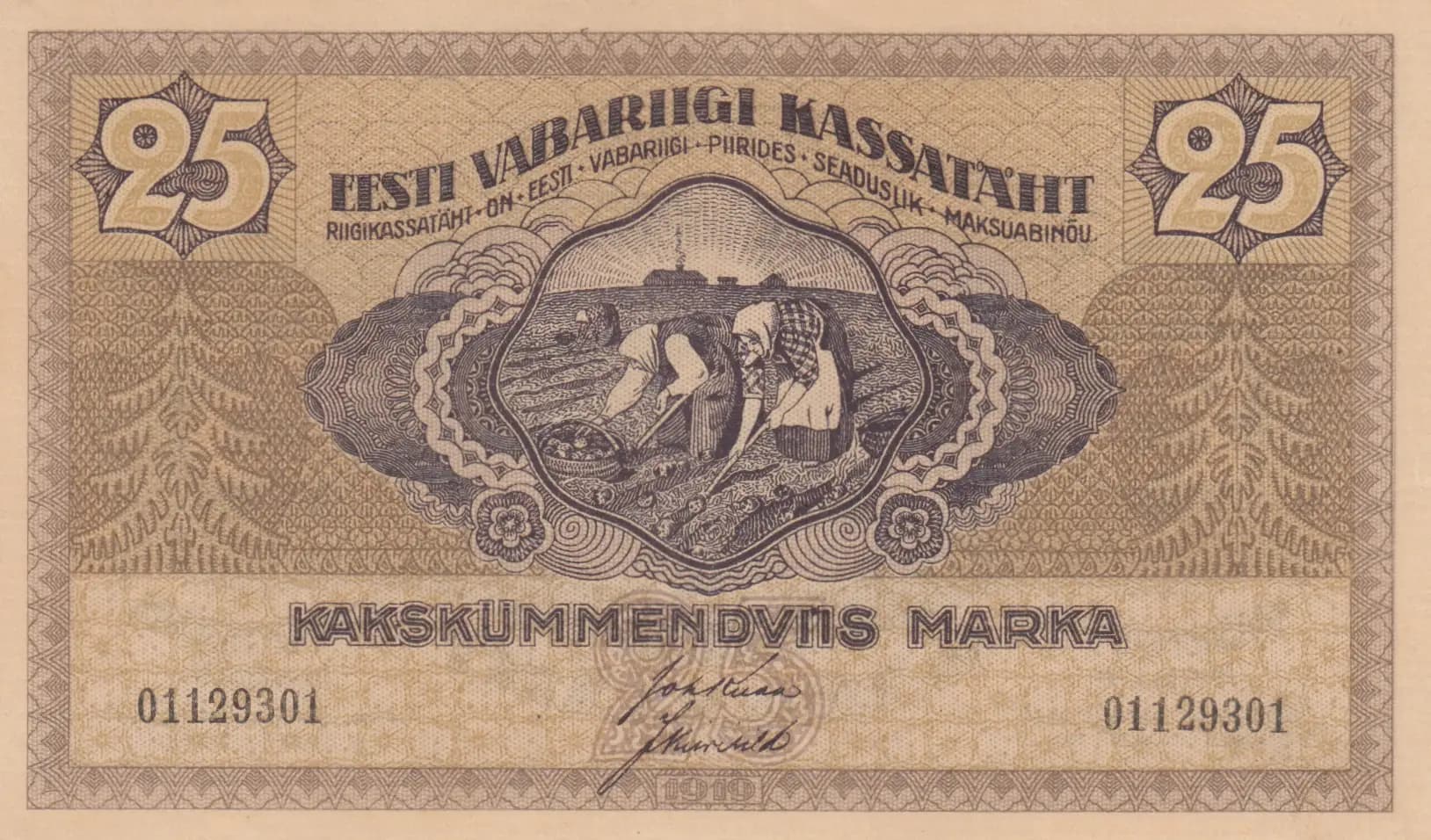
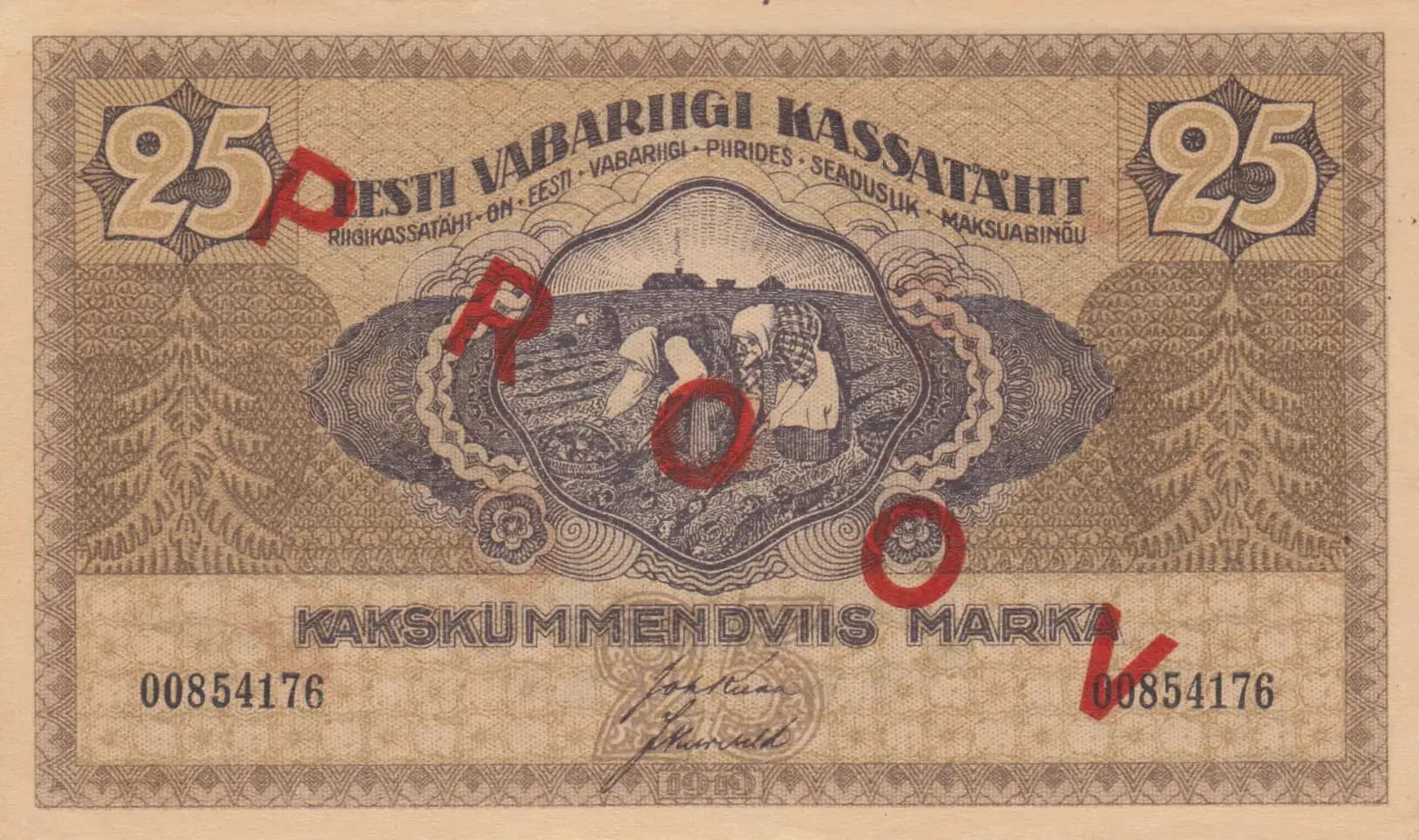
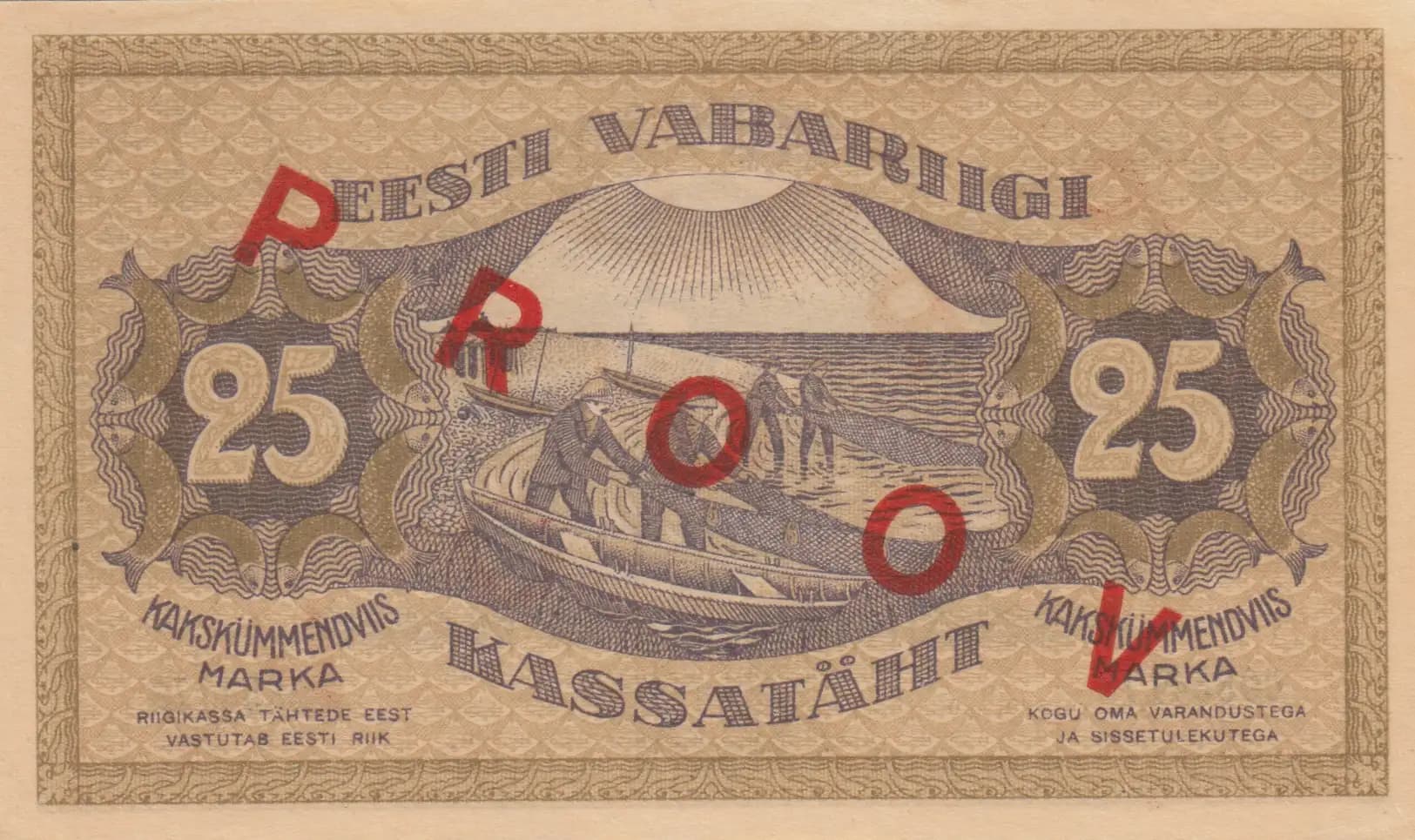
This is a 1919 Estonian 25 marka specimen note in AU condition, featuring exceptional Art Deco-style engraved design work with agricultural and maritime vignettes. The note displays prominent red specimen overprints and maintains excellent paper integrity with only light aging patina consistent with its early 20th-century origin. As a specimen issue (Pick P-47as), this represents a presentation copy from the newly independent Estonian Republic's first currency, making it historically significant to both Estonian and Baltic numismatics.
Common. eBay market data shows consistent sales in the $8-20 range for circulated examples (VG-F grades) over multiple years (2015-2020), with catalog values for VF condition at approximately $100 and UNC at $200. The regular issue status combined with modest market prices indicates this was produced in sufficient quantity to remain readily available to collectors. Specimen notes like this example are slightly less common than circulation issues, but the regular sale activity and stable pricing demonstrate no scarcity premium. The AU grade commanded no extraordinary prices relative to lower grades, further confirming common availability.
Issued in 1919 during Estonia's declaration of independence from the Russian Empire, this banknote celebrates the new nation's agrarian and fishing heritage through its dual vignettes—agricultural workers harvesting in rural landscapes on the obverse and fishermen with boats on the reverse. The imagery reflects Estonia's economy at the time of statehood, emphasizing the natural resources and traditional livelihoods that defined the newly sovereign Baltic nation. The Estonian language inscriptions throughout the note assert national identity and sovereignty after centuries of foreign rule.
The 25 marka note features an elaborate Art Deco-inspired engraved design with ornate geometric border patterns framing both sides. The obverse presents a central oval vignette depicting rural agricultural workers engaged in harvesting (likely potato picking based on catalog references), set within a pastoral landscape with buildings visible in the background. Trees flank the left and right edges of the design. The reverse displays a complementary maritime theme with a fishing vessel on water and a celestial body (sun or moon) in the sky, again framed within an ornate oval vignette. Both sides incorporate decorative rosette motifs in the corners, denomination numerals '25' positioned in upper corners, and fine-line engraved security patterns throughout. The color scheme employs tan, brown, and cream tones with red specimen overprints and stamps applied across both surfaces.
FRONT SIDE: 'EESTI VABARIIGI KASSATAHIT' translates to 'Estonian Republic Banknote'; 'RIIGIKASSATAHIT • ON • EESTI • VABARIIGI • PIIRIDES • SEADUSLIK • MAKSAALILNU' translates to 'State banknote is legal tender within the borders of the Estonian Republic'; 'KAKSKUMMENDVIIS MARKA' translates to 'Twenty-five marks'; Serial number '00854176' appears. BACK SIDE: 'EESTI VABARIIGI' translates to 'Estonian Republic'; 'KAKSKUMMENDVIIS MARKA' (appears twice) translates to 'Twenty-five marks'; 'RIIGIKASSAS TÄHTEDE EEST VASTUTAB EESTI RIIK' translates to 'The Estonian State is responsible for the state treasury banknotes'; 'KOGUS OMA VARANDUSTEGA JA SISSETULEKUTEGA' translates to 'Along with its property and income'.
Intaglio (engraving) was the primary printing method, evidenced by the fine line work, intricate detail in the vignettes, and complex border patterns visible throughout both sides of the note. The engraved security features, ornamental frames, and precise denomination numerals are characteristic of high-quality intaglio production. The red specimen overprints were applied separately, likely through lithographic or typographic means. This note was produced by the Estonian State Treasury's contracted security printer, following the engraving standards typical of European banknote production in 1919.
This note is cataloged as Pick P-47as, the specimen variety ('s' suffix) of the 25 marka issue. The PMG population report indicates three identified variants (P-47a, P-47b, and P-47s), suggesting differences in signatures, dates, or overprints among the regular issue and specimen versions. The red specimen overprints with circular and rectangular stamps are defining characteristics of this specific variety. The serial number '00854176' and the specimen designation stamps ('SPECIMEN' or equivalent in Estonian applied in red) distinguish this from circulating examples that would be cataloged as P-47a or P-47b.