25 marka 1919
Market Prices
3 salesAbout This Note
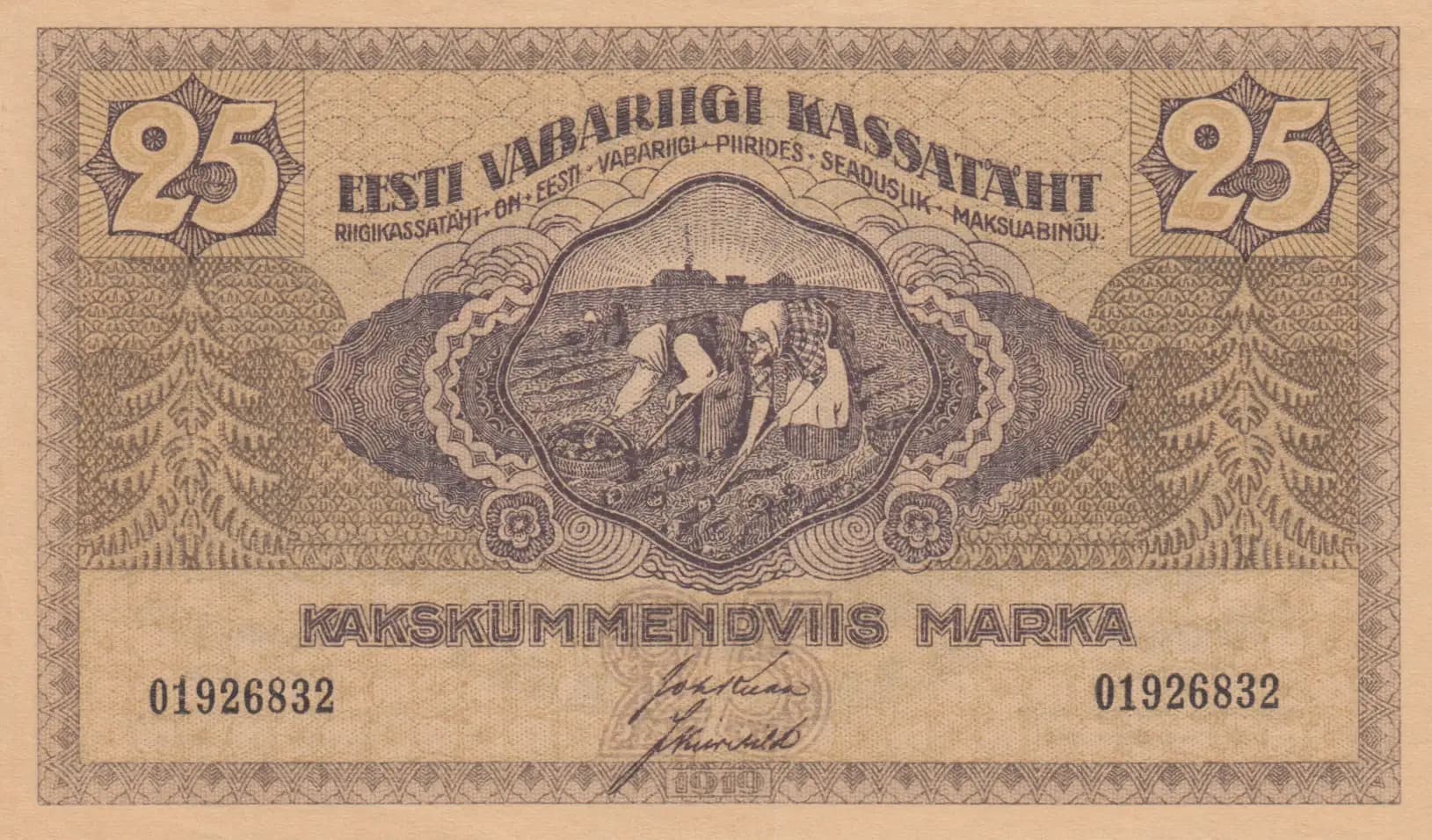
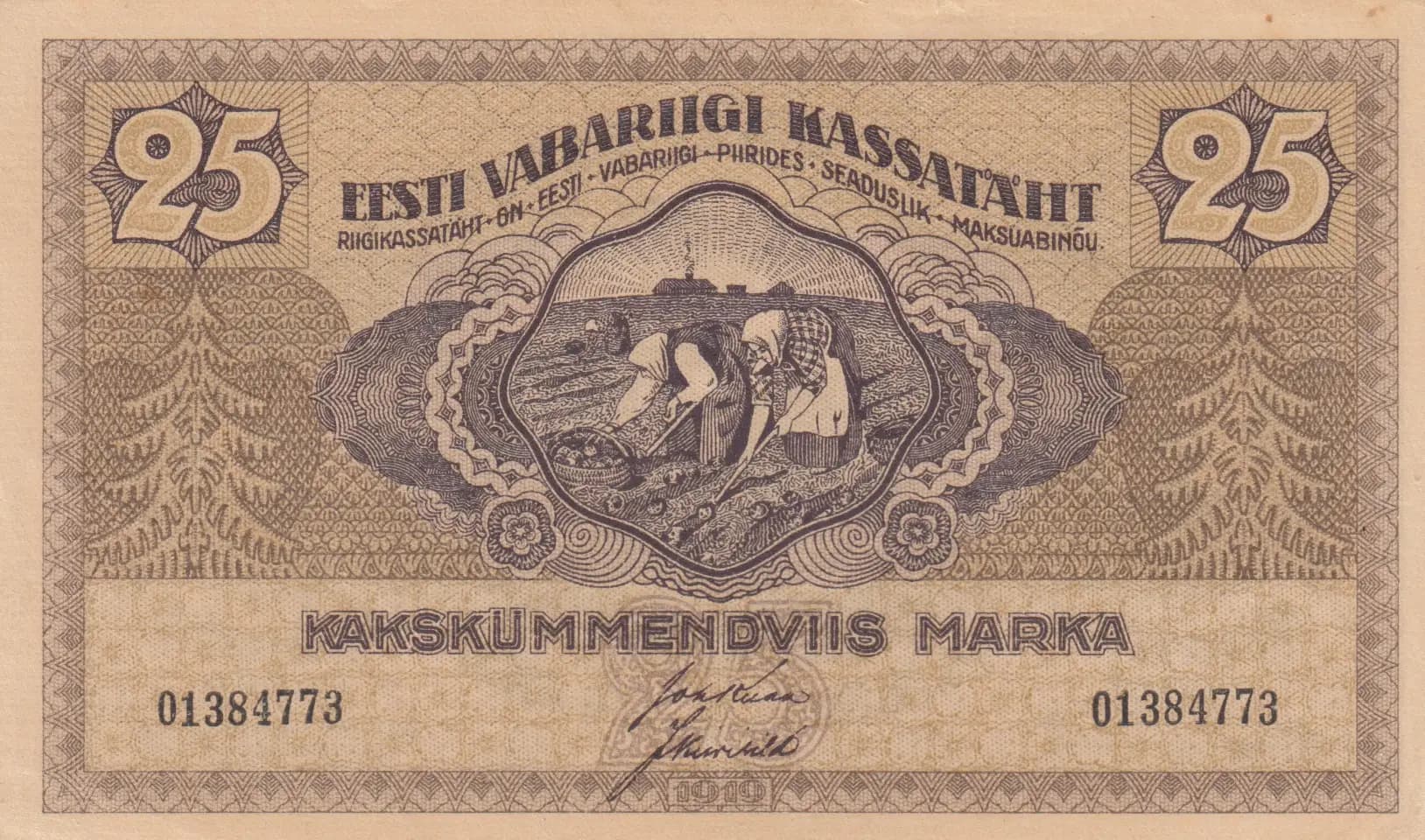
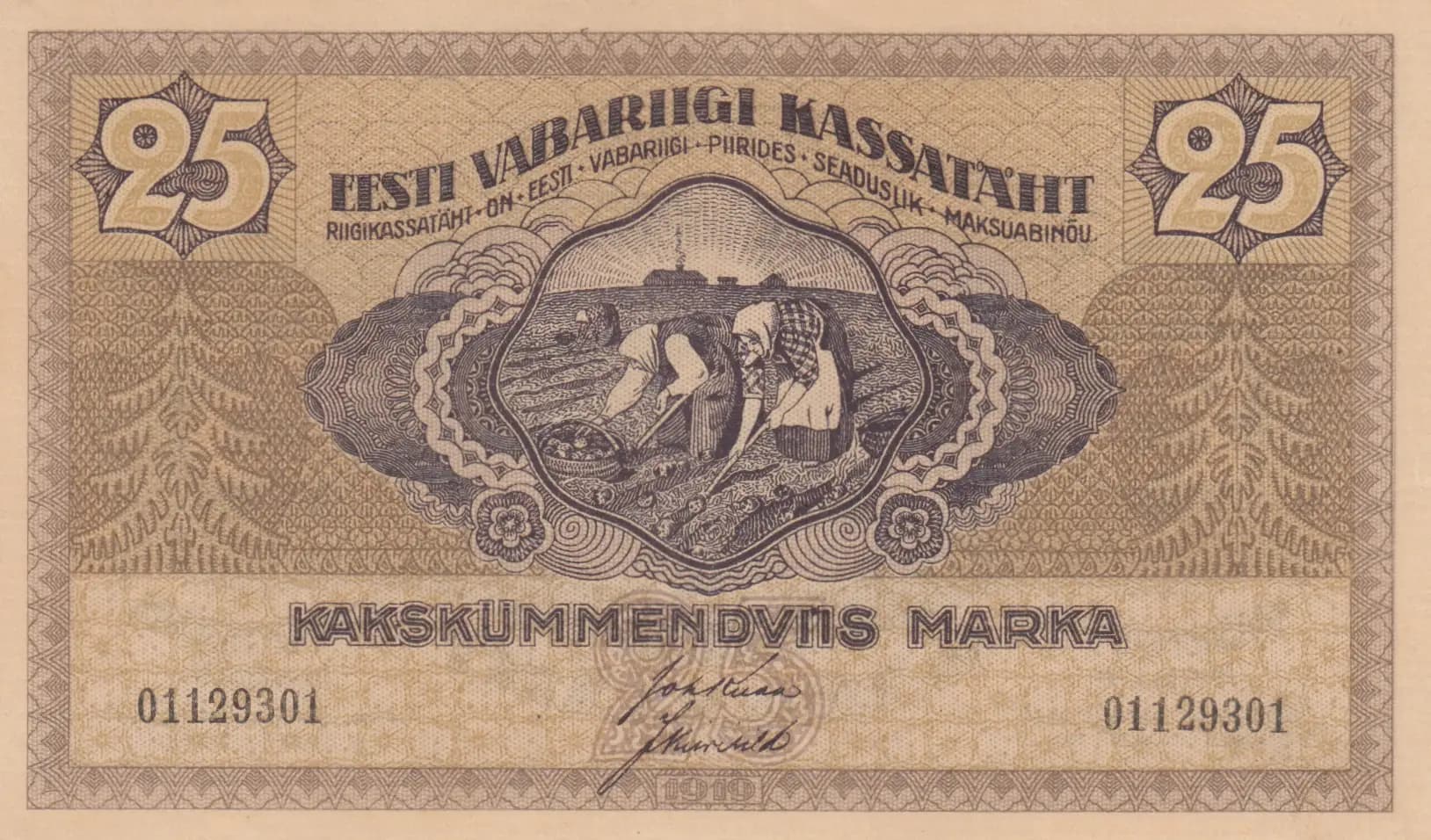
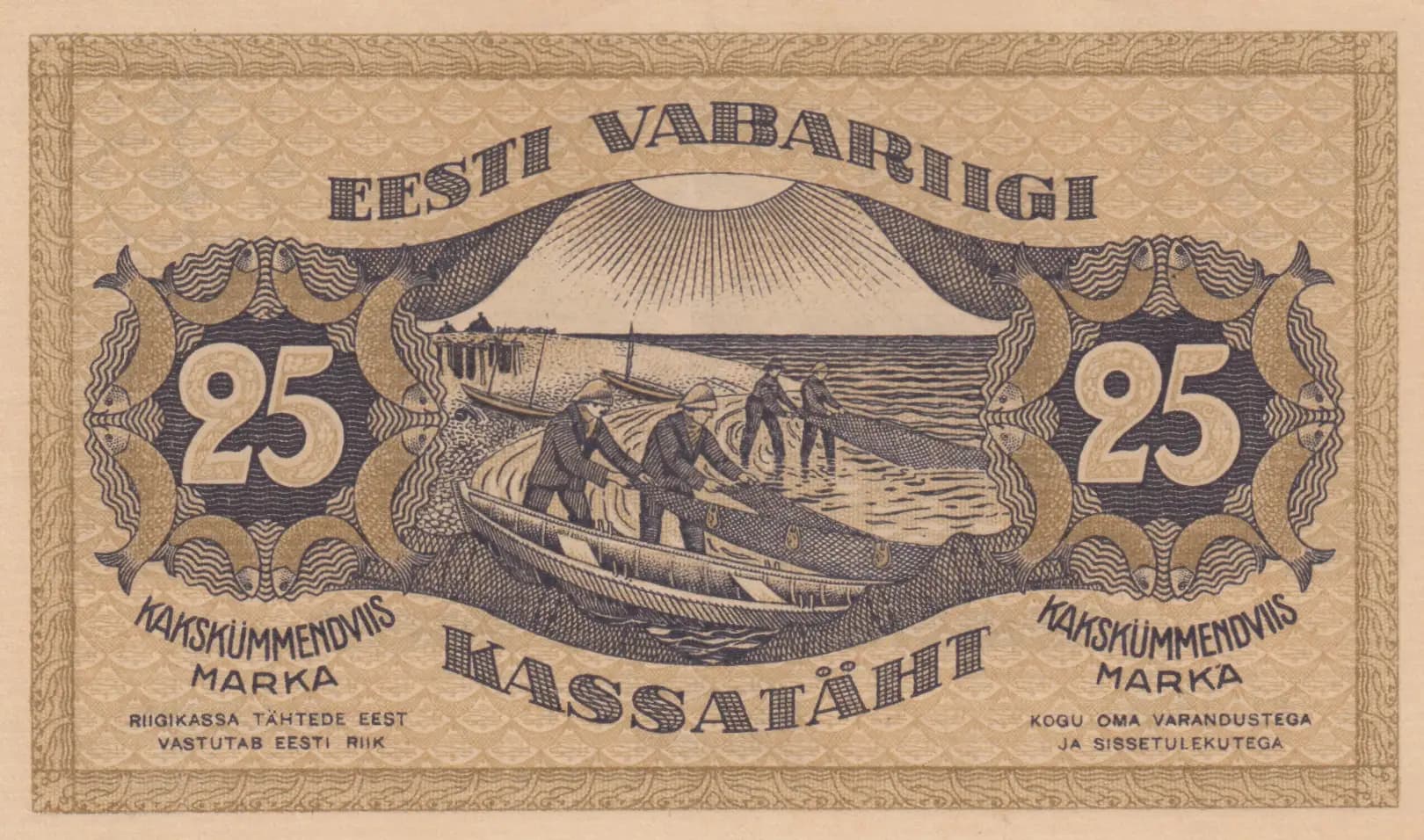
This 1919 Estonian Treasury Note (25 Marka, Pick P-47b) presents an exceptional uncirculated example featuring dual thematic vignettes celebrating the newly independent Estonian nation's economic foundations. The front depicts traditional agricultural labor with a woman in folk dress working in a harvest scene, while the reverse showcases a fishing scene with three men in a boat—together symbolizing Estonia's rural and maritime heritage. The note exhibits pristine condition with no visible circulation wear, sharp engraving detail, and period-appropriate aging in its beige and brown coloration, making it a desirable specimen for collectors of early Estonian currency.
Common. The eBay market data provided shows regular sales activity with prices ranging from $13.50 to $25.60 for lower grades (VG-F) in recent years, and 2016 catalog values of $200 for UNC specimens. This pricing pattern—while respectable—indicates steady collector demand without scarcity premium. Early Estonian Treasury Notes were issued in sufficient quantities during 1919, and P-47b does not appear in historical records as a short-run or recalled variety. The note's common status is typical for regular-issue denominations from functioning central banks, even early ones.
Issued in 1919 during Estonia's declaration of independence from the Russian Empire, this note represents the Treasury of the newly formed Eesti Vabariik (Estonian Republic) asserting monetary sovereignty. The deliberate choice of imagery—depicting fieldwork and fishing—reflects the economic priorities and cultural identity of a nation rebuilding itself as an agrarian and maritime society. These vignettes serve as nationalistic symbols, celebrating the labor and resources that would sustain the young republic during its formative years.
This note features allegorical representations of Estonia's economic sectors rendered in classical engraving style. The obverse presents a woman in traditional Estonian folk costume (headscarf and period dress) depicted in profile, engaged in agricultural work in a rural landscape with farm buildings visible in the background—representing the nation's agricultural foundation. The reverse depicts three fishermen in a working boat on water, with a rising or setting sun and a distant sailing vessel on the horizon, symbolizing maritime commerce and fishing industries. Both sides employ ornate Baroque-inspired decorative borders featuring geometric diamond and wave patterns, with the denomination '25' presented in elaborate oval frames at left and right. The overall design expresses national pride through labor and natural resources, with fine engraved line work creating textural depth throughout.
FRONT SIDE: 'EESTI VABARIIGI KASSASAHT' (Estonian Republic Treasury Note); 'RIIGIKASSATÄHT · ON · EESTI · VABARIIGI · PURIDES · SEADUSTIK · MAKSUABINDU' (State Treasury Note according to Estonian Republic laws regarding taxation); 'KAKSKUMMENDVIIS MARKA' (Twenty-five Marka); Serial number '01129301' with year '1919'. BACK SIDE: 'EESTI VABARIIGI' (Estonian Republic); 'KASSASAHT' (Treasury Note); 'KAKSKUMMENDVIIS MARKA' (Twenty-five Marka); 'RIIGIKASSA TÄHTEDE EEST VASTUTAB EESTI RIIK' (The Estonian State is responsible for these treasury notes); 'KOGU OMA VARANDUSEGA JA SISSETULEKUTEGA' (With all its property and income).
The note was produced using intaglio (line engraving) printing, evidenced by the intricate, finely detailed line work visible throughout both vignettes, the complex geometric border patterns, and the precise rendering of figures and landscape elements. The consistent ink density, sharp detail in architectural and decorative elements, and the tactile quality suggested by the deep engraved lines are characteristic of traditional intaglio bank note production. The printer for Estonian Treasury Notes of this period was typically Reichsdruckerei (German State Printing Office) or similar European security printers, though specific attribution for this variant may require additional research.
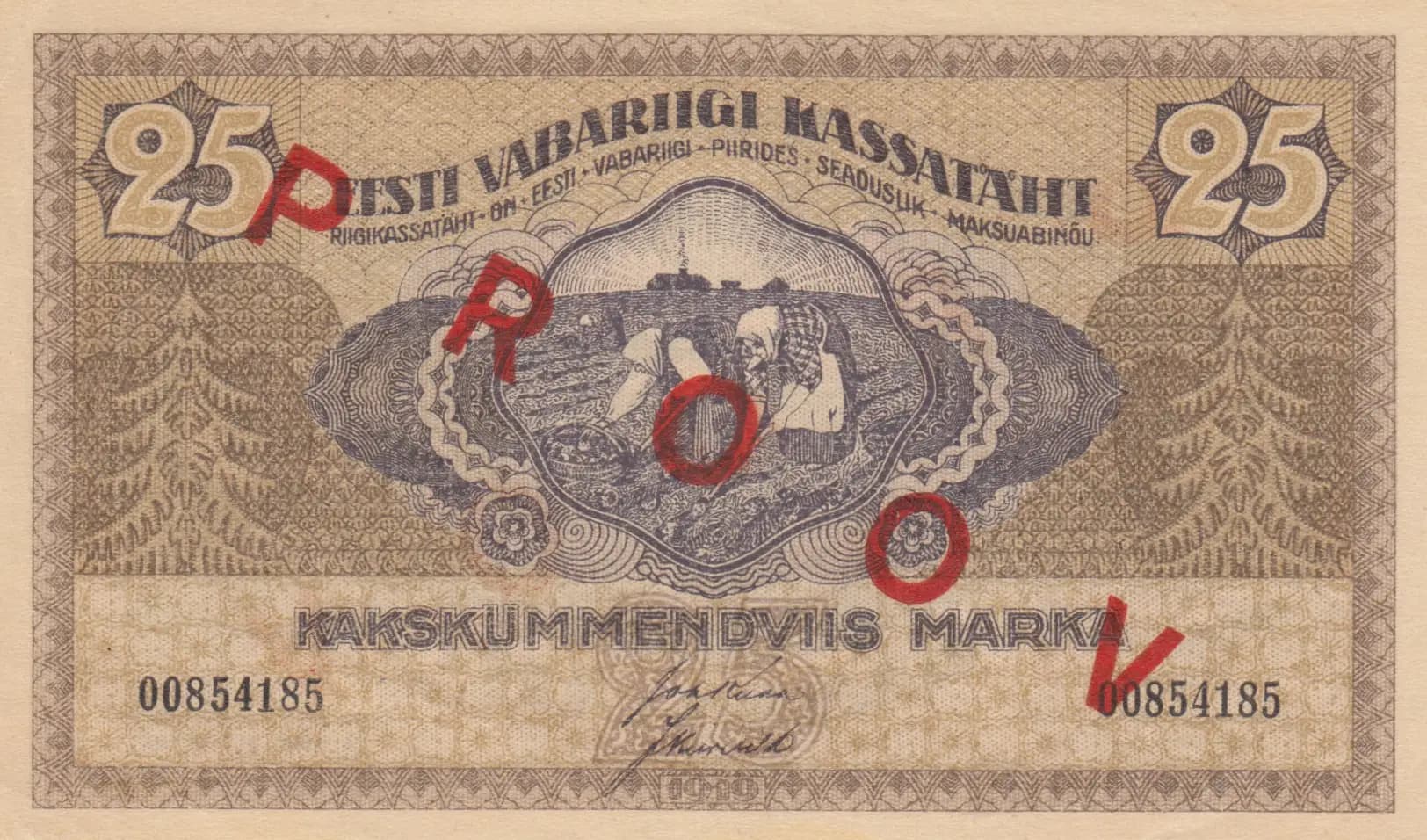
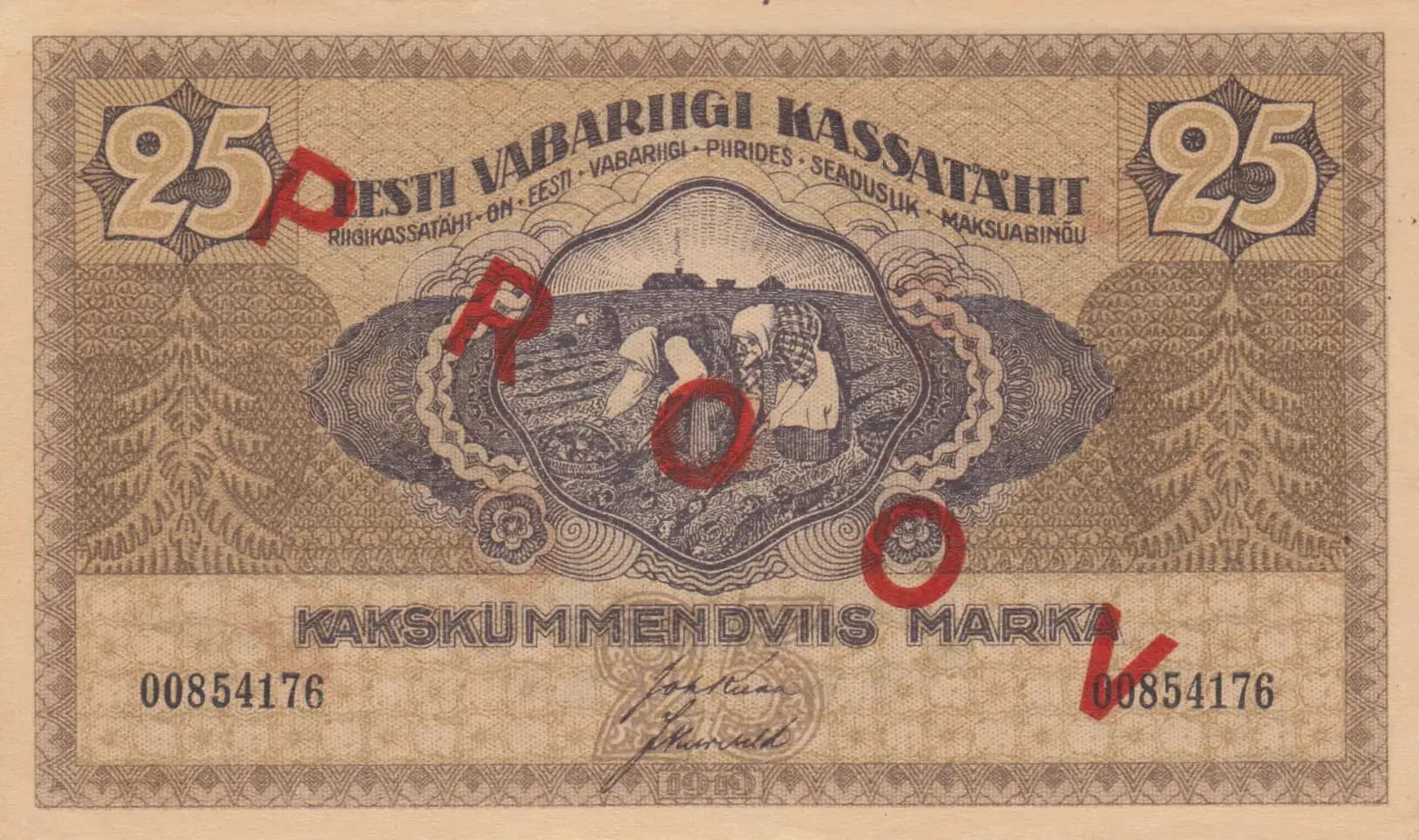
This note is identified as Pick P-47b, one of three cataloged variants for the 25 Marka denomination (P-47a, P-47b, and P-47s also exist). The 's' variant likely indicates a specimen note. Distinguishing features between P-47a and P-47b typically include signature varieties, serial number prefixes, or subtle design modifications, though these details require direct comparison with reference materials. The serial number observed on this specimen (01129301) should be noted for variety determination. No overprints or date variations are visible, consistent with the standard 1919 issue.