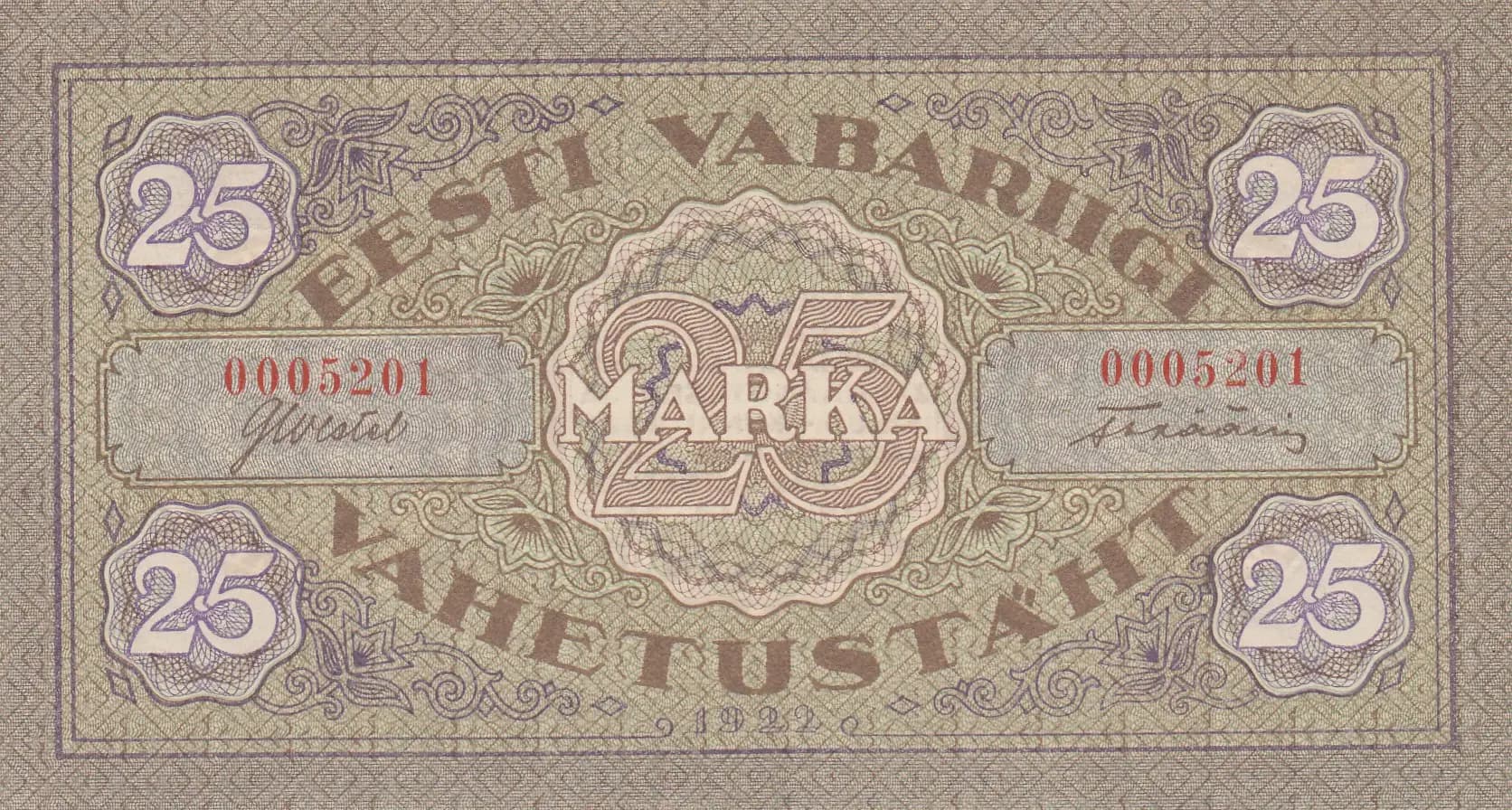
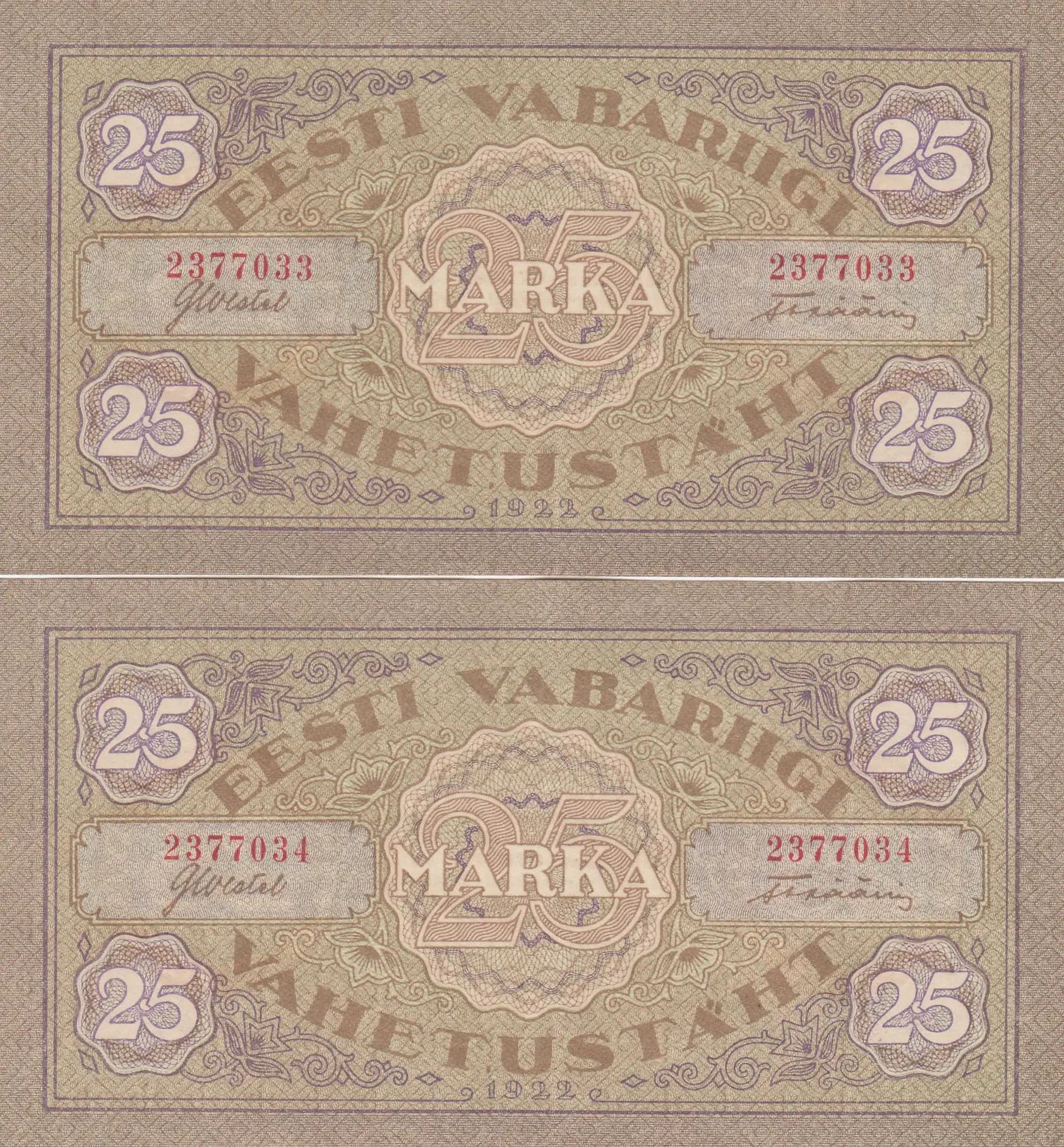
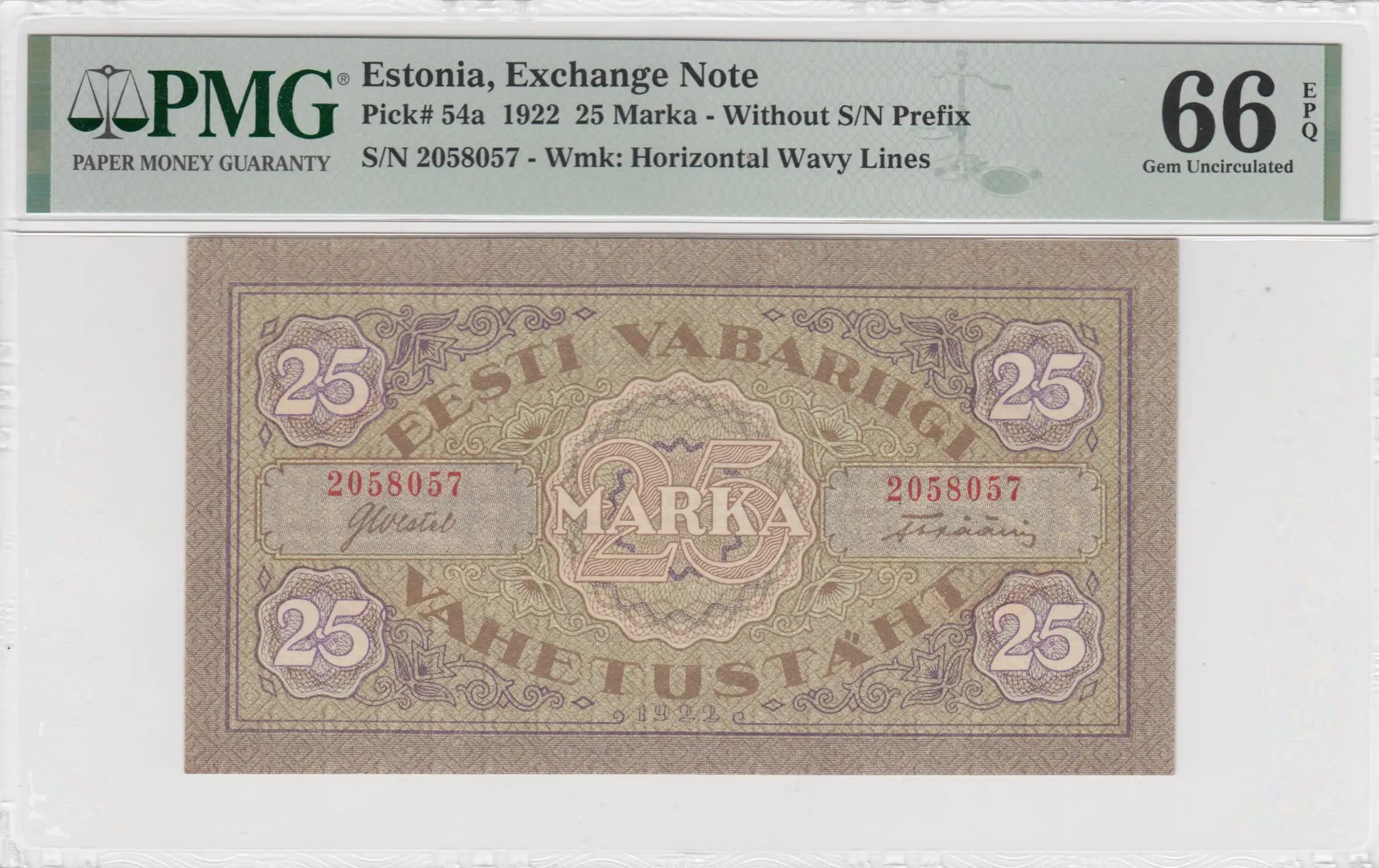
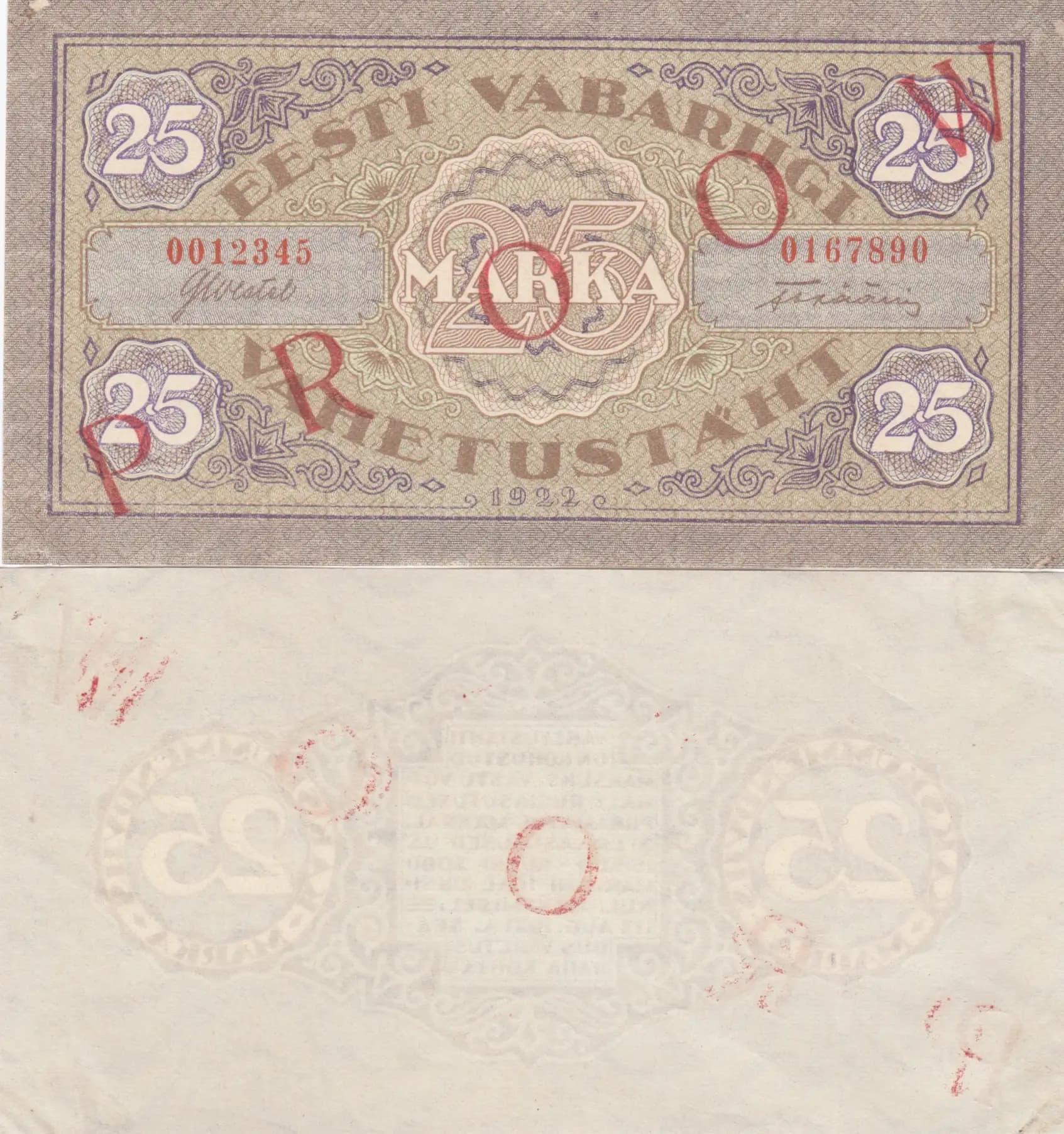
25 marka 1922
“#0000018”
Market Prices
1 saleAbout This Note
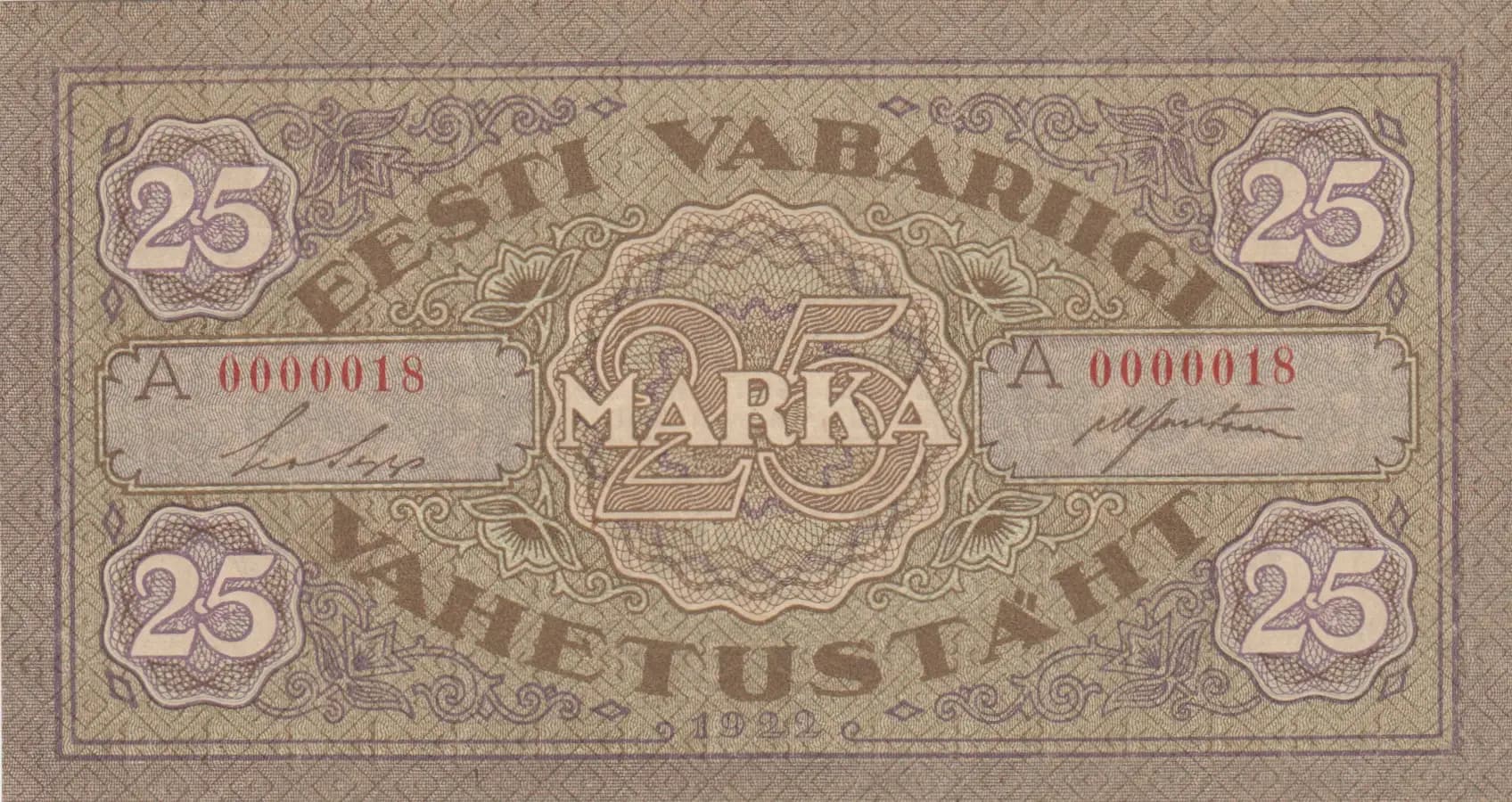
This is a stunning example of Estonia's 25 Marka note from 1922, presented in UNC condition with crisp printing and minimal wear despite nearly a century of age. The note showcases the elegant Art Nouveau-inspired design characteristic of early Estonian currency, featuring intricate ornamental borders, shield-shaped denomination frames, and purple/mauve coloring throughout. The serial number A 0000018 indicates an exceptionally low numbering, making this an attractive specimen for collectors of early Estonian numismatics.
Common. The 25 Marka denomination was a standard circulation note during Estonia's early independence period, and substantial quantities were produced. While all notes from this era show age-related wear, UNC examples like this one are not exceptionally scarce. The low serial number (A 0000018) may have modest collector appeal but does not significantly affect rarity assessment. No evidence suggests limited production runs, recall, or special circumstances that would elevate this to rare status.
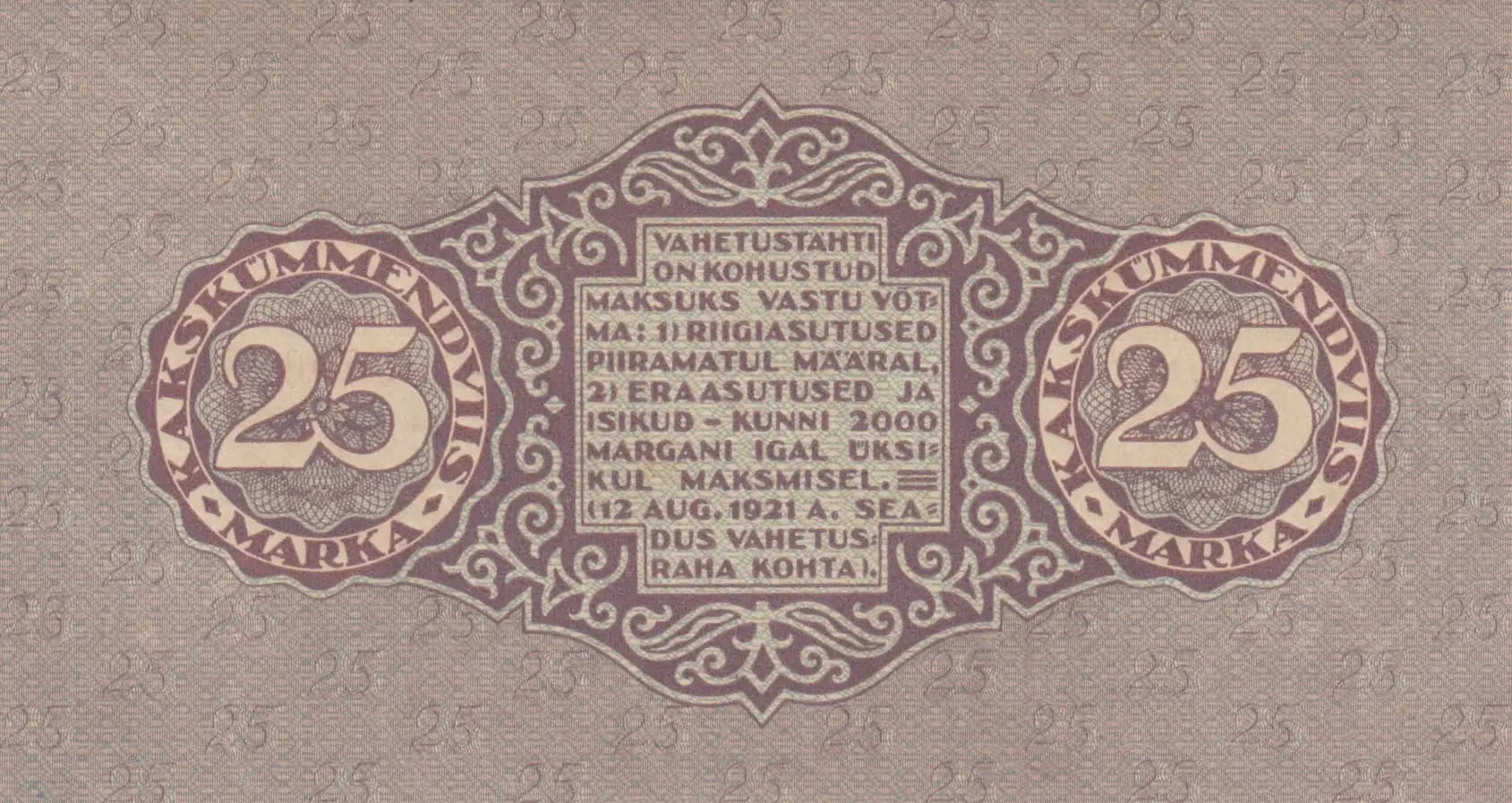
The 25 Marka denomination was issued by the Treasury of Estonia during the nation's early independence period following the 1918 declaration of independence from Russia. The inscription 'EESTI VABARIIK' (Estonian Republic) prominently displayed across both sides reflects the newly formed nation's assertion of sovereignty. The legal text on the obverse referencing the August 1921 exchange law demonstrates how Estonia's currency was tied to specific monetary regulations governing the young republic's financial system during a period of economic consolidation.
This banknote exemplifies the classical European banknote design tradition of the early 1920s with a symmetrical layout and ornamental complexity. The design features no portrait, reflecting Estonia's choice to emphasize state symbols and decorative elements rather than depicting individuals. The primary decorative elements include elaborate scrollwork and floral motifs rendered in fine line engraving, shield-shaped cartouches containing the denomination in all four corners, and a central ornamental frame housing the legal text on the obverse and the denomination text on the reverse. The color scheme of purple/mauve, tan, and cream creates visual hierarchy and aids in security. The fine line patterns and intricate engraving throughout serve as the primary anti-counterfeiting measures, typical of the period.
FRONT SIDE: '25 MARKA' - Twenty-five Marka (denomination). 'RAHVUSVALIT' - National [Bank]. Central legal text translates as: 'The National [Bank] is obliged to exchange [this note] at maximum without limit. 2) Private institutions and individuals - until 2000 marka per transaction per day of payment. (112 Aug. 1921 A. Law on exchange rate [determination].' BACK SIDE: 'EESTI VABARIIK' - Estonian Republic. '25' and 'MARKA' - Denomination markings in the four corner shield frames. 'A 0000018' - Serial number.
This note was produced using intaglio printing (also called line engraving), the standard security printing method for banknotes in 1922. The crisp, clear impression visible in the images and the fine line patterns characteristic of intaglio engraving are evident throughout. The printer for Estonian banknotes of this period was typically a European security printer, with many early Estonian notes produced by established firms such as Waterlow & Sons or similar institutions, though the specific printer attribution for Pick 54c requires confirmation from Estonian numismatic references.
The observed serial number prefix 'A' with numbering '0000018' represents an early printing from the series. The note is cataloged as Pick 54c, indicating it is the third variety of this denomination. Varieties of the 1922 25 Marka typically relate to signature combinations, serial number prefixes, and printing dates. The presence of handwritten signatures on both the obverse and reverse is consistent with the period's banknote authorization practices. Further variety identification would require comparison with other known examples to determine if this represents a specific signature variety or serial prefix variety documented in detailed Estonian numismatic catalogs.