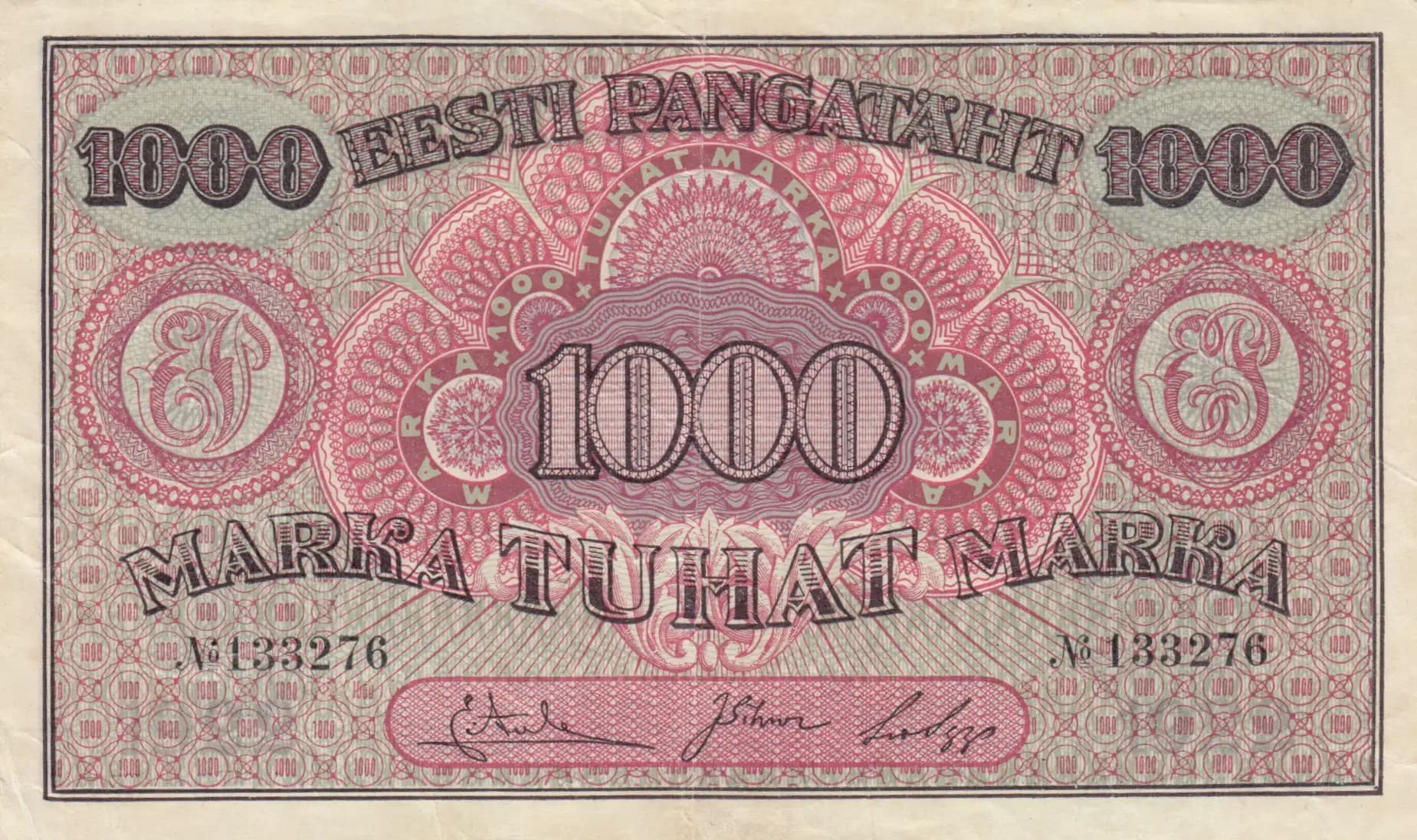
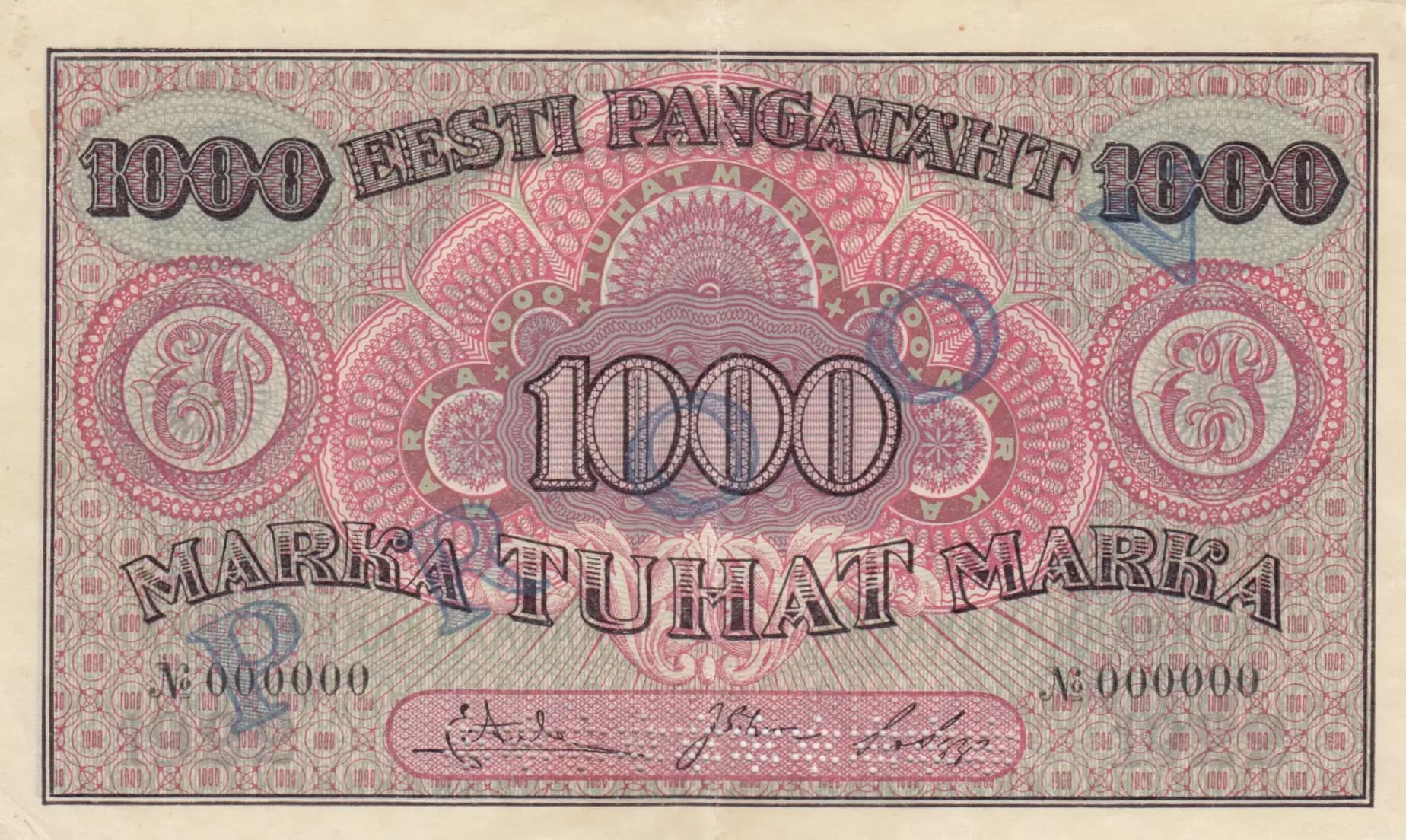
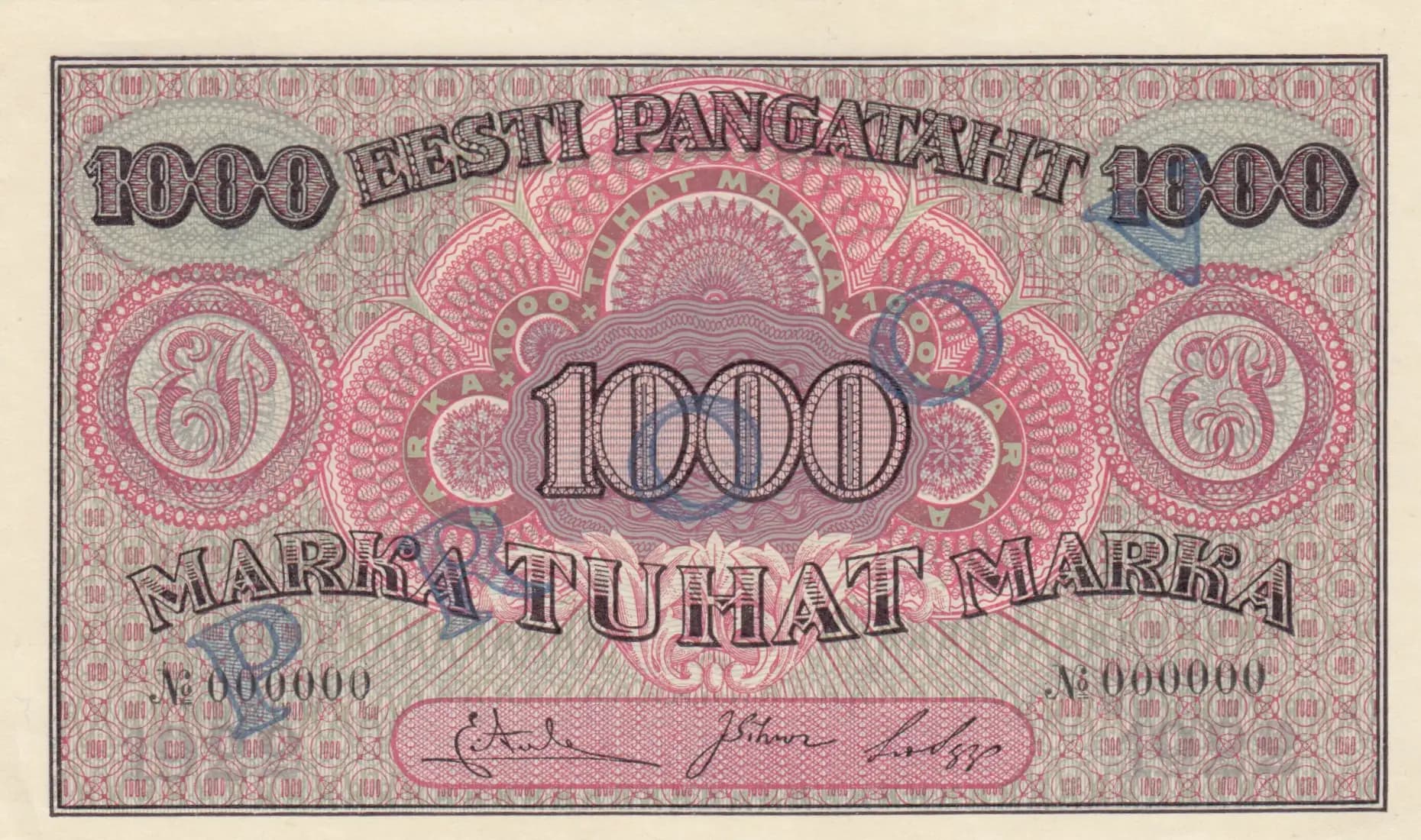
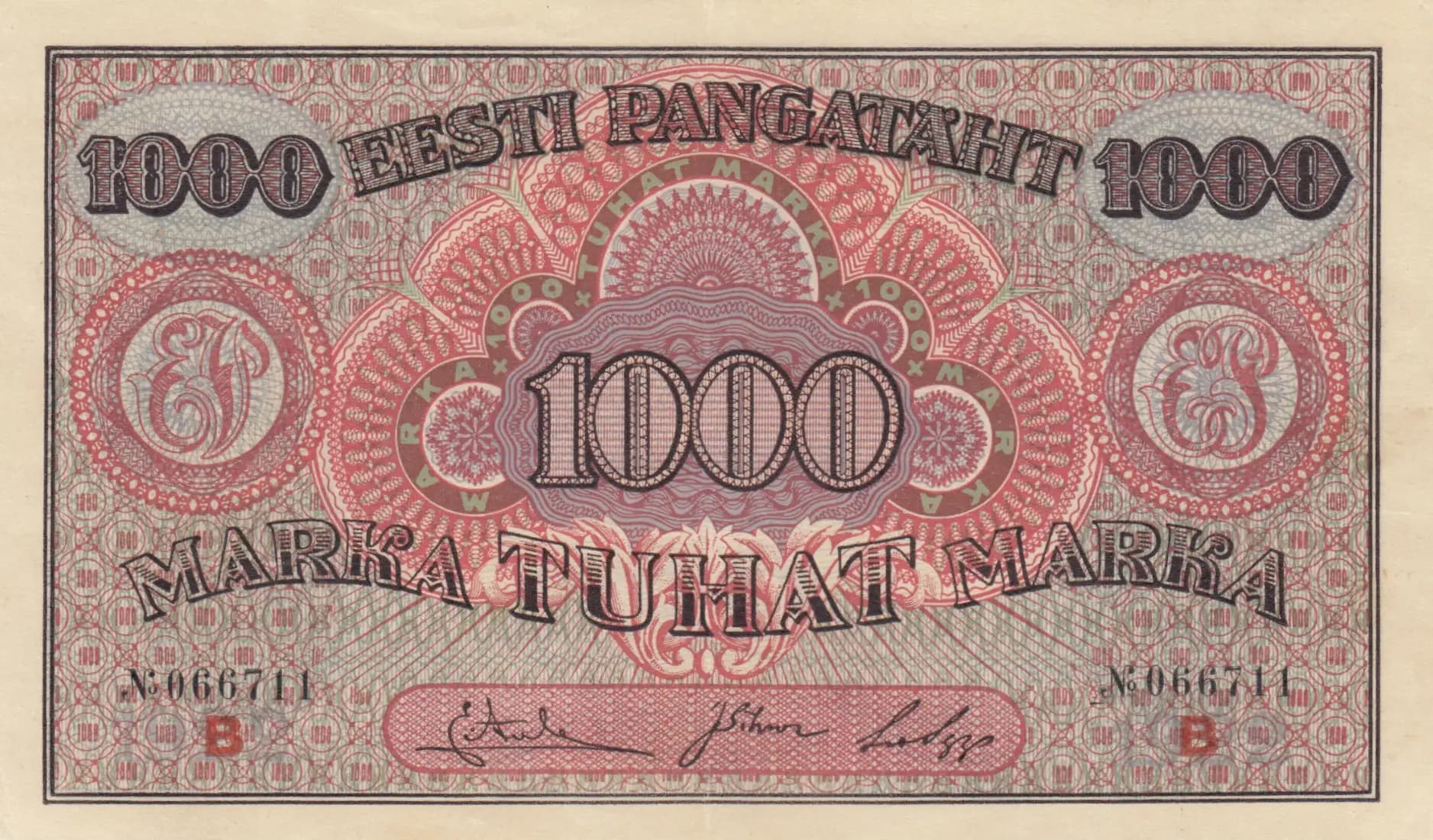
1000 marka 1927 specimen
“serie Aa”
Market Prices
About This Note
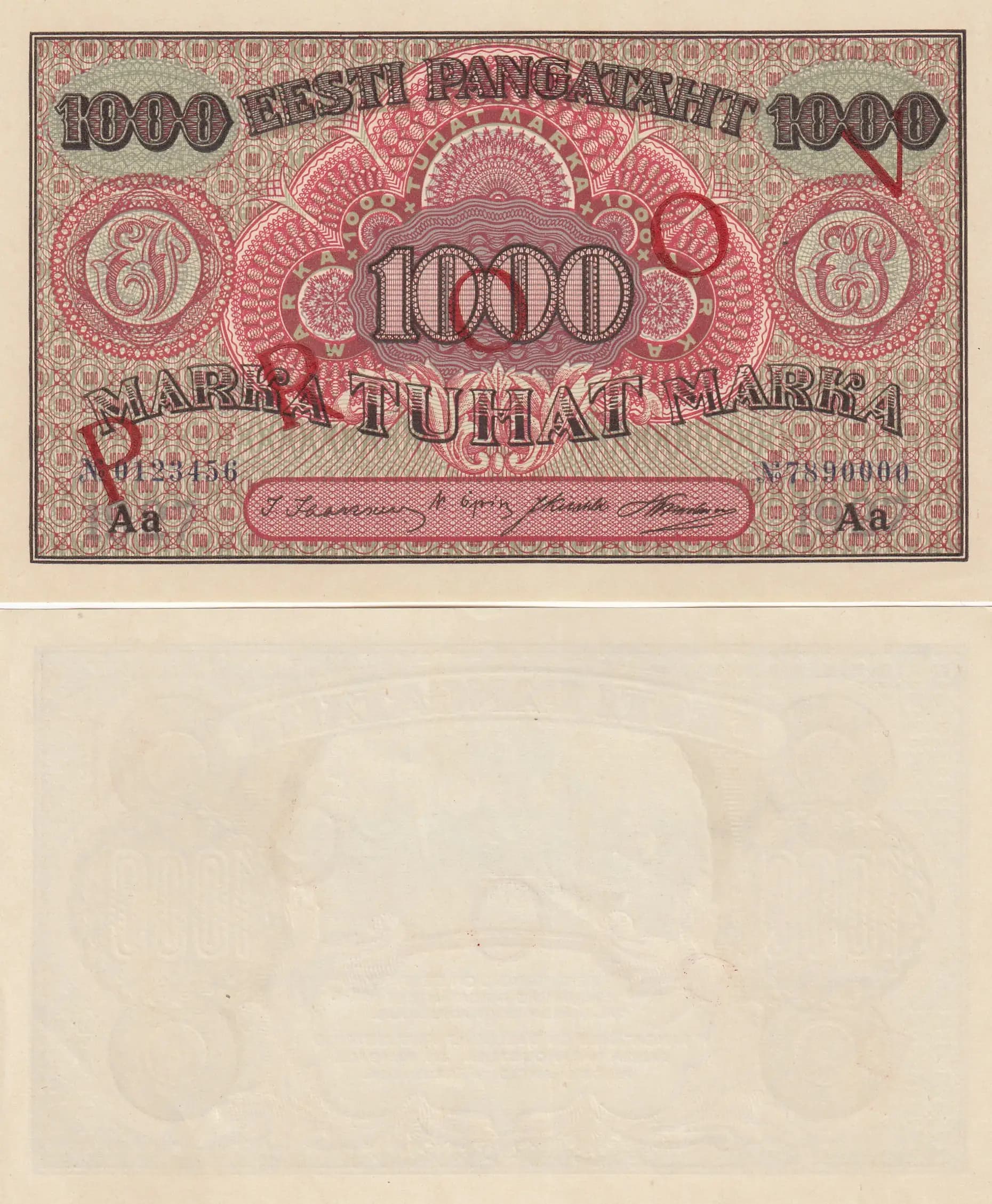
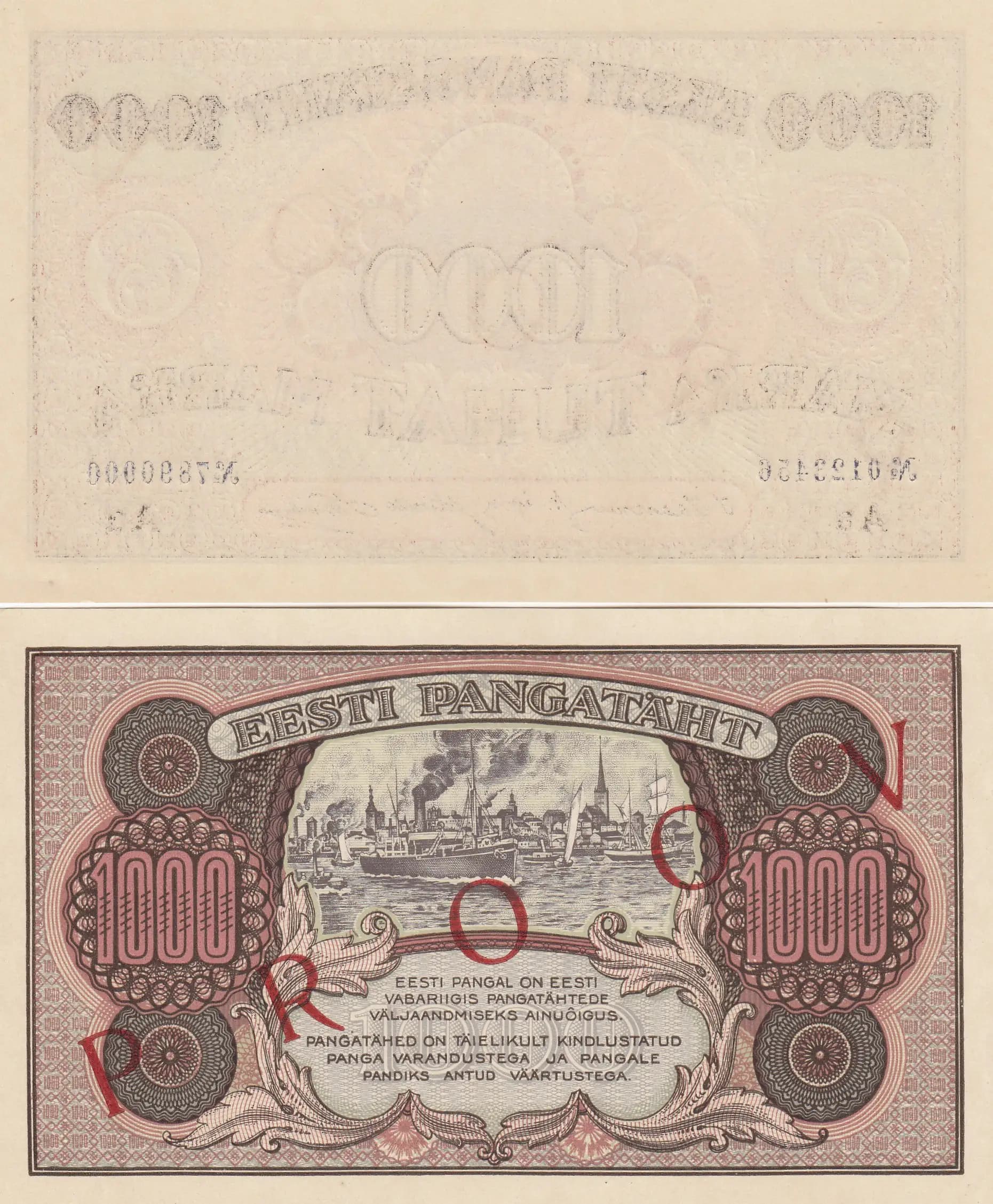
This is a magnificent 1927 Estonian 1000 marka specimen note in pristine uncirculated condition, featuring exquisite Art Deco-influenced design with ornate geometric and floral patterns in pink, beige, and brown tones. The reverse depicts a detailed engraving of a steamship in Tallinn harbor, a powerful symbol of Estonia's maritime commerce during the independence period. As a specimen note from the series Aa, this represents an important piece of early Estonian banking history with exceptional eye appeal and no signs of wear.
Common. While this is a specimen note (indicated by the 'fs' suffix in Pick P-59fs and the pristine presentation condition), the 1000 marka denomination itself was issued in substantial quantities during Estonia's interwar period. The 2016 catalogue value of $1500 for UNC specimens reflects collector demand but not extreme scarcity. eBay market data shows a wide range of prices ($9 to $669), with most circulated examples trading well under $200, indicating these notes remain relatively obtainable despite their historical significance. Specimen notes command premiums over circulation strikes, but they are not exceptionally rare.
The 1000 marka note was issued during Estonia's brief period of independence between World War I and Soviet occupation, with this particular example from 1927 representing the height of the young nation's economic confidence. The prominent depiction of Tallinn's bustling harbor with its steamship reflects Estonia's strategic position as a Baltic trading port and the nation's aspirations for modern commerce. The note's inscription boldly proclaiming the Estonian Bank's sole right to issue banknotes underscores the sovereignty and financial independence that Estonia asserted during this interwar period.
The obverse features an intricate Art Deco design dominated by ornamental cartouches, geometric interlocking patterns, and decorative rosettes in pink and beige with brown accents. The central oval cartouche contains the denomination 1000 in vertical stripes, flanked by circular medallions bearing ornamental designs. The reverse presents the principal vignette: a detailed engraving of a modern steamship with multiple smokestacks anchored in Tallinn harbor, with period waterfront buildings and church spires visible in the background—symbolizing Estonia's role as a Baltic maritime power. The composition is framed by rope-like ornamental borders and decorative scrollwork, with the denomination 1000 appearing in large circular cartouches on either side. The use of multiple vignettes and fine line work throughout demonstrates the sophisticated security printing techniques employed by the Estonian authorities.
Front Side: 'EESTI PANGATÄHT' (Estonian Banknote) arcs across the top; '1000' and 'MARKA' denote the denomination; 'Aa' appears as the series designation. Back Side: 'EESTI PANGATÄHT' (Estonian Banknote) arcs across the top; '1000' appears in large cartouches; The main inscription reads: 'EESTI PANGAL ON EESTI VABARIIGIS PANGATAHTEDE VALJAANDMISEKS AINUOIGUS. PANGATAHED ON TAIELIKULT KINDLUSTATUD PANGA VARANDUSEGA JA PANDIKS ANTUOD VAARTUSTEGG.' which translates to 'The Estonian Bank has the sole right to issue banknotes in the Estonian Republic. Banknotes are fully secured by the Bank's assets and pledged valuables.'
This note was produced using intaglio engraving, evident from the fine line work, detailed shading in the harbor vignette, and the intricate geometric background patterns characteristic of high-security banknote production of the period. The multi-color printing process (utilizing pink, beige, brown, and red tones) suggests the use of multiple printing plates typical of interwar European banknote production. The printer for Estonian banknotes of this era was De la Rue & Company, the London-based security printer, whose hallmark precision is evident in the complex ornamental designs and fine engraving quality observed throughout both sides.
This note is catalogued as P-59fs (the 'fs' indicating it is a specimen note). The visual analysis confirms series Aa designation visible on the obverse. According to PMG population data, variants P-59a, P-59c, and P-59e exist for this denomination, all featuring the same watermark design (light and dark keys). The specimen designation distinguishes this from regular circulation issues and accounts for its exceptional condition and presentation quality. The absence of a serial letter on some variants and the presence of the Aa series marking on this example may indicate a specific printing batch or specimen set.