1000 marka 1922
“serie D”
Market Prices
About This Note
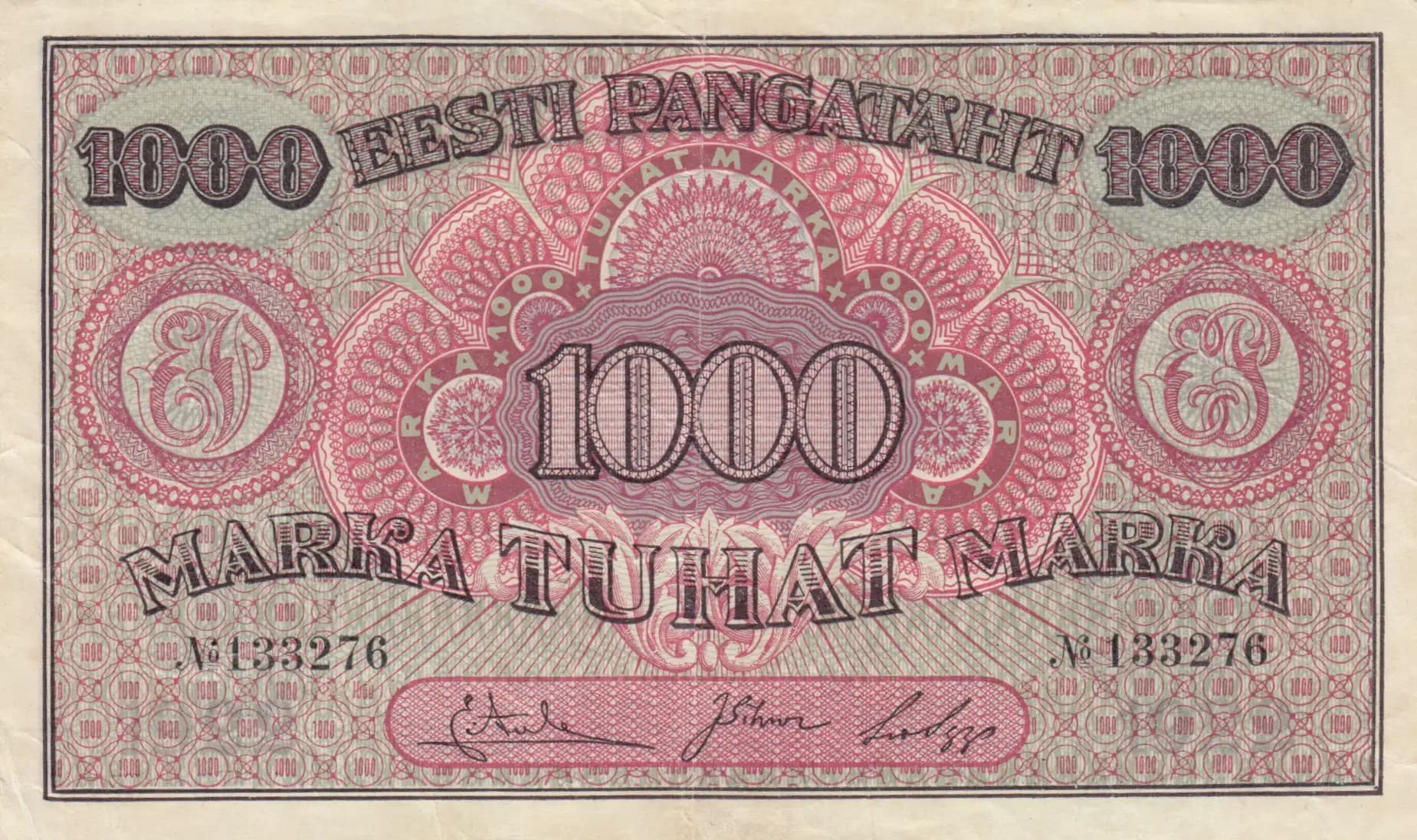
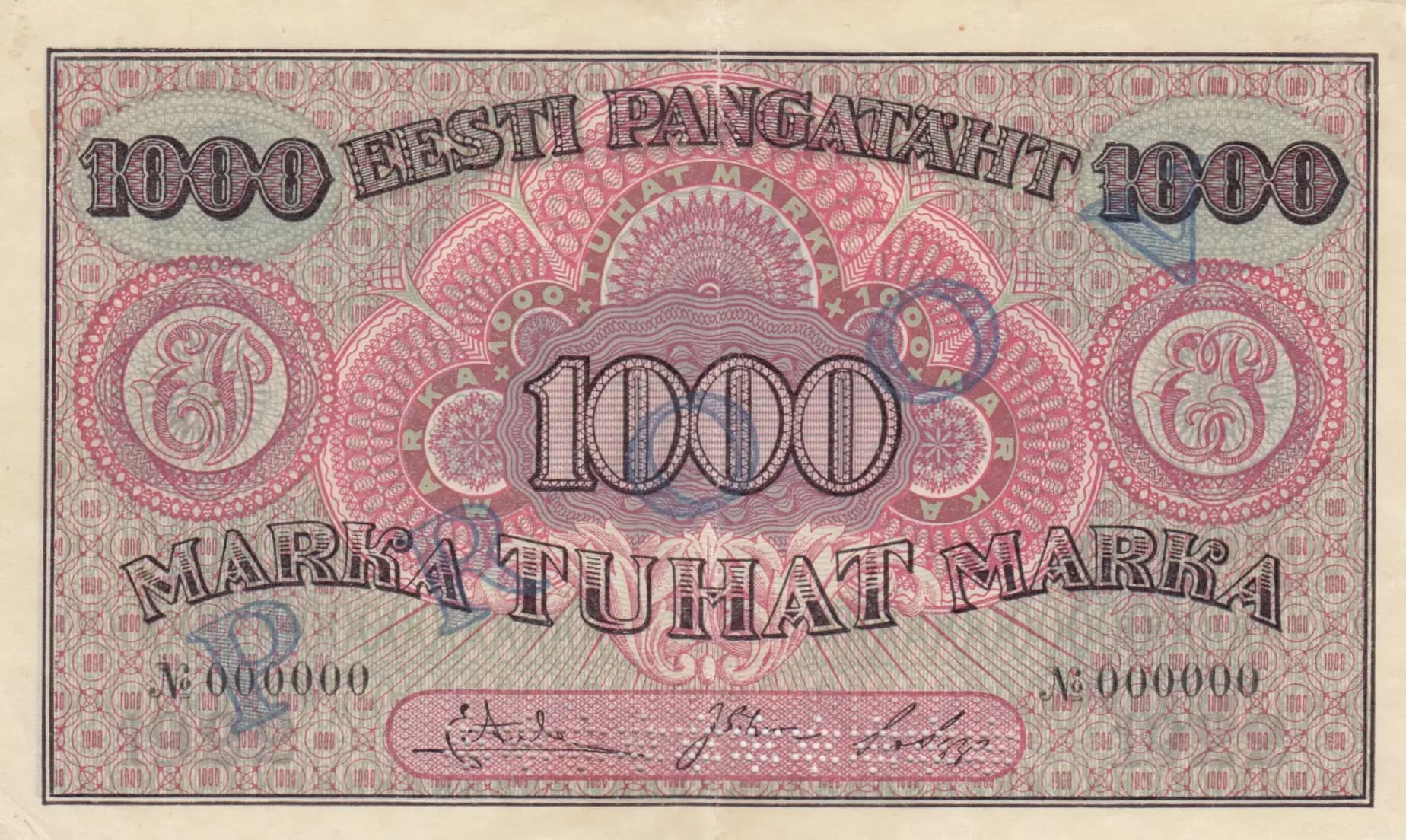
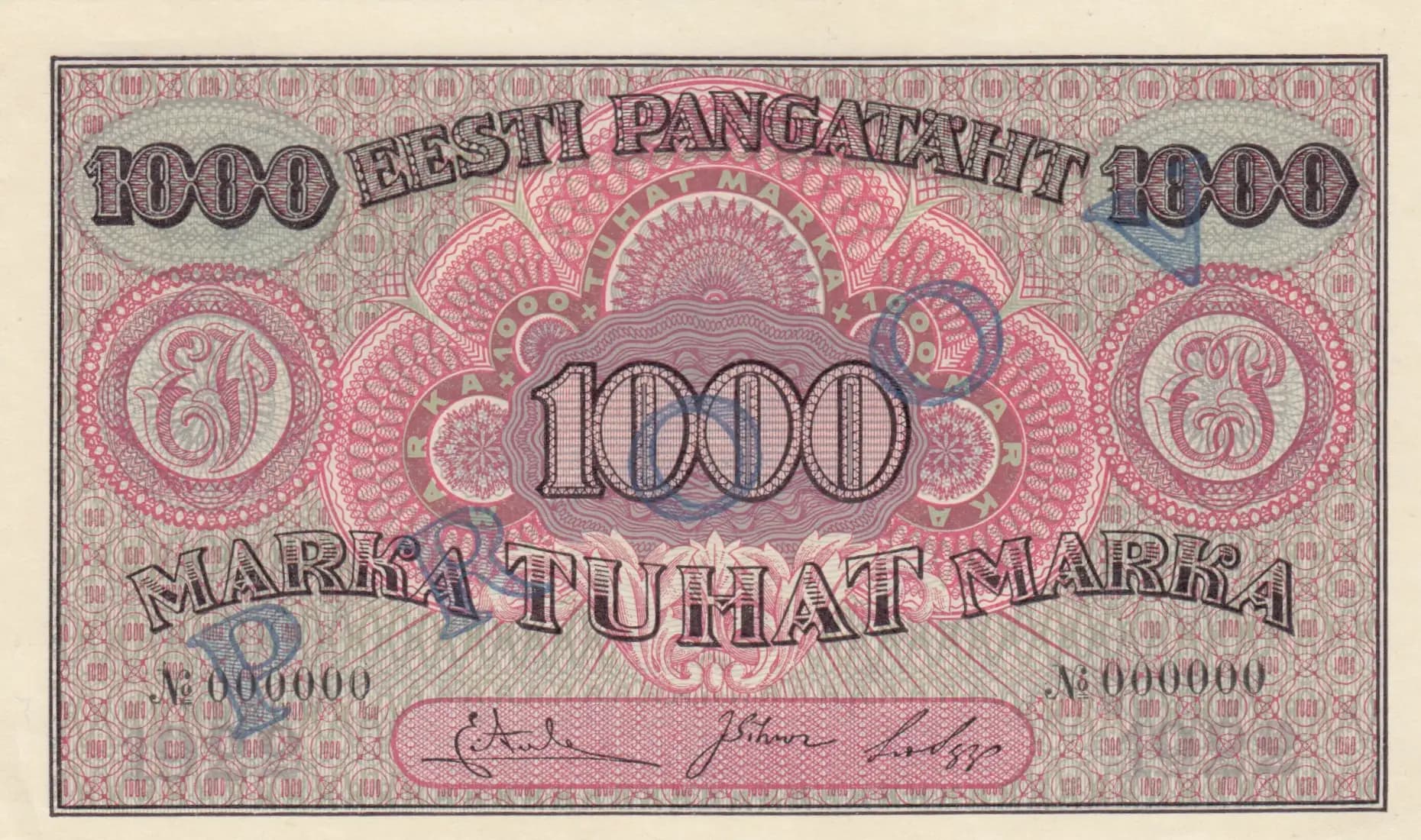
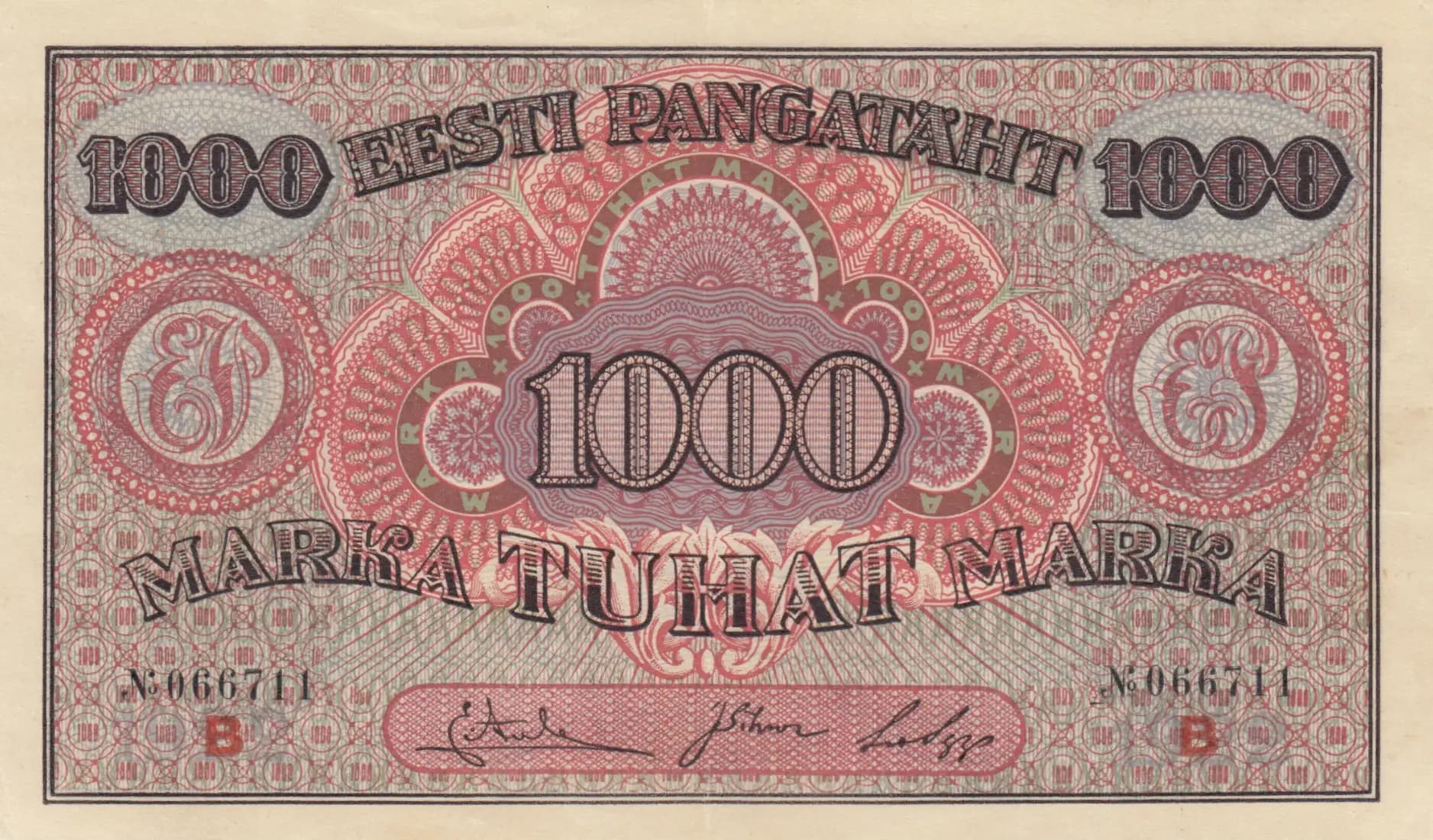
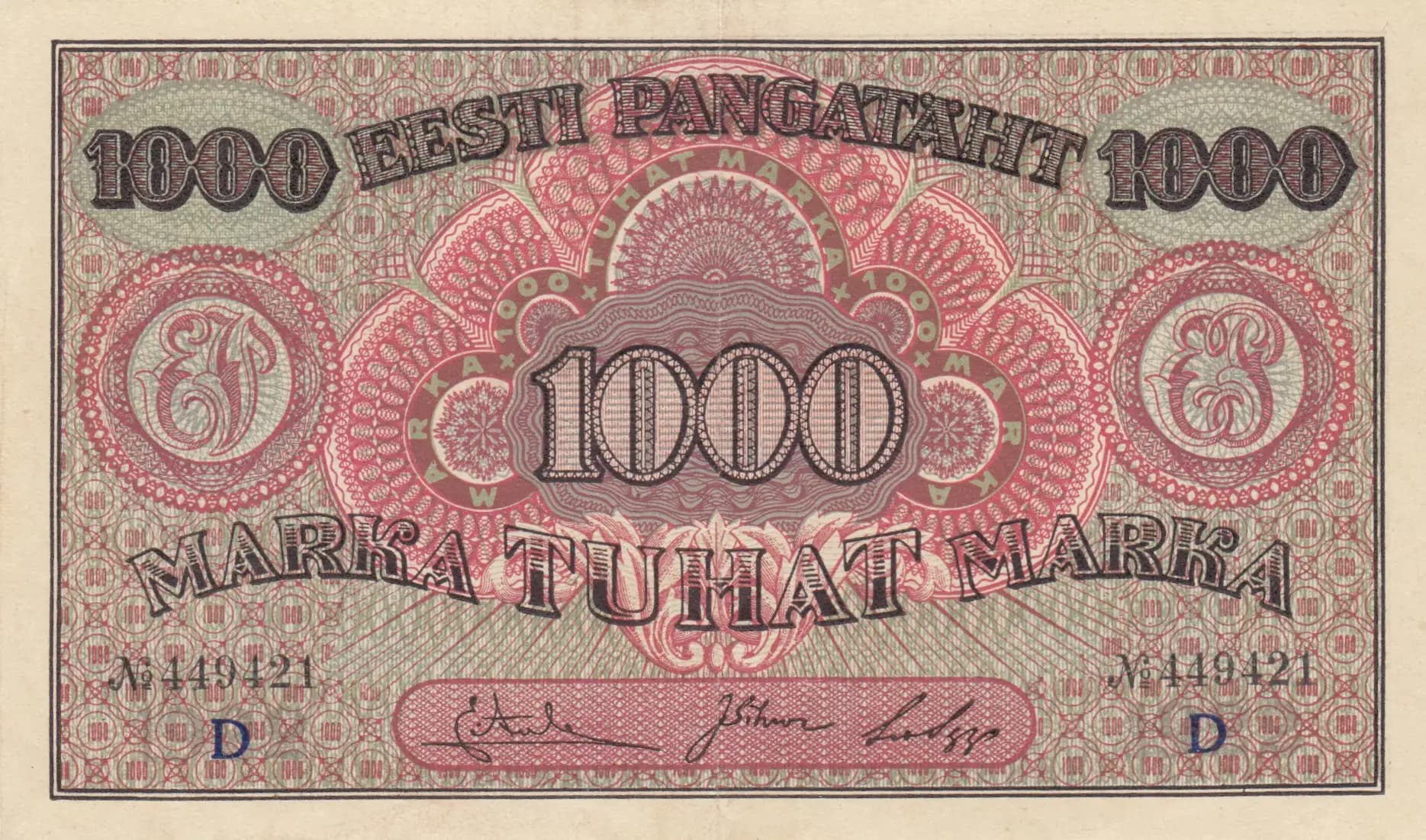
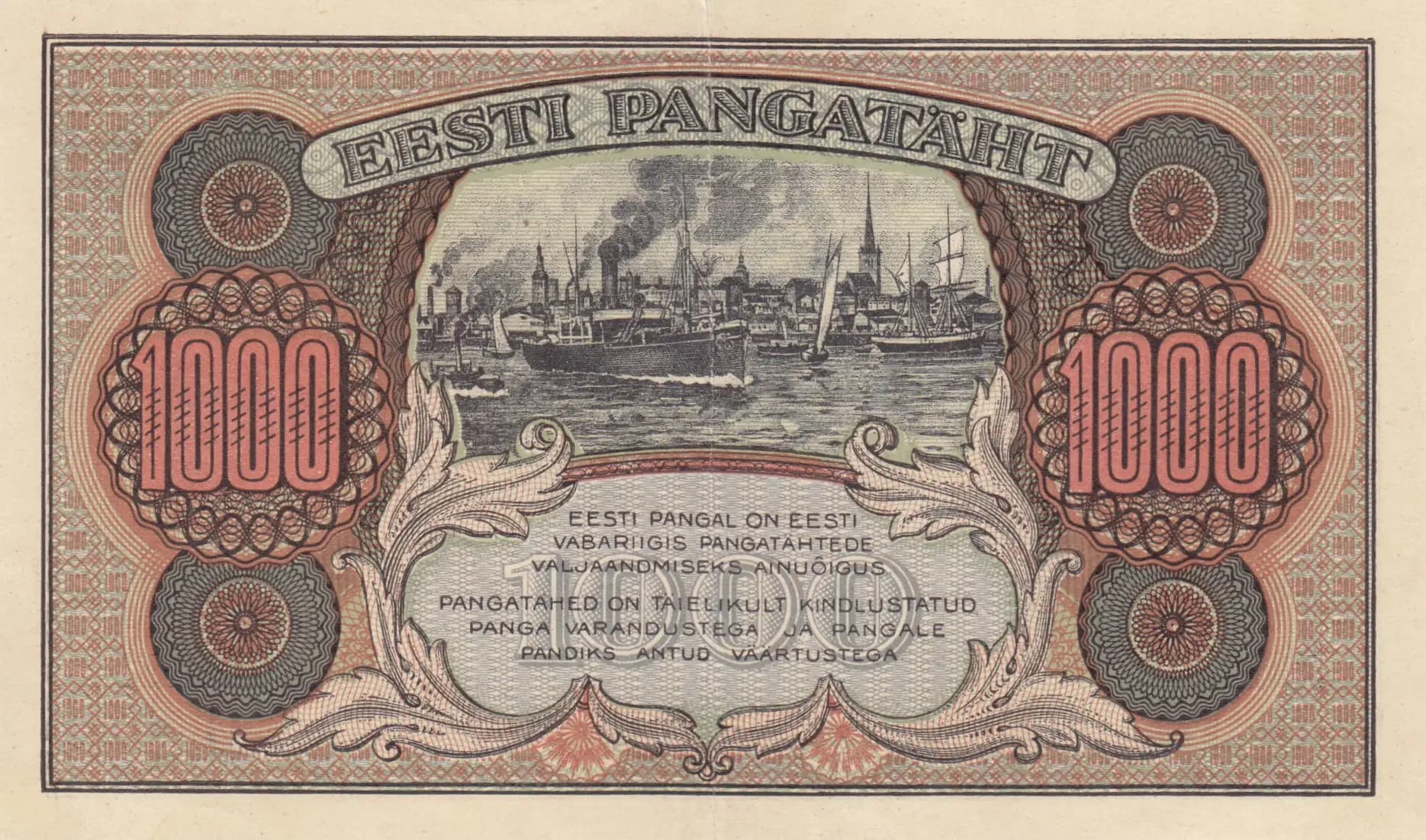
This 1922 Estonian 1000 Marka banknote in excellent (EF) condition represents a fine example of early Estonian independence currency from the Treasury of Estonia's first monetary issue. The note features crisp, uncirculated-quality printing with ornate red, green, and beige decorative elements framing the denomination, and displays the characteristic harbor scene of Tallinn on the reverse—a landmark choice reflecting Estonia's maritime heritage. The Series D designation and well-preserved condition make this a desirable collector piece from a historically significant period.
Common. While this is a historically interesting issue from Estonia's early independence period, the eBay price tracking data shows regular market activity with uncirculated examples fetching $150 USD and circulated grades well under $100, indicating steady availability in the collector market. The 2016 catalog values ($500-$1700 for higher grades) reflect standard pricing for early national issues rather than scarcity premiums. The existence of multiple Pick number variants (P-59a, P-59c, P-59e) suggests substantial print runs across the series. No evidence of restricted mintage, recalls, or extreme rarity factors exists for this specific Pick number.
This 1922 note was issued during Estonia's early years as an independent nation following World War I and the Russian Revolution, when the newly formed Estonian Republic established its own monetary system under the Treasury of Estonia. The harbor scene of Tallinn (historically known as Reval) depicted on the reverse symbolizes the nation's crucial Baltic trade position and maritime identity, while the ornate national iconography reflects Estonia's pride in its newfound sovereignty and cultural independence.
The obverse features a symmetrical design dominated by an ornate circular medallion with radiating fan patterns at center, flanked by decorative circular emblems containing numerals. Large denomination numerals '1000' appear at top left and right, with 'EESTI PANGATÄHT' curving across the top. The background employs intricate geometric lattice patterns in red and green/beige tones with black fine-line engraving. The reverse depicts a detailed engraved harbor scene of Tallinn showing the historic port with multiple sailing vessels, church spires, and waterfront buildings—a direct reference to Tallinn's role as a major Baltic trading center. Large ornate circular frames containing '1000' denominations flank the harbor scene, with decorative radiating sunburst medallions in the corners. The comprehensive legal inscription reinforces the Bank of Estonia's monetary authority.
Front side: 'EESTI PANGATÄHT' (Estonian Banknote), '1000' and 'MARKA' (Mark), 'TUHAT MARKA' (One Thousand Mark), with serial designation 'K 14912' and series letter 'D'. Back side: 'EESTI PANGATÄHT' (Estonian Banknote), '1000' (denomination in ornate frames), and the full legal text: 'EESTI PANGAL ON EESTI VABARIGIS PANGATÄHTEEDE VÄLJAAMNDISEKS AINUOIGUS PANGATÄHED ON TA ELIKULT KINDLUSTATUD PANGA VARANDUSTEEGA JA PANGALE PANDIKS ANTUD VÄÄRTUSTEGA' translates to 'The Bank of Estonia has the exclusive right to issue banknotes in the Estonian Republic. Banknotes are fully secured by the bank's assets and valuables pledged to the bank.'
The note employs intaglio (engraved) printing, evidenced by the fine-line detail work, complex geometric patterns, and three-color printing in red, green, and black. The crisp, sharp impressions visible throughout the design—particularly in the harbor scene and ornamental elements—are characteristic of high-quality engraved banknote production. This represents the standard security printing technique for early 20th-century European banknotes, with the intricate background patterns and detailed architectural engravings serving as anti-counterfeiting measures.
This note is cataloged as Pick P-59e, one of three known variants of the 1000 Marka 1922 issue (also including P-59a and P-59c). All variants share the watermark of light and dark keys. The specimen observed features Series D with serial number K 14912, displayed in blue as noted in the detailed visual analysis. The series letter designation (D) is a key identifier for this particular variety within the P-59e classification.