100 marka 1923/1 kroon 1928 specimen
Market Prices
About This Note
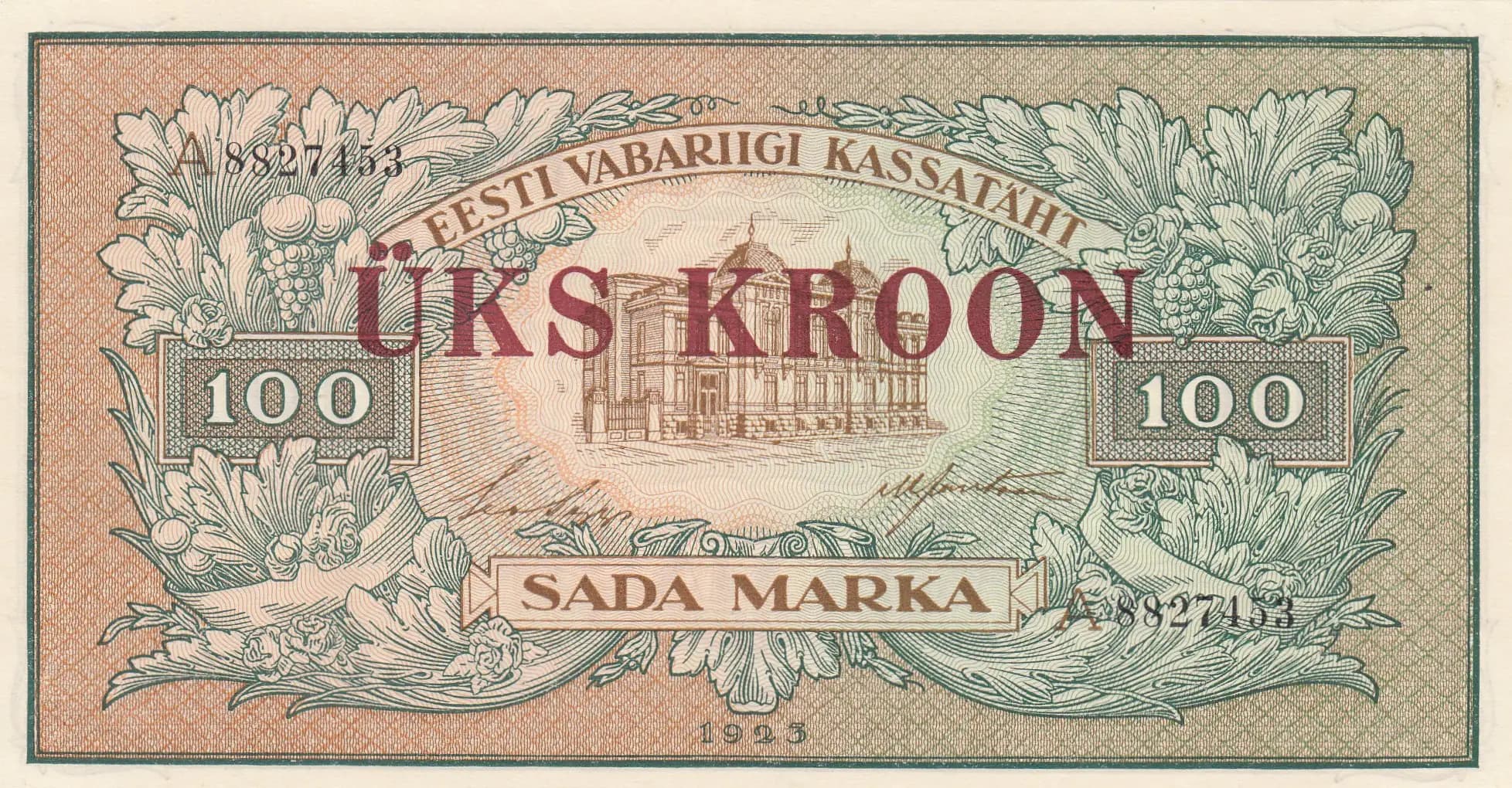
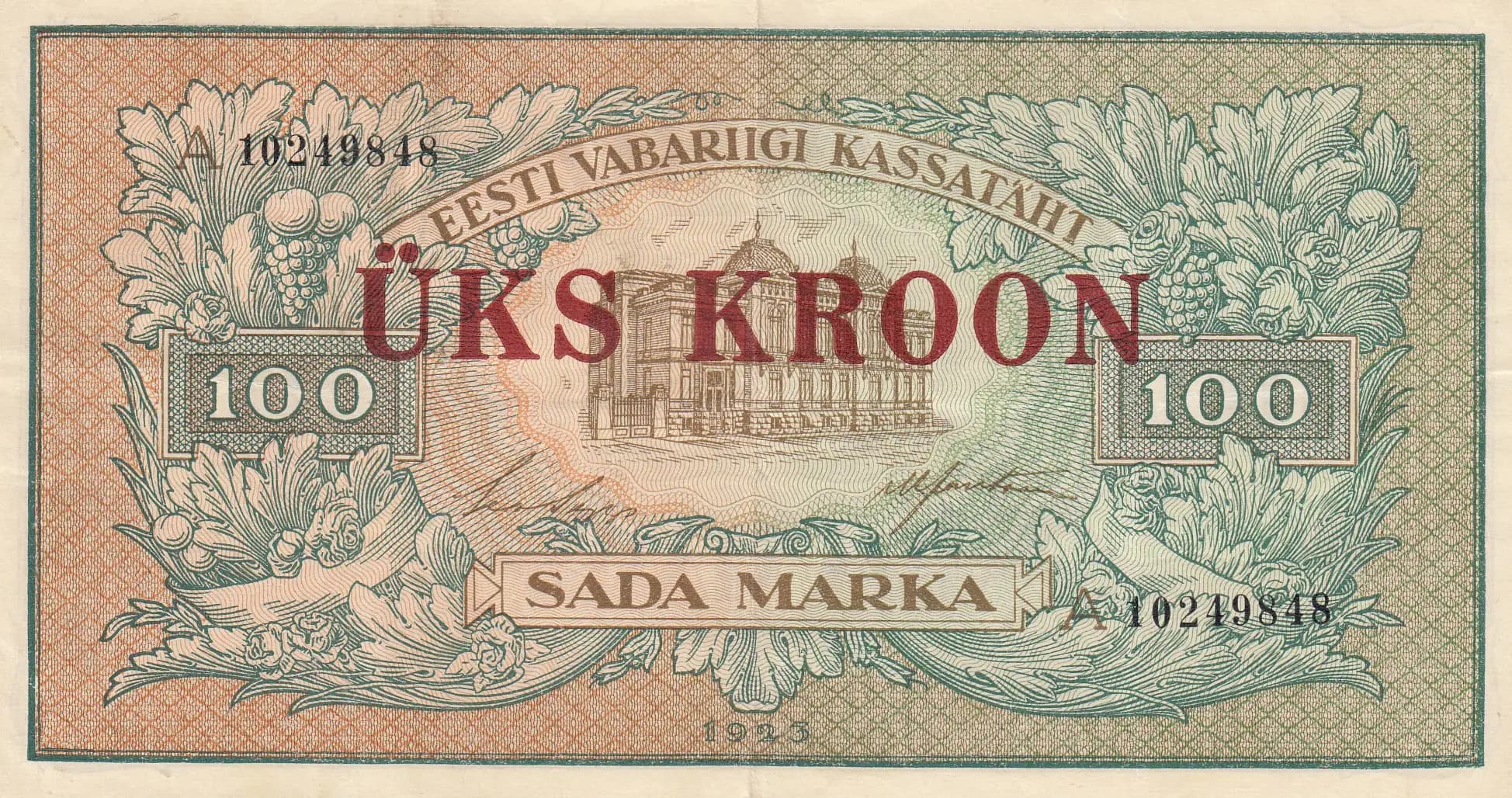
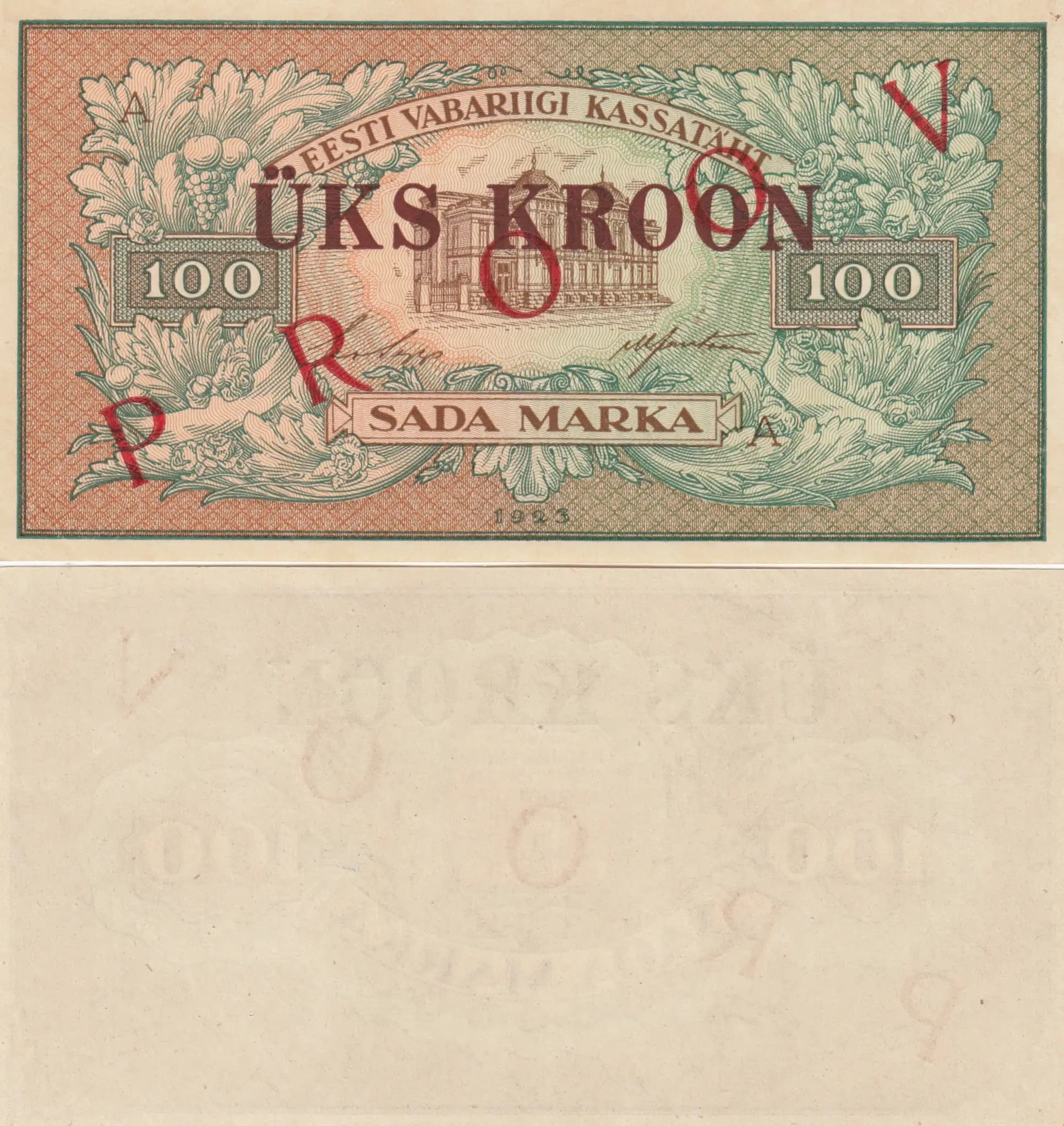
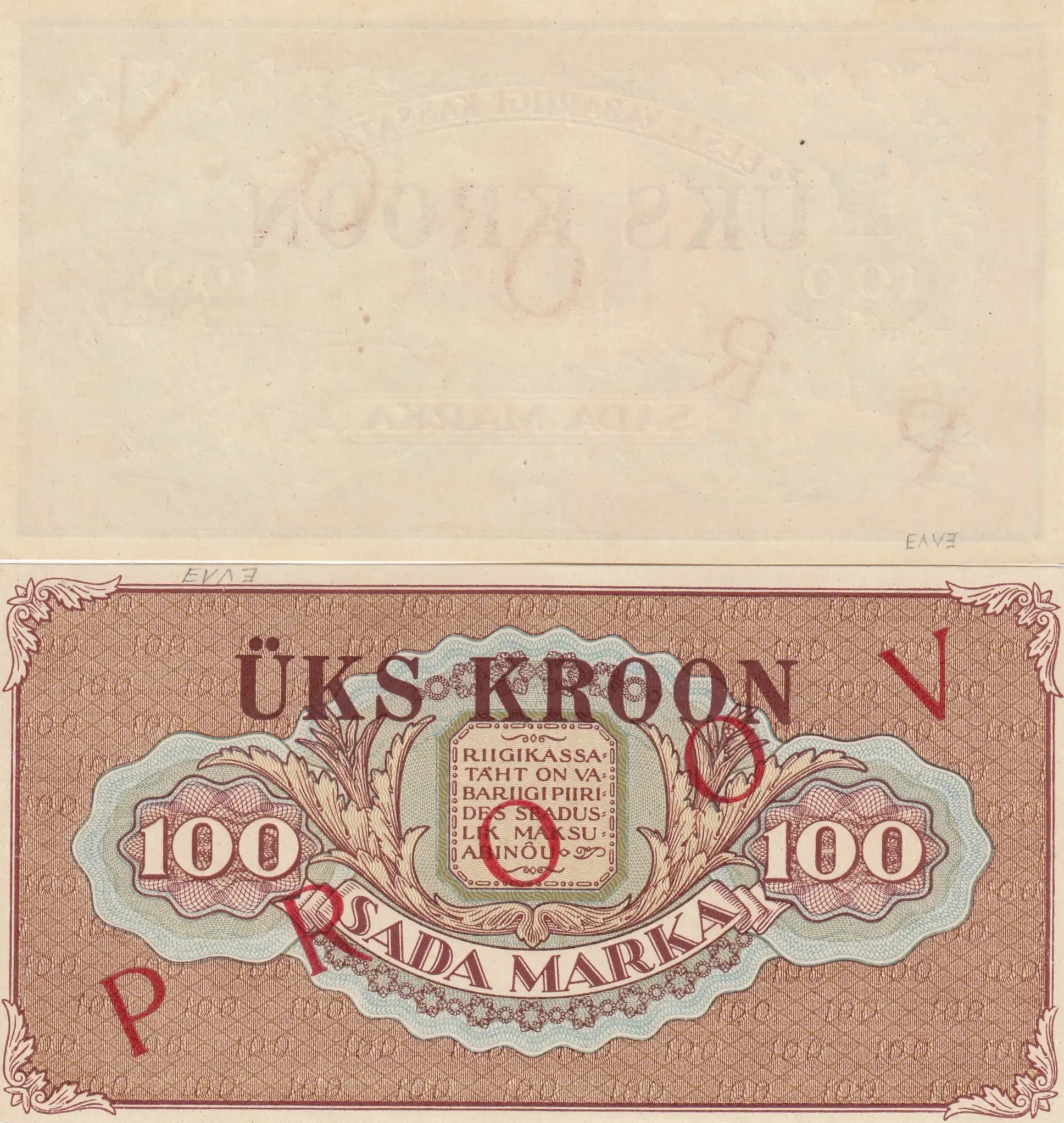
This is a specimen example of Estonia's 1 Kroon on 100 Marka banknote (Pick P-61bs), issued in 1928 during the interwar period. The note features exceptional ornate engraving with elaborate floral and fruit motifs, displaying red/coral and green intaglio printing on aged cream paper. The presence of red manuscript 'SPECIMEN' overprints and archival notations confirms this as a non-circulating specimen piece from institutional collections, making it a valuable reference example for numismatists studying early Estonian currency design.
Common. The eBay market data shows specimens in UNC condition trading between $1.99 and $59.99 USD, with most sales in the $4-6 range, indicating this note circulates regularly among collectors at modest prices. Despite being a specimen (non-circulating) variant, the 1 Kroon on 100 Marka from 1928 was issued in substantial quantities during Estonia's currency reform. The wide price variance on eBay ($1.99 to $59.99) reflects market inconsistency rather than true rarity, and the 2016 catalog UNC value of $300 appears to be significantly inflated relative to current secondary market activity.
This note represents Estonia's currency reform period following independence from Russia in 1918. The 1928 redenomination from 100 Marka to 1 Kroon reflected stabilization efforts in the young republic's economy. The classical building depicted in the central vignette symbolizes institutional authority and economic stability, while the ornate engraving style reflects early 20th-century European banknote security standards and the sophistication of the newly independent nation's fiscal infrastructure.
The note features a symmetrical classical design typical of interwar European banknotes. The front displays a neoclassical or classical building with columns and pediment in the central rectangular vignette, likely representing the Estonian State Bank or Treasury building. Ornate decorative borders frame the design with acanthus leaf scrollwork and grape cluster motifs in all four corners, serving both aesthetic and security purposes. Large denomination numerals '100' appear prominently on both left and right margins. The reverse maintains the symmetric design philosophy with an identical ornamental border frame enclosing the authorizing legal text in a decorative panel. The color scheme of red/coral and green intaglio printing on tan/beige paper was standard for high-security banknote production of the era.
FRONT: 'EESTI VABARIIGI KASSATÄHT' (Estonian Republic Bank Note); 'UKS KROON' (One Kroon); '100' (One Hundred); 'SADA MARKA' (One Hundred Marka); '1923' (Year 1923, the original issue date before 1928 redenomination). BACK: 'UKS KROON' (One Kroon); '100' (One Hundred); 'SADA MARKA' (One Hundred Marka); 'RIIGIKASSA TÄHT ON VABARIIGI PIHRI PES SEADUS JÄRGI KÄSU AINOL' (State Treasury Note issued according to Law by order of the State Treasury).
Intaglio (engraved) printing on banknote paper. The detailed engraving work is evident throughout both sides, with complex line work creating the ornamental borders, floral motifs, and architectural vignette. Security printers for Estonian currency of this period typically included European firms such as Enschedé or similar, though specific attribution for P-61bs would require archival confirmation. The engraving depth and clarity visible in the specimen indicate professional banknote-grade production standards.
This note is cataloged as Pick P-61bs, the 'bs' suffix indicating it is a specimen variant (marked with red archival overprints reading 'SPECIMEN' or similar). The PMG population report identifies P-61a and P-61b as documented variants of the base Pick number. This specific example shows '1923' on the face (original issue year) with redenomination overprinting converting the 100 Marka to 1 Kroon in 1928. The red manuscript notations and corner archival marking ('EAV3') indicate institutional provenance, consistent with banking archives or central bank specimen collections. No serial numbers are clearly visible in the images, preventing identification of serial number variety prefixes.