100 marka 1923/1 kroon 1928
“7-dig ser #”
Market Prices
2 salesAbout This Note
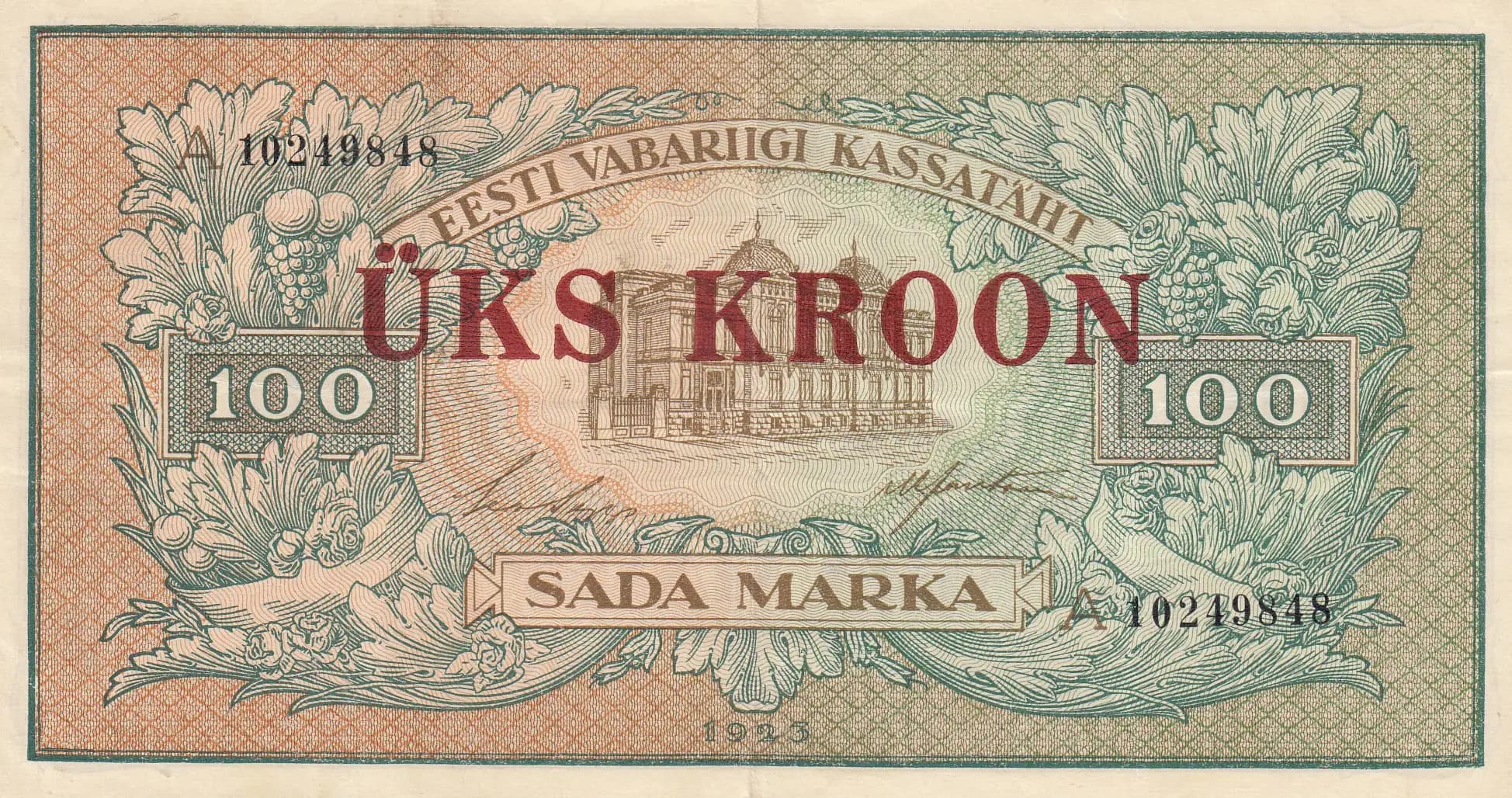
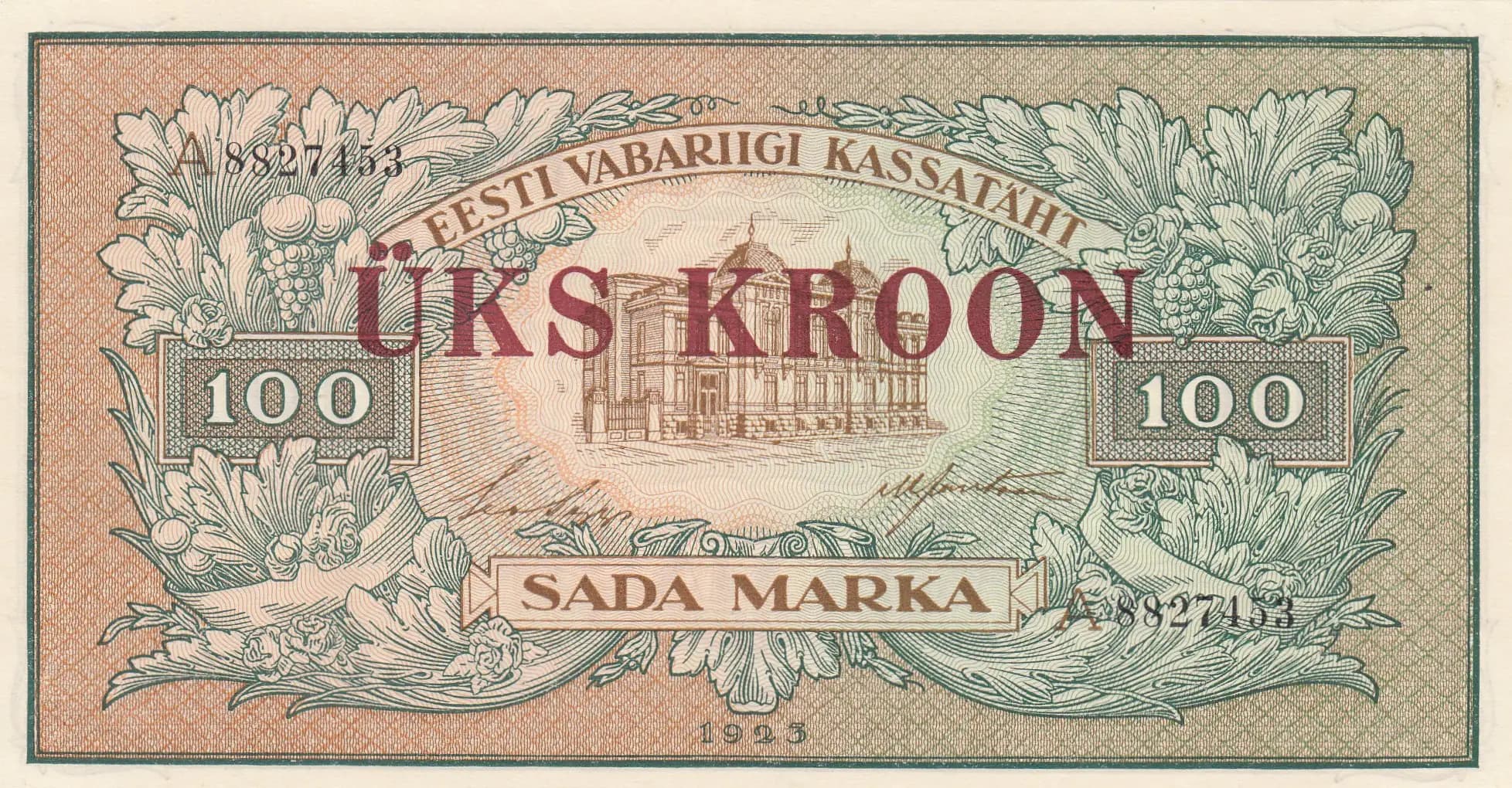
This 1928 Estonian 1 Kroon (overprinted 100 Marka) presents as a pristine uncirculated example with exceptional eye appeal. The note features elegant classical architectural imagery and ornate decorative borders rendered in warm tan, brown, and green tones, accompanied by fine engraving throughout. As a Pick-61b variant with a seven-digit serial number, this represents a key issue from Estonia's early Republican period, valued at $300 in UNC condition according to 2016 catalog standards.
Common. Despite catalog values suggesting $300 in UNC condition (2016 data), eBay market evidence shows substantially lower realized prices—notes in Fine condition selling for $34-$62 in 2018. This indicates robust circulation among collectors and relatively consistent availability. The 1928 1 Kroon / 100 Marka overprint was a regular issue with substantial print runs to facilitate the currency transition. No evidence of scarcity, short print runs, or recall status exists for Pick-61b.
This note was issued by the Estonian Treasury during the interregnum period between the original 100 Marka currency and the new Kroon system established in 1928, reflecting Estonia's transition to monetary independence following World War I and the establishment of the Estonian Republic in 1918. The classical building depicted on the obverse symbolizes the institutional strength and legitimacy of the young Estonian state, while the dual denomination marking (both 'Üks Kroon' and 'Sada Marka') documents the currency conversion period of the 1920s. The inscriptions referencing the Estonian Republic Treasury underscore national sovereignty during this formative decade.
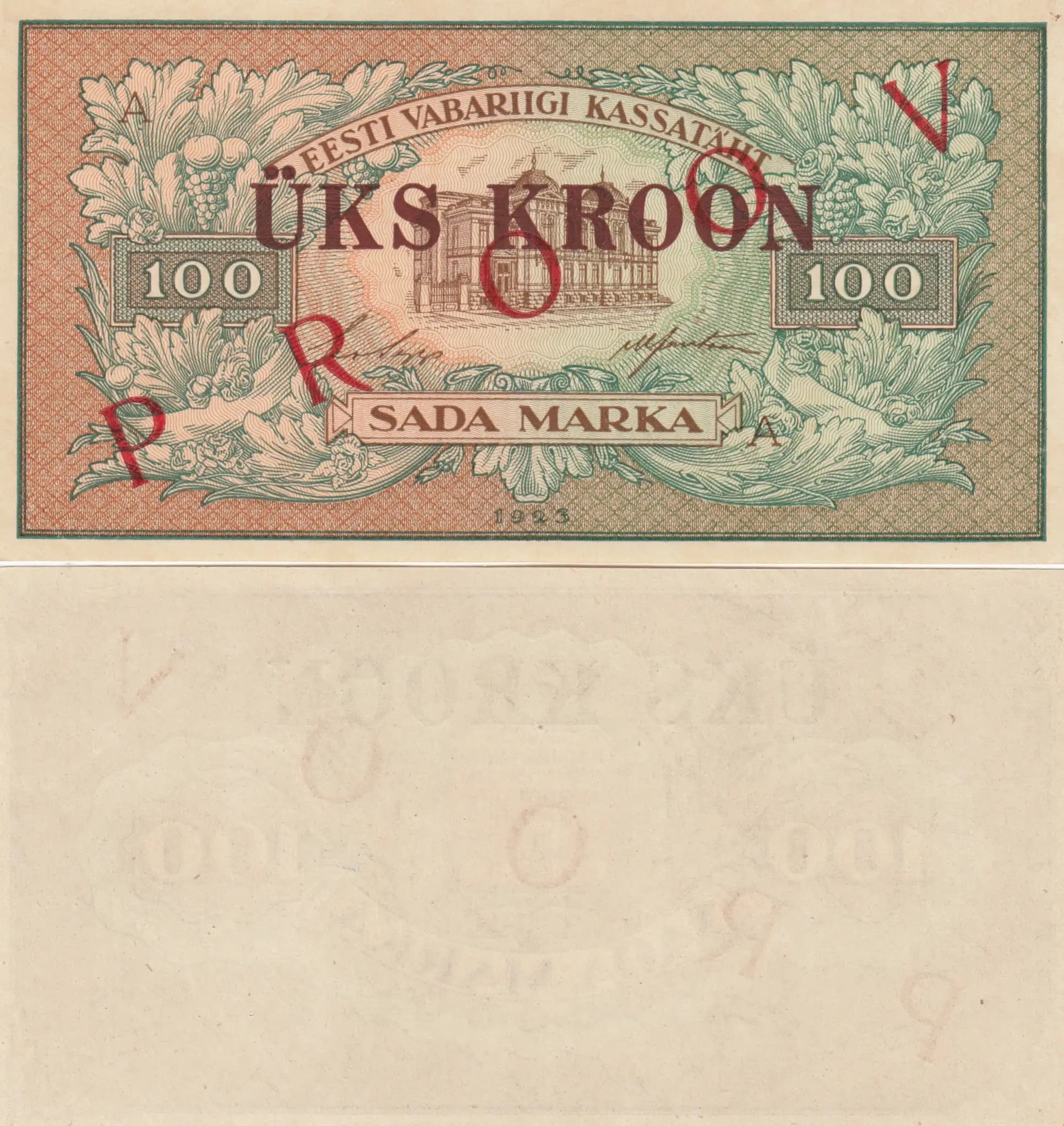
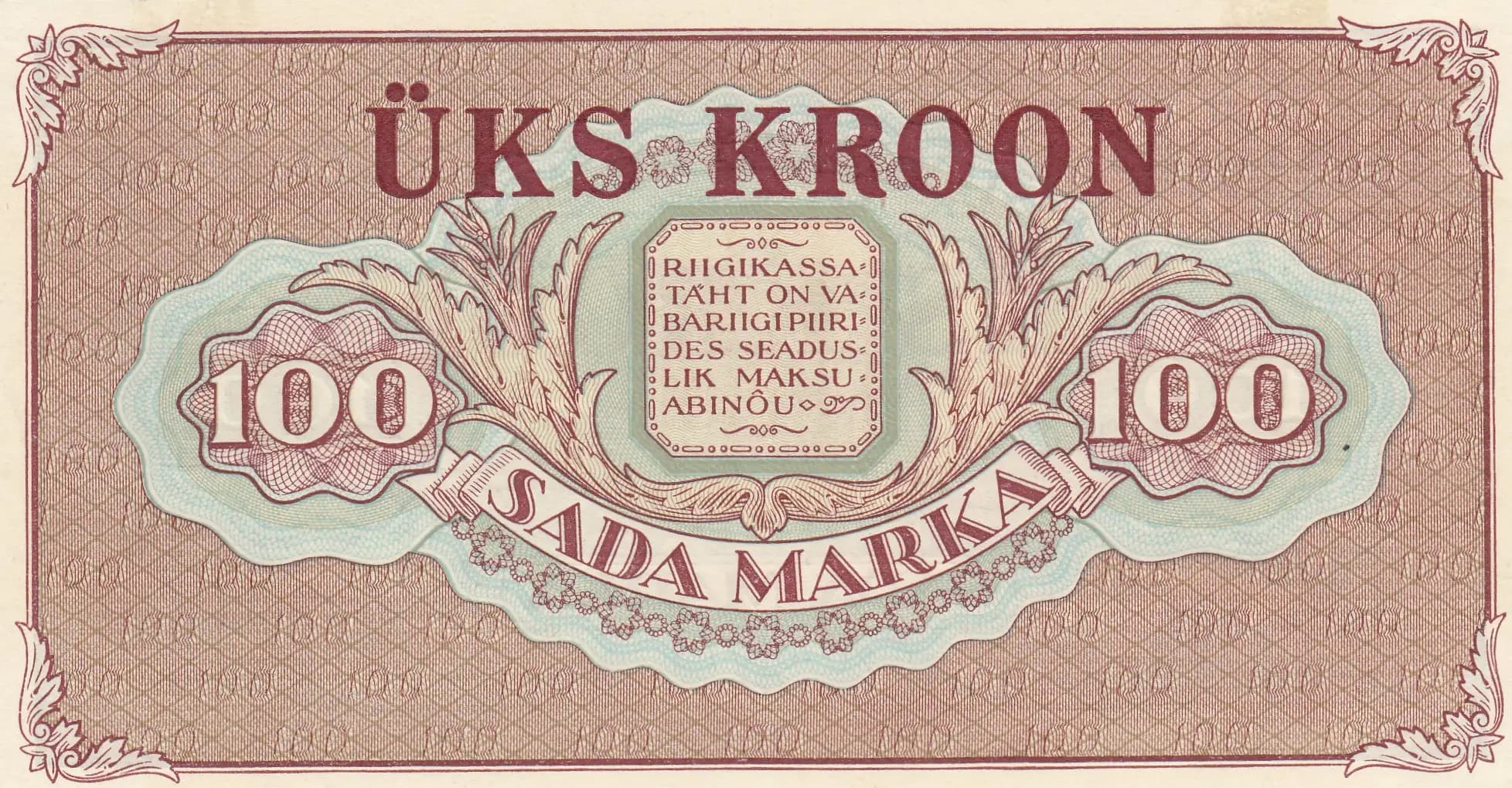
The obverse features a centrally positioned classical bank building with columned architecture rendered in sepia and brown tones, characteristic of early 20th-century institutional imagery. The building is framed by ornate decorative borders incorporating grape vine and floral motifs in the upper corners, with symmetrical ornamental flourishes extending to all edges. The reverse displays a more abstract design, emphasizing the denomination through two large ornamental cartouches containing '100', flanking a central scrollwork and floral motif rendered in mauve, dusty rose, and pale green. Both sides employ fine horizontal and crosshatch engraving patterns as primary security features, with intricate background detailing throughout. The color palette of cream, tan, brown, green, and mauve creates a sophisticated appearance consistent with 1920s Estonian state currency design standards.
FRONT SIDE: 'EESTI VABARIIGI KASSAPÄHT' (Estonian Republic Treasury) | 'ÜKS KROON' (One Kroon) | '100' (numeric denomination) | 'SADA MARKA' (One Hundred Marka) | '1882/1923' and '1923' (dates, likely referencing institutional founding and redenomination year). BACK SIDE: 'ÜKS KROON' (One Kroon) | '100' (numeric denomination, appears in ornamental cartouches) | 'SADA MARKA' (One Hundred Marka) | 'RIIGIKASSA TÄHT ON VABARIIGI PIIRIDE SEADUSE LIK MAKSU ABINÕU' (State Treasury note is a legal monetary instrument under the Republic's statutory framework).
Intaglio engraving with fine line work, evidenced by the detailed crosshatching, background patterns, and ornamental borders observable throughout both sides. The intricate security patterns and three-color printing scheme (utilizing tan, brown, green, and mauve inks) indicate professional security printing typical of Estonian state currency production of this era. The specific printer attribution is not definitively established in available documentation for Pick-61b, though Estonian notes of this period were commonly produced by established European security printers.
This note is identified as Pick-61b, specifically the '1 Kroon on 100 Marka' variant distinct from Pick-61a. The seven-digit serial number format noted in the catalog data is characteristic of this issue. PMG population data confirms the existence of both P-61a and P-61b variants for this base Pick number, with the 'b' designation indicating this particular overprint configuration. No signature varieties, major overprint variations, or known printing errors are documented for this Pick number in standard catalogs.