100 000 marka 1920
“#00002”
Market Prices
About This Note
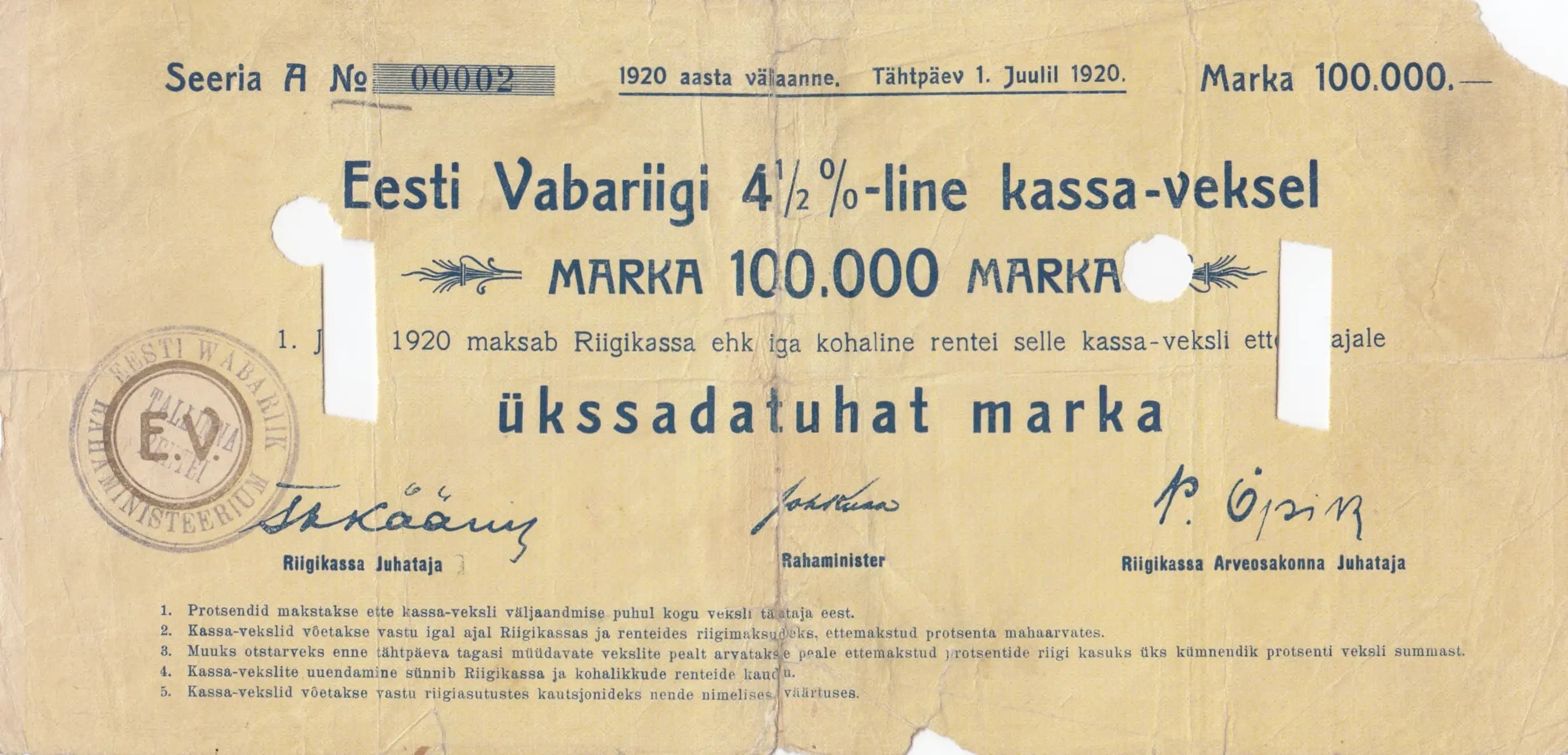
This Estonian 100,000 Marka cash bill from 1920 represents a fascinating artifact of the newly independent Estonian Republic's early financial system. The note exhibits honest wear consistent with its VG condition grade, displaying age-appropriate foxing, creasing, and paper discoloration typical of a century-old security document. The serial number 00002 and the presence of an official state seal underscore this note's role as a government-backed cash instrument during Estonia's formative years.
Common. eBay market data shows multiple examples of this general issue trading in the $9-$185 USD range across various conditions, with VF examples averaging approximately $50-80 USD and UNC specimens around $150 USD. The catalog reference notes this is Pick 38 without major variety distinctions. Print runs for Estonian monetary instruments in 1920 were substantial given the nation's urgent need to establish currency circulation. The serial number 00002 suggests this was part of an early printing run, but low serial numbers are not consistently rarer for 1920 Estonian issues. The VG condition and standard series designation indicate this is a typical survivor of this issue rather than a scarce variety.
Issued on May 1, 1920, just months after Estonia declared independence from the Russian Empire (February 24, 1920), this 4½% cash bill reflects the young republic's urgent need to establish its own currency and financial infrastructure. The note's dual-language inscriptions and official seals—including the State Treasury Director's mark—demonstrate the new nation's efforts to create legitimacy and confidence in its monetary system during a period of significant geopolitical instability in Eastern Europe.
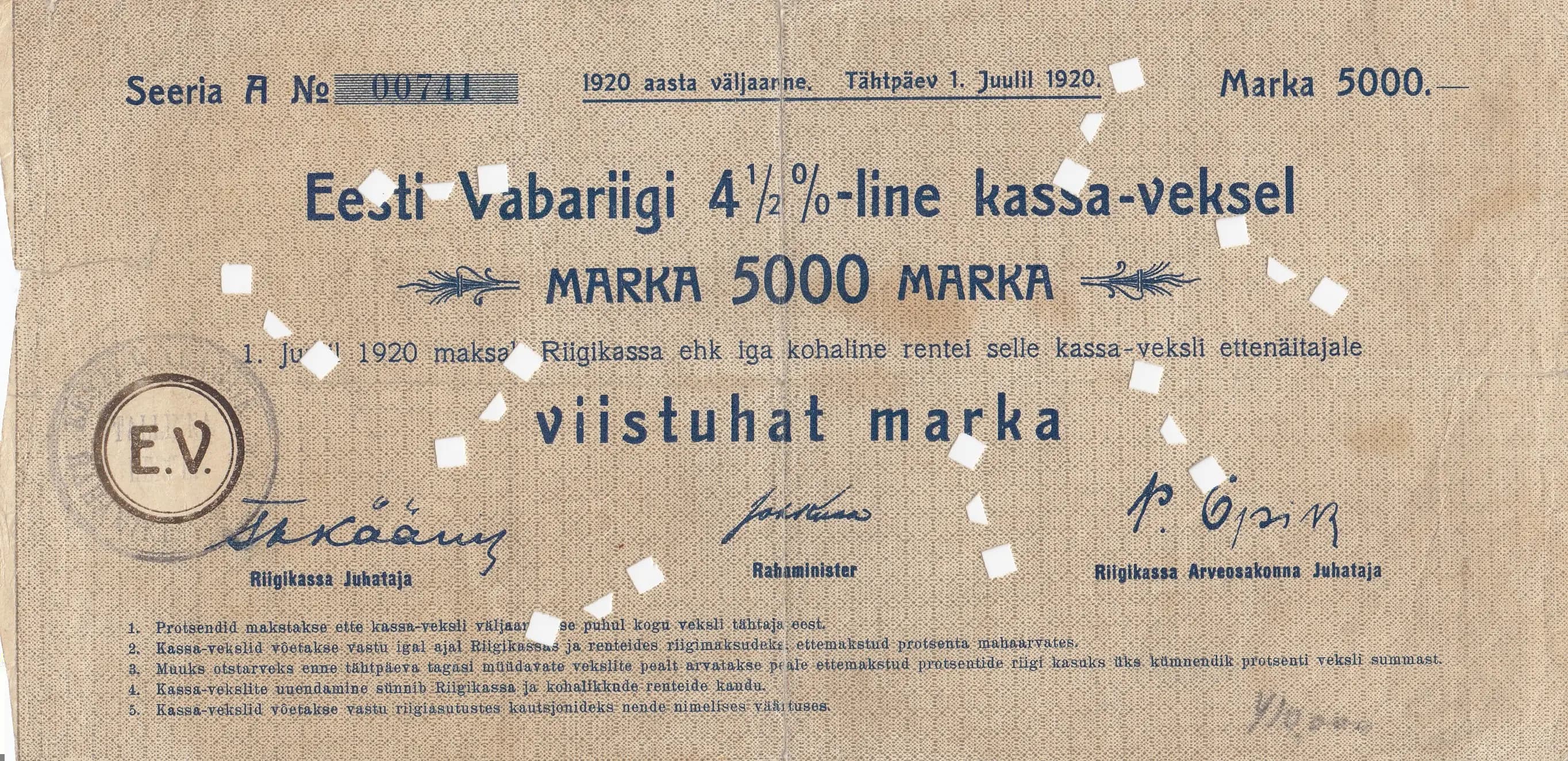
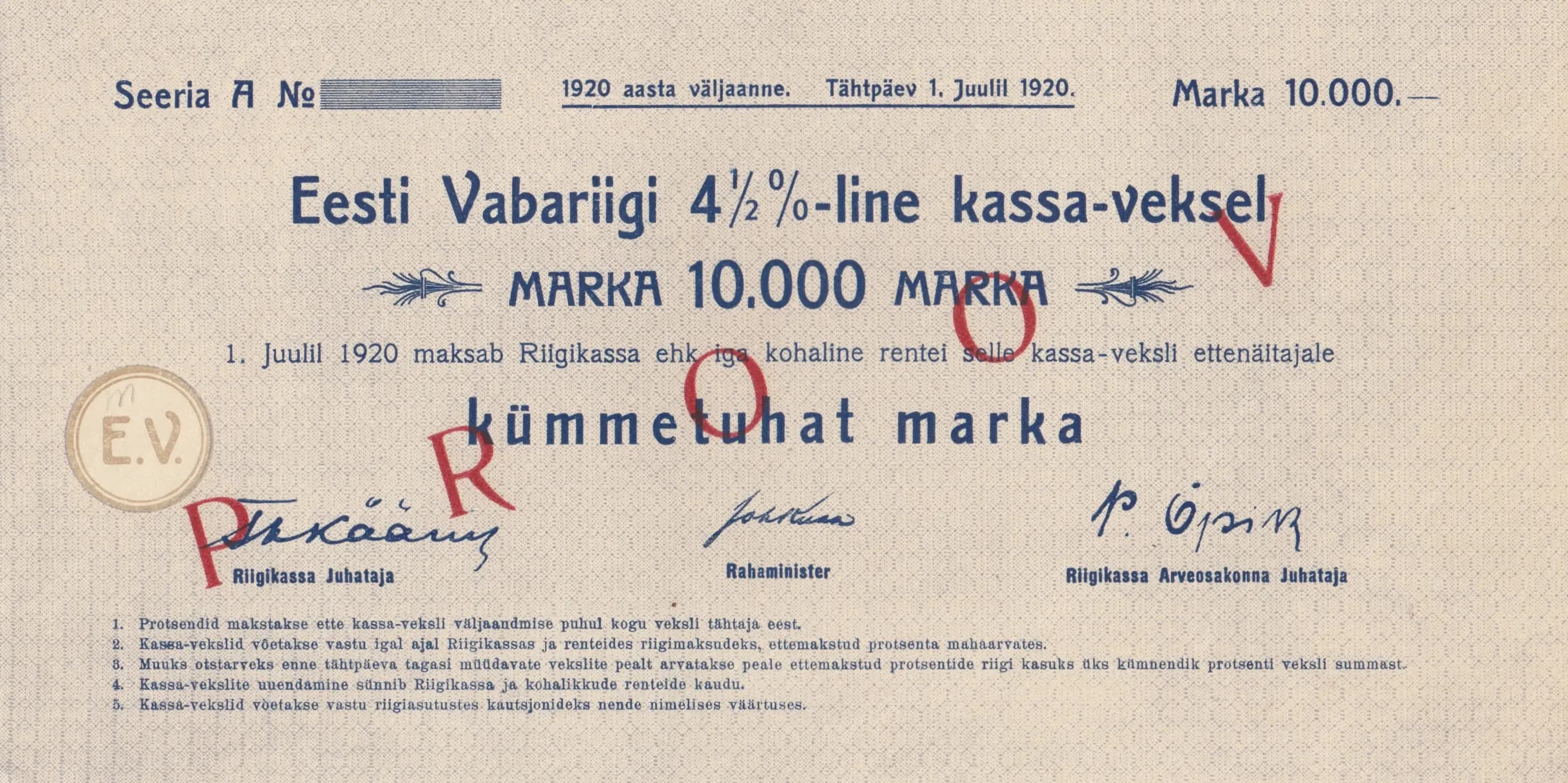
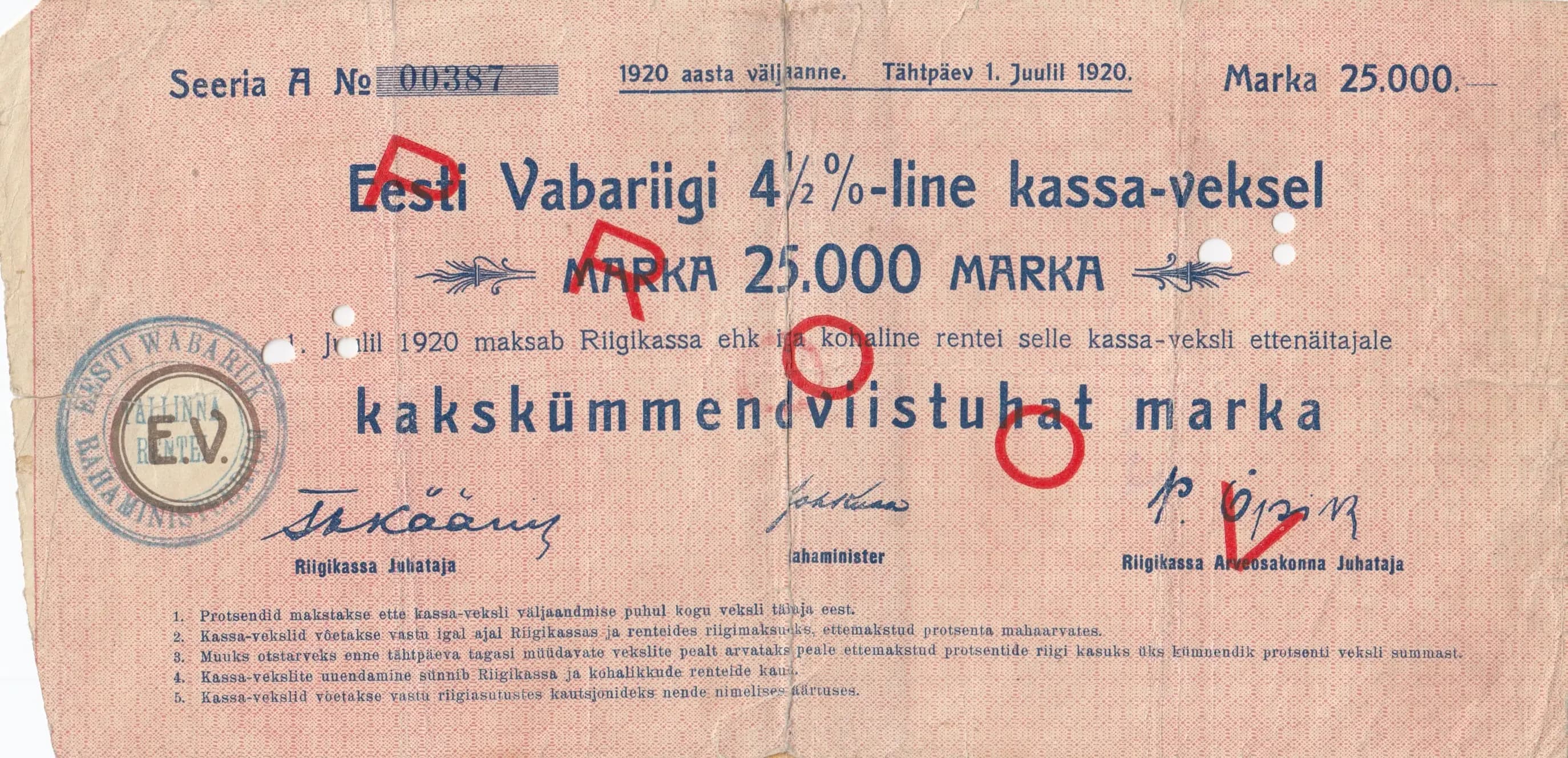
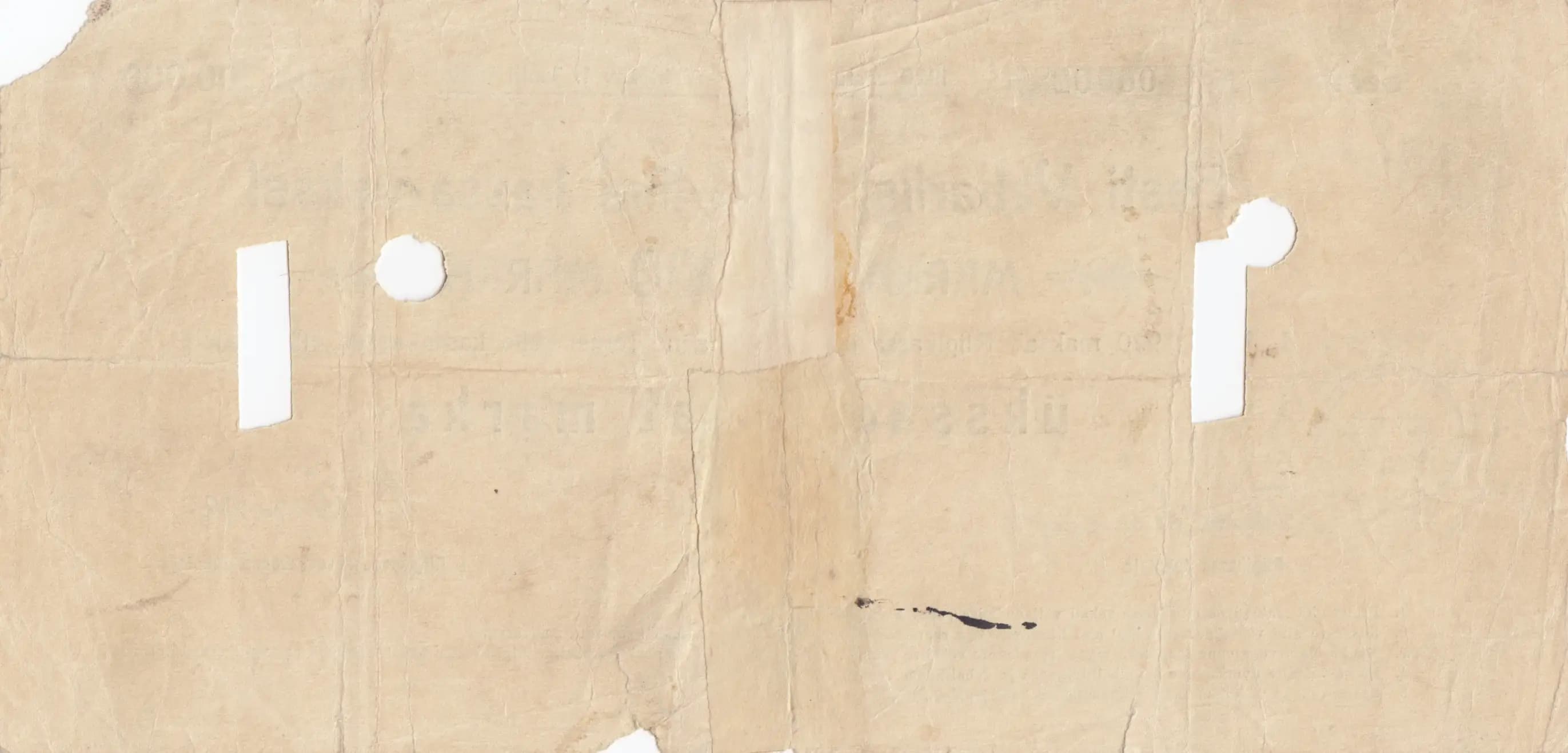
This is a government bond/cash bill rather than a traditional banknote, reflecting Estonia's monetary emergency in 1920. The front features a clean, institutional design dominated by text in Estonian language, with the denomination prominently displayed at top right (100.000 Marka). A circular official seal bearing state authority marks appears on the left side. Three signature lines are provided at the bottom for authentication by key financial officials: the State Treasury Director, Finance Minister, and Accounting Department Director. The note's cream-colored paper with tan undertones is typical of 1920-era security printing. The design emphasizes legibility and official authority through bold typography and the impression of governmental seals rather than portraiture or allegorical imagery. The reverse side appears blank or minimal, consistent with utility financial instruments of this period.
FRONT SIDE: 'Seeria A №' (Series A No.) / '1920 aasta väljjaanne. Tähtpäev 1. Juuli 1920.' (1920 year issue. Due date 1 July 1920.) / 'Marka 100.000.—' (Mark 100,000—) / 'Eesti Vabariigi 4½ %-line kassa-veksel' (Estonian Republic 4½% cash bill) / 'MARKA 100.000 MARKA' (MARK 100,000 MARK) / '1. Juuli 1920 maksab Riigikassa ehk iga kohaline rentei selle kassa-veksli ette ajale' (1 July 1920 the State Treasury or any local treasury pays this cash bill on the specified date) / 'ükssadatuhat marka' (one hundred thousand marks) / Signature lines: 'Riigikassa Juhataja' (State Treasury Director), 'Rahaminister' (Finance Minister), 'Riigikassa Arveosokonna Juhataja' (State Treasury Accounting Department Director) / Terms and conditions (numbered 1-5): Interest payment terms, redemption procedures, early repayment penalties (one-tenth percent surcharge), renewal mechanisms, and collateral acceptance provisions. BACK SIDE: Blank or largely blank with minimal visible text.
Letterpress printing on security paper with embossed or relief-printed official seal. The note exhibits characteristics of early 20th-century government security printing, with crisp text impression and deliberate use of multiple typefaces for hierarchy and emphasis. The circular seal was likely impressed or embossed separately, a common practice for authenticating government financial documents of this era.
This note is catalogued as P-38F, with the 'F' designation indicating a color variant. The external reference notes that similar notes exist in orange (P-38A) and gray (this example, P-38F). The serial designation 'Seeria A №00002' indicates Series A with very low serial number, but this does not constitute a rare variety—the series designation was standard for the issue. The specific due date of 1 July 1920 appears consistent across known examples of this denomination, suggesting no major date varieties for this Pick number.