10 marka 1922 specimen
Market Prices
9 salesAbout This Note
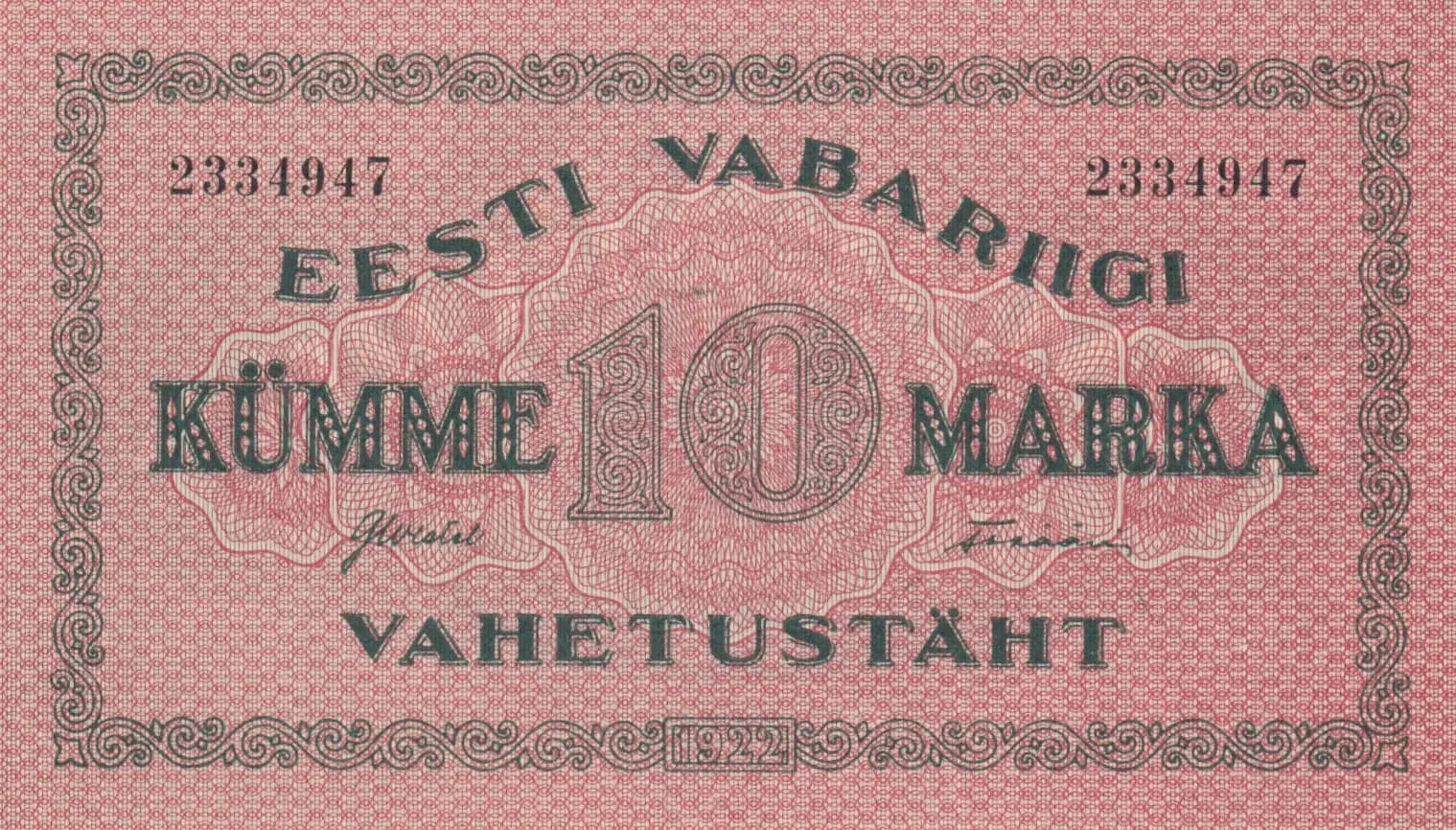
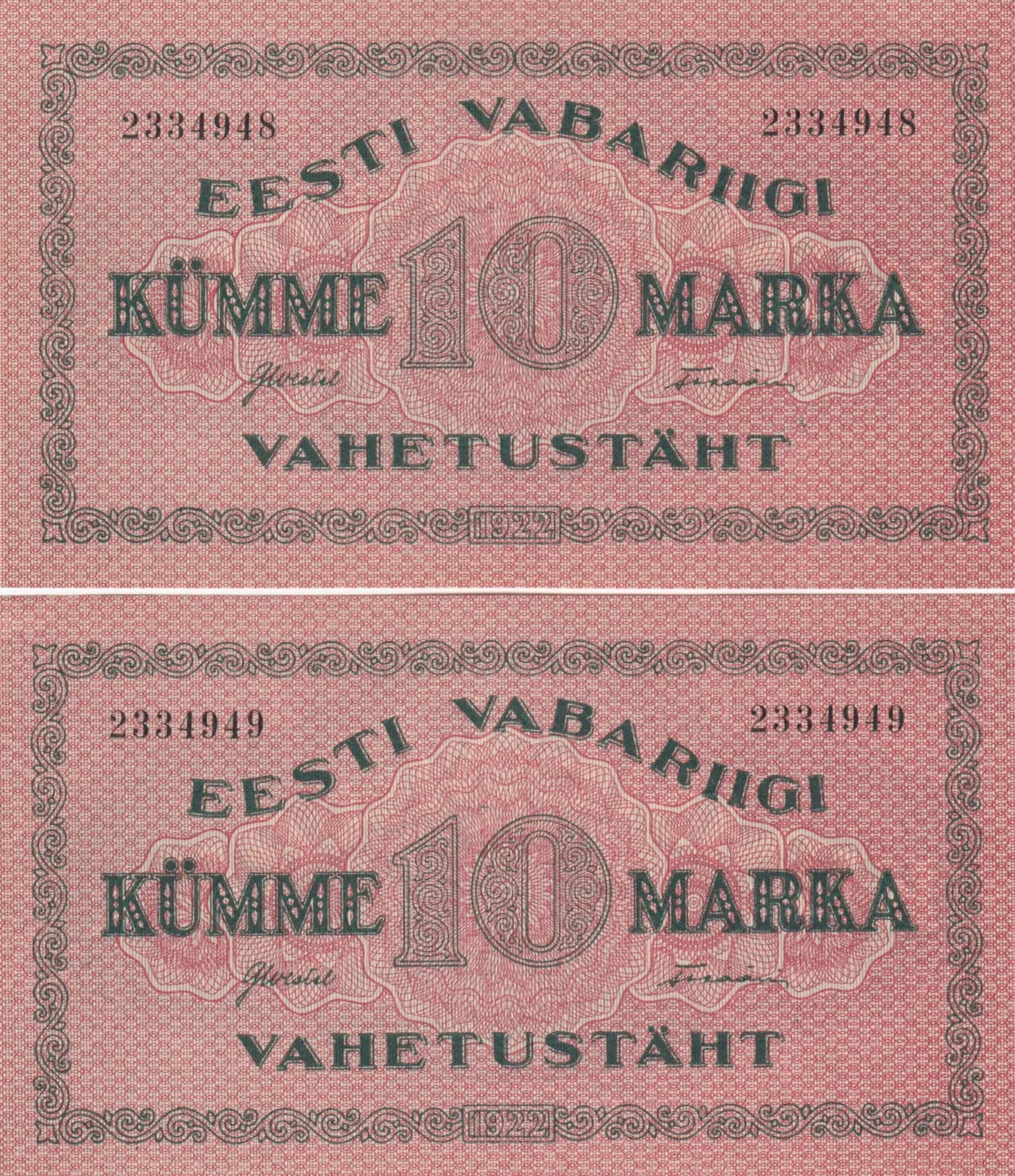
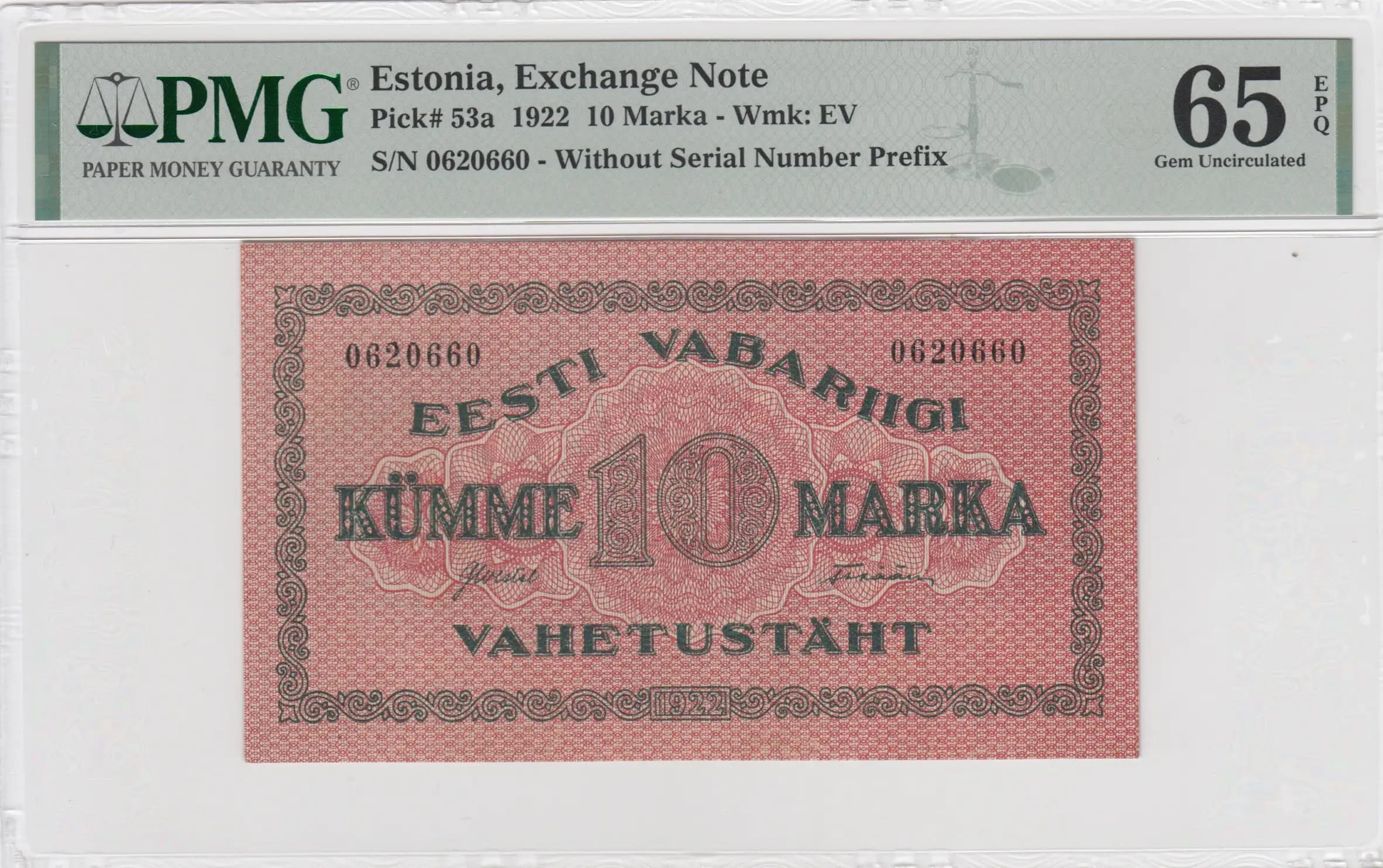
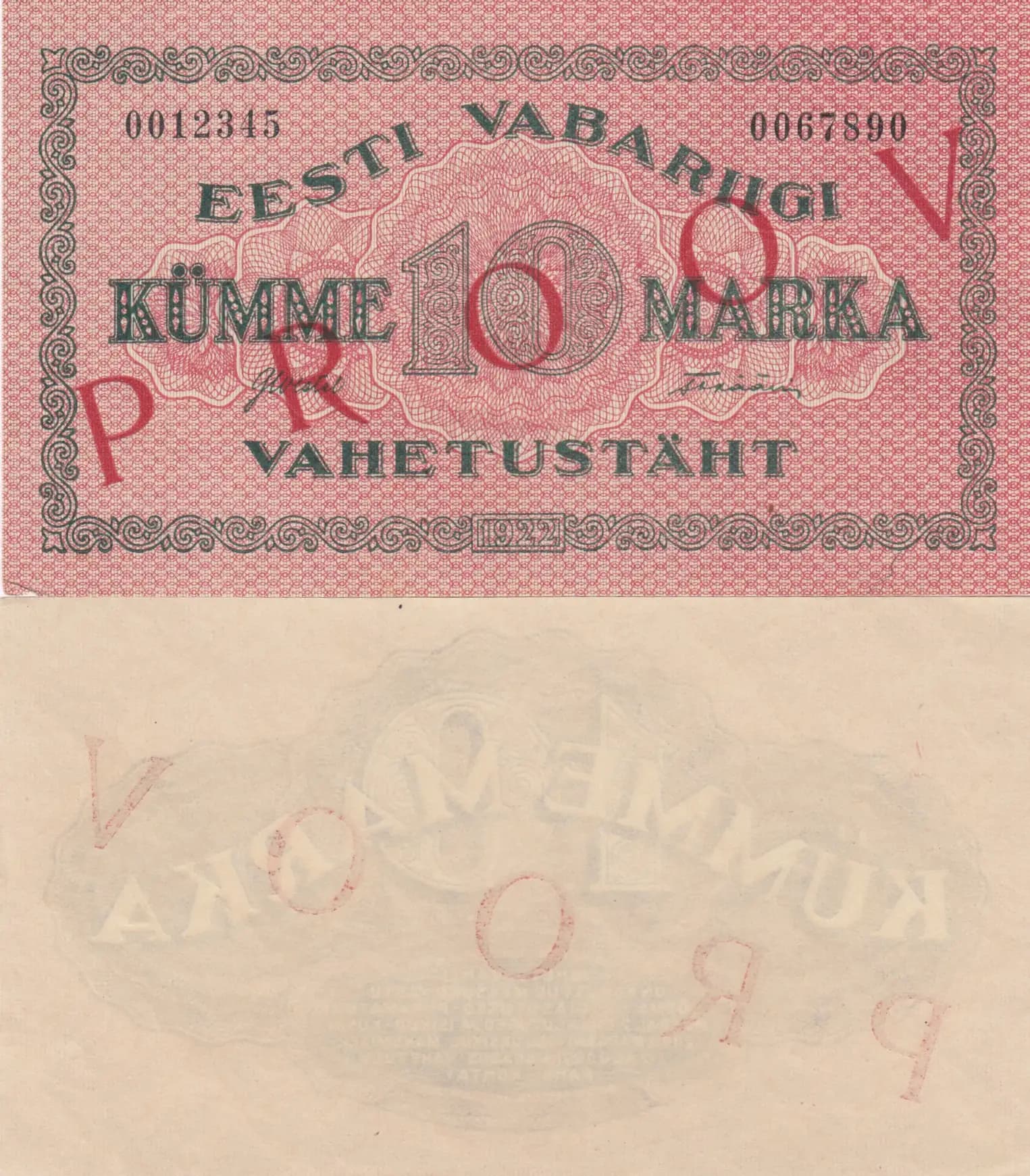
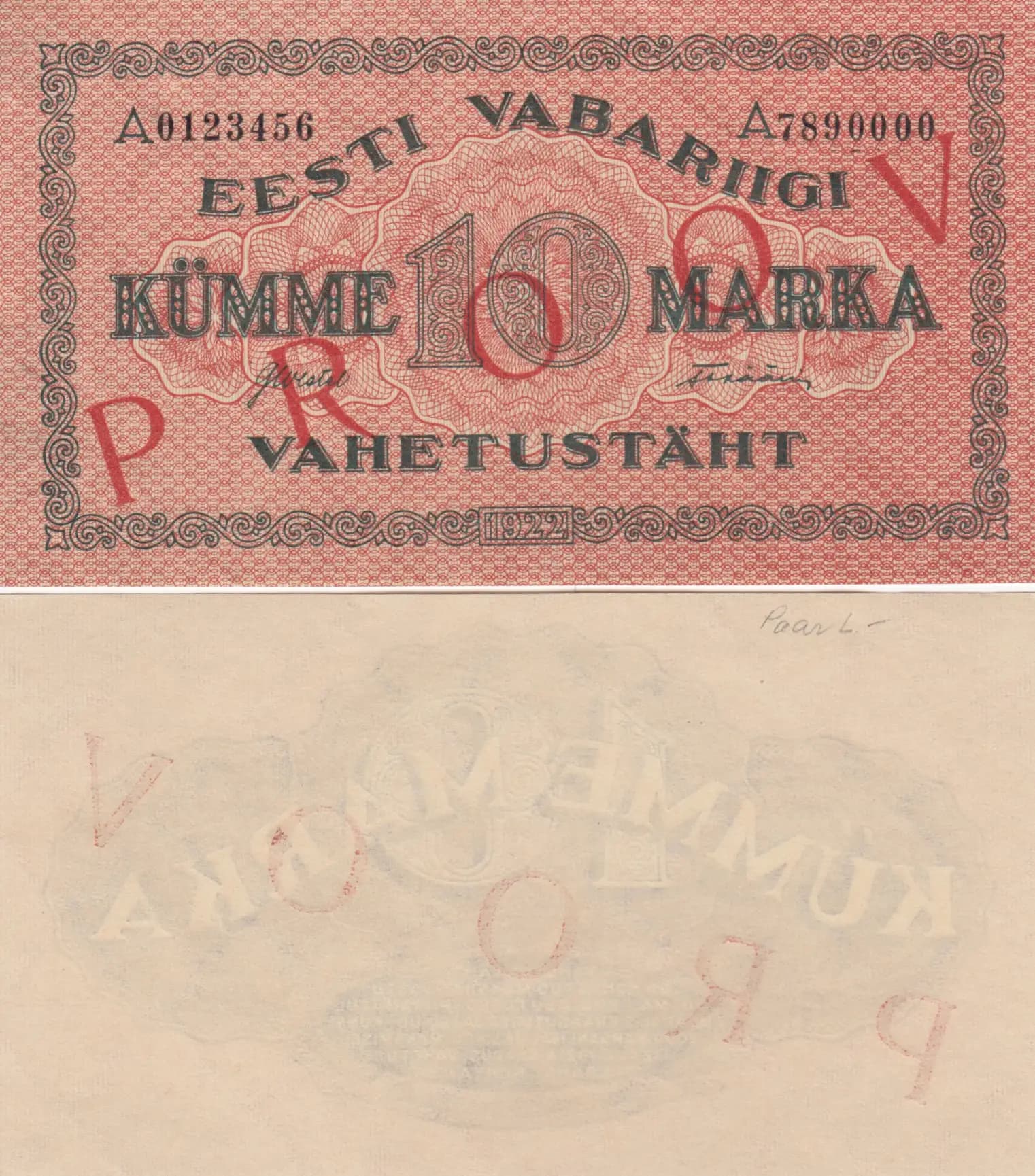
This is an exceptional example of Estonia's early 1922 10 Marka banknote in UNC condition, featuring the distinctive pink/coral color scheme with elaborate ornate scrollwork borders characteristic of early Estonian currency. The note displays crisp, well-preserved printing with fine line engraving throughout, no visible wear, and appears to be a specimen note based on archival notations observed on the margins. As a 1922 issue from the Treasury of Estonia during the nation's first years of independence, this represents an important piece of early Estonian numismatic history.
Common. This is a regular issue banknote from 1922 with a presumably substantial print run sufficient to meet circulation needs of the early Estonian Republic. The eBay market data shows consistent availability with notes in Fine condition selling for approximately $8.50-$22, with UNC examples catalogued at $90 (2016 values). The presence of multiple known varieties (P-53a through P-53s) and active trading activity indicates adequate supply in the collector market. While specimens and high-grade examples command prices befitting their condition, the base note type remains readily obtainable.
This 10 Marka note was issued in 1922 by the Treasury of Estonia (Eesti Vabariigi) during the newly independent Estonian Republic's formative years following independence in 1918. The inscription 'VAHETUSSTAHT' (exchange note/voucher) and the legal reference dated August 2, 1921 indicate this was part of Estonia's early monetary system establishing state-backed currency. The ornate Art Nouveau-inspired design with elaborate cartouche frames reflects the aesthetic standards of early 20th-century European central bank currency design.
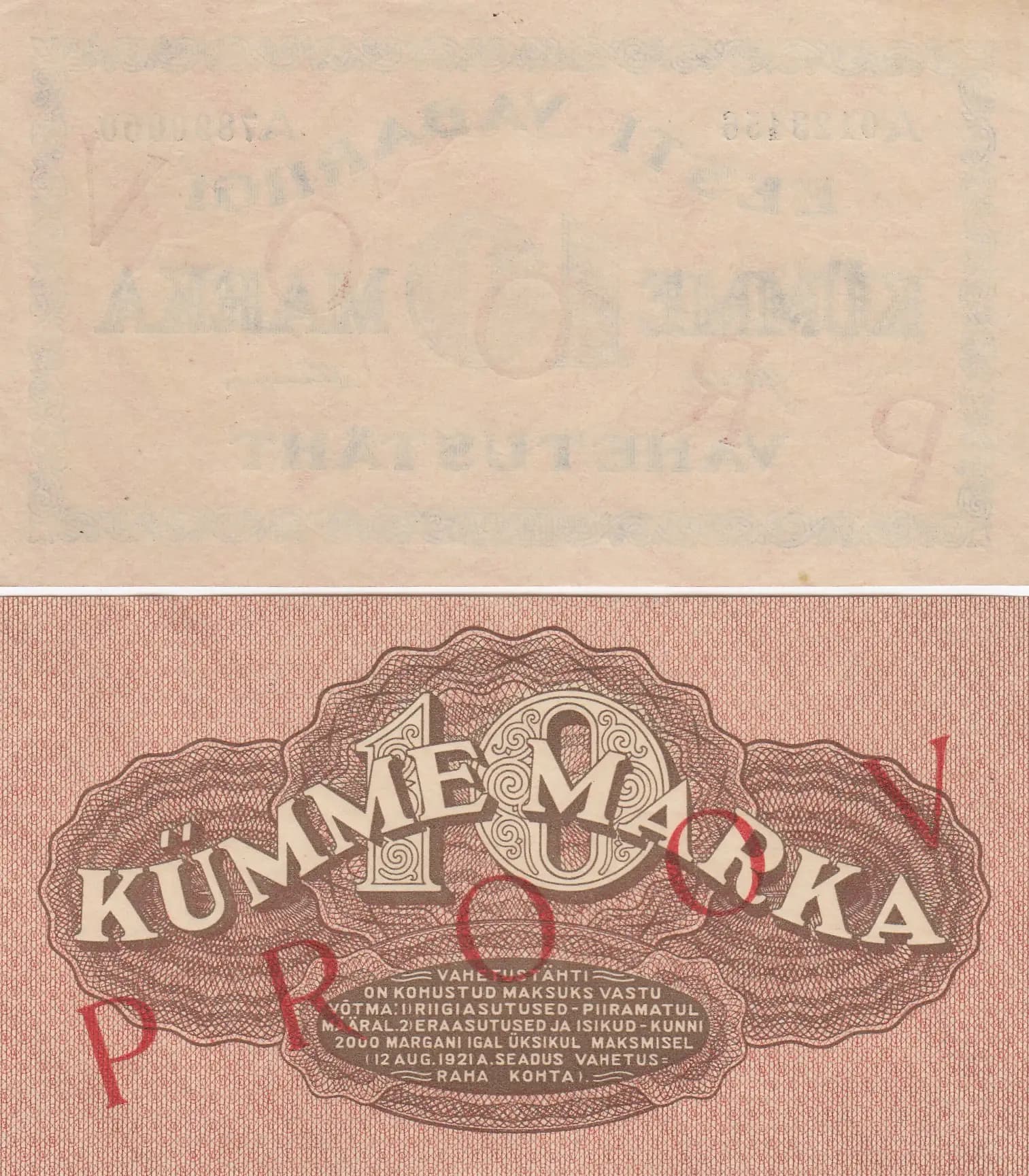
The obverse features a centrally positioned large numeral '10' with 'KÜMME MARKA' text, set against a pink/coral background with ornate scrolling spiral border patterns and fine decorative line work. The reverse displays a prominent ornate cartouche frame enclosing the denomination numerals, surrounded by elaborate Art Nouveau-style scrollwork and decorative elements. Both sides employ red accent letters ('R' on right side of obverse, 'D' on left side of reverse) as design elements. The dominant color palette consists of pink, coral, and red tones with gray-green and cream accents, with brown-gray shading visible on the reverse. The intricate ornamental design serves both aesthetic and security purposes, characteristic of early 20th-century European banknote design.
FRONT: 'EESTI VABARIIGI' (Estonian Republic); 'KÜMME MARKA' (Ten Mark); 'VAHETUSSTAHT' (Exchange Note/Voucher); '1922' (Year); Serial numbers visible as 'A0123456' and 'A7890000'. BACK: 'KÜMME MARKA' (Ten Mark); 'ON KOHUSTUD MAKSUKS VASTU VÕTMA: RIIGIASUTUSED, PIIRAMATUL MARAL ZIERAASUTUSED JA ISIKUD-KUNNI 2000 MARGANI IGAL ÜKSKUL MAKSMISEL /2 AUG.1921 SEADUS VAHETUSSTAHTIDE RAHA KOHTA/' (Is obligated to be accepted as payment: state institutions, unlimited scope of material institutions and individuals—until 2000 marks at a time in each payment /August 2, 1921 Law on Exchange Notes/).
The note was produced using fine line engraving on steel plates, evident from the crisp, detailed ornamental borders, the precise rendering of the scrollwork patterns, and the complex cartouche design. The multi-color printing (pink/coral base with red and gray-green accents) indicates the use of multiple printing passes or color separation plates. The quality of the fine line work and the uniformity of the design suggest production by a specialized security printer, though specific printer attribution for this early Estonian issue would require additional research. The security features incorporated into the design (complex ornamental patterns and fine engraving) were intended to deter counterfeiting.
This specimen note is catalogued as P-53bs, indicating it is a specimen variety ('s' suffix) of the base P-53 pick number. The Pick catalog identifies four catalogued variants: P-53a (watermark EV), P-53b (watermark Squares), P-53p, and P-53s. The watermark 'EV' (Eesti Vabariigi - Estonian Republic) is consistent with the P-53a variety. The visual analysis indicates this note lacks serial number prefix letters, which aligns with catalog descriptions for this issue. The 'specimen' designation (P-53bs) is supported by the archival markings observed in the margins of the images, suggesting this particular example was retained as a specimen for official or institutional records rather than released into general circulation.