10 marka 1922
Market Prices
9 salesAbout This Note
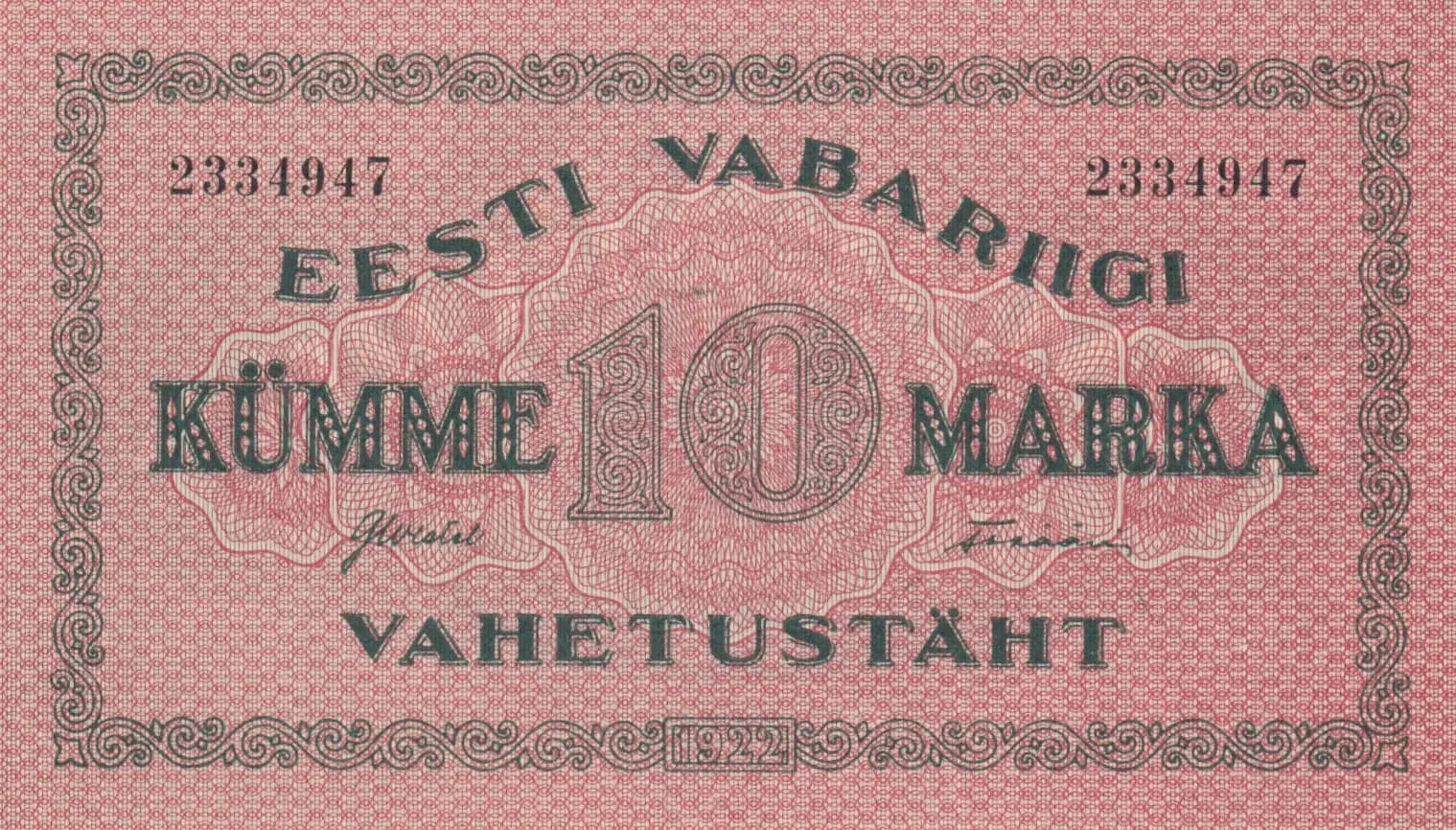
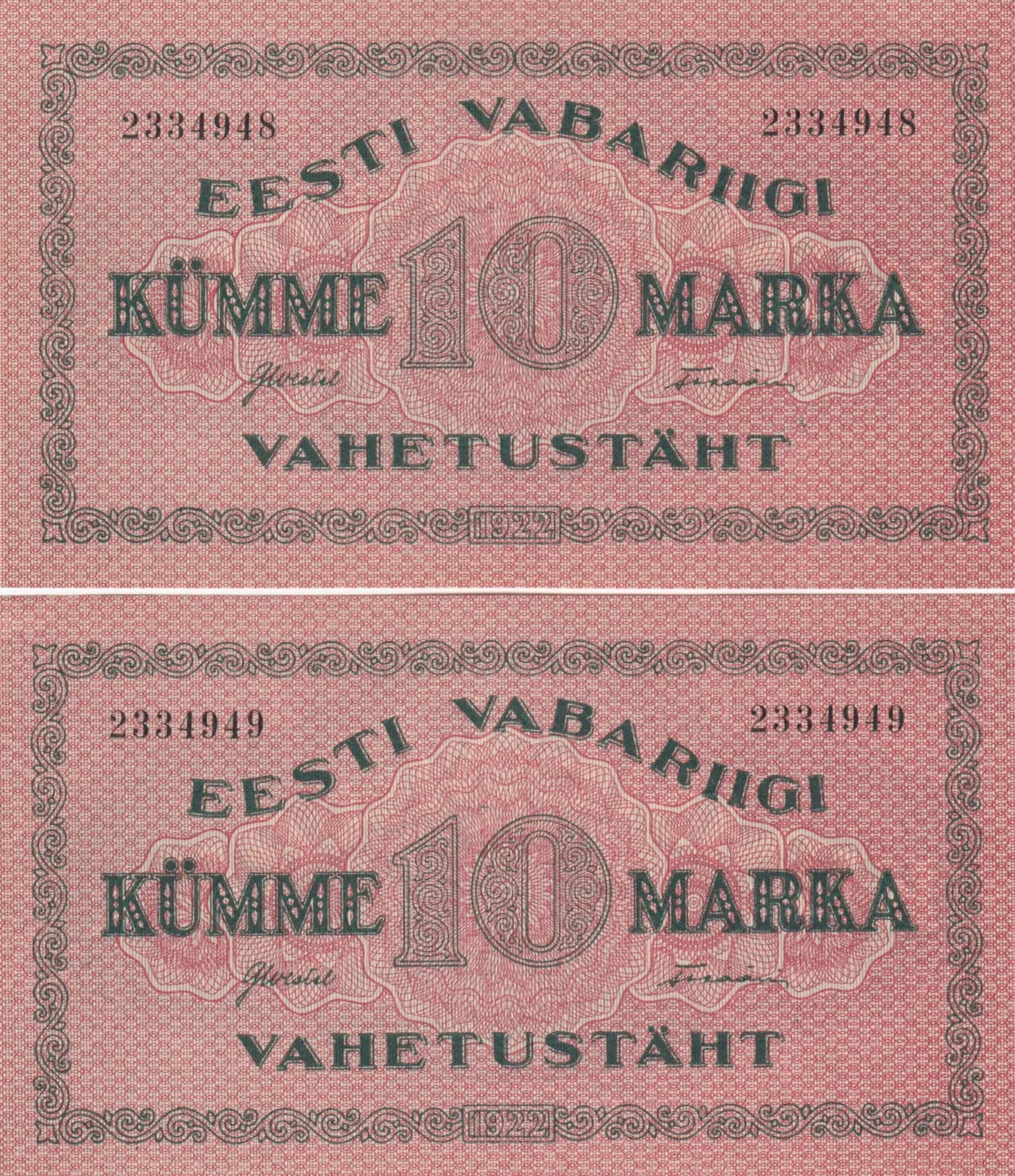
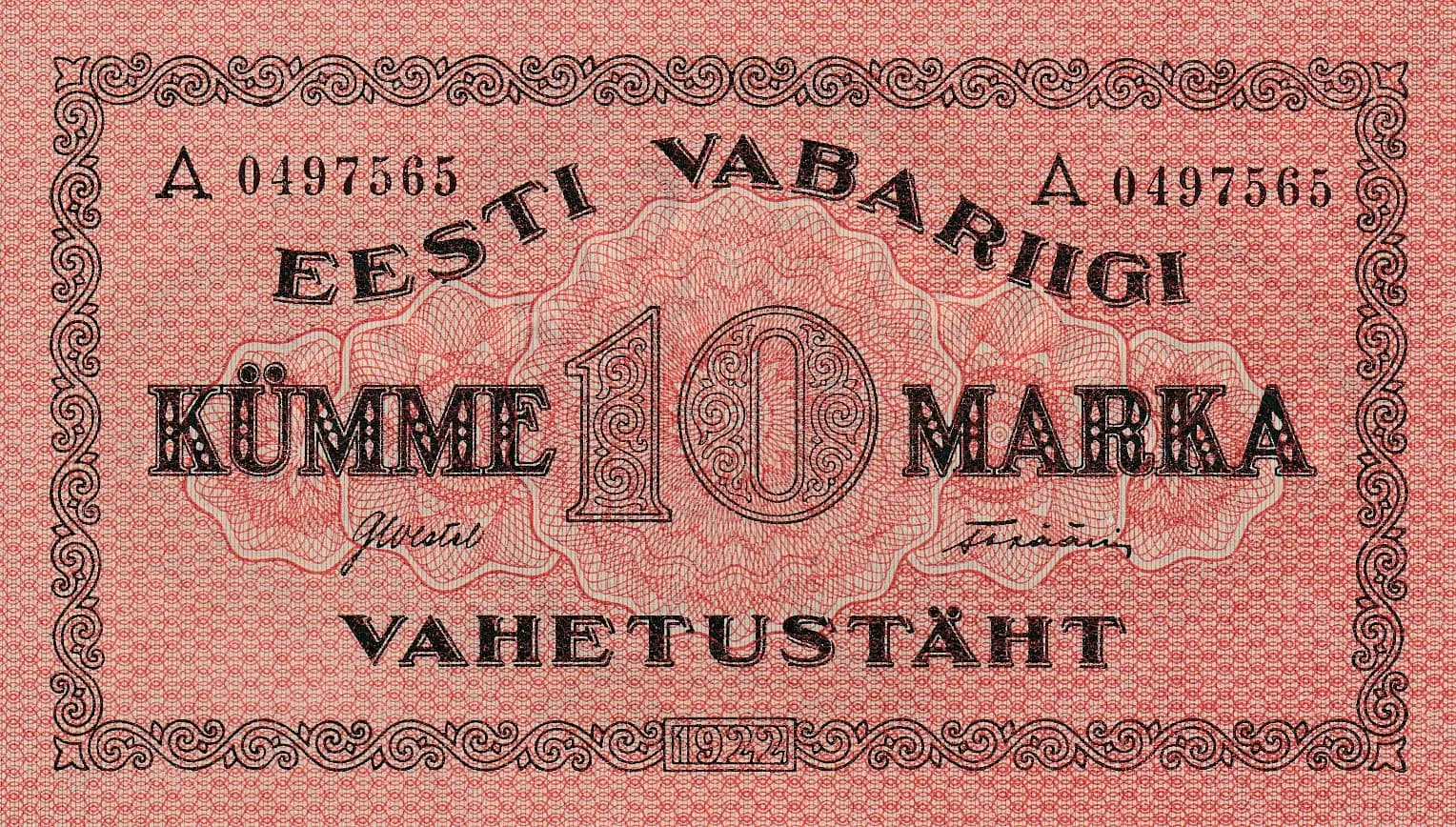
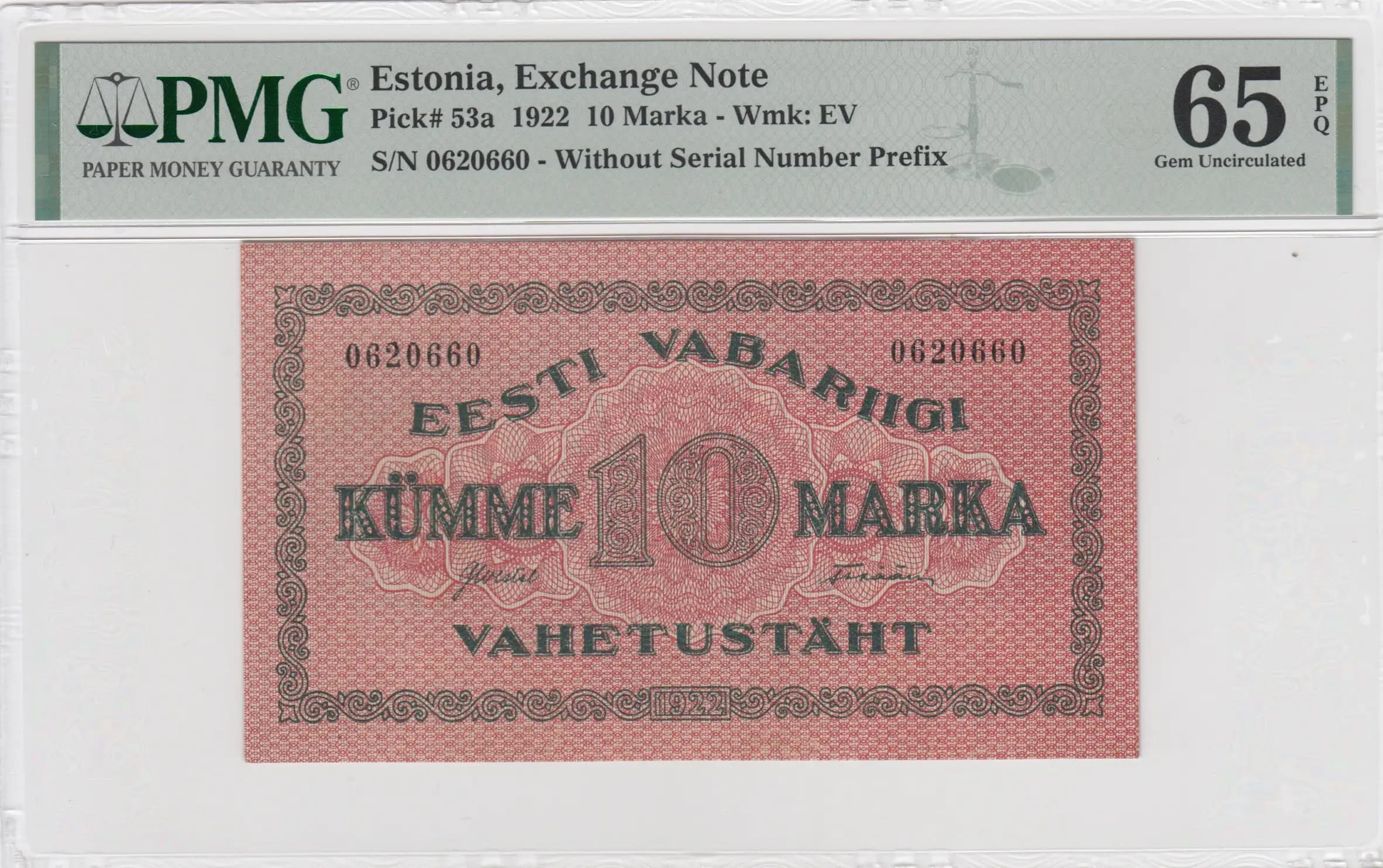
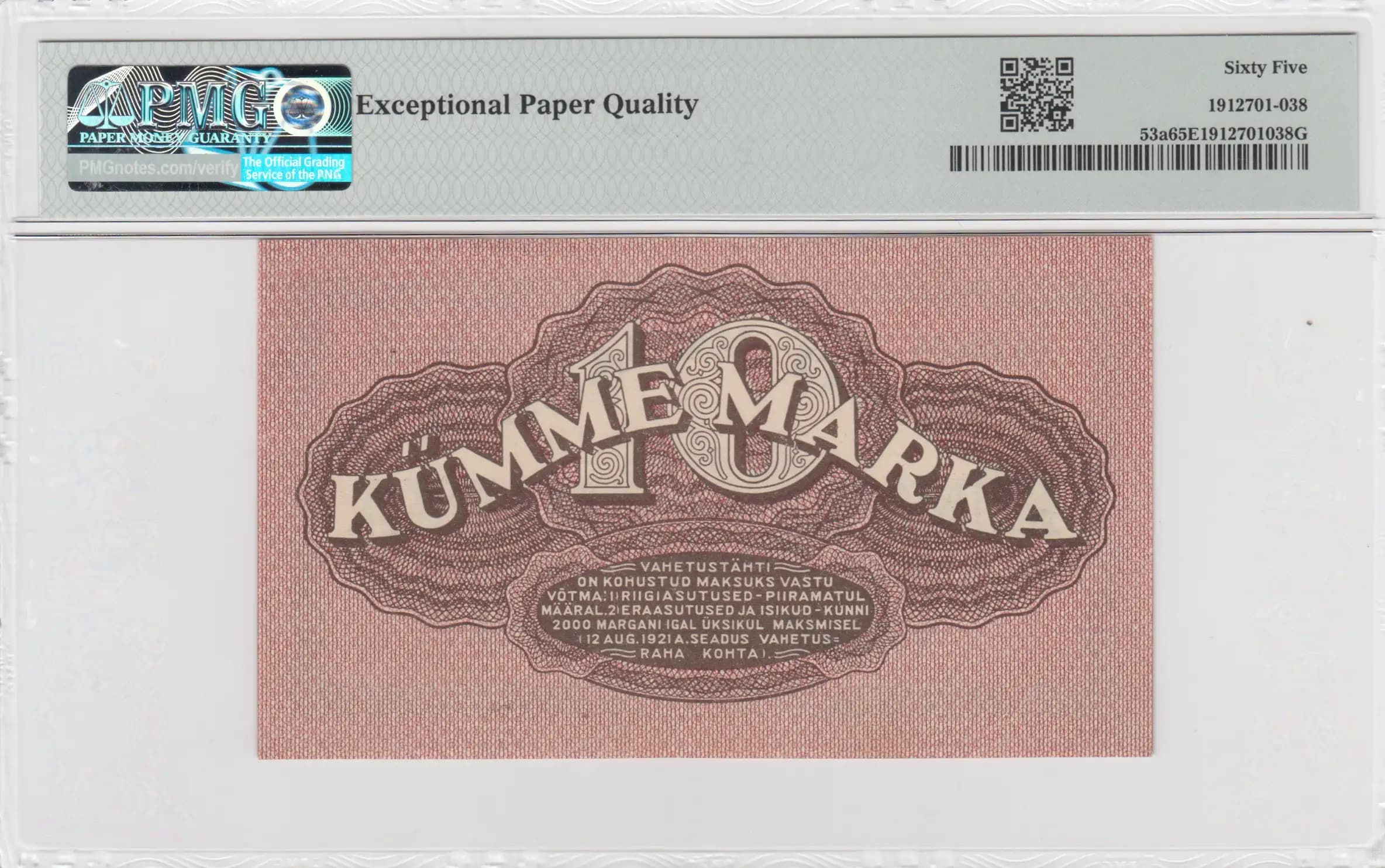
This is an exceptionally well-preserved example of Estonia's 1922 10 Marka note, graded PMG 65 EPQ (Gem Uncirculated). The obverse features a reddish-pink background with ornate decorative borders and large denomination numerals, while the reverse displays an elaborate oval cartouche containing regulatory text regarding the note's legal tender status. This note represents an early emission from the newly independent Estonian Republic and showcases the fine engraving and security printing techniques employed during this period of Baltic monetary reform.
Common. While this is an early emission from the Estonian Republic's first decade, the 10 Marka denomination appears to have been produced in substantial quantities. eBay market data shows consistent sales activity with prices in the $8.50 to $22 range for notes in Fine to Very Fine condition, with 2016 catalog values placing VF examples at $45 and UNC at $90. The specimen offered here (PMG 65 EPQ) represents a premium grade example, but the denomination itself remains readily available in the collector market. The lack of any documented print run restrictions, recall notices, or short-lived issuing period supports a common classification.
The 1922 10 Marka note was issued by the Treasury of Estonia (Eesti Vabariigi) during the early years of the Estonian Republic's independence, following the country's separation from the Russian Empire and the establishment of its own monetary system. The inscription 'VAHETUSTAHT' (Exchange note/certificate) and references to the 1/2 August 1921 currency exchange law indicate this was part of Estonia's transition to a new currency system, replacing the previous Russian and German currencies in circulation. The regulatory text specifying payment limits of up to 2000 marks reflects the economic controls and monetary policy of this formative period in Estonian statehood.
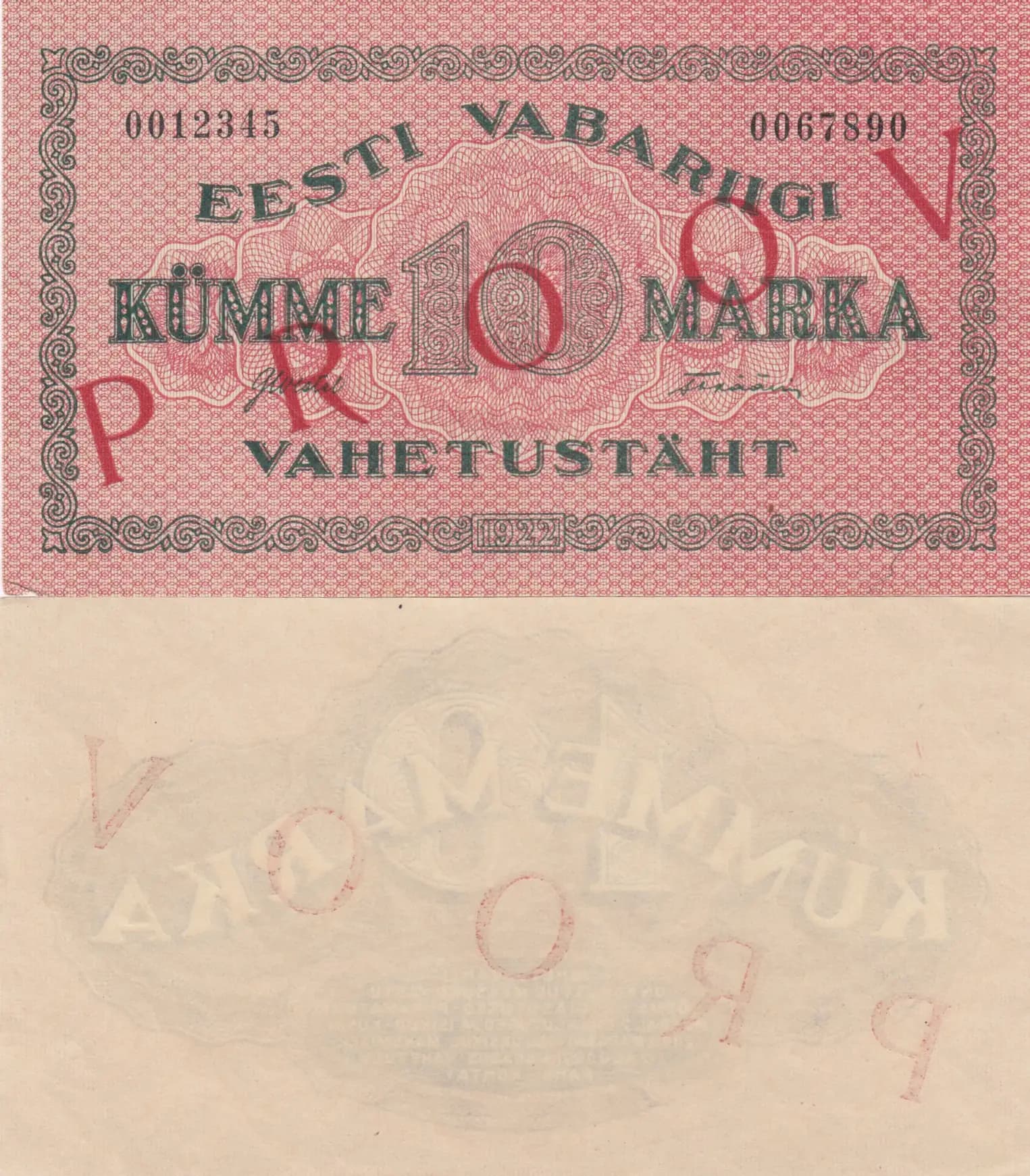
The 10 Marka note features a classical, highly ornamental design typical of early 20th-century European currency. The obverse is dominated by a reddish-pink field with large, bold numerals '10' in the center, framed by elaborate scrollwork and decorative border patterns in dark gray/black engraving. The reverse continues the same color scheme with a prominent oval cartouche (medallion) in tan/beige tones positioned centrally, containing the legal tender regulations in fine, precisely engraved Estonian text. The entire surface is covered with fine-line security background patterns to deter counterfeiting. No portraits or specific landmarks are depicted; instead, the design emphasizes typographic and geometric ornamentation characteristic of emergency currency and official state financial instruments of the period. The watermark 'EV' (Eesti Vabariigi — Estonian Republic) is integrated into the paper security features.
OBVERSE: 'EESTI VABARIIGI' (Estonian Republic) — 'KÜMME MARKA' (Ten Marks) — '0620660' (Serial number) — 'VAHETUSTAHT' (Exchange note/certificate). REVERSE: 'KÜMME MARKA' (Ten Marks) — 'VAHETUSTAHT' (Exchange note/certificate) — 'ON KOHUSTUD MAKSUKS VASTU OTMA:IRIIGIASETUSED-PIIRAMATUL MÄÄRAL IERAASUTUSED JA ISIKUD-KUNNI 2000 MARGANI IGAL UKSIKUL MAKSMISEL' (Is obligated to pay in return according to state regulations-unlimited by amount for institutions and persons-until 2000 marks for each individual payment) — '1/2 AUG.1921.A.SEADUS VAHETUS RAHA KOHTA' (1/2 August 1921 law of exchange regarding currency/money) — PMG certification: '65' and '53a65E1912701038G' with '1912701-038' (Certification reference and number).
This note was produced using intaglio engraving (line engraving), as evidenced by the sharp, crisp detail visible in the fine decorative borders, the precise serif typography, and the fine-line security background patterns throughout. The multi-color printing (reddish-pink primary with dark gray/black text and tan/beige cartouche accents) was achieved through multiple passes of the engraved plates. The high-quality paper stock and the exceptional clarity of the impressions visible in this PMG 65 EPQ specimen indicate professional security printing by a capable state or commercial printer. While the specific printer is not documented in the provided data, Estonian currency of this era was typically produced by established European security printers under government contract.
This note is identified as Pick 53a, characterized by the 'EV' watermark (Eesti Vabariigi). The Pick catalog documents four varieties: P-53a (EV watermark), P-53b (Squares watermark), P-53p (specimen), and P-53s (specimen). The visual analysis confirms the absence of serial number prefix letters, consistent with P-53a characteristics. The serial number 0620660 visible on the obverse is a standard numbering assignment without special prefixes. No signatures, date variations, or overprints are noted that would indicate additional sub-varieties within the P-53a classification.