10 marka 1922
Market Prices
9 salesAbout This Note
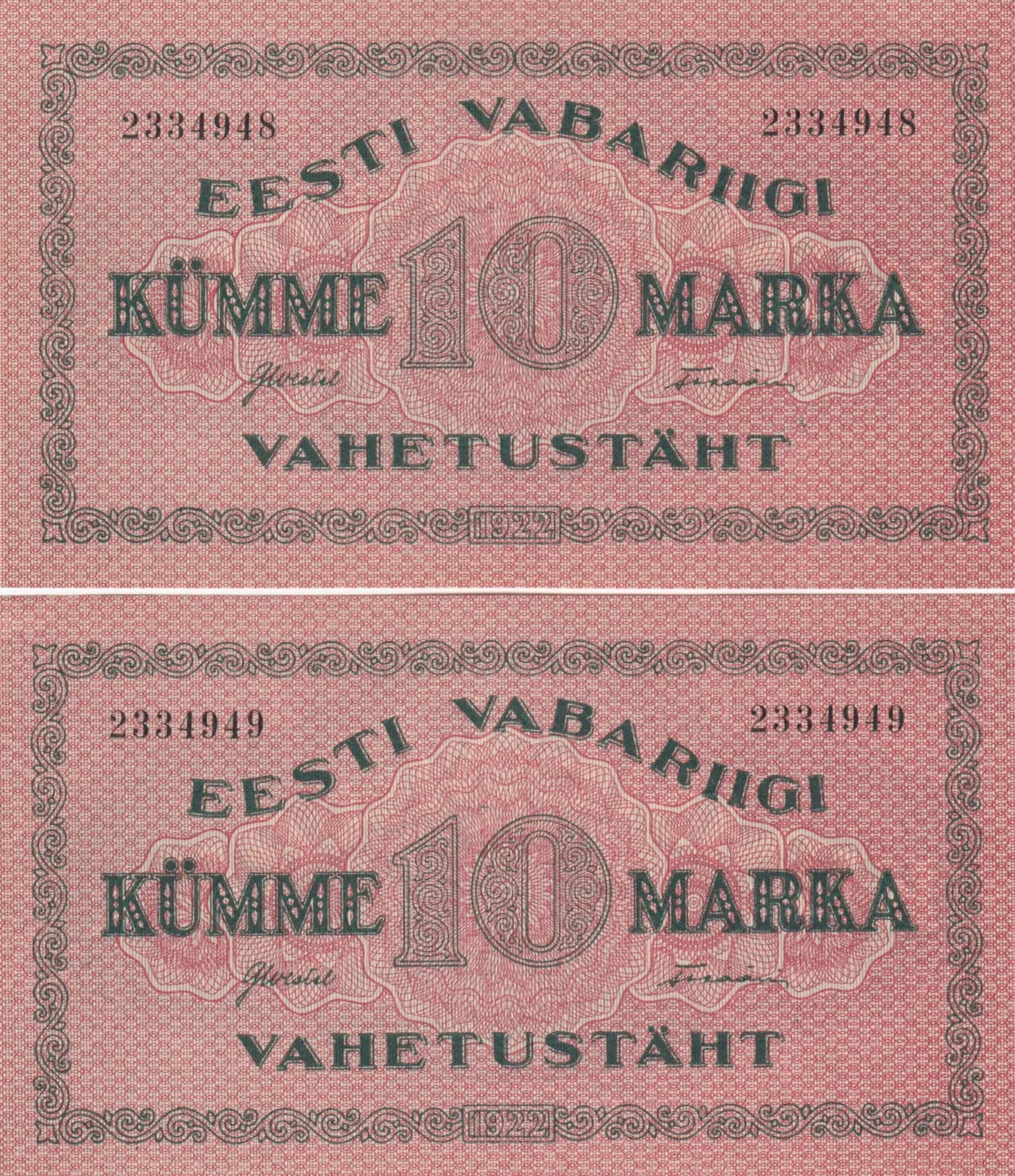
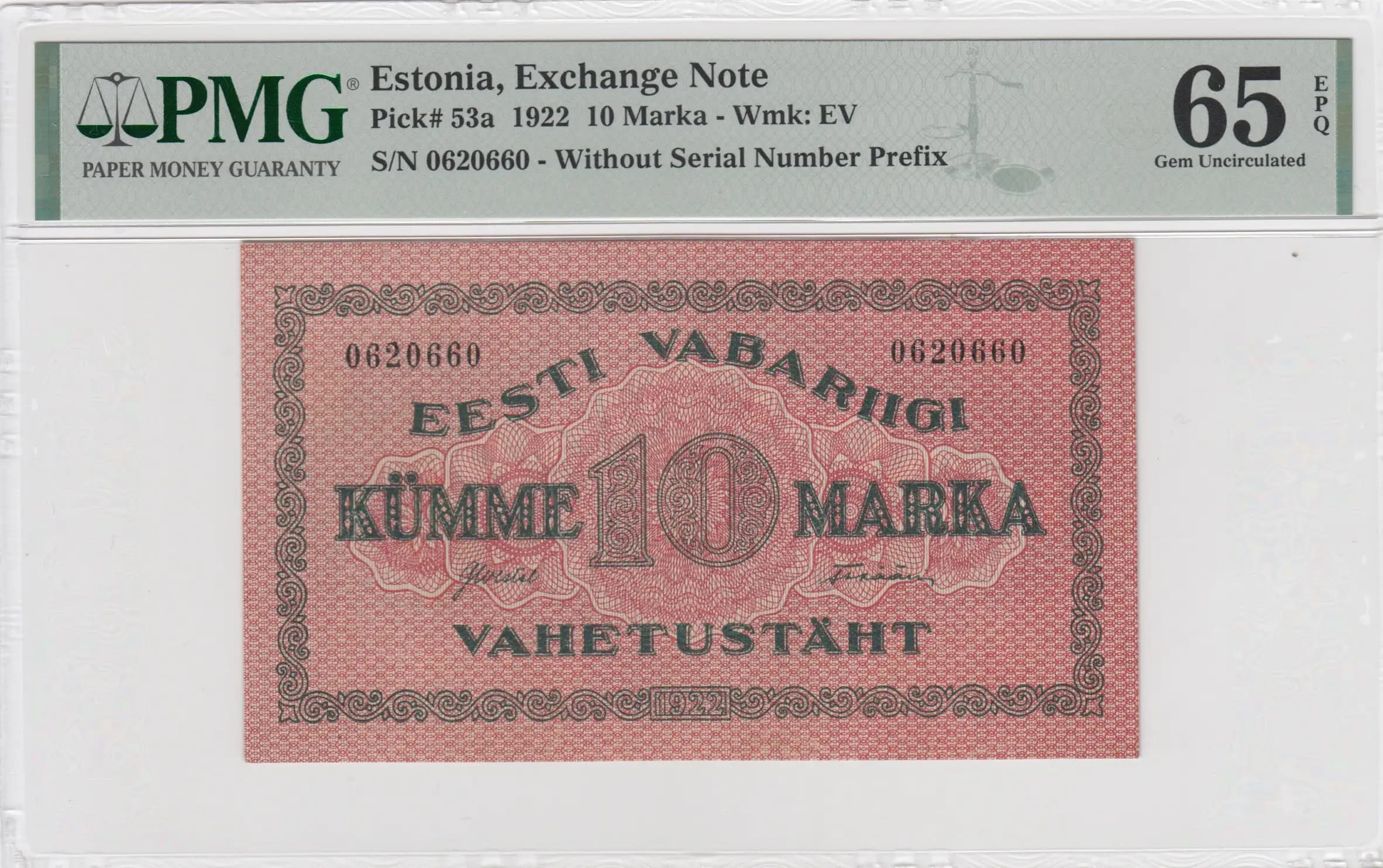
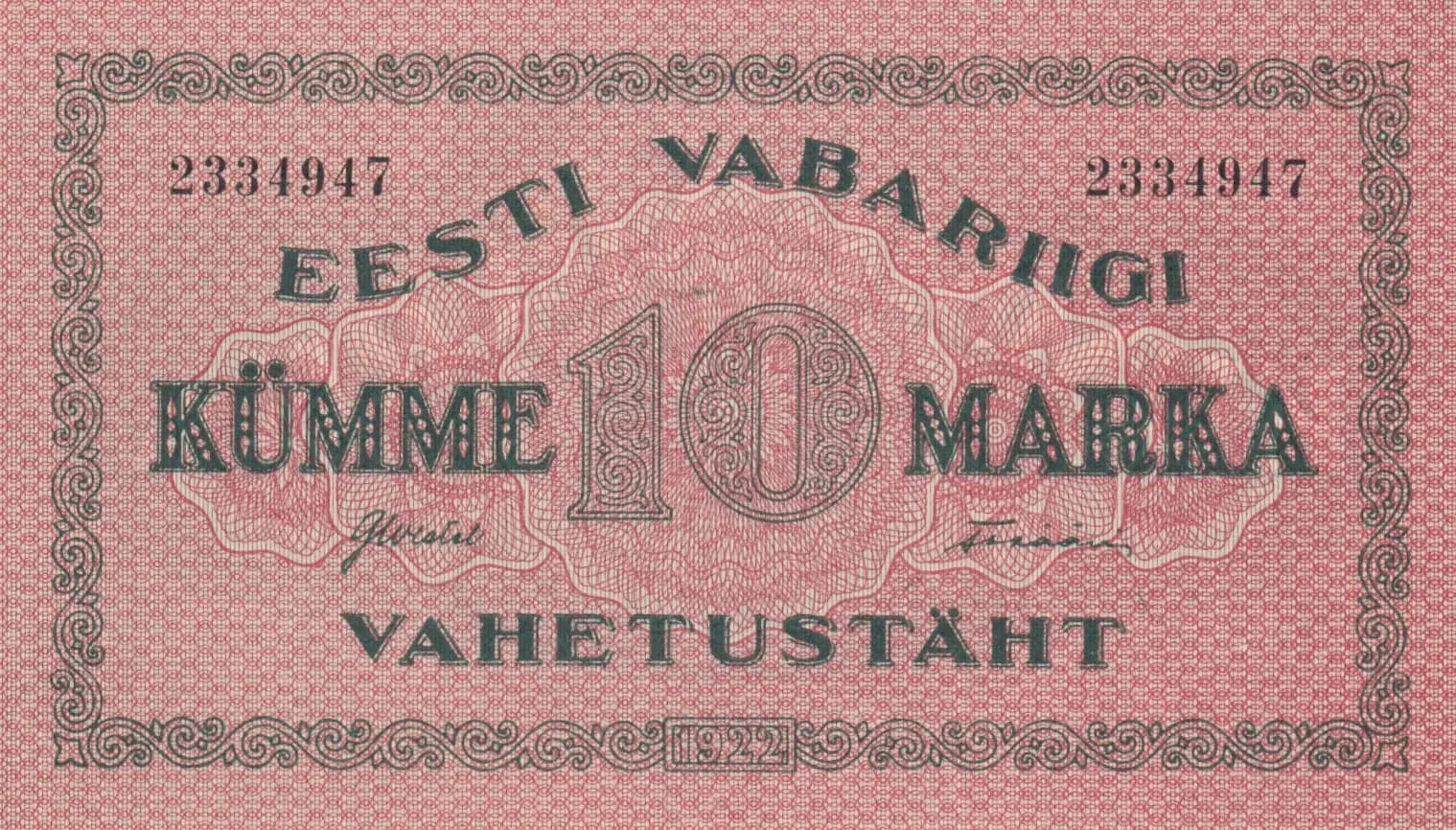
This is an exceptionally well-preserved example of Estonia's 1922 10 Marka exchange certificate (VAHETUSTÄHT), graded UNC and displaying pristine condition with no circulation wear. The note features striking pink/rose coloring with dark green ornamental borders and guilloché patterns characteristic of early Estonian currency security printing. As a 1922 issue from the Treasury of Estonia during the nation's early independence period, this uncirculated specimen represents an important artifact of Estonian monetary history.
Common. Despite being an early Estonian issue from 1922, eBay market data shows consistent selling prices in the $8.50–$22 range for circulated examples, with 2016 catalog values of $90 for UNC specimens. The relatively modest prices for higher-grade notes and the consistent availability of examples in the secondary market indicate this is not a scarce issue. The Treasury of Estonia's 1922 emission was substantial enough to ensure reasonable survivor quantities in all grades.
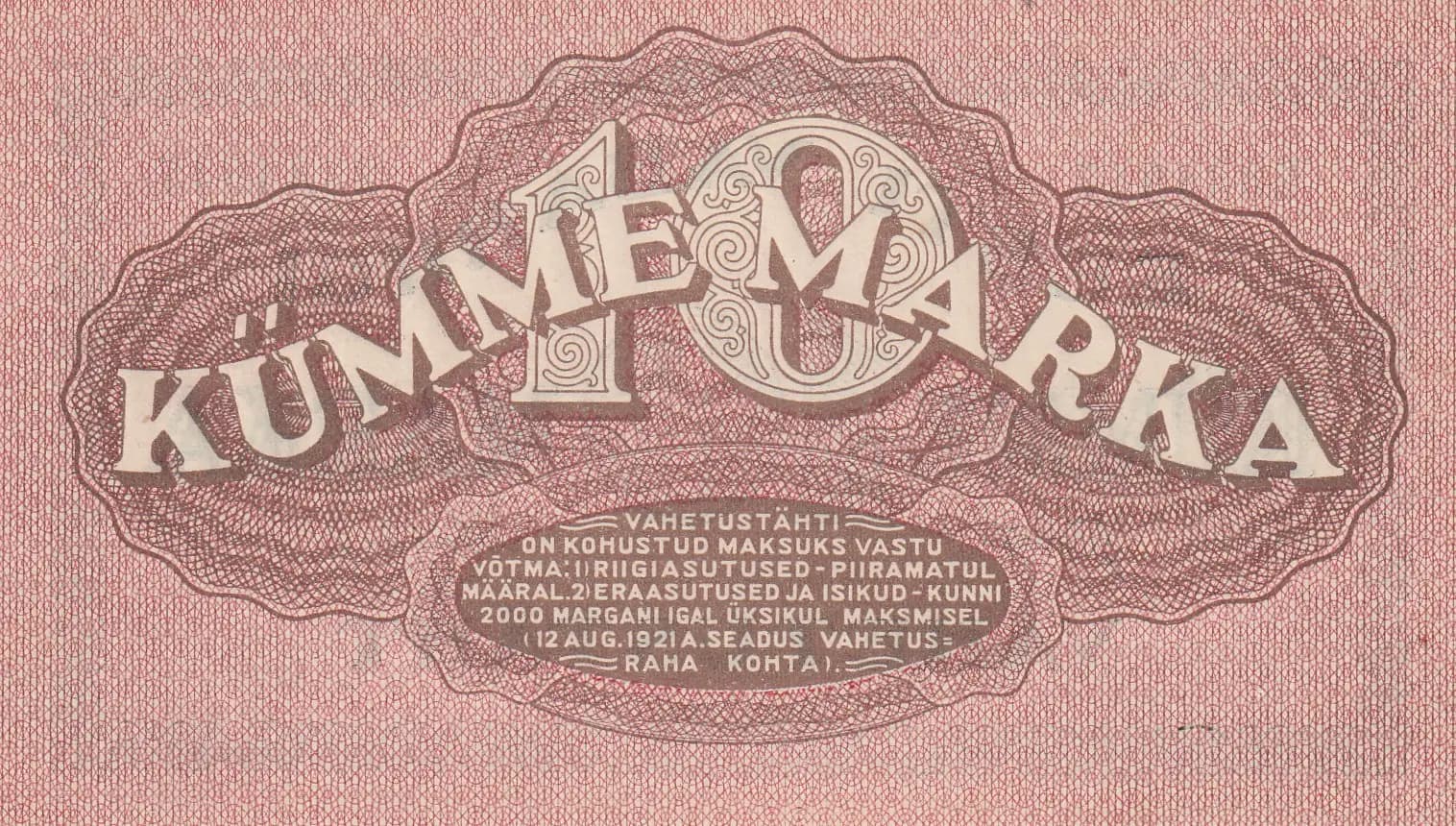
The 1922 10 Marka was issued by the newly independent Estonian Republic during its early years following independence from Russia in 1918. Designated as an exchange certificate (VAHETUSTÄHT) rather than standard currency, the note's inscriptions specify its legal tender status: mandatory acceptance by government institutions without limit, and by private entities up to 2000 marks per transaction as of August 12, 1922. This dual-tier acceptance policy reflects the transitional monetary conditions of post-WWI Estonia as it established its own financial system.
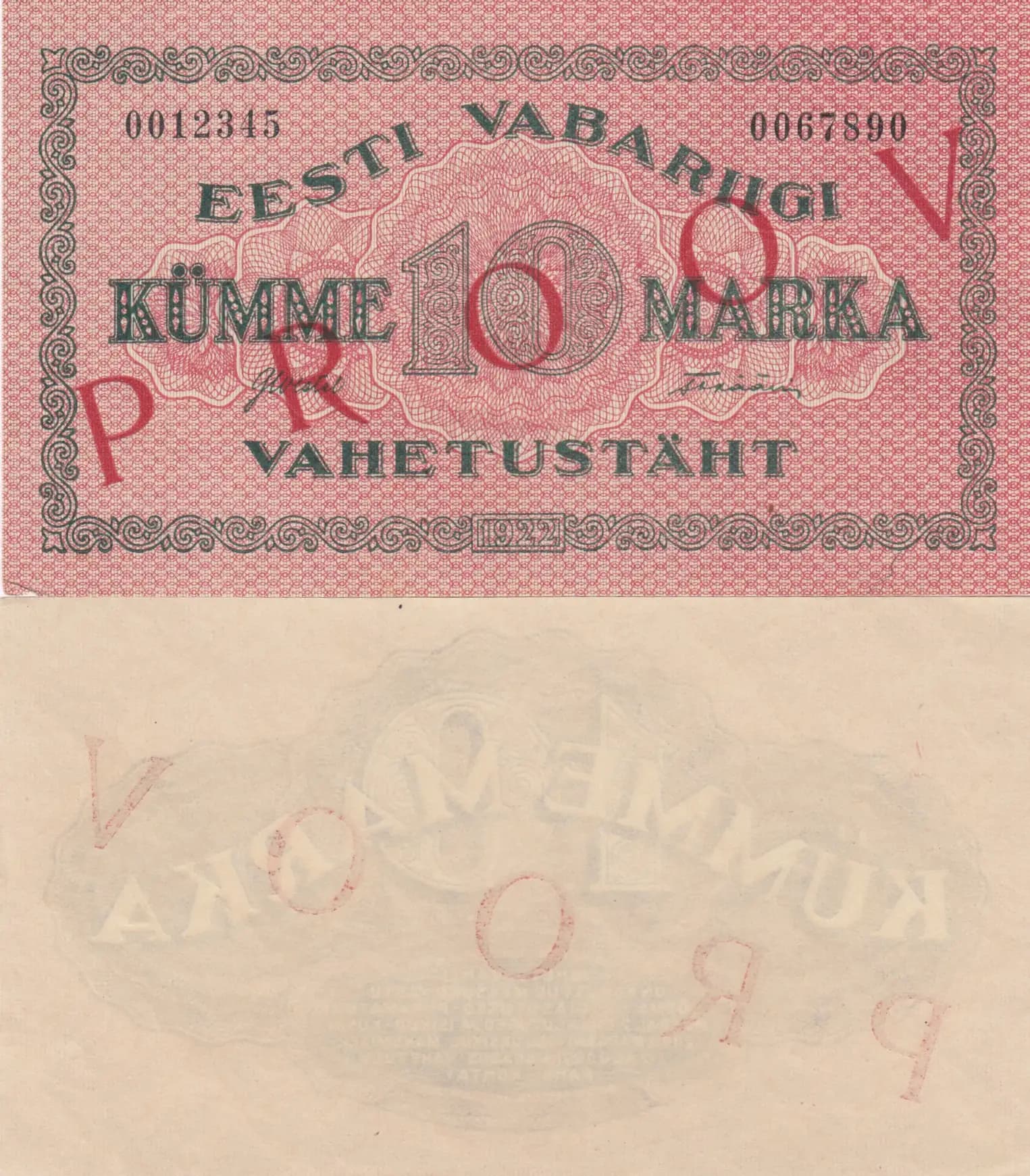
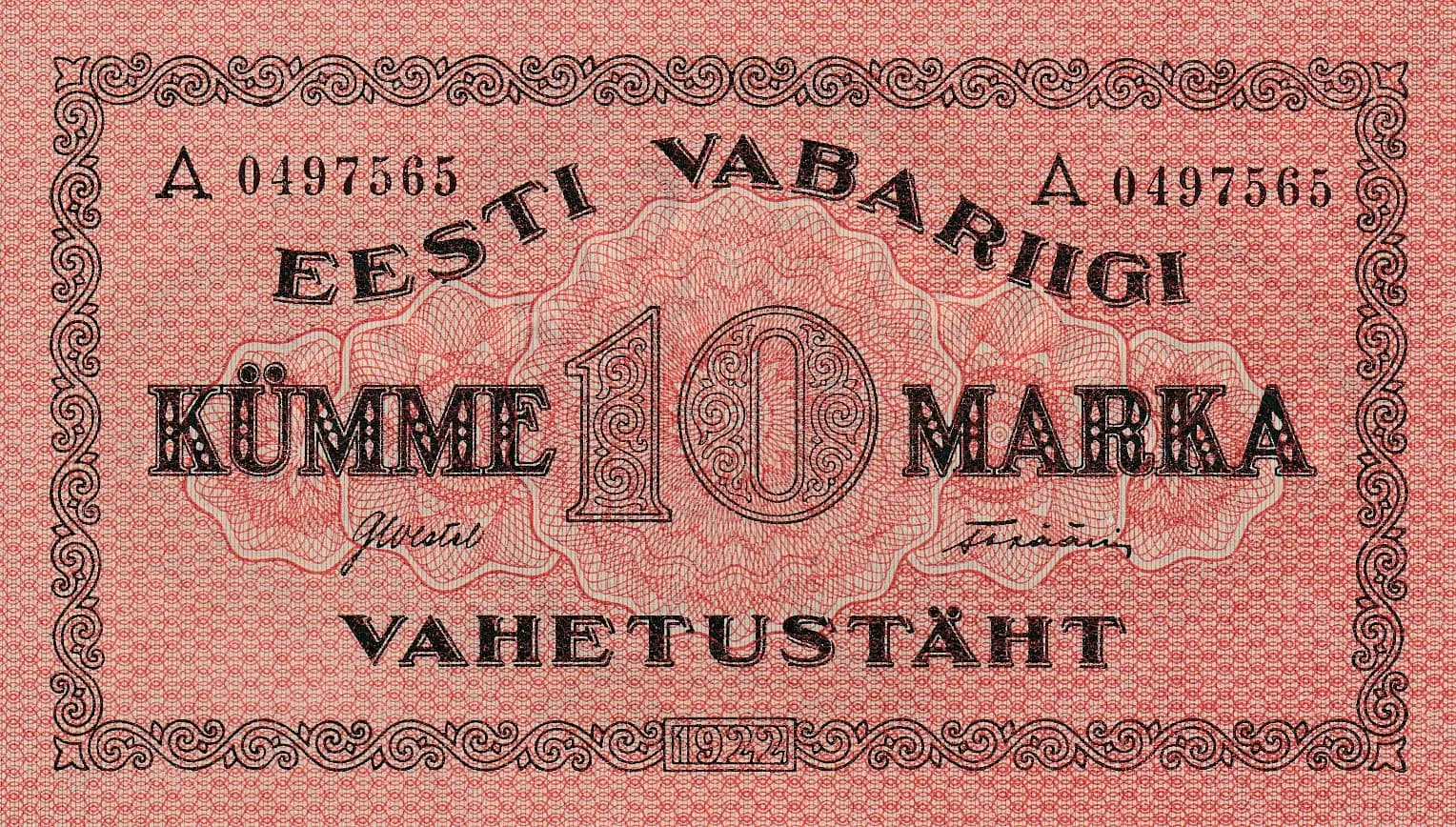
This exchange certificate employs a classical ornamental design centered on the denomination 10 within an elaborate rectangular frame surrounded by scrollwork and guilloché borders. The obverse features a pink/rose field with dark green/teal text and ornamental elements, while the reverse displays a prominent oval medallion containing 'KUMME MARKA' and the numeral 10, with a separate oval cartouche below containing the acceptance conditions. The design eschews portraiture in favor of pure ornamental elements—scrollwork borders, fine-line background patterns, and geometric frames—typical of security printing from this era. No portraits or specific landmarks are depicted; the note's visual authority derives entirely from its intricate decorative patterns and formal layout.
FRONT SIDE: 'EESTI VABARIIGI' (Estonian Republic), 'KUMME MARKA' (Ten Mark), 'VAHETUSTÄHT' (Exchange Certificate/Voucher), Serial number: 2334917 (appears left and right). BACK SIDE: 'KUMME MARKA' (Ten Mark), followed by extensive terms: 'Exchange certificates must be accepted as payment: 1) Government institutions - without limitation 2) Private institutions and individuals - up to 2000 marks per individual transaction. Valid as of 12 August 1922 regarding money in circulation.'
Intaglio engraving and letterpress printing, evidenced by the fine-line guilloché patterns, precise ornamental borders, and crisp text impressions visible throughout both sides. The multi-color printing (pink/rose underprint with dark green and tan/brown elements) indicates chromatic separation typical of quality security printing from the 1920s. The watermark 'EV' (Eesti Vabariigi) was incorporated during paper manufacture at the mill stage.
This specimen corresponds to Pick catalog P-53a, characterized by the EV watermark (Eesti Vabariigi). The Pick catalog identifies four main variants: P-53a (EV watermark), P-53b (Squares watermark), P-53p (specimen), and P-53s (specimen). The observed note lacks serial number prefix letters, consistent with the P-53a variety documentation from realbanknotes.com. Serial number 2334917 shows no prefix, confirming the early variety without alphabetic prefixes that were added to later emissions.