10 marka 1922
Market Prices
1 saleAbout This Note
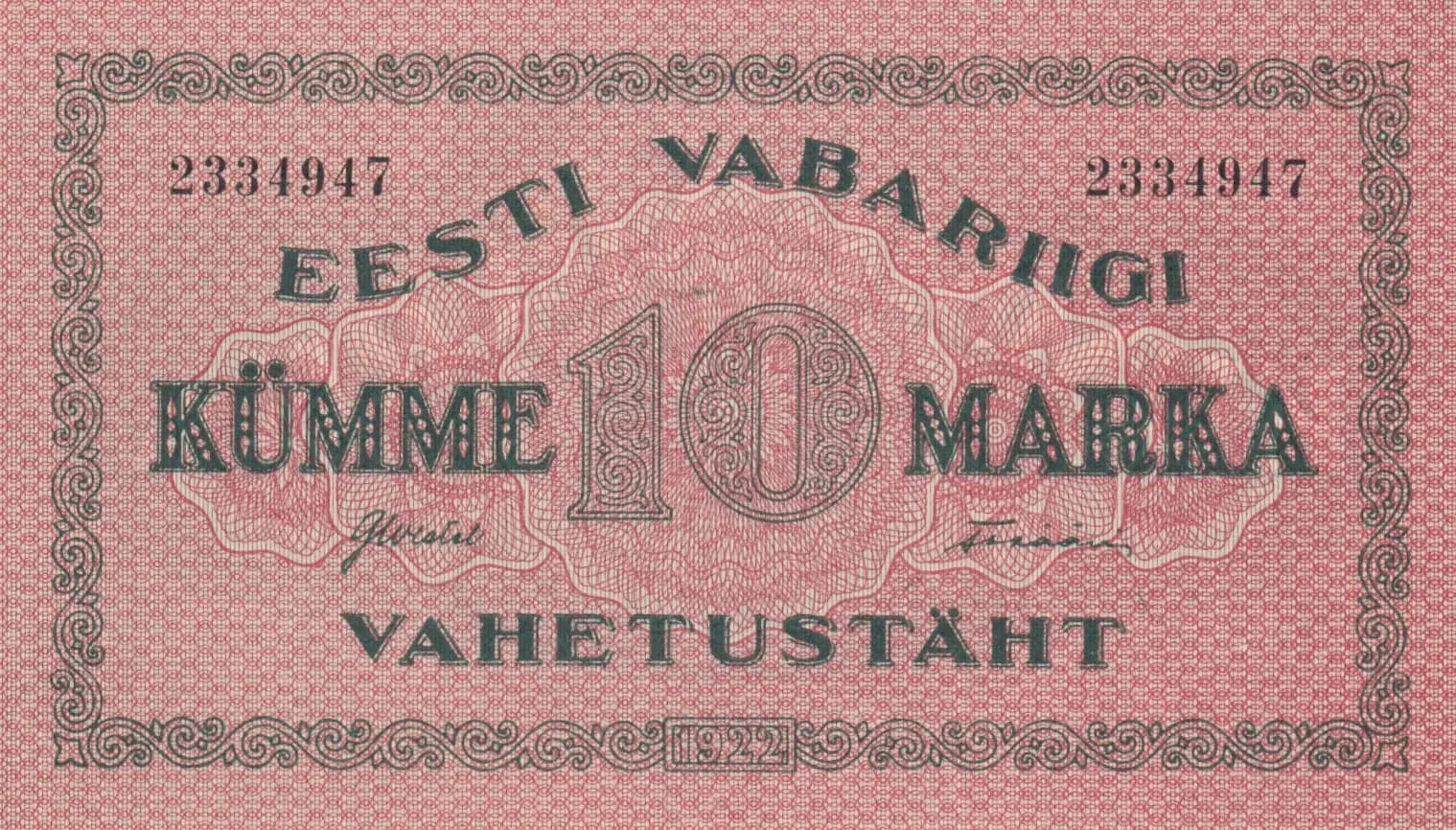
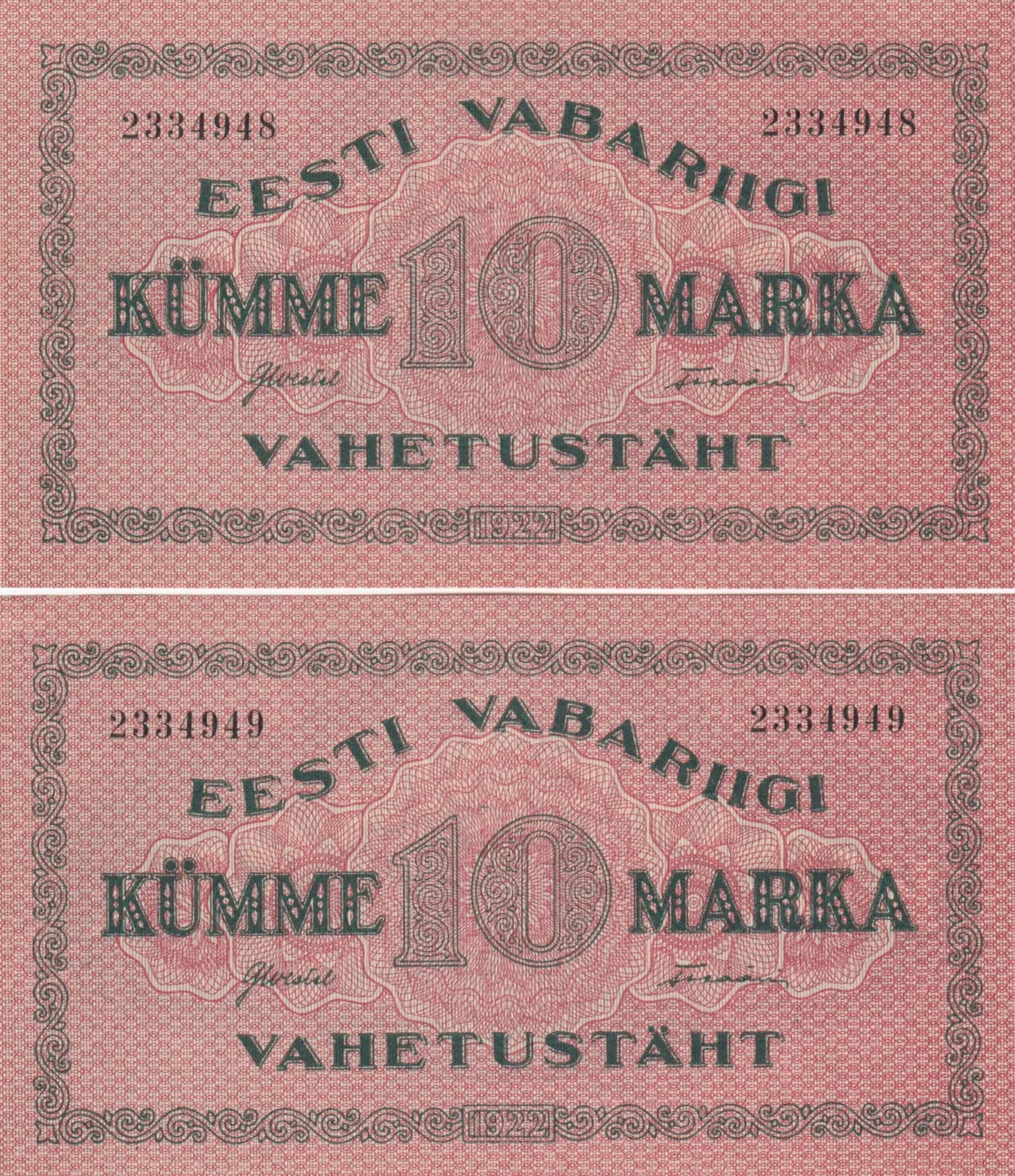
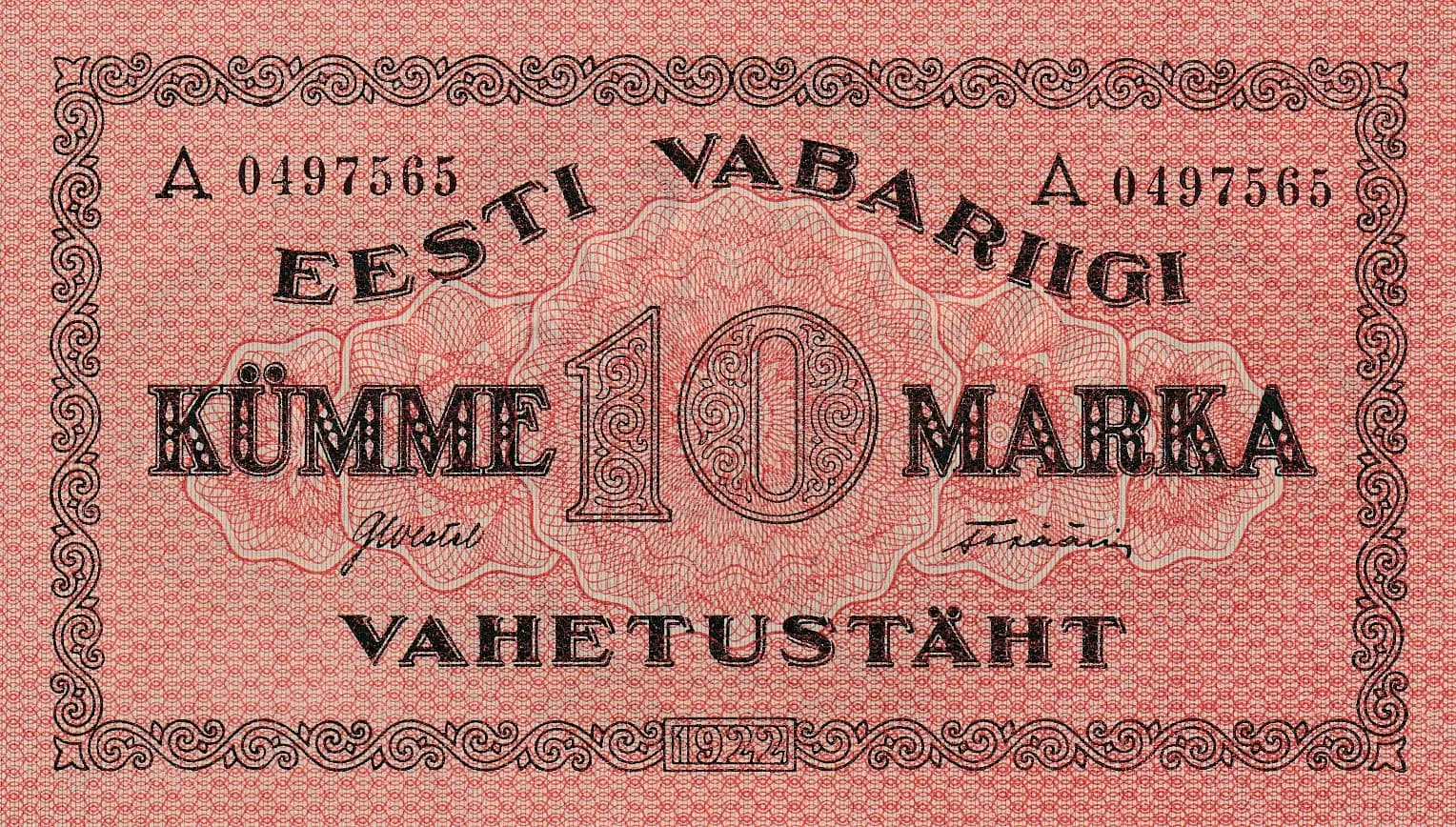
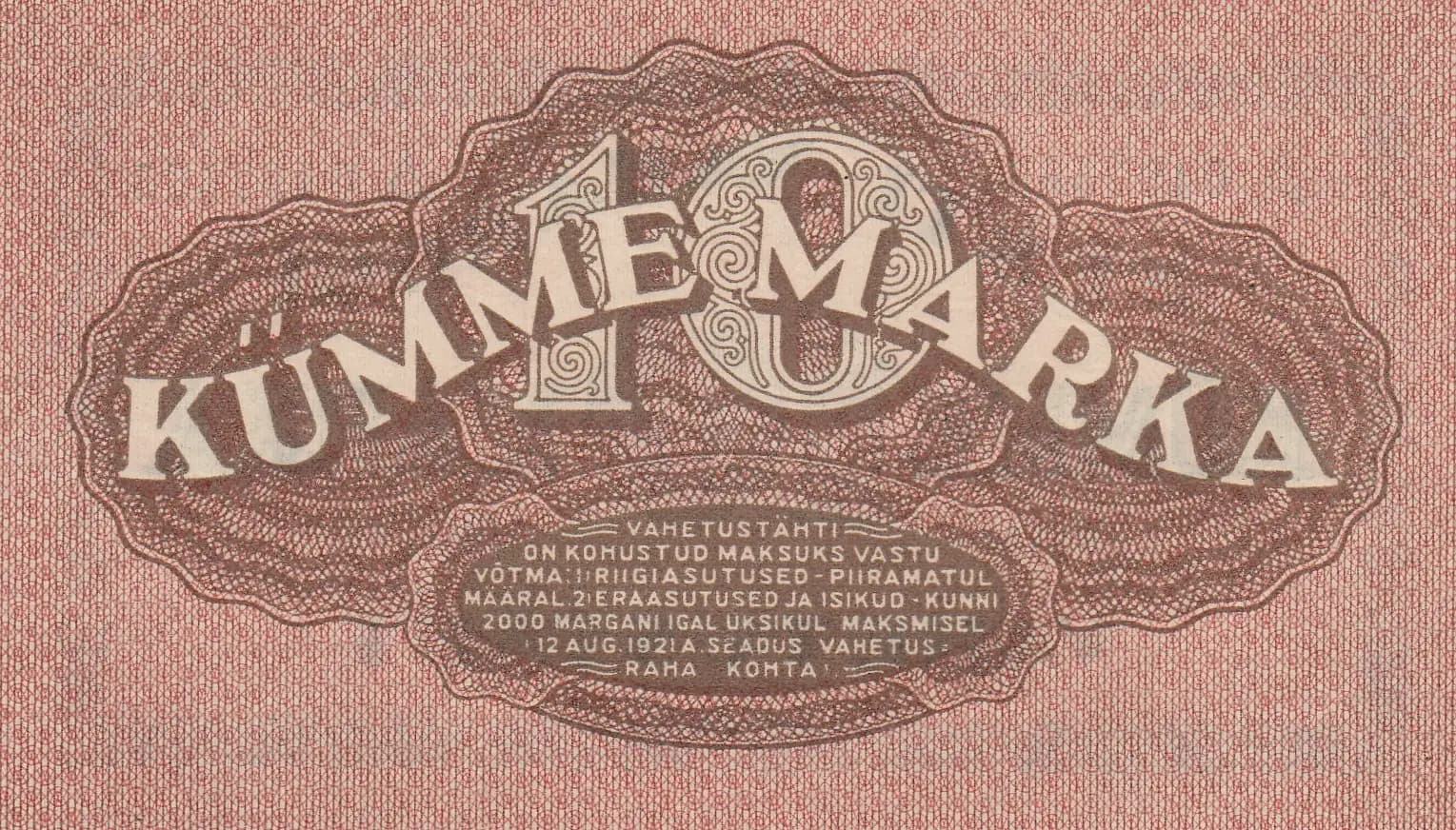
This is an exceptional example of Estonia's early post-independence currency: a 10 Marka note from 1922 in uncirculated condition. The note displays the characteristic pink/salmon obverse with intricate geometric patterning and ornate scrollwork borders typical of early Estonian Treasury issues, while the brown reverse features a prominent cartouche containing the denomination. As a P-53b variant with square watermarks, this represents a key issue from the formative period of the Estonian Free State, and the pristine condition significantly enhances its collector appeal.
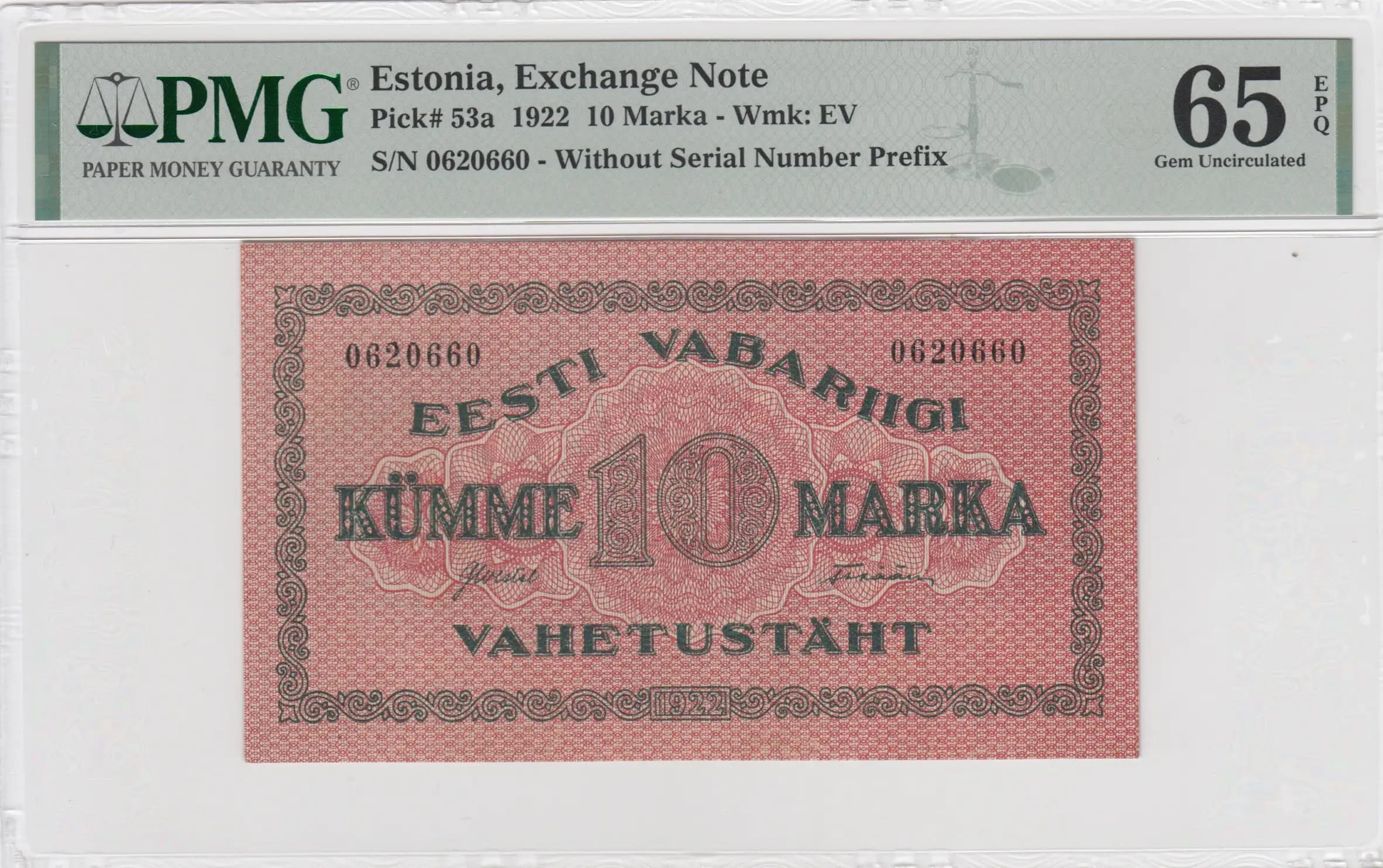
Common. While this is an early issue from a newly independent nation during a transitional period, the 10 Marka denomination was widely circulated and produced in substantial quantities. The catalog price reference data shows typical UNC examples valued at approximately $90 (2016 estimate), with EF examples selling for $54, indicating steady but not particularly strong collector demand. The availability of multiple PMG-graded variants (P-53a, P-53b, P-53p, P-53s) suggests reasonable survival rates. Early Estonian currency remains relatively affordable and accessible compared to truly rare early national issues.
Issued by the Treasury of Estonia (Eesti Vabariigi) in 1922, this note represents the currency of the newly independent Estonian Free State, established following the country's separation from Russia. The inscriptions in Estonian language—including 'EESTI VAB ARIIGI' (Estonian Free State) and 'KÜMME MARKA' (Ten marks)—reflect the nation's determination to assert its sovereignty through its own monetary system. The legal text on the reverse references a 1921 law governing the note's acceptance, underscoring the transitional nature of Estonia's early currency period as it stabilized its finances after independence.
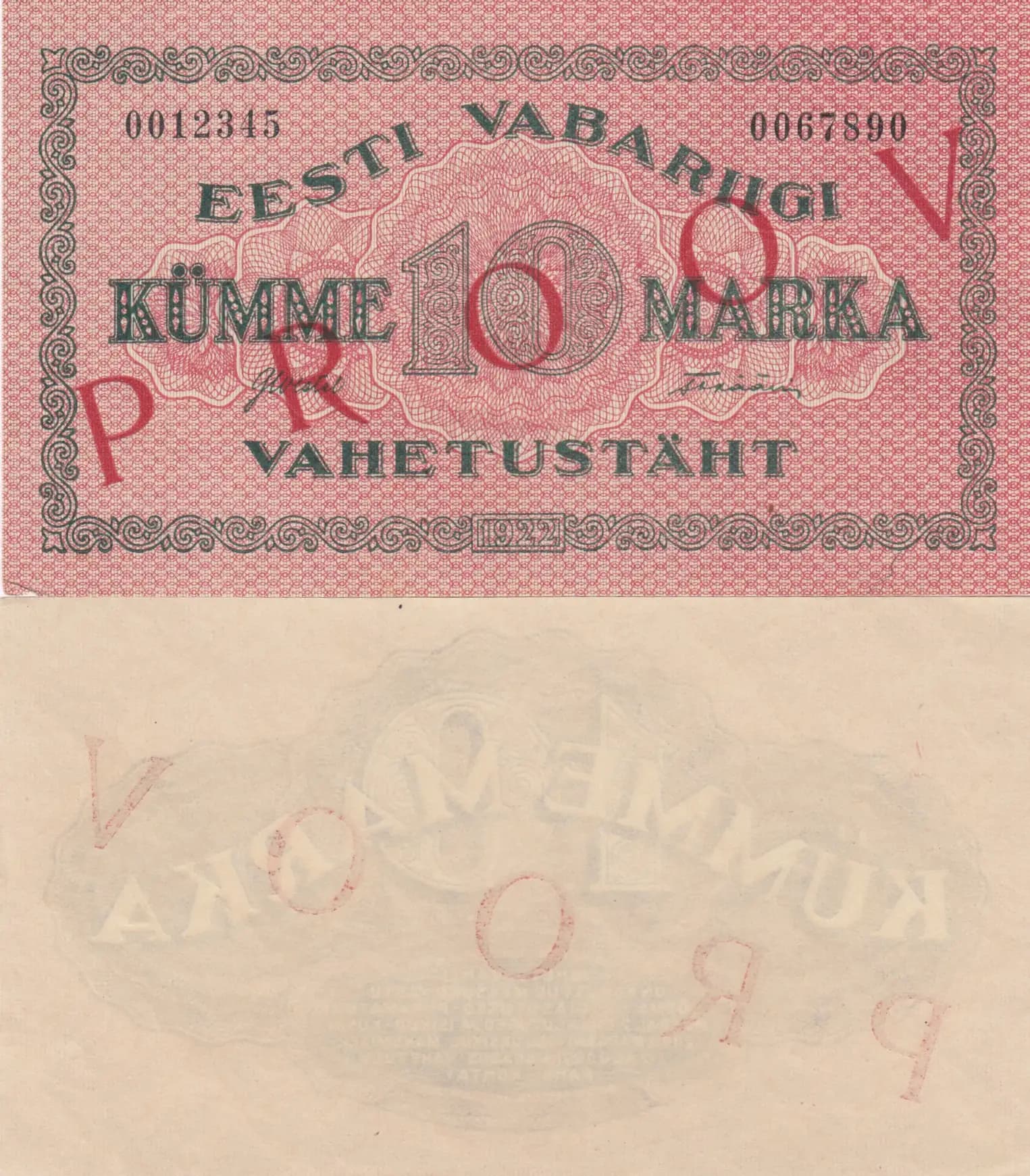
The obverse features a distinctly Art Deco aesthetic typical of early 1920s currency design, with a dominant pink/salmon background overlaid with fine geometric crosshatch security patterns. The large numeral '10' is centrally positioned within an ornate cartouche frame, surrounded by elaborate scrollwork borders with spiral and curved patterns in black/dark brown. The reverse employs warm brown and tan tones with a large ornate circular cartouche dominating the center, containing the denomination '10' within detailed engraved ornamental circles. Both sides feature fine security line work—vertical patterns on the reverse and complex geometric designs on the obverse—typical of security printing of the period. The note bears no portraits or specific landmarks, instead relying on abstract ornamental design elements and sophisticated engraving patterns for security and aesthetic appeal.
OBVERSE: 'EESTI VAB ARIIGI' = Estonian Free State; 'KÜMME MARKA' = Ten marks; 'VAHETUSSTAHT' = Exchange note; 'A 0197565' = Serial number (appears twice); '1922' = Year of issue. REVERSE: 'KUNNEMA PARKA' = Ten mark (alternative Estonian form); Extended legal text translates approximately to: 'This exchange note is legally required to be accepted by state institutions within limited amounts and by private entities and individuals up to 2000 marks per individual transaction, per the Law Regarding Exchange Notes of August 12, 1921.' The reverse text establishes the regulatory framework for the note's circulation and acceptance.
Intaglio engraving (line engraving), evidenced by the fine geometric crosshatch patterns, intricate linear security background designs, and detailed scrollwork characteristic of currency-grade security printing from the early 1920s. The sharp definition of the ornate cartouche frames and the delicate line work visible throughout both sides confirm professional security printing standards. The specific printer for this issue is not definitively documented in standard cataloging, but the quality suggests a reputable European security printer contracted by the Estonian Treasury.
This note is identified as Pick P-53b, characterized by the square watermark pattern, distinguishing it from the P-53a variant which bears 'EV' watermarks. The serial number observed is 'A 0197565', with series designation 'A'. The 1922 date and specific composition of pink/salmon obverse with red-brown and brown reverse as documented in external references confirms this as the standard P-53b type. No overprints, signatures, or other notable varieties are evident on the specimen examined. Minor cataloging discrepancies exist (some sources list 1924 as the date, but the note clearly displays 1922), which may relate to production versus circulation dating practices of the period.