10 marka 1922 specimen
Market Prices
9 salesAbout This Note
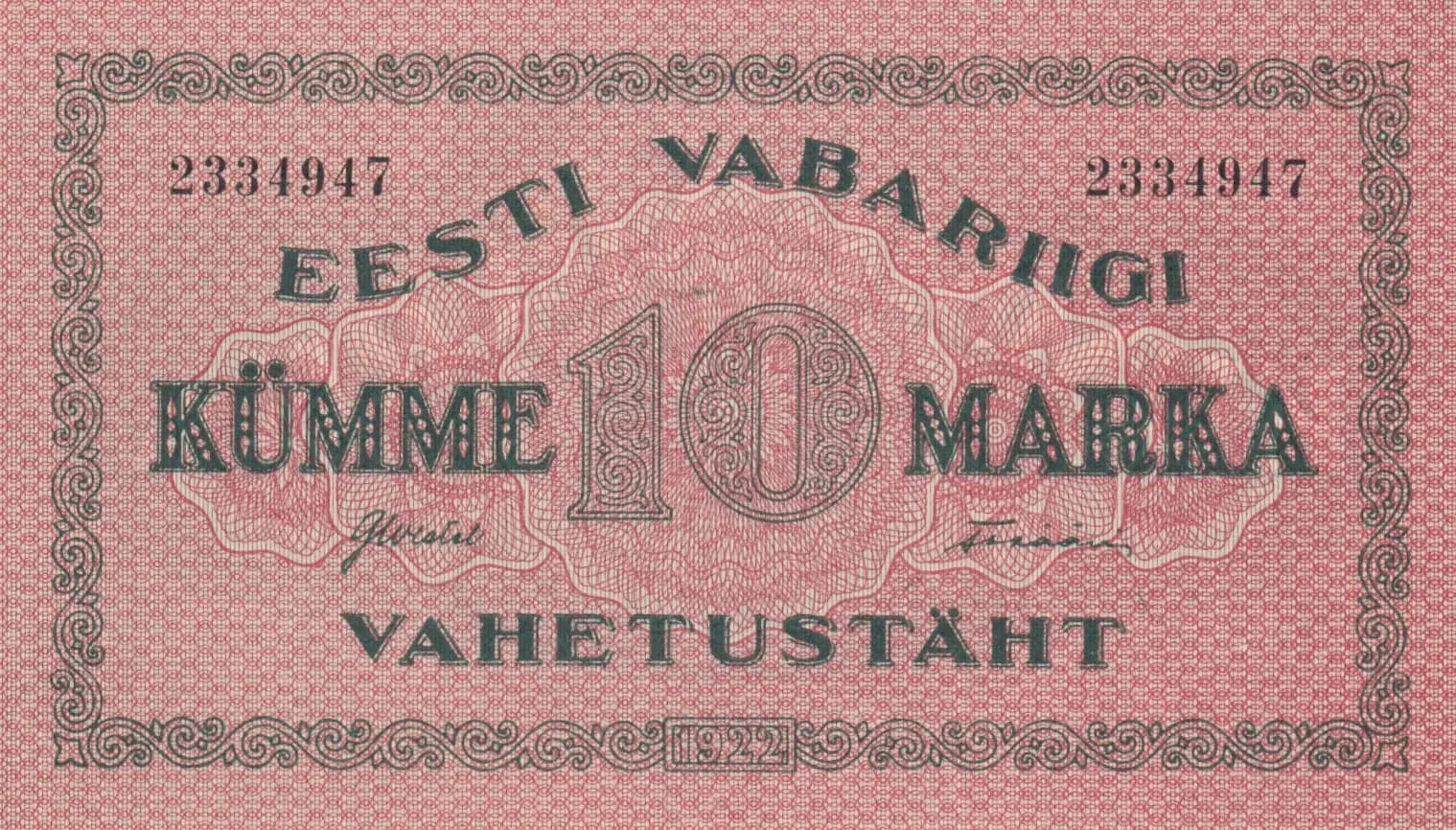
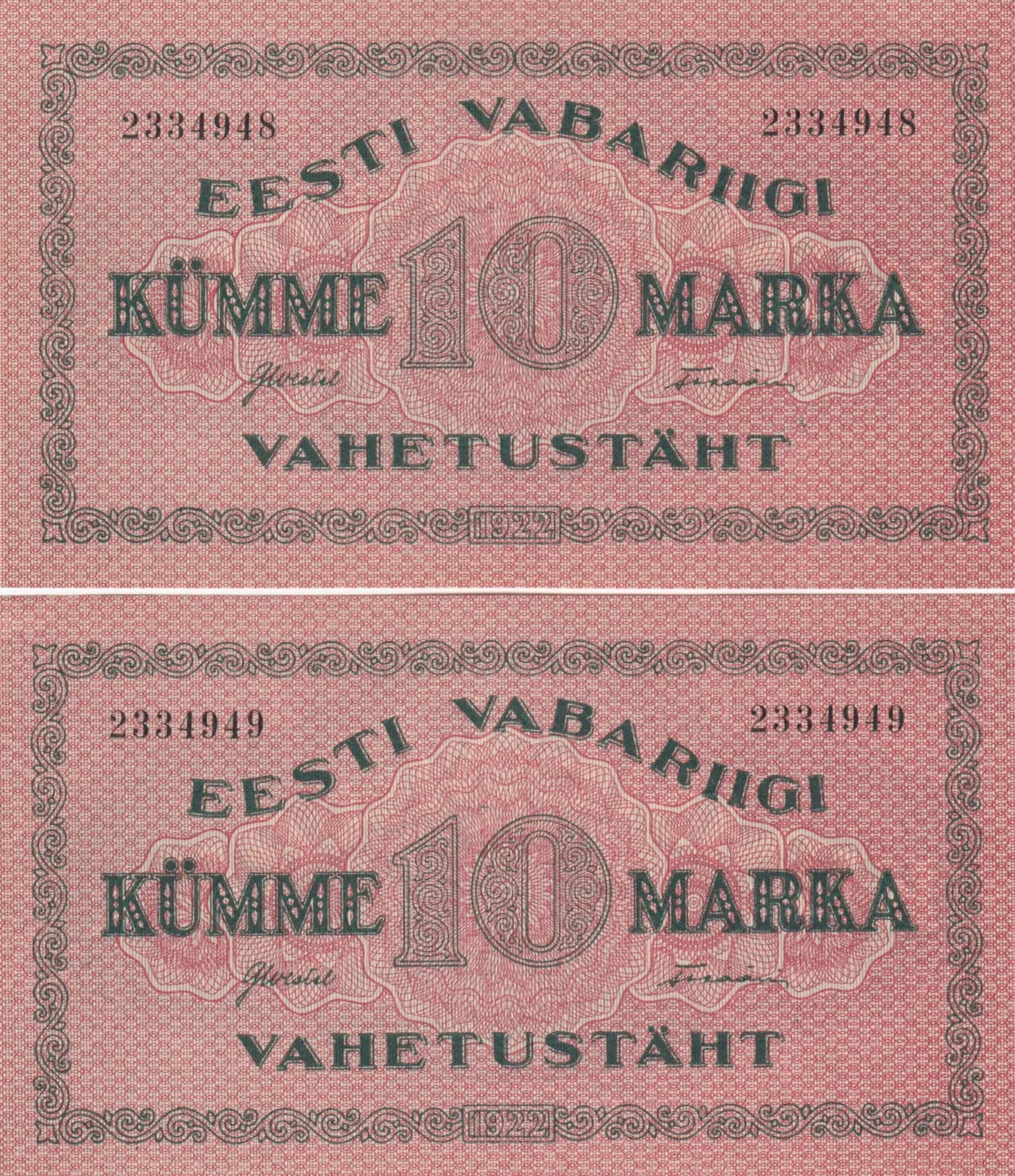
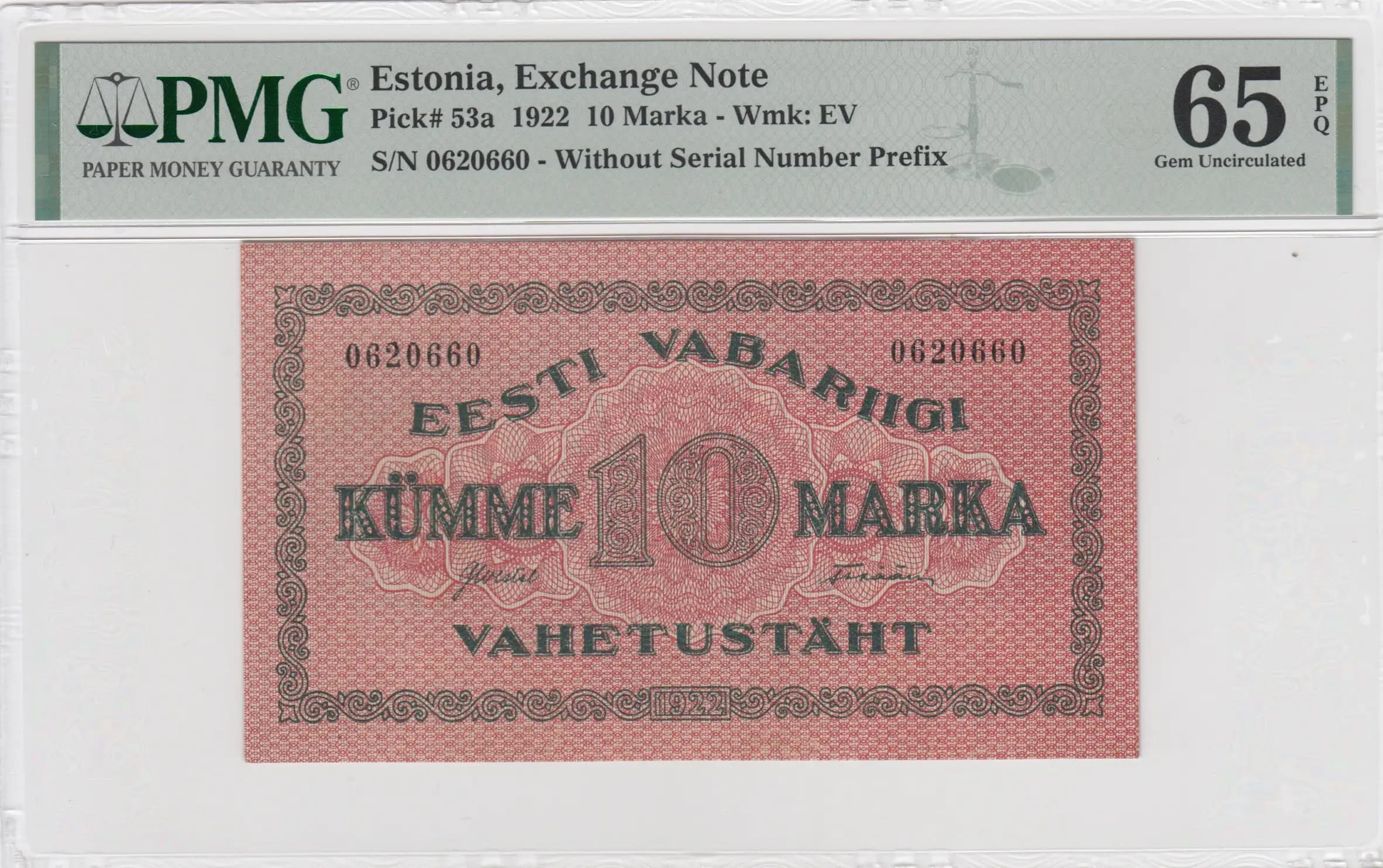
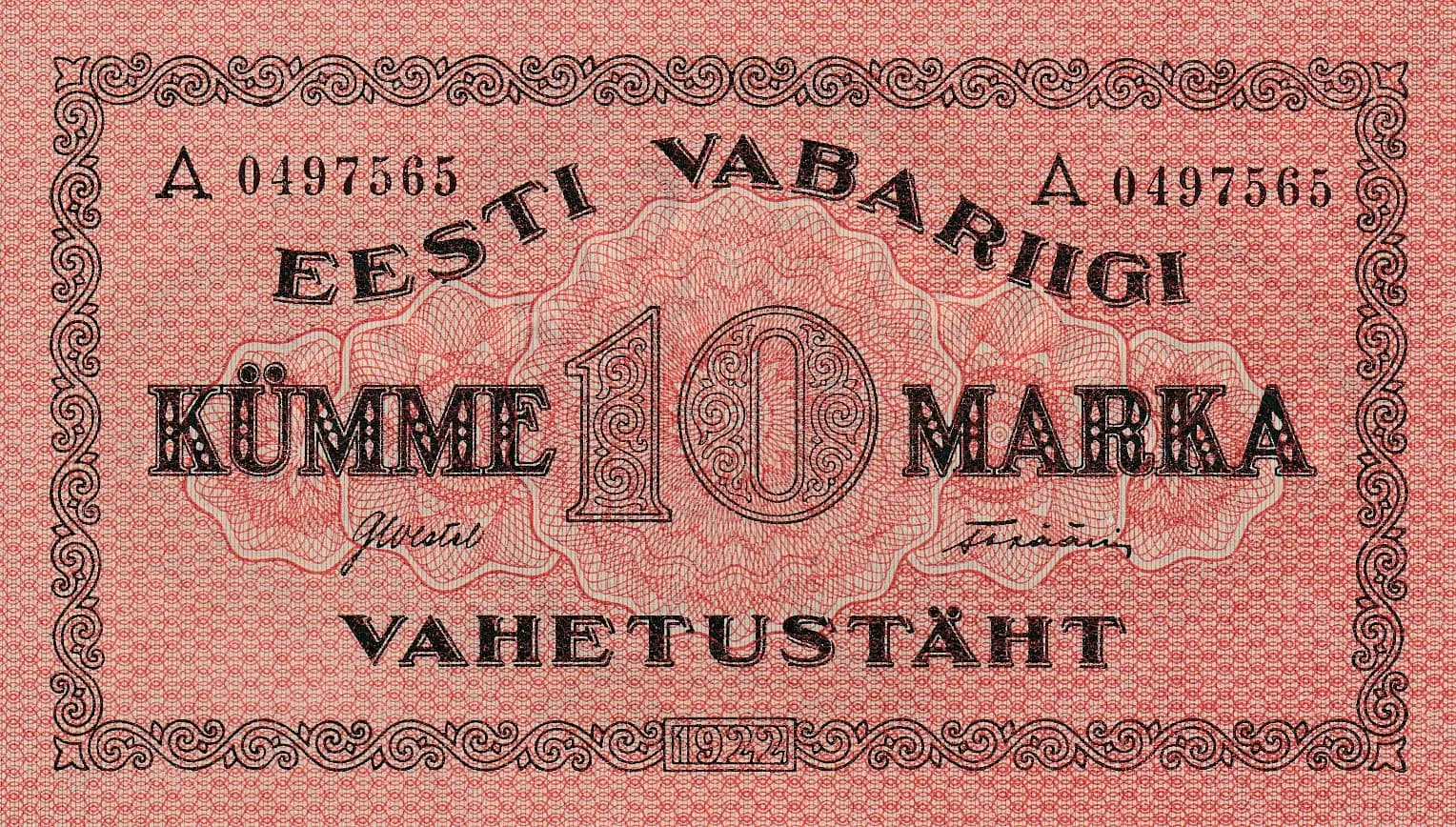
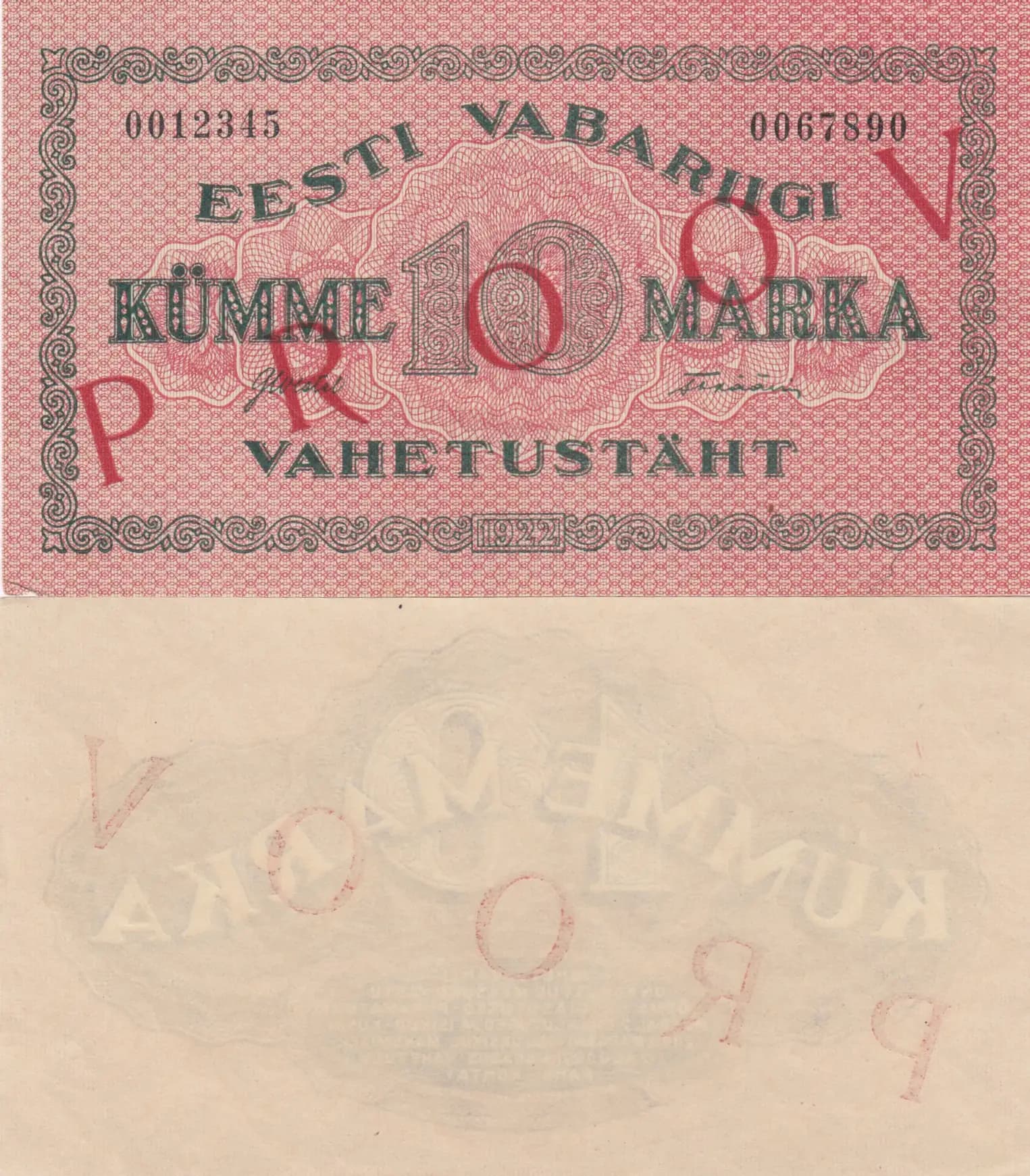
This is a 1922 Estonian 10 Marka specimen note in Uncirculated condition, featuring an elegant rose-pink design with ornamental borders and fine-line engraving throughout. The note displays the characteristic red diagonal 'PANK' overprint typical of specimen notes, along with well-preserved serial numbers and decorative medallion work. The paper shows age-appropriate yellowing and foxing consistent with a century-old banknote, yet the engraving details and color remain distinctly vibrant, making this an attractive example of early Estonian currency from the newly independent republic.
Common. The eBay market price data shows consistent sales in the $8–$22 range for similar circulated and fine condition examples, with 2016 catalog values of $90 for UNC notes. Despite the note being from an early independent Estonian state (historical interest), the regular issue designation and apparent adequate print run make this a relatively common issue in the collector market. The specimen designation (overprint) may make it slightly less common than regular circulation notes of the same type, but specimen notes from major mints were often produced in moderate quantities for banking records and international distribution. This note remains accessible to collectors at reasonable prices.
Issued in 1922 by the Treasury of Estonia (Eesti Vabariigi) during the young republic's first years of independence following the Russian Revolution and World War I, this note represents Estonia's early efforts to establish a national currency. The inscriptions reference the August 12, 1921 law governing currency exchange, reflecting the transitional monetary policies of the nascent state. The ornamental design with heraldic medallion and scrollwork represents the classical European aesthetic that characterized many new nations' early currency issues during this period of state consolidation.
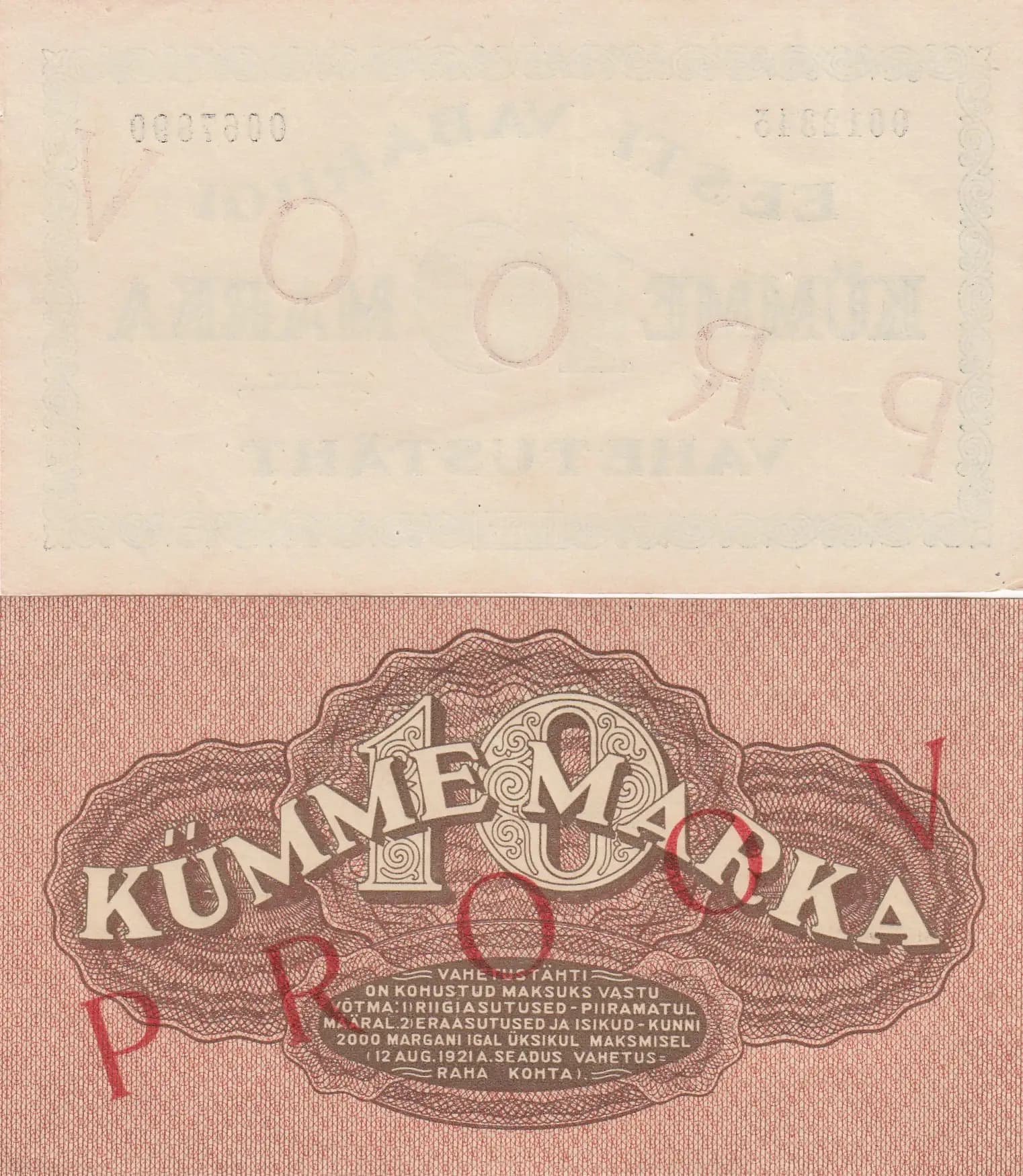
The 10 Marka features a symmetrical, ornamental design typical of early 20th-century European currency. Both obverse and reverse are dominated by an elaborate heraldic medallion or crest at the center, rendered in fine line engraving with intricate scrollwork and floral patterns. The denomination '10' is prominently displayed within a decorative frame on the obverse. The border consists of a continuous ornamental pattern with scrolling elements and floral motifs in the corners, providing a frame for the central design. The rose-pink color with brown-red underprinting creates visual depth, while the reverse employs similar ornamental framing with the central medallion containing the denomination text 'KÜMME MARKA'. No portraits or geographic landmarks are depicted; instead, the design emphasizes national symbols through heraldic and classical ornamentation, reflecting Estonia's desire to assert its identity as a sovereign state. The red 'PANK' overprint applied diagonally across both sides is the defining characteristic of specimen notes.
{"front":{"obverse_title":"EESTI VABARIIGI - Estonian Republic","denomination_text":"KÜMME MARKA - Ten Marks","numeral":"10","currency_type":"VAHETUSTAHTI - Exchange note/currency","specimen_overprint":"PANK - Bank (red diagonal overprint)","issue_year":"1922","serial_numbers":"0012345 (top left), 0067890 (top right)"},"back":{"denomination_text":"KÜMME MARKA - Ten Marks","numeral":"10","specimen_overprint":"PANK - Bank (red diagonal overprint)","legal_obligation":"ON KOHUSTUD MAKSUKS VASTU - Is obliged to pay against [further conditions]","liability_text":"MA ARAL ZIERASUTUSED JA ISIKUD KUNNI - [concerning institutions and persons up to]","liability_limit":"2000 MARGANI IGAL USKSKUL MAKSISEL - 2000 marks [limit per transaction/party]","legal_reference":"12 AUG 1921 A.SEADUS VAHETUSE RAHA KOHTA - 12 August 1921 law regarding currency exchange","serial_numbers":"0300000 (top left), 6166100 (top right)"}}
The note exhibits classical intaglio (steel engraving) printing technique, evidenced by the fine-line hatching, detailed ornamental work, and precise linework visible throughout both sides. The engraved borders, decorative medallions, and intricate scrollwork are characteristic signatures of high-quality steel plate engraving. The red specimen overprint 'PANK' was applied as a secondary printing or stamp process, likely through offset or lithographic overprinting. The multi-color effect (rose-pink with brown-red underprint noted in catalog references) suggests separate printing plates were used, consistent with the security printing practices of major European banknote printers of the 1920s era.
This is specifically Pick number P-53as, denoting the 'a' variety (EV watermark) with 's' specimen designation. The PMG population report indicates four variants exist: P-53a (EV watermark), P-53b (Squares watermark), P-53p (unspecified variant), and P-53s (unspecified variant). This note exhibits the EV (Eesti Vabariigi) watermark and the red diagonal 'PANK' overprint characteristic of specimen notes prepared for banking and archival purposes rather than circulation. The serial numbers visible in the images (0012345/0067890 on front, 0300000/6166100 on back) are specimen-range serials, typical of non-circulating reference copies.