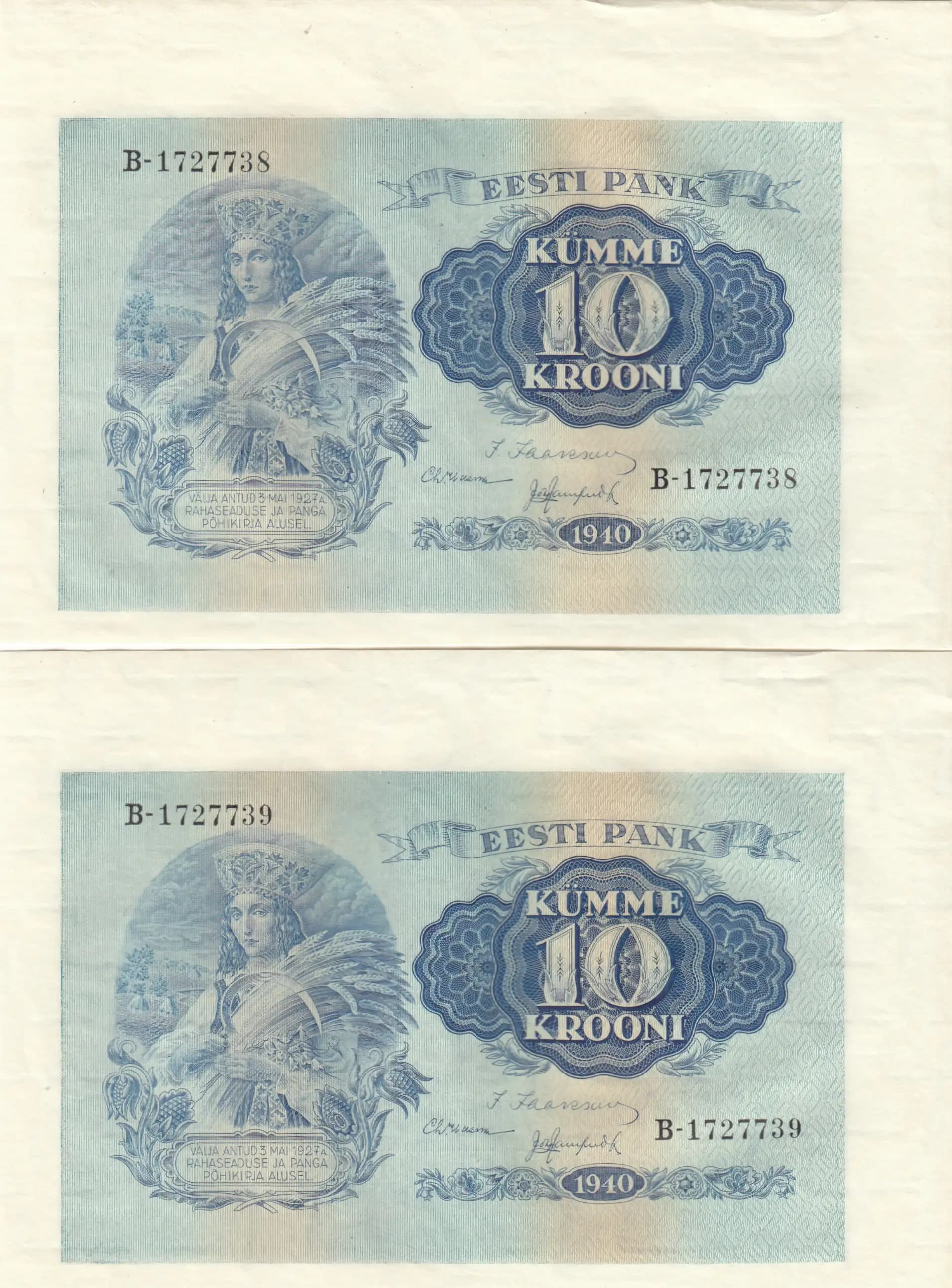
10 krooni 1940 uncut pair
Market Prices
About This Note
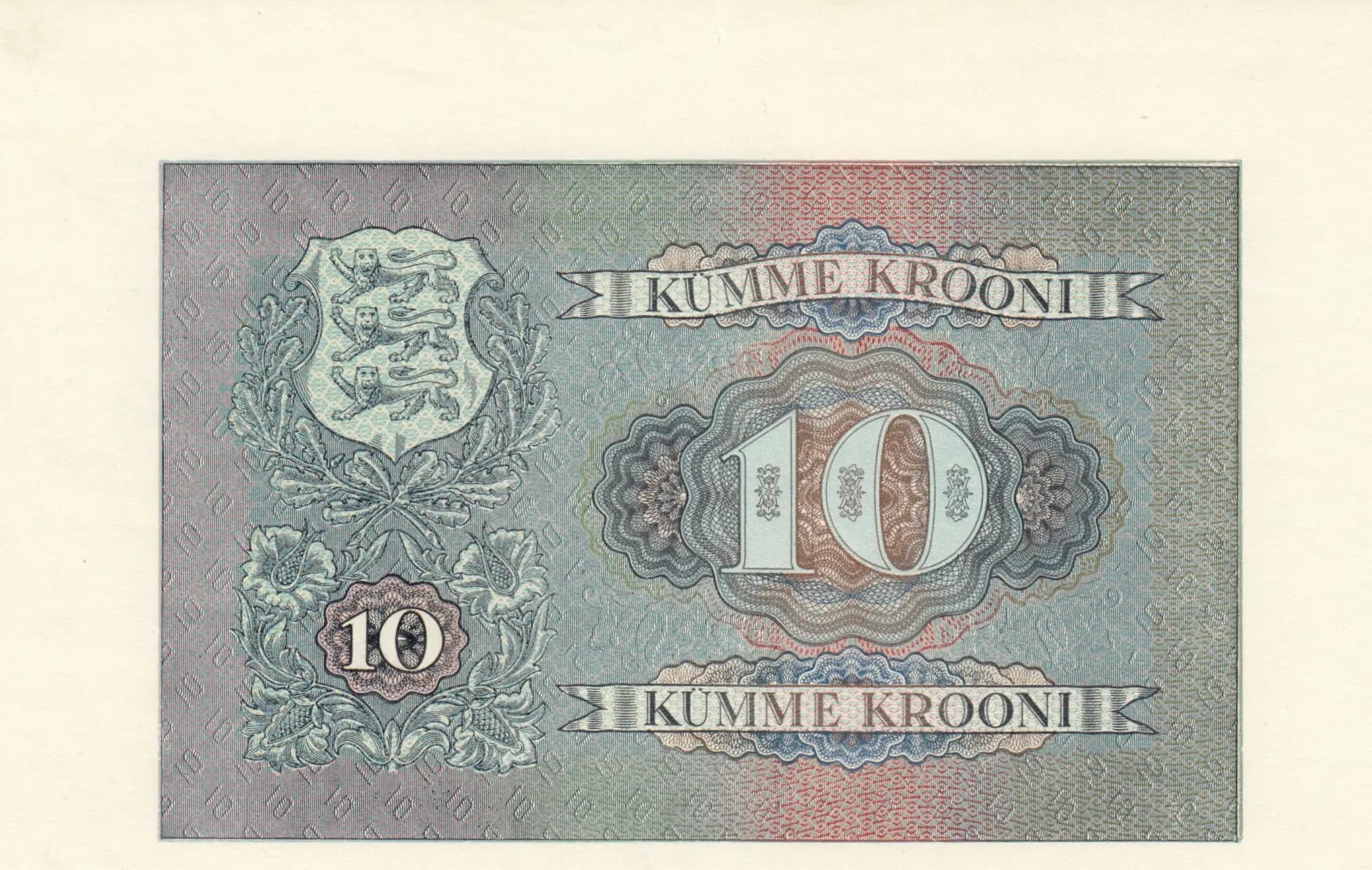
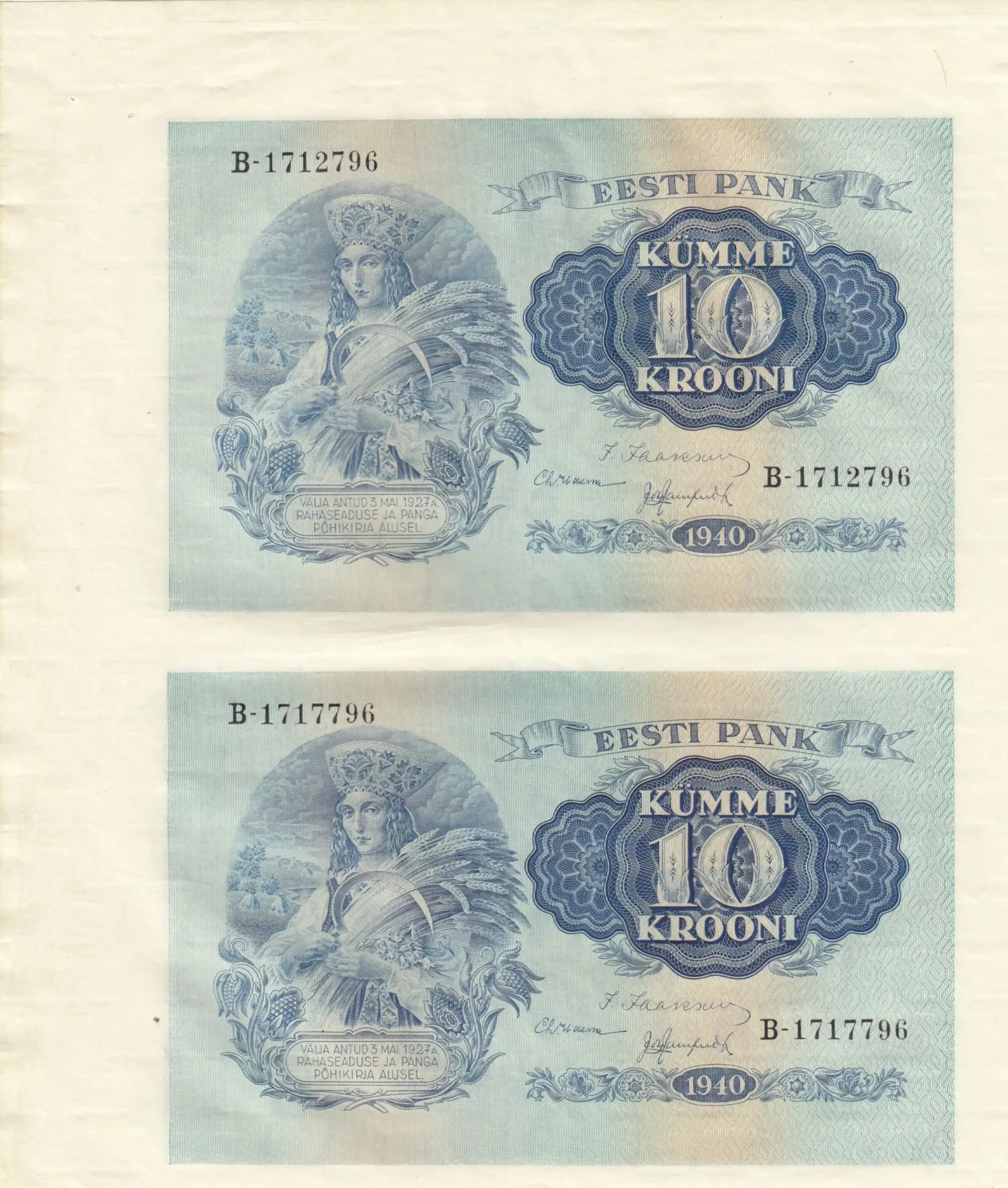
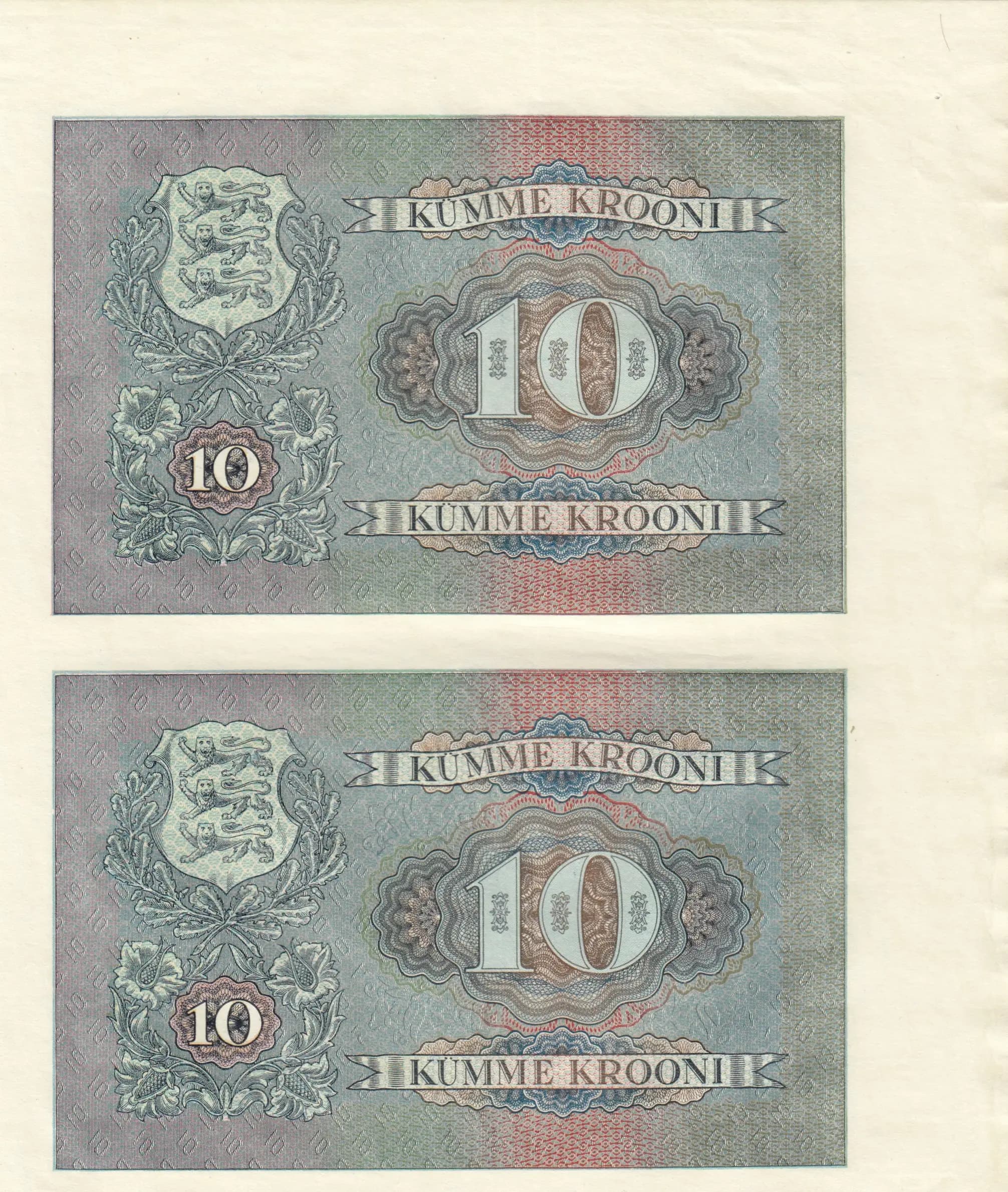
An exceptional uncirculated uncut pair of Estonian 10 krooni banknotes from 1940, displaying sequential serial numbers (B-1712796 and B-1717796) with sharp, pristine printing throughout. Both notes feature allegorical imagery on the obverse—a classically-dressed woman in ornate headdress—and the Estonian coat of arms with three lions on the reverse, printed in contrasting color schemes of blue/white and gray/green tones respectively. This uncut pair represents a scarce format for this issue, with the notes maintaining perfect condition, sharp registration, and clear handwritten signatures in blue ink.
Uncommon. While the catalog reference notes this issue as 'not issued,' the presence of handwritten signatures and sequential serial numbers on this uncut pair suggests these may be specimen or trial notes rather than unissued blanks. Uncut pairs are inherently scarcer than individual notes. The 2016 catalogue value of $500 for UNC examples and the wide range of eBay prices ($1.99–$484.00) suggest variable market availability. The combination of uncut format and uncirculated condition places this toward the scarcer end of the spectrum, though not exceptionally rare.
Issued by Eesti Pank in 1940, this 10 krooni denomination reflects Estonia's final period of independence before Soviet occupation during World War II. The allegorical female figure on the obverse represents Estonia or national sovereignty, rendered in the classical artistic style favored by interwar European central banks. The reverse features the Estonian coat of arms—three lions passant within a shield—a heraldic symbol of national identity and state authority that remained central to Estonian numismatic design throughout the 20th century.
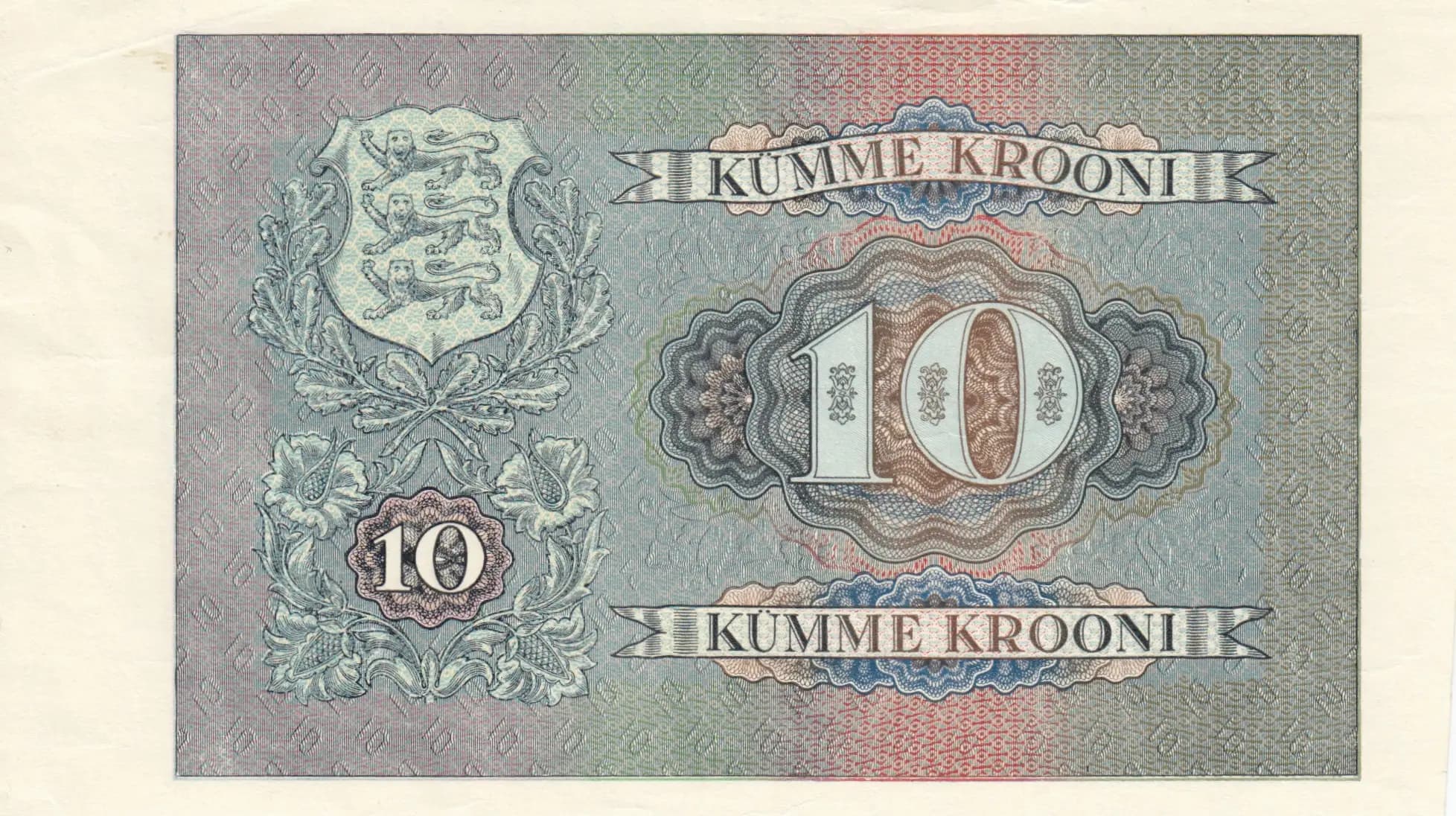
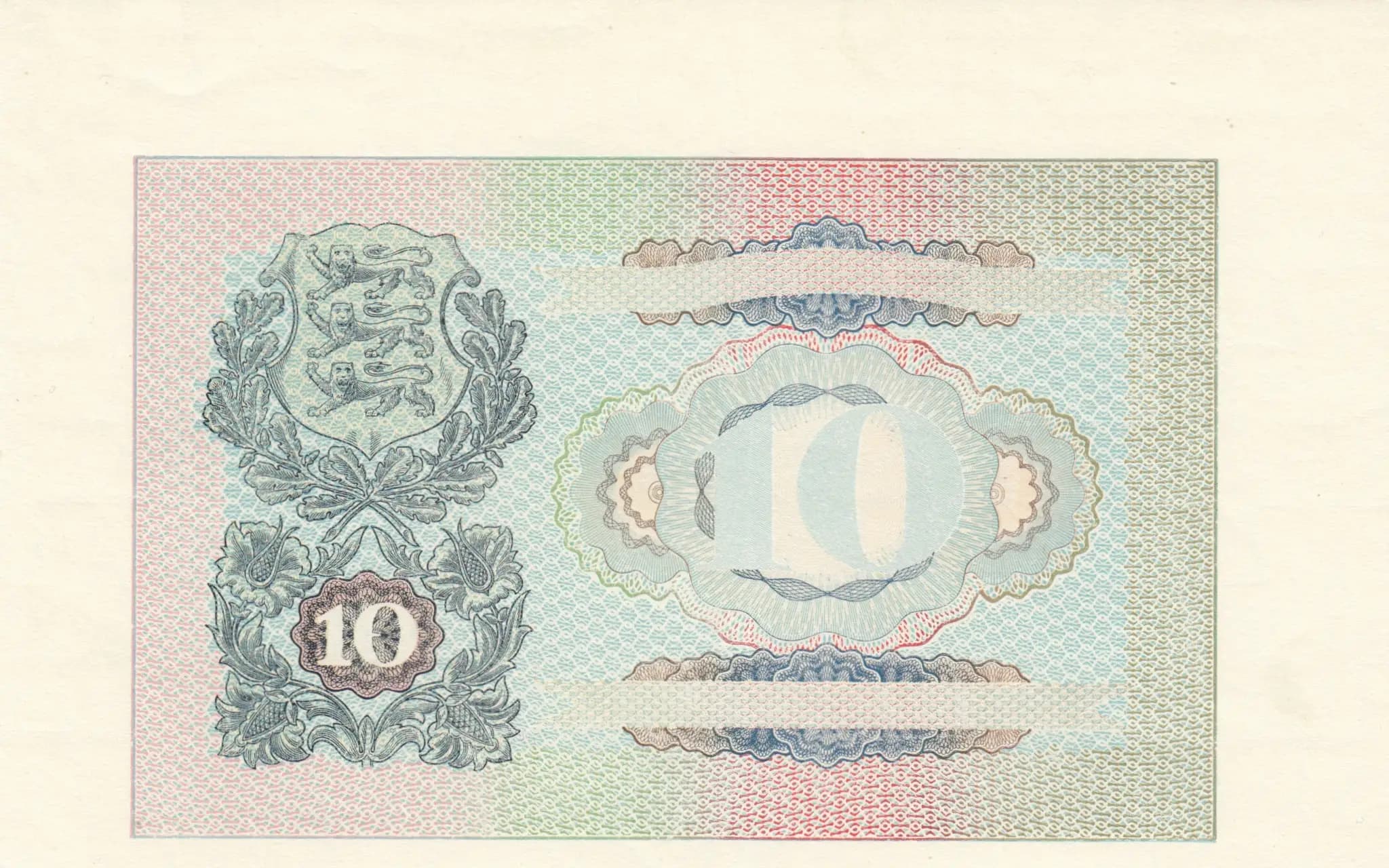
The obverse depicts an allegorical female figure—likely representing Estus or national sovereignty—rendered in classical style, wearing an ornate crown or diadem and flowing robes with decorative elements, positioned on the left portion of the note against a landscape background. The right side features the denomination 'KUMME KROONI' (Ten Krooni) within an ornamental rectangular frame. The reverse displays the Estonian coat of arms prominently on the left: a shield containing three lions passant (walking with forepaw raised) in heraldic arrangement, surrounded by elaborate floral and foliate ornamental designs. The center features a large numeral '10' within a decorative cartouche, with 'KUMME KROONI' repeated above and below. Both sides employ fine decorative guilloche patterns and intricate border work.
Front side: 'EESTI PANK' (Estonian Bank), 'KUMME KROONI' (Ten Krooni), year '1940', serial numbers 'B-1712796' (first note) and 'B-1717796' (second note). Back side: 'KUMME KROONI' (Ten Krooni) appears twice—above and below the central denomination numeral '10' within an ornamental cartouche.
Intaglio engraving (recess printing), the standard security printing method for banknotes of this era. The fine line engraving patterns, complex guilloche backgrounds, and sharp registration visible on both sides are characteristic of high-security intaglio work. The printer for Estonian notes of this period was typically a European security printer, though specific attribution would require additional research into Eesti Pank's suppliers during 1940.
This example corresponds to Pick P-68a (Unissued designation). The uncut pair format is a specific variety not commonly encountered. The handwritten signatures in blue ink and sequential serial numbers (B-1712796 and B-1717796) indicate this is likely a specimen or trial proof rather than a standard unissued blank note. PMG catalogues this as P-68a (Unissued) and P-68p1 (Full Color Print), with the present example matching the uncut pair configuration with complete color printing.