10 krooni 1940 pair
Market Prices
About This Note
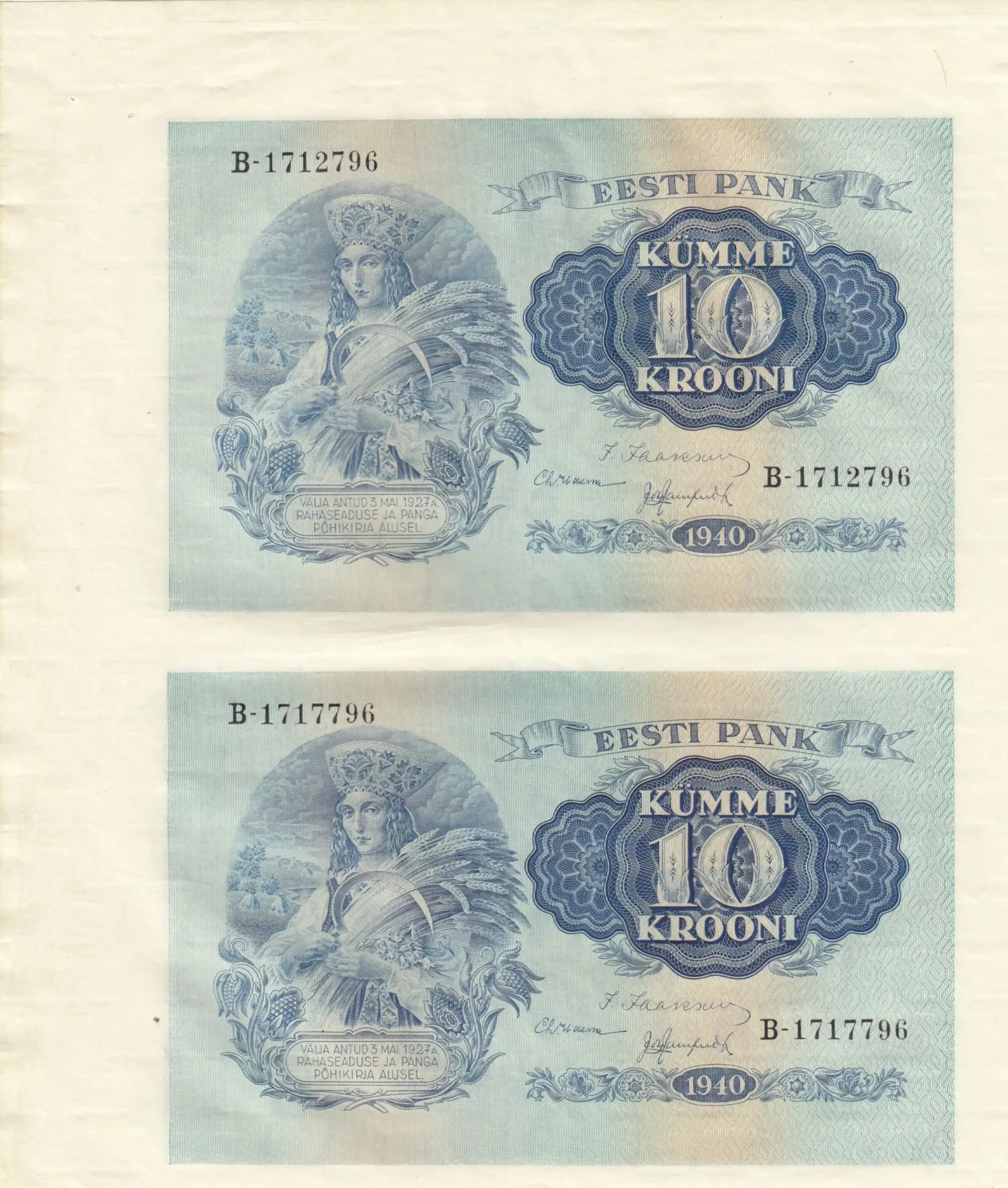
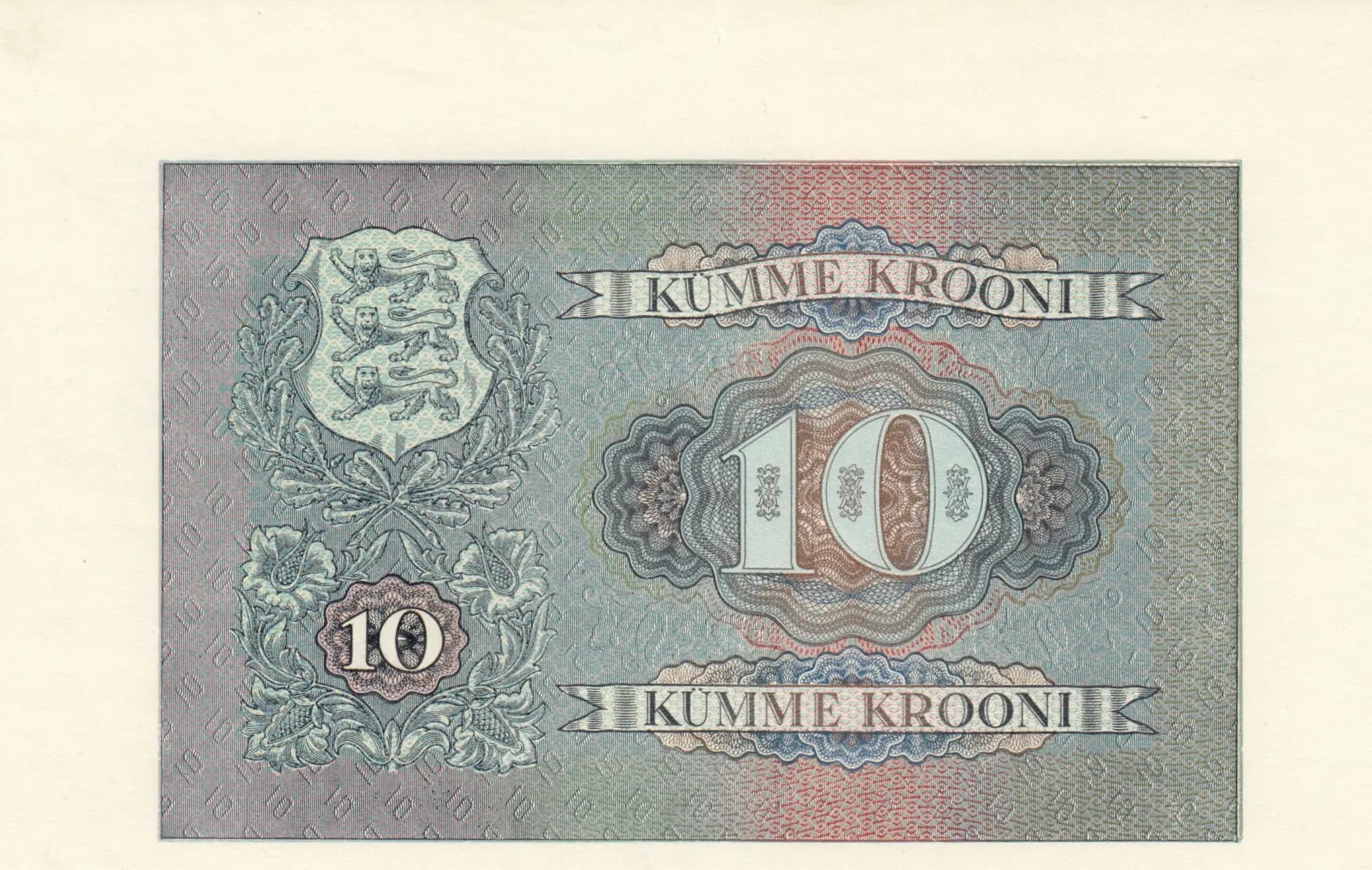
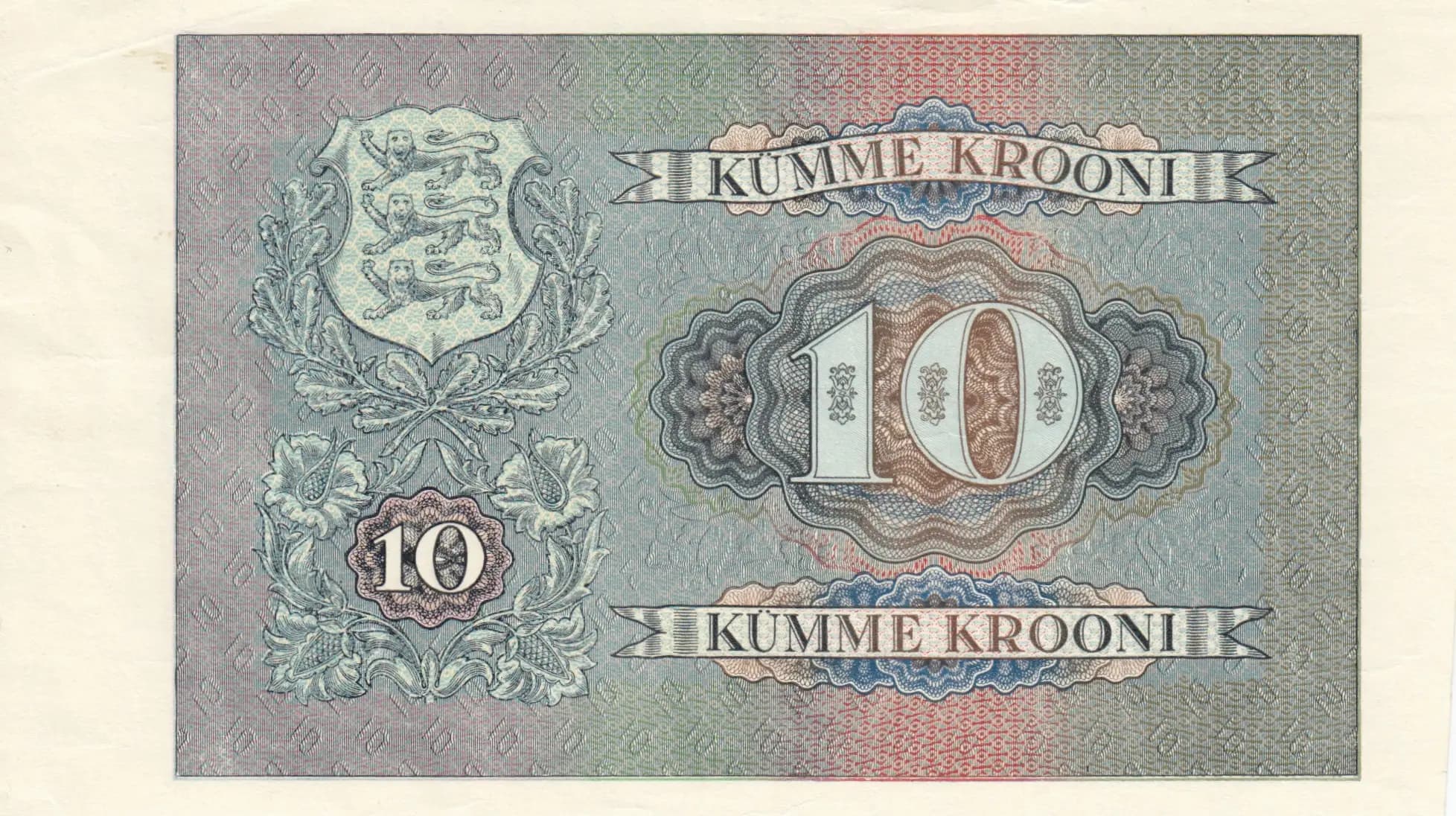
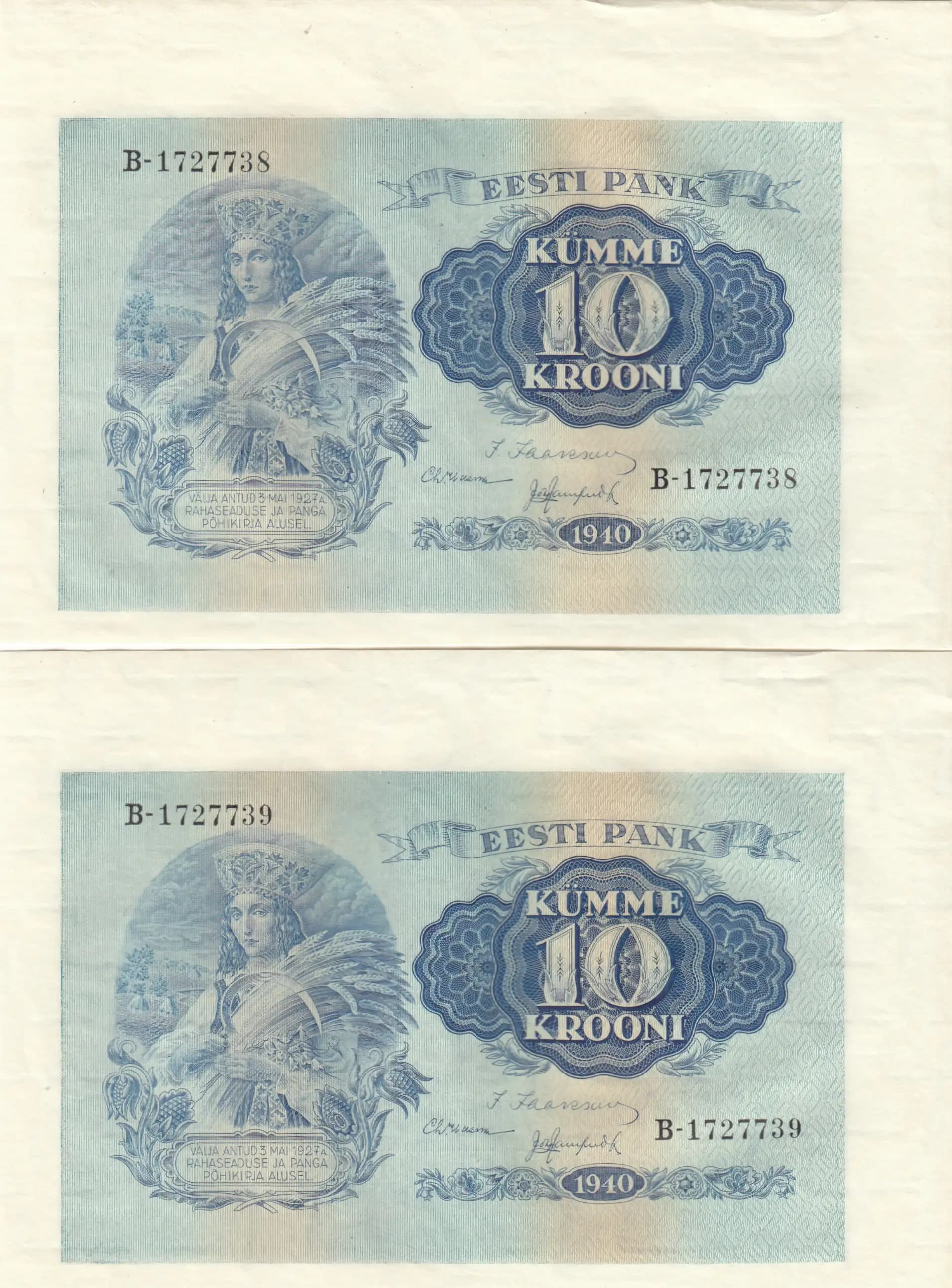
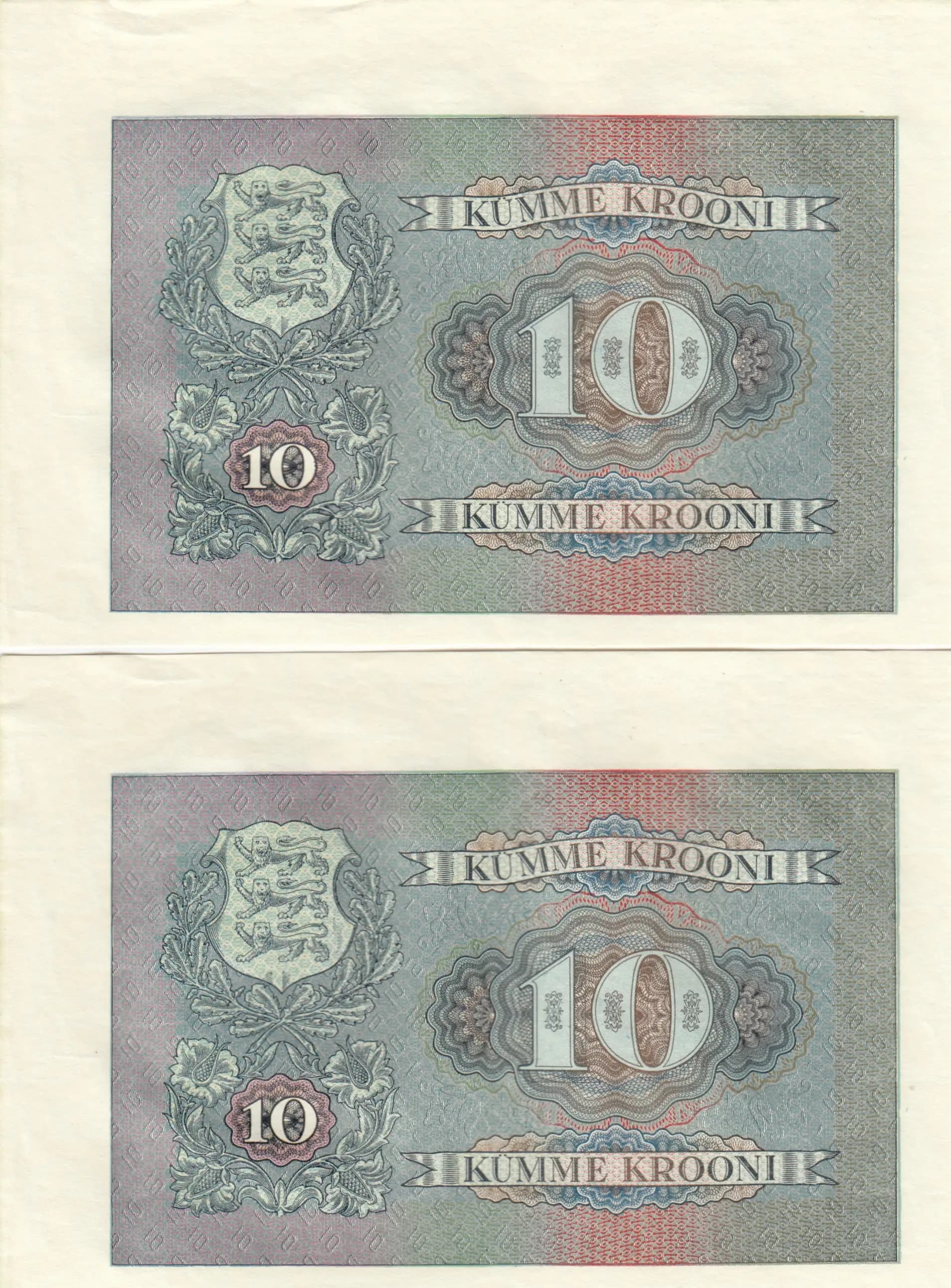
This is a superb example of the Estonian 10 Krooni banknote from 1940, presented in uncirculated condition with exceptional preservation. The note features a classical female portrait on the obverse and the Estonian coat of arms (three lions) on the reverse, both rendered with fine security printing typical of interwar European currency design. The sharp print quality, absence of wear, and intact color palette make this an outstanding specimen of Estonia's pre-Soviet currency.
Common. While this note is described as 'unissued' in PMG records and carries catalog values of $500 in UNC condition (2016), the eBay market data shows highly variable pricing ranging from $1.99 to $484.00 USD for UNC specimens, with many listings under $100. The wide price variance and frequent availability at modest prices (under $50 in many instances) indicate this is a common note in the collector market despite its historical significance. The 'unissued' designation may refer to its never circulating in regular commerce due to the Soviet occupation, but modern availability is sufficient to classify it as common.
Issued by Eesti Pank (Estonian Bank) in 1940, this note represents the final year of Estonia's independent monetary system before Soviet occupation in June 1940. The classical female figure on the obverse embodies the aesthetic ideals of Estonia's brief independence period (1918-1940), while the national coat of arms with three lions on the reverse symbolized national sovereignty. The legal text referencing the May 5, 1924 Currency Law anchors the note to Estonia's early republican monetary framework.
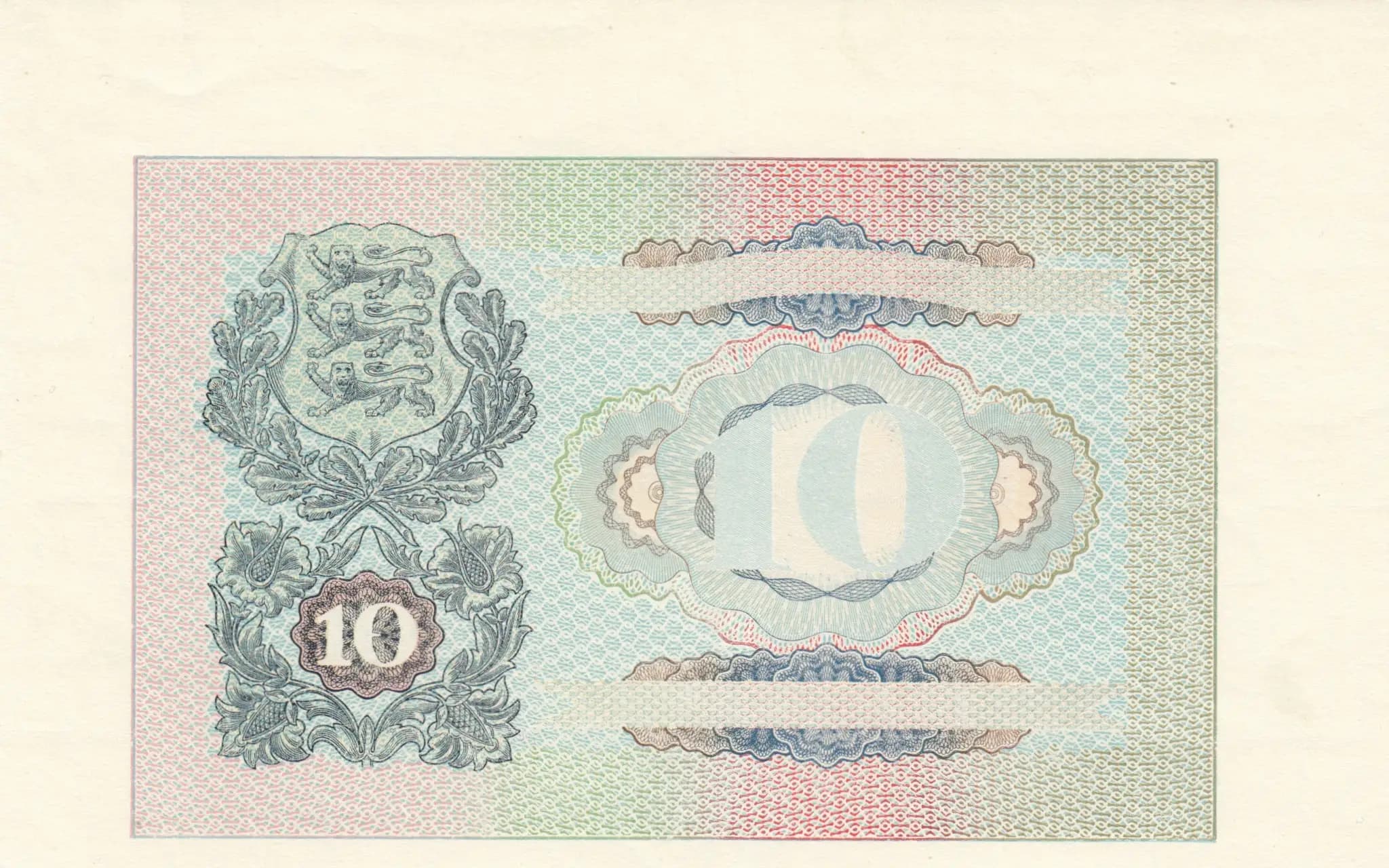
The obverse features a classical allegorical female figure in neoclassical style, draped and wearing a decorative wreath or crown, positioned on the left side of the note. This personification likely represents Estonia, Liberty, or a similar republican virtue. The reverse displays the Estonian national coat of arms—a shield bearing three lions arranged in a heraldic configuration—surrounded by ornate botanical and floral wreaths characteristic of early 20th-century currency design. Both sides employ fine geometric guilloché patterns and ornamental borders in light blue, pale green, and gray tones with dark blue and brownish-red accents, creating the visual depth and security characteristics typical of interwar European banknote printing.
FRONT: 'EESTI PANK' (Estonian Bank) - issuing authority; 'KUMME KROONI' (Ten Kroons) - denomination in words; '1940' - year of issue; 'B-1727738' - serial number; 'VABA ANTIUD 5 MAI 1924A RAHASEADUSE JA PANGA PÕHIKIRJA ALUSEL' (Issued under the law of May 5, 1924 and according to the bank's charter) - legal authorization text; signatures of F. Laarmann, Oidmann, and Löhmusadd - bank officials. BACK: 'KUMME KROONI' (Ten Kroons) - denomination repeated above and below; '10' - numerical denomination in decorative cartouches.
Intaglio (engraved) printing with multi-color lithographic elements, employing complex guilloché line patterns throughout for security purposes. The combination of fine line work, color gradations, and ornamental security elements reflects the advanced printing technology of European security printers in the 1930s-1940s period. The sharp definition and color transitions visible in both the visual analysis and the preserved condition suggest high-quality security printing from a specialized European printer.
This specimen corresponds to Pick P-68a (cataloged as 'Unissued'). The PMG Population Report notes variant P-68p1 exists as 'Full Color Print.' Based on the visual analysis showing multi-color printing with complex color gradations, this appears to be a standard type specimen. The serial number 'B-1727738' with the 'B' prefix may indicate a specific print batch, though without access to comprehensive serial number research for this issue, batch designations cannot be definitively established. The three signatures (F. Laarmann, Oidmann, Löhmusadd) are consistent with the 1940 issue.