10 krooni 1940 progressive proof
About This Note
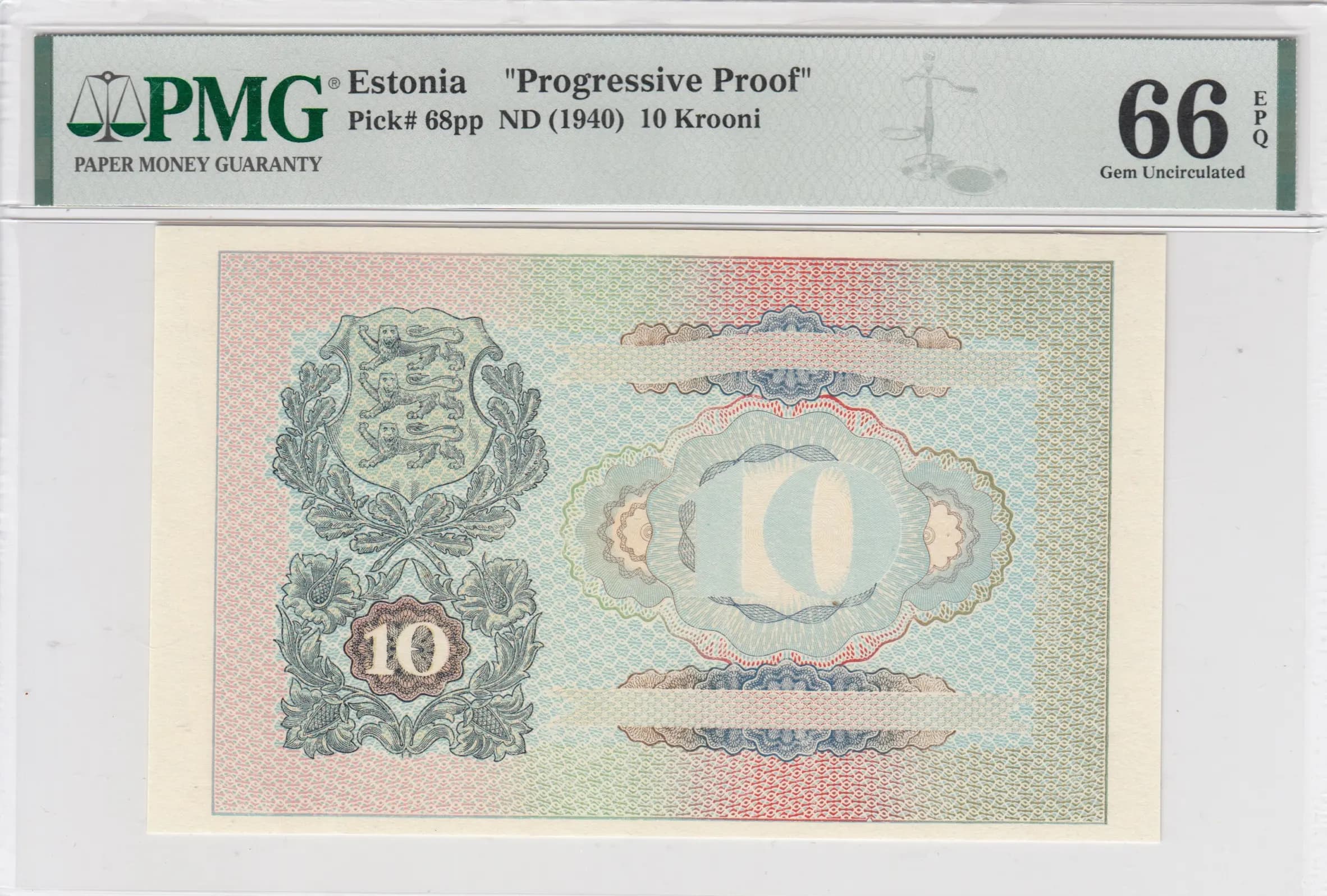
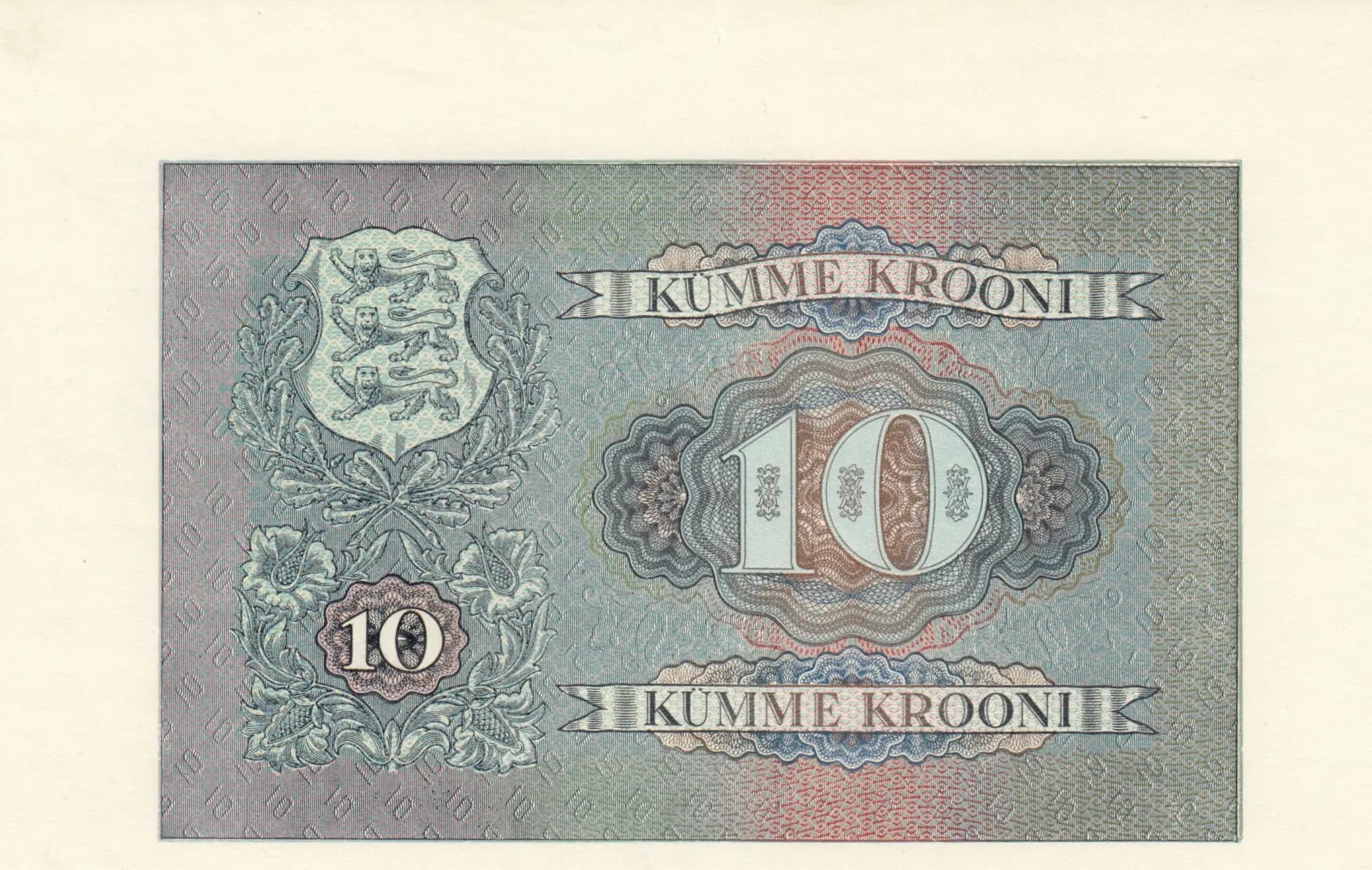
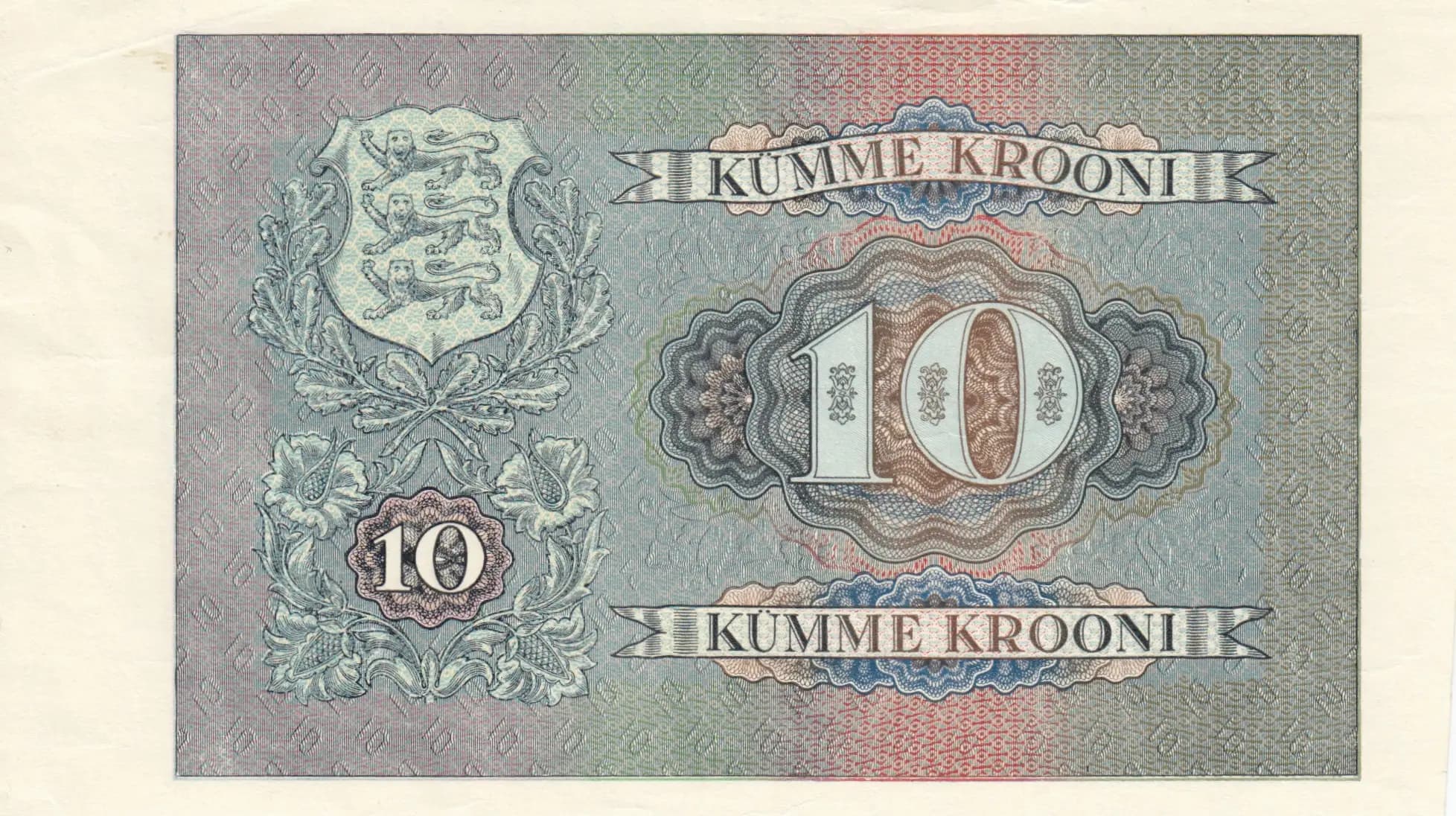
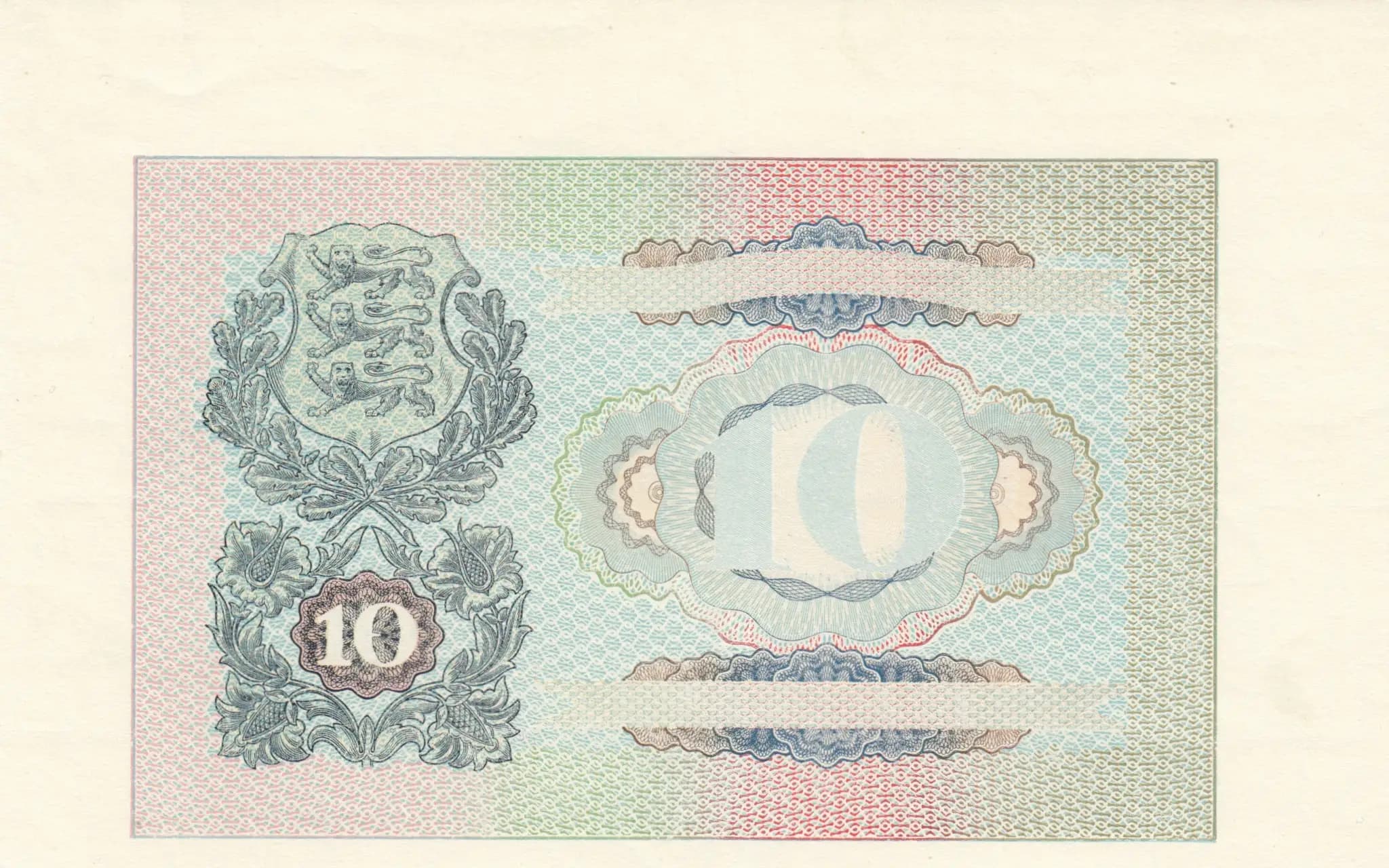
This is a 1940 Estonian 10 krooni progressive proof (Pick P-68pp3) in pristine uncirculated condition, representing an unissued denomination from the interwar Estonian banking period. The back features an elaborate heraldic design centered on Estonia's coat of arms with three lions passant, surrounded by ornate foliate ornamental work and a scalloped vignette frame rendered in multicolor intaglio. The obverse appears to depict a woman's portrait as indicated by catalog data, though only the proof back is shown in the visual analysis provided.
Rare. Progressive proofs (pp3 designation) represent intermediate stages in the banknote design and engraving process, produced in extremely limited quantities—typically single or low double-digit numbers for quality control purposes. The 'not issued' status combined with the proof designation significantly restricts availability. Progressive proofs are highly specialized collector items with minimal market circulation, making this substantially rarer than regular issued notes.
This 1940 proof represents the final period of independent Estonian monetary sovereignty before Soviet annexation in 1940. The prominent display of Estonia's national coat of arms—the three lions passant—symbolizes the nation's heraldic heritage and sovereignty during the interwar Republic of Estonia (1918-1940). As an unissued denomination, this progressive proof documents Eesti Pank's design and production capabilities at this critical historical juncture, before the currency was replaced following the loss of independence.
The back design features Estonia's state coat of arms prominently positioned on the left side within an ornate heraldic shield with elaborate mantling and flourishing floral/foliate ornamental designs. The shield displays three lions passant (walking with one paw raised) in heraldic arrangement, historically representing Estonia's historical regions. The denomination '10' is displayed in a rounded rectangular cartouche within the decorative heraldic panel. The right side features a large oval scalloped circular vignette frame with decorative border elements, currently blank in this proof state, which would likely contain a female portrait (the woman referenced in catalog data) on the issued note. The overall composition employs a fine geometric pattern background in pink, green, tan, and blue-gray tones creating subtle texture characteristic of security printing.
Back: '10' (denomination numeral) in universal Arabic numerals. No other text inscriptions are visible in the provided visual analysis. The front side inscription would typically include 'Eesti Pank' and may contain additional text, but the front image was not provided in the visual analysis.
Traditional intaglio (engraved) printing, evidenced by the fine line work, intricate engraved decorative elements, multiple color layers, and precision of the heraldic and ornamental designs. The geometric background pattern and scalloped border elements with fine line work are typical of high-security banknote production from this era. The printer for Estonian banknotes during this period was typically Reichsdruckerei or similar European security printers, though specific printer identification for this proof would require additional documentation.
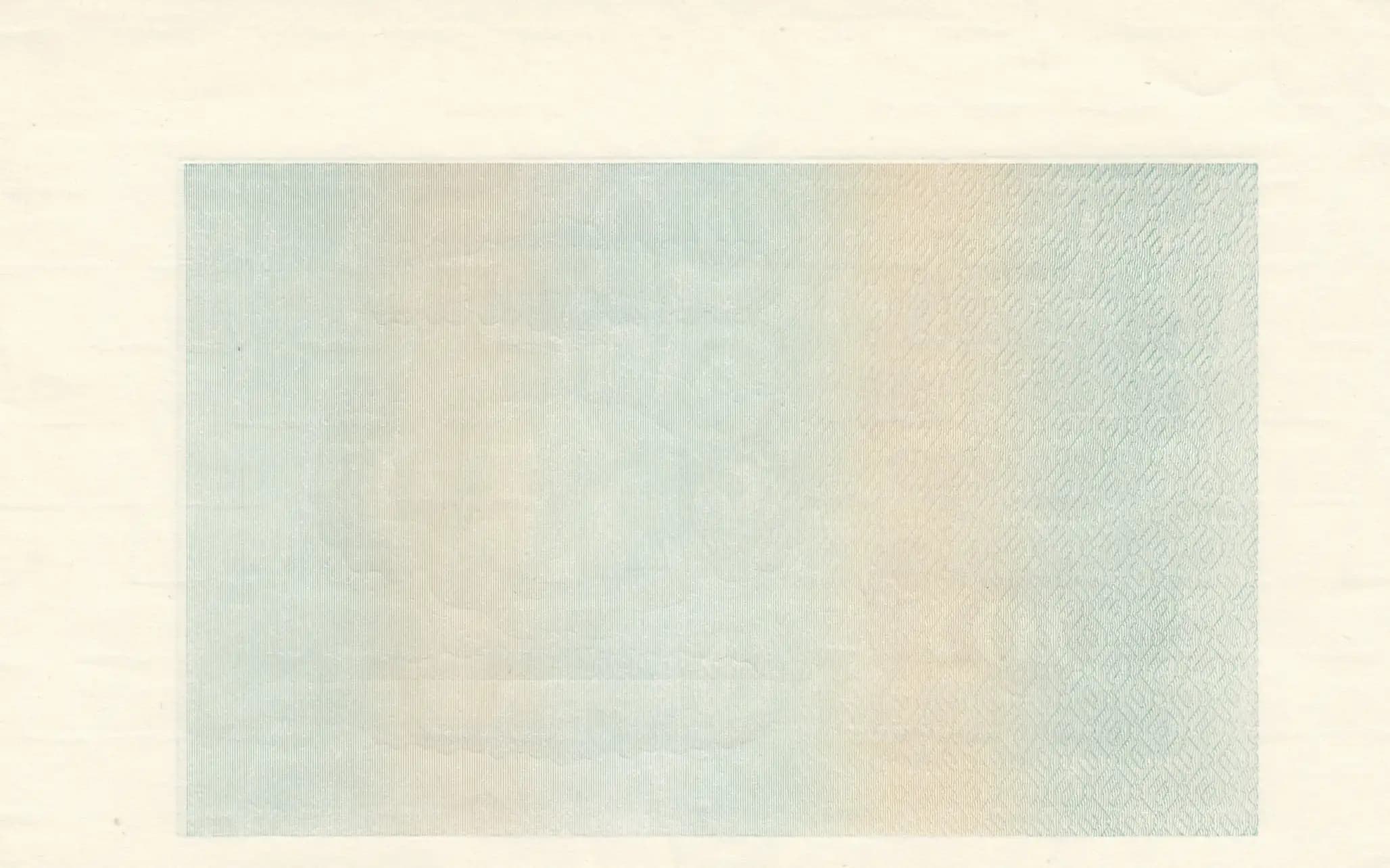
This is specifically identified as a progressive proof third state (pp3) per Pick catalog designation P-68pp3. Progressive proofs document the evolution of plate preparation, showing intermediate stages between initial design and final issued version. The blank or near-blank obverse (est204b.webp) suggests this is either the reverse proof stage or demonstrates the selective design application characteristic of progressive proofs. No serial numbers, signatures, or date varieties are applicable to proof material of this type.